Connect with us

Featured

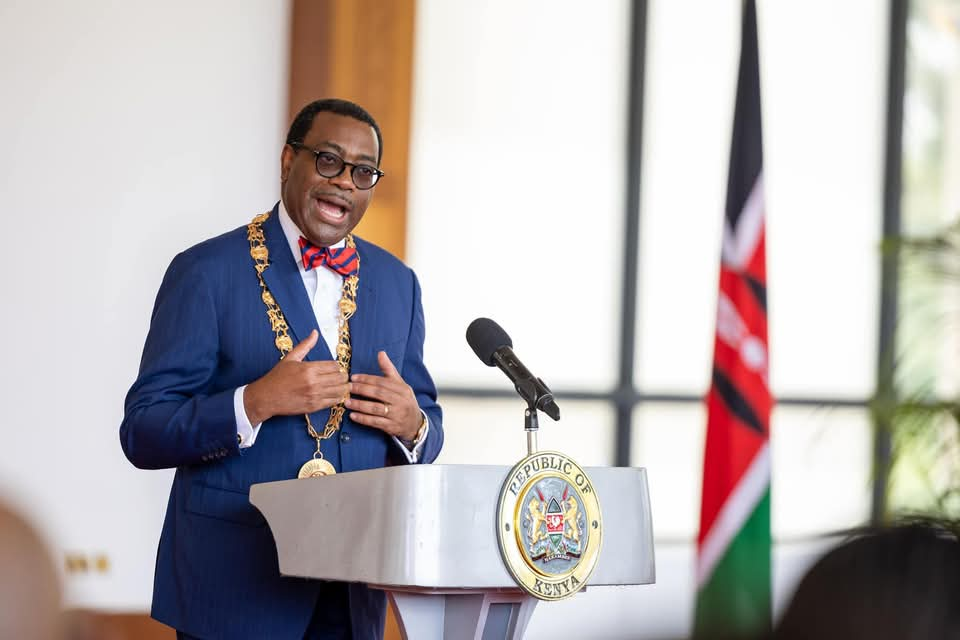
AfDB President, Akinwumi Adesina’s Acceptance Speech

Published

on

Speech by Dr. Akinwumi A. Adesina
President and Chairman of the Boards of Directors, African Development Bank Group, At the State House Event on the Conferment of the Chief of the Order of Golden Heart, C.G.H, State House, Nairobi, Kenya, March 17, 2025.

Your Excellency, Dr. William Samoei Ruto, President of the Republic of Kenya, C.G.H.

Your Excellency, Professor Kithure Kindiki, Deputy President of the Republic of Kenya.

Honorable Musalia Mudavadi, Prime Cabinet Secretary,
Honorable Cabinet Secretaries,
Distinguished Ladies and Gentlemen.

Good morning! Habari za Azubuhi.

Your Excellency, President Ruto, I am most grateful for your conferring on me today the prestigious honor of the Chief of the Order of Golden Heart, C.G.H, Kenya’s highest and most distinguished honor.

I am greatly humbled by your incredible kindness!

What a great honor! What a rare privilege! What a historic recognition!

Thank you, thank you, and thank you, Your Excellency, Mr. President.

It is such a joy to be back here, with my dear wife Grace, in Kenya, a nation that I love, and to be in the State House, with a President who is a dear brother and friend. They say home is where your heart will always be.

I consider Kenya as my home. Afterall, I lived and worked here in this beautiful country for about 9 years, starting from my days working with the Rockefeller Foundation and the Alliance for Green Revolution in Africa (AGRA). I have been back ever since, so I can claim to have been working in and on Kenya for at least 20 years.

The friendship between myself and President Ruto goes way back over those 20 years. As we say in Kenya, “Tumetoka Mbali” – we have come from far.”
Yes, we have come from far since Mr. President you were a much younger Minister of Agriculture, under the then government of President Mwai Kibaki. Your predecessor, former President Kenyatta, was then the Deputy Prime Minister and Minister of Finance.

I recall the very frequent and engaging discussions between us on how to improve the quality of lives of Kenyans. From seminars to workshops and conferences, we engaged intensely. I was not just working in Kenya, I was a Kenyan by mind, heart and soul, as I immersed myself in Kenya.

I remember that when I was later appointed as the Minister of agriculture in Nigeria, I came along with President Goodluck Jonathan on a State visit to Kenya. President Kenyatta and yourself, as then Deputy President, received us at the Jomo Kenyatta airport. As President Jonathan was making introductions of his ministers and got to me, he introduced me as “Minister of Agriculture of Nigeria.” President Kenyatta said “Yes, I know him. He is the Kenyan on loan to the Nigerian government!” We all busted out laughing (Laugh).

Of course, he was right, for even when I was appointed Nigeria’s Minister of Agriculture, I appointed Maria Mulindi, a Kenyan, as my Chief of Staff.

I worked everywhere in Kenya and have such great memories. From my praying and preaching at the Nairobi Pentecostal Church Valley Road (with Bishop Boniface Adoyo, Bishop Oginde and many others) to small family prayer groups with my Kenyan friends, to working with farmers and schools across Kenya.

From working with a friend of mine (Robert Mbugua) speaking across high schools to encourage and inspire the youth, to supporting research institutions including the Kenyan Agricultural Research Institute, the African Economic Research Consortium (with Dr. Harris Mule and Prof. Willis Oluoch-Kosura, Prof Chris Ackello Ogutu and Dr. Gem Argwings-Kodhek), to working with corporate giants such as Chris Kirubi who owned the International House, and Vimal Shah, of BIDCO Oil Refineries.

From working to support girls education with the Forum for Women Educationalists in Africa (with Dr. Edda Gachukia and Dr. Ruth Kagia) to working to improve the lives of farmers across the farms from Bungoma, to Eldoret, Kisi, and across the Rift Valley.
From working with the Kenyan Agricultural Research Institute (KARI) to develop new technologies, to working on the farms in Muranga with Dr. Florence Wambugu, to scale up the uptake of tissue culture bananas by farmers.

I recall my work launching the development of agro-dealer networks across Kenya (with Dr. Caleb Wangia of the Agricultural Market Development Trust (AGMARK), as we rapidly expanded availability of farm input traders across Kenya.

I was so driven and so much wanted things to change positively for Kenyans. I was very concerned then about the millions of poor farmers in Kenya who were begging for food and had no access to seeds or fertilizers. I wanted to see a national program to provide subsidized seeds and fertilizers for poor farmers across Kenya.
The then PS of agriculture, Dr. Romano Kiome, and then Minister of Agriculture, Kipruto Arap Kirwa, became allies and agreed.

But it was not a popular move. Several donors were unhappy with me at the time for trying to push for subsidies for farmers, including my own office, The Rockefeller Foundation. I was even told that if I did not back off, I could lose my job. I was undeterred, as I said, “if trying to help poor people is the reason for losing my job, I cannot think of a more honorable way to lose a job: fighting for the poor.”

I recall going to one meeting of donors at the time to push for this, and as soon I raised the issue, the chair of the session (a Kenyan who worked then for the World Bank by the name Daniel) simply said, “next agenda item please.” I retorted that “if I had been the Minister of Foreign Affairs, I would have sent you all packing for spending your time on beaches and not even having a heart for the poor people in Kenya.”

When William Ruto was appointed as the agriculture minister, I asked for a meeting. You need to know something about this man, then Minister Ruto, now President Ruto: he is a man of action. He is relentless. And he will push until he gets things done. He did not wait for me to visit with him at the Kilimo House, he made his way to my office, and we met at 7.30 am. That was how we developed and rolled out the Kilimo Plus program to provide subsidized farm inputs for over 2.5 million poor farmers in the country.

I recall while at AGRA how I developed and rolled out the Kilimo Biashara program, which provided financial guarantee facilities that reduced the risk of lending by commercial banks in Kenya to farmers. It worked so well that it supported Banks such as the Equity Bank (working with James Mwangi) to rapidly expand their lending to the agriculture sector, from its humble beginning, to becoming what it is today, of which I am very proud.

I recall my work with Kenyan colleagues as we developed at the time what was called the Kenyan Agricultural Commodity Exchange (with Adrian Mukhibi, Albert Wessonga) to provide market price information for farmers in the country, using their mobile phones. I remember our working with the Mayor of Bungoma at the time to set up the commodity exchange in Chewele market so farmers could bulk their maize and sell based on grade and quality at the exchange, working at the time with SACRED Africa, an NGO based in Bungoma (with Dr. Eusebius Mukhwana, who later became a Senator).

It worked so well, as middlemen could not rip off farmers anymore. In fact, it worked so well, that some disgruntled middlemen vandalized some of the commodity exchange Kiosks. One day, Mr. Kofi Annan, then former United Nations Secretary General, who was at the time the Chairman of the Board of AGRA, visited Chewele. He was so amazed, as he used his mobile phone to make orders via the exchange; he turned to me and said, “this is the Chicago Board of Exchange in a village in Kenya.”

I tried so hard to be Kenyan, so much so that I started running in the Jaffrey Center, early mornings and weekends. If only I could run like those long-distance runners of Kenya, maybe I could become a Kenyan! I failed, as I could not keep up with them. So, I told myself, let me just stick with being a Nigerian, at least I know that Nigeria can always defeat Kenya in football.

As President of the African Development Bank, I am proud that my colleagues and I have been running with Kenya and scoring development goals with Kenya. Kenya has a special place in the history of the African Development Bank since its establishment in 1964. The very first project ever financed by the African Development Bank was right here in Kenya in 1967, that’s 58 years ago.
The first one links Eldoret to Tororo in Uganda, laying the foundation for a transport infrastructure that drives commerce between countries of the Great Lakes and the Indian Ocean regions. The second road, which connects Nairobi to Kilimanjaro region in Tanzania, has become a major trunk road for commerce and tourism between both countries.
Since 1964, the Bank has financed a total of 167 projects, with financial commitment of $7.8 billion.

But I am especially proud of what we have done in and for Kenya over the past ten years since I was first elected President of the African Development Bank in 2015. Since I was elected President, the Bank has financed a total of 57 projects, with total financing commitment of $4.44 billion. That means we did in the past ten years (under my Presidency) 57% of all the African Development Bank has invested in Kenya for over the past 60 years!

That must tell you how special Kenya is to me!

The African Development Bank’s current portfolio consists of 45 projects worth $4.09 billion. And these projects are having huge impacts across Kenya.

For example, the Bank-supported Last-Mile Connectivity electricity project has helped to increase the population of Kenyans connected to the national electricity grid from 41% in 2014 to 76% in 2024. Put simply, electricity connections increased from 2.42 million households to 9.7 million households.

Many of you may not know that the Bank made this happen. You are not alone! On one of my field trips to the Rift Valley together with Cabinet Secretary minister at the time, Charles Keter, we walked down a dusty road in one of the villages that benefited from the last mile connectivity project. Right in front of us was an elderly woman whose name was Grace (not Grace, my wife!). She was asked by the Cabinet Secretary if she knows that the African Development Bank funded the connection of her village and household to electricity. She said, “I do not know the African Development Bank.” When further asked if she knows Dr. Adesina, President of the African Development Bank. She said “No, I do not know him, where is he?” Of course, I was beside her! She then said, “all I know is that we once were in darkness, now we have light!” (laugh).

With Kenya participating in the Mission 300 launched by the African Development Bank and the World Bank to connect 300 million people to electricity by 2030, Kenya is definitely on course to achieving 100% access to electricity by 2030. Ninaamini Tutatoboa!

The African Development Bank financed and was the Mandated Lead Arranger for the 310 megawatts Lake Turkana Project, which is the largest wind farm in Africa. The Bank also financed the 105 megawatts Menengai Geothermal power plant, further advancing Kenya’s leadership in geothermal development in Africa. For power transmission, the Bank provided $105.5 million for the recently completed Ethiopia-Kenya electricity highway project.

The African Development Bank is supporting several road and transport projects that are improving regional connectivity, trade and reducing travel costs for the population. Let me mention a few.
Take for example, right here in Nairobi, the Bank provided $106.7 million for the rehabilitation of the 13 kilometers Nairobi Outer Ring Road, turning it from a single lane to a dual carriageway, including service roads, grade separated intersections, pedestrian foot over-bridges, walkways and bicycle lanes, while providing secondary access to the Jomo Kenyatta International Airport.

The Bank co-financed with $175 million the expansion of the Thika-Nairobi road, expanding it into a six and eight lane highway. This has drastically reduced travel time from 2-3 hours to just 30-45 minutes.
The Bank has approved $852 million for on-going regional integration operations in Kenya. This includes the Bagamoyo-Tanga-Horohoro-/Lunga-Malindi road connecting Kenya and Tanzania. We are supporting the Kapchorwa-Suam-Kitale road project connecting Kenya and Uganda, as well as the Lesseru-Kitale roads project connecting Kenya and South Sudan.

The Bank financed the construction of the Addis-Ababa-Nairobi-Mombasa Highway that has reduced the travel time between Ethiopia and Kenya from 3 days to less than 24 hours and has helped to expand the trade between the two countries by 400%.

The Bank co-financed the dualization of the 84 kilometers Kenol-Sagna-Marua Highway, part of the Kenya section of the Trans-Africa Highway running from Cape to Cairo. Our support of $31million for the Timboroa-Eldoret Road Rehabilitation Project, part of the Northern Corridor, provides transit routes connecting Kenya, Uganda, Rwanda, Burundi, Eastern Congo and Southern Sudan.

President Ruto is passionate also about water and sanitation. When I visited with him in May, when Kenya graciously hosted the Bank’s Annual Meetings in 2024, he passionately requested the Bank’s expanded support for water and sanitation. Mr. President, I am pleased that the Bank is providing $634 million towards the Kenya Town’s Sustainable Water Supply and Sanitation. This includes Euros 314.92 million for the construction of the Thwake Multipurpose Water Dam, expected to be completed by July 2026. When completed it will provide 150,000 cubic meters of water per day to about 1.3 million people in Kitui and Makueni counties, as well as the Konza Techno-City in Machakos County.

The Bank is strongly supporting the private sector in Kenya. This includes the provision of over $700 million in lines of credit to more than 8 commercial banks, including Equity Bank Group, Kenya Commercial Bank, Diamond Trust Bank, Credit Bank, Commercial Bank of Africa, Family Bank and the Kenyan Mortgage Refinance Company.

I know that Kenya faces a huge challenge with high unemployment for its youth, as manifested in several youth riots that shook Kenya. Unemployment is especially high among Kenya’s well-educated youth. They demand support for skills upgrade, finance to build their businesses, and social protection, as well as inclusion in governance systems.

To support the youth of Kenya, the African Development Bank is providing $309 million for 8 on-going projects targeting skills development for the youth. This includes support for technical and vocational education that has already benefitted 88,000 trainees.

The African Development Bank’s flagship program in support of financing for women, the Affirmative Finance Action for Women in Africa (AFAWA) has provided a total of $177 million in loans for 3,177 women-owned businesses.

One of such young women entrepreneurs is Pauline Otila, the CEO of Apiculture Ventures, one of the fastest growing businesses in Kenya’s honey industry. With support received from AFAWA, right here in Kenya, Pauline has tripled her business and grew her beekeepers’ supply network from 1,200 to 10,000 beekeepers. Today, Pauline is one of the leaders in Kenya’s male-dominated beekeeping industry, showing how when women are supported they thrive. In her own words “women are bankable, if given a chance.”

I fully agree. No bird can fly with one wing. I am convinced that when women win, Kenya wins! When women win, Africa wins!
Yes, challenges may be there today, but let’s keep hope alive.

Kenya will grow. Kenya will thrive. Kenya will prosper.

I believe the future will be bright for the youth of Kenya!

That is why the African Development Bank is currently preparing for our Board’s approval, financial support to Kenya, for the establishment of Youth Entrepreneurship Investment Bank of Kenya. This will be a stand-alone financial institution, that will be 100% dedicated to providing technical assistance, debt and equity financing for the businesses of the youth of Kenya. When I earlier discussed this with President Ruto, as we both were at an airport lounge in Dubai, both of us coming from different tips, he said to me “Adesina. I want this in Kenya like yesterday.” And true to his words, within 48 hours, I received a formal letter of request from President Ruto for the African Development Bank to support the establishment of the Youth Entrepreneurship Investment Bank of Kenya.

To the youths of Kenya, you are not alone. The African Development Bank and our partners will work to boost opportunities for the youth in Kenya. Working with President Ruto and the Government of Kenya, the goal is simple: build youth-based wealth in Kenya.

So, as you can see, my heart has always been in Kenya. I am therefore immensely honored that President Ruto, you are conferring on me Kenya’s highest and most distinguished honor, the Chief of the Order of the Golden Heart, CGH. My heart is here, but you made it even better: you added Gold to my Heart!

Thank you President Ruto. Thank you, Kenya!

This an honor that I will cherish for life. It will be a constant reminder that the country I love so much, Kenya, loves me back, appreciates and celebrates my leadership at the African Development Bank, and values and honors the incredible contributions of the Bank to its development.

On behalf of my dear wife, Grace, the Board of Directors, Management and Staff of the African Development Bank, and on my own behalf, I accept this honor with great humility.

May God bless you, my dear brother, President Ruto.

Asante Sana Mheshimiwa Rais Ruto.

May God bless the good people of Kenya.

Mungu aibariki Kenya.

God bless Africa.

Mungu aibariki Afrika.

With all my heart, now the Golden Heart!

Thank you so very much.

Asante Sana!

Continue Reading
Click to comment

Leave a Reply

Your email address will not be published. Required fields are marked *

Featured

Atiku Abubakar Remains Only Person Tinubu Govt is Afraid Of – Dele Momodu (Full Interview)

Published

on

By

By Eric Elezuo

If there is one Nigerian, who can tell accurately the heartbeat of the nation, its direction and what the future portends for it, based on the dynamics already at play, that person is Chief Dele Momodu; a seasoned journalist, former presidential candidate, holder of high profile chieftancy titles across the country, and Chief Executive Officer, Ovation Media Group.

As a vocal politician and public speaker, whose voice echoes across the length and breadth of the nation for all the good reasons, Momodu has continued to speak against the cluelessness of the present government and the need for the government to redress its steps in terms of unpopular policies emanating from the cradle, which have rather impoverished the populace rather than do the opposite. He is credited with being the first to notice the government’s unpopular drift towards one-party system, and warned on the dangers. Today, almost all the state governors, national and state assembly members have all decamped to the ruling All Progressives Congress (APC).

Sustaining his credence as a value-adding speaker, Momodu was a guest of the fabulous, experience and adequately exposed Charles Aniagolu of Arise News(Night),  where he further highlighted the challenges and remedies of the Nigerian situation.

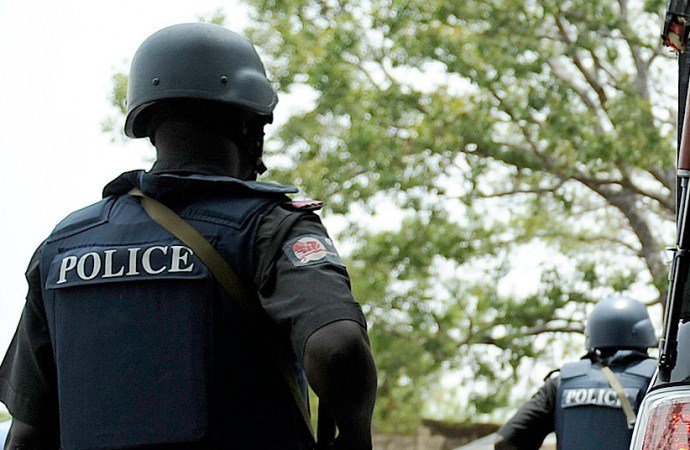
He also spoke on the appointment of the former Chief of Defence Staff, General Chris Musa (retd) as the Minister of Defence, the withdrawal of Police eacort from very important personalities (VIPs) including the former Vice President Atiku Abubakar and many other issues of national concern.

The text of the interview is presented in details even to the tiniest details below:

Momodu with former Vice President, Atiku Abubakar

Well, for more on this, I’m joined now from our studios in Lagos by the former presidential candidate and publisher of Ovation magazine, Basharu Dele Momodu. Mr. Momodu, thank you very much indeed for coming in. You look like you’re about to cry there. I mean, I know you had a bit of a tough time getting in, and I do apologize to our viewers because we’re quite a few minutes late. But you had a bit of a mishap coming in, and that delayed us a bit.

Dele Momodu: Yes. Well, we thank God that it was something minor. We had an accident on top of the bridge coming into the Arise studios, but we’re okay. Now, you asked if I am off the mark this…

Well, I’m going to get to that in a minute. Sorry to interrupt you – I want to be a bit systematic because we’ve got to gallop ahead, given that we’re, I mean, almost 12 minutes late in starting the program. Let me start by first of all getting your reaction to the confirmation of General Christopher Musa as the new Minister of Defence in the current climate of insecurity that’s gripping this country.

Dele Momodu: Well, I mean, I didn’t expect anything else. I expected that he would be screened — whether bow-and-go or not — he would be screened, and he would be ratified. And he’s been ratified, and I want to congratulate him. That’s all. I pray that we won’t hear sermons this time and that he will just go straight into action.

Yes, we all hope for that, don’t we? And we also got the news this evening that the National Economic Council has approved 100 billion naira for the renovation of training centres for the police and other security agencies across Nigeria. So that suggests that they’re serious about retraining serving police officers and training new ones. Is that the message that you’re getting from it?

Dele Momodu: Well, I would say that 100 billion is too small for the police and the security agencies. The government should do something better if it is serious about the insecurity that is terrorizing everybody in Nigeria. They would need to get serious, invest more in training, involve- I mean, invest in new personnel. The reasons they are saying they are withdrawing police from the streets are just because we don’t have enough of them. But we have enough jobless people in Nigeria, including graduates and non-graduates, who are willing to join the police force and other security agencies. So my advice is that President Tinubu should invest heavily in security. 100 billion to me, especially when you translate it into other currencies, it’s chicken feed.

Well, to be entirely fair, Bashorun, that 100 billion is for the renovation of training centers for the police. It’s not for the whole security recruitment thing. It’s purely to renovate the centres that have been left to kind of, you know, rot across the country, and he’s trying to bring them up to speed and at the same time get on with the recruitment of new police officers and move on with the training of existing ones.

Now, you spoke recently about the ban on police escorts for VIPs. You called it a targeted move against opposition figures like Alhaji Atiku Abubakar, who you support, and who is constitutionally entitled to security protection. You argued that the ban is a calculated move to weaken opposition voices and fuel resentment against successful Nigerians, and that it’ll expose prominent Nigerians to danger. I wonder why you think all that, because public sentiment in Nigeria seems to be in support of President Tinubu’s decision to ban the use of police escorts by VIPs. And it looks like you are the one who is off the mark this time.

Dele Momodu: No, I’m not off the mark. I remember in October 2022, when I foretold the dictatorship that would soon visit Nigeria. I was abused that night — that I’m talking rubbish. You see, I am trained to go behind the scene to find the real stories. A lot of Nigerians get easily, easily fooled. And if you read my press release yesterday, I said it there that we have been fooled again. What they are doing is to set the poor against the rich. And whenever you do that, you will get an applause, you will get an ovation. But the truth is that most people are not thinking about the real motive behind this decision.

If you look at Lagos State, for example, when they had the problem in the House of Assembly, you will see that one of the things they used to intimidate the people was, one, they sent some forces in to disrupt the house. Then they withdrew the police security that was guarding the brother of the new speaker. They withdrew the police from Oba Elegushi. It’s nothing new. So if we start the campaign, let’s say in January — I don’t know when we are starting — tell me, who will risk his life criss-crossing Nigeria without police escort?

We should stop being fooled. You see, the sentiment is that, oh yes, all of us should suffer. There is no country in the world where you don’t have VIPs. And it’s never a crime to be successful. As a matter of fact, those who should lose their security are those politicians in Abuja and not the ordinary man, not a Dangote, not an Abdulsamad. Imagine a time when a kidnapper said he almost got Aliko, if not for his heavy security.

So you will see – I’ve said it again today – when tomorrow comes, and events begin to unfold, you will remember that only one man warned you that this is part of the plot to suffocate the opposition.

Well, I mean, I think that obviously you’re entitled to your opinion, but a lot of people will probably disagree with that because the government didn’t say that they were going to completely leave VIPs naked without protection. They talked about redrafting civil defense people to become protectors. And members of civil defense — they carry guns and very sophisticated weapons at that. And of course, it’s not just directed at the opposition; members of the government and the VIPs are also subject to the same restrictions.

But let’s move on from there because I’m concerned that we lost a lot of time at the beginning. I want to get your response to a lot of things because it’s not every day that we have you sitting there. I don’t know whether you’ve heard this, but it’s being reported tonight that the US government has introduced a new policy which allows it to impose a visa ban on people considered responsible for the attack on Nigerian Christians.

The State Department issued a statement saying the policy allows it to deny visas to those who have directed, authorized, supported, participated in, or carried out abuses targeting people based on faith. And it said that family members of affected people are also subject to the restrictions, and that the US cannot stand by while such atrocities are happening in Nigeria. What’s your reaction to that? Does it sound like all the attempts by the Nigerian government to convince the Americans that there isn’t genocide targeted specifically at Christians have failed?

Dele Momodu: You see, when you have bullies in power, people will also jubilate when a bigger bully comes to bully them. So what’s happening in Nigeria right now is that a lot of people feel hopeless. They feel helpless, and they are excited that there is a bigger bully. The same way you said, “Oh, people are happy that they are withdrawing security from…” is the same way America is bullying us now, and you can see us reacting.

It took us over two years to react, to what? To appoint ambassadors who will represent our country. So I think the game continues, and I can tell you that a lot of Nigerians, especially on social media, are very excited that for once, at least, our leadership is listening to someone, and that’s President Donald Trump. So if that’s what it takes for our country to get serious, maybe that’s what we needed, and that’s what we are getting.

And Mr. Momodu, as you assess the political landscape inside Nigeria using your very blunt and unapologetic assessment indicators, what do you see as we approach 2027? Is it, as some have suggested, a done deal for President Tinubu and the APC, given the many failures of the opposition? Because I see you being quoted as saying that no southern candidate — not even Goodluck Jonathan or Peter Obi — can defeat President Tinubu in 2027.

Dele Momodu: Oh, I’ve been saying that for long. It’s nothing new. nothing is a done deal for President Tinubu. About two months ago, no one expected him to suddenly sit up and respond to America. But now we are responding. So we don’t know what’s going to happen in the coming weeks that may further get them sober.

What we witnessed in the past was the giddiness — “Oh, we are the ones in charge, nothing can happen.” But suddenly we see them reacting to forces from America, which is unfortunate because to govern Nigeria is not too difficult. Nigerians — we’re the most tolerant human beings; otherwise, we wouldn’t be where we are now. We tolerate everything.

And I know that 2027 is not yet a done deal. But the opposition must get its act together. I’ve said it before on this programme that actions and reactions are always equal and opposite, according to Isaac Newton. So that’s my scientific analysis of what is going to happen.

Any southerner who goes into the race now – an average southerner will say, “After all, we already have Tinubu there, so why are we worrying ourselves?” So, the force that we need to energize the opposition, I believe it will not be there. There are three key things when it comes to presidential elections. Number one is ethnicity — where the candidate comes from. No northerner is going to come and die to come and defend a southern candidate if, let’s say, for example, he’s rigged out of the election. But when you have your own candidate, it’s more than likely that you will be more enthused to vote for that candidate.

And that is why I said, look, don’t let us waste our time. And I’ve said it — you know me, I’ve said it — I said the only person this government is afraid of is Atiku Abubakar. I will continue to say it. And since Atiku and Peter Obi ran together in 2019, I supported them then, and I was not a member of PDP. So it should be easier for them to come back together.

We have less than one year to prepare for that election. While Tinubu is already campaigning, cajoling, and, you know, coercing whoever he can, we are still busy thinking who is going to be our candidate. I think we are wasting too much time. Now is the time to do what is necessary.

And just following up on that, you recently described Peter Obi’s candidacy as independent because, according to you, he doesn’t have a party and has shown unwillingness to build and work with the ADC. But I mean, many of his supporters disagree with you and say that he is still a member of the Labour Party for now, and that the party has been making behind-the-scenes moves towards reconciliation and could well pull a rabbit out of a hat in 2027. What’s your assessment of that?

Dele Momodu: Now you have gone in the realm of magic. I am not a magician and I don’t see any magic that would awaken Labour Party or PDP and that APC will fold its arms and allow such a platform for Obi. I mean, the truth of the matter is that, you know, he’s a man I respect so much. If you look at it right now, I believe he’s party-less, like most of our opposition leaders.

He has not yet made up his mind, and he joined the ADC last week. So anybody who wants to run a year to election and you have not yet made up your mind, I think it’s proving more difficult. that’s why I said an independent candidate. But he has not said that he’s opposed to ADC, so we need to correct that. He has not said that he’s opposed. What I think he’s opposed to is maybe having to go through a convention — a primary — and ADC said everybody should come to the primary: if you win, you win, then others will support.

But I think it’s going to be difficult for any party to donate a ticket — especially any formidable party — at this stage, to donate a ticket to any candidate. I don’t even think Atiku can get an automatic ticket in ADC; he will have to fight for it. So let them — I mean, you have Roti… one of the most experienced politicians in the history of Nigeria. So they are all there; let them go and fight for it. And that is what a true democrat should do.

The only person who will get an automatic ticket, and already has, is President Tinubu. So for anybody to be shopping for a ticket at this stage, I think we need to get very serious. I’m being brutally frank.

Indeed, and that’s what we like about you – your brutal frankness. And in that regard, let’s talk a little bit about you as a prominent media personality. I mean, do you see your role as a commentator as influencing government policy or shaping public opinion?

Dele Momodu: Well, for me, I am like a prophet. I was born in an Aladura church, and I was named Joseph. I dream a lot. I see visions. And most of my predictions about Nigeria have come to pass, even after people have abused me.

They used to tell me, “Oh, you like supporting losers.” But now they can see that I support common sense. It does not matter whether you are going to win or you are not going to win. That’s the role God has chosen for me, and I have gladly accepted it.
So those who want quick fixes or quick, you know, appointments, of course, would always join the ruling party. When I supported Buhari the other time, I never went there to do anything. They invited me; I told them my piece of mind. So it tells you that I’m not desperate for anything.
For me as a person, I will continue to influence the younger ones. Everywhere I go – and I travel virtually every week – the young people come to me, even on flights, and say, “Thank you for speaking up.” A lot of people don’t speak up. That is why we believe Nigeria is populated by bad people. There are a lot of good people who are voiceless. And so they are looking for someone to just tell them where to go.
And I am happy that most things that I have said have come. I predicted that there would be a dictatorship, and that one didn’t take much. So as a prophet, I’m enjoying it.

Well, we like having you, and thank you very much indeed for taking the time to talk to us. And thank you for being there tonight. And also, I hope everything goes well because I know you had a bit of a mishap getting into the studio.
Dele Momodu — Basharun Dele Momodu — is a former presidential candidate and publisher of Ovation magazine. He was talking to me from our studios in Lagos.

Continue Reading

Featured

Davido Hails Uncle, Gov Adeleke on Resignation from PDP

Published

on

By

Nigerian Afrobeat music singer, David Adeleke aka Davido, has commented on his uncle, Governor Ademola Adeleke, after he resigned from the Peoples’ Democratic Party (PDP), posting “Jeje…” on his X page.

Adeleke, who represented Osun West as Senator and currently serves as the governor of the State, announced his resignation in a letter dated November 4, 2025, citing the party’s national leadership crisis.

The letter titled ‘Resignation of my membership of the Peoples’ Democratic Party (PDP)’ read: “Due to the current crisis of the national leadership of the Peoples’ Democratic Party (PDP), I hereby resign my Membership of the Peoples’ Democratic Party with immediate effect.”

He expressed gratitude for the opportunities afforded to him by the PDP.

“I thank the Peoples’ Democratic Party for the opportunities given to me for my elections as a Senator (Represented Osun West) and as Governor of Osun State under the Peoples’ Democratic Party,” he added.

The resignation has sparked reactions, with Davido’s post sparking speculation about the implications for the party.

Continue Reading

Featured

Book of Infamy: Umo Eno, Umar Bago, Egbetokun Listed Among Media Unfriendly Public Officers

Published

on

By

Niger and Akwa Ibom state governors, Umar Bago and Umo Eno respectively, have been listed in the “Book of Infamy” by the International Press Institute (IPI) Nigeria as the worst offenders of media repression in the country.

The IPI also included the Inspector General of Police, Kayode Egbetokun, in the blacklist for continued police harassment and attacks on journalists.

This was made known on Tuesday during the IPI Annual Conference in Abuja, with Vice President Kashim Shettima and Minister of Information and National Orientation, in attendance.

At the conference, IPI President Musikilu Mojeed said the governors and the police chief have consistently prevented journalists from performing their legitimate responsibilities.

He said, “Mohammed Umar Bago, Niger Governor, Umo Eno, Governor of Akwa Ibom and the IG of Police, Kayode Egbetokun, are hereby written in the book of infamy.”

Mojeed added that Egbetokun was added for “failing to uphold his constitutional duties and allowing systematic media oppression”.

In recent years, media reports have highlighted multiple instances of repression under the two governors.

In August 2025, Governor Umar Bago was reported to have ordered the closure of Badeggi FM, a privately owned radio station in Minna, Niger State, accusing it of inciting violence.

The station was sealed by security agents, prompting condemnation from rights organisations such as Amnesty International and the Nigerian Bar Association, which described the move as unlawful and an attack on independent journalism.

Earlier in 2025, a postgraduate student at Ibrahim Badamasi Babangida University, Lapai, Isah Mokwa was reportedly arrested and detained after criticising Governor Bago on social media.

In Akwa Ibom State, under Governor Umo Eno, a Channels Television reporter and cameraman were expelled from the Government House Press Centre in May 2025 after airing a video in which the governor allegedly announced plans to defect from his political party.

Continue Reading

Trending