The Oracle
The Oracle: The Vanity of Life and the Ephemerality of Power (Pt. 2)
Published
1 year agoon
By
Eric
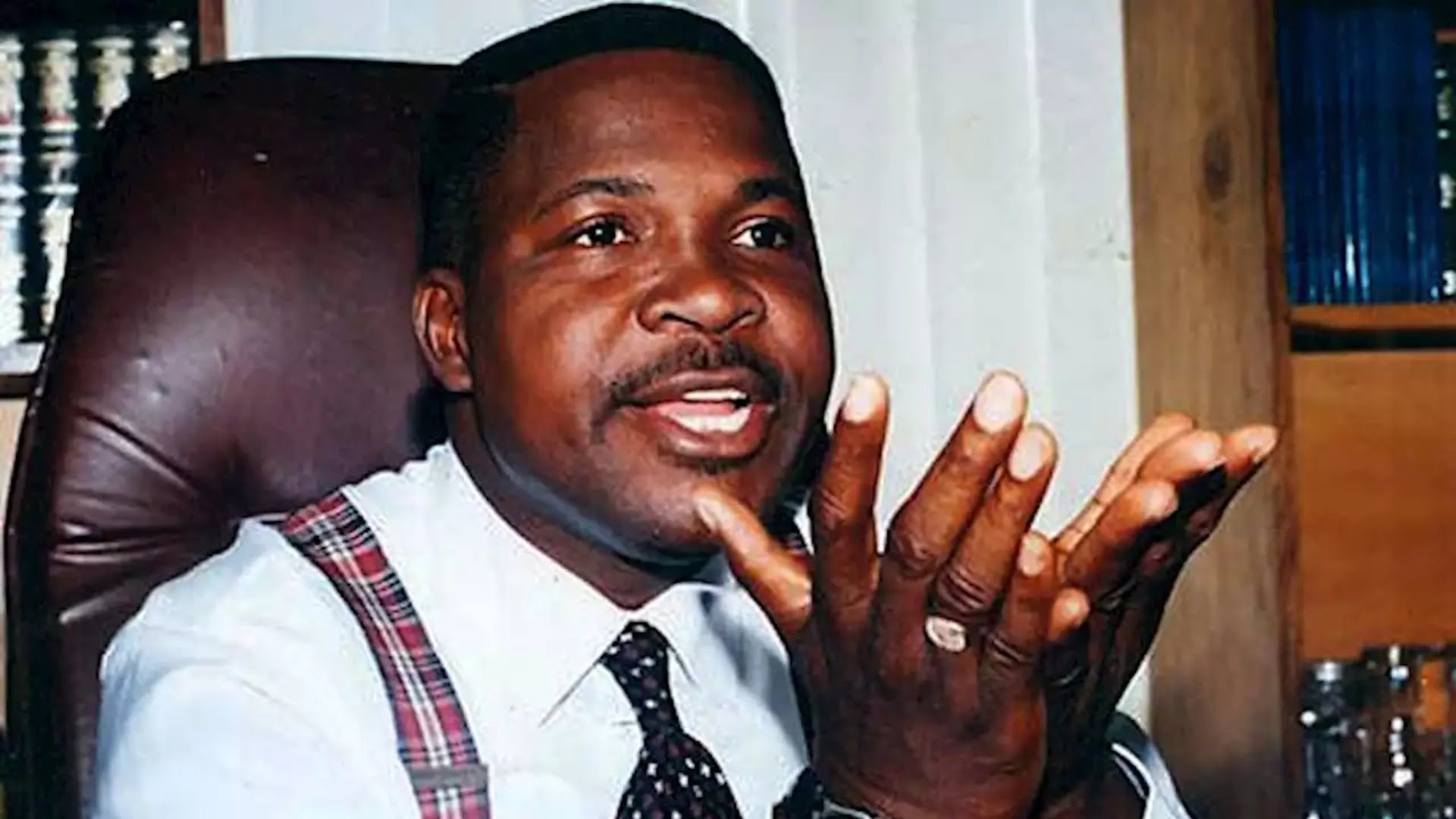
By Mike Ozekhome SAN
INTRODUCTION
In the 1st part of this treatise, we set the tone by examining its meaning with the aid of historical sketches and nuggets. Today’s feature explores power generally and man’s dominion over it, political power, it’s abuse – noting the ephemerality of life itself. I pose the question: ‘what is power?’. I then observe that God controls men of power, concluding that nothing lasts forever. Enjoy
POWER AND MAN’S DOMINION
Power is as old as the creation of the world. The first expression of power was by God – when he created the Heavens and the Earth. [Genesis 1 v. 1 – 2]. The Qur’an states that ‘Allah created the heavens and the earth, and all that is between them.’ [7:54].
God proceeded to create man in His own image and likeness when he said, ‘Let us create man in our image, to our likeness. Let them rule over the fish of the sea, over the birds of the air, over the cattle, over the wild animals, and over all creeping things that crawl along the ground.’ [Genesis 1 v. 27]. This means that man looks like God and possesses the attributes of God – with absolute dominion [power] over all things created by God. Psalm 82 puts it poignantly: “I said, you are “gods”; you are all sons of the MOST HIGH”.
POLITICAL POWER AND ITS ABUSE
In the labyrinthine corridors of political power, a captivating dance of death unfolds- where the mighty ascend to the throne with the grandeur of illusion and tall promises, only to find themselves ensnared in the maze and quagmire of their own making. Such is the hypnotic and seductive tale of power and its ephemeral grip on those who wield it. In the Nigerian political landscape, this narrative has played out time and again, as public officeholders have succumbed to the allure of authority, often leading to the abuse, misuse and disuse of power.
Edmund Burke was on target when he admonished that “the greater the power, the more dangerous the abuse”. The reason is that in the words of Paul Harris, “personality has power to uplift, power to depress, power to curse and power to bless.”
LIFE ITSELF IS EPHEMERAL
The ephemeral nature of power, as highlighted in religious texts such as the Holy Bible and the Holy Quran, emphasizes the transient and fleeting nature of human existence and the potential pitfalls of wielding power in a capricious, whimsical, arbitrary and unconscionable manner, without humility, righteousness and due regard to those at the receiving end.
In James 4:14 of the Bible, it is expressed that humans do not have control over what will happen in the future. Life is compared to a vapor that appears for a short time and then vanishes away. Hear James: “Why, you do not even know what will happen tomorrow. What is your life? You are a mist that appears for a little while and then vanishes.” This metaphor conveys the brevity and fragility of human life. It also suggests that power, like life itself, is temporary and also dissipates rapidly. Similarly, the Quran, in verse 28:76, narrates the story of Korah, a person of power during the time of Moses. Korah abused his authority and tyrannized his people. He was granted immense wealth and treasures that “even their keys would burden a group of strong men”. So, his people advised him, “Do not be prideful. Surely, Allah does not like the prideful.” The supremacy of divine power surpasses the transience of mortal power. God stands as the ultimate force to be acknowledged, while humanity’s existence is temporary. As they say, “Soldier come, Soldier go, Barracks remain”.
The Legendary musical icon, Prince, once said passively that, “But life is just a party, and parties weren’t meant to last.”
The historical Chinese politician and poet, Li Shang-yin, also told us that, “And a moment that ought to have lasted for ever has come and gone before I knew.”
The much celebrated Indian author, Krishna Udayasankar, also echoed this, “No empire lasts forever, no dynasty continues unbroken. Someday, you and I will be mere legends. All that matters is whether we did what we could with the life that was given to us.”
I once a read mesmerizing poem that is engraved in my everyday thought of action. It was a poem written by the highly celebrated English poet, Percy Shelly– “Ozymandias”. This was the first foremost metaphor for the ephemeral nature of power. It was written in a parlance – depicting a traveler telling the speaker a story about two vast legs of stone standing without a body, and near them, a massive, crumbling stone head lies ‘half sunk’ in the sand. The words on the statute read thus: “My name is Ozymandias, king of kings: Look on my works, ye Mighty, and despair! But today, the statute is broken and even decayed, where is the self-acclaimed king?”.
Same long-living Biblical figures still died anyway: Adam (930 years); Seth (912); Kenan (910); Noah (950) and Jared (962).
Even Methuselah reputed to be the longest-lived human whose lifespan was recorded as 969 years in Gen 5:27, still kissed the dust. When man became swollen-headed and too sinful, God cut his age to a maximum of 120 years (Gen 6:3). This God’s ceiling of human lifespan is why the oldest ever recorded Guinness Book of Records human being is Branyas of Spain who lived for 113 years and 364 days.
YET, GOD CONTROLS MEN WHO CONTROL POWER
With this observation, a compelling pattern emerges, a thought-provoking notion that everything, as if orchestrated by the hands of time, may eventually and inexorably reach its transient conclusion.
The terrific Nebuchadnezzar, King of Babylonian, reigned for so many years. After his great fall, and having come to true repentance, acknowledged the unlimited and unending power and greatness of God, thus: ‘The matter is by the decree of the watchers, and the demand by the word of the holy ones: to the intent that the living may know that the Most High ruleth in the Kingdom of men, and giveth it to whomsoever HE will, and setteth up over it the basest of men.’ [Daniel 4 – 1].
SO, WHAT IS POWER?
An American writer – Robert Green, popular for writing international books on human nature, all power-related, was asked the meaning of power. This was his response: “Power is the measure of the degree of control you have over circumstances in your life and the actions of the people around you. It is a skill that is developed by a deep understanding of human nature, of what truly motivates people, and of the manipulations necessary for advancement and protection”.
Returning to the nucleus of our riposte, let us embark on an expedition through the intriguing Nigerian terrain, shedding more light on the fleeting nature of assumed dominion bestowed upon the fortunate wielders of power.
Picture this: Nigeria is a land of vast potentials and immense diversity, where power dynamics dance like fickle flames in the wind. It is a place where nondescript politicians rise to sudden prominence like shooting stars, captivating a tired nation with alluring promises of change, progress, and prosperity. In my Ozekpedia, I once called the “Politrictians” who practise “Politricks”. (See Nigerian “Politricks” and the Politrictians“ https://nigeriaofourdreams.wordpress.com/ November 4, 2014). But alas, as the old saying goes, “Power corrupts, and absolute power corrupts absolutely.” In this case, it also evaporates like water in the Sahara. In 1655, King Louis XIV of France proudly stood in front of Parliament and imperiously declared, “L’etat C’est Moi” (meaning, “I am the State”. This was to accentuate his complete hold on power to the total exclusion of all other lesser mortals. (See https://en.wikipedia.org/wiki/L%27%C3%89tat, _c%27est_moi, February 7, 2024).
Oh, how we have witnessed the Nigerian political stage transform into a theatre of comedy, tragedy and the absurd; an Odeon where the script is written by fate itself. We have seen leaders sprinting towards power, like Usain Bolt, fueled by sheer ambition and infatuation rhetoric, only to stumble and fall on banana peels of their own making. It is as if there is a cosmic prankster, ever delighting them in the ironic twists and turns of political fortune.
Even an era of authoritarian rule or maximum dictatorship no longer guarantees a leader’s everlasting hold on power. While it may prolong their tyrannical reign, as seen in many cases, their grip must one day end. In history, we have seen long-lasting dictators like Nguema Mbasogo, Omar Bongo, Kim ll Sung, Muammar Gaddafi, Ali Khomeini, Sassuo Nguesso, Gnassingbe Eyadema, Paul Biya, Hun Sen, Yoweri Museveni, Omar Al-Bashir, Saddam Hussein, Haile Selassie and Ferdinand Marcos.
Dictators’ and rulers’ rule is inevitably bound to reach its end, sometimes through violent means, as witnessed in the fate of certain long-standing dictators. Even King Louis XIV who ruled the kingdom of France for 72 years, 3 months and 18 days, still bit the dust. Ditto Sobhuza II who ruled Swaziland for 82 years and 254 days, same with Min Hti of Arakan who ruled in the Kingdom of Arakan for 95 years. What about Pepi II Neferkare, who ruled the Kingdom of Egypt for 94 years? They all went the way of all mortals. They became mere dust. Furthermore, the limitations of human lifespan must be taken into account. An individual’s productive years typically fall within the 40 to 50-year range, following a normal distribution pattern known as the “Poisson” distribution. This implies that their most fruitful years span from ages 25 to 75, with the peak occurring between 35 and 65. Considering these factors, the window of power becomes remarkably narrow and encroaches upon the more enjoyable stages of life. Observing some politicians’ desperate and suicidal maneuvers to cling to power forever, one wonders if they harbor the illusion of immortality.
NOTHING LASTS FOREVER
Nothing lasts forever, even this life is vanity upon vanity. [Ecclesiastes 1:2 – 8 KJV]. In William Shakespeare’s epic in Macbeth, Macbeth himself tells, “Life’s but a walking shadow, a poor player that struts and frets his hour upon the stage and then is heard no more: it is a tale told by an idiot, full of sound and fury, signifying nothing.” (Act V, Scene V).
(To be continued).
THOUGHT FOR THE WEEK
“The vanity of human life is like a river, constantly passing away, and yet constantly coming on.” (Alexander Pope).
Related
You may like
The Oracle
The Oracle: The University As a Catalyst for Societal Development (Pt. 1)
Published
6 days agoon
December 12, 2025By
Eric
By Prof Mike Ozekhome SAN
ABSTRACT
Universities are not merely centres of learning but pivotal institutions that shape and sustain societal transformation. Positioned at the nexus of knowledge, innovation, and culture, they serve as engines of human capital formation, research, and socio-economic development. Their influence extends far beyond academic instruction: in developing societies grappling with political instability, economic challenges, and social inequities, universities have emerged as critical actors in nurturing critical thought, producing socially responsible graduates, and driving social reform. They contribute not only to national progress but also to regional and local development, acting as hubs of expertise, employers of labour, incubators of innovation and integrators of public policy.
By influencing governance, shaping labour market and skills policies, fostering entrepreneurship, and promoting sustainable development, universities play a unique role as catalysts for inclusive growth. Yet, their transformative capacity is often constrained by structural challenges such as underfunding, weak governance, and limited research–industry linkages. Drawing on theoretical perspectives and global best practices, this paper argues that universities can be repositioned as dynamic agents of societal change if granted greater autonomy, strengthened through research investment, and embedded in robust partnerships with government, industry, and civil society. Ultimately, the vitality of a society is mirrored in the strength and responsiveness of its universities.
KEYWORDS: Universities; Societal Transformation; Human Capital Development; Innovation Ecosystems; Higher Education Policy; Governance and Autonomy; Sustainable Development; Civic Engagement; Public Policy Reform.
INTRODUCTION
Different metaphors have long been used to capture the complex relationship between higher education and societal development in concise and memorable ways. The first is mechanical (https://www.researchgate.net/publication/387801956_Universities_as_Catalysts_for_Social_Transformation_in_Developing_Countries#:~:text=The%20role%20of%20universities%20in,also%20in%20driving%20social%20reform> accessed 7 September 2025): higher education is an engine, powerhouse, driver, dynamo, booster, accelerator, or lever of growth and prosperity, suggesting that the pace of regional and national progress is set within the university. The second is biological: universities as hothouses, seedbeds, breeding grounds, spawning places, catalysts, or fermenters, sites where ideas sprout, blossom and reinvigorate society through innovation. The third is network-oriented: universities as nodes, hubs, bridgeheads, mediators, transfer points, or transmission centres, emphasising their role in disseminating knowledge and linking government, industry and communities. Finally, the temporal metaphors portray universities as the spearheads, vanguards, lighthouses, and signposts of transformation, guiding society through periods of change.
Yet the university is not merely a catalogue of metaphors. It is not a mere edifice of stone and chalk, nor simply a marketplace where degrees are traded and rituals observed. It is, in truth, the living citadel of knowledge, the intellectual furnace where the raw ore of youthful potential is refined into the gold of human capital. At its best, the university is both the conscience and the compass of society: diagnosing its maladies, prescribing its cures, and charting its course into the future. To reduce it to a certificate mill is to misunderstand its sacred function and to weaken the very foundations of national development.
Consider, for instance, the metaphor of the catalyst. In the laboratory, a catalyst accelerates transformation without itself being consumed. So too must the university serve as the silent accelerator of societal progress, shaping minds, equipping hands, and moulding character while standing as a permanent reservoir of knowledge, values, and innovation. Through it, theory becomes praxis, and research becomes a weapon against poverty, disease and ignorance.
History testifies to this catalytic role. The Renaissance was mid-wifed by the universities of Bologna, Paris, and Oxford (Wikipedia, History of European Universities, https://en.wikipedia.org/wiki/History_of_European_universities> accessed 7 September 2025); the scientific revolutions that ushered in modernity were incubated within their walls. Even today, the technological marvels that define the twenty-first century from breakthroughs in medicine to advances in engineering and digital innovation are birthed in university laboratories and lecture halls.
But beyond science and technology, the university also shapes culture and character. It produces not only doctors and engineers, but statesmen, reformers and thinkers. It tempers technical knowledge with moral vision, reminding us that wisdom without values can be destructive. It challenges assumptions, disciplines impulses and prepares future leaders not merely for making a living, but for living lives of service and sacrifice.
Thus, when we describe the university as a catalyst for societal development, we are not indulging in rhetorical flourish. We are stating a sober truth: no nation has ever risen above the quality of its universities, and none ever will. The strength of the classroom is reflected in the courtroom, the marketplace, and the parliament. The decay of the university is the decay of the nation itself. If the university rises, society advances; if the university falls, society crumbles. The stakes could not be higher.
DEFINITION OF TERMS
UNIVERSITY
A university is far more than a cluster of buildings where lectures are delivered and examinations conducted. At its core, it is an institution of higher learning and research, uniquely mandated to generate, preserve, and disseminate knowledge across disciplines (Wikipedia, “University” https://en.wikipedia.org/wiki/University#cite_ref-WordNet_Search_u476_1-0 > accessed 8th September 2025). Unlike earlier stages of education, which focus on absorbing established facts, the university emphasizes inquiry, critique, and innovation. It is here that theories are tested, discoveries made, and society furnished with the intellectual capital needed for progress. Rooted in the Latin universitas magistrorum et scholarium (meaning “a community of teachers and scholars”) (https://www.byui.edu/speeches/dallin-hansen/seeking-the-higher-view> accessed 8th September 2025
), the university represents a fellowship of minds devoted to truth, dialogue, and discovery. It is not simply a transmitter of knowledge, but a creator of it, standing as both a timeless custodian of wisdom and a timely responder to the needs of each age.
EDUCATION
Education is the systematic process of imparting and acquiring knowledge, skills, and values; formally or informally. It equips individuals with reasoning ability, judgment, and intellectual maturity. Formal education takes place in structured settings such as schools and universities, while informal education occurs through family, community, and other social interactions. At every level, education provides the foundation for personal growth and societal advancement.
SOCIETAL DEVELOPMENT
Societal development refers to the sustained improvement in a community’s well-being and collective capacity. It encompasses economic growth, improved social structures, access to quality public services, individual empowerment, and institutional strength. True development also requires social inclusion, equity, and sustainability, ensuring that progress today does not compromise the welfare of future generations.
HUMAN CAPITAL DEVELOPMENT
Human capital development is the process of enhancing individuals’ knowledge, skills, health, and productivity to unlock their potential and advance both economic and social progress. It involves deliberate investments in education, training, and healthcare, producing a workforce that is innovative, competitive, and equipped to drive sustainable national growth.
INNOVATION ECOSYSTEM
An innovation ecosystem is a dynamic network of interdependent actors such as entrepreneurs, firms, governments, universities, and investors working collaboratively to transform ideas into impactful solutions (https://share.google/awi0YhHoT1VD7aG4E > Accessed on 9th September, 2025). These ecosystems thrive on continuous interaction, resource sharing, and co-evolution, creating the environment necessary for sustained innovation, economic growth, and societal transformation.
THE HISTORY OF UNIVERSITIES AND TERTIARY INSTITUTIONS GLOBALLY
The idea of the university as we know it today did not emerge in a vacuum. It is the product of centuries of intellectual struggle, cultural refinement, and institutional development. To appreciate its role as a catalyst for societal progress, one must first understand its historical roots and the trajectory of its growth.
Ancient Foundations of Higher Learning
The earliest prototypes of the university can be traced to ancient centers of learning such as the Platonic Academy in Athens, the Library of Alexandria in Egypt, and the great schools of philosophy in India and China. These institutions were not universities in the modern sense, but they established traditions of advanced learning, debate, and preservation of knowledge that influenced later models.
Renaissance Humanism and the Scholarly Revolution
The Renaissance and Enlightenment eras transformed the university into an even more powerful agent of change. Humanism encouraged a rediscovery of classical texts, and universities became custodians of not only religious knowledge but also literature, science, and art. By the 14th and 15th centuries, figures such as Petrarch and Boccaccio began to challenge scholastic traditions, promoting grammar, rhetoric, poetry, moral philosophy, and history as central disciplines. Although humanism initially developed outside the universities—in princely courts, chancelleries, and academies—it soon penetrated academia. By the mid-15th century, humanist scholars like Lorenzo Valla were holding university professorships, and institutions such as Bologna and Florence had created chairs in Greek and humanistic studies.
This infusion of humanism altered the outlook of medicine, law, and philosophy. Medical humanists, for example, used philological techniques to critique both medieval and ancient medical texts, reshaping the discipline. While law and theology resisted transformation, natural philosophy and medicine were deeply influenced. By the 16th century, humanism and universities were intertwined, and their joint legacy paved the way for the Scientific Revolution.
The Rise of the Medieval European University
The University of Bologna, founded in 1088, is widely regarded as the first modern university . It was primarily a law school, devoted to the systematic study of Roman law, which became essential for the administration of European kingdoms. What distinguished Bologna was not merely the subjects taught but also its institutional structure: it was organized as a universitas, a guild of students and masters bound together in the pursuit of knowledge.
In 1150, the University of Paris followed, excelling in theology and philosophy, and soon after came Oxford and Cambridge in England, Salamanca in Spain, and Heidelberg in Germany. These institutions became the intellectual nerve centers of medieval Europe, training clerics, lawyers, physicians, and statesmen. The early universities were deeply intertwined with the Church, which provided both patronage and regulation. Theology was regarded as the “queen of the sciences,” while philosophy, law, and medicine were cultivated under its shadow. Yet, even within this religious framework, universities nurtured critical inquiry. It was within their walls that scholasticism: the rigorous method of logical reasoning, flourished, preparing the intellectual ground for the Renaissance.
To be continued
THOUGHT FOR THE WEEK
“All that is valuable in human society depends upon the opportunity for development accorded the individual”. (Albert Einstein).
Related
The Oracle
The Oracle: When a Nation Undermines Citizens’ Rights (Pt. 4)
Published
2 weeks agoon
December 5, 2025By
Eric
By Prof .Ike Ozekhome SAN
INTRODUCTION
In our last outing on this treatise, we addressed the operational weaknesses and structural mismanagement of the Police; the failure of internal accountability; collusion of its men with criminal networks; erosion of civil liberties by its illegitimate enforcement practices; and cycle of impunity. And later followed by analysis of the abuse of judicial power as well as executive lawlessness directed at the Bench. We then concluded with suggested pathways and recommendations. Today, we shall continue with the same theme focusing on strengthening judicial independence; institutionalizing a comprehensive anti-corruption framework; enhancing the protection of civil liberties; community-based security initiatives; electoral integrity; transparency in the public sector; protecting vulnerable and marginalized groups as well as institutionalizing a culture of consequences. Enjoy.
Judicial Strengthening and Independence
The Judiciary should be insulated from political interference through secure tenure, adequate remuneration, and independent budgetary control. Court processes must be digitized to reduce delays and enhance transparency. Special courts should be created to fast-track cases of corruption, rights violations, and electoral offences so as to prevent them from being lost in a backlog of other matters.
Comprehensive Anti-Corruption Framework
Anti-corruption agencies must operate without political bias. Investigations and prosecutions should be based solely on evidence, regardless of the political or social standing of the suspect. Asset recovery processes should be transparent, and recovered funds must be channeled directly into public services such as healthcare, education, and infrastructure.
Strengthening of Civil Liberties Protections
Security laws and policies must be reviewed to remove provisions that allow arbitrary arrests, prolonged detention without trial, and excessive surveillance. The rights to free expression, peaceful assembly, and privacy should be reaffirmed through legislation, judicial precedent, and administrative directives. Security personnel should receive specific training on respecting these rights in the course of their duties.
Enhanced Community-Based Security Initiatives
Community policing structures should be developed in partnership with local stakeholders, including traditional leaders, civil society, and youth groups. These initiatives should focus on early conflict detection, intelligence sharing, and non-violent dispute resolution. Proper integration of community policing into the national security architecture can improve trust and cooperation between citizens and the State.
Electoral Integrity and Protection of the Political Process
To reduce politically motivated violence, security forces must adopt a neutral stance in elections and enforce the law impartially. Electoral offenders, including those within security agencies, must face swift prosecution. The deployment of technology in elections, such as biometric verification, should be protected by strong legal safeguards to prevent manipulation. More importantly, the Electoral Act must be urgently amended to include the use of BIVAS, electronic voting and real time transfer of results into IReV.
Public Sector Transparency and Open Data
Transparency in governance can significantly reduce opportunities for abuse of power. All government agencies should be required to publish regular reports on budgets, procurement, and performance indicators. Public access to information should be enhanced through stronger Freedom of Information laws and proactive disclosure of records.
Protection of Vulnerable and Marginalized Groups
Special attention should be given to protecting women, children, marginalized vulnerable persons and minorities and communities, who are disproportionately affected by rights violations and insecurity. Law enforcement and judicial olicers should be trained to handle cases involving such vulnerable groups with sensitivity. Dedicated units within security agencies should be tasked with preventing and responding to gender-based violence, child labour, human trafficking and exploitation.
Institutionalizing a Culture of Consequence
The single most important factor in ending impunity is ensuring that misconduct always attracts consequences. Disciplinary actions, criminal prosecutions and public reporting of case outcomes should become the norm. Political leaders must set the example by submitting themselves to the rule of law. They must lead by example and not by precepts.
CONCLUSION
The challenges confronting Nigeria in the areas of security, protection of citizens’ rights and enforcement of the rule of law are deeply rooted in a pattern of institutional neglect and governance failure. Throughout this work, it has become evident that insecurity in the country is not only result of violent crime or terrorism but also a product of weak and compromised institutions that allow such threats to flourish. When the very institutions tasked with safeguarding the people become unreliable or complicit, the result is a petrified environment where justice is selective, rights are precarious, and the social contract between citizens and the State is broken.
The evidence is clear that insecurity in Nigeria is a multi-dimensional crisis. Political violence undermines democratic processes. Economic hardship is exacerbated by corruption and the diversion of resources. Physical insecurity in many regions persists because law enforcement is either absent or compromised. The deterioration of education and healthcare further exposes the population to long-term instability. Each of these problems is interconnected and magnified by the failure of the justice and enforcement systems to function impartially and effectively.
Civil liberties, guaranteed by the Constitution and supported by international treaties, are repeatedly undermined by arbitrary arrests, unlawful detentions, and the suppression of free expression. When citizens live in fear of those entrusted to protect them, the legitimacy of the State is called into question. A society where speaking out invites retaliation and where wrongdoing by the powerful is met with silence or even approbation cannot claim to uphold the principles of democracy and justice.
The normalization of impunity is perhaps the most dangerous of all the trends identified. Impunity corrodes public trust, emboldens offenders, and creates a culture where breaking the law is not an aberration but an accepted norm of political and social life. Without decisive action to reverse this culture, every other reform will be weakened before it begins to take root.
Nigeria’s peculiar security realities demand a holistic approach. This includes rebuilding law enforcement into a professional, rights-respecting institution, ensuring the judiciary is free from political interference, and creating genuine accountability mechanisms that apply to everyone regardless of status. It also requires an investment in transparency, community trust, and the protection of vulnerable groups who suffer most from both insecurity and rights violations.
The task is undeniably challenging, but it is not impossible. The pathway to a more secure and just Nigeria begins with the recognition that true security cannot exist without justice, and justice cannot thrive without the rule of law. By committing to comprehensive reforms and by holding both leaders and institutions accountable, Nigeria can reclaim the promise of a society where rights are protected, laws are respected, and security is the shared foundation for national progress. In all these, one may ask, where is the Bar and what is its historic role? A once vibrant Association feared by the corrupt and dreaded by all successive governments has since become comatose, hardly responsive to societal needs. Aside many lawyers now professionally practising Bar instead of practising law by oscillating from one office to another over a period of decades, what has the Bar got to show for its continued relevance in terms of interrogating the status quo and challenging impunity? How has the Bar fared in holding governments responsible and accountable to the Nigerian people? Aside converging every year at designated venues for the annual ritual of the AGC, what dividends have we yielded from our usual banal communiqué?
How have we pushed to ensure we engaged the three arms of government to overhaul or at least improve on the status quo? Can we now blame some lawyers who are increasingly feeling disenchanted with the status quo and seek alternative platforms such as the Nigerian Law Society (NLS)? I think not. Colleagues, let us as lawyers and Judges wake up from our deep slumber of complicit silence and stop seeing law solely as a bread-and -butter profession. We must see law from the prism of Professor Dean Roscoe Pound-an instrument of social engineering. Anything short of this is not befitting of the legal profession. (Concluded).
THOUGHT FOR THE WEEK
“We cannot reform institutional racism or systemic policies if we are not actively engaged. It’s not enough to simply complain about injustice; the only way to prevent future injustice is to create the society we would like to see, one where we are all equal under the law”. (Al Sharpton).
Related
The Oracle
The Oracle: When a Nation Undermines Citizens’ Rights (Pt. 3)
Published
3 weeks agoon
November 28, 2025By
Eric
By Prof Mike Ozekhome SAN
INTRODUCTION
The last installment of this series continued from where the inaugural one stopped: the analogy of each corpse buried without justice being a clause in the Constitution buried in effigy. It then explained how inequality breeds violence, before moving onto how systemic lapses in law enforcement is the hidden engine of insecurity and erosion of rights. Later, it examined the contrast between constitutional mandate and institutional reality, followed by the politicization and weaponization of law enforcement; corruption as operational culture; and finally operational weaknesses and structural management. The week, we shall continue with same theme, after which we shall delve into the failure of internal accountability; collusion with criminal networks; erosion of civil liberties through enforcement practices; the cycle of impunity; abuse of judicial power and executive lawlessness targeted at the Bench. Thereafter, we shall consider various pathways and recommendations for addressing insecurity, rights protection and institutional weakness. Enjoy.
OPERATIONAL WEAKNESSES AND STRUCTURAL MISMANAGEMENT
Nigeria’s police-to-population ratio remains alarmingly low. With about 371,800 officers serving a population of over 236 million people, the country is well below the United Nations’ recommended benchmark of 222 officers per 100,000 people. This manpower gap severely hampers the Force’s capacity to tackle crime, especially in volatile areas plagued by insurgency and communal violence. To make matters worse, many of the limited officers available are deployed to safeguard high-profile politicians and elites rather than serving the broader public. In rural communities, especially in conflict-affected northern states, residents report waiting hours, sometimes days, for police to respond to distress calls, if they ever respond at all.
Compounding this problem is inadequate training. Many recruits receive minimal exposure to forensic methods, human rights protocols, or community policing principles. As a result, investigative work relies heavily on confessions, which are frequently extracted through coercion or torture. This not only violates constitutional guarantees against inhuman treatment but also produces unreliable evidence that weakens prosecutions.
Logistical deficits are equally damaging. Many police divisions operate without functioning patrol vehicles, secure communication equipment, or modern crime labs. The Inspector General of Police has acknowledged that, outside of Lagos, forensic capability is virtually non-existent. Without scientific investigation, crimes are either left unsolved or result in wrongful arrests, further undermining public trust
FAILURE OF INTERNAL ACCOUNTABILITY
In a functioning democracy, law enforcement personnel are subject to robust oversight, both internally and through independent bodies. In Nigeria, oversight mechanisms exist in name but not in consistent practice. The Police Service Commission (PSC), which is meant to handle recruitment, promotion, and discipline, is itself politically influenced and suffers from inadequate funding. Complaints of misconduct often disappear into opaque disciplinary processes, and there is little transparency about the outcomes.
When abuses are too public to ignore, as with the October 2020 End SARS protests, Commissions of Inquiry are established, testimonies are heard, and reports are submitted. Yet, implementation of recommendations remains rare. In Lagos, for example, despite the panel’s findings implicating specific officers in excessive force and unlawful killings, few have been prosecuted. Instead, many have returned quietly to duty. This pattern sends a dangerous message to the rank-and-file officers: violations carry reputational risk but rarely legal consequence.
COLLUSION WITH CRIMINAL NETWORKS
Perhaps the most alarming dimension of enforcement failure is the documented collusion between security personnel and criminal actors. In the Niger Delta, security forces have been implicated in illegal oil bunkering, the very crime they are deployed to prevent. In parts of the North-West, reports from Amnesty International and local media allege that bandit groups pay “protection fees” to avoid military or police raids.
Such collusion transforms law enforcement from an adversary of crime into a stakeholder in it. This is not merely passive negligence; it is active participation in the shadow economy of insecurity. In these areas, communities quickly learn that reporting crimes may not only be futile but dangerous, as information shared with authorities can be leaked to perpetrators.
EROSION OF CIVIL LIBERTIES THROUGH ENFORCEMENT PRACTICES
The systemic lapses in law enforcement also directly erode civil liberties. Arbitrary arrests, prolonged detentions without trial, suppression of lawful assembly, and harassment of journalists are not isolated acts but part of an entrenched enforcement culture. The constitutional right to personal liberty under Section 35 is regularly violated under the guise of maintaining public order.
Protesters face preemptive crackdowns, often justified by vague references to national security. During the #Revolution Now protests in 2019, dozens of demonstrators were detained, some for weeks, without formal charges. In many cases, court orders for their release were ignored by security agencies, underscoring the absence of legal consequence for disobedience of judicial authority.
This disregard for civil liberties creates a chilling effect on political participation and civic engagement. Citizens learn that speaking out carries personal risk, and self-censorship becomes a survival strategy. Over time, this quietens public dissent, enabling further abuses by both government and non-state actors.
THE CYCLE OF IMPUNITY
The combination of politicization, corruption, operational weakness, and lack of accountability feeds into a self-reinforcing cycle of impunity. Officers learn that their actions are judged not by legality but by political expediency. Politicians, in turn, see law enforcement as a tool to protect themselves and punish adversaries. Criminal networks exploit these gaps, securing protection through bribery or political patronage.
Once entrenched, this cycle is difficult to break. Each unpunished violation becomes a precedent, normalizing the idea that power grants immunity from the law. This normalization spreads beyond law enforcement to other institutions, eroding the very foundations of democratic governance.
THE ABUSE OF JUDICIAL POWER AND EXECUTIVE LAWLESSNESS AGAINST THE BENCH
In a functioning democracy, the judiciary serves as the impartial referee between the powerful and the powerless. It is the last line of defence for the citizen and the final hope for justice. But what happens when that sacred institution itself becomes the object of aggression? What happens when the enforcers of state power turn their weapons not on criminals, but on the judges who interpret the law? Nigeria confronted these very questions in October 2016, when the homes of senior judges across the country were invaded by heavily armed operatives of the Department of State Services under the cover of night.
These raids, carried out in Abuja, Gombe, and Port Harcourt, targeted some of the most senior members of the judiciary, including Justices Walter Onnoghen and Sylvester Ngwuta of the Supreme Court, and Federal High Court judges Adeniyi Ademola and Nnamdi Dimgba. The DSS claimed they were investigating corruption, yet their conduct betrayed a more sinister motive. Homes were stormed in Gestapo fashion, judges were treated like fugitives, and search warrants reportedly carried incorrect names or were not presented at all. The judiciary was under siege. In Rivers State, Governor Nyesom Wike arrived at the residence of one of the judges to intervene and was reportedly shoved, injured, and threatened by DSS operatives. It was not an arrest. It was a constitutional assault.
I spoke firmly and publicly against this invasion. I said then what I still affirm now: the DSS acted outside the bounds of the law. As I told journalists and as reported by Premium Times, the operation was not only illegal and unconstitutional but a dangerous desecration of the rule of law. No agency of government, including the DSS, has the authority to arrest or search the premises of serving judicial officers without going through the National Judicial Council, which is constitutionally empowered to discipline judges. If there are allegations of corruption, there is a process. That process was willfully ignored. What we saw instead was a show of force meant to intimidate and humiliate. It was executive lawlessness under the guise of anti-corruption.
The greatest tragedy, however, was not merely that these events occurred. It was the manner in which they were received. The Bar, which ought to have risen as a united force, was sluggish in its response. Statements were issued, but no real action followed. There were no mass protests, no urgent court filings to challenge the illegality. The judiciary itself offered little more than murmurs of disapproval. That silence was deafening. It spoke to a larger issue: the slow death of institutional courage. When judges are raided in their homes and lawyers look away, then the entire legal profession stands indicted. If we cannot defend our own, how then can we defend the people?
This unfortunate episode also calls into question the internal health of the judiciary. The Nigerian Law Society recently criticized the widespread abuse of power within judicial institutions, pointing to opaque appointments, poor welfare, and inconsistent rulings. According to their statement reported by the Guardian, the lower courts remain underpaid and under-respected, leaving many judicial officers vulnerable to compromise. It is undeniable that some within the judiciary have failed in their duties, and that corruption has indeed crept into its chambers. However, even in the face of that, the remedy is never brute force. It is lawful accountability, constitutional procedure, and institutional reform. The rule of law must never be sacrificed on the altar of expediency.
When security agents raid the homes of judges without due process, they are not upholding the law, they are undermining it. And when the legal community reacts with silence or justification, it invites a repeat. What began with judges will not end there. Such violations set a precedent that can easily extend to journalists, lawmakers, academics, and eventually, ordinary citizens. Today it is the gavel. Tomorrow it will be the pen, the vote, the voice. That is how authoritarianism begins not always with a declaration, but often with silence.
It is not too late to reset the balance. But we must remember that a judiciary that submits to fear is no judiciary at all. A legal profession that only whispers in the face of injustice is unworthy of its robes. We must return to our roots, as defenders of liberty and protectors of due process. Let the judiciary regain its independence, and let the Bar reclaim its courage. Only then can we begin to restore the broken faith between the Nigerian people and the system that was meant to serve them.
PATHWAYS AND RECOMMENDATIONS FOR ADDRESSING SECURITY, RIGHTS PROTECTION, AND INSTITUTIONAL WEAKNESS IN NIGERIA
The challenges outlined in this paper reveal a complex web of governance failures, enforcement gaps and systemic disregard for constitutional rights. Addressing these issues requires deliberate and sustained action across multiple fronts. The following ten pathways provide a practical blueprint for reform.
Reform of Law Enforcement Institutions
The Nigerian Police Force, the Department of State Services, and related agencies need deep structural reforms. Recruitment should be based on merit and integrity rather than political patronage. Training should include human rights education, forensic investigation, and conflict-sensitive community policing. The practice of diverting a large proportion of officers to serve political elites must be stopped so that policing resources are redirected toward public safety.
Creation of Independent Oversight and Accountability Mechanisms
A civilian-led oversight authority should be established with the power to investigate and prosecute cases of misconduct by law enforcement officials. This body must have full access to records, the ability to compel testimony, and legal safeguards for whistleblowers. Its findings should be made public to ensure transparency and build trust. (To be continued).
THOUGHT FOR THE WEEK
“Money and corruption are ruining the land, crooked politicians betray the working man, pocketing the profits and treating us like sheep, and we’re tired of hearing promises that we know they’ll never keep” – Ray Davies
Related


Mike Adenuga, Emmanuel Macron Hold High-Powered Meeting in Paris
Free at Last: Burkina Faso Releases 11 Nigerian Soldiers, Aircraft
Corruption Allegations: NMDPRA Boss Farouk Ahmed Meets Tinubu, Resigns
I’m Ready for Probe, NMDPRA Boss Farouk Ahmed Responds to Dangote’s Corruption Allegation
No Court Order Against Tinted Glass Permit Enforcement, Police Insist
Alleged Corrupt Practices: Dangote Petitions ICPC Against NMDPRA MD Farouk
US Congressman Recounts Harrowing Experience in Nigeria, Confirms ‘Systematic Genocidal Campaign’
2027: Nigeria Sliding into ‘Fanatical Governance’, Momodu Blasts APC, Submissive Legislature and Weak Opposition
There’s No Govt in Nigeria, Tinubu is the Person in Power – Dele Momodu
Rebuilding the Pillars: A Comprehensive Blueprint for Overcoming Nigeria’s Leadership Deficit
Corruption! Tinubu Tackles ‘Buhari Boys’
Voice of Emancipation: Nicolas Maduro is a Goner
Threat Against Nigeria’s Multi-Party Democracy: Atiku, Obi, George, Others Accuse Tinubu of Plot to Annihilate Opposition
OAU: MicCom Institutes Financial Awards for Best Graduating Student, Producing Dept
Trending
-
Featured6 days ago2027: Nigeria Sliding into ‘Fanatical Governance’, Momodu Blasts APC, Submissive Legislature and Weak Opposition
-
Featured5 days agoThere’s No Govt in Nigeria, Tinubu is the Person in Power – Dele Momodu
-
Opinion5 days agoRebuilding the Pillars: A Comprehensive Blueprint for Overcoming Nigeria’s Leadership Deficit
-
Headline4 days agoCorruption! Tinubu Tackles ‘Buhari Boys’
-
Voice of Emancipation4 days agoVoice of Emancipation: Nicolas Maduro is a Goner
-
Headline4 days agoThreat Against Nigeria’s Multi-Party Democracy: Atiku, Obi, George, Others Accuse Tinubu of Plot to Annihilate Opposition
-
News4 days agoOAU: MicCom Institutes Financial Awards for Best Graduating Student, Producing Dept
-
Adding Value6 days agoAdding Value: Model Success to Be Successful by Henry Ukazu