Opinion
The Oracle: How Buharocracy Put Nigeria in Throes (Pt. 1)
Published
3 years agoon
By
Eric
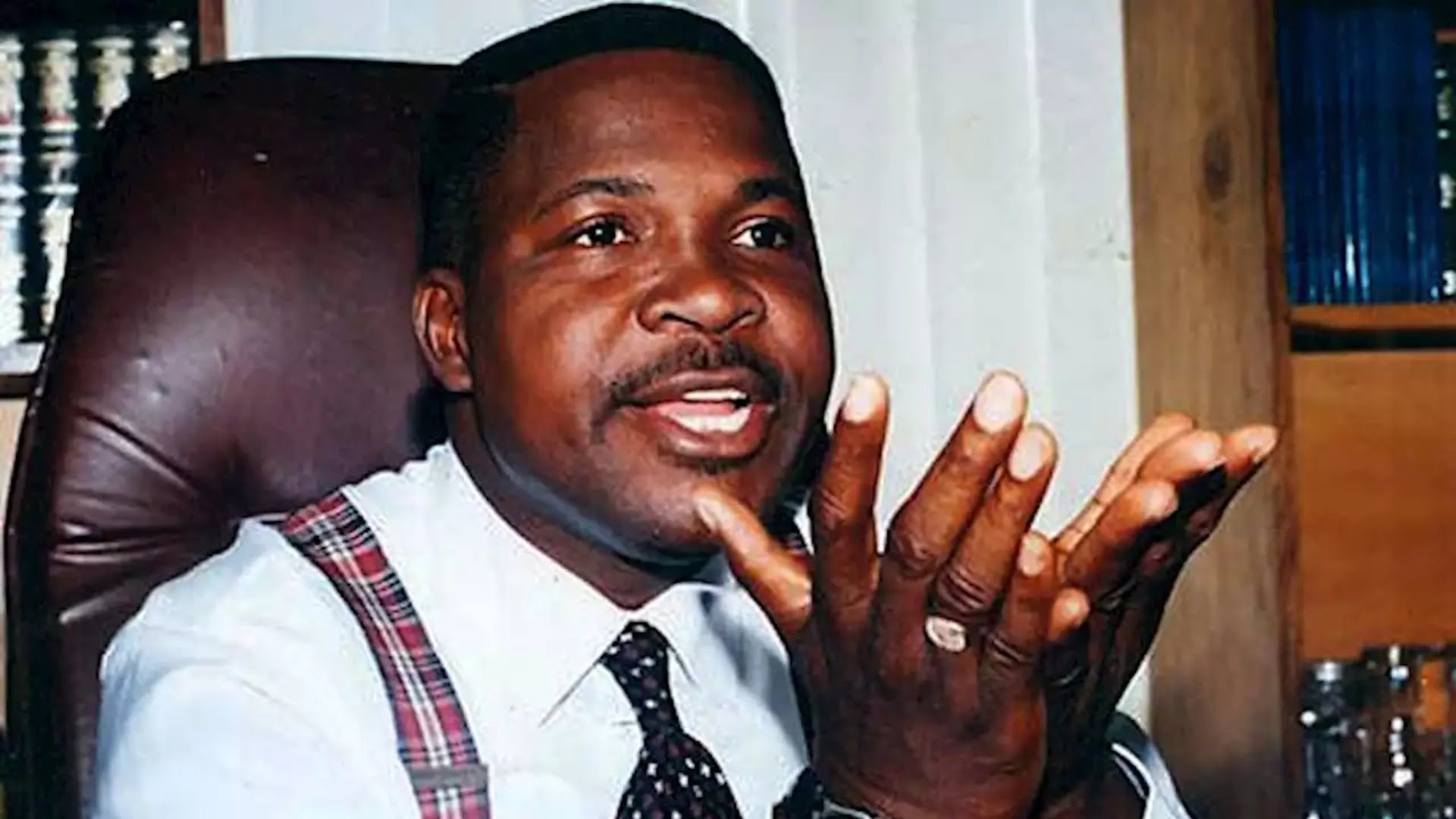
By Mike Ozekhome
INTRODUCTION
NO TO HISTORICAL REVISIONISTS
I will not allow historical revisionists the opportunity to quickly rewrite Nigeria’s recent history – especially of former president Mohammadu Buhari’s dismal performance and misgovernance of Nigeria in the last 8 years. True, the fawners, bootlickers, toady flatterers and clappers, who benefited greatly from his warped tenure, are ever ready to applaud, clap and “rankadede” him forever. I am not one of them. I never was. Never will be. Or are you? Let me however thank President Buhari (as I had done severally before now), for decorating me with the prestigious National honour of Commander of the Order of the Niger (CON), the 4th highest honour in Nigeria. This adds to my 2009 National honour of Officer of the Federal Republic (OFR). Buhari did this notwithstanding my strident criticism of his governance and leadership style throughout his 8 disastrous years of poor governance. He sure has tons of guts and strong balls to have taken my frequent disagreements with him in good faith. He earned my deep respect and admiration in this regard of large-heartedness. This is because not many in his huge shoes would have done so, given the same circumstances. However, whilst thanking the ex president, I will not be fair to history, the present and future generations yet unborn, if I do not give my earnest, but humble assessment of his 8 years misgovenance of Nigeria. It was simply squandering of riches. Missed opportunities! Missteps. False steps. This is where BUHAROCRACY comes in. he wobbled. He fumbled. He dawdled. He groggled. He literally crumbled. Buharocracy is the concept of government. But, let me background this writeup with my neologism.
I have since evolved OZEKPEDIA- my own neologism – my coinage of new words and phrases that appear not to exist before, but which I now throw up to achieve popular or institutional recognition and thus get accepted in the mainstream English language. It is in this regard I have since minted fresh words such as ELECTIONOCRACY (https://www.premiumtimesng.com/opinion/595657-nigerian-politicians-and-the-go-to-court-antics-by-mike-ozekhome.html); SELECTOCRACY (https://mikeozekhomeschambers.com/building-bridges-for-a-new-nigeria/); EXECUTOCRACY (https://independent.ng/building-bridges-for-a-new-nigeria/); LEGISLATOCRACY (https://barristerng.com/is-this-the-nigeria-of-our-dream-a-lecture-by-chief-mike-ozekhome-san-on-ambrose-alli-day/); and JUDOCRACY (https://www.youtube.com/watch?v=Yg8ByKVWWj0).
I had also coined, with reference to former President Buhari not treating Nigeria as one unified “Federal Republic of Nigeria”, some aberrative terms employed and practised by Buhari in his peculiar style of governance. Buhari practised “Federal Republic of the North”; or “The Northern Republic of Nigeria”; or “Republic of Northern Nigeria”; or “Republic of Federal North”; or “Northern Nigeria Republic”; or “Republic of Northern Nigeria and other vassal states”. (See http://mikeozekhomeschambers.com/nigerian-leaders-and-the-ephemerality-of-power/; The Cable, “It is illegal for Buhari to Solely Appoint IP, says Ozekhome, https://www.the cableng; 6/4/21). (https://www.capitalpost.ng/nba-fractionalisation-jibrin-okutepa-san-sorely-missed-the-point-Ozekhome/); (https://ourpeoplesfm1041.com.ng/2021/01/16/remove-that-fatwa-from-bishop-kukahs-head-by-mike-ozekhome-san/); https://www.latestnigeriannews.com/p/153190/remove-that-fatwa-from-bishop-kukahs-head-ozekhome.html).
I did not coin, but I have since used and popularised “Amala politics”; “Gbegiri politics”; “Come-and-chop politics”; and “Stomach infrastructure politics”, etc. But, I have also minted into our political lexicon, words such as “tuwo sinkafa politics” “politrician”, “militrician”, “civitrician”, and “politics of akpu”, “edikang ikon”, and “politics of omisaghue and amato”. In one of my outings as far back as May 11, 2015 (even before Buhari was sworn in for his first term), titled, “Era of Decampment: Politicians Without Principles” (see https://globalpatriotnews.com/opinion-era-of-decampment-politicians-without-principle/), I wrote as follows:
“The “come-and-chop” or “chop-I-chop” politics syndrome found its name into the Nigerian political lexicon long before Fayose. Long before now, we had colourful politicians like Busari Adelakun (Eruobodo) and Lamidi Adedibu, who popularised “amala” or “gbegiri” politics. Some call it “akpu”, “edikang ikon”, “tuwo sinkafa” politics. I call it “politics of “omhisaghue and amato” (don’t ask me what these mean in my Etsako, Weppa- Wanno language).
“This genre of politics is simply anchored on the cheap principle of sharing (never baking) the national cake amongst family members, old school mates, kinsmen, religious peers, business companions, political affiliates, etc. It is a euphemism for freely stealing from the national treasury and pillaging our commonwealth.
“It thrives on cronyism, tribalism, nepotism, undue favouritism, clannishness, religious bigotry, ethnic chauvinism and ethno-religious jingoism. It abhors merit. It detests brilliance. It enthrones mediocrity. As a principle, “come and chop” politics advocates that the strongest continuously pummels and subdues the strong into a comatose position of irreversibility, while the already weak ones are battered into oblivion and totally interred or entombed alive.
“The Nigerian politician (sorry, politrician) is at once a “Militrician” (Military top brass turned into politicians and “Civitrician” (civilians practising politics). The Nigerian Politician has corrupted politics and madly stripped it of its inherent nobility and integrity.
“Like common whores, they prostitute from one political party to another, never ashamed to return to an earlier party that he left with éclat and celebration to eat his vomit. Whether the party is PDP, APC, AD, APP, AC, ACN, CPC, ANPP, the Nigerian Politician gallivants about shamelessly, strutting from one party to the other. He lacks morality. He is allergic to political decorum or democratic nuances. He is a loose cannon. The same political class rotates offices amongst themselves. The same faces, but different offices. Once a local government chairman, he aspires to be member of a state House of Assembly; then House of Representatives; then Senate.
“Later, he leaves Senate to become a Governor; or from his gubernatorial seat to become a Senator. Over the years, it is the same dramatis personnel. No new entrants. No fresh ideas. Power is rotated from father to son, mother to daughter, brother to brother and kinsman to kinswoman. Little wonder that Nigeria has not grown. Even her purported development has been without actual and real development. She continues to suffer the fate of the barber’s chair of perpetual motion and rotation on its axis, but without progress. Her growth is stunted, for there is no manure or fertilizer to resuscitate the parched soil.”
On OZEKPEDIA, therefore, do not blame me or come after my jugular for daring to challenge Collins, Websters, Blacks and Oxford English Dictionaries. This was how Andrew Le Breton first conceptualized 28 Volumes of the Encyclopedia in French. It was later translated by Dennis Diderot, an 18th Century French Philosopher, Art Critic and writer, between 1751 and 1772. Indeed, it was actually an avid writer and admirer, who after following my writeups for a very long time, sent me the coinages – “OZEKPEDIA”, “OZEKMATICS” and “OZEKDICTIONARY”. He was referring to many of my writeups, including those on the requirement that the Nigerian President must compulsorily need to have 25% votes of FCT, Abuja; and my linguistics; syntax and prose style. I thank him immensely.
Thus, as at today, we have ENCYCLOPEDIA (1751-1772); SMITHSONIA (1846); WIKIPEDIA (2001); SCHOLARPEDIA (2006); LEGALPEDIA (2007); and EUROPEDIA (2008). Now, enters OZEKPEDIA (2023). So, help me God. Amen.
OZEKPEDIA AND BUHAROCRACY
Nigeria had her independence on October 1, 1960. She was however totally severed off the umbilical cord of imperialism in 1963 – when she became a Republic. Since then, the story of her leadership travails has become an unending tragedy; a cesspool and affront on the labours of our heroes past. The Nigerian polity became engulfed in the grip of series of military juntas under the thin guise of salvaging the decaying system. This went on until 1999, when a democratic government was ushered in. This year makes it 24 years of uninterrupted democracy. But it seems – like a man with a heavy load of web on his face – that Nigeria is still undergoing a vicious cycling and recycling of her leaders, de – die – in – diem.
In times of much uncertainty and untrammeled corruption bazaar, Nigeria was so unfortunate to have been governed by an apparently pretentious man who was almost deified and canonized. Buhari, like a man who never believes that once beaten, twice shy – ensured that Nigeria was beaten twice by the same man – Buhari. First as a military dictator. Later as a civilian ruler (not a democratic leader, in my humble estimation). I hope we are now awake from our self-imposed slumber and selective amnesia in this democracy.
NIGERIA IS FAR FROM PRACTISING DEMOCRACY
Strictu sensu, Nigeria, in my humble view, does not practise democracy. Rather, we practise other “cracies” (not democracy), which I have coined from my dictionary – Ozekpedia. These are Judocracy, Electionocracy, Executocracy, Selectocracy and Legislatocracy. (See https://m.youtube.com/watch?v=93SFQYIpkpU; https://www.page36news.com/2021/10/02/mike-ozekhome–says-we-are-not-practicing-democracy-in-nigeria-declares-that-what-we-have-under-president-muhammadu-buhari-others-is-election-ocracy-where-the-leaders-elect-themselves-into-office-o/amp/;
BUHAROCRACY
I have today, added another “cracy”, but this particular cracy is crazy – ‘Buharocracy.’ Buharocracy is a type of cracy, where government is ‘abysmally ignoramus, zero-idealistic, and dictatorially at it’s crescendo.’ Little wonder, popular African singer, late Anikulapo-Kuti, in one of the ‘Abami Eda’s songs, “Beast of No Nation”, sang, “Na craze world be dat, craze world, No be outside Buhari dey, craze world, na craze man be dat, craze world.” (See https://punchng.com/fans-remember-felas-lyrics-on-democracy-day/). Fela warned us then, but Nigerians feigned deafness; maybe because they said he smoked weed. Nigerians forgot that to be fore-warned, is to be fore-armed. Former President of America, Barrack Obama, once admonished, “I always believe that ultimately, if people are paying attention, then we get good government and good leadership. And when we get lazy, as a democracy, and civically start taking shortcuts, then it results in bad government and politics.”
Oh, see where our refusal and neglect to pay attention to history have landed us!. Leadership, to be sure, would also be accounted for in the last days of human existence. Taking solace from the Bible; “Blessed are you, o land, whose King is of nobility and whose instructions Princes eat at the appropriate time – for strength and not for drunkenness.” An Islamic cleric, Ma’qil narrated, “I heard Rasulullah (SAW) saying: “Any man whom Allah has given the authority of ruling some people and he does not look after them in an honest manner, will never feel even the smell of Paradise.” (Sahih Muslim).
John G. Lake, once told us, “the man with a groan never moved the world except to more groans.” Buhari tried very hard to flourish himself like a saint in white apparel, when in fact, he was the chief repository of negative governance. Therefore, Stanley Baldwin was not wrong when he said, “Dictatorship is like a giant beech – tree – very magnificent to look at in it’s prime, but nothing grows underneath.” Where have the 8 wasted years of the once feared “anti – corruption Czar” led us to today? I don’t know. Or, do you?
The voyage of Nigeria since May 29, 2015, through May 29, 2023, (being the second and final coming of Buharocracy), amounted to a craze of all cracies.
There are many “cracies” corrupted from the word “Democracy”, as shown in Ozekpedia above. When Abraham Lincoln on 19th November, 1863, eulogized “Democracy” during his Gettysburg Declaration as “government of the people by the people and for the people”, he could never have imagined that subsequent world leaders would corrupt this beautiful term invented by the ancient Athenians of Greece in 507 BC, following a turbulent era of aristocracy and tyranny. “Demos” derived from Greek, meaning “people”, or “population”. “Crasy” means “rule”, “government”, “governing body”. So, democracy is government of the people.
BUHAROCRACY AND ITS EFFECT
Buharocracy is a form of government where the people expect so much, but get nothing; or at best, so little in return. It is a system of government in which the ruler, during campaigns and in his manifesto, promises so much; but brazenly discards and trashes all promises upon being voted in by the people. In Buharocracy, the ruler freely deceives the people. He is a maximum dictator, rules by precepts, rather than by examples. The concept allows the ruler to ride slipshod on his people; destroy institutions, enkindle divisions; and enthrone cyronynism, prebendalism, nepotism, favouritism, ethnicity, sectionalism, tribalism and religious bigotry.
Under Buharocracy, rule of law is literally suspended in place of so called National Security, a veneer for self interest or government interest. Under Buharocracy, the elected rules, rather than governs. He tells the people, “do what I say and not what I do”. Because the ruler suffers grave disconnect with the people, he feigns amnesia of their sufferings and despondency. He neither sympathises, nor empathises. He lives in a make-belief world; a world garnished with grandeur of illusion. The ruler is permitted to discard his hitherto pretentious Spartan-like life. He indulges in vain-glorious affluence, pomp, pageantry and razzmatazz. Kakaaki trumpets escort him to the airport when travelling, and also welcome him back from his frequent medical trips abroad. The maximum dictator under Buharocracy is deaf, dumb and numb to the feelings, yearnings and aspirations of his beleaguered and vanquished citizens rendered prostrate through misgovernance, high-handedness, corruption, insecurity and jack-bootism. He would rather build rail lines, refineries and industries in a neighbouring country like Niger, wherein he has his own firm roots of origin, to the detriment of his own country – Nigeria – that elected him into office. Restructuring and true federalism are an anathema to Buharocracy. That is Buharocracy for you. And more …
Related
You may like
Opinion
Re-engineering the Mind: A Pathway to Freedom for Peoples, Corporates and Nations
Published
10 hours agoon
January 17, 2026By
Eric
By Tolulope A. Adegoke PhD
“The most formidable borders we must cross are not geographic, but cognitive. True sovereignty—for peoples, corporates, or nations—begins with the courageous act of dismantling the internal architectures of limitation and rebuilding with the materials of our own authentic possibilities.” – Tolulope A. Adegoke, PhD
We live in a world shaped by history, yet our future is not predetermined by it. One of the most profound challenges facing individuals, corporations, and nations, particularly in contexts like Nigeria and Africa—is the legacy of mental colonialism. This isn’t merely a historical discussion; it’s about the unconscious frameworks that continue to dictate how we think, what we value, and what we believe is possible. Decolonizing oneself from this “mental slavery” is the essential first step toward delivering genuine, self-determined possibilities. This process requires honesty, courage, and a deliberate reclamation of thought.
Understanding the Invisible Chains
Mental slavery is the internalization of a worldview where the former colonizer’s culture, systems, and standards are seen as inherently superior, universal, and the sole benchmark for progress. It manifests in subtle ways: the devaluation of local languages and knowledge, the preference for foreign goods and credentials over local ones, and the persistent narrative that real solutions must always come from outside. This mindset creates a ceiling on imagination, fostering dependency and a crippling doubt in one’s own innate capacity to innovate and lead.
The Personal Journey: Reclaiming Your Inner Narrative
For the individual, decolonization is a deeply personal journey of unlearning and rediscovery. It starts with critical self-reflection.
- Questioning Knowledge: It asks, “Whose history am I learning? Whose definition of beauty, success, and intelligence have I accepted?” It involves actively seeking out and valuing indigenous philosophies, like the Ubuntu concept of “I am because we are,” not as folklore but as viable, sophisticated frameworks for living.
- Redefining Value: It means measuring personal success not only by proximity to Western lifestyles but by contributions to community, by cultural continuity, and by personal integrity aligned with one’s own roots.
- Language as Liberation: It recognizes the power of language to shape reality. Embracing one’s mother tongue in thought and creative expression becomes an act of resistance and a reconnection to a distinct way of seeing the world.
The Corporate Transformation: From Extraction to Ecosystem
Businesses and organizations are often perfect mirrors of colonial logic, built on hierarchical control, resource extraction, and the standardization of Western corporate models. Decolonizing the corporate sphere requires a fundamental shift in purpose and practice.
- Beyond Exploitation: It moves from a model that extracts value (from people, communities, and the environment) for distant shareholders to one that generates and circulates value within local ecosystems. It prioritizes regenerative practices and community equity.
- Innovation from Within: It rejects the mere copying of foreign business playbooks. Instead, it looks inward, developing uniquely African management styles, products, and solutions that respond to local realities, needs, and social structures. It sees the informal sector not as a problem, but as a reservoir of resilience and ingenuity.
- Partnership Over Paternalism: It abandons the “savior” complex—the idea that development is “delivered” from the outside. A decolonized corporate entity positions itself as a humble partner, listening to and amplifying local agency and existing expertise.
The National Project: Reimagining Governance and Identity
For nation-states like Nigeria, the legacy is etched into the very architecture of the state: borders that divide ethnic groups, economies structured for export of raw materials, and educational systems that glorify foreign histories.
- Institutional Reformation: True decolonization necessitates the courageous reform of institutions. This means auditing legal systems, constitutions, and national curricula to root out colonial biases and integrate indigenous knowledge and juridical principles.
- Economic Sovereignty: It demands a strategic, deliberate reduction of dependency. This involves prioritizing regional trade (like the African Continental Free Trade Area), adding value to natural resources locally, and investing in home-grown technology and manufacturing. It is a pivot from being a primary commodity exporter in a global system designed by others to being an architect of one’s own economic destiny.
- Cultural Agency: On the global stage, a decolonized nation defines itself. It conducts diplomacy based on its own historical experiences and philosophical foundations, not merely by aligning with blocs formed by colonial histories. It tells its own stories, controlling its narrative.
Nigeria and Africa: The Crucible of Challenge and Promise
Africa, with Nigeria as its most populous nation, is the undeniable focal point of this global conversation. The continent’s challenges are real, but they are too often diagnosed through the very colonial lens that contributed to them. Nigeria’s specific struggle—to forge a cohesive national identity from its stunning diversity, to manage resource wealth for the benefit of all, and to overcome governance failures—is a direct engagement with its colonial past.
The “African Renaissance” envisioned in frameworks like Agenda 2063 is, at its heart, a decolonial project. It seeks an Africa integrated by its own people’s design, powered by its own intellectual and cultural capital, and speaking to the world with confidence and authority.
A Universal Call: Why the Wider World Must Engage
This is not a project for the formerly colonized alone. The wider world, including former colonial powers and global institutions, has a responsibility to engage.
- Acknowledgment and Equity: It begins with a sincere acknowledgment of historical injustices and their modern-day economic and political echoes. It requires moving from a paradigm of charity and aid to one of justice, fair trade, and equitable partnership.
- Enriching Humanity: Ultimately, decolonizing the mind enriches all of humanity. It frees everyone from the limitations of a single, dominant story about progress and human achievement. It opens the door to a world where multiple ways of knowing, being, and creating can coexist and cross-pollinate, leading to more resilient and innovative global solutions.
Conclusion: The Freedom to Imagine Anew
In this moment of global reckoning and transformation, the work of mental decolonization is not a luxury; it is an urgent necessity. It is the hard, internal work that must precede lasting external change. For the individual, it delivers the profound possibility of wholeness. For the corporation, it unlocks sustainable innovation and authentic purpose. For nations like Nigeria and for the African continent, it is the non-negotiable foundation for true sovereignty and transformational progress.
The ultimate deliverable is freedom—the freedom to imagine a future unbounded by the past, and the agency to build it.
Dr. Tolulope A. Adegoke is a Distinguished Ambassador For World Peace (AMBP-UN); Nigeria @65 Leaders of Distinction (2025); Recipient, Nigerian Role Models Award (2024); African Leadership Par Excellence Award (2024).
He can be reached via: tolulopeadegoke01@gmail.com, globalstageimpacts@gmail.com
Related
Opinion
Dele Momodu’s Arrival: Day ADC Became Heavier
Published
2 days agoon
January 16, 2026By
Eric
By Dr. Sani S a’idu Baba
What does loyalty mean to you in friendships, family, or work? To me, loyalty is staying true, honest and supportive even when it’s hard. That truth defines my relationship with Chief Dele Momodu, whom I more often refer to as the pride of Africa. My loyalty to him is non-negotiable. It is not seasonal, transactional, or driven by convenience. It is rooted in conviction. So, the moment he collected his membership card of the African Democratic Congress (ADC) in his hometown of Ihievbe, Owan East, Edo State, I did the same in Kano. In that instant, distance dissolved, and purpose aligned. What happened yesterday was not just a decamping; it was a declaration. A declaration that the long, hard road to Rescue, Recover and Reset Nigeria has gained one of its most formidable travellers.
This is indeed a remarkable day for the ADC. While many defections into political parties come and go with the tides of ambition, Dele Momodu’s entry stands apart, loud in meaning, deep in symbolism, and heavy with consequence. For the ADC, this is not merely the acquisition of a new member; it is the embrace of a movement-builder, a conscience-keeper, and a bridge across Nigeria’s fractured divides, and these qualities are evident in his record.
First, Dele Momodu’s political pedigree is rare and refreshing. In an environment where political loyalty often bends toward power, he has never been part of the ruling party throughout his entire political life. This is not stubbornness; it is principle. It means he understands opposition not as noise-making, but as nation-guarding. He knows how to put governments on their toes firmly, intelligently, and fearlessly. The ADC has gained a man perfectly schooled in democratic vigilance, one who knows that true progress is sharpened by principled opposition.
Second, the ADC has gained a tested pro-democracy fighter in Dele Momodu. He paid a personal price during the military era for resisting dictatorship and standing firmly for democratic rule in the Third Republic. That history of sacrifice now translates into a major advantage for the ADC: a leader with the moral authority, experience, and courage to constitutionally, peacefully and intellectually confront the growing threat of a one-party state and one-man dictatorship. With Dele Momodu in its fold, the ADC is better equipped to defend democracy and lead the national effort to recover Nigeria from authoritarian drift.
Third, he is widely recognized as one of the most principled and loyal politicians Nigeria has produced. When Dele Momodu commits, he commits fully. No half-measures. No double games. No conditional loyalty. If he belongs to a party, he supports it wholeheartedly and unconditionally. For the ADC, this is priceless. In a time when political parties struggle with internal contradictions and wavering allegiances, here is a man whose word is his bond and whose presence strengthens internal cohesion.
Fourth, the ADC has attracted not just a member, but a truth-teller. Dele Momodu derives pleasure in saying the truth as it is, without varnish, without fear, without apology. Parties rise or fall not only by their slogans but by their capacity for honest self-examination. With Momodu in the ADC, the party gains its greatest advisor and most reliable mirror. He will celebrate what is right, challenge what is wrong, and insist on moral clarity. This is how serious political institutions are built.
Fifth, Dele Momodu is a magnet. He attracts highly responsible, competent, and patriotic Nigerians from every corner of the country. Many see him as a part-time and independent politician, one whose ultimate allegiance is not to party symbols but to Nigeria’s soul. That perception is powerful. It means that wherever he goes, Nigerians are ready to follow, to join, and to support. By welcoming him, the ADC has sent a clear signal to the nation: this is a home for credibility, courage, and Nigeria first politics.
Wherever Dele Momodu goes, Nigerians at home and in the diaspora admire him effortlessly. He never gets tired of engaging, mentoring, inspiring, and mobilising. Without any noise, he becomes a vehicle of mass mobilisation. With him, the ADC’s message will travel farther than billboards, deeper than rallies, and faster than propaganda. This is influence earned through decades of credibility, not imposed.
I speak from experience. I was the North-West Coordinator of the Dele Momodu Movement in 2022 when he contested the presidential primaries under the PDP. I later served as his agent at the primaries held at the Moshood Abiola Stadium, Abuja, on May 28, 2022. I went round with him all over Nigeria, and from that experience, I came to truly understand the perception of the ordinary Nigerian about the extraordinary pedigree of Dele Momodu, how people see him as consistent, authentic, accessible, and genuinely committed to Nigeria’s progress.
Sixth, the ADC has attracted a great promise-keeper in Dele Momodu. Let me back this claim with facts. I was among those who accompanied him to the screening before the PDP presidential primaries. When he came out and journalists asked him questions, his response was characteristically clear and sincere: it is totally about Nigeria, nothing personal. He went further to announce the promise he took during the screening, that he would support whoever emerged as the party’s candidate to victory, and he kept that promise. As great globetrotter that he is, no one can easily recall when last Dele Momodu stayed in Nigeria for months, working assiduously for the success of his party and its candidate, His Excellency Atiku Abubakar. While many others who took the same promise were busy throwing tantrums, he was on the field, mobilising, advocating, and delivering. That was a promise kept.
But beyond politics lies the most compelling asset Dele Momodu brings to the ADC: his story. The turbulent but triumphant journey of his life can draw tears not only from the over 140 million Nigerians living in extreme poverty today, but from anyone who understands struggle. It is a story that melts hearts across class, age, and geography. Relatable. Poignant. Edifying. It speaks directly to the Nigerian who feels forgotten by birth or battered by circumstance. It tells you that you may be a rejected stone today, penniless, down and out but you can become a chief cornerstone tomorrow. Not by cutting corners, but by patience, consistency, building networks of influence, embracing hard work, and staying faithful to your dream. Perhaps this is why Dele Momodu is arguably the Nigerian mentor with the highest number of mentees across every nook and cranny of this country, myself included. His mentorship culture is organic, generous, and transformational. He opens doors, builds people, and multiplies hope. For the ADC, this is a strategic advantage that cannot be overstated. A party that attracts Dele Momodu automatically attracts thousands of thinkers, professionals, youths, and patriots he has inspired over decades.
Dele Momodu is in a class of his own. Naturally unique. Authentically Nigerian. Globally respected and travels road less travel. His life proves that greatness can rise from adversity, and leadership can be forged without bitterness. With his entry into the ADC, the party has not just caught a “big fish”; it has netted a tide-changer. Yesterday, in Ihiebve, history was made. From Edo to Kano, from the grassroots to the global stage, a new chapter has begun. The ADC is no longer just preparing for the future, it is recruiting it. And with Dele Momodu on board, the mission to Rescue, Recover and Reset Nigeria has found one of its strongest voices and most trusted hands.
The journey ahead is demanding. But with men of principle, truth and influence like Chief Dele Momodu, the ADC is no longer asking Nigerians to believe. It is giving them a reason to.
Dr Baba writes from Kano, and can be reached via drssbaba@yahoo.com
Related
Opinion
Reimagining the African Leadership Paradigm: A Comprehensive Blueprint
Published
1 week agoon
January 10, 2026By
Eric
By Tolulope A. Adegoke, PhD
“To lead Africa forward is to move from transactional authority to transformational stewardship—where institutions outlive individuals, data informs vision, and service is the only valid currency of governance” – Tolulope A. Adegoke, PhD
The narrative of African leadership in the 21st century stands at a critical intersection of profound potential and persistent paradox. The continent, pulsating with the world’s youngest demographic and endowed with immense natural wealth, nonetheless contends with systemic challenges that stifle its ascent. This divergence between capacity and outcome signals not merely a failure of policy, but a deeper crisis of leadership philosophy and practice. As the global order undergoes seismic shifts, the imperative for African nations to fundamentally re-strategize their approach to governance has transitioned from an intellectual exercise to an existential necessity. Nigeria, by virtue of its demographic heft, economic scale, and cultural influence, serves as the continent’s most significant crucible for this transformation. The journey of Nigerian leadership from its current state to its potential apex offers a blueprint not only for its own 200 million citizens but for an entire continent in search of a new compass.
Deconstructing the Legacy Model: A Diagnosis of Systemic Failure
To construct a resilient future, we must first undertake an unflinching diagnosis of the present. The prevailing leadership archetype across much of Africa, with clear manifestations in Nigeria’s political economy, is built upon a foundation that has proven tragically unfit for purpose. This model is characterized by several interlocking dysfunctions:
· The Primacy of Transactional Politics Over Transformational Vision: Governance has too often been reduced to a complex system of transactions—votes exchanged for short-term patronage, positions awarded for loyalty over competence, and resource allocation serving political expediency rather than national strategy. This erodes public trust and makes long-term, cohesive planning impossible.
· The Tyranny of the Short-Term Electoral Cycle: Leadership decisions are frequently held hostage to the next election, sacrificing strategic investments in education, infrastructure, and industrialization on the altar of immediate, visible—yet fleeting—gains. This creates a perpetual cycle of reactive governance, preventing the execution of decade-spanning national projects.
· Administrative Silos and Bureaucratic Inertia: Government ministries and agencies often operate as isolated fiefdoms, with limited inter-departmental collaboration. This siloed approach fragments policy implementation, leads to contradictory initiatives, and renders the state apparatus inefficient and unresponsive to complex, cross-sectoral challenges like climate change, public health, and national security.
· The Demographic Disconnect: Africa’s most potent asset is its youth. Yet, a vast governance gap separates a dynamic, digitally-native, and globally-aware generation from political structures that remain opaque, paternalistic, and slow to adapt. This disconnect fuels alienation, brain drain, and social unrest.
· The Weakness of Institutions and the Cult of Personality: When the strength of a state is vested in individuals rather than institutions, it creates systemic vulnerability. Independent judiciaries, professional civil services, and credible electoral commissions are weakened, leading to arbitrariness in the application of law, erosion of meritocracy, and a deep-seated crisis of public confidence.
The tangible outcomes of this flawed model are the headlines that define the continent’s challenges: infrastructure deficits that strangle commerce, public education and healthcare systems in states of distress, jobless economic growth, multifaceted security threats, and the chronic hemorrhage of human capital. To re-strategize leadership is to directly address these outputs by redesigning the very system that produces them.
Pillars of a Reformed Leadership Architecture: A Holistic Framework
The new leadership paradigm must be constructed not as a minor adjustment, but as a holistic architectural endeavor. It requires foundational pillars that are interdependent, mutually reinforcing, and built to endure beyond political transitions.
1. The Philosophical Core: Embracing Servant-Leadership and Ethical Stewardship
The most profound change must be internal—a recalibration of the leader’s fundamental purpose. The concept of the leader as a benevolent “strongman” must give way to the model of the servant-leader. This philosophy, rooted in both timeless African communal values (ubuntu) and modern ethical governance, posits that the true leader exists to serve the people, not vice versa. It is characterized by deep empathy, radical accountability, active listening, and a commitment to empowering others. Success is measured not by the leader’s personal accumulation of power or wealth, but by the tangible flourishing, security, and expanded opportunities of the citizenry. This ethos fosters trust, the essential currency of effective governance.
2. Strategic Foresight and Evidence-Based Governance
Leadership must be an exercise in building the future, not just administering the present. This requires the collaborative development of a clear, compelling, and inclusive national vision—a strategic narrative that aligns the energies of government, private sector, and civil society. For Nigeria, frameworks like Nigeria’s Agenda 2050 and the National Development Plan must be de-politicized and treated as binding national covenants. Furthermore, in the age of big data, governance must transition from intuition-driven to evidence-based. This necessitates significant investment in data collection, analytics, and policy-informing research. Whether designing social safety nets, deploying security resources, or planning agricultural subsidies, decisions must be illuminated by rigorous data, ensuring efficiency, transparency, and measurable impact.
3. Institutional Fortification: Building the Enduring Pillars of State
A nation’s longevity and stability are directly proportional to the strength and independence of its institutions. Re-strategizing leadership demands an unwavering commitment to institutional architecture:
· An Impervious Judiciary: The rule of law must be absolute, with a judicial system insulated from political and financial influence, guaranteeing justice for the powerful and the marginalized alike.
· Electoral Integrity as Sacred Trust: Democratic legitimacy springs from credible elections. Investing in independent electoral commissions, transparent technology, and robust legal frameworks is non-negotiable for political stability.
· A Re-professionalized Civil Service: The bureaucracy must be transformed into a merit-driven, technologically adept, and well-remunerated engine of state, shielded from the spoils system and empowered to implement policy effectively.
· Robust, Transparent Accountability Ecosystems: Anti-corruption agencies require genuine operational independence, adequate funding, and protection. Complementing this, transparent public procurement platforms and mandatory asset declarations for public officials must become normalized practice.
4. Collaborative and Distributed Leadership: The Power of the Collective
The monolithic state cannot solve wicked problems alone. The modern leader must be a convener-in-chief, architecting platforms for sustained collaboration. This involves actively fostering a triple-helix partnership:
· The Public Sector sets the vision, regulates, and provides enabling infrastructure.
· The Private Sector drives investment, innovation, scale, and job creation.
· Academia and Civil Society contribute research, grassroots intelligence, independent oversight, and specialized implementation capacity.
This model distributes responsibility, leverages diverse expertise, and fosters innovative solutions—from public-private partnerships in infrastructure to tech-driven civic engagement platforms.
5. Human Capital Supremacy: The Ultimate Strategic Investment
A nation’s most valuable asset walks on two feet. Re-strategized leadership places a supreme, non-negotiable priority on developing human potential. For Nigeria and Africa, this demands a generational project:
· Revolutionizing Education: Curricula must be overhauled to foster critical thinking, digital literacy, STEM proficiency, and entrepreneurial mindset—skills for the Fourth Industrial Revolution. Investment in teacher training and educational infrastructure is paramount.
· Building a Preventive, Resilient Health System: Focus must shift from curative care in central hospitals to robust, accessible primary healthcare. A healthy population is a productive population, forming the basis of economic resilience.
· Creating an Enabling Environment for Talent: Beyond education and health, leadership must provide the ecosystem where talent can thrive: reliable electricity, ubiquitous broadband, access to venture capital, and a regulatory environment that encourages innovation and protects intellectual property. The goal is to make the domestic environment more attractive than the diaspora for the continent’s best minds.
6. Assertive, Strategic Engagement in Global Affairs
African leadership must shed any vestiges of a supplicant mentality and adopt a posture of strategic agency. This means actively shaping continental and global agendas:
· Leveraging the AfCFTA: Moving beyond signing agreements to actively dismantling non-tariff barriers, harmonizing standards, and investing in cross-border infrastructure to turn the agreement into a real engine of intra-African trade and industrialization.
· Diplomacy for Value Creation: Foreign policy should be strategically deployed to attract sustainable foreign direct investment, secure technology transfer agreements, and build partnerships based on mutual benefit, not aid dependency.
· Advocacy for Structural Reform: African leaders must collectively and persistently advocate for reforms in global financial institutions and multilateral forums to ensure a more equitable international system.
The Nigerian Imperative: From National Challenges to a National Charter
Applying this framework to Nigeria requires translating universal principles into specific, context-driven actions:
· Integrated Security as a Foundational Priority: Security strategy must be comprehensive, blending advanced intelligence capabilities, professionalized security forces, with parallel investments in community policing, youth employment programs in high-risk areas, and accelerated development to address the root causes of instability.
· A Determined Pursuit of Economic Complexity: Leadership must orchestrate a decisive shift from rent-seeking in the oil sector to value creation across diversified sectors: commercialized agriculture, light and advanced manufacturing, a thriving creative industry, and a dominant digital services sector.
· Constitutional and Governance Re-engineering: To harness its diversity, Nigeria requires a sincere national conversation on restructuring. This likely entails moving towards a more authentic federalism with greater fiscal autonomy for states, devolution of powers, and mechanisms that ensure equitable resource distribution and inclusive political representation.
· Pioneering a Just Energy Transition: Nigeria must craft a unique energy pathway—strategically utilizing its gas resources for domestic industrialization and power generation, while simultaneously positioning itself as a regional hub for renewable energy technology, investment, and innovation.
Conclusion: A Collective Endeavor of Audacious Hope
Re-strategizing leadership in Africa and in Nigeria is not an event, but a generational process. It is not the abandonment of culture but its evolution—melding the deep African traditions of community, consensus, and elder wisdom with the modern imperatives of transparency, innovation, and individual rights. This task extends far beyond the political class. It is a summons to a new generation of leaders in every sphere: the tech entrepreneur in Yaba, the reform-minded civil servant in Abuja, the agri-preneur in Kebbi, the investigative journalist in Lagos, and the community activist in the Niger Delta.
Ultimately, this is an endeavor of audacious hope. It is the conscious choice to build systems stronger than individuals, institutions more enduring than terms of office, and a national identity richer than our ethnic sum. Nigeria possesses all the requisite raw materials for greatness: human brilliance, cultural richness, and natural bounty. The final, indispensable ingredient is a leadership strategy worthy of its people. The blueprint is now detailed; the call to action is urgent. The future awaits not our complaints, but our constructive and courageous labor. Let the work begin in earnest.
Dr. Tolulope A. Adegoke is a globally recognized scholar-practitioner and thought leader at the nexus of security, governance, and strategic leadership. His work addresses complex institutional challenges, with a specialized focus on West African security dynamics, conflict resolution, and sustainable development.
Related


Re-engineering the Mind: A Pathway to Freedom for Peoples, Corporates and Nations
Adding Value: Why You Must Work by Henry Ukazu
The Oracle: The University As a Catalyst for Societal Development (Pt. 5)
Alaafin Kicks As Makinde Okays Olubadan As Chair of Oba Council
Rivers High Court Temporarily Halts Fubara’s Impeachment Process
Undeclared $40k: Supreme Court Upholds Conviction of Ex-Gov Lamido’s Son
Dele Momodu’s Arrival: Day ADC Became Heavier
JAMB Announces Jan 26 As Commencement Date for Sale of 2026 Entry Forms
Benin Agog As Accomplished Entrepreneur and Journalist, Dele Momodu Set to Formally Declare for ADC
Two Rivers Lawmakers Step Down from Impeachment Proceedings Against Fubara, Sue for Peace
‘A Friend of a Thief is a Thief’, Defence Minister Warns Gumi, Other Bandit-Sympathizers
US Cancels Visa Processing for Nigeria, Brazil, Russia, 72 Other Countries
TWINSFAJA Shines As Africa’s Richest Man Rewards Top Dangote Cement Partners
Badagry Mourns Passage of Oba Akran Amid Sobriety, Restriction of Movement
Trending
-
News3 days agoJAMB Announces Jan 26 As Commencement Date for Sale of 2026 Entry Forms
-
Boss Picks3 days agoBenin Agog As Accomplished Entrepreneur and Journalist, Dele Momodu Set to Formally Declare for ADC
-
News5 days agoTwo Rivers Lawmakers Step Down from Impeachment Proceedings Against Fubara, Sue for Peace
-
Featured3 days ago‘A Friend of a Thief is a Thief’, Defence Minister Warns Gumi, Other Bandit-Sympathizers
-
Featured3 days agoUS Cancels Visa Processing for Nigeria, Brazil, Russia, 72 Other Countries
-
Boss Picks2 days agoTWINSFAJA Shines As Africa’s Richest Man Rewards Top Dangote Cement Partners
-
Headline5 days agoBadagry Mourns Passage of Oba Akran Amid Sobriety, Restriction of Movement
-
Entertainment3 days agoGlo Raises Bar in Mobile Entertainment with Launch of New ‘Travel Saga’