Connect with us

Headline

GLOBACOM: 19 Years of Phenomenal Impact

Published

on

By Eric Elezuo

The story of Nigeria’s thriving indigenous telecommunication network, Glo, is a story of doggedness, commitment, dedication and unbroken focus. This is considering the fact that the originator of the brand ventured into a terrain hitherto unknown to Nigerian business, overcoming the harsh business environment, familiar intimidation and huge financial involvement.

It is worthy of note that the first step towards hoisting the Glo network was a herculean task on its own as the overriding fame of Econet and MTN, was already on the ground with experience and huge financial muscle, taking the available space and thriving in all ramifications. It therefore, only required a tough and out of the box business acumen to bring Glo to existence. And this was what the man known by many names including Bull and Spirit of Africa, Dr. Michael Adenuga, did. He practically crashed the network ego, raising the customer to the kingship level and made him the sole concern of telecom business. This he did by bringing on board the famed per second billing; something nobody believed was possible.

The fact that the brand lost its initial $20 million after emerging as one of the four winners in the bid auction process to operate the just introduced Global System of Mobile telecommunications (GSM) in Nigeria, did not deter it from following the dream to give Nigerians equitable telecom service. The colossal loss may have been a blessing in disguise as it gave the team a leverage to come back smoking with ideas that changed the entire telecom world for good.

The brand is 19 years now, having waded through the murky waters of competition and churning out one great after another to the applaud of global citizens.
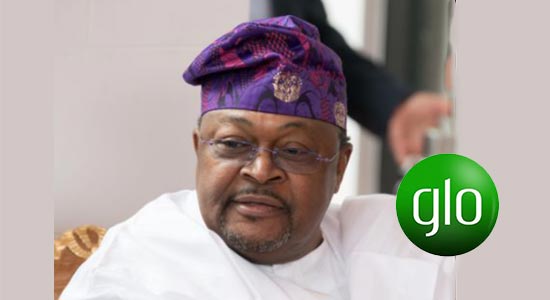
In a nutshell, the story of the phenomenal impact of Glo is better told by Glo itself as captured below:

X-raying Glo’s impact in telecoms sector at 19

The story of the rise of indigenous telecommunications company, Globacom, is like a fairytale.

It would be “remember clearly, as if it was yesterday, when its promoter and self-effacing billionaire, Dr Mike Adenuga, appeared to have hit a blank in his attempt to venture into the telecommunications business in 2000.

His company, Communications Investment Limited (CIL), was first issued a conditional licence in 1999 to operate the Global System of Mobile telecommunications (GSM). This followed its emergence as one of four winners of the bid auction process. Adenuga paid the $20 million mandatory deposit. However, in the process of effecting the release of the balance payment of $265 million, the licence was unfairly revoked and he lost the $20 million deposit. It was a colossal loss, but the bullish businessman who is renowned for his tenacity was undeterred. The other three winners, MTN, Airtel (then known as Econet) and M-tel proceeded to roll out services.

Two years later, Adenuga went on to bid for the Second National Operator (SNO) license, and deposited another $20 million. This time, he was lucky. He won the bid in August, 2002, through Globacom Limited. Incidentally, the SNO has a wider range of operations as it gave Globacom the right to operate as a national carrier, operate digital mobile service, serve as international gateway for telecommunications in the country, and operate fixed wireless service.

Globacom was to roll out services a year later, precisely on August 29, 2003. The odds were heavily stacked against Adenuga because by then, the other operators already had a two-year head start over Adenuga’s Glo. Secondly, he was venturing into a completely new terrain. Considering that MTN and Econet both had years of experience in the business in other countries, many expected Globacom to stutter.

However, the doubts soon evaporated. Not only did Globacom stun the industry by launching on per second billing, it also crashed the cost of acquiring a GSM line from N30,000 to N6,999 and later to N200. The older operators who, for two years boasted that it was not possible to launch operations on the billing platform as no operator in the world had done this before, were left playing catch up. Like a rampaging bull (which incidentally is Adenuga’s totem), Globacom embarked on a massive rollout of facilities and operations in several towns and cities across the country, and within nine months amassed over one million subscribers. Consequently, it established a reputation as the fastest growing GSM network in Africa.

Since that remarkable feat by Globacom, it has been one endearing success after another for the Nigerian company. In an industry where it was expected to lag behind the established multinational operators, Glo is not just rubbing shoulders with them, it has, indeed, been the pacesetter. It has come to be regarded as a behemoth in Nigeria’s telecom space.

It was the first operator to launch the 2.5 Generation technology, making the convergence of voice, data and multimedia technologies possible. Hence, Glo was able to launch such value added services as vehicle tracking, mobile internet, mobile banking, multimedia messaging service (MMS), voice SMS, and Text2email before the multinationals who were still running on 2G then.

Globacom also pioneered Blackberry Services in Nigeria, and the device was for a long time the rage among business executives and in social circles.

The introduction of the 3G Plus technology marked the second time that Globacom has been in the forefront of pioneering the latest transmission network in Nigeria. With this technology, Glo was able to carry out a much faster transmission of data, voice, broadband internet and multimedia services over a range of frequencies. It also allowed customers to do video call, video streaming and high-speed mobile internet access, amongst others, from their 3G mobile handsets.

Globacom was not done yet in setting the pace yet as it also become the first network to launch a nationwide 4G-LTE network in Nigeria. The technology offers efficient broadband internet to millions of Nigerians at speeds that are several times faster than the 3G network. Subscribers on the network are able to download ultra-high definition videos in seconds.

But perhaps one of the most audacious projects undertaken by Globacom was the construction of an international submarine cable, Glo 1. Launched in 2010, the project was said to have cost over $800 million. It was the first time a gigantic project of this nature had been undertaken by a single company.

The facility which has brought unprecedented bandwidth from Europe to Nigeria and other West African countries marked the beginning of the crashing of bandwidth costs in Nigeria and the rest of West Africa, thereby facilitating more access to broadband internet. With this intervention by Globacom, almost everyone who can afford a smartphone is able to use data. Also, according to industry sources, Glo 1 is currently providing the much needed connectivity to critical sectors of the economy. Companies in the Oil and gas, manufacturing, banking, commerce, education and health sectors as well as several multinational companies, including telecom operators and internet service providers (ISPs), are said to benefit from Glo 1.

Glo 1 has also played a major role in Nigeria’s broadband penetration which currently stands at 44.5 per cent. The penetration is principally driven by major players in the telecom sector, such as Glo 1. Globacom has also invested generously in the infrastructure to deliver the last mile to end-users, while also breaking the cost barrier by introducing affordable tariffs.

While commenting on the impact of Glo 1, Globacom sources said, “With the 4G expansion to tier 2 and 3 cities, Glo1 acts as the catalyst in propagating broadband penetration in Nigeria and acts as an enabler for enterprise customers to provide world class connectivity to all their offices and factories across Nigeria. Many cloud computing companies who cater to the Small and Medium Enterprises (SMES) are setting up shop within the Glo partnered data centers. Using Globacom’s robust terrestrial infrastructure, Glo1 has seized this opportunity to backhaul their traffic to other data centers across the world.”

It is remarkable that it is a Nigerian company that has pulled off this ambitious project. One of Adenuga’s close associates said the idea of building a submarine cable berthed when the entrepreneur went on a business trip to Paris, the French capital, sometime around 2008. While there, he found out that telephone calls to Nigeria were epileptic unlike the connection between France and other parts of Europe. When he made enquiries about what could be done to solve the problem, he was told it was to have an international submarine cable. There and then, Dr Adenuga decided to build Glo 1, and the rest is now history. The project is a testament to the entrepreneurial spirit and foresight of the man behind Globacom.

For those who know Adenuga well, it was not surprising that Glo was able to quickly established itself as the pacesetter in the industry, despite commencing business two years after MTN and Airtel (then called Econet).

Other areas Globacom has effectively set itself apart are customer-empowerment, sustainability and promotion of Nigeria’s arts and cultural heritage.  From 2003 when it commenced operations to date, no company has affected the lives of its subscribers and, indeed, the Nigerian people the way the telecommunications company has done.

Over the years, the company has launched series of promos through which different types of empowerment prizes including millions of naira in cash prizes, luxury cars, tricycles, sewing machines, generators, television sets and grinding machines have been won by Nigerians across the country.

For so many years, it supported the development of Nigerian sports through the sponsorship of the Nigerian Premier League and the national football teams of Nigeria when no other corporate organisation wanted to touch the assets. The company spent billions of naira in developing the Nigerian league and national teams, and this culminated in Enyimba Football Club winning the prestigious Champions League twice in a row, while the Super Eagles won the Nations Cup in 2013. 

Nigeria’s entertainment industry has also received a massive boost from the telecom operator. It has so far brought two of the world’s biggest reality television shows to the country. They are X-Factor, which produced DJ Switch as winner, and the Battle of the Year which was held between October last year and April, this year.

In addition to this, Globacom has over the years also held its own music and comedy shows across different cities and campuses across the country. The shows, including Rock ‘n’ Rule, GloNaija Sings, Laffta Fest, Slide and Bounce concert, and Glo mega Music, were some of the platforms through which Globacom entertained and delighted Nigerians. But more importantly they helped deepen the entertainment industry by giving budding talents in music and comedy and platform to showcase their abilities.

Similarly, the nation’s art and culture have also been positively touched by Globacom. From Ojude Oba in Ijebu-Ode, Ofala in Onitsha, Lisabi in Abeokuta, Imeori in Abriba, Oru – Owerri in Imo state, amongst others, the company has through sponsoring the festivals not only brought theme to international limelight, but has also turned them into major tourist attractions.

There is hardly any aspect of life that has not been positively touched by the telecommunications company.

Looking back at the gigantic milestones it has recorded, one would find it difficult to believe that it is just 19 years old. But would any less be expected from a company founded by Dr Mike Adenuga? He made clear his intention from the beginning with a very bold vision statement, “Building Africa’s biggest and best telecommunications network”. He is known to think and dream big – a very tenacious and dogged entrepreneur who likes to grow his businesses to dominate the sectors he operates in. Globacom has not only matched the multinational operators pound for pound, but it has, indeed, dominated Nigeria’s telecommunications sector these past 19 years.

Glo, Nigeria’s Empowerment Champion, Turns 19

Nigeria’s telecommunications giant, Globacom, turns 19 on August 29, 2022. Looking back at what the company has achieved and the kind of humongous impact it has made on people’s lives and businesses, it is difficult to believe it is just 19 years old.

Founded on August 29, 2003, by multi-billionaire business mogul, Dr. Mike Adenuga, Jr., Globacom has not only transformed the telecoms sector with its technological infrastructure, product innovations and quality service delivery, but it has also shown unparalleled commitment  to improving the lives of its customers. Its empowerment  initiatives cut across Innovation and Affordability, which have given millions of Nigerians access to telephony and allied services, Entertainment, Sports and Promotions, Festivals, among others.

Innovation and Affordability

Glo was the only operator in Africa to launch its operations on the superior 2.5G network which enabled the convergence of voice, data and multimedia technologies.

But more importantly, it launched operations on Per Second Billing, thus ensuring subscribers only pay for actual time spent on a call instead of the practice of billing customers N50 per minute event when the call cuts off at just 2 seconds.  It also crashed the cost of SIM card from N30,000 to N6,999 and later N100, thereby making it possible for low income earners, students and artisans are able to own a GSM line today.

With its massive investments in building over 20,000 kilometres of fibre optic backbone across the country, 4G technology  and Glo1, the first ever individually owned international submarine cable from the United Kingdom to Nigeria, Globacom has availed its subscribers the much needed internet bandwidth. This has led to what is called the democratization of data. For instance, with just N500, a Glo subscriber will get 2GB data, with N50 the customer gets 50MB, N100 gives 150MB. For big users on the network, they can get 675GB for N75,000 and 1Tera Byte (TB) for N100,000. The company also gives double data bonus to Glo subscribers. No wonder it is called the grandmasters of data by admirers!

Apart from boosting internet service to end users, Glo 1 is also providing connectivity to essential sectors of the economy such as oil and gas, manufacturing, banking, commerce, education and health, among others.

Entertainment

Globacom has always been associated with the development of the Nigerian music industry, since its inception, from its involvement with Nollywood and leading Nigerian music talents to the sponsorship of music shows such as Rock ‘n’ RuleGloNaija Sings, Laffta Fest, and  the world’s number one music singing talent reality TV show, X Factor. Others are Slide and Bounce concert, an entertainment tour which went round all the Geo-political zones of the country as well as Glo mega Music show, another platform through which Globacom entertains and delights Nigerians.

These programmes are meant to discover and help nurture budding talents. The company also supports the movie industry in Nigeria (Nollywood) and in Ghana (Ghollywood). Many of the actors and actresses in both countries have been chosen as Glo Ambassadors, thus projecting the continent in a refreshing light through African movies.

Only recently, Globacom brought the world’s biggest dance reality show, Battle of the Year, to Nigeria. The winners in seven different categories went home with mega millions in cash, space wagon , and also bagged an opportunity to represent at the global edition of the competition.

Indeed, no corporate organization has had the kind of assemblage of entertainment heavyweights as it brand ambassadors as Globacom. All through the years, the cream of the country’s musicians, footballers, actors and comedians have either been signed on as brand ambassadors or featured in the company’s television commercials. The long list includes veterans such as late Osita Osadebe, late Oliver d’Coque, King Sunny Ade, Ebenezar Obey, Nelly Uchendu, Mikel Obi, Victor Moses, Osaze Odemwingie  and Emmanuel Emenike. Others are MI Abaga, D’Banj, PSquare, Rita Dominic, Ini Edo, Flavour, Wizkid, Davido, Basketmouth, Gordons, I go Dye, Juliet Ibrahim, Matter Ankomah, Joselyn Dumas, Michael Essien and former World Heavyweight Boxing Champion, Anthony Joshua.

Life-changing Promotions:

One area where Globacom has connected with its subscribers and Nigerians generally is loyalty-reward Promos. Over the years, the company has launched series of promos through which different types of empowerment prizes have been won by Nigerians across the country. From Glo Overload to Glo Allawee, Text4Millions, Made for Life, Recharge to Stardom, 180 cars in 180 days, Glo CAF Award promo, Recharge and Win Big popularly known as My Own Don Beta, Everyday Bonanza, and Joy Unlimited Extravaganza, Nigerians have benefitted massively from Globacom and many have been empowered through the Glo promos.

Between October, 2021, and January, 2022, Globacom held a life-changing promotion called Joy Unlimited Extravaganza. Thousands of Glo subscribers won brand new Kia Rio cars, refrigerators, television sets and generators across the country. Altogether, 500,000 prizes were given out.

Promotion of Nigeria’s Cultural Heritage

Over the years, Glo has partnered with several communities across the country on the sponsorship of major festivals and promotion of culture and traditions.  These include Ojude Oba in Ijebu-Ode, Ofala in Onitsha, Lisabi in Abeokuta, Imeori in Abriba, Oru – Owerri in Imo state, Afia- Orlu In Nnewi  and Abia –Ugwa in Isialangwa in Abia State. Through these sponsorships, Glo is giving a new lease of life to the festivals as well as empowering some lucky individuals in the communities through various prizes won at special promotions held during the festivals. The company has not only brought these festivals to international limelight, but has also turned them into major tourist attractions. This association has helped build up Globacom as an enviable brand.”

Glo’s phenomenal impact extends to hosting of comedy shows and encouragement of footballers to further their careers, not only in Nigeria, but across the West African suburb

In 2019, the brand’s sponsored comedy show, Bovi Man on Fire, was held in Warri, Delta State. The show was described by many as a perfect way to celebrate Easter. Not only that, the company delighted its subscribers with free tickets to attend the fun-filled event anchored by ace comedian, Bovi Ugboma. Other humour merchants that graced the show were Kelvin Sapp, Young Chief Odogwu, MC Shakara and Mr. Flexy.

Summarising what Glo stands for in these 19 years of existence, a HNI subscriber once said “Beyond the laughter here and the fun, I think, we should personally acknowledge Globacom for its efforts at always going out of its way to delight its customers and make them always number one in everything.


Continue Reading
Click to comment

Leave a Reply

Your email address will not be published. Required fields are marked *

Headline

Court Dismisses Abejide’s Suit, Upholds Mark-led Leadership of ADC

Published

on

By

The Federal High Court in Abuja on Thursday affirmed Sen. David Mark’s leadership of the African Democratic Congress (ADC).

Justice Musa Liman, in a judgment, also dismissed the suit filed by Rep Leke Abejide challenging Mark and Ogbeni Rauf Aregbesola as national chairman and national secretary of the party for lacking merit.

Justice Liman upheld the preliminary objections filed by ADC, Chief Ralph Nwosu, Mark and Aregbesola which challenged Abejide’s suit.

The judge held that the court lacked the jurisdiction to dabble in the internal affairs of ADC, as the suit was non-justiciable.

He also held that Abejide lacked the legal right to have instituted the suit, having failed to show to the court that his rights had been violated in any way as a result of the emergence of Mark-led leadership.

He equally held that Abejide, who is a member of the House of Representatives, failed to explore the party’s internal mechanism for dispute resolution.

Justice Liman also resolved the three issues in the substantive suit in favour of the defendants.

On whether Mark, the former Senate president and Aregbesola, who was the former Governor of Osun, emerged as leaders of the party in compliance with the enabling laws, the judge resolved this against Abejide, the plaintiff in the suit.

He held that the handing over of the leadership of the party by Nwosu to Mark did not violate the provisions of the party’s constitution.

The judge agreed that the disputed July 2, 2025, meeting of the party was a stakeholder meeting which preceded the party’s National Executive Council (NEC) meeting held on July 29, 2025, which produced Mark and Aregbesola as the party’s leaders and was monitored by the Independent National Electoral Commission (INEC).

Justice Liman, therefore, declared that the emergence of Mark and Aregbesola as leaders of ADC was valid and in accordance with the constitution, the Electoral Act, 2026 and the party’s law.

The judge consequently awarded a fine of N2 million each in favour of all the defendants which shall be paid by Abejide.

He also awarded a N10 million fine against Abejide’s lawyer in compliance with the Electoral Act, 2026.

The News Agency of Nigeria (NAN) reports that Abejide had instituted the suit to stop the Mark-led leadership of ADC.

In the originating summons, marked FHC/ABJ/CS/1637/2025, filed on Feb. 15 by Idris, the lawmaker sued ADC, Ralph Nwosu, Mark, Aregbesola and INEC as 1st to 5th defendants respectively.

NAN reports that Nwosu was the former national chairman of ADC who stepped down for Mark, the ex-Senate president.

Abejide, among the eight reliefs, sought an order nullifying Nwosu’s handover or transfer of ADC’s leadership to Mark and Aregbesola as interim national chairman and interim national secretary respectively on July 2, 2025, at Shehu Musa Yar’adua Centre, Abuja, for being illegal, unlawful, null and void.

He sought an order of perpetual injunction restraining Mark and Aregbesola from parading themselves as leaders of the party “as their purported appointment, selection or election was unlawful, illegal, null and void.”

He also sought perpetual injunction restraining INEC from recognising Mark and Aregbesola as ADC’s interim national chairman and interim national secretary.

He alleged that their appointment, selection or election did not meet the requirements of Section 82 of the Electoral Act, 2022, among other prayers.

NAN

Continue Reading

Headline

Alleged N27.4bn Scandal: Presidency Exonerates Gbajabiamila, Says Adeyemi Matthew is a ‘Con Artist’

Published

on

By

The Presidency has volunteered details on how a certain Prince Adeniyi Adeyemi Matthew, allegedly built an elaborate web of forged documents, fake government appointments and fictitious agencies to deceive public officials and present himself as a senior presidential appointee under the administration of President Bola Tinubu.

The Presidency, in a statement issued on Wednesday by the Special Adviser to the President on Information and Strategy, Bayo Onanuga, described Adeyemi as “a con artist” who allegedly used forged appointment letters bearing the name of the Chief of Staff to the President, Femi Gbajabiamila, to create and operate a non-existent Presidential Foreign Intervention Promotion Council, later referred to as the Presidential Economic Advisory Council.

According to the statement, the alleged scam was uncovered after officials of the Nigerian Investment Promotion Council raised concerns that another purported government agency appeared to be operating alongside it.

The Office of the Chief of Staff subsequently alerted security agencies, accusing unnamed individuals of forging official appointment letters purportedly issued from his office.

“The attention of this office has been drawn to the activities of certain individuals and groups engaged in the forgery of official appointment letters purportedly issued from my office,” Gbajabiamila said in a petition dated October 17.

“The fake documents, bearing falsified signatures, reference/folio numbers, and seals, have been used to claim leadership appointments to non-existent entities, with particular reference to the Presidential Foreign Intervention Promotion Council.”

The Chief of Staff disclosed that Adeyemi had allegedly established an office at the Federal Secretariat Complex in Abuja, where he reportedly hosted meetings with Nigerians and foreign nationals while presenting himself as the Director-General of the fictitious agency.

According to the petition, the group even sought diplomatic support from the Ministry of Foreign Affairs to facilitate United States visas for its purported staff.

“The above development not only constitutes a serious criminal act but also undermines the integrity of the Presidency and the credibility of official government communication,” Gbajabiamila wrote.

“I therefore urge you to initiate a thorough investigation to identify and apprehend those involved and also to uncover the network facilitating the forgery.”

Foreign Affairs Ministry raises red flag

The statement revealed that concerns over Adeyemi’s activities had also reached the Federal Ministry of Foreign Affairs after he reportedly convened a meeting with ambassadors at the Wells Carlton Hotel and Apartments in Abuja on October 10, 2025, without the ministry’s knowledge.

In a letter dated October 15, 2025, signed by Ambassador Anderson Madubuike and addressed to the Office of the National Security Adviser and the Office of the Chief of Staff, the ministry sought clarification regarding the status of the purported agency.

“This act contravenes extant rules and regulations guiding diplomatic practices globally,” the ministry stated.

The enquiries triggered correspondence among the Office of the National Security Adviser, the Office of the Secretary to the Government of the Federation and the Office of the Chief of Staff.

Responding to the enquiries, Gbajabiamila categorically denied appointing Adeyemi or recognising the agency.

“Prince Adeniyi Matthew, Director-General of the Presidential Foreign Investment Promotion Council, is unknown to any office, nor do we have any dealings with the said council,” he wrote.

“My attention was drawn to a letter of this purported application, which is fake, and my office has instructed the police and other relevant security agencies to carry out investigations on the person and the entity he claims to represent.”

The Presidency stressed that the Chief of Staff could not have issued any appointment letter because appointments into government offices are the exclusive responsibility of the Office of the Secretary to the Government of the Federation.

Police uncover alleged forgery network

Following the petition, the Police launched an investigation and arrested Adeyemi on October 27, 2025, at the Abuja office from where he allegedly operated the scheme.

Searches conducted at both his office and residence in Suleja reportedly yielded several documents and exhibits believed to be connected with the operation.

Investigators said Adeyemi claimed that one Dolapo Babatunde Tanimola assisted him in procuring the forged appointment letter.

However, police investigations established that Tanimola had died in a fire incident at Kachi Hotel in Abuja on October 22, 2025, five days before Adeyemi’s arrest.

According to the State House, investigators established that the agency Adeyemi claimed to head never existed, while the appointment letters and several official documents recovered during the investigation were allegedly forged.

Police also accused him of falsely presenting himself as a presidential appointee and fraudulently requesting a diplomatic note verbale from the Ministry of Foreign Affairs to facilitate visa applications for himself and members of his organisation.

Investigators further alleged that Adeyemi operated no fewer than 34 bank accounts, including nine accounts opened in the names of fictitious organisations, including the FCT Investment Promotion Agency and Public Private Partnership (FIPA-APP).

The investigation also found that he allegedly succeeded in opening a Central Bank of Nigeria account by misleading the Office of the Accountant-General of the Federation using forged documents.

The Presidency, however, noted that investigators confirmed no government funds were ever paid into the account.

“The act of the suspect constitutes criminal forgery, impersonation and obtaining by false pretence, thereby bringing the office of the Chief of Staff to the President and the Presidency to disrepute before the public and international community,” the police report stated.

Eight-count charge filed

Based on the outcome of the investigation, police filed an eight-count charge before the Federal High Court in Abuja against Adeyemi and two alleged accomplices on November 27, 2025.

The matter is scheduled for hearing on July 27.

According to the Presidency, Adeyemi, while on police bail, recently resurfaced with fresh claims that the Chief of Staff had genuinely appointed him as Director-General of the agency.

The statement noted that the claim directly contradicted the statement he voluntarily made to investigators during the police probe.

It said the renewed allegation prompted Gbajabiamila to issue another public disclaimer on June 8, reaffirming that Adeyemi was an impostor.

Presidency urges caution

The Presidency said Adeyemi had a history of alleged fraudulent misrepresentation, recalling that in 2016 he allegedly presented himself as President-General of the World Youth Organisation, claiming it was affiliated with the United Nations before the UN reportedly disowned the organisation.

Describing the case as that of “a con artist who appears to have built a web of false claims to deceive unsuspecting government officials and the public,” the Presidency urged politicians and members of the public to avoid drawing conclusions before the ongoing criminal trial is concluded.

It further advised that, since the matter is before the court, interested parties should allow the judicial process to determine the allegations against Adeyemi and his co-defendants.

Continue Reading

Headline

Parties’ Deregistration: ADC, Not NDC, is the Target

Published

on

By

By Eric Elezuo

As the 2027 presidential election draws closer, intrigues, manipulations and maneuvers have continued to be the order of the day as political parties engage in one gimmick or another to outdo and undo one another.

While some are playing politics of numbers and conviction, others are engaging tendencies that tend to question the status quo and established principles under which genuine democracy is formed. As a matter of fact, fingers have been pointed at the President Bola Tinubu-led Federal government as the brain behind all machinations that have attempted to derail multi-party democracy, and institute a one-party state, which is alien to the Nigerian democratic roots. This is as a result of the constant imbroglio that has consistently engulf almost all the major political parties in the country.

Fresh facts have however, emerged to prove that every act of frustration thrown at the opposition has been indirectly aimed at the main opposition party, the African Democratic Congress (ADC), and its presidential candidate, Alhaji Atiku Abubakar.

According to reliable sources, the recent deregistration of parties, especially the Nigerian Democratic Congress (NDC), was actually targeted at the ADC.

Recall that the Federal High Court in Lokoja, Kogi State, on June, 26, set aside its earlier judgement directing the Independent National Electoral Commission (INEC) to register the NDC as a political party. A ruling that put a question mark on the eligibility of the party presenting candidates in the forthcoming 2027 elections

The presiding judge, Isah Dashen, held that all relevant parties must be heard before any substantive decision can be made in the matter.

The court upheld the application filed by a certain organization, the Peace Movement Party (PMP), ruling that the party was a necessary party to the suit.

According to the judge, the earlier judgement was constitutionally defective as it was delivered without hearing from all interested parties.

He declared that such an omission rendered the entire process null and void.

Mr Dashen further ruled that the status quo be restored to what it was before the December 10, 2025 judgement, pending the determination of the substantive suit.

He also observed that certain material facts were suppressed in the earlier proceedings, which justified the decision to set aside the judgment.

Consequently, the court ordered that the substantive suit should begin afresh, with the Independent National Electoral Commission (INEC), the PMP and the NDC as parties to the case.

According to NAN’s reports, the applicant’s lawyer, Chikezie Ekeocha, told journalists that the PMP approached the court after discovering that NDC’s registration was based on a logo it had previously submitted to INEC before the commencement of the suit.

According to Mr Ekeocha, the court agreed that the applicant’s rights had been affected and consequently vacated the earlier judgement.

“The court has ordered all parties to return to the position they occupied before the judgment of 10 December 2025, and directed the claimants to join all necessary parties to ensure the issues in dispute are effectually and completely determined,” he said.

He explained that the implication of the ruling is that every action taken by INEC in compliance with the now-vacated judgment stands reversed.

“The recognition of the NDC, the issuance of its certificate of registration, its inclusion in INEC’s records, and any appearance on ballot papers arising from that judgement must be withdrawn pending the final determination of the substantive suit,” Mr Ekeocha stated.

He, however, clarified that the substantive case remains before the court and has not been decided.

“The matter has not been concluded. The court merely set aside its previous judgment and directed that the party whose interests were affected be joined so that all sides can be heard before a fresh decision is reached.”

Mr Ekeocha also dismissed suggestions that the court merely ordered parties to maintain the status quo, insisting that the ruling specifically directed a restoration of the position that existed before the 10 December 2025 judgement.

The ruling effectively returns the dispute over the registration of the NDC to the Federal High Court for a fresh hearing, with all relevant parties expected to participate before a new determination is made.

It would also be recalled that a few weeks earlier, the Federal High Court in Abuja, had ordered the deregistration of five political parties including the African Democratic Congress (ADC). The others are Action People’s Party (APP), Action Alliance (AA), Zenith Labour Party (ZLP) and Accord Party.

However, on June 16, the Court of Appeal in Abuja halted the enforcement of the judgement, ruling that it violated its earlier ruling staying proceedings before the Federal High Court.

While INEC awaits the release of the Certified True Copy (CTC) of the judgment to deregister the NDC, the NDC has reacted, rejecting the judgment as travesty of justice.

Lending credence to the notion that the President Tinubu-led administration is basically targeting the establishment of the ADC as a party, and the candidature of its presidential flagbearer, former Vice-President Atiku Abubakar, who is also the presidential candidate of the ADC, has stated categorically that there are plots to prevent the party from participating in the 2027 general election.

Atiku’s position is stated in a statement issued by his Senior Special Assistant on Public Communication, Phrank Shaibu on Monday, notifying the public that he had received credible information suggesting that political and legal manoeuvres were being deployed against the ADC, stressing that the persecution that has been thrown towards the NDC was a clear distraction as the main target is the ADC.

Atiku alleged that anti-democratic elements within the ruling All Progressives Congress (APC) were working to ensure that the ADC is excluded from the ballot.

“We are fully aware of their plots. While they seek to sow confusion within the opposition, we know their real target is the ADC because it represents the most credible alternative,” he said.

Atiku called on Nigerians to reject any attempt to determine which opposition parties participate in the election.

“We therefore call on all Nigerians — not just ADC members and supporters — to rise in defense of democracy and reject any attempt by the ruling party to cherry-pick which opposition parties are permitted to participate in the next general election,” he said.

“Our message to the APC and the hooded men plotting in dark chambers is simple: you may conspire, but you will not succeed.

“If the APC is truly confident in its popularity, why is it so terrified of the ADC?”

He said he hoped the information available to him would not materialise but argued that recent political developments made such concerns difficult to dismiss.

“The pattern has become all too familiar. First, institutions that ought to be neutral are drawn into partisan contests,” he said.

“Then, frivolous litigations suddenly gain unusual momentum. Administrative powers are selectively deployed.

“Political pressure is mounted behind closed doors. Before long, democracy itself becomes the casualty.”

Atiku alleged that the ruling party has focused more on weakening the opposition than addressing the country’s economic and security challenges.

“The obsession with silencing the opposition has become so consuming that governance itself has taken a back seat,” he said.

“At a time when Nigerians are battling hunger, inflation, unemployment, insecurity, and collapsing purchasing power, those entrusted with public office appear preoccupied with political survival rather than national survival.”

Nigerians recall that ever since the official rejuvenation of the ADC in June/July of 2025, where the duo of Senator David Mark and Ogbeni Rauf Aregbesola emerged as the party’s chairman and secretary respectively, the party has not known moments of peaceful coexistence as litigations from corners unknown have sprang up in a bid to destabilize the party and deprive it of the opportunity of featuring on the ballot paper come 2027.

ADC, as a child of circumstance emerged from the rumbles of the litigation-ridden former main opposition party, the Peoples Democratic Party (PDP), where two factions have consistently remelained at loggerheads over leadership. While the Minister of the Federal Capital Territory, Nyesom Wike, who is working assiduously to ensure the reelection of Bola Tinubu, leads one faction, Oyo State Governor, Seyi Makinde, who became a defacto head, leads the other faction. In all, PDP appeared to have no direction, forcing many of its members to jump ship, thereby birthing the ADC, and to a large extent, the NDC, which is presenting Peter Obi as the presidential candidate, with former Kano governor, Rabiu Musa Kwankwaso, as his running mate.

Sources also informed The Boss that the hasty reading and passage of the Electoral Act 2026 by the Godswill Akpabio-led National Assembly, with many great areas left unattended to, were also part of the grand design to deprive the ADC the constitutional rights of presenting candidates for the 2027 elections.

But both the ADC and the NDC has vowed that they would follow every process to ensure that the crackdown on opposition parties by the Tinubu administration comes to an abrupt end.

But beyond the intrigues, Nigerians are gearing up to participate fully in the forthcoming election with cross sections of the population either hailing Tinubu for his policies or knocking him for the untold hardship in the land.

Continue Reading

Trending
