Islam
Friday Sermon: State Failure Syndrome
Published
4 years agoon
By
Eric
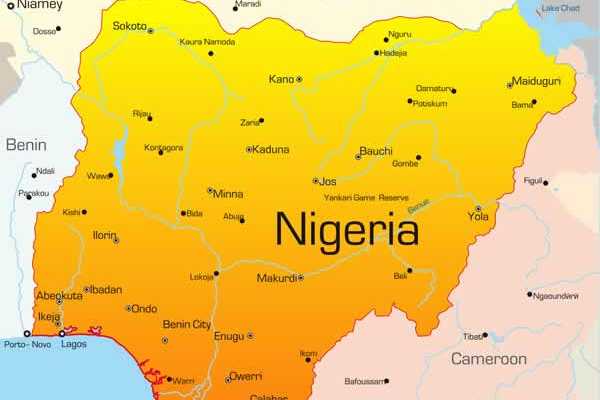
Contrary to the stand of many so-called wailing wailers, Nigeria is not a failed state, but is in the throes of state failure going by contemporary developments.
Common characteristics of a failing state include a weak and increasingly ineffectual central government with inability to raise taxes or other support in some parts of the country and has little practical control over some of its territory.
However, a failed state is a political body that has disintegrated to a point where basic conditions and responsibilities of a sovereign government no longer function properly.
Failed states create an environment of flourishing corruption and negative growth rates, where honest economic activity cannot flourish. Thus, state failure manifests itself when a state can no longer deliver physical security, a productive economic environment, and a stable political system for its people.
State collapse, breakdown, or downfall is the complete failure of a mode of government within a sovereign state. … State collapse may coincide with economic collapse. State collapse is not always synonymous with societal collapse, which often is a more prolonged process, as in the fall of the western Roman Empire, the collapse of Byzantium, the Caliphates, and the Ottoman Empire.
It was R. Briffault, in his book, The Making of Humanity who said: “A society based on false principles inevitably disintegrates. What really happens is that the phase of society, the order of things in which disregard of right is habitual and accepted, inevitably deteriorates, and perishes. However much the individual may temporarily benefit by inequity, the social organization of which he is a part and the very class which enjoys the fruits of that inequity, suffer inevitable deterioration through its operation. The ‘wages of sin is death’ by the inevitable operation of natural selections”.
There are five pathways to state failure: escalating ethnic conflicts, state predation, regional guerrilla rebellion, democratic collapse, and succession/reform crises, all of which are daily manifestations in our clime.
There is no doubt ours is a fragile or weak state characterized by low capacity or shaky legitimacy, leaving citizens vulnerable to a range of shocks and growing inability to maintain a monopoly on force in its declared territory.
Failing states or states in decline have the following characteristics: rise in political and criminal violence, loss of control of borders, rising ethnic, religious, and cultural hostilities and cleavages, weak institutions, food insecurity, rise in unemployment, inflation and fall in GDP with attendant rise in infant mortality, falling educational standards and a failed basic health delivery system.
The Quran has repeatedly directed our attention to the phenomena of nations that flourished in the past, but which went into ruin because of their way of life, the goals they pursued, the values around which their culture was organized, their actions and the consequences of those actions. By looking back at them we can avoid pitfalls. See Quran 24: 34; 40: 82-83; 21:11-14.
The Quran says: To every People is a term appointed: When their term is reached, not an hour can they cause delay, nor (an hour) can they advance (it in anticipation). (Quran 7:34)
Just as states can be fragile in various ways, not all regimes (or combinations of institutions) show the same characteristics of fragility. Stable political systems have institutions that mutually reinforce each other and are therefore able to manage tensions without a population resorting to violence.
Natural resources, ethnic composition and a colonial heritage do not in themselves drive fragility. Rather, it is the political manipulation of these factors that can impact on state stability.
Violent conflict is the ultimate manifestation of state fragility. However, it is not just an outcome of fragility, it can also be a driving factor of fragility.
Strong states offer high levels of security from political and criminal violence, ensure political freedom and civil liberties, and create environments conducive to the growth of economic opportunity. The rule of law prevails. Judges are independent. And so on.
Weak states typically harbor ethnic, religious, linguistic, or other intercommunal tensions. Urban crime rates tend to be higher and increasing. Also, the ability to provide adequate measures of other political goods is diminished or diminishing.
Physical infrastructural networks have deteriorated. Schools and hospitals show signs of neglect, particularly outside the main cities. GDP per capita and other critical economic indicators have fallen or are falling, sometimes dramatically; levels of venal corruption are embarrassingly high and escalating. Weak states usually honor rule of law precepts in the breach.
An analysis, published in Foreign Policy, based on 12 social, economic, political, and military indicators put Côte d’Ivoire at the top of the list of failed states, followed by the Democratic Republic of the Congo, Sudan, Iraq, Somalia, Sierra Leone, Chad, Yemen, Liberia, and Haiti.
Five oil-exporting countries make the top 60 list, including Venezuela (twenty-first), Indonesia (forty-sixth), and Nigeria (fifty-fourth).
The three top indicators used in constructing the Foreign Policy scorecard are uneven development, the loss of governmental legitimacy, and demographic pressure. Uneven development typically means that a small segment of the population is accumulating wealth while much of the society may be suffering a decline in living conditions. This unevenness is often associated with political corruption.
Governments that fail to effectively manage emerging issues and provide basic services are seen as ineffective. This often causes segments of the population to shift their allegiance to warlords, tribal chieftains, or religious leaders. A loss of political legitimacy is an early sign of state decline. This aptly describes the Nigerian situation where patently intelligent and intellectual minds shift their allegiance to non-state actors and budding warlords and other miscreants and nonentities.
The third top indicator is demographic pressure. In many that have experienced rapid population growth for several decades, governments are suffering from demographic fatigue, unable to cope with the steady shrinkage in per capita cropland and fresh water supplies or to build schools fast enough for the swelling ranks of children.
Foreign investment drying up and a resultant rise in unemployment are also part of the decline syndrome.
Another characteristic of failing states is a deterioration of the physical infrastructure—roads and power, water, and sewage systems.
Among the most conspicuous indications of state failure is a breakdown in law and order and a related loss of personal security. Unfortunately, Nigeria is getting to this point where some parts of the country are being increasingly controlled by bandits and terrorists.
Another indicator is long-standing civil conflicts. The Boko Haram insurrection in Northern parts of Nigeria comes under this purview and the sporadic actions in the Niger Delta and the IPOD menace in the Southeast.
The State is failing when it appoints hexagonal pegs into triangular holes.
The state is failing when it awards a N621 billion road contract to the Nigeria National Petroleum Corporation, NNPC. Yet the country has a Ministry of Works, and a specialized road construction agency, FERMA.
The State is failing when those responsible for supervising building construction works close their eyes to major infractions that would later lead to building collapse and the death of people.
The State is failing when officials responsible for superintending workers’ pension embezzle billions of the fund and are given a slap on the wrist for doing so.
The State is failing when security is so bad that insurrectionists, bandits, and terrorists use our soldiers and in some cases Generals for target practice.
The State is failing when with available remote sensing, drones, and modern satellite imaging technology, we fail to locate the hideouts of terrorists who storm our towns in broad daylight to whisk away students from our schools and cart them off on motor bikes into the forest: We are not talking of the Amazon or the tropical forest of Borneo or the Congo but a forest in the Savanna geographical belt.
Barka Jumu’ah and a happy weekend.
Related
You may like
Islam
Friday Sermon: Pride and the Pitfalls of Arrogance
Published
2 days agoon
December 4, 2025By
Eric
“Pride goes before destruction, and a haughty spirit before a fall.” Proverbs 16:18 .
The problem with pride is that it is a dangerous and deceptive sin. Nothing brings more destruction to our nation, homes, and relationships than a prideful spirit.
Adrian Rogers says, “Pride is a problem that all wrestle with, and those who think they don’t have it probably have more of it.”
A good self-image or self-esteem is not pride; neither is receiving honor or awards we’ve worked for.
Pride is an attitude of independence from God; it is a spirit of ungratefulness to God. A prideful person esteems himself better than other people.
The great sin of pride is a snare into which we fall all too easily, and its deceitful road leads only to destruction. Charles Haddon Spurgeon (Late Baptist preacher) declares that “There is nothing into which the heart of man so easily falls as pride, and yet there is no vice which is more frequently, more emphatically, and more eloquently condemned in Scripture.”
Unchastity, anger, gluttony, arrogance, conceit, drunkenness, and all that, are mere flea bites in comparison: it was through Pride that the devil became the devil: Pride leads to every other vice: it is the complete anti-God state of mind…… it is Pride which has been the chief cause of misery in every nation and every family since the world began.
Pride defies God; it is a fist in His face. Pride is what created the devil and ruined the human race in the Garden of Eden. God hates it, and when we harbor pride in our hearts, we become His adversary.
Pride divides society; there has never been an argument, a war, a divorce, or church split apart where pride was not the major factor.
Pride dishonors life; in the pursuit of honor, pride brings shame. Proverbs 29:23 says, “A man’s pride will bring him low, but the humble in spirit will retain honor.”
Pride is the road to ultimate ruin—national, domestic, financial, emotional, spiritual, and eternal ruin—because it destroys all that it controls.
Pride is a matter of the heart; if we are not right with God, we cannot be right with one another. But the grace of God is sufficient for everyone. James 4:6 says, “God resists the proud, but gives grace to the humble.”
There is none so bad he cannot be saved, there is none so good he doesn’t need saving. Defeating pride begins with humbling ourselves before God.
A profane person is one who has no spiritual conception, who sets no value on a birthright, and will sell it for red pottage. A profane person has no consciousness of the eternal, no commerce with the spiritual, is proud of animal ability, and acts as though independent of God. Profanity never prays, never worships, never speaks of spiritual intercourse, has no traffic with the eternities, no commerce with heaven.
What is pride? Pride is an attitude of independence from God. Pride is a spirit of ungratefulness to God. God has so blessed us. We have so many things. We act like we deserve it and have earned it, and it is ours.
Some may say that they worked for what they have. Who gave us the ingenuity to work? Who gave us the strength and energy? We do not have one thing that we have not received. Pride is esteeming ourselves better than other people.
A proud person becomes irritated when corrected for mistakes. A proud person accepts praise for things over which he or she has no control, such as beauty, talent, and abilities. Those are gifts.
C.S. Lewis said that pride gets no pleasure out of having something, only out of having more of it than the other man.
The Quran states that Allah does not like the arrogant and boastful, and those with an atom’s weight of arrogance in their heart will not enter Paradise. Humility, on the other hand, is a central goal of spiritual purification and is seen as the opposite of pride.
The concept of conceit, expressed in the Quran with terms like ‘mukhtal’ (self-deluded) and ‘fakhur’ (boastful), is a severely condemned spiritual disease. Pride is a direct challenge to Allah’s attribute of Al-Kabeer (The Greatest). Allah explicitly states His dislike for the arrogant and boastful.
Tafsir by authorities like Ibn Kathir on Quran 4:36 For Allah loveth not the arrogant, the vainglorious; and 57:23 For Allah loveth not any vainglorious boaster; clarifies that this refers to an arrogant individual who is pleased with themselves and boastful to others, while being ungrateful to Allah for His blessings.
In classical Islamic scholarship, pride (Al-Kibr) is a grave spiritual malady of the heart, defined by the Prophet Muhammad (SAW) as the dual act of rejecting divine truth and holding people in contempt. Classical authorities like Imam Al-Ghazali elaborate that it is an internal sense of self-aggrandizement that positions oneself above others and, ultimately, above the truth itself.
Across the 11 key Quranic verses on this topic, from the ‘pride in sin’ (2:206) “When it is said to him, “Fear Allah,” he is led by arrogance to (more) crime. Enough for him is Hell; – an evil bed indeed (to lie on)!” – to turning away from people scornfully (31:18); a consistent theme emerges: Pride is the primary veil that blinds the heart to guidance and severs the connection with Allah.
Ibn Kathir’s tafsir confirms that this was the foundational sin of Iblis and the cause of ruin for past nations who rejected their prophets. This synthesis establishes pride not merely as a negative trait but as a direct challenge to divine authority and a fundamental obstacle to spiritual purification.
In theological perspective, pride is a spiritual disease of the heart (qalb) that corrupts faith and actions.
Seen as the root of narcissism, inability to accept criticism, and contempt for others, leading to social isolation and spiritual ruin; Pride seals the heart from accepting truth and guidance from Allah and His messengers.
Overcoming pride and cultivating its opposite, humility, is a central goal of spiritual purification.
Prophet Muhammad (SAW) warned severely against it, stating that no one with an atom’s weight of arrogance in their heart will enter Paradise.
There is a powerful connection between pride and the senses. Verses like 22:9 (Disdainfully) bending his side, in order to lead (men) astray from the Path of Allah: For him there is disgrace in this life, and on the Day of Judgment We shall make him taste the Penalty of burning (Fire). And 75:33 Then did he stalk to his family in full conceit! show that internal arrogance is not abstract; it physically manifests in one’s posture, gait, and even the direction of one’s gaze. This proves that purification in Islam is holistic, requiring both internal change and external correction. — Al-Ghazali, Al-Qurtubi
A cross-verse synthesis of ‘pride in sin’ (2:206) and ‘pride of ignorance’ (48:26) uncovers a critical insight: pride creates a self-reinforcing cycle. The ‘pride of ignorance’ prevents one from seeking knowledge, and the ‘pride in sin’ prevents one from accepting correction, trapping the individual in a downward spiral of ignorance and disobedience, a spiritual feedback loop that only humility can break.
One recurring theme emphasized throughout the Quran is the importance of humility and the warning against pride and arrogance. These negative traits are viewed as obstacles in the spiritual journey, hindering individuals from attaining closeness to Allah and fostering harmonious relationships with others.
Surah Luqman, verse 18, states formerly cited highlights the detestable nature of arrogance and also contrary to the qualities that Allah desires in His servants.
“Indeed, He does not like the arrogant.” (Quran 16:23). This verse serves as a clear message that pride and arrogance find no favor in the sight of Allah.
Surah Al-Baqarah, verse 206, illustrates the grave consequences of arrogance. It highlights that when individuals become self-absorbed and disregard the guidance of Allah, they pave the way for their own spiritual downfall.
Surah Al-Furqan, verse 63, provides a contrasting image: “And the servants of the Most Merciful are those who walk upon the earth easily, and when the ignorant address them [harshly], they say [words of] peace.” This verse showcases the virtue of humility in the face of adversity.
The Holy Quran serves as a beacon of guidance for Muslims, offering profound insights into various aspects of life. Among the recurring themes emphasized in the Quran are the condemnation of pride and arrogance, and the promotion of humility. These negative traits are seen as hindrances to spiritual growth and detrimental to one’s relationship with Allah and fellow human beings. These verses underscore the importance of humbleness, while warning against the pitfalls of arrogance.
By cultivating humility in their hearts and actions, believers can strive to embody the virtues that Allah seeks in His servants, fostering an atmosphere of love, respect, and harmony within themselves and their communities.
Today, we celebrate the birthday of a virtuous woman of impeccable humility and godliness who has demonstrated forbearance and patience. A paragon of beauty, resilience and acceptance: We present to you our amiable sister Alhaja Lateefah Abimbola Kuru (the last daughter), retired but not tired and ever smiling. May Allah bless her new age and bless her home. Grant her good health and the wherewithal to take care of Amal, her lovely daughter. Bola, happy birthday and Allah’s everlasting blessings.
Barka juma’at and happy weekend.
Related
Islam
Friday Sermon: Which of the Favours of Your Lord Will You Deny? Surah Ar-Rahman
Published
1 week agoon
November 28, 2025By
Eric
The teachings of Al- Qur’an are universal, addressed to all people throughout the world regardless of their creed and colour. They enlighten man’s soul, purify his morals, condemn all wrongs, order good deeds and call for the establishment of justice and fraternity through obeying Allah as the supreme authority. Surah Ar-Rahman has benefits in education, indicating that the properties of educators are generous, compassionate, gentle, polite and morality to their students and anyone (Personal Competence).
Surah Rahman is the 55th chapter of the Quran and has 78 verses. It is often referred to as “The Beneficent.” It highlights the attributes of Allah, particularly His mercy and generosity. The surah is notable for its repeated refrain, “Fabi ayyi ala’i rabbikuma tukaththiban?” (So, which of the bounties of your Lord will you deny?), which serves to remind and awaken the listener to the blessings they receive from Allah.
The repetition of this question challenges those who deny the existence or power of Allah and invites them to reflect on their own limited abilities in comparison to the infinite power of Allah.
Surah Rahman also contains other instances of repetition. For example, the phrase “Then which of the blessings of your Lord will you both (jinns and men) deny?” is repeated six times in the surah.
Similarly, the phrase “So which of the favors of your Lord would you deny?” is repeated five times in the surah. This repetition further emphasizes the importance of gratitude and encourages the listener or reader to reflect on the countless blessings that Allah has bestowed upon them.
Another example is the repetition of the phrase “Which of the powers of your Lord can you (people) deny?” This phrase is repeated nine times in the surah, and it serves to highlight the power and might of Allah.
Overall, the repetition in Surah Rahman serves to emphasize key points and make them more memorable for the listener or reader. The repetition of the question “Which of your Lord’s blessings would you deny?” throughout the surah reminds us of Allah’s countless blessings and encourages us to express gratitude to Him. It also serves as a rhetorical device to challenge those who deny or reject the existence of Allah, inviting them to reflect on the blessings that are evident in the world around them.
The repetition of this question, along with other phrases such as “Then which of the blessings of your Lord will you both (jinns and men) deny?” and “So which of the favors of your Lord would you deny?” further emphasizes the importance of recognizing and acknowledging Allah’s blessings and encourages us to think about the ways in which we may be ungrateful or unaware of these blessings.
Finally, the repetition of the phrase “Which of the powers of your Lord can you (people) deny?” serves to highlight the power and might of Allah and challenges those who deny His existence or power to reflect on their own limited abilities in comparison to the infinite power of Allah.
Surah Rahman also includes other forms of repetition, such as parallelism and refrains. Parallelism is a literary device in which similar ideas are expressed using different words or phrases. For example, in verse 13, the phrase “Then which of the favors of your Lord will you deny?” is repeated twice, with slightly different wording: “Which of the favors of your Lord will you deny? He created man from clay.” This repetition creates a sense of rhythm and balance and helps to drive home the message of gratitude and recognition.
In the great astronomical universe there are exact mathematical laws, which bear witness to Allah’s Wisdom and also to His favors to His creatures; for we all profit by the heat and light, the seasons, and the numerous changes in the tides and the atmosphere, on which the constitution of our globe and the maintenance of life depend.
To be taken both literally and figuratively. A man should be honest and straight in every daily matter, such as weighing out things which he is selling: and he should be straight, just and honest, in all the highest dealings, not only with other people, but with himself and in his obedience to Allah’s Law. Not many do either the one or the other when they have an opportunity of deceit.
Justice is the central virtue, and the avoidance of both excess and defect in conduct keeps the human world balanced just as the heavenly world is kept balanced by mathematical order.
How can Allah’s favors be counted? Look at the earth alone. Life and the conditions here are mutually balanced for Allah’s creatures. The vegetable world produces fruit of various kinds and corn or grain of various kinds for human food. The grain harvest yields with it fodder for animals in the shape of leaves and straw, as well as food for men in the shape of grain. The plants not only supply food but sweet-smelling herbs and flowers.
The whole Surah is a symphony of Duality. The things and concepts mentioned in this Surah are in pairs: man and outer nature; sun and moon; herbs and trees; heaven and earth; fruit and corn; human food and fodder for cattle; things nourishing and things sweet-smelling; and so on throughout the Surah. Then there is man and Jinn. “Will ye deny?” that is, fail to acknowledge either in word or thought or in your conduct. If you misuse Allah’s gifts or ignore them that is equivalent to ingratitude or denial or refusal to profit by Allah’s infinite Grace.
The ships-sailing ships and steamers, and by extension of analogy, airplanes and airships majestically navigating the air-are made by man, but the intelligence and science which made them possible are given by man’s Creator; and therefore the ships also are the gifts of Allah.
The most magnificent works of man-such as they are – are but fleeting. Ships, empires, the wonders of science and art, the splendors of human glory or intellect, will all pass away. The most magnificent objects in outer Nature – the mountains and valleys, the sun and moon, the Constellation Orion and the star Sirius – will also pass away in their appointed time. But the only One that will endure forever is the “Face” of Allah. Tekbir!
Every single creature depends on Allah for its needs: of all of them the Cherisher and Sustainer is Allah. “Seek (its needs)”: does not necessarily mean ‘seek them in words’: what is meant is the dependence: the allusion is to the Source of supply.
Allah is still the directing hand in all affairs. He does not sit apart, careless of mankind or of any of His creatures. But His work shows new splendor every day, every hour, every moment.
Allah gives to both good and evil men a chance in this period of probation; but this period will soon be over, and Judgment will be established. To give you this chance, this probation, this warning, is itself a favor, by which you should profit, and for which you should be grateful.
If you think that because you do things in secret, or because some of your sins do not seem to meet their inevitable punishment or some of your good deeds seem to go unnoticed, do not be deceived. Judgment will soon come. You cannot possibly escape out of the zones in which your lives have been cast, without authority from Allah. Be grateful to Allah for the chances He has given you.
Blessed be the name of thy Lord, Full of Majesty, Bounty and Honor.
The question in Surah Rahman is a wake-up call for all of us. It reminds us that our time in this world is short. We don’t know when we will die or when the Day of Judgment will come. So, we need to make the most of every moment and every blessing. We need to use our time and energy to do good and get closer to Allah. We need to change our bad habits and develop good ones. We need to be kind and generous to others. And we need to remember that everything we have is a gift from Allah. It is not because of our own efforts or abilities. This should make us humble, and it should also make us more grateful.
At this hour, we pray to Allah to grant divine healing to the sick as we remember our sister Sobura, who is currently afflicted. May Allah open the gate of divine healing for her and ease her pains as she currently undergoes chemotherapy.
May Allah teach us how to be grateful for all we have been given.
Barka Juma’at and a happy weekend!
Related
Islam
Friday Sermon: Charity: Believer’s Shade on the Day of Ressurection
Published
2 weeks agoon
November 21, 2025By
Eric
“Give (in charity) and do not give reluctantly lest Allah should give you in a limited amount; and do not withhold your money lest Allah should withhold it from you.”
Allah enjoins all Muslims to spend in charity as much as possible. Spending in charity is an obligation which is not only desirable and beneficial to the giver, but also spiritually rewarding. The prophet (SAW) said: “The believer’s shade on the Day of Resurrection will be his charity.” – Al-Tirmidhi, Hadith 604 He went on to say: “Give (regular charity) out of your property, for truly it is a purifier, and be kind to your relatives and acknowledge the rights of the poor, neighbours and (those in need who seek your help).” – Fiqh-us-Sunnah, Volume 3, Number 3
In saying these, the Holy Prophet (SAW) was only corroborating what the Quran said. For Allah says in the Holy Quran Chapter 63 Surah Munafiqoon verse 10: And spend something (in charity) out of the substance which We have bestowed on you, before Death should come to any of you and he should say, “O my Lord! Why didst Thou not give me respite for a little while? I should then have given (largely) in charity, and I should have been one of the doers of good”. (Quran 63:10)
Allah also says in the Holy Quran, Surah Baqarah, verse 261: The parable of those who spend their substance in the way of Allah is that of a grain of corn: It groweth seven ears, and each ear hath a hundred grains. Allah giveth manifold increase to whom He pleaseth: And Allah careth for all and He knoweth all things. (Quran 2:261)
Allah goes on in the same Surah Baqarah, verse 254: O ye who believe! Spend out of (the bounties) we have provided for you, before the Day comes when no bargaining (will avail), nor friendship, nor intercession. Those who reject Faith–they are the wrongdoers. (Quran 2:254)
In same Surah Baqarah verse 274, Allah says: Those who (in charity) spend of their goods by night and by day, in secret and in public, have their reward with their Lord: On them shall be no fear, nor shall they grieve. (Quran 2:274)
In Surah Baqarah verse 110, Allah warns us: And be steadfast in prayer and regular in charity: And whatever good ye send forth for your souls before you, ye shall find it with Allah: For Allah sees well all that ye do. (Quran 2:110)
The Hadith is full up with several narrations enjoining the virtues of giving charity and as believers, it is incumbent on us to follow these admonitions.
The Messenger of Allah (SAW) said that Allah Says: ‘Spend (on charity), O son of Adam, and I shall spend on you.’ Sahih Al-Bukhari Hadith 4.11
Narrated by Abu Hurairah. A man asked the Prophet (SAW), “O Allah’s Messenger (SAW)! What kind of charity is the best?” He (SAW) replied. “To give in charity when you are healthy and greedy hoping to be wealthy and afraid of becoming poor. Don’t delay giving in charity till the time when you are on the death bed when you say, ‘Give so much to so-and-so and so much to so-and so,’ as at that time the property is not yours but it belongs to so-and-so (i.e. your inheritors).” Sahih Al-Bukhari Hadith 2.492
Narrated by Haritha bin Wahab. I heard the Prophet (SAW) saying, “O people! Give in charity as a time will come upon you when a person will wander about with his object of charity and will not find anybody to accept it, and one (who will be requested to take it) will say, “If you had brought it yesterday, I would have taken it, but today I am not in need of it.” Sahih Al-Bukhari Hadith 4.793
Narrated by Adi bin Hatim I heard the Messenger of Allah (SAW) saying, “Save yourself from the (Hell) Fire even with half a date (to be given in charity); and if you do not find a half date, then with a good pleasant word.” Sunna of Abu-Dawood, Hadith 2860
Narrated by Abu Sa’id al-Khudri .The Prophet (SAW) said: ‘A man giving a dirham as sadaqah (charity) during his life is better than giving one hundred dirhams as charity at the moment of his death.’ Sahih Al-Bukhari Hadith 6.543
Narrated by Abdullah bin Umar. Allah’s Messenger (SAW) said, “Envy is not permissible except of two men. A man whom Allah has given the knowledge of the Book and he recites it during the hours of the night, and a man whom Allah has given wealth, and he spends it in charity during the night and the hours of the day.”Sahih Al-Bukhari Hadith 3.764
Narrated by Asma. Allah’s Messenger (SAW) said, “Give (in charity) and do not give reluctantly lest Allah should give you in a limited amount; and do not withhold your money lest Allah should withhold it from you.”
Abu Kabshah al Anmari reported that the Prophet (SAW) said: “I swear upon three (things) and ask you to memorize my words: ‘Sadaqah (charity) given from a property never decreases it; a man who suffers injustice and is patient with it, Allah will grant him strength; a man who starts begging, Allah will cause him to be poor.” Related by Tirmidhi.
Abu Hurairah reported that the Messenger of Allah (SAW) said: “Allah receives charity by His right hand, and then He causes it to grow for each of you. Just as you raise a horse, colt, foal, or young weaned camel, so that morsel becomes as large as the Mount of ‘Uhud.” Sahih Muslim Hadith 7061
Narrated by Abdullah ibn ash-Shikhkhir. Allah’s Messenger (SAW) said: ‘The son of Adam claims: ‘My wealth! My wealth! O son of Adam, is there anything as your belonging except that which you consumed, which you utilized, or which you wore and then it was worn out, or that which you gave as charity and sent it forward (for the life hereafter)?’ Al-Tirmidhi Hadith 1527
Narrated by Mu’adh ibn Jabal. The Messenger of Allah (SAW) said: ‘Charity obliterates sins just as water extinguishes fire.’
There are many who constantly give in charity. They have been endowed by God and cheerfully give in charity to their fellow men. They establish foundations, relief agencies and hearken to the cries of the needy; during Ramadan they contribute to feeding the poor, they give to the aged and destitute and are fond of contributions to the mosque and churches. These men and women often grant scholarships to discerning pupils who would have dropped out of school for lack of funding. They are often self effacing and do not boast about their acts of giving.
On Monday, 24th November one of such men we have described turns 77. Many of us know him and he knows himself, but most important, Allah knows him. A quintessential philanthropist and Mumin, we pray that Allah will preserve him and teach him to number his days. May Allah bless his new age, grant him good health and bless his progeny. Here is wishing happy birthday to our invisible man of God. May his days be long and in good health, Amen.
May Allah give us the Grace to give in charity and may he obliterate our sins.
Barka Juma’at and a happy weekend!
Related


The Incredible World of Capt. Segun Sotomi @45
Adding Value: Heal and Move On by Henry Ukazu
Open Letter to Global Leadership: Forging New Intergenerational Partnership for Sustainable Governance
Meet Muhammad Ashfaq Hussain, CEO at Profound Realtors
How Dr. Fatima Ibrahim Hamza (PT, mNSP) Became Kano’s Healthcare Star and a Model for African Women in Leadership
Era of Nationwide Fuel Queues Has Come to An End, Says Dangote
The Oracle: When a Nation Undermines Citizens’ Rights (Pt. 4)
Kidnapped Kwara Monarch, Six Others Escape from Bandits’ Custody Amid Vigilante Onslaught
Alex Otti Pays Solidarity Visit to Nnamdi Kanu in Sokoto Prison
After Weeks of Incarceration, Cameroon Opposition Leader Dies in Detention
US Moves to Impose Visa Restrictions on Sponsors, Supporters of Violence in Nigeria
Just In: Defence Minister Abubakar Badaru, Resigns, Tinubu Accepts
US Lawmakers Meet Today over Reported Christian Genocide
Tinubu Names Immediate Past CDS Chris Musa As New Defence Minister
Trending
-
News6 days agoKidnapped Kwara Monarch, Six Others Escape from Bandits’ Custody Amid Vigilante Onslaught
-
Featured6 days agoAlex Otti Pays Solidarity Visit to Nnamdi Kanu in Sokoto Prison
-
Featured6 days agoAfter Weeks of Incarceration, Cameroon Opposition Leader Dies in Detention
-
World4 days agoUS Moves to Impose Visa Restrictions on Sponsors, Supporters of Violence in Nigeria
-
News5 days agoJust In: Defence Minister Abubakar Badaru, Resigns, Tinubu Accepts
-
USA5 days agoUS Lawmakers Meet Today over Reported Christian Genocide
-
National5 days agoTinubu Names Immediate Past CDS Chris Musa As New Defence Minister
-
Opinion4 days agoRedefining Self-leadership: Henry Ukazu As a Model