Headline
COVID-19: The World’s Biggest Killer
Published
5 years agoon
By
Eric
By Eric Elezuo
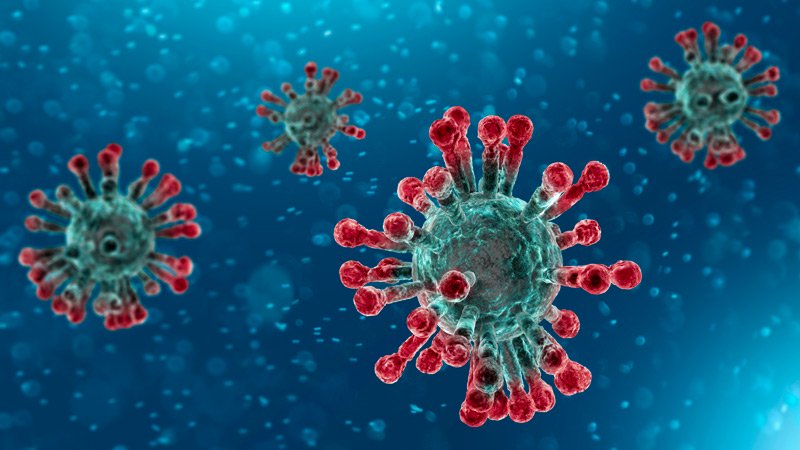
Watching the frail nature of renowned Nigerian broadcaster and Chairman, Biscon Communications, Prince Bisi Olatilo, while he tried to dispel the rumours of his death, one couldn’t help but shed a tear or two, and of course curse the spirit behind the deadly COVID-19, which ravaged the entire the world in 2020 while becoming a full blown pandemic.
The disease did not just make an appearance, but devastated businesses, livelihoods, social lives, families and day to day existence. It broke an all time record of the world’s biggest killer.
Much as the world may not claim ignorance of having seen so devastating, so hazardous and uncompromising a disease, one thing is obvious, none of the diseases in the past has appeared so stubborn and persistent that even a nine months lockdown could not drive it away completely. The COVID-19 made a dramatic return, claiming more lives in quick succession now than before. As at the present, newly two million lives have been wasted even as World Health Organisation (WHO) battles the new virus strains.
The killer disease bared its full pangs from inception on December 9, 2019 when it made its notorious appearance in the Chinese town of Wuhan. What started like a child’s play was later to metamorphosed into a full blown pandemic, paralysing the world’s economy, ruining social, entertainment and religious lives of the people as well as creating a distance between one and another.
According to Science Direct, “the coronavirus disease 19 (COVID-19) is a highly transmittable and pathogenic viral infection caused by severe acute respiratory syndrome coronavirus 2 (SARS-CoV-2), which emerged in Wuhan, China and spread around the world. Genomic analysis revealed that SARS-CoV-2 is phylogenetically related to severe acute respiratory syndrome-like (SARS-like) bat viruses, therefore bats could be the possible primary reservoir.”
By January 2020, the virus had eaten deep into the fabrics of the society, causing nations to systematically declare unspoken sanctions against one another as international travels became totally restricted. No one wanted the other into his territorial space. Apart from the war declared on humanity by the virus, there was also a silent war declared by man against man; do not trespass into my territory. There were dire consequences for defaulters. The world was on lockdown! And the midst of the lockdown, the virus continued its mass slaughter.
In Nigeria, the matter of COVID-19 assumed greater seriousness when on April 17, one of the supposedly strong men of the Muhammadu Buhari’s administration, who was the Chief of Staff, Mallam Abba Kyari died from complications from the disease. This was barely two months after the first case was reported in Nigeria, on February 26, 2020, of an Italian expatriate, who inadvertently recovered from the ailment. Kyari’s death jolted the Nigerian public, especially the elites. This was a disease that has no respect for class or status. The dice was cast. It became obvious that no one was safe. The safest place to hide therefore, became the embrace of discipline with its attendant features that involve hand washing, mask wearing and keeping a safe distance from the public irrespective of how well known or close the other person is to you.
Nigeria was not the only country that lost its CoS, as Guinea also recorded the death of Sékou Kourouma. He was the second high-profile death from COVID-19 within a 24-hour period after that of the country’s elections body head, Amadou Salif Kebe.
From then onwards, there was no looking back as the ailment claimed personality after personality, not to talk of ‘ordinary’ people who did not get a mention as a result of their status.
The killer disease showed no mercy, cutting short prevailing happiness in homes and rendering children fatherless, and motherless in most cases. On June 25, another Nigerian political heavyweight, Senator Abiola Ajimobi, bowed to the disease. He was 70 years. Abiola was a two term governor of Oyo State. Shortly afterwards, Senator Kashamu Buruji followed suit. Struggling with the pangs of death, Buruji had brokered a peace deal with one of his major foes. He knew he was not going to make, and so put through a pathetic call to billionaire businessman, Kesington Adebutu, and made peace. His words were rapid and desperate, and his voice shaky. Though the bitterness of death was severe and obvious in his voice, he must have died a happy man.
Following closely in July, another heavyweight of the Buhari administration, Mallam Isah Funtua, joined the fray of fallen heroes. He was a notable force in Nigeria’s political terrain.
It is worthy of note that almost all the state governors had contracted the virus at one time or another. Some of them are Governor of Oyo, Seyi Makinde, Kaduna State’s Nasir El-Rufai and Bala Mohammed of Bauchi State, Others are Governor Okezie Ikpeazu of Abia State, Governor Babajide Sanwo-Olu of Lagos State among others.
Elsewhere, in July, Naya Rivera bowed out, just as the US Supreme Court Justice, Ruth Bader Ginsburg died at age 87. It was a moment of emotion as the disease claimed Jeopardy! host, Alex Trebek at age 80. These were men and women regarded as movers and shakers of world’s politics and policy makers.
The disease was no respecter of persons. It claimed the heavyweight and paperweight, the young, the not very young as well as the aged in its sweeping movement.
As at April, 2020, the virus had cleared over 1000 African personalities from former presidents, prime ministers and lawmakers, to entertainment icons and top sportsmen. The agony of the of the deaths was that most of these greats could not get the send-off they would have been accorded in “normal times.”
Dr. Anastasie Akamba, head of a district hospital in Yaounde, Cameroon, died from COVID-19. In the same vein, 56-year-old South African Queen Noloyiso Sandile, widow of the late King Maxhobha Sandile, passed away on 8 July 2020 following a short illness.
Ghana was not spared as it lost prominent medical experts in one fell swoop including an Orthopaedic Surgeon, a General Surgeon, a paediatrician and a Consultant Physician/Academic.
The casualties were Professor Jacob Plange-Rhule, Dr. Harry Boateng, a Specialist Paediatrician and Medical Superintendent at the Kwadaso SDA Hospital. A retired Orthopaedic Surgeon, Dr. Emmanuel Twagirayesu as well as Dr. Richard Kisser, a Consultant Surgeon with the Trust Hospital in the capital Accra.
On the political scene, Anthony K. K Sam, the Mayor of the Western Region’s oil-rich twin city of Sekondi-Takoradi had succumbed to the disease on Friday, June 12 before enigmatic leader, John Jerry Rawlings fell to the virus as well days after giving his mother a befitting burial.
Across Africa, and the world at large, the story remained the same; a tale of deaths and untold crises.
In Nigeria, three phases of lockdown were recorded yet the disease has maintained an upper hand, making a mincemeat of all efforts previously put in to curtail it. The impact of the virus did not only waste human lives, it also has a debilitating effect on economies with Nigeria, among a few other economies sliding into recession, the second in less than five years, and the worst since 1987. The country is still neck deep in it..
Just before the turn of the year, Nigeria announced that it has unceremoniously entered a fresh phase of the pandemic. The chairperson of the Presidential Task Force (PTF) and Secretary to the Government of the Federation (SGF) Boss Mustapha, gave the indication, lamenting the risk of not just losing the gains from the hard work of the last nine months, but also losing precious lives of citizens.
Speaking through the Minister of Aviation, Sen. Hadi Sirika, Mustapha said: “the events and statistics of the last two weeks, within and outside Nigeria, have been very mixed.
“On the one hand, the cheering news of the COVID-19 vaccine, while on the other hand, we have witnessed spikes in the number of infections at home and abroad.
“The real threat is upon humanity and the progress made in the global health sector in the last five decades or more.
”In Nigeria, the indication is that we have entered a second wave of infections and we stand the risk of not just losing the gains from the hard work of the last nine months but also losing the precious lives of our citizens.
“The PTF believes that if we do the right things, adhere to the NPIs and step up our testing and detection, loss of lives will be minimised and the rising curve will begin to flatten”, the chairperson said.
Mustapha further stated that “we are in a potentially difficult phase of the COVID-19 resurgence; accessing the hope offered by the arrival of the vaccine is still some time ahead.
”Vaccines alone cannot cure the virus, rather, but a combination of initiatives, including the NPIs; that more than ever before, we need compliance.”
The SGF lamented lost lives and vow to ‘escalate our risk communication and community engagement strategies to higher levels’.
As at Friday, Nigeria has recorded a total of 107, 345 cases with 84, 535 recoveries and 1, 413 deaths. There are presently over 20, 000 active cases, and the figures keep rising. On the global stage, about two million deaths have been recorded while there 93.3 million infections with 51.5 million recoveries. Consequently, about 42 million COVID-19 active cases is still being managed as today.
While the virus has sent a whole lot to their early graves, a lot has survived the scourge and its deadly attacks which involve dry cough, loss of taste, difficulty in breathing among others. The survivors have sorry tales of near death experiences – an experience they unanimously agreed that no one should go through.
Among some Nigerians, who had gone through the hell of COVID-19 and survived include Mrs Laila Saint Matthews-Daniel, veteran broadcaster, Prince Bisi Olatilo, Ali Baba, Yomi Badejo-Okusanya, Retired Police AIG,Tunji Alapini, Seun Fakorede, Ivuoma Tom, Seun Osowobi, presidential aide, Babafemi Ojudu, Chairman, DAAR Communications, High Chief Raymond Dokpesi and entire family and others.
Speaking exclusively to The Boss, famous public speaker, Mrs Matthews-Daniel said that the experience should not be wished any living soul. She narrated in her own words:

Laila St.Matthews- Daniel
For stand-up comedian, Atunyota Akpobome, known as “Alibaba”, Nigerians must be cautious and keep safe. He maintained that COVID-19 pandemic is real.
In a video, which was uploaded on his Instagram page (alibabagcfr), the laugh merchant claimed that he just survived the deadly virus, and urged doubting Thomases to desist from describing COVID-19 pandemic as a scam.
“COVID-19 is real. Don’t let anyone tell you it is a scam. I just came out of isolation, several people died, while I was there.
“Some of my close friends know and they were very supportive.
“I thank the Lagos State Governor, the Commissioner of Health, Managing Director of the COVID-19 Isolation Centre in Yaba, doctors, especially Dr Nifemi, who are risking their lives to keep us alive. Thanks also to the nurses.
“COVID-19 is real. Observe all the protocols, people are dying, and it is not a joke.
“In fact, anyone who says COVID-19 is a scam, is a compound idiot and a fool,” he wrote.
I NEVER BELIEVED I WOULD MAKE OUT ALIVE – Ivuoma Tom
Speaking with the United Nations International Children’s Emergency Fund (UNICEF), a registered nurse based in Benin, Ivuoma Tom, said her survival represents a second chance to live for which she is grateful.
Ivuoma narrated in part as follows:
“Although the hospital where I work did the best that they could to ensure our safety, I was exposed to the virus when I came into contact with a patient who we didn’t know had been exposed. My colleague and I went into self-isolation for fourteen days after the exposure. My test result came out within the period and I tested positive for COVID-19. I thought everything was alright because I was asymptomatic, but on the sixteenth day, this deadly disease got a hold of me
“The sixteenth day after exposure, I started having difficulty breathing. I called NCDC, they came to pick me up and took me to the isolation centre in Lekki, Lagos. That night was horrible. I was wheezing like somebody who has asthma and at some point, I could not talk. I was so scared. Luckily, an oxygen cylinder was brought in and I was able to breathe through it before I was transferred to the Infectious Disease Hospital in Yaba. I stayed on oxygen for five days. Those five days were days of restlessness, sorrow and depression.”
“I am very fortunate to have a strong support system. My fiancé, my sister and her husband were strongly there for me,” Ivuoma said.
“On the third day of being on oxygen, I sent a message to my fiancé. I told him I didn’t know if I was going to make it and whatever happens, he should stay strong. He called me immediately and told me I was not going anywhere. He played a vital role in ensuring that I was transferred to Infectious Disease Hospital for proper management.”
“I am not a careless person, yet I contracted the virus. COVID-19 has taught me to be much more careful in observing all precautions, such as handwashing, wearing a facemask and keeping physical distance. Now I hardly go out except to work. I feel really bad whenever I see someone who still thinks coronavirus is a scam in Nigeria.”
IT WAS AN EXPERIENCE I DON’T WISH ANYONE TO HAVE – Seun Osowobi
And for those, who erroneously believe that being young exempts them from the virus, it is imperative to note that anti-rape campaigner, Oluwaseun Ayodeji Osowobi, was 29 years old when she fell victim of coronavirus during the early days. She narrated that the symptoms began shortly after she returned from a trip to London.
She told Al Jazeera genesis of her traumatic experience
“It feels great to have survived COVID-19. If you see the data of people who have passed away due to the virus, they are alarming. I’m really grateful to be alive but also grateful for the experience as I am able to share with people that COVID-19 is not a hoax like many people may believe in Nigeria.
“I had high fever, was coughing heavily and had loss of appetite. I had a lot of symptoms on the COVID-19 list so I knew I had to get tested just to be sure of what the situation was because I was feeling really sick and wasn’t getting better.
“The virus kicked my system. It made me very weak. I was dizzy every second, I was throwing up. I lost my sense of taste but my sense of smell heightened so I could smell everything like water, food, even soaps. Everything was just disgusting to me. It was a very tough period, a very tough moment for me but I am happy I beat it. It was an experience I don’t wish anyone to have.
“The first thing that came to my mind was, “Am I going to die?” I feared that am I going to be one of the people to be counted as dead. I was asking myself, “Is Nigeria ready to handle the situation? Is Lagos state capable to handle the situation as of now?”
Many people still deny the existence of COVID-19, and many Nigerians go about their business every day without putting on a facemask or maintaining physical distance, but survivors say such people are playing with their lives.
In his message to the people of Lagos, Governor Babajide Sanwo-Olu cautioned that a way must be found “to delicately balance the imperatives of life and livelihood. With this in mind, the only solution available to us is to take responsibility for all our actions, and to understand that we must stay safe not only for ourselves but for the sake of the entire society.”
Related
You may like
Headline
Tinubu’s 2026 Budget Bad Omen for Nigerians – PDP
Published
38 minutes agoon
December 21, 2025By
Eric
By Eric Elezuo
The 2026 Appropriation Bill presented by President Bola Tinubu before a joint session of the National Assembly has been rated below par, and described as a bad omen for Nigerians, by the opposition Peoples Democratic Party (PDP).
The Tanimu Turaki-led Peoples Democratic Party (PDP) said on Friday that President Bola Tinubu’s 2026 budget would add to the sufferings of Nigeria rather than giving them any renewed hope or consolidation of economic reforms.
The party noted that there would be no renewed hope in an environment where hunger, insecurity and other forms of deprivation were the lot of Nigerians.
It cited the 2025 World Bank Poverty & Equity Brief, which placed more than 30.9% of Nigerians below the international extreme poverty line.
“This shows that there is growth without prosperity for our citizens, meaning that despite GDP growth, poverty remains endemic”, the National Publicity Secretary, Comrade Ini Ememobong, stated on Friday soon after Tinubu presented the 2026 Appropriation Bill of N58.18trillion to a joint session of the Senate and the House of Representatives in Abuja.
Ememobong noted: “The budget, which is themed ‘Budget of Consolidation, Renewed Resilience and Shared Prosperity’, claims that the economy is stabilising and promises shared prosperity.
“In response, we see it rather as a budget of consolidated renewed sufferings, because what Nigerians have witnessed since the birth of this administration is nothing but unmitigated hardship on the people, while the governing class relishes in affluence.
“Nigerians have suffered greatly from many economic woes under this administration.
“President Tinubu cited a 3.98% GDP growth rate as evidence of economic stabilisation under his administration.
“However, it is well established that economic growth alone does not and cannot guarantee improved living standards for citizens.
“According to the 2025 World Bank Poverty & Equity Brief, more than 30.9% of Nigerians live below the international extreme poverty line. This shows that there is growth without prosperity for our citizens, meaning that despite GDP growth, poverty remains endemic.
“This clearly indicates that whatever economic gains exist are not reaching the majority of Nigerians.”
The PDP rejected the President’s figures on economic progress, saying rather that Nigeria has been on rever gear.
“The President stated that the economy under his watch grew by 3.98% without stating the sectors that stimulated the growth or identifying those who benefitted from it. This figure reflects the economic decline the nation has suffered under the leadership of the APC-led Federal government when compared to the growth rate of 6.87% recorded in 2013(same period under the last PDP administration), which was driven largely by non-oil sectors such as agriculture and trade.
“Today, the President celebrates a 3.98% growth rate, whereas a reality check reveals excruciating hunger, a high cost of living, and other indices of economic hardship, which Nigerians are currently facing.
“While we acknowledge the security allocation in the 2026 budget, we must remind the government and Nigerians that allocation alone is insufficient.”
The party added, “We therefore, demand effective and transparent execution to ensure that security funding translates into tangible improvements -modern equipment, adequate ammunition, improved intelligence capabilities, and better welfare for security personnel who are currently engaged in different theatres of armed conflict, where criminal non-state actors are alleged to possess superior arms compared to our security forces.
“Overall, we are deeply concerned about the unapologetic admission by the President that the execution of the 2024 capital budget had been extended to December 2025, while the 2025 budget is still in force.
“This confirms the long-standing rumours of the concurrent operation of multiple budgets.
“This cannot be described as best practice, as every budget has a defined period of operation and no two budgets should operate concurrently. The operation of different budgets at the same time undermines fiscal discipline, transparency, and accountability. These multiple budgetary regimes show yet another unprecedented negative feat by this APC Bola Tinubu-led administration.
“We hereby call for increased transparency and accountability in the administration of the finances of our country, as these have been conspicuously absent so far under this administration.
“Financial accountability and transparency are critical to public trust-building and effective public administration.”
The budget with the theme, “Budget of consolidation, Renewed Resilience and Shared Prosperity”, is N3.19trillion higher than the N54.99trillion approved for 2025.
The key aggregates of the budget are expected revenue of N34.33trillion; debt servicing of N15.52trillion; recurrent (non‑debt) expenditure of N15.25trillion; capital expenditure of N26.08trillion; a deficit of N23.85trillion representing 4.28% of GDP.
In addition, the budget will be benchmarked at $64.85 per barrel of crude oil, daily oil production of 1.8million barrels and a dollar/naira exchange.
Below is the full presentation of Tinubu’s 2026 Budget:
FULL SPEECH BY PRESIDENT BOLA AHMED TINUBU AT THE PRESENTATION OF THE 2026 NATIONAL BUDGET
“Budget of Consolidation, Renewed Resilience and Shared Prosperity”
Distinguished Senate President,
Rt. Honourable Speaker and Honourable Members of the House of Representatives,
Distinguished Senators and Honourable Members of the National Assembly,
Fellow Nigerians,,
1. I am here today to fulfil an essential constitutional obligation by presenting the 2026 Appropriation Bill to this esteemed Joint Session of the National Assembly for your consideration.
2. This budget represents a defining moment in our national journey of reform and transformation. Over the last two and a half years, my government has methodically confronted long‑standing structural weaknesses, stabilised our economy, rebuilt confidence, and laid a durable foundation for the construction of a more resilient, inclusive, and dynamic Nigeria.
3. Though necessary, the reforms have not been painless. Families and businesses have faced pressure; established systems have been disrupted; and budget execution has been tested. I acknowledge these difficulties plainly. Yet, I am here, today, to assure Nigerians that their sacrifices are not in vain. The path of reform is seldom smooth, but it is the surest route to lasting stability and shared prosperity.
4. Today, I present a Budget that consolidates our gains, strengthens our resilience, and takes this country from out of the dark tunnel of hopelessness, from survival to growth.
5. The 2026 Budget is themed: “Budget of Consolidation, Renewed Resilience and Shared Prosperity”. It reflects our determination to lock in macroeconomic stability, deepen competitiveness, and ensure that growth translates into decent jobs, rising incomes, and a better quality of life across for every Nigerian.
6. Mr. Chairman, Leaders of the National Assembly, while the global outlook continues to improve, this Budget aims to further strengthen our Nigerian economy to benefit all our citizens.
7. I am encouraged that our reform efforts are already yielding measurable results:
1) Our economy grew by 3.98 per cent in Q3 2025, up from 3.86 per cent in Q3 2024.
2) Inflation has moderated for eight consecutive months, with headline inflation declining to 14.45 per cent in November 2025, from 24.23 per cent in March 2025. With stabilising food and energy prices, tighter monetary conditions, and improving supply responses, we expect the deflationary trend to persist over the 2026 horizon, barring major supply shocks.
3) Oil production has improved, supported by enhanced security, technology deployment, and sector reforms.
4) Non‑oil revenues have expanded significantly through better tax administration.
5) Investor confidence is returning, reflected in capital inflows, renewed project financing, and stronger private‑sector participation.
6) Our external reserves rose to a 7‑year high of about US47 billion dollars as of last month, providing over 10 months of import cover and a more substantial buffer against shocks.
8. These outcomes are not accidental or lucky. They are the consequence of our difficult policy choices. Our next objective is to deepen our gains in pursuit of enduring and inclusive prosperity.
9. Mr. Chairman, Distinguished Members, our 2025 budget implementation faced the realities of transition and competing execution demands. As of Q3 2025, we recorded:
• 18.6 trillion naira in revenue — representing 61% of our target; and
• 24.66 trillion naira in expenditure — representing 60% of our target.
10. Following the extension of the 2024 capital budget execution to December 2025, a total of 2.23 trillion naira was released for the implementation of 2024 capital projects as of June 2025.
11. While fiscal challenges persisted, the government met its key obligations. However, only 3.10 trillion naira — about 17.7% of the 2025 capital budget — was released as of Q3, reflecting the emphasis on completing priority 2024 capital projects during the transition period.
12. Let me be clear: 2026 will be a year of stronger discipline in budget execution. I have issued directives to the Honourable Minister of Finance and Coordinating Minister of the Economy, the Honourable Minister of Budget and Economic Planning, the Accountant‑General of the Federation, and the Director‑General of the Budget Office of the Federation to ensure that the 2026 Budget is implemented strictly in line with the appropriated details and timelines.
13. We expect improved revenue performance through the new National Tax Acts and the ongoing reforms in the oil and gas sector — reforms designed not merely to raise revenue, but to drive transparency, efficiency, fairness, and long‑term value in our fiscal architecture.
14. I have also provided clear and direct guidance regarding Government‑Owned Enterprises. Heads of all agencies have been directed to meet their assigned revenue targets. To support this, we will deploy end‑to‑end digitisation of revenue mobilisation — standardised e‑collections, interoperable payment rails, automated reconciliation, data‑driven risk profiling, and real‑time performance dashboards — so leakages are sealed, compliance is verifiable, and remittances are prompt. These targets will form core components of performance evaluations and institutional scorecards. Nigeria can no longer afford leakages, inefficiencies, or underperformance in strategic agencies. Every institution must play its part.
15. Mr Chairman and fellow Nigerians, the 2026 Budget is guided by four clear objectives:
1) Consolidate macroeconomic stability;
2) Improve the business and investment environment;
3) Promote job‑rich growth and reduce poverty; and
4) Strengthen human capital development while protecting the vulnerable.
16. In short: we will spend with purpose, manage debt with discipline, and pursue broad-based, sustainable growth.
17. Distinguished Members, the 2026 Federal Budget is anchored on realism, prudence, and growth.
18. The key aggregates are as follows:
1) Expected total revenue is 34.33 trillion naira.
2) Projected total expenditure is 58.18 trillion naira, including 15.52 trillion naira for debt servicing.
3) Recurrent (non‑debt) expenditure is 15.25 trillion naira.
4) Capital expenditure will be 26.08 trillion.
5) The Budget deficit is expected to be 23.85 trillion naira, representing 4.28% of GDP.
19. These numbers are not mere accounting lines. They are a statement of national priorities. We remain firmly committed to fiscal sustainability, debt transparency, and value‑for‑money spending.
20. The 2026–2028 Medium‑Term Expenditure Framework and Fiscal Strategy Paper sets the parameters for this Budget. Our projections are based on:
1) a conservative crude oil benchmark of US64.85 dollars per barrel;
2) crude oil production of 1.84 million barrels per day; and
3) an average exchange rate of 1,400 naira to the US Dollar for the 2026 fiscal year.
21. We will continue to reduce waste, strengthen controls, and ensure that every naira borrowed or spent delivers measurable public value.
22. Our allocations reflect the Renewed Hope Agenda and the practical needs of Nigerians. Key sectoral provisions include:
1) Defence and security: 5.41 trillion naira
2) Infrastructure: 3.56 trillion naira
3) Education: 3.52 trillion naira
4) Health: 2.48 trillion naira
23. These priorities are interlinked. Without security, investment will not thrive. Without educated and healthy citizens, productivity will not rise. Without infrastructure, jobs and enterprises will not scale. This Budget is, therefore, designed to provide a single, coherent programme of national renewal.
A. National Security and Peacebuilding
24. National Security remains the foundation of development. The 2026 Budget strengthens support for:
• modernisation of the Armed Forces;
• intelligence‑driven policing and joint operations;
• border security and technology‑enabled surveillance; and
• community‑based peacebuilding and conflict prevention.
25. We will invest in security with clear accountability for outcomes — because security spending must deliver results. To secure our country, our priority will remain on increasing the fighting capability of our armed forces and other security agencies and boosting the effectiveness of our fighting forces with cutting-edge equipment and other hardware.
26. We will usher in a new era of criminal justice. We will show no mercy to those who commit or support acts of terrorism, banditry, kidnapping for ransom and other violent crimes.
27. Our administration is resetting the national security architecture and establishing a new national counterterrorism doctrine — a holistic redesign anchored on unified command, intelligence gathering, community stability, and counter – insurgency. This new doctrine will fundamentally change how we confront terrorism and other violent crimes.
28. Under this new architecture, any armed group or gun-wielding non-state actors operating outside state authority will be regarded as terrorists.
29. Bandits, militias, armed gangs, armed robbers, violent cults, forest-based armed groups and foreign-linked mercenaries will all be targeted. We will go after all those who perpetrate violence for political or sectarian ends, along with those who finance and facilitate their evil schemes.
B. Human Capital Development: Education and Health
30. No nation can grow beyond the quality of its people. The 2026 Budget strengthens investments in education, skills, healthcare, and social protection.
31. In education, we are expanding access to higher education through the Nigerian Education Loan Fund. Over seven hundred and eighty eight thousand students have been supported, in partnership with two hundred and twenty nine tertiary institutions nationwide.
32. In healthcare, I am pleased to highlight that investment in healthcare is 6 per cent of the total budget size, net of liabilities.
33. We also appreciate the support of international partners. Recent high‑level engagements with the Government of the United States have opened the door to over 500 million United States dollars for health interventions across Nigeria. We welcome this partnership and assure Nigerians that these resources will be deployed transparently and effectively.
C. Infrastructure and Economic Productivity
34. Across the nation, projects of all shapes and sizes are moving from vision to reality. These include transport and energy infrastructure, port modernisation, agricultural reforms, and strategic investments to unlock private capital.
35. We will take decisive steps to strengthen agricultural markets. Food security shall remain a national priority. The 2026 Budget focuses on input financing and mechanisation; irrigation and climate‑resilient agriculture; storage and processing; and agro‑value chains.
36. These measures will reduce post‑harvest losses, improve incomes for small holders, deepen agro‑industrialisation, and build a more resilient, diversified economy.
37. In 2026, the Bank of Agriculture plans to plant confidence back into our soil; mechanising through seven regional hubs, protecting harvests with fair prices and substantial reserves, providing affordable finance to millions of small holders and growing export value. Under the plan, Nigerian farmers will cultivate one million hectares, create hundreds of thousands of jobs, and prove that prosperity can rise through better use of our God given land.
D. Procurement
38. Starting in November last year, the government has embarked upon a comprehensive framework of procurement reforms. These reforms have enhanced efficiency and generated significant cost savings for the government, resulting in resulting in reduced processing times for Government contracts and better enforcement procedures directed against erring contractors and government officials.
39. Our Nigeria First Policy has been established to encourage self-sufficiency and sustainable growth within Nigeria by promoting domestic products and businesses. By mandating that all Ministries, Departments, and Agencies (MDAs) consider Nigerian-made goods and local companies as their primary option, the policy aims to support local industries, create job opportunities, and reduce dependency on imported items. This bold new approach is expected to enhance the competitiveness of Nigerian enterprises, foster innovation, and ultimately contribute to the country’s overall economic development.
40. Distinguished Members and fellow Nigerians, the most significant budget is not the one we announce. It is the one we deliver.
41. Therefore, 2026 will be guided by three practical commitments:
1) Better revenue mobilisation through efficiency, transparency, and compliance.
2) Better spending by prioritising projects that can be completed, measured, and felt by citizens.
3) Better accountability through strengthening of procurement discipline, monitoring, and reporting.
42. We will build trust by matching our words with results, and our allocations with outcomes.
43. Distinguished Members of the National Assembly, fellow Nigerians, the 2026 Budget is not a budget of promises; it is a Budget of consolidation, renewed resilience and shared prosperity. It builds on the reforms of the past two and a half years, addresses emerging challenges, and sets a clear path towards a more secure, more competitive, more equitable, and more hopeful Nigeria.
44. I commend the people of this country for their understanding and resilience. My administration remains committed to easing the burdens of the transition to a more stable and prosperous nation. We promise to make sure that the benefits of reform reach households and communities across the Federation.
45. In united purpose between the Executive and the Legislature; and with the resilience of the Nigerian people, we will deliver the full promise of the Renewed Hope Agenda.
46. It is, therefore, with great pleasure that I lay before this distinguished Joint Session of the National Assembly; the 2026 Appropriation Bill of the Federal Republic of Nigeria, titled: “Budget of Consolidation, Renewed Resilience and Shared Prosperity”. I seek your partnership in charting the nation’s fiscal course for the coming year.
47. May God bless the Federal Republic of Nigeria.
48. Thank you.
Bola Ahmed Tinubu, GCFR
President, Commander-in-Chief of The Armed Forces,
Federal Republic of Nigeria
Related
Headline
Insecurity: Akpabio Begs Tinubu to Reinstate Police Orderlies for NASS Members
Published
23 hours agoon
December 20, 2025By
Eric
Senate President, Godswill Akpabio, has appealed to President Bola Tinubu to reconsider the directive withdrawing police orderlies from members of the National Assembly, citing safety concerns.
Akpabio made the appeal during the presentation of the 2026 budget to a joint session of the National Assembly, by President Tinubu, warning that some lawmakers fear they might be unable to return home safely following the withdrawal.
His said: “As we direct the security agencies to withdraw policemen from critical areas, some of the National Assembly said I should let you know they may not be able to go home today.
“On that note, we plead with Mr. President for a review of the decision.”
President Tinubu, on November 23, ordered the withdrawal of police officers attached to Very Important Persons (VIPs), directing that they be redeployed to core policing duties across the country.
According to Bayo Onanuga, Special Adviser to the President on Information and Strategy, Tinubu issued the directive after a security meeting with Service Chiefs and the Director-General of the Department of State Services (DSS) following heightened security issues in the country.
Under the order, VIPs requiring security are to seek protection from the Nigeria Security and Civil Defence Corps, as the Federal government seeks to boost police presence in communities, particularly in remote areas grappling with insecurity.
Tinubu later reaffirmed the directive on December 10, moments before presiding over the Federal Executive Council, expressing frustration over delays in implementation.
He instructed the Minister of Interior, Olubunmi Tunji-Ojo, to work with the Inspector-General of Police (IGP), Kayode Egbetokun, and the Civil Defence Corps to immediately replace withdrawn escorts to avoid exposing individuals to danger.
“I honestly believe in what I said…It should be effected. If you have any problem because of the nature of your assignment, contact the IGP and get my clearance,” Tinubu said.
“The minister of interior should liaise IG and the Civil Defence structure to replace those police officers who are on special security duties.
“So that you don’t leave people exposed,” he said.
Related
Headline
Defence Gulps Lion Share As Tinubu Presents N58.47trn 2026 Budget to NASS
Published
2 days agoon
December 19, 2025By
Eric
President Bola Tinubu has presented a budget of N58.47 trillion for the 2026 fiscal year to a joint session of the National Assembly, with capital recurrent (non‑debt) expenditure standing at N15.25 trillion.
Tinubu presented the budget on Friday, pegging the capital expenditure at N26.08 trillion and putting the crude oil benchmark at US$64.85 per barrel.
He said the expected total revenue is N34.33 trillion, projected total expenditure: N58.18 trillion, including N15.52 trillion for debt servicing. The budget is N23.85 trillion, representing 4.28% of GDP.
The budget was anchored on a crude oil production of 1.84 million barrels per day, and an exchange rate of N1,400 to the US Dollar for the 2026 fiscal year.
In terms of sectoral allocation, defence and security took the lion’s share with N 5.41 trillion, followed by infrastructure at N3.56 trillion.
Related


Consistent, Focused, Impactful: The Story of Bella Disu
Tinubu’s 2026 Budget Bad Omen for Nigerians – PDP
Actress Iyabo Ojo Makes Case for Single Mothers
Why I Visited Nnamdi Kanu in Prison – Alex Otti
Court Upholds Authenticity of David Mark-led ADC Executive
How Glo Network Became the Lifeline That Saved Two Lives: A True Story from Sallari
Insecurity: Akpabio Begs Tinubu to Reinstate Police Orderlies for NASS Members
Alleged Corrupt Practices: Dangote Petitions ICPC Against NMDPRA MD Farouk
NNPCL Slashes Fuel Price by N80
Book Launch: Tinubu Vows to Sustain Buhari’s Legacies
Corruption Allegations: NMDPRA Boss Farouk Ahmed Meets Tinubu, Resigns
I’m Ready for Probe, NMDPRA Boss Farouk Ahmed Responds to Dangote’s Corruption Allegation
Tinubu Didn’t Win 2023 Election, Will Lose in 2027 – Abaribe
US Congressman Recounts Harrowing Experience in Nigeria, Confirms ‘Systematic Genocidal Campaign’
Trending
-
Headline5 days agoAlleged Corrupt Practices: Dangote Petitions ICPC Against NMDPRA MD Farouk
-
Business2 days agoNNPCL Slashes Fuel Price by N80
-
National5 days agoBook Launch: Tinubu Vows to Sustain Buhari’s Legacies
-
Headline3 days agoCorruption Allegations: NMDPRA Boss Farouk Ahmed Meets Tinubu, Resigns
-
National4 days agoI’m Ready for Probe, NMDPRA Boss Farouk Ahmed Responds to Dangote’s Corruption Allegation
-
Headline5 days agoTinubu Didn’t Win 2023 Election, Will Lose in 2027 – Abaribe
-
World5 days agoUS Congressman Recounts Harrowing Experience in Nigeria, Confirms ‘Systematic Genocidal Campaign’
-
News6 days agoGowon is Not Dead, in Good Health, Aide Debunks Death Rumour