Headline
You Are Not Educated until You can Create Ideas By Henry Ukazu
Published
7 years agoon
By
Eric
Hearty Greetings my dear friends!
Communicating and relating with you on a regular basis gives me not only joy and satisfaction but also fulfillment. As one of my positive mentors, Chief Dele Momodu, will say, ‘in order to remain relevant on social media, you must continually endeavor to feed your followers with information and updates to keep them engaged, otherwise they might lose interest in your work’. It is on this note, I try to update my tribe every week on resourceful topics that will not only inspire them, but also assist them in attaining success. This is my own little way of giving back to the society. By so doing, I’m educating progressive minds with resourceful information that has empowered me.
Today, we shall be discussing education and how it can serve as a pathway to success. We shall also be looking at various ways education can serve as a pathway to success and other component parts. Not only that, we will be discussing the contemporary and smart ways of educating oneself as opposed to the traditional style of education.
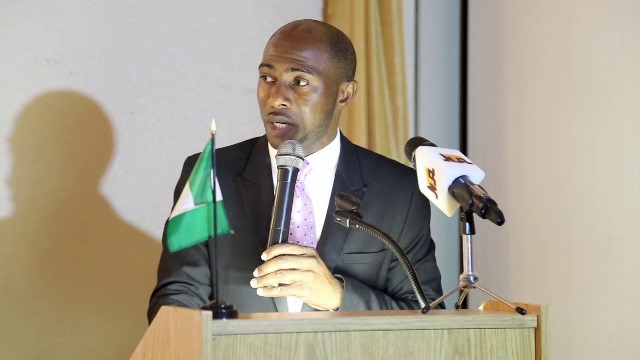
I was inspired to write about education being a pathway to success after listening to two terms former Governor of Anambra State and Vice Presidential Candidate of the Peoples Democratic Party (PDP), Mr. Peter Obi’s speech at an event which was organized by the Christian Covenant Centre under the auspices of Platform. Honestly, it is always good to listen to intelligent people when they speak or write because one has a great opportunity to learn from their secret of success.
Please permit me to share a word or two about the background of Mr. Peter Obi.
Mr. Obi is a trained and experienced Economist, Administrator and Politician. He sees himself privileged to have attended some of the best schools in the world such as Harvard Business School, Boston, USA; London School of Economics UK; Columbia Business School, New York and Lagos Business School in Nigeria. Mr. Obi is also the Vice Presidential Candidate for the Peoples Democratic Party for the 2019 Nigerian presidential election; He was a Governor of Anambra State, one of the most resourceful and viable states in Nigeria.
In his speech, Mr. Peter Obi mentioned education as one of the most resourceful and viable tools to stimulate the economy. That speech really resonated in me, and I thought it nice to write about education but on a different note.

The focus of this article is how resourceful minds can tap into the indirect form of education to achieve their dreams. In this twenty-first century, you cannot underestimate the power and role of education for an emerging economy, and countries that have truly distinguished themselves in the comity of Nations. Education plays a great role in shaping the life of a progressive mind. This is because all civilized countries know that the only way to stamp their feet in the global world is by planning for tomorrow, and how does one plan for tomorrow? You plan for tomorrow by investing for the future through education.
Investment in education is synonymous to your future. In the words of Benjamin Franklin, “failing to prepare is preparing to fail”. In civilized climes, they have taken education to the next level by investing in STEM (Science, Technology, Engineering, and Mathematics). They didn’t stop at that; they try to empower their citizens through Research and Development to solve some of the challenges facing them.
I strongly believe that one of the greatest investment you can have in life is education. Education secures the future because it’s a form of security. Even the book of life states in Proverbs 4:13 “Your education is your life, guard it very well” and Hosea 4:6 “My people perish for lack of knowledge”.
That being said, we shall be looking at the component and the relative part of education as a way of leveraging oneself. There’s nothing good in life that comes easy. Every good product or success comes with a price tag. The same theory goes for education. The price of education is very expensive. I remember when I was seeking admission into one of Nigerian state universities to study Law. I met one of the admission officers who promised to assist me secure admission. I was excited about this opportunity until he told me the amount I have to pay as a kickback. The price sounded outrageous to me. When I asked him why I have to pay such amount of money as a kickback, he said: “young man if you think education is expensive, try ignorance”. That statement has always remained in my heart till date. I definitely agreed with him because if you compare and contrast the value of education and the price of ignorance, you will realize that education will definitely pay in the long run. Moral: If you are not willing to risk the unusual, you will have to settle for the ordinary.
What do we therefore mean by traditional form and style of education? It simply involves attending classes and preparing for exams. However, it should be noted that education is not only limited to getting degrees and certificates. Education also entails thinking out of the box, reading books outside your discipline, researching, learning from resourceful minds and developing oneself and also acquiring soft and hard skills.
During one of my classes as graduate student studying Taxation at the New York Law School, a particular professor had told the students; ‘it is good to get good grades like As; but networking and developing oneself and following your passion are some of the things that will give you the desired opportunity you want in addition to defining you. What I literally got from that advice is, yes, it’s good to get good grades, but there’s more to success than getting the grades. He ended the class by telling us ‘you’ll understand what I’m saying when you graduate and start exploring job opportunities’.
No doubt, education is good, and the advantages numerous. A very big advantage of education is that it is the greatest leveler known to mankind just like money. Let me explain a bit. You can study in the same classroom with the son or daughter of any great man or woman and can even fall in love with the said being, especially when you know or understand the love language of the person in addition to being compatible to the being. This opportunity can even lead to marriage if properly nurtured. What I’m trying to say is that the son of a certified pauper can be a man of means tomorrow if properly nurtured.
Let me share a practical experience with you, I was privileged to attend one of the most expensive private universities in Nigeria, and I had the opportunity of meeting the children of top government officials, politicians, businessmen, ambassadors, and technocrats. Ordinarily, I felt a little bit uneasy relating with them because of the class status, but it didn’t take me long to adjust to the system when I saw the value I was bringing to the table and knowing full well we are the same. The secret to this feat was because of the exposure I got from education. Furthermore, I have been privileged to meet high profile people in the world in the USA because of the value I bring to the table, but more especially, because I have been properly educated to speak and communicate in the language they understand.
Be informed however, that education does not guarantee success; stories abound of so many great people who have been able to succeed in life without getting the traditional style of education. For example, the wealthiest Black woman in the world, Mrs. Folorunsho Alakija; Henry Ford, Shawn Corey Carter popularly know as Jay -Z, Richard Branson and many more are accomplished individuals who believed in themselves, explored their talents and worked hard to develop themselves by learning from their failures.
Again, education creates opportunities. According to Steve Jobs, innovation distinguishes a leader from a follower. When you create a product that solves a problem, there’s a high tendency you will find people who will need your products. According to Albert Einstein, “try not to be a man of success, try to be a man of value. A good education makes you to think out of the box. It makes you creative. It broadens your mind in addition to exposing you to resourceful information. A good education is like traveling because it gets you exposed to world affairs. It’s quite unfortunate that sometimes we complain of not having time, money, or opportunities. We forget that time is like money. Whenever you say you don’t have money, it invariably means you don’t have time to read and research. It’s important to note that ideas are what creates money. Education will not literally give you money, it will open doors of opportunity for you to explore. For example, instead of waiting to get funds for a formal education, how about visiting websites, researching for online and offline companies that offer free courses and equip yourself with knowledge. Moral: Never allow an opportunity to meet you unprepared.
You might have the best of education, but you might not be as successful as someone who has empowered his/her mind. Having faith and belief in oneself is very critical to success.
According to Muhammed Ali “The man who has no imagination has no wings”. This is the reason some entrepreneurs who never had the opportunity of going to a school were able to succeed more than those who attended universities.
According to Robert Collier “Your chances of success in any undertaking can always be measured by your belief in yourself”. One story of interest that comes to mind is that of John Sculley, the former CEO of Pepsi who left Pepsi to join Steve jobs in his company. Steve Jobs told John Sculley “Do you want to sell sugar water for the rest of your life? Or do you want to come with me and change the world?” The rest they say is history. The interesting part of this analysis is that Steve Jobs trusted his innate ability to achieve success and the knowledge he had can’t be acquired within the four walls of a classroom. It was this same innate ability that made the bank to give him and Bill Gate two million dollars when they presented their ideas to them. The question now is did they go to school to acquire this knowledge? The answer is no. They developed their minds, believed in themselves and above all, educated themselves by learning from their failures.
Finally, a major form of indirect knowledge and education in our contemporary society is social media. Testimonies abound of people who have gained a lot by mere listening to a podcast, videos, and reading online messages on Twitters, Facebooks, LinkedIn, Instagram and relevant articles from resourceful minds. Education has truly gone global. Social media has made the world much closer and easier to learn. What literally took Mr. A five to ten years to acquire in the classroom can simply be gotten via researching and listening to people with authoritative form of knowledge who have expertise in the subject matter in question. But it’s quite unfortunate a lot of people spend valuable time and resources listening and watching online information that won’t add value to their lives
In conclusion, I’m not insinuating that formal education is not important, please it is very important. If you have the opportunity to get one, please do, because that alone is education itself. However, as mentioned earlier, it is not the yardstick for success.
Have a great weekend!
Henry Ukazu writes from New York. He works with the New York City Department of Correction as the Legal Coordinator. He can be reached via henrous@gmail.com
Related
You may like
Headline
Senate Passes Electoral Bill 2026, Rejects Real-time Electronic Transmission of Results
Published
2 days agoon
February 5, 2026By
Eric
The Senate, yesterday, passed the Electoral Bill 2026 following hours of robust debate. But it rejected a proposal to mandate real-time electronic transmission of election results while approving significant reforms to election timelines, penalties for electoral offences and voting technology.
At the centre of the controversy was Section 60, which governs the transmission of polling unit results. Senators voted down a recommendation by the Senate Committee on Electoral Matters that would have compelled presiding officers to upload results to the INEC Result Viewing (IReV) portal in real time.
Instead, lawmakers retained the approach in the 2022 Electoral Act, which allows electronic transmission after votes are counted and publicly announced at the polling unit.
Relatedly, the Independent National Electoral Commission (INEC), which concluded work on the timetable and schedule of activities for the 2027 general election, is unable to release it due to ongoing amendments to the Electoral Act by the National Assembly.
It also identified the inclusion of deceased persons on the voters’ register, prompting plans for a nationwide verification exercise.
On its part, the African Democratic Congress (ADC) raised the alarm over the National Assembly’s delay in passing the Electoral Act amendments, warning that the situation could expose political parties to technical and legal pitfalls ahead of the 2027 general elections.
Under the retained provisions, presiding officers are required to: count votes at the polling unit, record results on prescribed forms, announce them publicly and transmit them electronically to the appropriate collation centre.
Copies must also be provided to polling agents and security personnel where available. Violators face fines of up to N500,000 or a minimum of six months’ imprisonment.
Senators opposing the real-time upload argued that inconsistent network coverage and logistical challenges could trigger legal disputes and undermine electoral credibility.
Chairman of the Senate Committee on Media and Public Affairs, Adeyemi Adaramodu, described the debate as largely semantic.
“Electronic transmission remains part of the law,” he said, “and results will continue to be available to the public both electronically and through physical forms, ensuring verifiable records for disputes.”
Beyond the transmission debate, the Senate approved far-reaching amendments to Nigeria’s electoral calendar. The election notice period was reduced from 360 days to 180 days, the deadline for submission of party candidate lists was shortened from 120 to 90 days, and the nomination period was cut from 180 to 90 days.
To deter electoral malpractice, the fine for unlawful possession of voters’ cards was increased from N500,000 to N5 million, though the Senate rejected a proposal for a 10-year ban on vote-buyers, opting for stiffer financial penalties instead. The smart card reader was officially removed from the electoral framework and replaced with the Bimodal Voter Accreditation System (BVAS).
INEC Chairman, Prof Joash Amupitan, noted the delay yesterday in Abuja at INEC’s first quarterly consultative meeting with Civil Society Organisations (CSOs).
The e-transmission of results, if approved, would have required INEC presiding officers to upload results from each polling unit to the IReV portal in real time, immediately after completing Form EC&A, which must be signed and stamped by the presiding officer and countersigned by party agents.
Instead, the senators chose to retain the present Electoral Act provision, which mandates that “the presiding officer shall transfer the results, including the total number of accredited voters and the results of the ballot, in a manner as prescribed by the Commission.”
The rejected proposal was contained in the new Clause 60(5) of the draft bill, which aimed to mandate presiding officers to electronically transmit polling unit results in real time after completing and signing Form EC8A.
The clause was designed to strengthen transparency and reduce electoral malpractice through technology-driven result management.
The motion to reject the electronic transmission clause was swiftly seconded by the Deputy President of the Senate, Barau Jibrin.
Similarly, the Senate also rejected a proposed amendment under Clause 47 that would have allowed voters to present electronically-generated voter identification, including a downloadable voter card with a unique Quick Response (QR) code, as a valid means of accreditation.
The Senate further upheld the provision mandating the use of the Bimodal Voter Accreditation System (BVAS) or any other technological device prescribed by INEC for voter verification and authentication, rather than allowing alternative digital identification methods as proposed in the new bill.
With these decisions, the Senate reaffirmed the use of PVC and BVAS-based accreditation while rejecting efforts to expand digital voter identification and make electronic transmission of results compulsory.
The Guardian
Related
Headline
Wike Remains Undisputed Rivers APC, PDP Leader, Tinubu Rules
Published
4 days agoon
February 3, 2026By
Eric
President Bola Tinubu has, again, intervened to halt the escalating feud between Rivers State Governor, Siminalayi Fubara, and his predecessor and estranged godfather, Nyesom Wike.
The peace deal came after months of failed settlements that had pushed the state to the brink of governorship impeachment, legislative paralysis, and prolonged instability.
The president had previously intervened in the rift between Fubara and Wike in December 2023, when he brokered a fragile peace, which broke down soon after, leading the declaration of a six-month emergency rule in the state on March 18, 2025 by Tinubu and suspension of the governor.
However, in the fresh push to defuse one of the country’s most combustible political disagreements in recent times, Tinubu ordered an immediate suspension of any impeachment moves against Fubara, but with very strict conditions.
Multiple highly placed sources familiar with the issue told THISDAY that Tinubu, who acted just before departing for an official trip to Türkiye on January 26, laid down the political terms aimed at restoring peace between the two key political actors in Rivers State, a state seen as critical to the president’s re-election in 2027.
Tinubu’s intervention came with a blunt message to Fubara: Wike remains the undisputed political leader of the party, whether APC or Peoples Democratic Party (PDP) in Rivers State, and he must be respected in that regard.
THISDAY was told that the president, visibly displeased by the depth of the rift, despite his efforts in the past, warned that continued hostilities would undermine governance in the state and lead to instability, a situation Tinubu said he was not ready to condone.
Tinubu was said to have clearly told Wike to back off any impeachment plots against Fubara and allow governance in the state.
Fubara and his predecessor, Wike, have had a cat and mouse relationship just within months of the governor’s swearing into office in May 2023. What is now out in the open is that Wike, who personally engineered Fubara’semergence as his successor, has sought to control the levers of power from Abuja, while the governor has resisted what many see as the FCT minister’s chokehold on him.
The relationship began to fracture within months of Fubara’s inauguration, as the governor quietly sought to assert his independence, with political actors in the state immediately taking sides. Notably, in the ongoing fight, almost all the state lawmakers align with Wike.
Subsequently, attempts to impeach Fubara emerged from the pro-Wike group in the House of Assembly. Although the governor has tried to wriggle out of the situation several times, the shadows of impeachment continue to haunt him every time there is a disagreement with the minister.
Several efforts have been made to resolve the crisis, all of which failed to produce lasting peace. The failure of one of the peace meetings eventually led to the declaration of a state of emergency in the oil-rich state, which lasted six months.
While Wike’s camp continues to accuse Fubara of betrayal and political ingratitude, the governor’s allies argue that Rivers State cannot be run from outside the state by a former governor now serving as the FCT minister.
Still on the latest attempt to seek an end to the prolonged imbroglio, one insider recounted the president’s thinking, drawing a parallel with Lagos State, where Sanwo-Olu is the leader of the party.
Tinubu was said to have stated, “Is Babajide Sanwo-Olu my leader in Lagos, or was Babatunde Fashola my leader when he was governor?”, according to a source.
The president was equally said to have stated that Fubara should respect elders, saying Wike is an elder statesman in Rivers politics and should be regarded as such. Tinubu, one of the sources added, made it clear that political seniority could not be wished away because of personal disagreements.
As part of the peace deal, the president directed Wike and his camp to immediately halt all impeachment-related actions against Fubara, citing his overriding concern about stability in Rivers State.
In return, Fubara was instructed to make significant concessions. Chief among them was the formal recognition of Wike as the “political leader” in Rivers State, with final authority on party matters.
Sources said Tinubu stressed that all internal party disputes in the state must ultimately defer to Wike.
However, the complexity of Wike’s case is that he is not a card-carrying member of APC in Rivers State. Officially, he remains a member of the struggling opposition PDP, although he is a top minister under the ruling APC government – A position he has used to weaken his party, the PDP.
Besides, the understanding covered the upcoming state House of Assembly bye-elections in Rivers State. Tinubu directed that candidates loyal to Wike should be recognised by the APC leadership for the two vacant assembly seats. “It was explicitly stated that Wike has two candidates for the by-elections and that those candidates are to be recognised by the APC party structure,” one source said.
Already, Independent National Electoral Commission (INEC) has fixed February 21, 2026 for the contentious by-elections into Ahoada East II and Khana II State Constituencies of the state.
THISDAY learnt that while the Ahoada-East II seat became vacant following the resignation of its former occupant, Edison Ehie, who was appointed Chief of Staff (CoS) to Governor Fubara, the Khana II seat was vacant since the death of its lawmaker, Dinebari Loolo, in September 2023.
Notably, the sensitive issue of Fubara’s second term ambition also came up for deliberation, the source said, but was deliberately side-lined, with the president alleged to have said such discussions were too early for now. One source said Tinubu described any talk about the 2027 governorship in the state as still premature.
ThisDay/Arise News
Related
Headline
Otunba Adekunle Ojora: Farewell to a Good Man
Published
6 days agoon
February 1, 2026By
Eric
By Eric Elezuo
The curtain dropped on the elitist life of prominent Lagosian, traditional custodian, boardroom guru, refined journalist and elaborate philanthropist, Otunba Adekunle Ojora, on January 28, 2026, bringing to an over nine decades of spreading good tidings, prosperity, unity and humanity. He was 93 years.
His death was announced via a statement by his daughter, Mrs Toyin Ojora-Saraki, on behalf of the Ojora Family, saying he died early in the morning in full submission to the will of Almighty Allah (SWT)
“With total submission to the will of Almighty Allah (SWT), the Ojora family of Lagos hereby announces the passing of our beloved patriarch, Otunba Adekunle Ojora, the Otunba of Lagos and Lisa of Ife, who returned to his creator early this morning.
“We say Alhamdulilahi for a life well lived, and we comply with Allah’s words: ‘Surely, to Allah we belong, and to Him we will all return’ (Q2:156),” the statement reads.
A distinguished businessman, people-oriented-person, the Olori Omo Oba of Lagos and the Lisa of Ife, Adekunle Ojora’s passing came with a much ancipated heartbreak, wailings and regrets, among his hugely extended family members, circle of friends, mentees, colleagues in and across business and traditional terrain, associates and the well impacted general public.
With the announcement of his death came the heavy traffic of personalities, dignitaries and nobles to his Ikoyi palatial home, where his adorable wife, Ojuolape Ojora, and one of his distinguished daughters, Mrs Toyin Saraki, who is the wife of the former Senate President, Bukola Saraki, played significant hosts.
President Bola Tinubu was one of the first mourners with a statement signed by his spokesperson, Bayo Onanuga, acknowledging the dimunitive personality of the deceased, noting how he had affected humanity in a positive light.
Tinubu commiserated with the government and people of Lagos State, as well as the Ojora and Adele royal families.
“The passing of Otunba Ojora is a significant loss to the country, the private and public sectors, and traditional institutions,” the President said, describing the late industrialist as a man whose life was defined by humility, perseverance, hard work and generosity. He further noted that his values shaped his long and distinguished career.
“He remained a towering figure whose counsel and experience benefited institutions at both national and subnational levels,” Tinubu added.
In his condolence message, former President Olusegun Obasanjo described Ojora’s death as painful, saying his absence would be difficult to fill, according to a statement released by his Special Assistant on Media, Kehinde Akinyemi.
The ex-president described Ojora as “an amiable and distinguished Nigerian who, during his lifetime, built a remarkable legacy of integrity, wisdom, and unwavering dedication.”
“By his death, the country has lost a notable captain of industry and commerce, but there is no doubt that his memory lingers on through his many landmark contributions to the development of the South-West zone in particular, and the country in general,” Obasanjo added.
He also stated that “He was a remarkable entrepreneur whose vision, determination, and resilience added value to the community and to hundreds of families who depended on his commercial activities. He was a role model and exemplar whose personal life and achievements inspired a generation of entrepreneurs, industrialists, and merchants. Over the years, with his wise counsel, unquestioned strength, and gentle guidance, Otunba Ojora commanded respect and reverence, and took particular pleasure in mentoring younger men and women to succeed in life.”
Also reacting, a former Minister of Communications, Major General Tajudeen Olanrewaju (Rtd) described Ojora as a “veteran journalist and boardroom titan”.
The former General Officer Commanding (GOC) 3 Division Nigerian Army noted that he made positive contributions to the industrial and entrepreneurial sectors of the economy, lightened up the social fabric of his time in Lagos, in particular, and across our nation.
Among dignitaries that called to the home of the Ojora’s to express heartfelt condolences were the Governor of Osun State, Senator Ademola Adeleke and his elder brother, Dr. Deji Adeleke; Africa’s richest man, Alhaji Aliko Dangote, Mr. Femi Otedola and former governor of Akwa Ibom State, Udom Emmanuel.
As a revered Muslim, versed in Islamic doctrines, the nonagenarian’s burial followed the very next day, drawing an avalanche of well wishers and mourners to the Central Mosque, on Lagos Island, where the funeral rites or the Janazah, led by the Chief Imam of Lagos, Sheikh Sulaiman Abou-Nolla, and assisted by other prominent Islamic clerics, were conducted, and finally to the Vaults and Garden, Ikoyi, where the remains were committed to mother-earth. The events were a meeting point of some sort, as they drew together prominent Islamic scholars, family members, political bigwigs and other distinguished guests.
A roll call of the elite callers at the events include the deceased’s wife, Erelu Ojuolape Ojora; his daughter, Toyin Ojora-Saraki, and her husband, former Senate President and Kwara State Governor, Bukola Saraki. Also in attendance were Lagos State Governor Babajide Sanwo-Olu, former Ogun State Governor Ibikunle Amosun, former Speaker of the Kwara State House of Assembly Ali Ahmad, former PDP National Chairman Kawu Baraje, Mufti of Ilorin Sheikh Sulaiman Onikijipa, and National President of Ansar-Ud-Deen Society of Nigeria Prince Adeniji Kazeem.
The burial ceremonies began with a recovery of the remains, which were borne by pallbearers for a burial procession before it was a motorcade bore it to the venue of the Janazah.
The long convoy of dignitaries that accompanied the body to the mosque spoke volumes of the personality of Adekunle Ojora. As the solenm approached, Imam Sulaiman Abou-Nolla led the congregation in prayers, asking for the repose of the siul of the deceased.
At the conclusion of the prayers, the body was conveyed to the Ikoyi Vault, where pallbearers and Muslim Ummah as well selected members of the family and notable dignitaries accompanied the remains, amid chants, to its final resting place.
THE MAN, OTUNBA ADEKUNLE OJORA
The highly principled businessman was born Isiaq Adekunle Ojora on June 13, 1932, into the distinguished Ojora Royal Family of Lagos, where he grew with a deeply-rooted tolerance for the history, culture and traditional governance of the Yoruba race and Lagos in particular.
His lineage placed him among the foremost royal families in the state, a heritage he upheld with dignity throughout his long life. Over several decades, he emerged as one of the most influential figures within Lagos’ traditional institutions, commanding respect across royal, cultural and civic circles.
Ojora was a member of the Ojora and Adele royal families of Lagos and was himself the holder of the chieftaincy of the Otunba of Lagos. He studied journalism at Regent Street Polytechnic, with the intention of developing a career in journalism. He started work as a staffer at the BBC where he rose to become an assistant editor.
In 1955, he switched his services to the Nigerian government as a reporter with the Nigerian Broadcasting Corporation. He was soon transferred to Ibadan as an information officer in the office of the regional premier. Ojora’s stint with NBC lasted until 1961 when he took up appointment as the public relations manager at United African Company.
Ojora soon developed interest in the commercial units of enterprises, he became an executive director of UAC in 1962. After a military coup truncated the first republic, Ojora was nominated as a member of Lagos City Council in 1966. A year later, he was given political appointments in two government agencies, in 1967, he was managing director of WEMABOD, a regional property and investment company and also in 1967, he succeeded Kola Balogun as chairman of Nigerian National Shipping Line.
After leaving WEMABOD, he became an investor in various firms including AGIP petroleum marketing and NCR Nigeria. He also founded the private firms Nigerlink Industries, Unital Builders and a holding company Lagos Investments. After the Nigerian Enterprise Promotion Act, he took equity interest in some foreign companies operating in Nigeria such as investments in the Nigerian operations of Bowring Group, Inchape, Schlumberger, Phoenix Assurance, UTC Nigeria, Evans Brothers and Seven-Up. He married Erelu Ojuolape, and among their children is Toyin Saraki.
Beyond royalty, Otunba Ojora was widely regarded as a bridge between tradition and modern governance.
The Otunba Adekunle Ojora would be remembered as a quintessential gentleman, astute businessman, excellent in speech, dignified in conduct, and deeply respected across generations.
For as many as those who know him, Ojora has for decades, remained a familiar and revered presence in elite social and cultural spaces, where his highly sought-after counsel and calm disposition have proved relevant and needful.
He is also known for his refined lifestyle and strong family values, an embodiment of a “brand of old-school nobility that earned him admiration well beyond wealth or status. He was often described as a man of honour whose life reflected discipline, tradition, and unwavering integrity.
Otunba Adekunle Ojora is survived by his wife, Erelu Ojuolape Ojora, his children, grandchildren and great-grandchildren.
Related


APC Drops Uzodinma As National Convention Chairman, Names Masari As Replacement
A Holistic Framework for Addressing Leadership Deficiencies in Nigeria, Others
Daredevil Smugglers Kill Customs Officer in Ogun
Tali Shani vs Mike Ozekhome: How a Legal Mole-Hill Was Turned into a Mountain
Glo Boosts Lagos Security with N1bn Donation to LSSTF
Friday Sermon: Facing Ramadan: A Journey Through Time 1
Ex-AfDB Chief Akinwumi Adesina Launches Investment Platform to Drive Capital to Africa
Otunba Adekunle Ojora: Farewell to a Good Man
Ghana 2028: Mahamudu Bawumia Claims NPP’s Presidential Ticket
Legendary Gospel Singer, Ron Kenoly, is Dead
Senate Passes Electoral Bill 2026, Rejects Real-time Electronic Transmission of Results
Fight Against Terrorism: US Troops Finally Arrive in Nigeria
Glo Leads in Investments, Performance As NCC Sets New Standard for Telecoms
Voice of Emancipation: President Tinubu’s Recent Trip to Turkey
Trending
-
Headline6 days agoOtunba Adekunle Ojora: Farewell to a Good Man
-
Boss Of The Week5 days agoGhana 2028: Mahamudu Bawumia Claims NPP’s Presidential Ticket
-
Featured3 days agoLegendary Gospel Singer, Ron Kenoly, is Dead
-
Headline2 days agoSenate Passes Electoral Bill 2026, Rejects Real-time Electronic Transmission of Results
-
National3 days agoFight Against Terrorism: US Troops Finally Arrive in Nigeria
-
National5 days agoGlo Leads in Investments, Performance As NCC Sets New Standard for Telecoms
-
Voice of Emancipation6 days agoVoice of Emancipation: President Tinubu’s Recent Trip to Turkey
-
Headline4 days agoWike Remains Undisputed Rivers APC, PDP Leader, Tinubu Rules