The Oracle
The Oracle: The Independence of the Judiciary in a Democratic Dispensation (Pt. 1)
Published
1 hour agoon
By
Eric
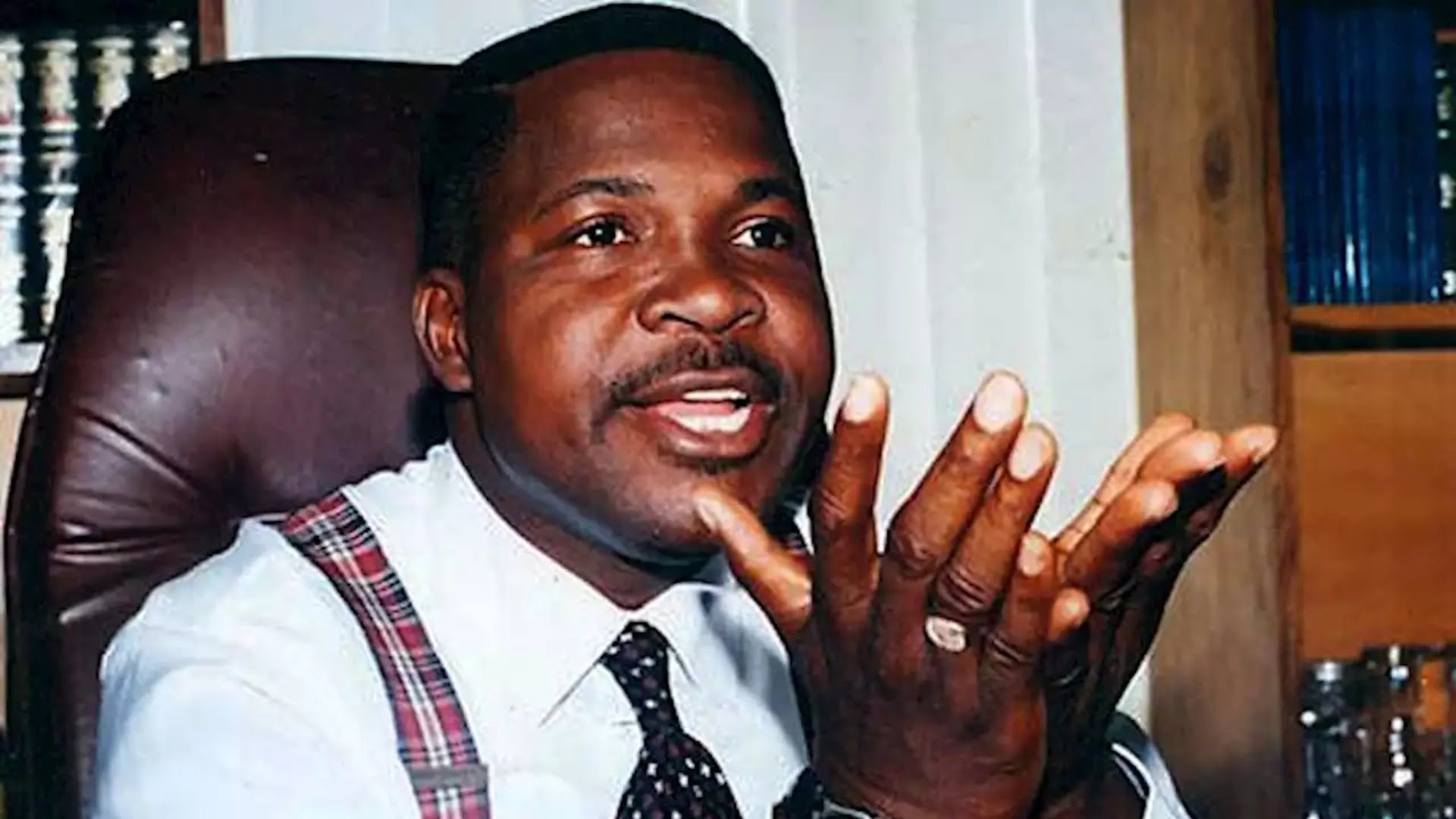
By Prof Mike Ozekhome SAN
Introduction
The judiciary is popularly referred to as the last hope of the common man. Yet, to maintain the attributes that qualify it for this populist appellation, the independence and integrity of the judiciary must be jealously guarded and sustained so as to continue to attract the confidence of the said common-man in the ability of the judiciary to do justice to all without fear or favour.
Indeed, the title of this paper becomes urgently relevant in view of the difficult times the judicial institution as a whole has been going through in recent times, as regards its integrity and retention of public confidence. Never in Nigeria’s history (not even during the repressive and tyrannical era of military juntas) has the judiciary suffered such high degree of public bashing, ridicule and contempt as it has in recent times.
Of late, the Judiciary has come under intense criticism and experienced serious erosion of public confidence, so much that its indispensable independence and impartiality have been put to serious doubt by an ever-increasing cross section of Nigerians. While some of the events that gave rise to these doubts were largely misunderstood by the public, the truth remains that some events have shown an even more urgent need to safeguard and defend the political, fiscal/economic and intellectual independence of the Judiciary in this dispensation. The imperatives for an independent and impartial Judiciary in a democracy are great and pressing. This is bolstered by the general feeling and expectation of greater freedoms in a democracy. The protection of human rights is implicit in open democracy. The Judiciary is the greatest bastion for protection of human rights.
The aim of this article is not to place the Judiciary in the dock and try it for the alleged ‘offences’ for which it has recently been perceived (rightly or wrongly) to have committed. Consequently, we would do no more than merely restate some of the events which in the opinion (however flawed) of most Nigerians seem to signify a compromise of its independence and integrity. Our own value judgment would be minimal. We therefore enter a caveat that those who expect the main focus of this paper to be on trashing the judicial institution may be a little bit disappointed at the end. The paper shall conclude with a focus on the role of an independent Judiciary in Nigeria’s nascent democracy.
Definition of Terms
There is hardly any term than can be properly and exhaustively defined (strictu sensu). We shall however adopt dictionary definitions of our principal terms as working definitions to aid clarity of analysis.
The noun ‘independence’ is derived from the adjective ‘independent’ which connotes the following attributes:
“Free from the authority, control or influence of others, self-governing… self-supporting, not dependent on other for one’s living, not committed to an organized political party…not subordinate…not depending on another for its value.” (Oxford Dictionary).
We now turn to the key and operative word, the ‘Judiciary’. The term has been defined as:
“That branch of government invested with the judicial power; the system of courts in a country; the body of judges; the bench. That branch of government which is intended to interpret, construe and apply the law.”
It has however been argued at various times that this definition (as exhaustive as it might appear) is restrictive. It has been suggested that a working definition of the term ‘Judiciary’ may:
“Include the messengers, clerks, Registrars, Bailiffs, the Police, the other security forces, the members of the Bar and such persons that have anything to do with the Judiciary and this will ultimately include the generality of the populace”
For the present purposes however, it would be something of a stretch to suggest that perhaps the generality of Nigerians are part of the Judiciary. Nwabueze agrees with the wide definition of the term, but sees the usage as a somewhat permissible ascription of terminology as regards its composite brother term, the Judicature. According to the learned author:
“There is a certain amount of looseness in the use of the word ‘Judiciary’. In its strict meaning it refers to the ‘judges of a state collectively, but it often (loosely) used interchangeable with ‘judicature’, a wider term embracing both the institution (the courts) and the persons (the judges) who compose it.”
‘Democracy’ is still best known with its Lincolnian definition as ‘government of the people, for the people and by the people’. It is however important to state that our type of ‘democratic dispensation’ has not qualified to be simply referred to as democracy (when the word is stretched to its utilitarian of limits). At best, Nigeria is passing through the process of democratization from years of military dictator ship to civilian governance. Being a process, democratization primarily embraces the steps that go into internalizing the norms of democracy after the institution of a democratically-elected government. In this connection, following democratic elections, there comes a period where governments, institutions and the populace imbibe the democratic culture and principles, and gradually drop autocratic and uncivilized tendencies. This is the cross-roads at which the contemporary Nigeria finds itself. Nwabueze, therefore, sees democratization as:
“The infusing of the spirit of liberty, democracy, justice, the Rule of Law and order amongst the people.”
The point we arrive at is that Nigeria’s Judiciary (which involves both the system of courts and the judges has a pivotal role to play in this democratic dispensation in upholding the rule of law and holding the balance between constitutional and unconstitutional acts. Democratic practice in a limited government being essentially a regime of adherence to constitutionalism, legality and the rule of law, the presence of an independent Judiciary is a sine qua non for successful democracy. An independent Judiciary acts like a compass in complex and turbulent voyage of democracy. Its performance or lack of it determines whether or not the ship of state anchors safely.
If the word ‘independence’ still connotes freedoms from the authority, control or influence of others, and if it still points to an institution which is self-supporting, (not dependent on others), not committed to a political party, not subordinate and not depending on any person or other institution for its value, then the Nigerian Judiciary must politically, economically and intellectually be seen to be self-reliant in order to be called an independent Judiciary. It has been urged (albeit ad ignoranta) that the doctrine of separation of powers does not presuppose independence of one arm of government from the other. This flawed argument is usually impressively hinged on the doctrine of checks and balances. It was used extensively against the Legislative arm in their efforts to operate independently of the executive arm during the first (6) six years of return to democracy. It is, however, submitted that the constitutional doctrine of checks and balances does not derogate from the doctrine of separation of powers.
It is not intended to confuse the doctrine of separation of powers with the issue of judicial independence. Whilst it is right to argue that the latter is a fall-out of the former, it is important to note that the issue of judicial independence has an additional constitutional, political and moral importance in our national life. This is because after the Constitution of the Federal Republic of Nigeria 1999 has successfully separated the powers of government in sections 4, 5 and 6 thereof, it goes ahead to provide unequivocally that:
“The independence, impartiality and integrity of courts of law, and easy accessibility thereto shall be secured and maintained.”
It can easily be seen that judicial independence entails, but is not limited to, separation of powers. Thus in construing the meaning of the expression ‘independence of the Judiciary’, Nwabueze argues:
“We tend to think that the independence of the Judiciary means just independence from the legislature and the executive. But it means much more than that. It means independence from political organs of government or by the public or brought in by the judges themselves through their involvement in politics.”
It is unarguably that the most prominent issue in judicial independence is the freedom of the Judiciary from any form of political influence, whether exerted from outside or self imposed. Another learned writer sees judicial independence to mean:
“The independence of the judges to think freely and act freely according to the dictates of their conscience in line with the provisions of the law without any let or hindrance or fear of repercussion from any quarters whether from the legislative, Executive, individual members of the public or even from the ghost of the individual judge’s past, present or future.”
Unless the Judiciary is aggressively shielded from political influence from the other two arms of government, especially the Executive, the chances of such influence being actually exerted over it are indeed bright. The Constitution made both the Executive and the Legislature generally amenable to the jurisdiction of the ordinary courts. Accordingly, the judicial power vested in the courts by the Constitution extends:
“To all matters between persons, or between government or authority and to any person in Nigeria, and to all actions and proceedings relating thereto, for the determination of any question as to the civil rights and obligations of that person.”
It is natural for a branch of government which wields a preponderant of coercive power and exercises power over the purse, (but still has the possible sanction of the Judiciary lurking over it), to attempt to stultify, hijack or control the machinery of the Judiciary. That is the only way, in a democracy, the government can check the ‘menace’ and interference, of the courts and thereby amass more powers and secure impunity unto itself in defiance of constitutionalism and due process. (To be continued).
Thought for the Week
“The bedrock of our democracy is the rule of law and that means we have to have an independent judiciary, judges who can make decisions independent of the political winds that are blowing” – Caroline Kennedy
Related
You may like
The Oracle
The Oracle: Understanding the Economic, Social and Cultural Rights of Nigerians (Pt. 3)
Published
1 week agoon
June 13, 2026By
Eric
By Prof Mike Ozekhome
INTRODUCTION
For the past two weeks, we have dealt extensively on this treatise. We discussed the following themes:
i. Assault on economic rights in Nigeria under the military juntas;
ii. Social rights;
iii. Cultural rights and
iv. Justiceability or otherwise of economic, social and cultural rights.
This concluding part of the treatise will examine human rights under other relevant international/universal instruments such as the African Charter on Human and Peoples Rights. Please read on.
OTHER INTERNATIONAL UNIVERSAL INSTRUMENTS
There are various International Instruments that recognize economic, social and cultural rights of people. Article 1 of the Universal Declaration of Human Rights, 1948, declares that:
“All human beings are born free and equal in dignity and right. They are endowed with reason and conscience and should act towards one another in a spirit of brotherhood”.
THE POSITION OF AFRICAN CHARTER ON HUMAN AND PEOPLES RIGHTS
The African Charter on Human and Peoples Rights, 1981, also recognizes the position of human rights severally among others, and thus provide for the right to peace, development, satisfactory environment and the right to respect the common heritage of mankind. This is as provided for in Article 20 of the African Charter on Human and Peoples rights, which guarantees:
“Freedom, equity, justice and legitimate aspirations of African peoples”
To give effect to these rights, the leaders of the then Organization of African Unity (OAU), now African Union (AU). also reaffirmed the pledge solemnly made in Article 2 of the said Charter, to eradicate all forms of colonialism from Africa, to co-ordinate and intensify their co-operation and efforts to achieve a better life for the peoples of Africa and to promote international co-operation having due regard to the Charter of the United Nations and the Declaration of Human Rights and taking into cognizance, the virtues of their historical tradition and the values of African Civilization, which should inspire and characterized their reflection in the concept of human and people’s rights.
They are also recognized on the one hand, that Fundamental Human Rights stem from attributes of human beings, which justify their international protection; and on the other hand, that the reality and respect of people’s rights should necessarily guarantee human rights. To achieve this, it should be borne in mind that the enjoyment of rights and freedoms also implies the performance of duties on the part of every citizen.
The leaders were convinced that it was essential to pay particular attention to the right to development and that civil and political rights cannot be dissociated from economic, social and cultural rights as a guarantee for such civil and political rights. This position is well encapsulated in Article 22 of the African Charter on Human and People’s Rights, which provides that:
i “All peoples shall have the right to their economic, social and cultural development with due regard to their freedom and identity and in the equal enjoyment of the common heritage of mankind”
ii “States shall have the duty, individually or collectively to ensure the exercise of the right to development”
Nevertheless, the duty to achieve the total liberation of Africa, the peoples of which are still struggling for their dignity and genuine independence and undertaking to eliminate colonialism, neocolonialism, apartheid, Zionism and to dismantle aggressive foreign military bases and all forms of discrimination, language, religion or political options, were then the major pre-occupation of African leaders. They were firmly convinced of their duty to promote and protect human and people’s rights and freedoms, taking into account the importance traditionally attached to these rights and freedoms in Africa.
It is therefore submitted with respect, that by the provisions of all the international instruments on human rights, man has been significantly elevated to the echelon of a subject of international law beyond municipal or State
CONCLUSION
It is obvious that the economic, social and cultural rights of Nigerians have been violated severally by various successive governments and such violation is encouraged by their non-justiciability by virtue of the provisions of Chapter II the Constitution of the Federal Republic of Nigeria, 1999, as altered. The question thus posed as a result of this ugly trend would be: Does this mean that we should all fold our hands and watch these rights violated? Is there nothing the Nigerian people can do to litigate these rights?
The answer in conscience is that there is much we can do. We must encourage and promote the enforcement of all the fundamental objectives and directive principles of state policy as they are meant to enhance the living conditions of man. It is noteworthy however, that all international Human Rights Instruments recognize economic, social and cultural rights of the people. Nigeria not being an island unto itself cannot be cocooned in self-defeatism and haplessness. She must move with the civilized world and render ECOSOC rights justiciable and enforceable. It is the duty of Civil Society and every affected citizen to challenge violation of the provisions of Chapter II of the 1999 Constitution of the Federal Republic of Nigeria, as altered. (The end).
THOUGHTS FOR THE WEEK
“True freedom requires the rule of law and justice, and a judicial system in which the rights of some are not secured by the denial of rights to others” – Jonathan Sacks.
“The sacred rights of mankind are not to be rummaged for among old parchments or musty records. They are written, as with a sunbeam, in the whole volume of human nature, by the hand of the divinity itself; and can never be erased or obscured by mortal power” – Alexander Hamilton.
Related
The Oracle
The Oracle: Understanding the Economic, Social and Cultural Rights of Nigerians (Pt. 2)
Published
2 weeks agoon
June 5, 2026By
Eric
By Prof Mike Ozekhome SAN
INTRODUCTION
The inaugural part of this piece was necessarily foundational: it defined ‘human rights’; ‘economic social and cultural rights’ and also reviewed historical assault on economic rights by military juntas in Nigeria. Today we continue same theme after which we shall delve into social and cultural rights and equally examine their justiciability. Enjoy.
ASSAULT ON ECONOMIC RIGHTS BY MILITARY JUNTAS (continues)
The opaque commercialization and privatization of economic policies that were originally introduced by successive military regimes in Nigeria were later to be fully and absolutely incorporated and implemented in the scheme of things by the Obasanjo administration from 1999-2007. For example, the Obasanjo administration illegally privatized NNPC, NITEL, NEPA, Federal Hotels, strategic public institutions and other public corporations, without necessarily following due process as is required under a constitutional democracy. This privatization and commercialization exercise was done with the ulterior motive of satisfying the whims and caprices of a certain cabal of politicians at the expense of the vast majority of the masses. The commanding heights of our National economy were privatized to friends, relations, school mates, surrogates and lackeys of Government officials and their compradors.
SOCIAL RIGHTS
These include right to quality education, right to security of employment, access to free medical care, right to drink clean pipe-borne water, right to electricity, right to information, right to good roads, right to good shelter and clothing, etc. These are also known as basic social amenities, which are necessarily incidental to decent and reasonable existence. We are already in the 21st century where a serious global campaign is on going for mass literacy. This campaign for good and qualitative education is predicated on the well known truism that education leads to development in all its ramifications.
Has the Nigerian Government done enough in the area of fundamentals of the importance of education? The answer in good conscience is a capital “No”. Since the days of “Ali-must-go protests (1978), education has suffered tremendously as a result of its commercialization, thus making it an exclusive preserve of the rich. The then National union of Nigerian Students (NUNS), under the leadership of late Mr. Segun Oni demonstrated its abhorrence for this and strenuously protested against the commercialization of education by the then Commissioner for Education, Amadu Ali. Unfortunately, however, this noble struggle of Nigeria Students led to indiscriminate shooting, maiming and killing of innocent and harmless students who were essentially the sons and daughters of the poor. All Federal Universities were promptly closed down following the mass protests. These tragedies occurred during the inglorious days of the military dictatorship of Obasanjo. That was perhaps the first time when Nigerian students signposted their determination to assert their inalienable right to education. Till date, education is still in shambles as all successive military and civilian Administrations have done little or nothing to improve it. While the children of the rich and people in Government attend Ivy league schools both locally and in foreign countries, the mass majority of children of the poor receive half-baked education in half completed buildings, without writing or learning materials.
In fact, since the evolution of Nigeria as a country and indeed since the attainment of political independence, no government has sincerely attempted the convocation of an Education Summit where all stakeholders are permitted to contribute intellectually to the production of a blue print for sustainable quality education that will meet our yearnings and aspirations as a rapidly developing African Country. It is an indisputable fact that without quality education, life will be of no avail and consequently, development will be retarded.
Another epochal struggle of the later National Association of Nigerian Students (NANS), for improved living standard and conditions in tertiary institutions was the 1990 agitation for the provision of the most basic needs on campuses, essentials such as pipe – borne water, electricity and laboratory equipment just to enhance quality education. The response of the then Babangida Military Junita was a far cry from the legitimate demands of the students. Between March/April, 1990, the Federal Government decided to take an IMF loan of $120m for the Federal Universities and this unilateral and retrogressive decision triggered off violent protests and agitation from the academic community. The National Association of Nigerian Students (NANS) and Academic Staff Union of Universities (ASUU), actively protested against the decision to take loan from the world Bank, essentially because the conditionalities attached thereto would worsen the already crisis – ridden educational situation in the country. Not less than three Federal Universities were closed down following the massive protests that greeted the decision to take the said IMF loan. Some students of the Obafemi Awolowo University, Ile – Ife, were arrested and arraigned before an Ile – Ife Magistrate Court for charges of conduct likely to cause a breach of the peace. The then Education Minister, Prof. Babs Aliyu Fafunwa, while trying to justify the essence of the loan stated that it was meant for the restoration of the universities, but this explanation was not acceptable to Nigerian Students as well as the Academic Staff Union of Universities, who that knew the loan would further deny Nigerians a right of access to the already collapsed educational system. All these were the by-products of SAP, an anti-people program that was initiated by General Babangida’s Military regime.
CULTURAL RIGHTS
Culture has been defined by Bairamian J. in Lewis vs. Bankole, as a mirror of accepted usage. It is a way of life of people, which has gained acceptance among them over the years. The great sage, Chief Obafemi Awolowo of blessed memory, once said that:
“Culture is the tap root of every society and if culture decays, that society will have to develop parasitic features for it to continue to exist”.
Cultural heritage has many aspects. For example, cultural songs and dance, cultural foods, cultural traditional marriage, cultural dresses and festivals. Nigerian’s multi-ethnic groups presuppose the existence of cultural pluralism. This means that as there are many different ethnic groups, so also there are different and diverse cultures in Nigeria. It is therefore necessary to preserve and promote cultural rights among the various ethnic Nationalities in Nigeria, so as to enable Nigerians participate actively in their cultural life. This would also foster our philosophy of national integration and diversity. An examination of the Nigerian Society in the pre-colonial era will reveal how well preserved, promoted and respected our cultural heritage was by all the paramount traditional rulers of the time. For example, the Benin Empire during the reign of Oba Overamwen Nogbaisi earned continental applause as a result of the Oba’s dedication and commitment to the promotion and preservation of the Benin cultural heritage. The Oyo Empire under the Alaafin of Oyo was also feared and respected by all and sundry for its commitment to the preservation of their cultural heritage. The Hausa/Fulani struggled for decades for the preservation and promotion of their cultural heritage. This was copiously acknowledged by all British Colonial Administrators in Nigeria during the colonial era.
JUSTICEABILITY OR OTHERWISE OF ECONOMIC, SOCIAL AND CULTURAL RIGHTS
Chapter II of the 1999 Constitution of the Federal Republic of Nigeria, 1999, as amended made copious provisions for Fundamental Objectives and Directive Principles of State Policy. Sections 13 – 24 of the constitution are basically on such all important issues and matters like fundamental obligations of the Government, the Government and the people, politics, economic, social, educational, foreign policy, environmental objectives, directives on Nigerian culture, obligations of mass media, National ethnic and duties of the citizens. Section 16 (1) – (4) of the constitution deals essentially with economic objectives, while section 17 (1) – (3) deals with social objectives; and section 21 of the Constitution of the Federal Republic of Nigeria, 1999 as amended provides for directives of Nigerian culture.
A cursory look at the Constitution of the Federal Republic of Nigeria, 1999, as altered, quickly reveals that the Government, gave these rights and privileges with the left hand, and took them back with the right hand. This is akin to the proverbial Greek gift. It is submitted with respect that, the non-justificiability of the Fundamental Objectives and Directive Principles of State Policy under the 1999 Constitution appears to be a conspiracy by the state and its preferred minions to deny the Nigerian citizens, particularly the masses, the enjoyment of their well deserved wealth by many public officers and Government functionaries. A careful consideration of the diary of looting in Nigeria will reveal how public officers in connivance with elected political office holders have embezzled and mismanaged public funds meant for provision of infrastructural facilities and other developmental projects. But since the 1999 constitution as imposed by themselves and their military collaborators has prohibited any person from challenging or seeking to enforce the Fundamental Objectives and Directive Principles of State Policy, the looting or siphoning of public funds will continue with impunity and the perpetrators will always find an escape route. The average Nigerian continues to wallow in abject penury. The recent revelations of looted billions of naira constitute and eye – opener to this tragedy.
We must encourage and promote the enforcement of all the Fundamental Objectives and Directives Principles of State Policy as they are meant to enhance the living standard of all and sundry.
THOUGHT FOR THE WEEK
“True freedom requires the rule of law and justice, and a judicial system in which the rights of some are not secured by the denial of rights to others”. – Jonathan Sacks.
Related
The Oracle
The Oracle: Understanding the Economic, Social and Cultural Rights of Nigerians (Pt. 1)
Published
3 weeks agoon
May 29, 2026By
Eric
By Prof Mike Ozekhome SAN
INTRODUCTION
Generally speaking, economic, social and cultural rights are part and parcel of inalienable human rights with which man is naturally endowed upon birth. In a responsible and ideal society, all the human rights including economic, social and cultural rights are recognized, respected, guaranteed, enforced, implemented and even prompted by all and sundry, the state inclusive. These rights which have been universally recognized are otherwise known as ECOSOC RIGHTS.
However, before discussing in detail, economic, social and cultural rights which constitute the gravamen of this write-up, it is pertinent to deal with terminological issues by attempting to know the meaning of a ‘Right’. What is a “Right”?
DEFINITION OF TERMS
“Right” is a versatile term meaning correct, suitable, or morally proper, as well as indicating the direction opposite to left, or a legal/moral entitlement. It signifies accuracy.
According to Osbornes Law Dictionary of current English, a Right is defined as:
“An interest recognized and protected by the law, respect for which is a duty and disregard of which is wrong”
This definition is on all fours with that of Black’s Law Dictionary (8th Edition, page 1347) which defines ‘Right’ as:
“That which is proper under the law, morality or ethics. Right also means to know right from wrong, something that is due to a person by just claim, legal guarantee, or moral principle-the right of liberty. A power, privilege, of immunity secured to a person by law -the right to depose of one’s estate. A legally enforceable claim that another will do or will not do a given act; the violation of which is a wrong-, a breach of duty infringes one’s right. The interest, claim or ownership that one has in tangible or intangible property-a debtor’s rights in collateral-publishing rights. The privilege of corporate shareholders to purchase newly issued securities in amounts proportionate to their holdings. The negotiable certificate granting such a privilege to a corporate shareholder”
A legal scholar, John Chipman Gray, in his book “The Nature and Sources of law, page 8-9 (2d ed. 1921)”, opines that:
“Right is a correlative to duty; where there is no duty there can be no right. But the converse is not necessarily true. There may be duties without rights. In order for a duty to create a right, it must be a duty to act or forbear. Thus, among those duties which have rights, corresponding to them do not come within the duties, if such there be, which call for an inward state of mind, as distinguished from external acts or forbearances. It is only to acts and forbearances that others have a right. It may be our duty to love our neighbor, but he has no right to our love”.
Ordinarily, right means power of free action. It refers, inter alia, to the economic, social and cultural advantages or benefits to which man has a just claim morally, legally and ethically. It is different and distinct from a privilege. From the above definitions only a right recognized and protected by law can be considered as a right; Otherwise, it is just a privilege.
WHAT THEN ARE HUMAN RIGHTS
Human rights strictly speaking are those sets of rights referred to as inalienable, which are also specifically and particularly recognized and protected by law. Every human being is naturally endowed with and is entitled to the enjoyment of such rights except by due process of law. They are human because they are fundamental.
Another legal scholar, M. Cranston in his book titled: “Human Rights: Real and Supposed quoted in D/D, Rapheal (ed) Political Theory and the Rights of man (1967) Bloomington, Indian University Press page 52”. Opined that:
“A human right is something of which no one may be deprived without a great affront to justice. These are certain deeds, which should never be done, certain freedoms, which should never be invaded, something’s which are supremely sacred”.
One of the most distinguished jurists ever produced by Nigeria, Kayode Eso JSC, re-affirmed the importance of human rights in RANSOME KUTI V. A-G OF THE FEDERATION (1985) 2 NWLR (Pt. 6) 211, 230, in the following words:
“it is a right which stands above the ordinary laws of the land and which in fact is antecedent to the political society itself. It is a primary condition to a civilized existence… and what has been done by our constitutions…. is to have these rights enshrined in the constitution so that the rights could be “immutable” to the extent of the “non immutability” of the constitution itself”.
From the above definitions of human rights, it is obvious that those rights that are termed fundamental human rights and which are specifically codified in our statutes particularly Chapter IV of the Constitution of Federal Republic of Nigeria, 1999, as amended, are not only recognized and protected, but are also enforceable in law courts.
WHAT ARE ECONOMIC, SOCIAL AND CULTURAL RIGHTS?
These are simply rights that enable man to have a reasonable and decent standard of living in the society. In accordance with the provisions of Chapter II of the Constitution of the Federal Republic of Nigeria, 1999, as amended, every citizen in Nigeria shall be afforded the opportunity to develop his full potentials economically, socially and culturally to the utmost of his ability. Unfortunately, however, the contrary is the case as these rights are not in any enforceable in a court of law. This informs the reason why some countries of the world have codified some fundamental laws regarding the implementation and enforcement of economic, social and cultural rights in their grundnorm, the constitution. The right to a decent living is unarguably a corollary to the right to life. To be saddled with less than decent living standard is to demote human beings to the base level of animals.
ECONOMIC RIGHTS
An Economic right is nothing but the right of man to be gainfully employed in order to share a decent and adequate standard of living in the society. The state is enjoined to ensure the provision of job opportunities to all persons without discrimination on grounds of belief, religion, gender, political and ethnic affiliations. In this respect, it is expected that the Government should provide an enabling economic environment to improve on the living conditions of the citizens. Without this, life, as in the Hobbesian state of nature, would be “short, nasty and brutish”.
ASSAULT ON ECONOMIC RIGHTS BY MILITARY JUNTAS
Unfortunately, the economic rights of many Nigerian citizens have been seriously undermined by successive military and civilian Administrations (See Annual Report on Human Rights in Nigeria, 1990-Civil Liberty Organisation (CLO).). In the locust days of the General Ibrahim Babangida administration, the nationally acclaimed maximum dictator, and self-styled “evil genius”, the Nigerian economy was badly managed and terribly crises-ridden, thus subjecting poor Nigerian citizens to squalor and abject penury. It was during the tenure of this military junta that subsidy in petroleum products was removed and left to the vagaries of international market forces. Nigerians were living from hand to mouth; both the employed and unemployed. Inflation geometrically increased and consequently the poor living conditions of Nigerian citizens became aggravated. All the civil liberties organizations, Student Unions and the Nigerian Labour Congress massively mobilized Nigerians to protest against the military Government policy of removing oil subsidy. This did not in any way deter him. In fact, the protests led to the arrest and incarceration of many human rights and pro-democracy activities. Many died in the struggle.
When the Babangida regime eventually responded to the economic crisis in Nigeria with the introduction of the Structural Adjustment Program (SAP), the implementation of which rather aggravated the living conditions of a vast majority of the citizens who were then living below poverty line, he went scot free. The United Nations Development Project (UNDP) Report on Human Development better captured this sorry state to which Nigerians were subjected by the Ibrahim Babangida regime in its report which scored Nigeria 0.322 out of a maximum Human Development Index of (HD10 1.0). That report automatically placed our country last in terms of citizen’s access to resources needed for a decent standard of living, literally levels and average life expectancy in a given country. The value of Naira also experienced a monumental decline or downward slide vis-à-vis the dollar and other international currencies under the Second Tier Foreign Exchange Market (SFEM).
Another negative effect of SAP to Nigerians was the massive loss of employment as many Nigerian workers of various levels were laid off. It was reliably reported that not less than 10, 000 junior workers of Julius Berger Construction Company in the Federal Capital Territory, Abuja (FCT), were unlawfully dismissed simply because they embarked on a strike action to demand for better working conditions. This further worsened the alarming abject poverty in the country.
With the advent of Democracy in Nigeria in 1999, (one would have expected an aggressive and radical transformation of the economy in such a way that adequate job opportunities would be created to quickly arrest the alarming hunger and poverty that had ravaged the Nigerian masses). Unfortunately, the civilian administration of Chief Olusegun Obasanjo did nothing practical to ameliorate the deplorable living conditions in Nigeria. Instead, his administration introduced social and economic policies that were not only strangulating in nature, but exclusively impoverished the Nigerian masses who started living like “walking corpses”, as Ayi Kwei Ama once posited, in his book, “The Beautiful Ones Are Not Yet Born”. (To be continued).
THOUGHT FOR THE WEEK
“Rightful liberty is unobstructed action according to our will within limits drawn around us by the equal rights of others. I do not add ‘within the limits of the law’ because law is often but the tyrant’s will, and always so when it violates the rights of the individual”. (Thomas Jefferson).
Related


Adding Value: Why You Don’t Need Excess Worry by Henry Ukazu
The Oracle: The Independence of the Judiciary in a Democratic Dispensation (Pt. 1)
Ekiti Decides 2026: INEC Assures of Credible Election
Nigeria’s Youth Crisis: When Education No Longer Guarantees Opportunity
Friday Sermon: Terrorism: The Curse of Islam 3
Nigeria’s Gas Exports Climb to $2.53bn in Q1 2026 Amid Push for FX Diversification
When Subsidy Removal Meets Responsible Leadership: Why Tinubu Owes Gov Adeleke a Big Thank You
Conoil Profit Hits N3.89bn in First Quarter of 2026 Despite Revenue Decline
The Judicial Coup That Failed: How Desperate Power Mongering Manufactured the FHC Abuja Ambush Against Opposition Parties
From 55,000 TB a Year to 1.4 Million a Month: Nigeria’s Data Boom is Overwhelming the System
Echoes of History: Democracy and the Deregistration Judgment
INEC Heads to Appeal Court, Seeks Suspension of Judgment on Deregistration of ADC, Others
Behold! The World’s First Trillionaire, Elon Musk
UK Court Clears Ex-Petroleum Minister Alison-Madueke of All Corruption Charges
Trending
-
Business3 days agoConoil Profit Hits N3.89bn in First Quarter of 2026 Despite Revenue Decline
-
Featured3 days agoThe Judicial Coup That Failed: How Desperate Power Mongering Manufactured the FHC Abuja Ambush Against Opposition Parties
-
Opinion5 days agoFrom 55,000 TB a Year to 1.4 Million a Month: Nigeria’s Data Boom is Overwhelming the System
-
Opinion4 days agoEchoes of History: Democracy and the Deregistration Judgment
-
Headline4 days agoINEC Heads to Appeal Court, Seeks Suspension of Judgment on Deregistration of ADC, Others
-
Boss Of The Week5 days agoBehold! The World’s First Trillionaire, Elon Musk
-
Headline3 days agoUK Court Clears Ex-Petroleum Minister Alison-Madueke of All Corruption Charges
-
Headline5 days agoAbiola Was Not Poisoned, Says Abdulsalam Abubakar