Connect with us

Opinion

Abiola and the Ancient Journey of June 12

Published

on

By Dare Babarinsa

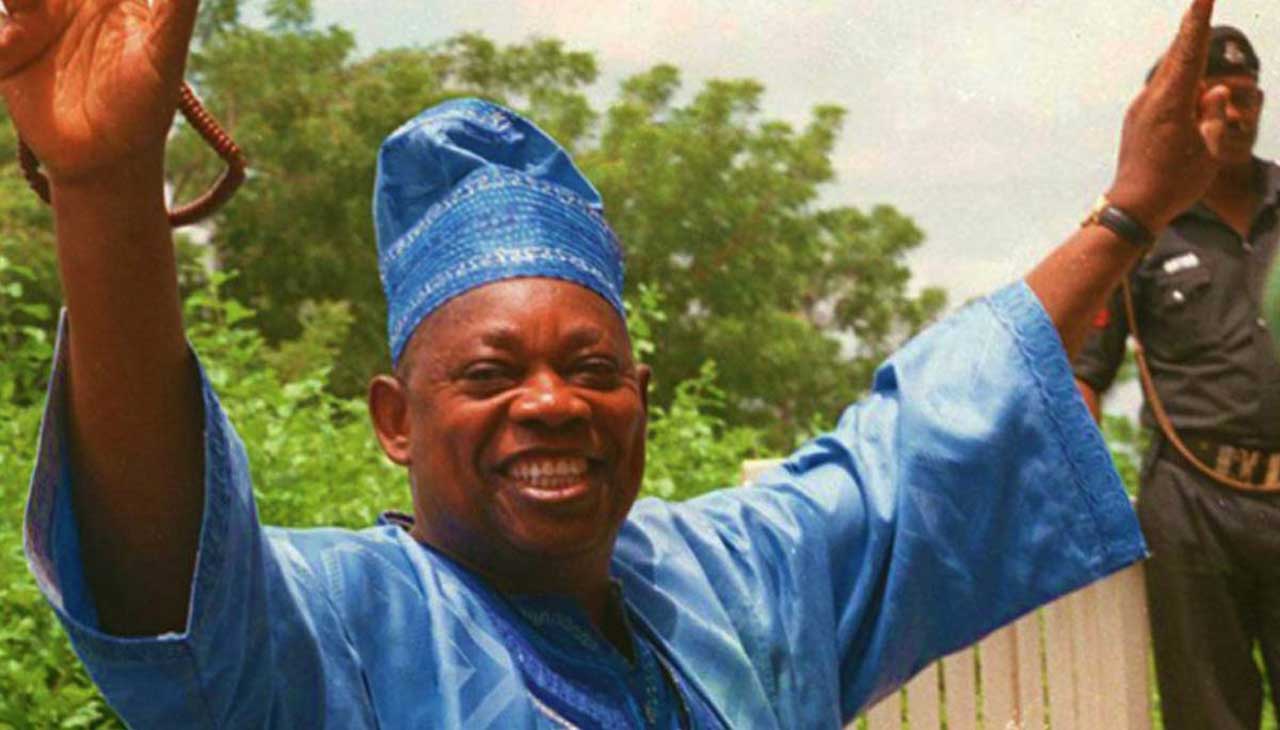
It is 33 years since we lined up to vote for Chief Moshood Abiola to become the President of Nigeria. It is now like ancient history. More than half of Nigeria’s population today was not even born then. June 12, 1993, was a pivotal day in our country’s march to constitutional democracy. On that date, Nigerians were given the option of picking one of two. Abiola’s opponent was the Kano businessman, Bashir Tofa, the candidate of the National Republican Convention, NRC. Abiola was of the Social Democratic Party, SDP. The truth was that both parties were sponsored by the military regime of General Ibrahim Babangida and it was difficult to know which one to pick. Then the majority picked Abiola.

When TELL magazine hit the newsstand in April 1991, we thought we were on the threshold of democracy. The self-appointed military President had promised that he would hand over power in 1991, then he shifted it to 1992, and then 1993. I met the Minister of Information, Chief Alex Akinyele, to seek an explanation for this constant changing of the goalposts. He said blandly that it was because “the transition programme is elastic!”

Dr Bala Usman, the radical Katsina prince and teacher at Ahmadu Bello University, warned that Babangida had a hidden agenda. Chief Gani Fawehinmi and Alhaji Balarabe Musa alerted us that if Nigerians want democracy, we must be ready to fight for it. A few days after we voted, our colleague, Nduka Irabor, the chief press secretary to Admiral Augustus Aikhomu, the Vice-President, distributed a press statement in Abuja, telling Nigerians that the military junta had annulled the election. By that time, though it had not been officially announced by Professor Humphrey Nwosu, the chairman of the National Electoral Commission, NEC, it was clear that Abiola had won the presidential election according to returns from the states.

Nigerians were up in arms against the military regime, calling for the full results of the election to be released. Babangida said no. Then he sent his goons to hunt down opposition elements. One Sunday afternoon, we were in the office when the TELL premises were surrounded. We had scheduled a meeting for that afternoon. Therefore, it was easy for them to pick up Nosa Igiebor, Editor-in-Chief, Onome Osifo-Whiskey, the Managing Editor, Kolawole Ilori, the Executive Editor and Ayodele Akinkuotu, the General Editor. The four big men were then taken to Shangisha, the Lagos headquarters of the notorious State Security Service, SSS. The following day, they were driven furiously to Abuja, where they were kept in a police cell until Babangida was forced out of power on August 27, 1993.

Babangida was succeeded by boardroom titan, Chief Ernest Shonekan, who became the Head of the Interim National Government, ING. After the overthrow of Chief Shonekan, I went to Chief Alfred Rewane in the company of my friend, Funminiyi Afuye. Baba Rewane believed that the new regime of General Sani Abacha would be our friend. He said Abacha was a nice man who had served as a General Officer Commanding in Ibadan and was well known to many of our friends. Besides, General Oladipo Diya, former Governor of Ogun State and now Abacha’s deputy, had met our leaders. He promised that “our stay will be brief.”

We misread Abacha seriously and paid dearly for it. One of the most active members in the struggle was my friend, Gbenga Adebusuyi, who played a prominent role in the Alpha Group under the leadership of Chief Bola Ige. When the goons came for Adebusuyi, he was not home and then they arrested his father and his wife. Eventually, Adebusuyi gave himself up. His father was released after many days in the cell. Baba died later. His wife spent three months in detention. Adebusuyi was in detention for many months.

Kazeem, who played a prominent role in setting up Radio Freedom (later Radio Kudirat) transmitter in a secret location in Ikeja, was killed in a mysterious bomb blast opposite the Air Force barracks. Omojola, who was our colleague in the Alpha Group, was captured with ‘subversive materials’ and detained for many months in Ibadan. He died shortly after his release. Of course, the martyrdom of Bagauda Kaltho, the reporter for TheNews magazine, was well reported.

There are too many heroes of the June 12 struggle. I remember Otunba Olabiyi Durojaiye with his bushy beard after many months in the gulag of the Directorate of Military Intelligence, DMI, where he shared detention in the distinguished company of Professor Akinjide Osuntokun, former Nigerian ambassador to Germany. It took a lot of effort for the SSS to capture Ayo Opadokun, who also grew a luxuriant beard. Olusegun Osoba fled home for many months while the SSS were on his trail, moving from one safe house to another. The publisher of Razor magazine, Moshood Fayemiwo, was captured and kept in an underground DMI cell for almost two years. Soji Omotunde, editor of the African Concord was captured on the road, beaten, and became a half-criple. Today, he is facing a serious health challenge. Osifo-Whiskey and Igiebor were to spend many months in prison.

Then the arranged coups that corralled innocent people like Dr Beko Ransome-Kuti, Kunle Ajibade, Ben Charles Obi, Niran Malaolu, Chris Anyanwu, George Mba, General Olusegun Obasanjo, Major-General Shehu Musa Yar’Adua, Colonel Gabriel Ajayi, Colonel Olusegun Oloruntoba (now His Majesty, the Olugbede of Gbede Kingdom in Kogi State), and others who became victims of phantom coup plots. The list of heroes and victims is endless. We have professionals like Olisa Agbakoba, Fola Adeola, Tola Mobolurin, Bayo Adenekan, Femi Yerokun, Pascal Idowu, Bayo Onanuga, Babafemi Ojudu, Dapo Olorunyomi, Seye Kehinde, Dayo Adeyeye, Anwo Kayode, Adedokun Abolarin (now our father, the Orangun of Oke-Ila), Demola Oyinlola, Professor Rotimi Akinola, Professor Akin Onigbinde, Professor Omikorede, Deji Sasegbon, Alao Adedayo, Dele Momodu, Ademola Adeniji-Adele, Tokunbo Ajasin, Rotimi Obadofin, Kunle Famoriyo, Ayo Afolabi, Abiodun Aremu, Joe Igbokwe, Seye Kehinde, and many others. Moneybags like Chief Michael Ade-Ojo, Otunba Gbenga Daniel, and Chief Deinde Fernadez were in a special class.

In the forefront were our fathers: the indomitable Chief Michael Adekunle Ajasin, Senator Abraham Adesanya, Chief Bola Ige, Chief Reuben Fasoranti, Sir Olanihun Ajayi, Chief Ayo Adebanjo, Otunba Solanke Onasanya, Chief Olu Falae, Chief Alfred Rewane, Air Commodore Dan Suleiman, Commodore Ebitu Ukiwe, Admiral Ndubuisi Kanu, Chief Arthur Nwankwo, Mr Udenta O. Udenta, Dr Wahab Dosumu, and Dr Femi Okunronmu. Chief Gani Fawehinmi and his paladins were the special heroes of the struggle; Femi Falana, Baba Omojola, Shehu Sani, Uba Sani, Festus Keyamo and all those irrepressible boys and girls in Gani’s law firm, including my friend, now His Lordship, Honourable Justice Abiodun Akinyemi. The list is endless. That is why the President cannot honour everybody in one year. The list has to be updated regularly before history becomes myth. I can only remember a few during this peregrination.
The exile team was led by Chief Anthony Enahoro, and comprises leaders like Professor Wole Soyinka, Professor Bolaji Akinyemi, Senator Bola Ahmed Tinubu, and General Alani Akinrinade. On their team were the likes of Ropo Sekoni, Bolaji Aluko, Kayode Fayemi, Bolaji Aluko, Sola Adeyeye, Kole Omololu and Kayode Oladimeji
In 1996, it was agreed that Chief Anthony Enahoro, co-chairman of the opposition National Democratic Coalition, NADECO, had to go into exile after spending several months in the Lagos underground, moving from one safe house to another. He finally ended up in the Ikeja home of Dr Amos Akingba, the redoubtable risk-taker and hero of the struggle. Akingba was the greatest collaborator with General Alani Akinrinade during those testy times before the two of them fled into exile. Enahoro was an elderly man who was wise in the ways of our ancestors. He insisted that before he would go into exile, he must touch base at his home in Benin. One of our leaders arranged security escorts for him to go to Benin and back as he requested. One Sunday morning, I was in Akingba’s house, and I joined the convoy of cars that escorted Baba Enahoro to Mile 2 on his way to exile. The escort team was led by the redoubtable Dr Frederick Fasehun, the founder and leader of the Oodua Peoples Congress, OPC. Dr Akingba has now retired to his country home in Ode-Irele, Ondo State.

People from different parts of the country participated. Soldiers risked their lives and commission to be part of the struggle. I still run into some of these people now and then, and you will not believe that these ordinary-looking people are the heroes of our Republic who risked everything so that Nigeria can be free from tyranny. Such was the nobility of our people; such courage, such ingenuity and capacity to hope when the situation appeared hopeless.

This short reminiscence is just to remind us that some people paid dearly for the current democracy. The greatest tribute we can pay the heroes is not to endanger it or take it for granted. That is the assignment of President Bola Ahmed Tinubu, one of the heroes of the struggle, and other current tenants of power. The survival of the Republic as a democracy is the President’s ultimate constituency project.

Dare Babarinsa, CON is the Chairman, Gaskia Media Ltd, and writes from Lagos

Continue Reading
Click to comment

Leave a Reply

Your email address will not be published. Required fields are marked *

Opinion

Echoes of History: Democracy and the Deregistration Judgment

Published

on

By

By Olukayode Majekodunmi

The controversy generated by the recent judgment reportedly directing the deregistration of the African Democratic Congress (ADC), Accord Party and several other political parties has moved beyond the confines of legal discourse. It has become a national conversation touching on the future of opposition politics, the integrity of judicial institutions and the resilience of Nigeria’s constitutional democracy.
As expected, public opinion has been sharply divided.

To some observers, the judgment represents a legitimate application of Section 225A of the Constitution, a long-overdue effort to sanitise the political landscape by removing parties that have failed to demonstrate minimal electoral relevance. To others, it signals a dangerous narrowing of democratic space and reinforces concerns that opposition politics is increasingly vulnerable to institutional pressures.

The truth, as is often the case in constitutional controversies, lies somewhere between these competing narratives.

There should be no serious disagreement regarding the constitutional framework itself. Section 225A of the Constitution of the Federal Republic of Nigeria empowers the Independent National Electoral Commission (INEC) to deregister political parties that fail to meet prescribed electoral thresholds. The provision emerged from the Fourth Alteration to the Constitution and was intended to address the proliferation of political parties that existed largely on paper, contributed little to democratic competition and complicated electoral administration.

The Supreme Court has affirmed the validity of that constitutional arrangement.
Consequently, it would be intellectually dishonest to suggest that deregistration, in and of itself, is unconstitutional. The Constitution contemplates circumstances under which political parties may cease to exist as legal entities. Constitutional democracy requires fidelity not only to rights but also to responsibilities.
However, acknowledging the existence of constitutional power is not the same as endorsing every exercise of that power.

The controversy surrounding this judgment does not arise because Section 225A exists. It arises because of serious questions regarding whether the constitutional provision was correctly applied to the facts before the court and whether the proceedings leading to the judgment complied with fundamental principles governing the administration of justice.

The constitutional threshold established under Section 225A is remarkably modest. A political party need not dominate the national political landscape to justify its continued existence. It need only demonstrate minimal electoral viability. The Constitution requires no more.

This is why the reported facts surrounding the African Democratic Congress are so significant.

Public records from the 2023 general elections indicate that the ADC secured representation in the House of Representatives and won seats in various State Houses of Assembly. If those electoral outcomes were acknowledged by INEC in the proceedings before the court, then an unavoidable legal question emerges: how does a political party that appears to have satisfied the constitutional threshold become constitutionally non-compliant?

The answer cannot simply be assumed.
The legitimacy of judicial reasoning depends upon its ability to reconcile legal conclusions with established facts.

Constitutional interpretation cannot transform electoral victories into constitutional deficiencies. If there exists a legal basis for arriving at such a conclusion, that basis must be articulated clearly and convincingly.

Equally important is the issue of locus standi.

Standing is often dismissed as a technical legal doctrine understood only by lawyers. In reality, it is one of the mechanisms through which constitutional democracies protect the integrity of judicial power.

Courts exist to resolve genuine disputes brought by parties with legally recognisable interests in the matters before them. They are not designed to serve as arenas for abstract political contests or ideological campaigns.

It is therefore entirely legitimate to ask: who were the plaintiffs in this case, and what legal injury had they suffered?
How were their rights affected by the continued existence of the affected political parties?

What was the nature of the interest that entitled them to seek judicial orders effectively extinguishing the legal personality of political organisations recognised under the Constitution?
These are not peripheral questions.
They are jurisdictional questions.

And jurisdiction remains the foundation upon which every valid judicial proceeding rests.

This aspect of the controversy invites a broader historical reflection.
Those old enough to remember the political crises of the early 1990s will recall the role played by the Association for Better Nigeria. Acting ostensibly in the national interest, that organisation became associated with one of the most regrettable episodes in Nigeria’s democratic history. Through legal and political interventions, it contributed to developments that frustrated the democratic aspirations embodied in the June 12 election.

History should never be invoked carelessly. The circumstances of today are different, and simplistic comparisons often obscure more than they illuminate.

Yet history serves an important purpose.
It reminds us that threats to democratic development do not always emerge through direct executive action. Sometimes they arise through the activities of private actors who seek judicial outcomes capable of restricting rather than expanding democratic choice. The lesson is not that citizens should be discouraged from approaching the courts. Rather, it is that courts must exercise exceptional caution whenever they are invited by private litigants to reshape the democratic landscape itself.

The preservation of democracy requires vigilance not only against executive overreach but also against the misuse of otherwise legitimate institutional processes.
Perhaps the most troubling dimension of this entire controversy, however, concerns reports that the Court of Appeal had already intervened in the matter prior to the delivery of the judgment.

According to publicly available reports, the appellate court had granted an order staying further proceedings pending the hearing and determination of an appeal arising from the suit. If those reports accurately reflect the procedural history of this case, then the implications are profound.

The hierarchy of courts is not an administrative convenience. It is a constitutional necessity.

The rule of law depends upon consistency, predictability and institutional discipline. Superior courts issue binding directives because the legal system cannot function effectively if subordinate courts operate independently of appellate supervision.
Orders of superior courts are not advisory opinions.

They are commands that derive their authority from the constitutional structure itself.

If a lower court proceeds in circumstances where a superior court has directed otherwise, difficult questions inevitably arise. The issue ceases to be merely whether a particular party won or lost a case. Instead, attention shifts to the integrity of the judicial process and the continued effectiveness of safeguards designed to preserve public confidence in the administration of justice.

This is why the implications of this judgment extend far beyond the fortunes of the ADC, Accord Party or any other affected political organisation.

They concern judicial propriety.
They concern institutional discipline.

They concern the credibility of constitutional governance.

There is also a broader political reality that should not be ignored.

Whether fairly or unfairly, actions affecting opposition parties invariably shape public perceptions regarding the openness of democratic competition. Democracies derive legitimacy not only from constitutional text but also from the confidence of citizens that political contests are conducted on a level playing field.

Strong governments generally seek validation through electoral success.

They organise.
They persuade.
They campaign.
They compete.
They trust the electorate.

Opposition parties are not inconveniences to be eliminated. They are indispensable components of democratic life. Their existence compels accountability, stimulates public debate and offers citizens alternative visions of governance.

Consequently, whenever developments create the appearance that political alternatives are being diminished through institutional mechanisms rather than democratic competition, a troubling perception emerges.

The perception is not one of confidence. It is one of insecurity. It is one of weekness.
Whether that perception accurately reflects reality is, in some respects, secondary. Perceptions influence legitimacy, and legitimacy remains essential to democratic stability.

This observation is not intended as an accusation against any political party or institution. Rather, it is a recognition of political reality. Governments confident in their popular mandate generally welcome the opportunity to demonstrate that confidence at the ballot box.
The existence of opposition should never provoke institutional anxiety.

It should inspire political engagement.
None of these observations should be understood as suggesting that political parties ought to remain registered indefinitely irrespective of constitutional requirements. If a political party genuinely fails to satisfy the standards prescribed by the Constitution, deregistration becomes an inevitable legal consequence.

Constitutional provisions are binding precisely because they apply even when their outcomes are inconvenient.

However, constitutional outcomes must emerge through constitutional processes.
The legitimacy of a destination cannot compensate for defects in the journey.
This is why appellate review has become so important.

The appellate courts must determine whether the affected parties satisfied the requirements of Section 225A. They must address the issue of standing of the plaintiffs. They must clarify the legal consequences of any subsisting order staying further proceedings. Most importantly, they must reassure Nigerians that constitutional disputes of immense political significance will continue to be resolved according to law rather than expediency.

Nigeria’s democratic experience has been shaped by sacrifice, resilience and an enduring insistence that political power must remain accountable to constitutional principles.

The lessons of that history should not be forgotten. Democracies rarely collapse dramatically.

More often, they erode gradually through small departures from established norms, each defended as an exception, each tolerated as a temporary necessity, until the cumulative effect becomes impossible to ignore.

That is why vigilance remains the price of liberty.

The questions raised by this judgment extend far beyond the immediate interests of the affected political parties.

Did the parties satisfy the constitutional threshold required for continued registration?

Did the plaintiffs possess the standing necessary to invoke the jurisdiction of the court?

Was there a subsisting order of the Court of Appeal staying further proceedings?
If so, what implications does that have for the validity of the judgment subsequently delivered?

These are not partisan questions.
They are constitutional questions.

The answers will shape not only the future of specific political parties but also the extent to which Nigerians continue to trust that democratic competition in the Fourth Republic will be governed by law, fairness and institutional restraint.

History often judges institutions not by their performance during periods of stability but by the choices they make in moments of controversy.

Future generations may look back upon this episode as an important test of Nigeria’s commitment to constitutional democracy.
One hopes they will conclude that when confronted with difficult questions involving law, politics and democratic choice, Nigeria’s institutions chose fidelity to the Constitution over expediency, principle over convenience and democracy over the temptations of the moment.

The country deserves nothing less.
And history demands nothing less.

Olukayode Majekodunmi can be reached via olukayodemajek@gmail.com

Continue Reading

Opinion

From 55,000 TB a Year to 1.4 Million a Month: Nigeria’s Data Boom is Overwhelming the System

Published

on

By

By Osita Odafi

In late 2025, this writer projected that Nigeria’s data traffic would surpass 13.2 million terabytes (TB) by year-end. It did—closing at 13.25 million TB. What has happened since makes that milestone look modest.

Consider two numbers. In 2020, Nigeria consumed 1,538,000 TB of data across an entire year. In March 2026 alone, the country consumed 1,422,764 TB. One month. Nearly the same volume. That is not just a statistic. It is a structural shift.

But even that comparison understates the transformation.

In 2015, Nigeria’s entire annual data consumption stood at just 55,000 TB. Today, that volume is exhausted in little more than a single day. What took twelve months to generate a decade ago now moves across networks in roughly 24 hours. This is not just growth. It is compression—of time, of scale, and of how an economy functions when connectivity becomes its operating layer.

Between 2015 and 2025, Nigeria’s data traffic expanded from 55,000 TB to 13.25 million—an increase of more than 24,000 percent, achieved without a single year of decline. Even within the more recent window, the acceleration is stark: traffic rose 761 percent between 2020 and 2025 alone. Q1 2026 added another 4.07 million TB, putting the full year on course to surpass 16 million.

By March, Nigerians were consuming an estimated 45,900 TB every day—up from about 41,000 TB per day just four months earlier. That daily increment alone—roughly 5,000 TB—would have been a meaningful national average not long ago. At current run rates, monthly traffic is set to cross 1.5 million TB by June 2026—levels that once defined an entire year.

Nigeria is already a data-driven economy. The real question is whether the system behind it can keep up.

A decade without deceleration

The shift did not begin in 2021. It has been building, uninterrupted, for a decade.

From 55,000 TB in 2015—when broadband penetration stood at just 10 percent—consumption doubled to 93,000 TB in 2016, then to 148,000 TB in 2017. In 2018, it surged 114 percent to 316,000 TB. In 2019, another 106 percent to 651,000 TB. By 2020, it had crossed 1.5 million TB—more than doubling again in a single year. Every year. No reversals. No plateau.

The pandemic did not create this trajectory. It accelerated one already running at extraordinary pace. Between 2020 and 2021, data traffic more than doubled again—rising 109.6 percent to 3.22 million TB—as remote work, e-learning, digital payments, and streaming all surged simultaneously. Many of those behaviours became permanent, raising the floor from which subsequent growth has compounded.

What followed was not a spike, but a new baseline. Traffic climbed to 5.45 million TB in 2022, before settling into a still-aggressive 33–36 percent growth band between 2023 and 2025. Consumption reached 7.27 million TB in 2023, 9.76 million in 2024, and 13.25 million in 2025. This is not a slowdown. It is scale.

In 2021, Nigeria added roughly 1.7 million TB of new traffic. By 2025, it was adding about 3.5 million annually—twice the volume, even at lower growth rates. The base has expanded. Compounding has taken over. The story is no longer annual. It is monthly.

What is driving the surge

The forces behind Nigeria’s data growth are structural and self-reinforcing: cheaper smartphone financing schemes, wider mobile internet access, rising video consumption, cloud adoption, and the steady digitisation of services and business operations.

They were present in 2015 when consumption was 55,000 TB. They are present now as the country approaches 1.5 million TB a month. The decade between those two figures is what happens when structural forces compound without interruption.

Nigeria’s demographics amplify all of it. With a median age of around 18, the country has one of the most digitally native populations globally. As this cohort enters the economy—opening accounts, launching businesses, consuming content, and accessing services—each new participant adds materially to monthly traffic.

One milestone stands out. In November 2025, broadband penetration crossed 50 percent for the first time. Half the country now has access to broadband. The traffic numbers show what happens when that access is fully used.

This is not occurring in isolation. Africa is the fastest-growing region globally for international bandwidth, expanding at a 38 percent CAGR between 2021 and 2025. Nigeria sits at the centre of that expansion.

Seasonality is now structural

December has quietly become the system’s stress test. In 2023, December traffic exceeded November by 67,794 TB. In 2024, by 94,502 TB. In 2025, by an estimated 150,000 TB, driven by travel, streaming, and e-commerce activity. Month-on-month growth of roughly 10–12 percent is now a recurring feature.

For operators, it is a capacity test. For analysts, it is a demand signal. For the system, it is pressure that never fully resets.

Infrastructure is falling behind

Demand is compounding. Supply is struggling to keep up. The turning point on the supply side came with pricing. A tariff adjustment in early 2025 freed up much-needed investment capital in an industry that had been financially constrained.

Operators have since responded at scale. Last year, MTN invested over ₦900 billion in infrastructure upgrades; Airtel committed roughly $500 million; and Globacom expanded network capacity. The regulator has complemented this with stronger enforcement and accountability. A quarterly Industry Performance Report—covering consumer trends, 5G performance, rural–urban gaps, and network quality—alongside mandatory airtime refunds for service shortfalls, has materially increased the cost of underperformance.

But policy pressure alone is not closing the gap. Operators have agreed to upgrade approximately 12,000 sites in 2026—but that effort is running against deeper structural constraints.

Project BRIDGE, the 90,000-kilometre national fibre rollout, requires faster execution. Right-of-way bottlenecks and multiple taxation persist. Grid instability adds another layer of cost and complexity, forcing operators to run diesel-dependent sites whose economics deteriorate as fuel prices rise. Security risks compound the problem further: nearly 5,000 theft incidents and 49 cases of vandalism were recorded last year, alongside an estimated 70 fibre cuts daily.

None of these constraints is new. All of them are more urgent.

What the numbers signal to investors

A country consuming 1.4 million TB in a single month—up from 55,000 TB a year just a decade ago—is structurally undersupplied in data infrastructure. The case for fibre, data centres, and edge computing is no longer speculative. It is immediate.

For digital businesses, the message is clear: the addressable market is expanding rapidly. Data consumption is increasingly a proxy for economic activity—how Nigerians communicate, transact, learn, and build.

At this scale, the digital economy is not a layer on top of the real economy. It is the connective tissue of it.

The bottom line

There is something almost vertiginous about what ten years has compressed into a single data point. In 2015, 55,000 TB was a year. In 2020, 1.5 million TB was a year. In March 2026, 1.4 million TB was a month. Nigeria now consumes its entire 2015 annual data volume in little more than a day.

This is no longer a story about growth. It is a story about scale—a decade of it, unbroken and still accelerating. The question is not whether Nigeria will consume more data. It will. The question is whether the infrastructure, policy and investment behind it can scale fast enough to support what comes next.

Osita Odafi, a digital economy analyst, writes from Lagos.

Continue Reading

Opinion

Democracy and Prosperity of Nigerian Citizenry: Foundations for Deciding a Fruitful Future

Published

on

By

By Tolulope A. Adegoke PhD

Democracy, at its best, represents far more than periodic elections or formal institutions of government. It is a living covenant between the state and its people — one that promises participation, accountability, justice, transparency, and the genuine opportunity for collective advancement. In Nigeria, Africa’s most populous nation and a key actor on the global stage, the interplay between democracy and the prosperity of its citizens remains central to the nation’s future. When democracy is nurtured with sincerity and competence, it becomes a powerful driver of human development, economic growth, social cohesion, and national stability. When it falls short, it risks breeding disillusionment, inequality, and unrest. This write-up examines this vital relationship, reflecting on Nigeria’s democratic journey, its impact on citizen well-being, persistent obstacles, and realistic pathways toward a more secure, prosperous, and hopeful future for all Nigerians.

The Promise and Practice of Democracy in Nigeria

Nigeria’s return to civilian rule in 1999 ushered in the longest stretch of uninterrupted democratic governance in the country’s post-independence history. The 1999 Constitution, despite its imperfections, enshrines core principles such as separation of powers, fundamental human rights, federal character, and regular elections. For millions of Nigerians, democracy symbolises the chance to have a voice in shaping their destiny and to benefit from responsive governance.

True democratic prosperity goes beyond economic statistics. It encompasses improved access to quality education, healthcare, security, infrastructure, decent employment, and equal opportunities. When citizens experience tangible improvements in their daily lives as a result of democratic processes, public trust in institutions grows stronger. Conversely, when prosperity remains elusive for large segments of the population, democratic legitimacy weakens.

Nigeria has recorded notable achievements within its democratic framework. The liberalisation of the telecommunications sector, banking reforms, the rise of the creative economy (Nollywood, music, and digital content), and increasing participation in regional trade agreements such as the African Continental Free Trade Area (AfCFTA) all occurred in a democratic environment that enabled private enterprise and innovation.

Persistent Challenges on the Path to Prosperity

Despite these gains, significant gaps remain between democratic aspirations and lived realities. Nigeria continues to grapple with high rates of multidimensional poverty, youth unemployment, and widening inequality. Many citizens, particularly in rural areas and among vulnerable groups, feel disconnected from the dividends of democracy.

Key challenges include:

  • Insecurity: Persistent threats from insurgency, banditry, kidnapping, and communal conflicts continue to destroy lives, displace communities, and discourage investment.
  • Economic Structure: Over-reliance on oil revenue, weak industrial base, and limited value addition in agriculture and solid minerals constrain broad-based prosperity.
  • Institutional Weaknesses: Corruption, uneven policy implementation, and limited coordination across government levels often undermine development efforts.
  • Human Capital Deficits: Inadequate investment in education, healthcare, and skills development leaves many young Nigerians unprepared for the demands of a modern economy.
  • Electoral and Governance Issues: Concerns about electoral integrity, political patronage, and policy inconsistency sometimes erode public confidence.

These issues are not unique to Nigeria. Many democracies worldwide, especially in developing contexts, face similar tensions between democratic ideals and developmental outcomes.

Practical Pathways to a Deciding and Fruitful Democratic Future

For democracy to truly assure prosperity for the Nigerian citizenry, deliberate and sustained actions are required across multiple fronts:

1. Strengthening Institutions and Accountability Independent and well-resourced institutions — particularly the judiciary, anti-corruption agencies, and electoral bodies — are essential. Transparent appointment processes, adequate funding, and robust oversight mechanisms can significantly reduce impunity and enhance public trust.

2. Inclusive Economic Transformation Nigeria must accelerate economic diversification by investing heavily in agriculture, technology, manufacturing, renewable energy, and the creative industries. Policies should deliberately target small and medium enterprises, women, and youth. Human capital development through quality education, vocational training, and digital skills must become a national priority.

3. Security as a Foundation for Prosperity A holistic security strategy that combines effective law enforcement with community engagement, intelligence-led operations, and massive socio-economic interventions in affected regions is vital. Addressing the root causes of conflict — poverty, unemployment, and marginalisation — is as important as tactical responses.

4. Youth and Women Empowerment With a predominantly youthful population, Nigeria’s greatest resource is its people. Deliberate investments in youth entrepreneurship, innovation hubs, sports, and leadership development can transform demographic pressure into a powerful dividend. Similarly, gender-inclusive policies that enhance women’s access to education, finance, and political participation will accelerate national progress.

5. Deepening Democratic Culture and Participation Civic education, responsible media, and active citizen engagement beyond election periods are crucial. Citizens must be empowered to demand accountability while contributing constructively to nation-building.

6. Leveraging Regional and Global Opportunities Nigeria should continue to play a leadership role in ECOWAS and the African Union while attracting responsible foreign investment and technology transfer. Successful democratic governance and economic progress in Nigeria can serve as a beacon for other African nations.

Relevance to the Wider-World

Nigeria’s democratic experience offers valuable lessons for other nations navigating the complex relationship between democracy and development. It demonstrates the resilience of democratic ideals even in challenging contexts, the power of a vibrant civil society, and the potential of a youthful population. At the same time, it highlights the universal truth that democracy must deliver tangible results to remain legitimate and sustainable.

Conclusion: Democracy as an Assurance of a Fruitful Future

Democracy remains the most credible pathway to sustainable prosperity for the Nigerian citizenry. While challenges persist, they should not overshadow the progress achieved or the immense potential that still lies ahead. The deciding factor for a fruitful future lies not in abandoning democracy, but in deepening, refining, and perfecting it.

This requires visionary and ethical leadership that prioritises the common good, active and responsible citizenship that demands accountability, and institutional reforms that translate democratic promises into tangible improvements in people’s lives. When democracy truly works for the people — delivering security, opportunity, justice, and dignity — it becomes the strongest assurance of a stable, prosperous, and hopeful future.

Nigeria stands at a critical crossroads. The choices made by leaders and citizens today will determine whether the promise of democracy translates into widespread prosperity or remains an unfulfilled aspiration. With courage, wisdom, collective commitment, and sustained effort, Nigeria can build a democracy that not only endures but genuinely serves the aspirations of its people — offering inspiration to many nations facing similar journeys around the world.

The future of the Nigerian citizenry can be brighter — if democracy is well defended, strengthened, and made to work for all.

Dr. Tolulope A. Adegoke, AMBP-UN is a globally recognized scholar-practitioner and thought leader at the nexus of security, governance, and strategic leadership. His mission is dedicated to advancing ethical governance, strategic human capital development, resilient nation building, and global peace. He can be reached via: tolulopeadegoke01@gmail.comglobalstageimpacts@gmail.com

Continue Reading

← Back

Thank you for your response. ✨

Trending