Connect with us

Headline

TAS Pushes Sustainability Training Drive to Bridge Africa’s ESG Implementation Gap

Published

on

In this interview, we speak with Esther Otoibhi, a Sustainability Executive at Audit, Advisory, Assurance and Assessment Services Limited (A4S), on the growing importance of sustainability education across Africa and the role of the Train Africans on Sustainability (TAS) initiative in driving this agenda.

She shares insights into the inspiration behind TAS, its impact so far, and how it is equipping individuals and organizations with the practical knowledge needed to engage meaningfully with ESG principles and the Sustainable Development Goals.


  1. What inspired the creation of Train Africans on Sustainability (TAS)?

Train Africans on Sustainability was founded by Dr. Orlando Odejide out of a clear and compelling vision to equip Africans with the knowledge and tools required to actively participate in the global sustainability agenda. At A4S Limited, where I work as a Sustainability Executive, we see TAS as a strategic initiative that brings that vision to life.

From my experience working in sustainability, it became evident that while awareness of ESG and the Sustainable Development Goals is growing, there is still a significant gap when it comes to practical understanding and implementation, especially across Africaa. Many professionals are eager to contribute but lack structured guidance on how to do so effectively.

TAS addresses this gap. It is designed to move people from interest to action by providing practical, relevant, and context-driven learning. The broader goal, as set by Dr. Odejide, is to train 50,000 Africans, and that ambition reflects the scale of transformation we believe is possible when the right knowledge is made accessible.

  1. What exactly does TAS offer, and who is it for?

TAS is a capacity-building initiative focused on sustainability, ESG, and SDG implementation. It is structured to serve a diverse audience, including young professionals, corporate organizations, public sector institutions, and individuals who are interested in building competence in sustainability.

At A4S, we ensure that TAS goes beyond theoretical knowledge. The program is designed to be practical and application-driven. Participants are exposed to how sustainability works within real organizational settings, how ESG frameworks can be integrated into business operations, and how impact can be measured and reported.

Another key aspect of TAS is its contextual relevance. We deliberately tailor the learning to reflect African realities. This ensures that participants are not just learning global concepts, but are able to apply them within their own environments in a meaningful and effective way.


  1. Why is sustainability education important for Africa right now?

Africa is at a critical stage of development, where decisions made today will significantly shape the future of the continent. We are dealing with environmental challenges, economic pressures, and social inequalities, all at once. At the same time, we have a rapidly growing and youthful population that represents immense potential.

Sustainability education is essential because it equips people with the ability to navigate these complexities responsibly. It helps individuals and organizations understand how to create value in a way that is environmentally sound, socially inclusive, and economically viable.

From my perspective, one of the biggest challenges is not a lack of willingness, but a lack of clarity. Many people want to engage with sustainability, but they are unsure how to translate it into action. Education bridges that gap. It turns sustainability from a broad concept into a practical tool for decision-making, innovation, and long-term growth.

  1. What impact has TAS made so far, and what are your future goals?

The impact of TAS so far has been very encouraging. We have had 548 registered individuals and 212 certified (2030 Agenda for SDGs and ESG (IWA48) Champions) individuals who are not only gaining knowledge but are also beginning to apply what they have learned within their respective spaces.

Some participants have started driving sustainability conversations within their organizations, while others are exploring ways to align their work with the Sustainable Development Goals. There is a noticeable shift from passive awareness to active engagement, which is a strong indicator that the model is working. Evidence of their works and awareness can be seen on linkedln.

Looking ahead, our focus is on scaling this impact. The vision to train 50,000 Africans is ambitious, but it is also necessary. We are working towards expanding our reach across more countries, strengthening our partnerships, and deepening the quality of our programs.

We want TAS to become a leading platform for sustainability capacity building in Africa, supported by strong collaborations with the private sector, government institutions, and development organizations.


  1. How can organizations or individuals get involved with TAS?

There are several ways to engage with TAS, and we have intentionally created pathways that allow both individuals and organizations to participate meaningfully.

Individuals can join the program to build their knowledge and become part of a growing network of sustainability professionals. It is an opportunity not just to learn, but to connect, collaborate, and contribute to real impact.

For organizations, TAS provides an opportunity to invest in capacity building. They can partner with us to train their employees, sponsor programs that extend access to more participants, or collaborate on initiatives that align with their ESG and sustainability goals.

At A4S, we believe strongly in collaboration. Addressing sustainability challenges requires collective effort. TAS is designed as a platform that brings different stakeholders together, all working towards the shared goal of building a more sustainable future for Africa.


Continue Reading
Click to comment

Leave a Reply

Your email address will not be published. Required fields are marked *

Headline

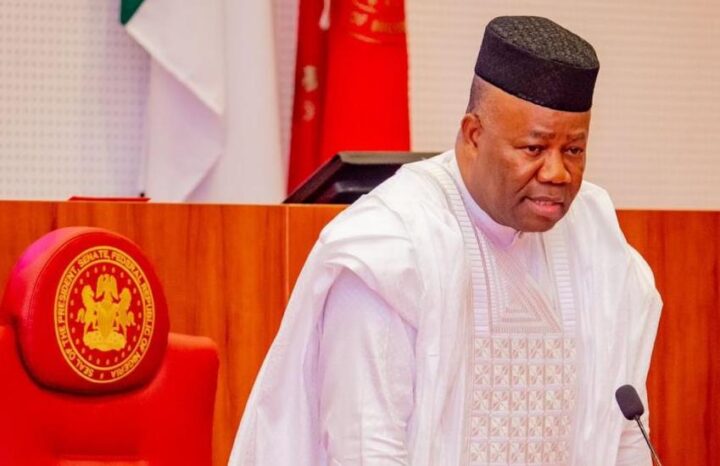
Akpabio Lashes Out at Tinubu’s Critics, Says Nigeria Safe Despite Insecurity

Published

on

By

The Senate President, Godswill Akpabio, has urged Nigerians to be careful of those trying to kidnap for ransom.

Akpabio argued on Tuesday that those behind kidnapping are perpetuating the activity to create an impression that Nigeria is not safe.

Speaking in Abuja during the commissioning of road projects to mark President Bola Tinubu’s third year anniversary, Akpabio said some of the president’s critics have resorted to paying youths to cause mayhem.

Akpabio accused Tinubu’s critics of focusing on insecurity instead of policy and infrastructure.

“Minister you said that people claimed that nothing is happening in Nigeria under the administration of President Tinubu. If they did not say that, how will they go for election? he asked rhetorically.

“If you realize what is happening recently, when they realized that they can’t talk about projects, performance, good laws, transformation in the Petroleum industry, subsidy removal that have been promised Nigerians for decades, they can no longer talk about the high-rise buildings in Abuja such as the NRS building, they resorted to paying young people and recruiting them to cause mayhem in the country.

“Be very vigilant and be careful about people trying to kidnap for ransom. They are kidnapping in order to give the impression that Nigeria is not safe.

“Our men and women in uniform have done tremendously well but many people will not know and that is why I keep saying that the devil you see today, you will soon see them no more.

“Elections will come and go; elections will never be our end; we will see the end of elections; it will never see our end,” he said.

Continue Reading

Headline

The Search for Justice: ADC vs Tsoho

Published

on

By

By Eric Elezuo

From the first day the African Democratic Congress (ADC) took a new shape in July, 2025, in readiness to wrest power from the government of the day, crises, allegedly engineered by the President Bola Tinubu-led All Progressives Congress (APC), have remained its lot.

From the struggle for leadership positions to the fight to save itself from deregistration, the hitherto coalition and main opposition party, has remained in a battle for its life and existence. And has not relented in the search for lasting justice. This time, it has taken the law itself to court to ensure that justice is not only done, but seen to have been done.

It would be recalled that shortly after the the party ratified the election of Senator David Mark and Ogbeni Rauf Aregbesola as Chairman and Secretary of the party respectively, skirmishes were noticed among the rank and file of the party as a supposedly former deputy national chairman of the party, Nafiu Bala Gombe, claimed chairmanship of party, saying that since the founding chairman had resigned, it is constitutionally incumbent upon him to automatically assume the chairmanship role.

Gombe’s claims came on the heels of his ‘resignation’ from office, which paved the way for a new national executive of the party to be constituted. But his claims did not deter the party from carrying on with the formation and running of the party, including holding a keenly contested presidential primary election, which produced His Excellency, the former Vice President Atiku Abubakar. So Gombe went to court. Yet, Mark and Aregbesola carried on the running of the party.

As a result, Gombe had approached a court for an order restraining Mark leadership from parading themselves as leaders of the ADC pending the hearing and determination of his suit challenging their leadership.

He had also asked the court to issue another order against the Independent National Electoral Commission (INEC), restraining it from recognizing the Mark leadership.

But in his ruling in the interlocutory application, Justice Emeka Nwite ordered Gombe to put the defendants on notice so that they appear before the court to show cause, why the application should not be granted.

Rather than appearing before the trial court to show cause, the defendant appealed to the Abuja division of the Court of Appeal, challenging the jurisdiction of the trial court to dabble into the matter they described as internal matters of the ADC.

The appellate court in dismissing the appeal for lacking in merit, ordered accelerated hearing in the suit and further ordered all parties to maintain status quo ante bellum.

Dissatisfied, Mark had approached the appellate court but, his appeal was dismissed and the matter returned to the trial court.

With the to and from nature of the cases involving the ADC leadership crisis, the party has accused judges of bias in favoring party detractors and disobedience to court rules among other malice, the party has taken a new route to obtain the much eluded justice, and that involves charging the custodians of the law to court.

Consequently, the ADC has filed a lawsuit before a High Court in Abuja involving the Chief Judge of the Federal High Court, Justice John Tsoho, over concerns arising from the ongoing leadership dispute within the party.

Also joined in the suit is the National Judicial Council (NJC), which the party said had not addressed issues it raised regarding the handling of a case challenging the leadership of former Senate President, Senator David Mark, within the ADC.

The lawsuit, dated June 4, 2026, was filed by the National Welfare Secretary of the ADC, Nkemakolam Ukandu, who is seeking to be joined in Suit No: FHC/ABJ/CS/1819/2025 instituted by Nafiu Bala Gombe against the Mark-led leadership of the party.

According to the suit, Ukandu expressed concerns about the handling of the matter and alleged that the actions of both Justice Tsoho and Justice Peter Lifu, the judge assigned to hear the case, could affect confidence in the proceedings.

The lawsuit further stated that the assignment of the case to Justice Lifu stirred concerns among some members of the party, who believe the process may not guarantee a fair hearing.

The legal action marks a fresh twist in the leadership dispute within the ADC, which has attracted significant political attention ahead of the 2027 general elections.


Aside Justice John Tsoho, other defendants are the National Judicial Council (NJC), and Justice Peter Lifu, a judge newly assigned to hear the suit challenging the Senator David Mark-led leadership of ADC.

The plaintiff, who was seeking to be joined in the Suit No: FHC/ABJ/CS/1819/2025, brought by Nafiu Bala Gombe against the Mark-led leadership, accused the chief judge and Lifu of manifest bias, and willingness to do the biddings of persons against the interest of the party.

Ukandu, in the suit he personally filed at the Federal High Court, Abuja, faulted the chief judge for reassigning the suit to Lifu, in alleged disregard of the orders of the Supreme Court as well as Justice Emeka Nwite of the Abuja division of the Federal High Court, who initially heard the suit brought by Gombe against the party.

The plaintiff, in the suit marked FHC/ ABJ/ CS/ 1165/2026, recalled that an appeal from an interlocutory decision of Nwite rose to the Supreme Court, wherein the apex court on April 30, 2026, “made an order of remittance of Suit No: FHC/ABJ/CS/1819/2025: Nafiu Bala Gombe VS. ADC & 4 ORS back to Justice Emeka Nwite for continuation of hearing of pending applications challenging the jurisdiction of the trial court.”

He stated that upon resumption of hearing before Nwite, the plaintiff wrote to the chief judge praying for a reassignment of the matter to another judge of the Honourable Court.

Ukandu stated, “All the defendants’ counsel, including counsel to the applicants seeking to be joined in this matter, opposed the said application by the plaintiff’s counsel and Hon. Justice Emeka Nwite thereafter adjourned the matter sine die pending the service of the said letter by the plaintiff’s on all the parties in the matter, outcome of the letter by the 2nd defendant and the furnishing of the CTC of the judgement of the Supreme Court to the court.

“Without complying with the orders of the Supreme Court and Hon. Justice Emeka Nwite, the 2nd Defendant in abuse of his judicial powers reassigned this matter,” to Lifu.

He added that the third defendant, on his part, pretending not to see the order of Nwite, went ahead and fixed the matter for hearing for June 3, 2026.

Ukandu further recalled that ADC had on May 7 informed the public through a press release that the chief judge had planned to reassign the case to another judge favourable to the plaintiff.

He said the party had “warned against such unethical practice but the 2nd Defendant despite the public outcry reassigned the suit to the 3rd Defendant who have been nick-named as ‘Wike Judges’.”

He stated that the third defendant had started presiding over the matter, despite taking judicial notice of the orders of the Supreme Court and Nwite, and that the matter came up for hearing before the third defendant.

Though neither the Federal High Court nor the National Judicial Council had publicly responded to the issues raised so far, it is imperative to to state that the ADC appears to have lost interest in both the judiciary,  which it believe is kowtowing to the dictates of Gombe, and by extension the body language of the Federal Government.

The ADC appears to have managed to draw the sympathy of the public as a group known as the Grassroots Mobilization Network (GMN), has lent their voice to the supposed injustice leveled against the Mark-led ADC, raising concerns about the handling of the matter, and calling for transparency in the judicial process.

The group alleged that the judiciary was being used to target opposition parties.

The group expressed concern over what it described as growing public distrust in the judiciary and called on relevant authorities to ensure fairness and transparency in the handling of politically sensitive cases.

While Nigerians await the outcome of the litigation, and other resolution of other sundry issues arising from the ADC and the judiciary, the party is going ahead making last minute transparent efforts to nominate a suitable running mate to bear the presidential flag with the presidential candidate, Atiku Abubakar.

Among the party’s shortlists are the first runner-up in the presidential primary, Rotimi Chibuike Amaechi, Mrs. Ngozi Okonjo-Iweala, Akinwumi Adesina, Emeka Ihedioha, Emeka Nwajiuba and Chief Dele Momodu.

Continue Reading

Headline

Gunmen Abduct Ex-Power Minister Adelabu’s Sister, Her Two Sons in Ibadan

Published

on

By

Suspected gunmen have abducted the sister of a former Minister of Power, Adebayo Adelabu, in Ibadan, the Oyo State capital.

The family of former minister and chieftain of the All Progressives Congress (APC) confirmed the abduction, disclosing that Mrs. Olaide John-Paul and her 12-year-old twin sons were kidnapped by the gunmen on Wednesday, June 3, 2026.

According to a statement issued by Adelabu’s media aide, Femi Awogboro, the victims were kidnapped at about 7:30am while Mrs. John-Paul was taking her children to school.

Mrs. John-Paul, the youngest of five children of Mrs. Olufunmilayo Aduke Adegoke Adelabu, reportedly retired voluntarily from her career at First Bank Pension Custodian in 2025 before relocating to Ibadan with her children.

She was said to be making arrangements to join her husband, who had earlier relocated to the US.

The family expressed deep concern over the development but stated that security agencies had already commenced efforts to rescue the victims and apprehend those responsible.

“We are pleased to confirm that security operatives have swung into action and preliminary investigations have commenced in earnest,” the statement partly read.

While appealing for calm, the family urged members of the public to refrain from spreading unverified information that could undermine ongoing rescue operations.

“We are deeply distressed by this unfortunate incident, but remain hopeful that the victims will be rescued safely. We appeal to the public to remain calm, avoid speculation and support ongoing efforts with prayers,” the statement added.

The family also called on anyone with useful information that could aid the rescue operation to promptly share such intelligence with security agencies through the appropriate channels.

It assured that it would continue to cooperate fully with law enforcement authorities and provide updates as investigations and rescue efforts progress.

Continue Reading

Trending