Connect with us

Islam

Abraham, Ishmael and Isaac: Familial Bonds, Divine Promise and Human Action

Published

on

By Babatunde Jose

Isaac and Ishmael were both sons of Abraham but had different mothers. Ishmael was born to Hagar, Sarah’s Egyptian maidservant, as a result of Sarah’s attempt to provide an heir due to her initial barrenness (Genesis 16:15). Isaac, however, was born to Sarah herself as the fulfillment of God’s covenant promise, making him the ‘child of promise’ (Genesis 21:3). This distinction created a natural divergence in their destinies, with Isaac designated as the heir of God’s covenant and Ishmael destined to become the progenitor of a separate nation (Genesis 21:12-13).

The story told in the Quran and Islamic exegesis naturally creates doubts about Judeo-Christian renditions, yet the Torah or Taurat predates the Quran by over 3,000 years. We should therefore be cautious in treating historical facts which we are not in a position to corroborate or dismiss. No doubt in the narrations of both Judaism and the Quran, supernatural claims were involved. One supernatural claim cannot be dismissed offhand by the other. There is no doubt God made a promised to both Abraham and his wife. He also came to the aid of Ishmael and his mother during their sojourn in the wilderness.

The story of Abraham and his two sons has a bearing on the just concluded Hajj which is an essential pillar of Islam.

Ishmael, as the firstborn son of Abraham, holds a significant position in the family. Yet, his birth is not the fulfillment of God’s promise to Abraham and Sarah. The narrative takes a pivotal turn in Genesis 17, when God reiterates His covenant with Abraham and promises that Sarah will bear a son, Isaac, through whom the covenant will be established. In Genesis 17:19, God explicitly states, “Your wife Sarah will bear you a son, and you will call him Isaac. I will establish my covenant with him as an everlasting covenant for his descendants after him.”

Theologically, the story of Ishmael and Isaac raises important questions about God’s promises and human agency. Moreover, the relationship between Ishmael and Isaac has been interpreted allegorically by later biblical writers. In the New Testament, the Apostle Paul uses the story of Hagar and Sarah to illustrate the difference between living under the law and living under the promise (Galatians 4:21-31).

In Islamic tradition, Ishmael is considered an important prophet and an ancestor of Muhammad (SAW), which further complicates the historical and theological relationship between Ishmael and Isaac’s descendants. This adds layers of significance to their story, as it touches on issues of identity, heritage, and faith across different religious traditions.

The relationship between Ishmael and Isaac as depicted in Genesis is a rich tapestry of familial bonds, divine promise, and human action. It challenges us to consider the dynamics of God’s covenantal relationships and the ways in which God works through and despite human frailty.

While Ishmael and Isaac’s paths diverge, both are integral to the unfolding story of God’s interaction with humanity, reminding us of the breadth and depth of God’s promises and the diverse ways in which they manifest in the world.

In retrospect, Isaac and Ishmael themselves were not depicted as lifelong enemies. Biblical accounts show moments of tension and divine prophecy that have been interpreted symbolically or historically as foreshadowing conflict among their descendants, but the narrative emphasizes God’s care and promises for both sons. The perception of enmity largely arises from later historical, religious, and cultural interpretations rather than direct biblical evidence. They were both alleged to have come together to bury their father, Abraham.

What do Isaac and Ishmael have to do with the conflict in the Middle East? The conflict in the Middle East has to do with eschatology, or end-time Bible prophecy?

In Islam, the story of Isaac and Ishmael emphasizes themes of faith, sacrifice, and divine mercy, with both figures revered as prophets and significant in the lineage of the Abrahamic faiths.

Ishmael (Isma’il) is considered the father of the Arabs and an ancestor of Prophet Muhammad (SAW), while Isaac (Ishaq) is recognized as a prophet and the father of Jacob (Yaqub), establishing a lineage of prophets in both traditions. Over time, some interpretations have linked this lineage to historical and modern conflicts between Jews and Arabs. However, these interpretations are retrospective and not explicitly stated in the biblical text.

Both sons are seen as continuing the spiritual legacy of their father, Abraham (Ibrahim), and are respected figures in Islam.

The story illustrates profound themes of faith and divine mercy. Ishmael’s survival and the miraculous provision of water (the Zamzam well) in the desert symbolize God’s mercy and care for those who trust in Him.

Isaac’s birth is viewed as a reward for Abraham’s unwavering faith, representing hope and the fulfillment of God’s promises.

The narratives surrounding Isaac and Ishmael are not just historical accounts but are imbued with moral and spiritual lessons that resonate with Muslims today. They emphasize the importance of faith, obedience, and the belief in God’s mercy and providence.

The differing interpretations of the sacrifice story reflect broader theological discussions within Islam regarding lineage, prophecy, and the nature of divine tests.

Both figures are integral to the Islamic understanding of the Abrahamic tradition, illustrating the deep connections between these foundational stories across different faiths.

A central story in Islamic tradition is Abraham’s test of faith, where God commanded him to offer one of his sons in sacrifice. The Quran does not explicitly name the son, but many Islamic traditions identify Ishmael as the intended sacrifice. In this account, Ishmael willingly submitted to God’s command, demonstrating profound faith and obedience. At the last moment, God provided a ram to be sacrificed instead, commemorated annually during Eid al-Adha.

Some early Islamic sources and scholars, however, mention Isaac as the son in this test, reflecting a diversity of interpretations.

Ishmael is associated with Mecca; he and Abraham are credited with constructing the Kaaba, the holiest site in Islam. His descendants became the Arab peoples, and he is honored as a prophet who exemplified patience and submission to God.

Isaac is recognized as a prophet and righteous man, whose lineage produced many Israelite prophets, including Jacob (Yaqub) and Joseph (Yusuf). He represents the continuation of divine guidance through his descendants. It needs to be borne in mind that all prophets in Islam are Judaic prophets except Prophet Muhammad (SAW).

The stories of Ishmael and Isaac emphasize faith, obedience, and divine wisdom. They illustrate the importance of submission to God’s will, the blessings of righteous offspring, and the interconnectedness of Abrahamic lineages. The narrative of the sacrifice teaches Muslims about trust in God and the spiritual value of obedience, forming a foundational element of Islamic belief and practice.

In summary, Ishmael and Isaac are both central figures in Islam, each with distinct roles: Ishmael as the forefather of the Arabs and participant in the Kaaba’s construction, and Isaac as the forefather of the Israelites and a prophet of righteousness. Their stories highlight the shared heritage and moral lessons of the Abrahamic faiths.

Islam’s conception of Ishmael is similar to that of Judaism and Christianity. Sources for this narrative include the Quran and tafsir (i.e., Quranic exegesis); Muhammad’s (SAW) Hadith; historiographic collections by al-Tabari and other Muslim scholars; and Israʼiliyyat, which collectively refers to information and religious literature sourced primarily from the Jews for details about early prophets and messengers.

There are many versions of the construction of the Ka’aba that differ in fairly significant ways, although all have Abraham build or cleanse the Ka’aba and then immediately after, or at an unknown time, God called Abraham to establish the Hajj, or pilgrimage. The starting of the Hajj has many versions, and some scholars believe this reflects the late association of Abraham with the Hajj after Islam had developed to help remove its connection to early pagan rituals.

In other verses, such as 21:85 and 38:48, Ishmael is praised for being patient, good, and righteous. A particular example which describes Ishmael individually is Quran 19:54-55 – “And call to mind, through this divine writ, Ishmael. Behold, he was always true to his promise, and was an apostle [of God], a prophet, who used to enjoin upon his people prayer and charity, and found favor in his Sustainer’s sight.” As a descendant of Ishmael, Muhammad (SAW) is the Prophet and continues the line of prophets from ancient times.

“All the best compliments, prayers, and good deeds are for Allah. Peace, mercy, and blessings of Allah be upon you, O Prophet! Peace be upon us and upon all the righteous servants of Allah. I testify that there is no god but Allah, and I testify that Muhammad is His servant and Messenger”. Attahiyat or Tashahhud.

Barka Juma’at and happy weekend

Continue Reading
Click to comment

Leave a Reply

Your email address will not be published. Required fields are marked *

Islam

Friday Sermon: Terrorism the Curse of Islam 2

Published

on

By

By Babatunde Jose

If from a cursory reading of the history of Islam, especially in the age of the Caliphs and the period of territorial expansion, people get the impression that Islam is a religion of war and violence, that impression cannot be easily dismissed, even though drawing conclusions about Islam based on such impressions is simplistic, one-dimensional, naïve, immature, and inappropriate at best.

In the aftermath of 9/11 when President Bush visited the Islamic Centre of Washington DC, he remarked: “The face of terror is not the true faith of Islam. That’s not what Islam is all about. Islam is peace.” This statement was met with all round condemnation and denigration by neo-conservatives and even some of the President’s compatriots. Former British Prime Minister, David Cameron, suffered the same abuse and all-round denunciation from the neo-con, when he expressed similar views on Islam.

In contrast to the above are the Islamic hardliners who are the bedrock of fundamentalism. They are the so-called Jihadists who have read their Quran upside down and out of context. They give Islam a bad name and are extremists in their behavior. Their language is not only fiery, but intemperate and attitudes towards other faiths are belligerent. They form the crux of the extremists, unfortunately for Islam, they are vociferous but in the minority.

We have them here too. Alfas and Imams who preach hate at every opportunity and poison the minds of their congregants with odious and abhorrent interpretations of the Quran and misinterpretation and misrepresentation of the Hadith.

A bunch of ignoramuses, they are the cause of much of the disagreement between Islam and other faiths. But it does not have to be so.

Repudiating this group of extremist Muslims, is the broader Muslim community that finds an echo of their own position in what President Bush said and they would like the world to know that Islam means peace and Islam is peaceful. Period!

This group is very much troubled by the hate-mongering and violent posturing of the fringe extremists among Muslims. Thus, they would like to underscore and highlight the essential dimension of Islam, which in their view is peace.

To present Islam as essentially peaceful or violent, leads to a false and an unacceptable reductionism; and trying to cast Islam in such a reductionist framework inevitably leads to either misunderstanding or misrepresentation. Islam, like any other faith should be judged by the tenets of the religion; its five pillars and the Quran, without taking its provisions out of context and the life and time of the prophet and his ‘Sahabah’ placed in the proper historical settings.

The history of Islam is also like that of many other religious communities and is not devoid of violence and warfare. There have been almost perpetual wars, conflicts, and the attending violence in the Muslim world.

The Islamic polity, which from the beginning was on a pluralistic foundation, continued to be drawn to war with other great civilizations and lesser powers of the time.

The Caliphate was also engulfed in internal schism and conflict; the Shiite and Sunni divide. Contending powers or blocks had internecine conflicts, in most cases completely de-linked and unrelated with the spirit, vision, and precepts of Islam. This continues today as we witness in the Shiite revolt in Northern Nigeria.

Islam (submission to God) being a religion of freedom, peace and justice does cover the legitimacy of fighting in the Quran as and when it is required and justified. The believers at the time of the revelation of the Quran had to face hostile opposition because of their religious views and were in many cases forced to fight to save their lives as well as to stay in their homes and to practice their religion freely.

But it is unfortunate that the misguided groups who claim they are Muslims have quoted certain verses or their parts out of context in support of their terrorist activities in the erroneous belief of passage to Paradise and so do the critics of the Quran to trace the presence of violence in Islam.

However, below are the verses which are often taken out of context, even the message is very clear being the commandment of fighting for the believers when their lives and properties were in danger: 2:191; 4:101;  8:12; 8:13; 9:5; 9:14.

Fighting was a great concern of the believers at the initial period of the religion. For the first ten years, they faced persecution and oppression and after they immigrated to Medina, the Meccans waged wars against them. There are misinterpretations in the commandment of fighting, while some groups who have entirely inverted the religion claim that they are Muslims, but they do not belong to God’s religion as mentioned in the Quran. They commit murder and suicide expecting to go to Paradise but what they would get is a place in Hell Fire.

Since these groups insist on calling themselves Muslims, they belong to one group, which is labeled “Radical Islam” or “Islamic extremists” or “Islamic terrorists” in the media. Such labeling of these groups is completely wrong, because killing innocent people is the total opposite of the religion of Islam as detailed in the Quran. Hence, they are plainly terrorists, extremists, and anarchists.

Allah said:  Fight in the Way of God against those who fight you, but do not go beyond the limits. God does not love those who go beyond the limits. (Quran 2:190)

Without justice, peace is an illusion. That is human reality. Islam urges and emboldens people never to succumb to injustice. Rather, it instills courage and spirit to resist any social injustice and work collectively, creatively, and capably toward a just society, see Quran 4:135.

This pursuit of justice is not parochial or limited to only Muslims. Indeed, even though it should not be compared to the contemporary standard of human experience, during certain periods of Islamic civilization, non-Muslims, including Jews, found the best protection under Islamic rules and fled persecutions in Christendom to the Islamic polities. In this regard, we would like to quote ‘The Ashtiname of Muhammad’ (SAW).

The content of which is a testament, an eloquent testimony to the perception of the Holy Prophet (SAW) to Moslem/Christian relations:

This is a letter which was issued by Mohammed, Ibn Abdullah, the Messenger, the Prophet, the Faithful, who is sent to all the people as a trust on the part of God to all His creatures, that they may have no plea against God hereafter. Verily God is Omnipotent, the Wise. This letter is directed to the embracers of Islam, as a covenant given to the followers of Jesus the Nazarene in the East and West, the far and near, the Arabs and foreigners, the known and the unknown.

“This letter contains the oath given unto them, and he who disobeys that which is therein will be considered a disbeliever and a transgressor to that whereunto he is commanded. He will be regarded as one who has corrupted the oath of God, disbelieved His Testament, rejected His Authority, despised His Religion, and made himself deserving of His Curse, whether he is a Sultan or any other believer of Islam. Whenever Christian monks, devotees and pilgrims gather together, whether in a mountain or valley, or den, or frequented place, or plain, or church, or in houses of worship, verily we are [at the] back of them and shall protect them, and their properties and their morals, by Myself, by My Friends and by My Assistants, for they are of My Subjects and under My Protection.

“I shall exempt them from that which may disturb them; of the burdens which are paid by others as an oath of allegiance. They must not give anything of their income but that which pleases them—they must not be offended, or disturbed, or coerced or compelled. Their judges should not be changed or prevented from accomplishing their offices, nor the monks disturbed in exercising their religious order, or the people of seclusion be stopped from dwelling in their cells.

“No one is allowed to plunder these Christians, or destroy or spoil any of their churches, or houses of worship, or take any of the things contained within these houses and bring it to the houses of Islam. And he who takes away anything therefrom, will be one who has corrupted the oath of God, and, in truth, disobeyed His Messenger.

“Jizya should not be put upon their judges, monks, and those whose occupation is the worship of God; nor is any other thing to be taken from them, whether it be a fine, a tax or any unjust right. Verily I shall keep their compact, wherever they may be, in the sea or on the land, in the East or West, in the North or South, for they are under My Protection and the testament of My Safety, against all things which they abhor.

“No taxes or tithes should be received from those who devote themselves to the worship of God in the mountains, or from those who cultivate the Holy Lands. No one has the right to interfere with their affairs, or bring any action against them. Verily this is for aught else and not for them; rather, in the seasons of crops, they should be given a Kadah for each Ardab of wheat (about five bushels and a half) as provision for them, and no one has the right to say to them ‘this is too much’, or ask them to pay any tax.

“As to those who possess properties, the wealthy and merchants, the poll-tax to be taken from them must not exceed twelve drachmas a head per year (i.e. about 200 modern day US dollars).

“They shall not be imposed upon by anyone to undertake a journey, or to be forced to go to wars or to carry arms; for the Muslims have to fight for them. Do no dispute or argue with them, but deal according to the verse recorded in the Quran, to wit: ‘Do not dispute or argue with the People of the Book but in that which is best’ [29:46].Thus they will live favored and protected from everything which may offend them by the Callers to religion (Islam), wherever they may be and in any place they may dwell.

“Should any Christian woman be married to a Muslim, such marriage must not take place except after her consent, and she must not be prevented from going to her church for prayer. Their churches must be honored and they must not be withheld from building churches or repairing convents.

“They must not be forced to carry arms or stones; but the Muslims must protect them and defend them against others. It is positively incumbent upon every one of the follower of Islam not to contradict or disobey this oath until the Day of Resurrection and the end of the world.”

Some have argued that the Ashtiname is a resource for building bridges between Muslims and Christians. The Ashtiname urges all Muslims to abide by the treaties and covenants that were concluded by Muhammad (SAW) with the Christian communities of his time.

If today some fringe elements disobey this covenant, it’s not because their actions are sanctioned, but they should be seen for what they are; not be seen as representing the faith. They should not only be condemned, but they should also be made to face the full wrath of the law.

In our next discourse, we shall examine the sources of the schism in interfaith relations and the origins of modern-day terrorism.

Barka Juma’at and Happy weekend

Continue Reading

Islam

Friday Sermon: Terrorism: The Curse of Islam 1

Published

on

By

By Babatunde Jose

A lot has happened recently on the ‘terrorism’ front that brings to the front burner the issue of Islam and terrorism, more especially with some erstwhile Moslems and ‘friends’ of Islam beginning to ask the question: Why Islam? Misperception and confusion are starting to set in and many have begun to ruminate over the possibilities of a real connection between the tenets of the religion and terrorism.

Here in Nigeria, it has become increasingly clear that terrorism is no more the exclusive preserve of the Fulani herdsmen, Boko Haram and their derivatives, rather it has become a full-blown lucrative proposition for all comers. Kidnapping, terrorism and their variants have assumed industrial scale pursuits; and is no more limited to regions or provinces. 

Recent provocative messages from Mike Arnold, a former US mayor and missionary and spokesman on the perceived Christian persecution, radical Islam and humanitarian crises in Nigeria, has made this sermon very germane.  He is also the US ally of Nnamdi Kanu, the misguided Biafra irredentist: And most of all a self-styled modern-day crusader for the liberation of Nigeria from the clutches of remnants of Dan Fodio’s Jihad and the emergence of the ‘Promised Messiah’.

From the onset, let us disabuse our minds of any connection, encouragement, aiding or abetting of terror by mainstream Islam. There is no point repeating the assertion that Islam is a religion of peace.

It must also be said that the media is today enamoured with incidents of terrorism as it gives them good copy and the now proverbial’ Breaking News’ syndrome. The result of these odious presses, the activities of fringe terrorists is causing the faith what many now perceive that: “Violence is inherent in Islam. It’s a destructive, nihilistic cult of death. It legitimizes murder.”  

We can say with certainty that the violence and conflict racking much of the Muslim world does not happen because its inhabitants are Muslims. Because in recent decades alone we have seen every one of these types of violence replicated in the Democratic Republic of Congo, Liberia, Rwanda, South Sudan, Ethiopia, Eritrea, Sri Lanka, Myanmar and Cambodia, in conflicts where next to no Muslims were involved.

Contrary to the oft-stated view that religion causes much of the world’s violence, the past century has shown the immense potential for violence of the centralizing nation-state. Some people will be quick to say that none of the countries have generated global terrorism; which is correct. The fact is that they do not make sensational headlines as religion would.

A better explanation is that none of these post-colonial nations was deemed of crucial strategic importance to the West, and so none found itself garrisoned by Western troops; whereas the countries where large numbers of Muslims live happen to lie across the Suez Canal, the Strait of Hormuz and a vast reservoir of fossil fuels, as well as the birthplace of the West’s major religion. All those things made the West a participant in the Muslim world’s conflicts and then – eventually, after many decades – a target for them.

But that is geopolitics and cannot explain the recent emergence of home-based terrorists in England, France, Germany, Belgium and the United States. However, we might ponder, why the same type of terrorism is absent in South America, even Mexico.

The reason is not far-fetched. These nations have never had exploitative relationships with the so-called axis of Islamic militarism. That is, simply the Oil kingdoms of the East.

If anything, Europe is suffering from the collateral damage of years of its injustice to the people of the ‘Fertile Crescent’. The situation is however, not being helped by the intemperate language of ‘Islam haters’ in the West.  A commentator on CBS 60 Minutes did not stop at the violent acts of militant Muslims: No, he declared on the program that ‘Muhammad (SAW) is a “terrorist” who set an example opposite to that of Jesus and Moses’.

The most detestable of them all is the book by J.K Sheindlin: THE PEOPLE VS MUHAMMAD: A PSYCHOLOGICAL ANALYSIS, dubbed; ‘The trial which challenges the founder of Islam’s authority over all mankind’.  In this book (worse than Salman Rushdie’s Satanic Verses), the author called the Prophet (SAW) all sorts of unprintable epithets, most unbecoming of a sane human being. No wonder the book was eventually censored and banned on the Internet.

We have written about this before, namely, that the sins of Muslims should not be confused with the tenets or doctrines of Islam. We absolutely agree that some Muslims use Quranic verses (out of context) to justify their murder of innocent people. But the Bible has also been used to justify murder (http://www.evilbible.com/evil-bible-home-page/murder-in-the-bible/), the enslavement of Africans, or racial discrimination in the United States. You can also reference ‘The Slave Bible’.

Scores of Orthodox Christian Serb soldiers systematically raped tens of thousands of Bosnian Muslim women in the aftermath of the breakup of Yugoslavia. The members of the Klu Klux Klan are Christians. Can one justifiably conclude that Christianity is a racist and “evil” religion? Islam is not accorded this same treatment, and it is wrong.

On the one hand some Christian fundamentalists say how barbaric Islam is when it decrees cutting off the hand of the thief; however, when we read the Old Testament, much of the punishment prescribed there is the same as in the Qur’an. Even the evangelicals’ relentless assault on the dress of the Muslim women is contentious.   Ask them about the dress of Mary, the mother of Jesus and the pious women during the time of Jesus: In the New Testament the verses read, ‘it is a shame for a woman to pray with her head uncovered. (1 Cor. 11:2-16); also, in the book of Ephesians, there are verses that read, wives obey your husbands and be silent in the church, if you have a question, wait until you get home and ask your husband. Women are to learn in silence and subjection (Ephesians 5:21-32). The Evangelical are silent on these and countless other verses that support racism against people of colour; the verse reads “Slaves, obey your earthly masters in everything, not by way of eye-service, as people-pleasers, but with sincerity of heart, fearing the Lord.”  (Colossians 3:22).

Allah says in the holy book: O ye who believe! stand out firmly for Allah, as witnesses to fair dealing, and let not the hatred of others to you, make you swerve to wrong and depart from justice. Be just: that is next to piety: and fear Allah. For Allah is well-acquainted with all that ye do (Quran 5:8)

It is very easy to forget that the evangelicals and the neo-conservatives use the Bible to justify Israeli occupation of Palestine. They fund and support illegal settlement activity. They are also against peace and all “road maps” to peace. They support directly or indirectly the violence and terrorism against Palestinians fighting for their just cause against occupation. They also supported the illegal war against Iran for the “security” of Israel.

The US, Israel, India, Russia, etc. have all the WMDs and other powerful weapons which they use frequently – these nations have terrorized and killed so many and continue to do so in the name of self-defence or in the defence of their economic interest – even at the cost of so many innocent lives? It is therefore an insult upon injury when the legitimate struggle of the oppressed is termed terrorism.

We need to educate people in the fact that terrorism is not Islam; and that terrorists, regardless of religion or political ideology, are all demented fools who use their religion or ideology as a mechanism to justify their sick and twisted acts. No religion condones terrorism.

We need to educate the people that being a Muslim, Christian, Jew, Atheist, a member of the political left or political right does not equate you to being a terrorist, but rather that those who are terrorist are trying to equate themselves with members of these faiths or ideologies and are causing catastrophic damage when they hijack these faiths and ideologies for their own sick and twisted actions.

Groups such as Al-Qaeda, the IRA, The Japanese Red Army, ISIS, Boko Haram and many other groups do not represent the whole of the community they claim to represent, instead they are the exact opposite of what they claim to represent.

It is rather unfortunate that the terrorists, kidnappers and extremists that operate in our country fall under the above nomenclature. Kidnapping, terrorism and extremism have become a growth industry and are in no way religious in nature. The Fulani herdsman is not fighting for Islam. His cows destroy the farmland of both Muslim and Christian farmers.

Does the Quran or Muhammad (SAW) promote violence? Some issues in peace and violence are what we will look at in our next discourse.

Barka Juma’at and a happy weekend

Continue Reading

Islam

Friday Sermon: Facing Mount Arafat 3: A Prophet’s Final Admonition

Published

on

By

By Babatunde Jose

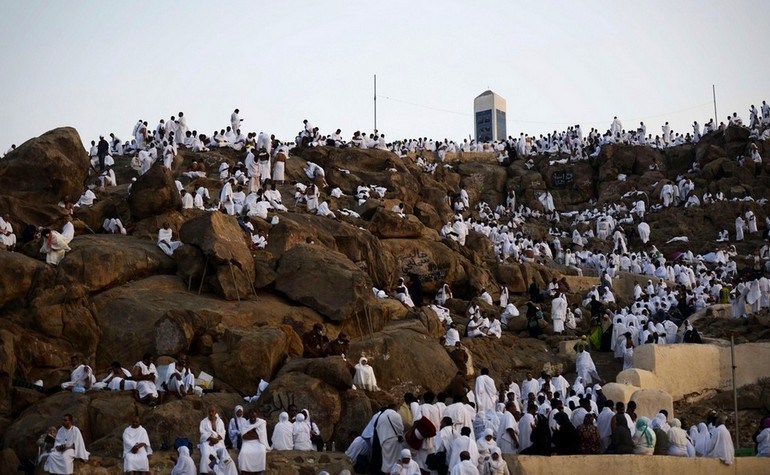
Khutbatul Wada’ or Prophet Muhammad’s (SAW) ‘last sermon’ was delivered on the 9th of Zulhijjah 10 A.H (632 C.E) on Mount ‘Arafat, Makkah.

Prophet Muhammad (SAW) is an example for all of humanity. He was always a remarkable man. He excelled in all walks of life by being a prophet, ruler, statesman, orator, soldier, husband, friend, father and a grandfather. He was a man of love, patience, courage, wisdom, generosity, intelligence and exemplary character who inspires over a billion lives throughout the world.

Allah says in the Quran that he was sent as a mercy for the people of the world: And We sent thee only as a mercy for all mankind. وَمَٓا اَرْسَلْنَاكَ اِلَّا رَحْمَةً لِلْعَالَم۪ينَ; Wama arsalnaka illa rahmatanlilAAalameen. (Surah Al Anbiya, Quran 21:107)

Shortly before his death, Prophet Muhammad (SAW) delivered a sermon during the Hajj, which came to be known as his “Final Sermon”. This sermon was not only a reminder to his followers, but also the ‘final admonition’; it also heralded the end of his Prophetic Mission. Historically, the Farewell Sermon of Prophet Muhammad (SAW) occupies an important place in Islam.

The sermon consisted of summarized exhortations reflecting some of the core teachings of the Quran and Sunnah. The sermon exemplifies the Quran’s assertion that the prophet was but a Warner: This was mentioned 57 times in the Quran.

Prophet Muhammad (SAW) undertook his farewell and only pilgrimage in the year 10 A.H. and it has since been the model for performing the fifth pillar of Islam, the Hajj.

The Final Sermon:

“O People, lend me an attentive ear, for I know not whether after this year, I shall ever be amongst you again. Therefore, listen to what I am saying to you very carefully and take these words to those who could not be present here today.

“O People, just as you regard this month, this day, this city as Sacred, so regard the life and property of every Muslim as a sacred trust. Return the goods entrusted to you to their rightful owners.

“Hurt no one so that no one may hurt you. Remember that you will indeed meet your Lord, and that He will indeed reckon your deeds. God has forbidden you to take usury (interest), therefore all interest obligation shall henceforth be waived. Your capital, however, is yours to keep. You will neither inflict nor suffer any inequity.

“God has Judged that there shall be no interest, and that all the interest due to Al-Abbas ibn Abd’el Muttalib shall henceforth be waived… Beware of Satan, for the safety of your religion. He has lost all hope that he will ever be able to lead you astray in big things, so beware of following him in small things.

“O People, it is true that you have certain rights with regard to your women, but they also have rights over you. Remember that you have taken them as your wives only under a trust from God and with His permission. If they abide by your right, then to them belongs the right to be fed and clothed in kindness. Do treat your women well and be kind to them for they are your partners and committed helpers. And it is your right that they do not make friends with any one of whom you do not approve, as well as never to be unchaste.

“O People, listen to me in earnest, worship God, perform your five daily prayers, fast during the month of Ramadan, and offer Zakat. Perform Hajj if you have the means. All mankind is from Adam and Eve. An Arab has no superiority over a non-Arab, nor does a non-Arab have any superiority over an Arab; a white has no superiority over a black, nor does a black have any superiority over a white; [none have superiority over another] except by piety and good action. Learn that every Muslim is a brother to every Muslim and that the Muslims constitute one brotherhood. Nothing shall be legitimate to a Muslim which belongs to a fellow Muslim unless it was given freely and willingly. Do not, therefore, do injustice to yourselves. Remember, one day you will appear before God and answer for your deeds. So beware, do not stray from the path of righteousness after I am gone.

“O People, no prophet or apostle will come after me, and no new faith will be born. Reason well, therefore, O people, and understand words which I convey to you. I leave behind me two things, the Quran and my example, the Sunnah, and if you follow these you will never go astray. All those who listen to me shall pass on my words to others and those to others again; and it may be that the last ones understand my words better than those who listen to me directly. Be my witness, O God, that I have conveyed your message to your people.”

Thus the beloved Prophet (SAW) completed his Final Sermon, and upon it, near the summit of Arafat, the revelation came down: “…This day have I perfected your religion for you, completed My Grace upon you, and have chosen Islam for you as your religion…” (Quran 5:3)

Perhaps it is more appropriate to present this ayat in proper context: “Forbidden to you (for food) are: dead meat, blood, the flesh of swine, and that on which hath been invoked the name of other than Allah; that which hath been killed by strangling, or by a violent blow, or by a headlong fall, or by being gored to death; that which hath been (partly) eaten by a wild animal; unless ye are able to slaughter it (in due form); that which is sacrificed on stone (altars); (forbidden) also is the division (of meat) by raffling with arrows: that is impiety. This day have those who reject faith given up all hope of your religion: yet fear them not but fear Me. This day have I perfected your religion for you, completed My favour upon you, and have chosen for you Islam as your religion. But if any is forced by hunger, with no inclination to transgression, Allah is indeed Oft-forgiving, Most Merciful.” (Quran Surah Al Ma’idah Verse 3)

Indeed the meanings found in this sermon are astounding and it could rightly be described as the Prophet’s last Admonition.

But how have we as his followers kept to his admonitions? We have kept to them in the breach: An incorrigible generation, hell bent on disobedience and trenchant iniquities, we kill our fellow men, we enslave our women in the name of Sunnah, we persecute people of other faiths and engage in terrorism and are unjust to peoples of other races and ethnic persuasions, we are intolerant and intemperate in our manners and speech and we are bigots and fanatical in our ways. We have gone against all the things in the admonitions. We are unjust, nepotic and consume usury; we even export hard drugs to the ‘House of God; child abuse, prostitution and other forms of iniquities that make Sodom and Gomorrah pale into insignificance.

What will we not do for money? We dispossess the orphans and maltreat the widows. Sexual inequality which the Prophet preached against is still the order of the day in most Islamic countries and Muslim communities; 1,387 years after the Prophet, the Arabs and their cohorts still treat women as chattels.

The Admonition talks about equality of men but the Arab Muslims did not remember that when they came to enslave Africans, especially from East Africa. A generation of vile men and human anacondas, we even attempt to bribe God, but He refused to be mocked. On the Day of Qiyamah they will reap their just recompense. Walahi! There will be much weeping and gnashing of teeth, but it will be too late.

Let us reflect on ourselves, take a step back, and revive the core teachings of our Prophet (SAW) in achieving an ethical and moral society, wherever we are, where no one inflicts harm or injustice upon others.

May Allah grant us the strength to become better Muslims and better human beings.

LA ILAHA ILLA ANTA SUBHANAKA INNI KUNTU MINAZ ZALIMEEN: “None has the right to be worshipped but You (O Allah)), Glorified (and Exalted) are You (above all that (evil) they associate with You). Truly, I have been of the wrong-doers.”(Quran 21:87)

Barka Juma’at, happy weekend and Eid Mubarak and Barka da Sallah.

Continue Reading

Trending