Connect with us

Literature

Exhausted? I’m Fine, I Think… By Adeoye Inioluwa

Published

on

There is a strange kind of exhaustion that does not announce itself.

It does not always look like collapse or crisis. It often looks like productivity. People still go to work, still reply messages, still meet deadlines, still laugh at the right moments. From the outside, everything appears intact.

But internally, something is constantly draining.

We rarely talk about this state because it is inconvenient to define. It does not fit neatly into categories of “well” or “unwell.” So instead, it becomes something people quietly endure — a background fatigue that slowly reshapes how life feels.

In modern society, being busy has almost become a moral achievement. Rest is postponed until everything is finished, yet everything is never truly finished. There is always another email, another expectation, another version of ourselves we are trying to improve.

At some point, exhaustion stops feeling temporary and starts feeling like personality.

What makes this even more complicated is that many people are not technically breaking down. They are functioning. And because they are functioning, they assume they should not complain. After all, there are others who seem to be coping better, achieving more, handling more.

So silence becomes the default response.

We learn to say “I’m fine” with increasing efficiency, not because it is true, but because it is easier than explaining a fatigue that has no dramatic shape. There is no single event to point to. No visible wound. Just a gradual thinning of energy, patience, and emotional availability.

Perhaps the most overlooked part of this experience is how normal it has become. Entire generations are growing accustomed to living slightly detached from themselves — present in body, absent in feeling. Constantly reachable, but rarely restored.

And yet, nothing about this state is actually sustainable.

Human beings were not designed for continuous performance. There is a reason rest exists not as luxury, but as necessity. When rest is treated as optional, everything else slowly becomes heavier than it should be.

Maybe the issue is not that people are weak, but that the standard for “coping” has quietly shifted beyond what is healthy. We praise endurance without asking what it is costing.

And so the question becomes less about how much more people can take, and more about why taking less has become so difficult to justify.

Because sometimes, what we call normal life is simply prolonged depletion — widely shared, rarely named, and almost never questioned.

Continue Reading
Click to comment

Leave a Reply

Your email address will not be published. Required fields are marked *

Literature

The Death of Nuance by Adeoye Inioluwa

Published

on

By

We are living in one of the noisiest periods in modern history.

Never before have so many people had access to platforms powerful enough to shape public opinion within seconds. A single tweet can spark outrage. A thirty-second video can destroy reputations. A headline can travel farther than the truth itself.

Yet, despite being more connected than ever, meaningful conversation appears to be dying.

Today’s culture rewards speed over understanding. People rush to react before they reflect. Complex issues are reduced to hashtags, and disagreement is increasingly treated as hostility rather than an opportunity for intellectual engagement.

Perhaps most worrying is the growing normalization of selective empathy. Many people only defend humanity when it concerns people who look like them, speak like them, worship like them, or belong to the same social and political circles. Once empathy becomes conditional, division becomes inevitable.

This is how ignorance quietly evolves into intolerance.

Xenophobia, discrimination, and social hostility rarely begin with violence. They often begin with narratives — repeated assumptions, inherited prejudices, and the refusal to understand people outside one’s immediate environment. Over time, stereotypes become accepted as facts, and fear becomes easier than curiosity.

Ironically, history consistently proves that societies thrive not in isolation, but through exchange. Economies grow through migration, innovation grows through collaboration, and cultures evolve through interaction. The greatest cities in the world became influential precisely because they attracted different kinds of people and ideas.

The danger, therefore, is not diversity.
The danger is intellectual laziness.

A society unwilling to ask questions eventually becomes vulnerable to manipulation. When citizens stop reading deeply, listening carefully, or engaging thoughtfully, public discourse becomes vulnerable to propaganda, sensationalism, and emotional extremism.

This is why media literacy has become one of the most important survival skills of the modern era. The ability to distinguish information from noise may ultimately determine the quality of future democracies.

But beyond institutions and politics, there is also an individual responsibility. Every generation must decide whether it wants to inherit prejudice or challenge it. Whether it wants to amplify fear or expand understanding.

Because civilizations are not destroyed only by wars or economic collapse.
Sometimes, they slowly decline through the normalization of ignorance.

And perhaps that is the defining challenge of this generation. Not merely learning how to speak louder, but also learning how to think deeper.

Continue Reading

Literature

Survival, Soft Life and Side Hustles

Published

on

By

By Anjorin Fehintola Stella

There is a quiet transformation happening among young Nigerians today; one that does not always make the headlines, but shows up in the numbers, in the timelines, in the conversations happening in kitchens, group chats and rented apartments across the country.

Across cities and small towns alike, an increasing number of young people are re-inventing themselves in real time, switching careers, learning digital skills, building online businesses, creating brands from their bedrooms and refusing to remain confined to traditional definitions of success.

For many, survival is no longer just about finding a job. It is about creating opportunities where none seems to exist. A generation once told to follow predictable paths is now embracing uncertainty, adaptability and self-reinvention as a way of life.

To understand why, one has to understand what was handed over to this generation. They were raised on the promise that education was the key, only to graduate into a job market that had misplaced the lock. Young people who did everything right, studied hard, earned degrees, dressed sharp for interviews, were still told, in one way or another, that there wasn’t space for them at the table.

Economic uncertainty has played a major role in this shift. In a country where traditional employment opportunities are increasingly limited, many young Nigerians have been forced to think beyond conventional career structures. Side hustles have evolved into full time businesses. Skills once dismissed as hobbies such as makeup artistry, hairstyling, content creation, fashion branding, photography and digital marketing are now becoming legitimate sources of income and influence.

Social media has also accelerated this culture of reinvention. Platforms like Instagram, TikTok and LinkedIn have exposed young people to new possibilities beyond their immediate environments. Today, a young person in Lagos can learn a skill online, build a customer base digitally and create a brand capable of reaching audiences far beyond Nigeria’s borders.

What makes this moment fascinating is that the reinvention is not uniform, it doesn’t have a single face. It is the law graduate who now runs a thriving catering business and carries no shame about it. It is the banker who wakes up one morning, looks at the spreadsheets, and decides that her real life is in fashion design. These are not people who failed at their original paths. These are people who outgrew them. There is a difference, and it matters.

Yet, beneath the aesthetics of entrepreneurship and online visibility lies a deeper reality, many young people are reinventing themselves not purely out of passion, but out of necessity. Reinvention has become both a survival strategy and a response to a rapidly changing world. And the quietness of it all is deliberate. Previous generations reinvented loudly, with declarations, and testimonies and big announcements. This generation has watched too many people announce transformations that never survived contact with Monday morning. So they build in silence. They learn the skill quietly, save the money quietly, test the idea quietly. And by the time the world notices, the transformation is already complete and too solid to be talked out of, too real to be dismissed.

Perhaps the most remarkable thing about this generation is its refusal to remain stagnant. Faced with economic pressure, social expectations and an unpredictable future, many young Nigerians are choosing adaptation over defeat. They are learning, unlearning and rebuilding themselves repeatedly in search of stability, relevance and purpose. They want autonomy. They want meaning. And perhaps most radically, they want multiple things to be true about them at once, to be the professional and the artist, the corporate and the creative, the serious and the soft. They are done choosing.

In many ways, reinvention is no longer an exception among young people today. It has quietly become a defining characteristic of an entire generation. And if you are somewhere in the middle of your own, in that in-between space where you are no longer who you were but not yet fully who you are becoming, the silence is not failure. The silence is the work.

Continue Reading

Literature

Writers Celebrate Chinua Achebe’s 94th Posthumous Birthday

Published

on

By

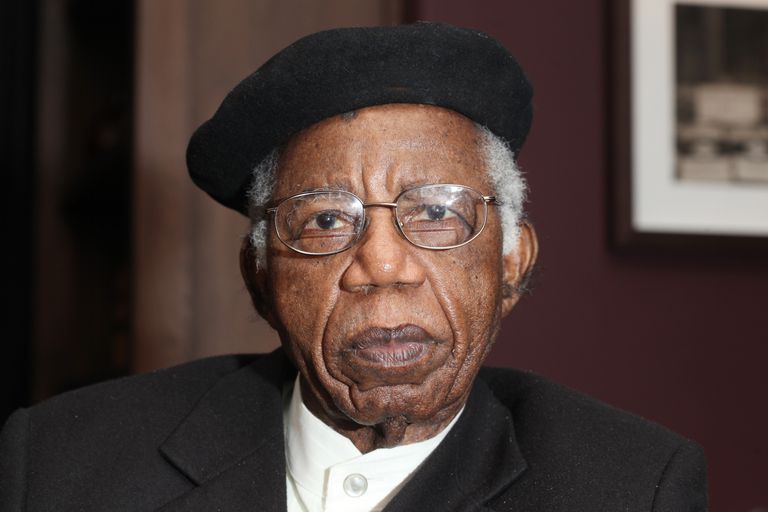
Writers across Nigeria, under the auspices of the Society of Young Nigerian Writers (SYNW), have united in commemorating the 94th posthumous birthday of one of Africa’s greatest literary icons, Prof. Chinua Achebe. Achebe, renowned globally for his groundbreaking novel *Things Fall Apart*, remains an enduring symbol of literary excellence and cultural preservation.

In a statement issued by Wole Adedoyin, the President of SYNW emphasized Achebe’s unmatched contributions to African literature and his role as a beacon of inspiration for writers across generations. Adedoyin highlighted the Society’s unwavering commitment to honoring Achebe’s legacy through creative and impactful initiatives.

One of the key tributes mentioned is the *Chinua Achebe Annual Literary Festival and Memorial Lecture*, initiated by the Anambra Chapter Coordinator of SYNW, Izunna Okafor. Now in its 9th edition, the festival has become a significant platform for celebrating Achebe’s works and discussing his influence on modern African literature.

Cynthia Maduekwe, the President of the Nigeria Society of Campus Writers, also spearheaded the *Writers Tour*, another initiative aimed at engaging young writers with Achebe’s literary philosophy. This tour exposes aspiring authors to Achebe’s timeless themes of cultural identity, colonialism, and societal transformation, ensuring his legacy continues to inspire future generations.

The Society of Young Nigerian Writers (SYNW) reaffirmed its dedication to Achebe’s memory through these longstanding programs. Writers across the country were encouraged to reflect on Achebe’s life and works, sharing tributes and essays on social media platforms to further propagate his vision of storytelling.

Adedoyin lauded the efforts of writers like Okafor and Maduekwe, whose initiatives keep Achebe’s legacy alive.

He also urged literary organizations and institutions to continue collaborating to sustain Achebe’s impact on African literature and culture.

“Prof. Achebe’s work transcends literature. He gave Africans a voice on the global stage, presenting our stories with authenticity and pride. Celebrating his 94th posthumous birthday is a reminder of the power of storytelling in shaping society,” Adedoyin stated.

The SYNW also used the opportunity to announce plans for a series of upcoming events dedicated to Achebe in the coming year, including essay competitions, poetry readings, and book discussions. These programs aim to further Achebe’s vision of nurturing literary talent and promoting African narratives.

As the literary community celebrates Achebe’s life and achievements, his timeless words resonate: “Until the lions have their own historians, the history of the hunt will always glorify the hunter.”

Achebe’s legacy continues to inspire writers to tell their own stories, preserving the richness of African culture for generations to come.

The Society of Young Nigerian Writers concluded by inviting literary enthusiasts to join in celebrating Achebe’s enduring impact, emphasizing that his legacy is a shared treasure for all who value the power of words.

Continue Reading

Trending