Connect with us

News

Tinubu’s Govt Rejects EU’s 2023 Election Assessment, Says Institution Bias

Published

on

By Eric Elezuo

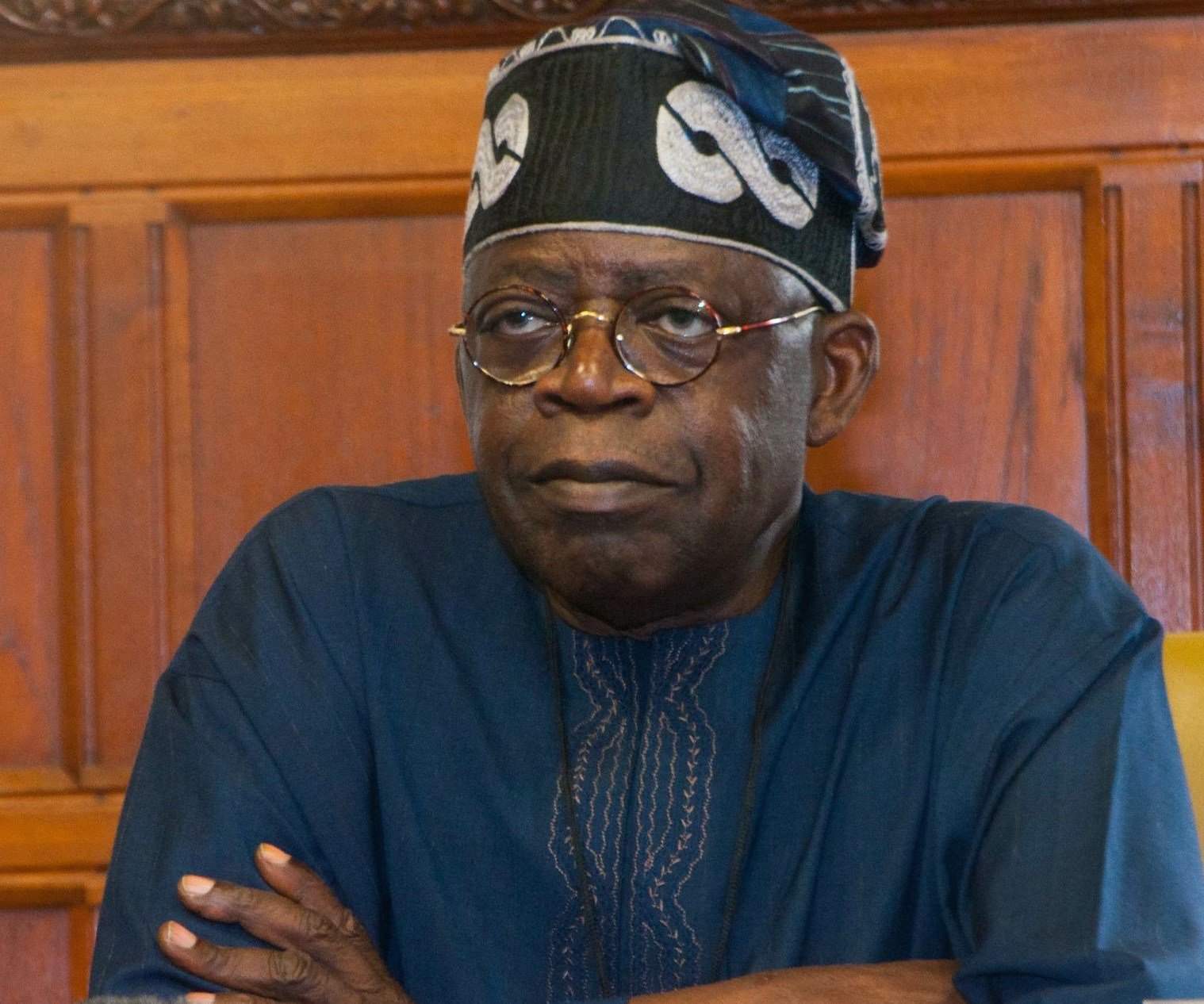
The Bola Tinubu-led Federal Government has rejected the assessment of the February 2023 presidential election by the European Union (EU), saying the institution’s conclusion is bias and not objective.

The government, which added that Tinubu and the All Progressives Congress (APC) won the election fair and square, made the remarks in a statement signed by the Special Adviser to the President (Special Duties, Communications and Strategy), Mr. Dele Alake, on Sunday.

The Federal government questioned how the EU with only 50 observers for the election can give an objective assessment of an election that took place in 176, 000 polling units. It also defended that bodies such as the African Union, ECOWAS and the Nigerian Bar Association (NBA) has given credible reports of the election.

Recall that the Head of EU Electoral Observation Mission, Barry Andrews, addressed a press conference in Abuja the precious week, stating the final report on the elections. The EU, according to Andrews, monitored the pre-election and post-election processes in Nigeria from January 11 to April 11, 2023 as an INEC accredited election monitoring group, coming out with reports that discredited the process and outcome of the election.

Read the statement in full:

WE REJECT EUROPEAN UNION’S CONCLUSIONS ON 2023 GENERAL ELECTIONS

Sometimes in May, we alerted the nation, through a press statement, to the plan by a continental multi-lateral institution to discredit the 2023 general elections conducted by the Independent National Electoral Commission. The main target was the presidential election, clearly and fairly won by the then candidate of All Progressives Congress, Bola Ahmed Tinubu. While we did not mention the name of the organisation in the said statement, we made it abundantly clear to Nigerians how this foreign institution had been unrelenting in its assault on the credibility of the electoral process, the sovereignty of our country and on our ability as a people to organise ourselves. We find it preposterous and unconscionable that in this day and age, any foreign organisation of whatever hue can continue to insist on its own yardstick and assessment as the only way to determine the credibility and transparency of our elections. Now that the organisation has submitted what it claimed to be its final report on the elections, we can now categorically let Nigerians and the entire world know that we were not unaware of the machinations of the European Union to sustain its, largely, unfounded bias and claims on the election outcomes. For emphasis, we want to reiterate that the 2023 general elections, most especially the presidential election, won by President Bola Tinubu/All Progressives Congress, were credible, peaceful, free, fair and the best organised general elections in Nigeria since 1999. There is no substantial evidence provided by the European Union or any foreign and local organisation that is viable enough to impeach the integrity of the 2023 election outcomes. It is worth restating that the limitation of EU final assessment and conclusions on our elections was made very bare in the text of the press conference addressed by the Head of its Electoral Observation Mission, Barry Andrews. While addressing journalists in Abuja on the so-called final report, Andrews noted that EU-EOM monitored the pre-election and post-election processes in Nigeria from January 11 to April 11, 2023 as an INEC accredited election monitoring group. Within this period, EU-EOM observed the elections through 11 Abuja-based analysts, and 40 election observers spread across 36 states and the Federal Capital Territory. With the level of personnel deployed, which was barely an average of one person per state, we wonder how EU-EOM independently monitored election in over 176,000 polling units across Nigeria. We would like to know and even ask EU, how it reached the conclusions in the submitted final report with the very limited coverage of the elections by their observers who, without doubt, relied more on rumours, hearsay, cocktails of prejudiced and uninformed social media commentaries and opposition talking heads. We are convinced that what EU-EOM called final report on our recent elections is a product of a poorly done desk job that relied heavily on few instances of skirmishes in less than 1000 polling units out of over 176,000 where Nigerians voted on election day. We have many reasons to believe the jaundiced report, based on the views of fewer than 50 observers, was to merely sustain the same premature denunciatory stance contained in EU’s preliminary report released in March.

We strongly reject, in its entirety, any notion and idea from any organisation, group and individual remotely suggesting that the 2023 election was fraudulent. Our earlier position that the technology-aided 2023 general elections were the most transparent and best organised elections since the return of civil rule in Nigeria has been validated by all non-partisan foreign and local observers such are the African Union, ECOWAS, Commonwealth Observer Mission and the Nigerian Bar Association. Unlike EU-EOM that deployed fewer than 50 observers, the Nigerian Bar Association that sent out over 1000 observers spread across the entire country for same election gave a more holistic and accurate assessment of the elections in their own report. NBA, an organisation of eminent lawyers and an important voice within the civic space, reported that 91.8 per cent of Nigerians rated the conduct of the national and state elections as credible and satisfactory. Any election that over 90% of the citizens considered transparent should be celebrated anywhere in the world. It is heart-warming that INEC, through its National Commissioner for Information and Voter Education, Mr. Festus Okoye, has come out to defend the integrity of the election it conducted by rejecting the false narratives in the EU report. It is also gratifying that the electoral umpire, as an institution that is open to learning and continuous improvements, has also committed to taking on board more ideas, innovation and reforms that will further enhance the integrity and credibility of our electoral process. As a country, we have put the elections behind us. President Tinubu is facing the arduous task of nation-building, while those who have reasons to challenge the process continue to do so through the courts. In just one month in office, Nigerians appear satisfied with the decisive leadership of President Tinubu and the manner he is redirecting the country to the path of fiscal sustainability and socio-economic reforms. We urge the EU and other foreign interests to be objective in all their assessments of the internal affairs of our country and allow Nigeria to breathe.

Continue Reading
Click to comment

Leave a Reply

Your email address will not be published. Required fields are marked *

News

Jigawa ADC Receives Defecters from APC, NNPP, PDP

Published

on

By

A wave of defections has hit the All Progressives Congress, the New Nigeria People’s Party, and the Peoples Democratic Party in Jigawa State, as politicians and supporters defected to the African Democratic Congress.

On Sunday, Dutse, the Jigawa State capital witnessed a large turnout of supporters and politicians during a mass gathering to formally receive a two-term senator representing Jigawa South-West Senatorial District, Senator Sabo Nakudu, who joined the ADC alongside other defectors.

Nakudu, accompanied by other politicians from across the state, was received by ADC leaders and supporters.

The former senator, who chaired the Senate Committee on Petroleum (Downstream) in the 9th Assembly, resigned from the APC on Friday and joined the ADC on Sunday.

Speaking after receiving his ADC membership card, Nakudu said, “I am grateful to my supporters for turning out en masse to receive me into my new party,” adding, “I promise to work towards a greater Jigawa and the country at large.”

Nakudu, who contested against Governor Umar Namadi during the 2023 APC governorship primaries, is expected to run for governor on the ADC platform in 2027.

Sources close to him said he has begun consultations with key stakeholders in the state.

Another prominent figure linked to the ADC is Aminu Ringim, a three-time governorship candidate in Jigawa State under the PDP (2015, 2019) and NNPP (2023).

Ringim, described as a protégé of former Kano State governor, Rabiu Kwankwaso, said he would soon formally join the ADC at a similar event in his hometown.

Also present at the event was Senator Ubale Shittu, a political figure who previously represented Jigawa North-East Senatorial District in the 8th National Assembly on the PDP platform before later moving to the APC.

Earlier, the Jigawa State ADC coordinator, Ahmad Gumel, welcomed Nakudu and other defectors, describing the development as a boost to the party.

He said the defections reflected the party’s growing popularity in the state and praised Nakudu’s experience as an asset.

Similarly, ADC chieftain Bashir Jumbo welcomed the new members, saying, “We pledge equal opportunities within the party structure.”

He urged party members to work towards unity, adding, “We must take over power in 2027 by the grace of God.”

Reacting, the PDP Public Relations Officer in the state, Umar Kyari, dismissed the defections, saying they did not involve key members of the party.

“They’re just a group of political jokers seeking relevance,” he told our correspondent via telephone on Monday.

Kyari challenged the ADC to test its popularity at the polls.

“If they want to test their power, come out and contest — we’ll show them what politics is,” he said.

Also reacting, the APC spokesperson in the state, Bashir Kundu, downplayed the development, describing the defectors as driven by personal interests.

“They’re chasing personal interests, not the public good,” he said.

Kundu added that Namadi’s performance would continue to attract support, expressing confidence that more politicians would join the APC.

Continue Reading

News

‘ADC Membership Hits 500,000 after INEC Derecognition of Leadership’

Published

on

By

The African Democratic Congress has recorded a surge in new members following the Independent National Electoral Commission’s decision to delist Senator David Mark and Ogbeni Rauf Aregbesola as national chairman and national secretary of the party.

ADC National Publicity Secretary, Bolaji Abdullahi, revealed in a statement on his X account on Sunday that the party’s membership “had grown from over 40,000 registrations on April 2 to more than 500,000 new Nigerians joining between April 1 and today.”

INEC, through its National Commissioner and Chairman of the Information and Voter Education Committee, Mohammed Haruna, announced the delisting on April 1, citing a court order that directed the commission to maintain the status quo pending a suit challenging the legality of Mark’s leadership.

The commission removed Mark and Aregbesola from its portal and said it would not recognise Nafiu Bala Gombe, who had approached the court seeking to be declared national chairman.

Haruna explained that INEC had received conflicting legal demands from opposing camps, including a cautionary letter from Suleiman Usman SAN & Co. advising against recognising Gombe, and a counter-letter from Summit Law Chambers requesting enforcement of the Court of Appeal judgment affirming Gombe’s position.

Reacting to the development, Abdullahi and his Peoples Democratic Party counterpart, Ini Ememobong, insisted the development was “a calculated attempt to undermine democratic structures,” and urged supporters to mobilise in defence of democratic principles.

Continue Reading

News

Yusuf Tuggar Resigns As Foreign Affairs Minister

Published

on

By

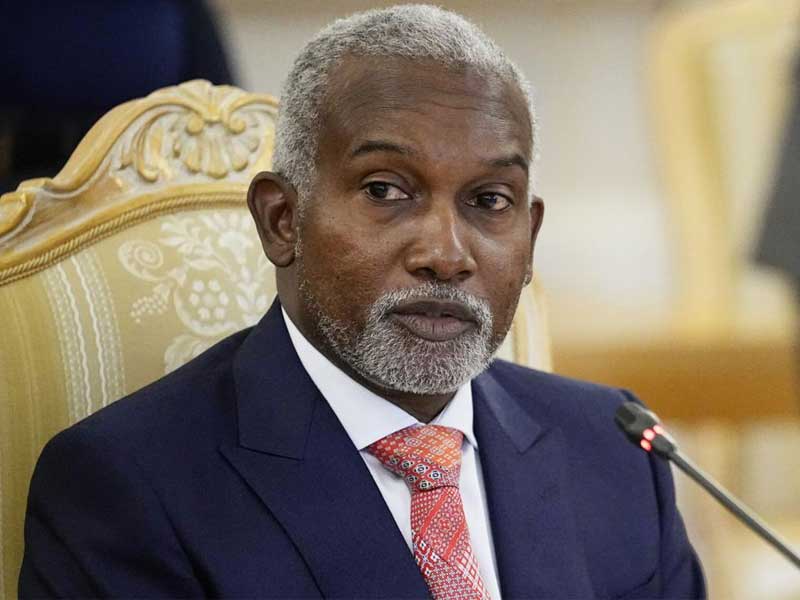
The Minister of Foreign Affairs, Yusuf Tuggar, has resigned.

Tuggar’s resignation was confirmed by the ministry’s spokesperson, Kimiebi Ebienfa, on Monday.

The minister’s action followed the directive of President Bola Tinubu to all political appointees in his administration who intend to contest elective positions in the 2027 elections to resign from their posts on or before March 31.

The president had hinged his decision on Section 88(1) of the Electoral Act 2026 and the timetable released by the Independent National Electoral Commission (INEC) for party primaries ahead of the 2027 polls.

Tuggar’s resignation comes amid the speculation of his interest in contesting the 2027 Bauchi State governorship election on the platform of the All Progressives Congress (APC).

He is a seasoned diplomat, policymaker, and political figure who was appointed as minister by Bola Ahmed Tinubu in August 2023.

Born on March 12, 1967, he has built a distinguished career spanning diplomacy, politics, energy, and strategic consulting.

He is widely regarded for his role in shaping Nigeria’s global engagement and advancing its foreign policy priorities.

His political career includes serving as a member of the House of Representatives from 2007 to 2011, representing the Gamawa Constituency in Bauchi State.

The diplomat later contested the governorship of the state in two election cycles.

From 2017 to 2023, Tuggar served as Nigeria’s ambassador to Germany, where he played a key role in strengthening bilateral relations, enhancing trade cooperation, and promoting Nigeria’s interests in Europe.

As Minister of Foreign Affairs, Tuggar led Nigeria’s diplomatic efforts under the Tinubu administration.

Channels Television

Continue Reading

Trending