Connect with us

Islam

Friday Sermon: Who Stole Our God? A Revisit

Published

on

By Babatunde Jose

A few weeks ago, I had cause to engage Prof Adebayo Williams in an intellectual masturbation over his article on the place of African philosophy. The discourse led to the need to revisit the issue of the African God and the obliteration of African philosophy in the process of colonization.

Africans were late in the development of a philosophy to encapsulate their thoughts and values and never had time to evolve the requisite idiosyncrasy with which to uphold that philosophy. Unlike the Vedas, the primary texts of Hinduism which also had a vast influence on Buddhism, Jainism, and Sikhism. The Rig Vedas, the oldest of the four Vedas, was composed about 1500 B.C., and codified about 600 B.C. It was finally committed to writing around 300 B.C.

The Egyptian Book of the Dead, the Sumerian Enuma Elish, the I Ching or Ancient Chinese ‘Book of Changes’, and the Avesta of Zoroastrianism, are among the most ancient religious texts still in existence.

Though Africa is the cradle of man as confirmed by archaeological findings, we do not have anything compared to the Vedas. Though Africa would later sprout great empires such as Zimbabwe, Kush, Zulu, Ghana, Mali, Songhai and Kanem-Borno, the continent never had the luxury of developing religions and philosophies comparable to Buddhism.

The reasons for these are not farfetched. Africa’s development was truncated my external factors of slavery and colonization. The intrusion of foreign peoples, Arabs from the East, and North, Europeans from the West and all along to the Cape did not allow Africans to develop a systematized philosophy of religion. The result was that in the event of the clash of cultures that ensued, African cultures were unable to withstand the onslaught. Cultures were destroyed and altered in the process and historical development were truncated. The base and groundswell of most African cultures became polluted.

In West Africa, for example, the peoples had not yet evolved alphabets nor writing before the onslaught on their cultures. Therefore, it was not possible to systematize or codify such philosophies as Ifa in Yoruba land before it became supplanted by Islam and Christianity. Even though there were notable political empires in West Africa, their histories were meshed in Islam which determined their rise and fall. Secondly, they were trading empires that relied on the trans Sahara trade. But sadly, they never developed a philosophy of life on the same level as the Greeks or Romans.

Africans are also a deeply religious and artistic people. But they never developed or evolved an epistemology that defined their traditional religions. Timbuktu produced many accomplished African scholars such as Mohammed Bakayoko; Mohammed Al Kaburi; Muhammad Ibn Uthman; and Ibn Aqit, a Supreme Judge of Timbuktu, Imam and the Dean of Sankore University. But they were not philosophers or exponents of African religions.

In the forest kingdoms of Ashanti and Old Oyo, there never developed any notable center of knowledge or systematized philosophy by the time the Malians and Europeans arrived with Islam and Christianity respectively. Though they were not tabula rasa, there had not developed a system of religious thoughts that could be compared with Judaism, Christianity, or Islam. African religions were too variegated and unsystematized. They were therefore unable to withstand the colonizing religions.   In the words of W. E. B. Du Bois, ‘Sudanese civilization fell before the triphammer blows of two of the world’s great religions, Islam and Christianity.’

Colonialism had a total influence on the society and the life of the colonized. Not only did it affect their culture and values, but it also engendered a lasting influence on the mindset of the colonized, especially their values and religious orientation, especially their conception of God.

Powerful kingdoms, beautiful sculpture, complex trade, tremendous wealth, centers for advanced learning — all are hallmarks of African civilization on the eve of the age of exploration.

The empires of Ghana, Mali, And Songhay are some of the greatest the world has ever known. Timbuktu, arguably the world’s oldest university, was the intellectual center of its age, but it was not a center for African philosophy or religious thoughts. It was Islamic in all its coloration.

The slave trade that uprooted millions of men and women to America unwillingly, attenuated Africa’s development. The slave trade brought ruin to West Africa. Entire villages disappeared. Guns and alcohol spread across the continent. Tribes turned against tribes as the once-fabled empires were sent jolting back into the limbo of history.

Unfortunately for the evolution of African philosophy and religion, the slave trade attenuated such thoughts only for it to spring up in the diaspora as ‘cargo-cults’ exemplified by the relics of African religions in Brazil, Haiti and the Caribbeans. Thus, we have a resurgence of Ogun, Oya and Obatala worship in the new world. But in the old country and continent, the old African philosophy and religions were no match for the Maxim guns and muskets of the invading white colonialists and the Bible of their missionaries. The damage Islam failed to do to African religions, Christianity finished it off and, in the end, nothing was left. It is therefore too late in the day to talk of any meaningful African religion and philosophy.

As an attempt to reassert African religious ways, notable schism was caused in the Church with the emergence of syncretistic movements such as the Aladura and its variants. There was also the rebellion of Africans who formed the African Church with emphasis on the Africanness of the liturgy and other practices including polygamy.

All these did not cause the resurgence of any African philosophy that could be written home about. Even the African language suffered a coma and remained there.

In Yorubaland, Ifa which according to late Professor Sophie Oluwole,  is a philosophical tenet comparable to the philosophies of Aristotle was attenuated and became relegated and consigned to a practice referred to in unprintable epithets and associated with ‘pagan’ rites. Yet, you find many of our elite searching for philosophical fulfilments in such esoteric undertakings such as Rosicrucian’s, Grail Message, Freemasons, and others. They cannot be regarded as philosophical societies by any stretch of the imagination. But they all espouse non-African based religions.

What then is left? Nothing.

Yet the societal values and sanctions of the old religions have proven to be more effective than the new faiths. Despite our Bible thumping and Quran mouthing, there is more corruption, crime, delinquency, and waywardness in our society today. Our religiosity has become a transparent sham, and our supplications an opaque sham.

Our leaders do not fear God anymore. They are today more brazen in their thievery. We continue to live a lie and our whole lives have become truncated; our education, progress and development as a people are stunted.

Yet, we have the capacity to rethink and start a process of reorientation. Professor Adebayo Williams wrote: It seems to me that both the Black person and his philosophy need to be reinvented.  We should return to our indigenous language and culture and take the advantage offered by science and culture to leapfrog into the 21st century; our culture and language are already dead but hasn’t disappeared. We need an urgent reawakening and the sooner the better.

Our disenchantment with the religions of our colonizers and enslavers is belated, seeing as it were, we were born and raised into them, and we continue to socialize our children into them. We are therefore, stuck with them, their values mores, and foibles.

It is the great misfortune of colonized people who failed to free their spiritual life as the Chinese and Indians did. Not only did we allow our land and resources to be purloined, but we also allowed our God to be stolen.

We are therefore left with no alternative than to extol the qualities of the foreign God. It’s a great pity.  But all is not lost. There are still innumerable good precepts in the Eastern religions that could be followed to live a good life. The Ten Commandments are universally applicable, even when devoid of who collected the tablets on which they were etched from God. So too are many others foremost of which is the dictum,’ love thy neighbor as yourself’. Islam devoid of Arabism is a veritable way of life which if followed would make us better human beings. Islam is a life coach from cradle to grave.

Barka Juma’at and a happy weekend

 +2348033110822

Continue Reading
Click to comment

Leave a Reply

Your email address will not be published. Required fields are marked *

Islam

Friday Sermon: Reflections on Ramadan 5: Rejuvenation and Fulfilment

Published

on

By

By Babatunde Jose

What have we gained from Ramadan? Have we been spiritually cleaned, recharged and rejuvenated? Has it been morally and spiritually gratifying and fulfilling? Have we been able to shed many of our iniquitous baggage? Have we relinquished the sins of fornication, covetousness, and a life of deceit? Have we been able to move nearer God in an atmosphere of God-consciousness? Have we been doing the needful in our homes and to our fellow man?

Have we given the orphan his due? Have we entrenched Justice and Fairness in our daily living? What of compassion and empathy? Do we feel the pains of our fellowmen, our subjects, and followers? Have we taken steps to right the wrongs we wroth on the people around us? Have we been fair to our wives, children, relations, and neighbors? Are we satisfied with our new lease of spiritual awakening?

Must all the gains of Ramadan end today? Are we returning to our old ways of cheating, backbiting, slander, and wickedness? Today is therefore, a day of decision. Are we going to consolidate on the gains of Ramadan or descend back into the abyss of a sinful life? The choice is ours. Ihdinas siraatalmustaqeem.

Ramadan has rightly been described as a school of Iman and a stop to recharge our spiritual batteries. Must we alloy that battery to die by going back to the old ways? The choice is ours.

Unfortunately, the fall and descent into a life of sin and iniquity starts a few days after Ramadan; when we say ‘fasting is finished, the nightly prayers are over; the group gatherings to break the fast have vanished. We can eat, drink, and be merry again when we like.’ And that special feeling of God consciousness gradually fades away. The spiritual high evaporates, and all we are left with are the bad habits we tried to shed during Ramadan which mysteriously rear their ugly heads once it is over.

Ramadan is supposed to increase your faith and God-consciousness: “Believers! Fasting has been prescribed for you-as it was prescribed for those before you-so that you may be conscious of God.” (Quran 2:183).

The lessons learned and spiritual benefits gained during that month are intended to carry over for the rest of the year until next Ramadan.

Prophet Muhammad (SAW), said: “Whoever does not give up forged speech and evil actions [while fasting], God is not in need of his leaving his food and drink.”

Ramadan is a month of training for us so that we may become doers of good and refrain from evil throughout the year. Each and every year this blessed month helps to train us to become better Muslims. But now that Ramadan is over are we going to continue doing the good we acquired from it or are we going to go back to the way we were before it started? That is the question.

Many of us did not say our prayers before Ramadan but during the blessed month we found it easier to pray. We cannot continue our lives without praying; otherwise, we are not fulfilling the purpose of our lives.

Allah says: “I have created the jinn and humankind only for My worship” (Quran 51:56)

We will not be successful in this life or the next without prayer. The Prophet (SAW) said, “The first thing that a person will be questioned about is his prayers.” Missing prayers intentionally is so serious that it is tantamount to disbelief: The Prophet (SAW) said: “What lies between a man and disbelief is the abandonment of prayer.” Muslim. Unfortunately, there will be many Muslims in Hell who did not say their prayers.

Many of us left the Quran on the top shelf throughout the year but when Ramadan came we picked up the Quran and blew off the dust and began to recite it again. By returning the Quran to the bookshelf, we will be missing out on receiving intercession from the Quran on the Day of Judgment: The Prophet (SAW) says: “Recite the Holy Quran as much as you can for It will come as an intercessor for its reciter on the Day of Judgment” (Muslim)

Allah the Most High said:

Establish regular prayers–at the sun’s decline till the darkness of the night, and the Morning Prayer and reading: For the prayer and reading in the morning carry their testimony. And pray in the small watches of the morning: (It would be) an additional prayer (or spiritual profit) for thee: Soon will thy Lord raise thee to a Station of Praise and Glory! (Quran 17: 78-79)

During the blessed days and nights of Ramadan we were given the opportunity to repent and ask Allah for his mercy and forgiveness and to thank him for his infinite favors upon us. But now that Ramadan is over we must not stop repenting to Allah for our sins and we must continue to be thankful to Allah for his infinite favors upon us.

They ask thee concerning women’s courses. Say: They are a hurt and a pollution: So keep away from women in their courses, and do not approach them until they are clean. But when they have purified themselves, ye may approach them in any manner, time, or place ordained for you by Allah. For Allah loves those who turn to Him constantly and He loves those who keep themselves pure and clean. (Quran 2:222)

Our Lord! (They say), Let not our hearts deviate now after Thou hast guided us, but grant us mercy from Thine own Presence; for Thou art the Grantor of bounties without measure (Quran 3:8)

Merciful Allah, I acknowledge my sins and shortcomings before You. Your Word says I should not despair because You forgive all sins. I ask for Your complete forgiveness—cleanse my heart, erase my past mistakes, and renew my soul. Let this Ramadan be a turning point in my life, where I walk in Your mercy and grace. Ameen.

Ya Rabb, purify my heart from hypocrisy, pride, and hidden sins. Create in me a sincere heart that seeks only Your pleasure. Remove every evil intention and fill me with love for righteousness. Let my worship be genuine and my actions be pleasing in Your sight. Grant me a heart that will stand accepted before You on the Day of Judgment. Ameen.

O Allah, protect me and my family from the punishment of Hellfire. Shield us from sins that lead to destruction and guide us toward righteousness. Let our lives reflect obedience to You, and grant us safety in this world and the next. Make us among those who are saved by Your mercy. Ameen.

Ya Allah, bring peace, love, and unity into my family. Remove every conflict, misunderstanding, and division among us. Let our home be filled with Your presence and blessings. Make us a source of comfort and joy to one another. Guide each member of my family to righteousness and faith. Make our household an example of love and devotion to You, Ameen.

Ya Shafi, the Healer, I call upon You for healing and strength. Touch every part of my body and restore me to full health. Remove sickness, pain, and weakness from my life. Grant me physical, emotional, and spiritual well-being. Let Your healing power flow through me completely. Keep me strong to worship You and fulfill my purpose, Ameen.

O Allah, increase my faith and strengthen my belief in You. Fill my heart with tranquility and unwavering trust. Let my iman grow stronger with every act of worship. Remove doubts and replace them with certainty and conviction. Help me remain firm in my faith in all situations. Make me among those whose hearts are filled with light, Ameen.

Eid Mubarak and Jumuah Mufeedah!

Continue Reading

Islam

Friday Sermon: Reflections on Ramadan 4: Empathy and Compassion

Published

on

By

By Babatunde Jose

Prophet Muhammad (SAW) said: “You see the believers as regards their being merciful among themselves and showing love among themselves and being kind, resembling one body, so that, if any part of the body is not well then the whole body shares the sleeplessness (insomnia) and fever with it.” (Al-Bukhari)

We want others to put themselves in our shoes and view the world from our perspective. That is empathy – putting oneself in someone else’s shoes. We feel close to the person who is empathetic to us, find it easy to share our thoughts with them, go to him or her when we’re in trouble and seek solace. Each of us has a natural sense of empathy through which we connect to others.

There are two aspects of empathy: cognitive and affective. Cognitive empathy is about understanding another person’s point of view, their emotions and needs at the intellectual level. Affective empathy is about actually feeling an emotion that another person is experiencing.

If only our leaders would empathize with the suffering multitude, they would do the needful and set the country on the path of sustained development. But they would not. These are stone-hearted people who are bereft of the milk of human kindness. The Prophet (SAW) attested to this when he said: “None of you will have faith till he wishes for his (Muslim) brother what he likes for himself.” (Al-Bukhari) A man without empathy will therefore be devoid of faith.

This Hadith necessitates cognitive empathy. You have to firstly imagine yourself in someone else’s shoes and think from their perspective in order to understand what you would do in his situation.

A believer who has achieved excellence of faith will feel this special love for other believers. This is effective empathy.

The Quran stresses that righteousness is not in precise observance of the rituals but in acts of compassion and kindness.  It says that the litmus test for true belief and genuine worship is that it leads to compassionate living:

Goodness does not consist in turning your face towards East or West. The truly good are those who believe in God and the Last Day, in the angels, the Scripture, and the prophets; who give away some of their wealth, however much they cherish it, to their relatives, to orphans, the needy, travellers and beggars and to liberate those in debt and bondage; those who keep up the prayers and pay the prescribed alms; who keep pledges whenever they make them; who are steadfast in misfortune, adversity and times of danger. These are the ones who are true, and it is they who are aware of God.  (Quran 2:178)

This verse talks about a set of beliefs and then a set of good deeds, the intricate relationship between the two escapes many if not most.

Every Friday in the second part of the sermon, Muslims all over the world hear a verse, which stresses, justice, kindness and natural mutual love as among the closest blood relatives:

Indeed, Allah enjoins justice, and the doing of good to others; and giving like kindred; and forbids indecency, and manifest evil, and wrongful transgression. He admonished you that you may take heed. (Quran 16:90)

He makes His relationship or His Providence to the common man, conditional to common human compassion, by claiming that those, who wish to find Him, will succeed only if they are kind and compassionate to the common people:

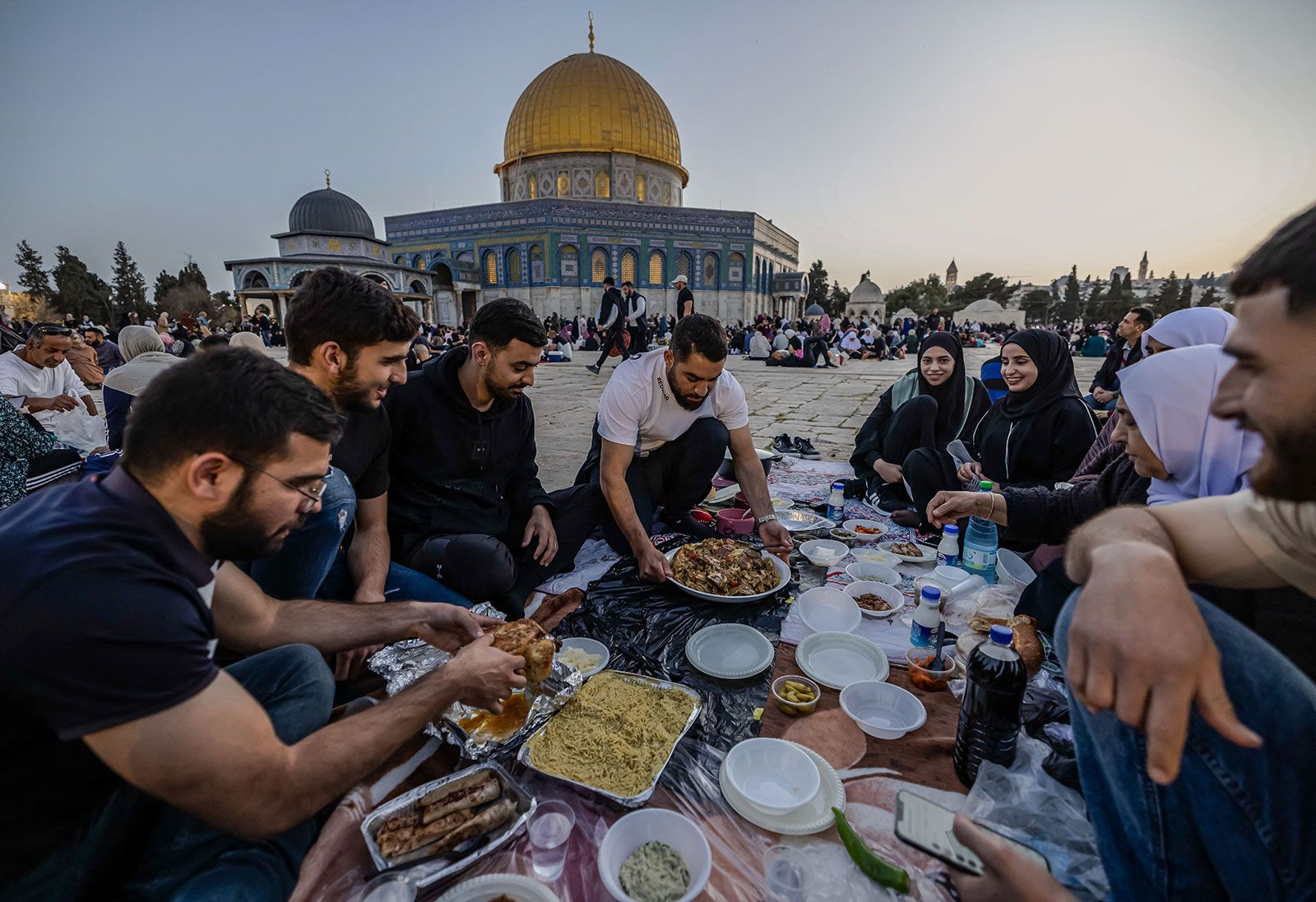
Fasting cleanses your soul and makes you appreciate all your blessings. Fasting humbles you; it makes you feel compassion for the poor who experience that type of hunger ev­ery day. At the end of the day, however, we have a big dinner; the poor don’t have that luxury. That is why Muslims are required to give Zakat on an annual basis. Many choose to do this during Ramadan. This money is either given personally or through a charity. The main thing is that it must be paid.

We are taught to not only abstain from food and drink but to try to refrain from conflict, anger and mean words. Our prophet (SAW) says, “Saying a nice word is like giving to charity.” And he also said, “To smile in the face of your brother is like giving to charity.” We are to be kind and loving to each other. We are to be forgiving, not only in this month but in every month. But for some reason, this month brings out the best in everyone.

During this holy month, we spend a lot of time reading our Quran: We also spend a lot of time praying, trying to help those who are less fortunate and performing good deeds, which in turn cleanses our hearts and souls. For one month, we truly do become less selfish, less self-centered and more focused on what really matters in the world.

What then are the lessons of the month of Ramadan as it winds up? Ramadan teaches patience, self-discipline, empathy, gratitude, and spiritual mindfulness, offering lessons that extend far beyond fasting.

Ramadan is primarily a time to cultivate taqwa, or God-consciousness, through fasting, prayer, and reflection. Abstaining from food, drink, and other desires from dawn to sunset encourages believers to focus on their spiritual and moral essence rather than material needs, fostering mindfulness and a deeper connection with Allah. The month also emphasizes the importance of ethical behavior, as Muslims are reminded to avoid harmful speech and actions while maintaining integrity in all aspects of life.

Fasting during Ramadan is a rigorous exercise in sabr (patience) and self-control. By resisting hunger, thirst, and other impulses, individuals strengthen their ability to manage desires and make thoughtful decisions in daily life. This discipline extends to controlling emotions, refraining from anger, and practicing restraint in speech and behavior.

Experiencing hunger and thirst firsthand cultivates empathy for the less fortunate, motivating acts of charity such as Zakat (obligatory almsgiving) and Sadaqah (voluntary charity). Ramadan encourages believers to support those in need, fostering a sense of social responsibility and compassion.

Fasting highlights the blessings often taken for granted, such as food, water, and health. This practice instills humility and gratitude, reminding individuals that true contentment comes from appreciating simple blessings rather than material wealth. The shared experience of fasting also strengthens family and community bonds, reinforcing social cohesion and mutual support.

Ramadan provides an opportunity for self-reflection, helping individuals evaluate their purpose, actions, and relationships. It encourages mindfulness of the ‘Last Day’ and accountability for one’s deeds, promoting ethical conduct and a commitment to justice and fairness in interactions with others. The month serves as a spiritual “classroom” where habits of prayer, charity, and self-restraint are cultivated and ideally carried forward throughout the year.

In essence, Ramadan is not only a period of fasting but a transformative journey that nurtures spiritual awareness, patience, empathy, gratitude, and moral integrity. The lessons learned during this sacred month are intended to guide believers in their daily lives, shaping character, relationships, and a deeper understanding of their place in the world.

A few years ago, The UN High Commissioner for Refugees, Filippo Grandi, in sharing his wishes, for all observing the holy month of Ramadan, urged action on behalf of millions of forcibly displaced people worldwide. His thesis remains valid today.

He said: “Through our reflection, we come to recognize that while words may reassure, it is only through action that we can truly see tangible change,” he said. “We continue to live in extremely complex times where violence is multiplied, conflicts are protracted and tens of millions of people are forcibly uprooted or on the move. This has created unprecedented levels of human suffering and desperation. “Millions of people like you and I are living in a constant state of conflict, insecurity and persecution: Their loved ones torn from them under inexplicable circumstances. Think of civilians in Syria or Yemen. Think of the plight of the Rohingyas in Myanmar, Bangladesh and the other countries to which they have fled”. 

And I urge you to also think of the castrated and emasculated people of Palestine: Pray for them and remember them. May Allah make it easy for us; Ameen.

Let us remember those who prepared to participate in this Ramadan but did not make it to the starting line. There are also those who started but did not get to the finish line. May Allah grant them forgiveness and grant them Jannatul Firdousi.

Allahuma innaka afuwwun tuhibbul afwa fa’fu wanni. “O Allah you are most forgiving and you love to forgive so forgive us.” ‘May our hearts soften in sincere repentance, and may our souls be counted among those liberated from every chain of sin, embraced by divine forgiveness and grace.   Write us among those forgiven completely,  accept our prayers and worship, grant us good in this world and the Hereafter, guide us and our children against all evils and don’t let us cry over them.’Aamee

Barka Juma’at and Ramadan Karim

Continue Reading

Islam

Friday Sermon: Reflections on Ramadan 3: Spiritual Stocktaking

Published

on

By

By Babatunde Jose

O ye who believe! Guard your own souls: If ye follow (right) guidance, no hurt can come to you from those who stray. The goal of you all is to Allah: it is He that will show you the truth of all that ye do. (Quran 5:105)

A deep reflection on the institution of Fast reveals the various ways in which fasting helps in the mending of habits and development of character and God consciousness.

Ramadan is a time for moral rearmament and retrospection. It’s a time for critical self evaluation and adjustment.

How does the prayers and fasting of Ramadan influence attitudes and perspectives; how is it improving relationships with families, friends and neighbors; how much has it increased consciousness of responsibility towards the destitute; how is it impacting on the body, the heart, the mind and the soul?

If there is a genuine effort towards the spiritualization of one’s being, the moralization of consciousness, empathy in attitude and goodness in conduct; then perchance a concerted effort is being made of treading on the pathway towards the objective of fasting – the attainment of taqwa (piety). Truly, the month of Ramadan is a season for spiritual stocktaking.

Among the profound concepts discussed in the Quran, one that stands out is Taqwa. While often loosely translated as ‘fear of Allah,’ Taqwa encapsulates a far deeper meaning, emphasizing consciousness and mindfulness of the Divine.

The term ‘Taqwa’ is derived from the Arabic root ‘waqa,’ which means to shield or protect oneself. It’s a state of the heart cultivated by harboring fear and awe of Allah, leading to adherence to His guidelines and abstention from His prohibitions. “O you who have believed, fear Allah as He should be feared and do not die except as Muslims [in submission to Him].” (Surah Al-Imran, 3:102). Thus, Taqwa isn’t merely fear – It’s an all-encompassing concept that drives a believer’s thoughts, intentions, and actions.

According to Erik Ohlander, the word taqwa is used in the Quran over 100 times. According to the Oxford Dictionary of Islam, the word taqwa and its derivatives appear “more than 250 times” in the Quran “…But the clothing of righteousness (Taqwa) – that is best…” (Quran 7:26), the criterion of honor in Allah’s sight “…Indeed, the most noble of you in the sight of Allah is the most righteous (most full of Taqwa) of you…” (Quran 49:13). This frequent mention of Taqwa in the Quran underscores its critical role in shaping a believer’s spiritual journey.

Nurturing Taqwa in our hearts isn’t an overnight process but a continuous journey of spiritual growth. We begin this journey by gaining knowledge of Allah and His commands. Say: Is it that ye deny Him Who created the earth in two Days? And do ye join equals with Him? He is the Lord of (all) the Worlds. (Surat Fussilat 41:9).

Next, we engage in constant remembrance (dhikr) of Allah, striving to maintain mindfulness of His presence in our daily lives. Consciousness of His omnipresence encourages us to act righteously. Another crucial element is consistent prayer (Salat), which serves as a direct link between us and Allah, helping to strengthen our relationship with the divine. This is echoed in a Hadith where the Prophet (SAW) said, “He who remembers his Lord and he who does not are like the living and the dead.” (Bukhari).

Although Taqwa is deeply personal, it has profound societal implications. A community guided by Taqwa values truth, justice, and compassion, as these values are at the heart of Allah’s commands. “O you who have believed, be persistently standing firm for Allah, witnesses in justice, and do not let the hatred of a people prevent you from being just. Be just; that is nearer to righteousness (Taqwa)…” (Quran 5:8).

When individuals in a society cultivate Taqwa, they create an environment of mutual respect, tolerance, and peace. They hold themselves accountable, striving not only for their well-being but also for the welfare of others. Living with Taqwa allows us to contribute to building a more empathetic, fair, and loving society.

Actively seeking ways to enhance Taqwa can lead us to live more fulfilling lives spiritually. “…Allah has sent down the best statement: a consistent Book wherein is reiteration. The skins shiver therefrom of those who fear their Lord; then their skins and their hearts relax at the remembrance of Allah. That is the guidance of Allah by which He guides whom He wills. And one whom Allah leaves astray – for him there is no guide.” (Surah Az-Zumar  39:23).

Another practical step is incorporating more acts of charity into our lives. Generosity and kindness imbibe the spirit of Taqwa as they reflect our obedience and submission to Allah’s command. Prophet Muhammad (SAW) once said, “Charity extinguishes the sins just as water extinguishes the fire” (Tirmidhi).

When we embody Taqwa, it profoundly influences our interpersonal relationships. As Allah advises us in the Quran, “…and speak to people good [words]…” (Quran 2:83). This translates into healthier, more respectful, and loving relationships, helping to foster a stronger, more united community.

Taqwa and patience go hand in hand. Life can sometimes throw us in challenging situations. It’s during these times that Taqwa empowers us to be patient, persevere, and trust in Allah’s plan. As Allah mentions in the Quran, “O you who have believed, seek help through patience and prayer. Indeed, Allah is with the patient.” (Quran 2:153). With Taqwa, we can remain patient and hopeful, recognizing that every hardship is a test of faith.

Prophet Muhammad (SAW) often reminded us of the importance of patience, citing it as a virtue of the highest order: “Patience is a key to success” (Bukhari). Through patience, we can navigate the uncertainties of life with grace and dignity.

In Islam, ultimate success lies in attaining Allah’s pleasure and entering Paradise. Taqwa is the path that leads us to this success. As Allah tells us in the Quran, “And hasten to forgiveness from your Lord and a garden as wide as the heavens and earth, prepared for the righteous.” (Surah Al-Imran 3:133).

A vital aspect of Taqwa is the realization of our eventual accountability to Allah. This powerful awareness permeates every aspect of our lives, shaping our actions and decisions. Allah reminds us in the Quran, “So whoever does an atom’s weight of good will see it, And whoever does an atom’s weight of evil will see it.” (Surah Az-Zalzalah 99:7-8).

Knowing that we’re accountable for our deeds can be sobering but it also motivates us to strive for excellence in all areas of life. Thus, Taqwa fuels a commitment to leave a positive impact on our surroundings, which unfortunately our leaders are not doing. .

Taqwa, the deep-rooted consciousness and fear of Allah, is not merely a concept but an actionable principle that has far-reaching implications in our daily lives.

By cultivating Taqwa, we are essentially preparing for the ultimate success – to attain Allah’s pleasure and His Paradise.

Ramadan is an ideal training period for filtering out bad habits and developing virtuous character. It is therefore a good time for our leaders to turn a new leaf, lest ‘we the people’ decide to chase them out like Oliver Cromwell did the ‘Long Parliament’ in 1653.

Cromwell’s speech aptly reflects the character of our leaders today: “It is high time for me to put an end to your sitting in this place, which you have dishonored by your contempt of all virtue, and defiled by your practice of every vice; ye are a factious crew, and enemies to all good government; ye are a pack of mercenary wretches, and would like Esau sell your country for a mess of pottage, and like Judas betray your God for a few pieces of money. Is there a single virtue now remaining amongst you? Is there one vice you do not possess? Ye have no more religion than my horse; gold is your God; which of you has not bartered your conscience for bribes? Is there a man amongst you that has the least care for the good of the Commonwealth? Ye sordid prostitutes; have you not defiled this sacred place, and turned the Lord’s temple into a den of thieves, by your immoral principles and wicked practices? Ye are grown intolerably odious to the whole nation; . . ..”  If only they would change in the spirit of Ramadan!

Prophet Muhammad (SAW) said: “Your practice of faith will not be correct unless your actions are correct, and your actions will not be considered correct unless your heart is correct.” Ramadan is therefore a period for spiritual rejuvenation as it offers the opportunity for a unique expression of worship.

From ethical and moral perspectives, we should contemplate the higher purpose and the deeper meaning of our lives, trying to live meaningfully; balancing our physicality with our spirituality.

While Fasting, we are far more aware of the hunger of the poor and the suffering of the oppressed and are therefore instructed to be more generous this month. This promotes attentiveness to social responsibility, interest in the welfare of society and inspires a continued spirit of generosity. The Qur’an refers to the fasting ones as sa’ihin/spiritual wayfarers. So, the journey of Ramadan motivates each person to perpetuate the positive spirit being imbibed and to continue on the spiritual journey towards fulfilment and excellence.

It is easy to talk about the world’s problem of hunger. We can feel sorry that millions of people go to bed hungry each day. But not until one can actually feel it in one’s own body is the impact truly there. Compassion based on empathy is much stronger and more consistent than compassion based on pity. This feeling must lead to action.

Fasting is never an end in itself; that’s why it has so many different outcomes. But all the other outcomes are of no real moral value if compassion is not enlarged and extended through fasting. It is therefore in the interest of our fasting leaders and those not fasting to shed the toga of iniquity, selfishness and corruption and for once think of the poor masses that are not only defenseless but also hungry. It is only by doing this that the fast can have spiritual reward and meaning.

As the prophet Isaiah said, “The kind of fasting I want is this: remove the chains of oppression and the yoke of injustice, and let the oppressed go free. Share your food with the hungry and open your homes to the homeless poor” (Isaiah 58:3-7) May Allah accept our fast, Amee.

Ramadan Kareem and Barka Jumuah

Continue Reading

Trending