Connect with us

Featured

Why WHO Excluded Nigeria from Pfizer Vaccine Shortlist

Published

on

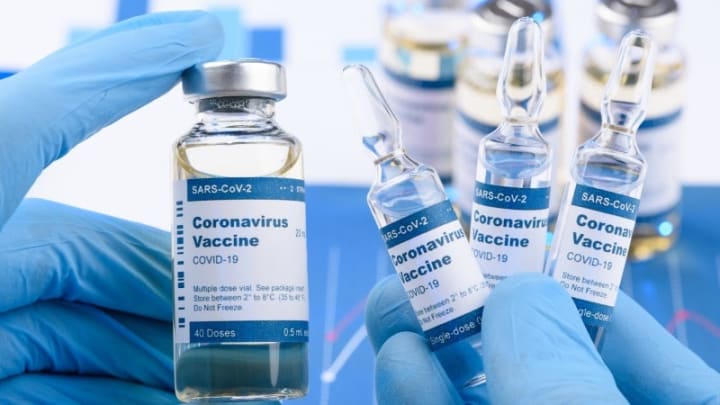
Nigeria is missing on the list of four countries shortlisted to receive the Pfizer-BioNTech COVID-19 vaccines by the World Health Organisation-led COVAX global initiative.

It seems the countries that did not make the Pfizer-BioNTech vaccines shortlist were unable to meet the standard requirement of being able to store the vaccines at the required -70 degrees Celsius.

A Press briefing addressed by WHO Regional Director for Africa, Dr. Matshidiso Moeti, on Thursday, stated: “Around 320,000 doses of the Pfizer-BioNTech vaccine have been allocated to four African countries: Cabo Verde, Rwanda, South Africa and Tunisia.

“Deliveries are also expected later in February.

“To access an initial limited volume of Pfizer vaccine, countries were invited to submit proposals.

“Thirteen African countries expressed interest in participating in the initiative, and their proposals were evaluated based on current mortality rates, new cases and trends and capacities to store the vaccine at minus 70 degrees Celsius.”

Continuing, Moeti said, “We urge African nations to ramp up readiness and finalise their national vaccine deployment plans.

“Regulatory processes, cold chain systems and distribution plans need to be in place to ensure vaccines are safely expedited from ports of entry to delivery.

“Planning for the vaccination campaigns, including putting in place strategies to engage communities will be crucial.

“We can’t afford to waste a single dose.”

The Minister of Health of Malawi, Ms Khumbize Kandondo Chiponda; and her Rwandan counterpart, Dr. Daniel Ngamije, joined the WHO official at the press conference.

This is even as the National Primary Health Care Development Agency, via an sms, claimed that “Nigeria has met all the conditions for the mRNA vaccine storage with three UCC freezers.”

The Nigerian agency added that “states and LGAs have enough refrigerators for storage at their level.”

The sms was delivered to every phone user in Nigeria via the global system of mobile communications on Thursday.

The Federal Government had stated that it was expected to receive 100,000 doses through the COVAX initiative, which was set up to ensure rapid and equitable access to COVID-19 vaccines for all countries, regardless of income level.

The Director-General of the Nigerian Institute of Medical Research, Prof Babatunde Salako, had told this newspaper that there is not enough space at the moment to store the Pfizer vaccines at that temperature.

But the Executive Director of the National Primary Health Care Development Agency, Dr Faisal Shuaib, had described the report as fake, saying Nigeria had the capacity to store the vaccines and had taken journalists on a tour of its facility in Abuja.

Nigeria was expected to be on the list of African countries to receive the first set of Pfizer vaccines because of its rate of infection which is now the sixth-highest on the continent.

Only South Africa, Morocco, Tunisia, Egypt and Ethiopia have higher infection rates than Nigeria. But Morocco and Egypt have already independently obtained vaccines and begun distribution while South Africa, which has the highest burden of the disease in Africa, has already procured one million doses of the Oxford-AstraZeneca vaccine, produced in India but has yet to begin distribution.

Nigeria has, however, received no COVID-19 vaccine even as its rate of infection has continued to surge.

Unlike the other vaccines on the market, the BioNTech/Pfizer vaccine, which has the highest WHO rating, is expected to be stored at 70 degrees Celsius, which Nigeria could not meet.

However, the WHO regional director said countries that failed to make the Pfizer list could get the Oxford/AstraZeneca vaccine later in the month, although it has not yet been endorsed by the health organisation.

This newspaper learnt that the Oxford-AstraZeneca vaccine does not need to be stored in a cold facility.

Moeti said, “Nearly 90 million of the Oxford/AstraZeneca vaccine could start arriving on the continent later this month. This is subject to the WHO listing the vaccine for emergency use. The review is ongoing and its outcome is expected very soon.”

The WHO director said it was time for African countries to up their game in the rollout of vaccines.

She said the initial phase of 90 million doses of COVID-19 vaccines would support countries to immunise three per cent of the African population most in need of protection, including health workers and other vulnerable groups in the first half of 2021.

“As production capacity increases and more vaccines become available, the aim is to vaccinate at least 20 per cent of Africans by providing up to 600 million doses by the end of 2021,” Moeti said.

To complement COVAX efforts, the African Union has secured 670 million vaccine doses for the continent which will be distributed in 2021 and 2022 as countries secure adequate financing. The African Export-Import Bank will facilitate payments by providing advance procurement commitment guarantees of up to $2bn to the manufacturers on behalf of countries.

Since the AU will distribute vaccines based on population, Nigeria is expected to receive the highest shipment. However, no date has been announced for the distribution.

The Punch

Continue Reading
Click to comment

Leave a Reply

Your email address will not be published. Required fields are marked *

Featured

Innovation Meets Vision As Glo Partners Samsung to Unveil New Galaxy S26

Published

on

By

In a convergence of technology and vision, digital solutions leader Globacom has entered a partnership with global electronics giant Samsung to introduce the much-anticipated Galaxy S26 Series to the Nigerian market. It is a device conceived for a generation that lives, works and dreams in real time.

The unveiling, held at Globacom’s corporate headquarters in Victoria Island, Lagos, gathered an august assembly of high-net-worth customers, industry figures and members of the media. The atmosphere was not merely ceremonial; it was symbolic — a quiet affirmation that when global engineering meets indigenous connectivity, innovation finds its true signal.

As part of the partnership, Globacom has commenced an exclusive pre-order window for its subscribers. Each Galaxy S26 purchased at any Gloworld outlet nationwide is bundled with 18GB of complimentary data under the Glo Smartphone Festival Data Plans delivered as 3GB monthly for six months.

In addition, customers receive a distinguished Platinum Number eSIM, accompanied by up to 10GB of extra data monthly. It is a proposition crafted not as an afterthought, but as a deliberate statement of value.

The Galaxy S26 Series itself is a study in assured sophistication. It fuses next-generation processing power with a sleek, immersive display, enhanced camera intelligence, durable battery performance and privacy screen technology. Its Agentic AI capabilities introduce a more intuitive user experience, one that anticipates need, protects data and enhances productivity.

In essence, it is a device built not merely to function, but to empower.

Speaking at the event, Samsung’s Product Manager, Sellout Platinum, Mr. Solomon Osibeluwo, described Globacom as the first partner to host the S26 masterclass session — a testament, he noted, to the enduring strength of the relationship between both organisations. He reaffirmed Samsung’s commitment to deepening this alliance, adding that the S26 Series has been meticulously engineered to enrich the calling, browsing and overall digital experience of Nigerians.

In his address, Globacom’s Head of Gloworld, Mr Mohamed Rabie, underscored that the collaboration is anchored on delivering real and measurable value. Premium technology, he remarked, must travel with meaningful benefit. He expressed pride that Globacom stands as the first partner to offer both the masterclass engagement and immediate pre-order advantages following the device’s launch in Nigeria.

Encouraging Nigerians to experience the device firsthand at Gloworld outlets nationwide, Rabie concluded with quiet conviction: “this moment transcends the unveiling of a smartphone. It signals the unfolding of new possibilities powered by intelligence, sustained by partnership, and carried on the dependable wings of connectivity”.

Continue Reading

Featured

FCCPC Uncovers Patterns of Price Manipulation by Local Airlines

Published

on

By

The Federal Competition and Consumer Protection Commission (FCCPC) has uncovered patterns of price manipulation perpetrated by some local airlines during the last festive season.

The findings are contained in the interim report released on Thursday by the Commission’s department of Surveillance and Investigations, according to a statement signed by the Director, Corporate Affairs, Ondaje Ijagwu, and made available to The Boss.

Recall that the Commission announced an industry-wide investigation earlier in January.

The forensic exercise benefitted from data collated by the Commission from airlines operating local routes in the country.

The report compares domestic airline pricing from the December 2025 festive period with post-peak January 2026 fare levels.

Preliminary analysis indicates that fares recorded during the December peak were materially higher than those observed in the post-peak period across several routes despite relative stability in critical operating variables like fuel price, government taxes and foreign exchange.

The differences observed in fares therefore appear to reflect airlines’ arbitrary pricing decisions, including yield management and capacity allocation, rather than any variation in regulatory fees.

Route-level analysis shows that higher fares coincided with periods of reduced seat availability during predictable seasonal demand peaks. On some high density routes, peak fares were clustered within relatively narrow ranges across several operators.

For instance, on certain corridors like Abuja-Port Harcourt, peak fares were several times higher than corresponding post-peak levels. On selected routes, the difference in the price of a single ticket reached approximately ₦405,000. Median fares across the sampled routes also rose markedly during the festive window when compared with post-peak benchmarks.

However, the interim report recognises that seasonal demand pressures, scheduling constraints and fleet utilisation may also affect pricing during peak travel periods.

These factors remain under consideration as part of the Commission’s ongoing review.

Commenting on the release of the interim report, the Executive Vice Chairman and Chief Executive Officer of the FCCPC, Mr. Tunji Bello, said the review is part of the Commission’s statutory responsibility to promote competitive markets and safeguard consumers.

“This assessment is intended to provide clarity on pricing behaviour during predictable peak travel periods. The Commission’s role is not to disrupt legitimate commercial activity, but to ensure that market outcomes remain consistent with competition and consumer protection principles under the law,” Mr. Bello said.

He noted that the Commission is conducting further structural and route-level analysis before reaching any conclusions.

“It is important to emphasise that this is an interim report. Our next action will be dictated by full facts established at the end of the review exercise.  Then, the Commission will decide whether any regulatory guidance, engagement or enforcement steps are necessary, strictly in accordance with the law,” he said.

The report identifies the possible relevance of Sections 59, 72, 107, 108, 124 and 127 of the Federal Competition and Consumer Protection Act 2018, which respectively address the prohibition of agreements in restraint of competition, the prohibition of abuse of a dominant position, the offence of price-fixing, conspiracy to commit offences under the Act, the right to fair dealings, and the prohibition of unfair, unreasonable or unjust contract terms.

Meanwhile, Mr. Bello announced that foreign airlines will come under FCCPC radar after the ongoing review of local airlines in view of widespread complaints of exploitative fares they allegedly charge Nigerians on certain routes compared to fares in neighbouring countries that are of equal distance.

Continue Reading

Featured

Many Killled, Houses Torched As Terrorists Unleash Deadly Attacks on Adamawa Communities

Published

on

By

At least 25 ⁠people were killed and several houses torched after ​gunmen attacked two villages late on Tuesday in Adamawa State, northeast ‌Nigeria, residents and the ‌state governor said on Wednesday.

The attackers struck Kirchinga in Madagali ⁠district ⁠and Garaha in neighbouring Hong, two villages on the edge ​of the Sambisa Forest where Boko Haram and Islamic State West Africa Province (ISWAP) operate.

The twin raids highlight the enduring insecurity in Nigeria’s ​northeast, the epicentre of a 17-year Islamist insurgency, despite years of ⁠military ⁠campaigns.

Abubakar Lawan Kanuri, the ⁠village ​head of Kirchinga, told Reuters the attackers arrived on Tuesday evening ​dressed in military uniforms ⁠that initially led residents to mistake them for soldiers on patrol. He said 18 bodies were recovered after the gunmen swept through the community.

In Garaha, seven people were killed when ⁠gunmen on more than 50 motorcycles stormed the village and attacked ⁠a nearby military base, said resident Musa Isa, who added he “narrowly escaped.”

They advanced from several directions and hit the military base, killing three soldiers. Four fleeing residents were shot, and a school was also burned. Many villagers have since fled to Mubi, the nearest big town, Isa said.

Adamawa State Governor Ahmadu Umaru Fintiri condemned the attacks ⁠as “cowardly acts of terrorism” and vowed not to “let terrorists undermine our efforts to restore peace and stability,” according to a statement from his spokesman.

Source: usnews.com

Continue Reading

Trending