By Eric Elezuo
Many are of the opinion that 2023 is a long way away, but to the ambitious, many of whom are already beginning to (overtly and covertly) express their intentions to seek the highest office in the land. A lot of supporters or praise singers have echoed their principal’s intentions though of course none of those involved has so far owned up to harbouring presidential ambition as the year 2023 drag itself forward.
The title of this piece is derived from a former Attorney General and Minister of Justice, Chief Bola Ige (1930-2001), who in 1998 described the five political parties that unilaterally adopted General Sani Abacha as consensus presidential candidate as the “five fingers of a leprous hand”. The parties, much as Abacha remained vocally silent, beckoned on him to be their parties’ flag bearer. Though his silence spoke volumes, but it was never held against him until he unceremoniously passed away on June 8, 1998.
The parties were Grassroots Democratic Movement (GDM), Congress for National Consensus (CNC), National Centre Party of Nigeria (NCPN), Democratic Party of Nigeria (DPN), and United Nigeria Congress Party (UNCP),
Late Chief Gani Fawehinmi’s attempt to declare the head of the junta unfit to stand for the said election was quashed by Justice Babatunde Belgore of the Federal High Court, who declared thus:
“If other people in their wisdom decided to nominate him or confer an honour on him, he is not bound in law to react. The greatest fundamental human right is that a man cannot be prosecuted or held liable for his thought or even his wishes. A man’s mind is like a parachute; it can only function or malfunction when it is open.”
“I cannot see how a declaration can be made or injunction can be issued on a mere speculative conclusion.”
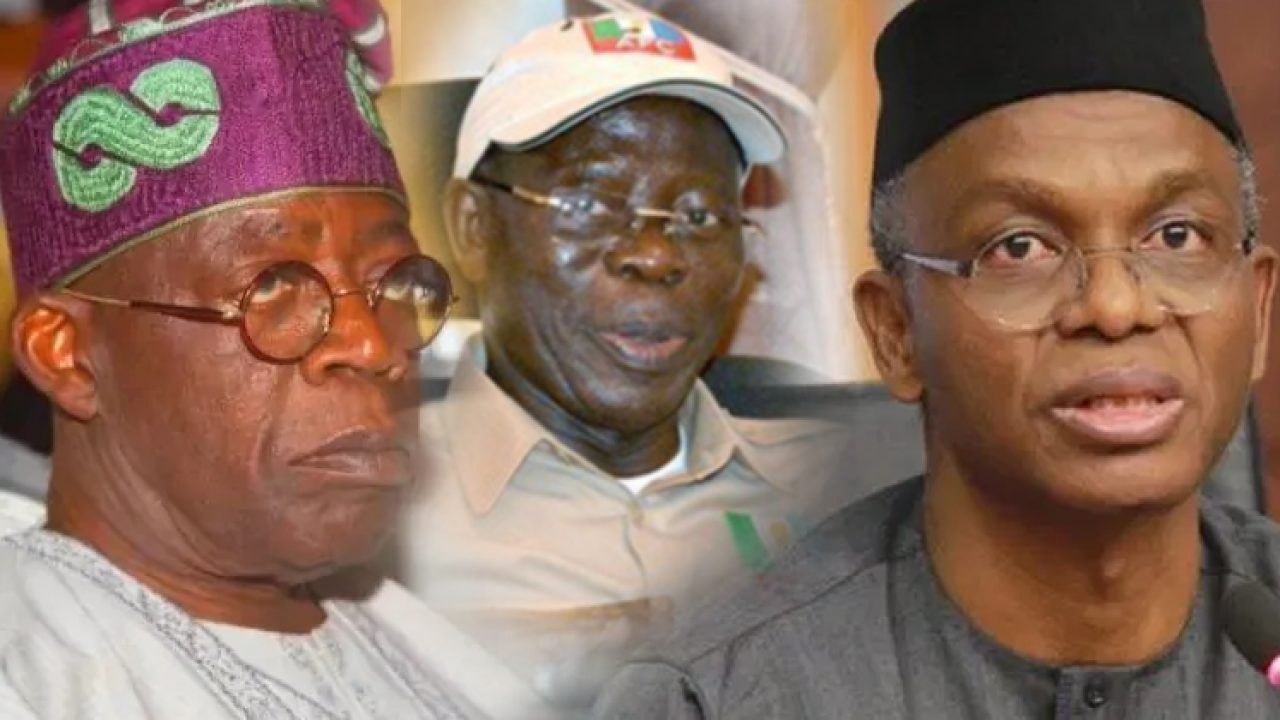
Resting on Justice Belgore’s precedence therefore, it will be out of place to hold responsible as many as are nurturing presidential ambition come 2023. However, a few names come to mind as a result of their body language, clandestine moves, and/or followers actions. They include but not limited to 1. the incumbent Vice President, Prof Yemi Osinbajo; 2. the National Chairman of the ruling All Progressives Congress (APC), Comrade Adams Oshiomhole; 3. the APC National Leader, Asiwaju Bola Tinubu; 4. the Kaduna State governor, Malam Nasir el-Rufai and 5. a former Secretary to the federal Government, Baba Gana Kingibe.
Let’s view their abilities or otherwise to hold the exalted position:
YEMI OSINBAJO
Born into the family of Opeoluwa Osinbajo on March 8, 1957, in Lagos, Yemi Osinbajo SAN, GCON, has come under serial attacks by a cross section of Nigerians described as the cabal, for harbouring unconfirmed ambition for the presidency.
Osinbajo’s suspicion dated back to the periods before the run off to the 2019 elections when some faceless groups and individuals accused him of eyeing the presidency, especially owing to his superlative performance as Acting President when President Muhammadu Buhari was away on sick leave.
Though he appears his usual self, the Vice President has suffered great humiliation in the recent past including allegation that he was corrupt and systematic stripping of his legitimate duties.
A scholar of great repute, Osinbajo was educated at Corona Primary School, in Lagos. Between 1969–1975, he attended Igbobi College Yaba, Lagos, Nigeria. where he was the winner of the State Merit Award (1971); the School Prize for English Oratory (1972); Adeoba Prize for English Oratory (1972-1975); Elias Prize for Best Performance in History (WASC, 1973); School Prize for Literature (HSC, 1975); and African Statesman Intercollegiate Best Speaker’s Prize (1974).
Thereafter, he studied for his undergraduate degree at the University of Lagos between 1975-1978 when he obtained a Second Class Upper Degree in Law. Here, he also won the Graham-Douglas Prize for Commercial Law. In 1979, he completed the mandatory one-year professional training at the Nigerian Law School whereon he was admitted to practice as a Barrister and Solicitor of Nigeria’s Supreme Court. In 1980, he attended the London School of Economics & Political Science, where he obtained a Master of Laws degree.
From 1979–1980, Osinbajo served the compulsory one year youth service as a legal officer with Bendel Development and Planning Authority (BDPA), Bendel state.
In 1981, he was employed as a law lecturer at the University of Lagos, Nigeria. From 1983 to 1986, he was Senior lecturer of Law at the University of Lagos. From 1988 to 1992, he was an Adviser (legal advice and litigation) to the Attorney-General and Minister of Justice, Bola Ajibola. Osinbajo began lecturing at the age of 23.
Yemi Osinbajo was also the Pastor in charge of the Lagos Province 48 (Olive Tree provincial headquarter) of The Reedeemed Christian Church of God, Ikoyi before his inauguration into office as the Vice President of Nigeria. He however still insists that he remains the pastor-in-charge of the said province and he is only on loan to the Federal Government. In his words, “Just like Pastor Ibitayo has said we are on loan. I am still the pastor-in-charge of Province 48 in Lagos and my wife remains wife of the pastor-in-charge and wife of the Vice President.”
On May 9, 2017, he became the Acting President after President Muhammadu Buhari wrote a written declaration to the president of the Senate and Speaker of the House of Representatives on his decision to embark on a medical trip.
Ruthless as a leader in taking the right decisions, on August 7, 2018, he fired the State Security Service boss, Lawal Daura for illegal invasion of National Assembly by armed and masked operatives of the department. Daura was replaced with Matthew Seiyefa, who was removed by Buhari when he returned from medical leave.
BABA GANA KINGIBE
This is one man who a lot of people are believing has a lot to do with the presidency come 2023, his old age notwithstanding. He is alleged to be a member of the so called cabal, which up till now, is yet to be unmasked.
Kingibe was in 2018 recognised and honoured as the running mate of the Chief Moshood Abiola in the June 12, 1993 presidential election despite the fact that he left the struggle even before it started. He was conferred with the Grand Commander of the Order of the Niger (GCON) award. An honour reserved for former vice presidents.
He was born on the June 25, 1945 to the family of Mustafa Shuwa and Ya Kingi Mallam. He grew up in city of Maiduguri and attended primary schools in the city. In 1958, he was admitted into the Borno Provincial Secondary School, however, in 1960, he traveled to London to complete his O’Level and A-level at Bishop’s Stortford College under a Borno Native Authority sponsored scholarship scheme. He took up further studies earning a Bachelor of Arts degree in International Relations at the University of Sussex .
He worked as a Research and Planning Officer at Ahmadu Bello University, Zaria before becoming the head of Features and Current Affairs at the Broadcasting Corporation of Northern Nigeria. In 1972, he joined the Nigerian Foreign Service a senior counselor and later became the head of the political desk at the Nigerian High Commission in London. During the Obasanjo administration in the late 1970s, Kingibe worked in the political department as principal secretary and was involved in the government’s return to civil rule programme, states creation and boundary adjustment, local government reforms and the constitutional drafting committee. In 1981,at age 36, he was appointed the Nigerian ambassador to Greece and later the country’s representative in Pakistan.
In June 2007, he was appointed Secretary to the Federal Government of Nigeria. He was unceremoniously removed from office on September 8, 2008 by the President, Umaru Yar’Adua after spreading rumors about the President’s ill-health while believed to be contending for the presidency.
Kingibe has silently remained in the corridors of power ever since Buhari assumed power in 2015, and bookmakers suspect that something may be brewing.
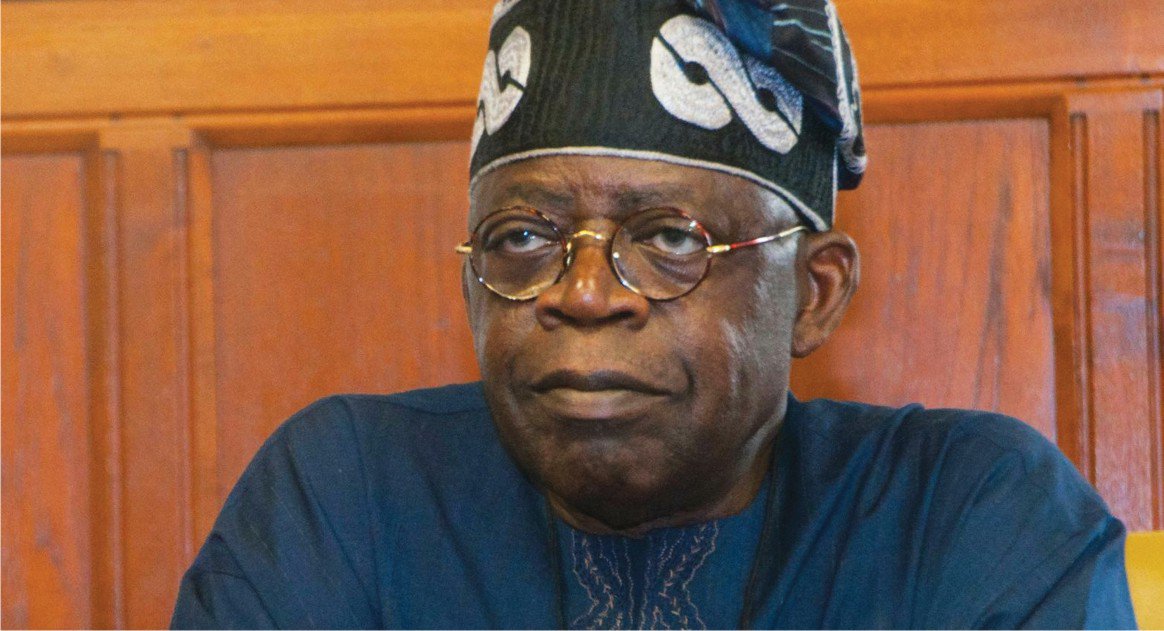
BOLA AHMED TINUBU
Bola Tinubu is revered by many as the most successful politician to have come out of the south west in recent times owing to his elaborate political schemings and maneuvers. He has been single handedly dictating the political direction of Lagos State in the last 20 years, having been a two terms governor of the state. He is also reputed to have played a great part in the installation of Buhari as president in 2015 and 2019. Not a few however, believe that all his political schemes over the years are geared towards becoming the president in 2013
His presidential posters were the first to don major streets of Lagos and unlike some of the others accused of presidential ambition, Tinubu has not denied his ambition.
Born Bola Ahmed Adekunle Tinubu on March 29, 1952 in the city of Lagos, Nigeria. Asiwaju as he is fondly called attended St. John’s Primary School, Aroloya, Lagos and Children’s Home School in Ibadan.
At the age of 23 in 1975, the man whose hindsight is legendary left the shores of Nigeria for the proverbial greener pastures to the United States, where he studied first at Richard J. Daley College in Chicago, Illinois and then at Chicago State University. He graduated in 1979 with a Bachelor of Science degree in Accounting.
In the run-up to the 1999 elections, he was a protégé of Alliance for Democracy (AD) leaders Abraham Adesanya and Ayo Adebanjo. He paid his dues. He won the AD primaries for the Lagos State gubernatorial elections in competition with Funsho Williams and Wahab Dosunmu, a former Minister of Works and Housing.
In April 1999, he stood for the position of Executive Governor of Lagos State on the AD ticket and was elected, and there extended his larger than life existence.
Following the victory by the Peoples Democratic Party (PDP) in the April 2007 elections, Bola Tinubu was active in negotiations to bring together the fragmented opposition parties into a “mega-party” capable of challenging the PDP in 2011. In July 2009, he called for implementation of electoral reforms spelled out in the Uwais report to ensure that the 2011 elections would be as free and fair as the elections of 1993 had been.
Tinubu is married to Oluremi Tinubu, the current Senator representing Lagos central. His mother, Abibatu Mogaji died on June 15, 2014 at the age of 96.
In giving back to the society, Asiwaju Tinubu has established industries, and employed thousands of Nigerians. His investments cut across the media, aviation, finance and many more.
His Bourdillon Ikoyi home is home to many individuals who throng there on a daily basis for one directive or assistance or another.
ADAMS OSHIOMHOLE
Oshiomhole is a firebrand activist, who spent most of his professional life as a labour unionist. His presidential ambition took many by surprise when his posters appeared in Abuja with Kaduna State governor as running mate. Though he has since denied knowledge of the posters, bookmakers believe there is no smoke without fire.
Presently the National Chairman of the ruling All Progressives Congress (APC), Adams Aliyu Oshiomhole was born on April 4, 1952 at Iyamho, near Auchi in Edo State. He was born Muslim but was led to Christianity by his late wife, Clara who died of cancer aged 54. He is Catholic and his Christian name is Eric. He has since remarried to a young model called Lara Fortes
After his secondary education, he joined the Arewa Textiles Company, where he was elected union secretary. He became a full-time trade union organizer in 1975.
He then studied at Ruskin College, Oxford in the United Kingdom and majored in Economics and Industrial Relations. He also attended the National Institute for Policy and Strategic Studies, Kuru.
In April 2007, Adams Oshiomhole ran for Governor of Edo State under the Action Congress Party, with which his Labour Party had entered a strategic alliance. Though he lost, he contested the election results at the tribunal and emerged victorious
On 11 November 2008, a federal Appeal Court sitting in Benin City upheld the ruling of the state’s elections petitions tribunal, declaring Oshiomole to be the Governor of Edo State. The decision was based on several voting irregularities.
In 2012, he was elected to a second term, winning the elections in a massive landslide. He ended his tenure on November 12 2016.
On 23 June 2018, Adams Oshiomhole emerged as the national chairman of the All Progressives Congress (APC) in Nigeria following a voice vote by delegates at the party National convention, and led the party to presidential victory in 2019.
NASIR EL-RUFAI
Kaduna State governor, Nasir El-Rufai has been one name that has remained synonymous with the presidency for a very long time now. He has a way of warming his way into the hearts of incumbent presidents. While Chief Olusegun Obasanjo was president between 1999 and 2007, many believe he would be the successor. He was even ‘considered’ to replace the then vice president, Alhaji Atiku Abubakar, who was having a running battle with Obasanjo.
Today, apart from his posters coming as a presidential hopeful come 2023, his utterances have left many in doubt about his ambition.
He was born on February 16, 1960 in Daudawa of Faskari Local Government Area in Katsina State. His father died when he was eight years old, and was sponsored throughout his schooling days by an uncle in Kaduna.
He attended Barewa College, and graduated at the top of the class, winning the “Barewa Old Boys’ Association Academic Achievement” Trophy in 1976.
He went off to Ahmadu Bello University, Zaria, earning a Bachelor in Quantity Surveying degree with First Class Honors. He also attended post-graduate programmes at Harvard Business School and Georgetown University. Since leaving public service, Nasir has completed an LL.B degree from the University of London, graduating in August 2008 with Second Class Honors, Upper Division, and a Master’s Degree in Public Administration from the John F. Kennedy School of Government, Harvard University in June 2009. He also received the Kennedy School Certificate in Public Policy and Management having spent 11 months as an Edward A. Mason Fellow in Public Policy and Management from July 2008 to June 2009.
Rufai is serving his second term as Governor of Kaduna State. He is also a writer of great repute.
Much as many fingers are up for the number one office in the land, it should not be forgotten that President Buhari, who has tasted power this far might spring a surprise third term intention. Who knows?








 News4 days ago