Connect with us

Featured

Four Years After, Diezani’s Alleged $20bn Theft Case Still in Coma

Published

on

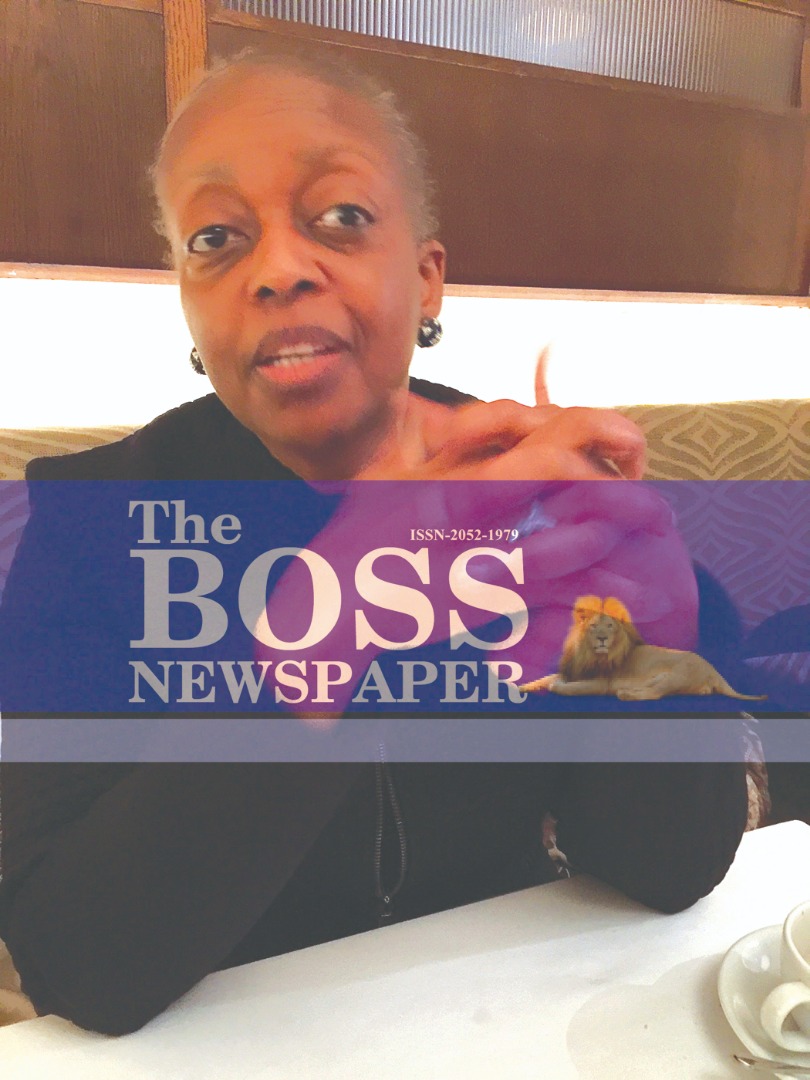
About four years ago, exactly on Thursday and Saturday, November 5 and 7 2015, The Boss Newspapers had a world exclusive interview with the embattled former Minister of Petroleum, Mrs. Diezani Alison-Madueke who had been accused of abusing her office and looting anything from $20 billion and above. The Boss had succeeded in seeking her out after her arrest in London where she’s currently domiciled.
The Federal Government of Nigeria had alleged that the woman, who described herself as the ‘most vilified’ stole from the coffers of the Nigeria National Petroleum Corporation (NNPC), one of the agencies under her supervision. For a corruption allegation of this magnitude, one would have expected the case to be speedily prosecuted but not much has happened. Neither the government of Nigeria nor her host government in England has made any substantial progress in what may turn out to be the biggest corruption case in Nigeria.
Now, the crux of the matter: four years after she spoke of her innocence in a no holds barred interview with The Boss Publisher; four years after the Federal Government accused her of the said theft, why has it been difficult for her case to come up? What are the legal bottlenecks stalling her cases either in England or her repatriation to Nigeria?
There have been pockets of seizures of her property here and there, but no one has yet to prosecute her for the alleged looting. Meanwhile, the last time she spoke to The Boss, she spoke about her cancer story which which many had said was concocted to draw sympathy to her and, probably, forgiveness. No newspaper has spoken to her since then.
Today, The Boss serves you once again this one of its kind encounter with a woman who fell from grace after a monumental professional career in the corporate world as well as the highest levels of public office…


“I DID NOT STEAL NIGERIA’S MONEY” – Former Minister, Diezani Cries Out

By Dele Momodu

What you are about to read is probably the most anticipated story of the year birthed in the long awaited authoritative investigative newspaper of the future. This pregnant saga fell into labour last week in the pre-natal wing of Pendulum ward of Thisday clinic and it has now given birth to a big bouncing baby christened The Boss.

This is an apt metaphor for the melodramatic scoop which is the cover of the first edition of what I believe will be a catalyst for unbiased investigative reporting in Nigeria. The Boss had long been conceptualised as a Leadership newspaper to occupy the void created by lack of true and credible investigative journalism in some traditional and online media. The original plan was to launch in December or early January.

But the Diezani Alison Madueke story changed all that. It was too compelling to restrict to the Pendulum column alone. And here we are with what promises to be an exciting addition to the media landscape in Nigeria and beyond featuring an enthralling cover story that will educate and entertain the readers.

After that effervescent introduction in Thisday, in which Nigeria’s most influential newspaper published the meeting between this reporter and the embattled former Minister of Petroleum Resources, Mrs Diezani Alison-Madueke, everyone requested for details of the encounter. Some unbelieving Thomases even suggested the story was pure fiction, or at the very best “faction” to borrow Kole Omotoso’s coinage.

They wondered why a more comprehensive interview could not be published, garnished with clear crispy pictures of Madame Diezani. It was obvious many had read the story in a hurry and did not assimilate the carefully worded tale of a woman in deep pain and anguish for variety of reasons. Of course there were insinuations that it was a public relations stunt but mercifully most readers thought it was a well-balanced story. It even went viral.

At any rate, those who took their time would have noticed that I had to settle for such gripping monologue because it was virtually impossible to extract more information from a cancer patient who had spent her day with her medical team in a private London hospital. Our protagonist had also probably taken the risk of meeting this reporter in order to check if he was going to play the quintessential antagonist or do his job professionally and dispassionately.


That meeting obviously impacted on her decision to open up eventually, two days after episode one. A call came through on Friday November 6, 2015, from a female aide of Mrs Alison-Madueke to request for a meeting the following day at 2.30pm at a location yet to be determined.

The appointment was immediately approved. Later in the evening, this ubiquitous aide made yet another call shifting the appointment forward by a few hours to 11am the same Saturday. My response again was yes. The pot that would eat pepper must endure some heat, says a Yoruba proverb. The Diezani story was worth all the sacrifice in the world. In other climes, journalists would have shown more than cursory in chasing that super exclusive chat. Her copyrighted picture would have fetched a few million dollars, probably. Anyway…

A text message flew into my phone very early Saturday morning. It contained the address and full postcode of a new venue different from the one of two days earlier. Not to worry. My wife offered to chauffeur me again but without her sister this time around. While on our way, the female aide called to ask if we were going to make the 11 o’clock time pronto or arrive late. I replied we would arrive earlier rather than later. I would soon understand the import of her question. Madam Diezani was apparently on her way and I was expected to be comfortably seated prior to her arrival. Presumably, so I would not know how and from what direction she had come. There was no sign this time of any overbearing or anxious security man. Mrs Alison-Madueke had laughingly dismissed as funny my James Bond imagination of Thursday, in any event. Since the meeting was supposed to be strictly one-on-one, my wife had to wait in the car while I was away. The venue turned out to be a popular restaurant near Regent’s Park, famous for its breakfast.

I was a bit surprised and disappointed at the choice of location. I was hoping she was going to give me access to her now famous apartment which was said to have been bought at a most staggering amount, or the new multi-billion dollar home that was rumoured to have triggered the alarm leading to her arrest, claims she would dismiss as tales by moonlight.

I called the mobile number I had been given as I approached the doorway of the restaurant, and her female aide emerged from the bowel of the restaurant to lead me to a somewhat secluded corner where a table has been reserved. I was seated facing the entrance, and hoping I could catch her glimpse whenever she arrives.

After waiting for about 20 minutes or so, I heard some footsteps and the once most powerful woman in Nigeria surfaced. She looked slightly better than at our last meeting and I sprang to my feet as we exchanged pleasantries. I mentioned to her that she looks better and she said she’s been resting and gaining strength in preparation for her radiotherapy. She ordered full English breakfast while I settled only for cappuccino. But when the meal arrived she didn’t eat it because she has lost appetite for food generally and was more on fluids. She then asked for American coffee, water and fresh lime instead. She also ordered for tea at some point. Most of the time we spent talking, she coughed intermittently into a napkin and dabbed her mouth with it but she was clearly determined to pour out her obviously heavy mind despite the discomfort I could notice she was struggling to endure.

Let me reiterate for the sake of those who missed the first part of this story that our two meetings took place on Thursday, November 5 and Saturday, November 7, 2015 at different locations. The first was in a private apartment while the second was in this restaurant. Unlike the first which lasted less than half an hour, we were able to spend more time together this time. Indeed, we were at it for for over a total of just over four hours, and I believe she spoke from the heart, I believe, but the reader is always the judge.

There were several off-the-record interludes. More than anything we were both careful not to discuss in detail matters which might impact on the cases and legal problems now bedevilling her.


I did not expect otherwise. Mrs. Alison-Madueke is a smart and intelligent woman and had recently benefitted from being advised by lawyers both in UK and Nigeria in connection with her arrest in the UK and the search of her Abuja home.

Getting and persuading her to talk in detail about a lot of issues was therefore very difficult. There were other reasons. First, was her obvious paranoia of the Nigerian press. She’s been bruised, battered and blistered, especially in print and on social media. She’s been scandalised, summarily tried and precipitously convicted by the media, according to her. She did not expect anyone to lend her an ear or listen to her now muffled voice.

On top of her problems, she’s having a running battle with the most dreaded form of cancer of the breast and she’s had to undergo surgeries to remove the lumps and later some chunky tissue. The treatments have not been that successful and it’s been a ding-dong affair for this once ebullient and elegant lady.

We had to give assurances of not sensationalising her story if granted access. Of course it has never been our practice to do so and thus this was not a problem. We promised not to embellish her stories in any way or reveal off-the-record discussions which were truly personal and confidential and had nothing to do with her travails. There was a strict proviso that no form of recording would be allowed and we had to adopt the novelistic style. The result of that covenant is what you’re reading today.

We must note that we were highly restricted and encumbered by strings of events as well as existing litigation and other possible future developments. We could not get as much revelations as we expected but the little we managed to get provided enough insight into a woman who had achieved so much and enjoyed substantial accolades before the sad turn of events. Had she remained in Shell, where she became the first and only female Director, and shunned the murky water of Nigerian politics, maybe she would have savoured the klieglights forever.

We knew it was going to be very difficult getting pictures in her present not too genial or glamorous condition. That was practically tough on our first meeting as she was just returning from her hospital rounds and looked totally exhausted. We however succeeded in getting a few pictures this time some of which we are revealing for the first time today.


The Diezani Alison-Madueke story is a classic study in the intrigues of power-play. Barely months ago, she was at the pinnacle of the temple as Minister of one of the biggest oil-producing nations on earth. She was elected the President of the powerful Organisation of Petroleum Exporting Countries (OPEC). And the world was at her feet. The cancer issue had crept in, like a thief in the night, but was being treated and managed by the best doctors available in England. There was that optimism that all shall be well at the end until everything that could go wrong started going wrong, like in Murphy’s Law.

Madame Diezani confirmed that she she and the government she served loyally and passionately never thought for one second that Nigerian general elections could turn out the way it did or that they would suffer the crushing and devastating defeat that they did. The first and major casualty would be the woman who controlled the destiny of Nigerians as Petroleum Resources Minister. Under her care, a whopping $20 billion was alleged to have vamoosed into thin air. Till this day, no one has come forward to authenticate the veracity or otherwise of such mind-boggling claims. Instead we’ve received conflicting figures on the supposed infractions.

This is a story like no other and it cannot be told like any other. It is a tale from the super highway of power and the fast lane of confusion. Nothing is sweeter than power and money, in no particular order, as long as you have both you are in the rarefied company of national decision-makers. And nothing is sadder than having both and falling from grace to grass or from fame to infamy. Mrs Alison-Madueke had the world not just at her feet but firmly in her palm. She could apparently turn a certified pauper into a certificated billionaire within the twinkle of an eye. In short, she could make and unmake. Diezani was the subject of many fables. And this is the crux of the matter. Her closeness to President Jonathan and the influence she wielded on him was never a hidden matter. This lent credence to the mystical power over the Nigerian economy that it was claimed she possessed. I fired my first shot from that direction and it was as if she expected it:

“Is it true that a sister of yours has a kid or kids for President Jonathan?” I asked. “That is totally untrue as I don’t have any such sister or relative!” she said. She wondered how people could fabricate such blatant lies.

I soon followed with what I regarded as an upper-cut: “It was said that you and the former First Lady, Dame Patience Jonathan were in permanent conflict; why was it so?” She responded that their relationship was cordial enough and she gave the former First Lady the respect she should give the wife of her boss. She went further to say that “What people don’t know is that we’ve been family friends for long. My mum, Mrs Beatrice Agama, has always played the role of a godmother in the Niger Delta and all the militants love and respect her. I come from a royal and privileged background and lacked nothing.”

She said she was not unaware of certain insinuations about an intimate relationship with the former President but she never bothered her head about them because some people had made up their minds to spread those ugly tales about her. “If you are in the corridor of power, you must expect anything, including mud and even bricks being thrown at you.”

Now wait for the next shot! “You’ve been linked to so many young guys who made so much money from you and later absconded or turned against you… What was between you and Chris Aire, Kola Aluko, Jide Omokore, Tonye Cole, Dapo Abiodun, Wale Tinubu, Igho Sanomi and others?” I queried her.

Madame Diezani’s response was calm and unruffled: “I vehemently deny any intimacy or liaison with any of these gentlemen.” She noted that she is happily married like most of them are happily married and asserted that she is not the Scarlet Lady that people paint her to be. She sees those rumours as insults on accomplished women who cannot be seen in sensitive positions without running riotous with some men. She said it was important to put in context how she met most of them:


“I was the Chairman of the Nigerian Content Development & Monitoring Board and I did my job to the best of ability and intentions. My boss and I were determined to empower Nigerians, especially the young ones, who had the brains and guts to dare.” She pointed out that her firm belief and desire to empower Nigerians stemmed from the manner that she and her parents and siblings were unceremoniously dumped out of Shell Camp where her father worked and lived while she was young.

The memory was apparently traumatic as I could notice her wiping her eyes with another handkerchief. She said “I remember that day vividly.  It was definitely one of the worst days of my life.  We were not even allowed to finish eating before they hurriedly packed our belongings, threw them into trucks and drove us into an uncertain, unknown future.”

She continued “I was determined that what my father fought for, which was to ensure that Nigerians had a greater say in the scheme of things in Shell and thus in the petroleum industry would be championed and achieved by me in Government.”

She noted that in every government, some people must land the big jobs which every human being would love to have. She said “I chose to empower mostly Nigerians and took the power away from foreigners who used to dominate the sector. That was why we pushed for the Nigerian Content Bill, which mercifully we got through. So you cannot expect some forces not to hate me but I was shocked that Nigerians themselves were ready to crucify me mostly on rumours and not verifiable facts. Most leaders before me have suffered a similar fate so I take some comfort from that experience.”

She added that people seem to forget that she is happily married to Rear Admiral Alison Madueke and would not do anything to jeopardise her marriage or smear herself in the eyes of her husband, children and family. She also said that some of these men were unknown to her until she became a Minister and that although, in some cases, they later enjoyed a cordial relationship with her, it was no more than the kind of relationship she enjoyed with other successful Nigerian businessmen who respected and admired her for the way she was bringing Nigerians to the forefront of the industry:

“It is unfortunate that things didn’t work perfectly all the time as expected and as a leader I take the blame for those imperfections, but I’m certainly not a demon as being portrayed. I have no doubt that I served my nation well, the reason my colleagues at OPEC supported me despite the opposition from my own people. I still maintain that level of relationship with my former colleagues despite not being in government.“

I then asked why is she so controversial? “Controversy has nothing to do with your qualifications or performance. As a matter of fact, people often hate you for knowing so much and for being efficient and confident which they mistake for arrogance. We had to confront so many challenges, including oil theft and general insecurity but we did very well even if we did not succeed 100 percent. I must say that some of our own people delivered responsibly while a few of them breached the faith and wasted the opportunities handed to them by my boss, President Jonathan. Unfortunately, no one ever remembers the things that went right but everyone remembers and tends to emphasise the things that went wrong…”

We soon moved the discussion to the many allegations of financial impropriety under her tenure, especially the alleged disappearance of $20billion and other wasteful spending authorised by her. She observed that she could not go into any real details because of the criminal investigations in Nigeria and England as well as the civil case here. However, she told me she would try and provide general details about these matters because it was important to shed some light on her own involvement from the vantage point of someone actually in Government who believes these things simply cannot happen.

She was visibly angry at the mention of the $20billion: “If there is one issue I must pursue in this world it is the biggest lie of this money. How can $20billion disappear just like that? Where did it disappear to? Is it possible that such an amount would not be traceable? This is more painful coming from someone I considered a good friend who should appreciate the gravity of such allegation. I challenge anyone to come forward with facts showing that I stole government or public money. I’ve never stolen Nigeria’s money…”

“Rather I worked hard to halt the rampant business of round-tripping. When I brought in Reginald Stanley to clean up the place, I requested for a list of the defaulters. There were about 92 of them and I made sure we sanctioned them. You can imagine the threat to my life but I was ready to defend the economic interests of my country. In fact, we were able to reduce the oil subsidy by about half. No one has applauded our effort.

“There were those who said the then Governor of Central Bank must have been angry at me because of the way the Presidency treated him. In all honesty, he was being blocked from seeing the President by some of Oga’s people (presidential aides) but it had nothing to do with me. I was the one who even told Oga about the development and Oga said he would meet him in London on one of his trips. Unfortunately my boss fell ill and was rushed to King Edward Hospital and the meeting was aborted.”

“Sanusi and I had been friends. There was no way I would have done anything bad to him. He even came to my house to inform me about his interest in heading the African Development Bank and we discussed for about two hours. I promised to support him and I spoke to Oga about it. We were together on the Reconciliation Committee that looked into the accounts of NNPC. Yes there were gaps but not on the alarming scale being circulated. Markafi (former Governor of Kaduna State) did a thorough job. You know he is a very sound accountant.”

What about the allegations that she owns choice properties everywhere? “It is so sad that anyone could say such about me. Let me say something to you, I live with my husband in the same house we’ve lived since we married in 1999. Ask anyone who knows us. Our house in Abuja was bought in 2007 by my husband and as an architect and lover of interior décor I did it up to our own taste. It is not over the top because I have good taste and appreciate bargains. I shop in regular shops like B & Q to do up all the places where I live. Anyone who tells you I have houses anywhere should feel free to publish them. That was how they said I bought an expensive property in Vienna. I went to court and I won the case. I never saw the house before except in picture. The house I stay in London is rented. As a woman I love to look good. Some of my dresses and jewelleries are often dumped on me by those I buy from and I pay them when I can…”

She went on to explain that virtually all the transactions in respect of which allegations of corruption are being levelled against her went through due process and that the Group Managing Director of NNPC was actively involved in ensuring that the best international practices were maintained. She added that her involvement in the conclusion of these transactions was limited and that some of the contracts had been executed before she became Minister of Petroleum Resources. In some other cases she only got details after the contracts had been concluded when approached by some businessmen who complained about the terms. She usually admonished them to forego the contracts if they felt they were not profitable and seek other ventures within the industry.

But she emphasised that her boss neither discriminated against nor favoured anyone. She claimed some of those who benefited the most were even in opposition and mentioned how a renowned opposition leader and vocal critic of the Government at the time met her on about three occasions to discuss his interests in the business of oil.

“My boss didn’t want Nigerians to suffer because of politics so we agreed to offer certain support to a company we knew was owned by the opposition once we were satisfied they controlled the market substantially and have what it takes to deliver the goods nationwide. We were that tolerant…”
Continue Reading
Click to comment

Leave a Reply

Your email address will not be published. Required fields are marked *

Featured

Reno, Fani-Kayode’s Brains Configured to Say Anything and Delete – Dele Momodu

Published

on

By

By Eric Elezuo

Renowned journalist and a chieftain of the African Democratic Congress (ADC), Chief Dele Momodu, has come down hard on two loyalists of President Bola Tinubu, Reno Omokri and Femi Fani-Kayode, who were ambassadors-designate, before being posted to Mexico and Germany respectively.

Momodu, in a statement titled Reno Omokri and Femi Fani-Kayode: A Tale of Two Shameless friends, and posted on his verified social media handles, including Instagram, noted that the two men have proved themselves as very ‘shameless’, with brains configured to say anything and delete immediately.

While referring to Reno and Fani-Kayode as two perpetual agents of perfidy’, Momodu informed that his statement was in other not to give the ‘two…friends’ the impression to think they could bully him into silence and submission.

“No. They can’t. They both have no credibility whatsoever. Together, they’ve expressed the worst views ever about BOLA TINUBU that they will never be able to erase, or clean up, in a million years, except the world finally comes to an end,” he said.

While maintaining that he stands by his qualification of President Tinubu as a dictator, he clarified that the duo of Rwno and Fani-Kayode has disparaged and said worst things about Tinubu in the past, with whom they are hobnobbying with at the present.

Momodu revealed that his suspension of his weekly column on ThisDay and The Boss Newspaper was out of respect for some Yoruba elders, for Tinubu, and not to be critical of him as he did to his predecessors, saying that he has nothing against the president except for his consistent dive into the world of dictatorship and tyranny.

The Ovation Magazine publisher berated the duo of Reno and Fani-Kayode for severally reaching out to him privately for publicity. He also boted that he is not a victim of poor upbringing as the two men constantly portray. He further contrasted himself from the two men, saying he does not fight like pigs, and unlike the duo, has a job.

Read the statement in full

RENO OMOKRI & FEMI FANI-KAYODE: A TALE OF TWO SHAMELESS FRIENDS…

I was going to ignore these two perpetual agents of perfidy but later decided to respond to them just in case they think they could bully me into 🔕 silence and submission.

No. They can’t. They both have no credibility whatsoever. Together, they’ve expressed the worst views ever about BOLA TINUBU that they will never be able to erase, or clean up, in a million years, except the world finally comes to an end.

The only reason I could adduce for Tinubu’s tolerance of both irritants is desperation and his inability to find better people to do the dirty jobs. The brains of these ones have been configured to say anything and delete immediately.

I have never disparaged TINUBU in my life. I have never called him a murderer. I have never called him a drug baron or addict. I’m intelligent enough, not to say what I have no proof of. Only morons talk without thinking. I thank God for good upbringing. I do not fight like pigs. And I have a job and manage my modest income. I’m not seeking government appoints. I know how many times Femi and Reno have reached out to me, privately, either begging for publicity or apologizing for attacking me publicly.

All I have accused Tinubu of is DICTATORSHIP and I stand by it with my full chest. I oppose tyranny because I once suffered under it. Chief Moshood Abiola won an election but dictatorship deprived him of his victory. Why should we replace military dictators with civilian slavemasters. That’s my only grouse against TINUBU. Because of our past association, I have been partial and generous to him by not being as critical of him as I did to his predecessors.
Because of TINUBU, I stopped writing my PENDULUM column on the Backpage of Thisday and The Boss newspapers. Also, out of respect for Yoruba elder statesmen, including retired Generals who pleaded that we give him time to stabilize. They are alive to bear me witness.

How Femi and Reno can continue to harass people on behalf of a TINUBU they’ve permanently damaged and sent to the cleaners really baffles me.

But this is Nigeria…

– AARE BASORUN AKINROGUN DELE MOMODU

Continue Reading

Featured

Resign by March 31, Tinubu Tells Political Appointees Seeking Elective Offices in 2027

Published

on

By

President Bola Tinubu has directed all political appointees in his administration who intend to contest elective offices in the 2027 general elections to resign their positions on or before March 31, 2026.

The directive, according to the Presidency, is in line with Section 84(12) of the Electoral Act and the timetable released by the Independent National Electoral Commission (INEC) for party primaries ahead of the 2027 polls.

The directive was conveyed on Tuesday through a statement from the Office of the Secretary to the Government of the Federation (OSGF).

The statement was signed by the Permanent Secretary, General Services Office, Dr. Ibrahim Abubakar Kana, on behalf of the Secretary to the Government of the Federation, Senator George Akume.

According to the statement, the directive applies to all categories of presidential political appointees who plan to participate in party primaries or seek nomination for any elective office in the forthcoming elections.

Those affected include Ministers, Ministers of State, Special Advisers to the President, Senior Special Assistants, Special Assistants and Personal Assistants to the President.

It also covers Directors-General and Chief Executive Officers of Federal parastatals, agencies, commissions and government-owned companies, as well as other political appointees appointed by the President.

The government stated that all affected officials are required to submit their formal resignation letters through the Office of the Secretary to the Government of the Federation on or before the March 31, 2026 deadline.

“Accordingly, all affected officials are required to submit their formal resignation letters through the Office of the Secretary to the Government of the Federation not later than March 31, 2026,” the statement said.

The Presidency explained that the directive is intended to ensure strict compliance with electoral laws and promote fairness in the political process ahead of the elections.

President Tinubu emphasised that the measure is aimed at upholding transparency and providing a level playing field for all aspirants preparing to participate in party primaries and the 2027 general elections.

The administration also reiterated its commitment to strengthening democratic institutions and ensuring credible electoral processes in the country.

Continue Reading

Featured

Electoral Umpires in Nigeria and Its Miasma of Failures

Published

on

By

By Hon. Femi Kehinde

Elections in Nigeria since 1923 had been bedeviled with hiccups, brouhaha, frustration, suspicion, lack of trust, and untrustworthy umpires, who were usually placed into such positions by perhaps equally untrustworthy men of power. Nigeria does not stand in isolation in this instance. However, its peculiarities of electoral failures have definitely impacted its growth and development, and stunted the eminence of its position in the Committee of Nations.

Sir Hugh Clifford assumed the office of Governor of Nigeria on August 8, 1919 and served until 1925, succeeding Sir Frederick Lugard, the apparent founder of a country called “Nigeria”- after the Amalgamation of the Southern and Northern Protectorate he had established in 1900 and 1903 respectively. He had consequently amalgamated these two uncommon people on the 1st of January, 1914 into a union called “Nigeria”- a name suggested to him by his British Journalist-wife, Flora Shaw, whom he married on 10th of June, 1902.
Perhaps as a soothsayer, the British Secretary of the Colonies, Lord Harcourt, the man whom Port-Harcourt was named after, in a formal “Instruments of Instruction” Cablegram dispatch to Sir Frederick Lugard on the 26th of December, 1913, sanctioning the creation of a new Nigeria on the 1st of January, 1914, and the appointment of Sir Lugard as its first Governor-General, said: “…May the Union be fruitful…May the Parties remain constant”.

In 1919, Sir Lord Frederick Lugard left office as Governor-General of Nigeria and was succeeded by Sir Hugh Clifford – a hugely prominent and highly experienced British Colonial Officer, who had hitherto, been Governor of the Gold Coast (present day Ghana).

Subsequently in 1922, to administer Nigeria within his own conception and to govern its people in strict adherence to the Rule of Law and democratic tenets and principles, Sir Hugh Clifford created Nigeria’s first Constitution ably tagged the “Clifford Constitution of 1922”. Interestingly, Britain has never operated a written constitution.

To herald democracy in accordance to this Constitution, he conducted an election into a talk-shop like Legislative Council, where only four (4) members were elected; three (3) from Lagos and one (1) from Calabar.

Infact, Lagos and Calabar were then referred to as British Crown Colonies. The four elected members were Egerton Shyngale, Eric Olawolu Moore, Crispin Adeniyi-Jones, Kwamina Ata-amonu. The three (3) successful candidates from Lagos were elected on the platform of Herbert Macaulay’s Nigerian National Democratic Party (NNDP), while the Calabar candidate emerged as an independent candidate.

There was no Electoral Commission to organize the election. It was personally organized and supervised by the Office of the Governor of Nigeria – Sir Hugh Clifford, who was completely apolitical (non-partisan).

However, in 1959, the tide changed. The 1959 General Election was the most significant, as it determined who would lead the country into independence. In 1958, Ronald Edward Wraith, a highly consulate British Administrative Officer, was appointed as the first Electoral Umpire by the British Governor-General in Nigeria, Sir James Wilson Robertson. His task was to design the framework for the country’s first major elections. He was appointed to oversee the 1959 General Elections, which were the most critical elections prior to Nigeria’s independence in 1960. Wraith is often credited with introducing the concept of the Secret Ballot to Nigeria. He spent years traveling round the country to educate Nigerians on how to register and vote, ensuring the transition from colonial rule to the First Republic, had a structured, albeit imperfect, foundation.

The 1959 elections, despite being organized by a British expert and Colonial Officer, was still bedeviled with irregularities. The Parties; NCNC, NPC, and AG, held dominant controls of their Regions. Elections were even won before contest, due to non-availability of Nomination Forms for opposition party members.

Right from the 1959 elections, participatory democracy began to fumble and wobble. The massive riggings of the Federal Elections of 1964 and Regional Elections of 1965 respectively, ultimately led to the collapse of the First Republic on the 15th January, 1966.

In 1960, Chief Eyo Esua was the first indigenous Chairman of the Federal Electoral Commission (FEC) during Nigeria’s First Republic. He was a veteran trade unionist and teacher. Before entering the electoral space, he was a founding member and long-time General Secretary of the Nigeria Union of Teachers (NUT). He was appointed by the Balewa government to oversee the 1964 and 1965 elections. His tenure was defined by the extreme political volatility of the 1960s. The 1964 federal election was marred by boycotts and allegations of massive fraud.

Esua was known for his personal integrity, famously admitting publicly that the 1965 Western Region elections were riddled with irregularities. This admission, while honest, highlighted the powerlessness of the Commission against the political giants of the time, shortly before the 1966 coup. He did not however admit that the 1964 Federal Election which he superintended, was equally marred with irregularities, and was infact a precursor of the 1965 Regional electoral riggings in all the regions of the federation.

In the 1965 Regional Elections in the Western Region, Chief Obadiah Ojerinola, a seasoned Senior Civil Servant in the Government of the Western Region, was appointed by the Ladoke Akintola government as the Electoral Umpire.

Obadiah Ojerinola was a high-ranking Civil Servant in the Western Region of Nigeria. Unlike the figures he worked alongside (like Chief S.L. Akintola, Chief Remi Fani-Kayode), he was not a “party man” by trade but an official within the regional bureaucracy. His appointment to lead the Electoral Body suggests he held a position of significant seniority and perceived stability within the Western Region’s Civil Service at the time.

Obadiah Ojerinola, served as the Chairman of the Western Region Electoral Commission during the highly controversial 1965 Western Region election, a period considered as one of the darkest chapters in Nigerian political history, often referred to as the era of “Wild Wild West” (Wetie).

As the “electoral umpire,” Ojerinola was at the center of the storm between the two major warring factions: NNDP (Nigerian National Democratic Party), led by Chief Samuel Ladoke Akintola (the incumbent Premier), and UPGA (United Progressive Grand Alliance), an alliance including the Action Group (AG) led by Chief Mrs. H.I.D Awolowo and Hon. Dauda Soroye Adegbenro (standing in for the imprisoned Obafemi Awolowo).

Ojerinola’s Commission was accused of extreme bias in favor of Akintola’s government. The election is remembered for several systemic failures. Before the first vote was even cast, the Commission declared many NNDP candidates “unopposed” by refusing to accept the nomination papers of opposition candidates.

On election day, there were reports of widespread ballot box stuffing and the physical intimidation of voters by “party thugs”. In a bizarre turn of events, Ojerinola’s Commission announced Akintola as the winner, while the opposition (UPGA) simultaneously announced their own victory via a pirate radio broadcast.

The conduct of the Ojerinola-led Commission sparked a total breakdown of law and order. Protesters began dousing political opponents and their property with petrol and setting them on fire, hence the term ‘Wetie’, meaning “douse it”. The Western Region became ungovernable, with widespread rioting and killings.

This electoral crisis is widely cited as the primary “trigger” for Nigeria’s first military coup on January 15, 1966, which ended the First Republic and led to the deaths of Akintola and other top leaders like Tafawa Balewa (Prime Minister of Nigeria), Festus Okoti-Ebo (Minister of Finance), Ahmadu Bello (Premier of the Northern Region).

Ojerinola is often studied as a cautionary tale of what happens when an electoral body loses its perceived neutrality. His tenure proved that without a credible ‘umpire’, the Democratic process can collapse into violence.

Similarly, the Electoral Umpires in the Eastern Regional Elections and the Northern Regional Elections in 1965, were Barrister Anthony Aniagulu (later Justice Anthony Aniagulu of the Supreme Court of Nigeria Rtd.) and Alhaji Bello Makaman Kano respectively. They performed similar feats like Ojerinola, to ensure the success of their regional gladiators in the NCNC and NPC respectively.

On 15th November, 1976, Michael Ani was appointed to the role of the Chairman of the Federal Electoral Commission (FEDECO) by General Olusegun Obasanjo’s military administration. Prior to entering the electoral arena, Michael Ani was a seasoned Civil Servant, who was known for his administrative discipline.

His primary responsibility was to oversee the transition from military rule to civilian government, which eventually led to the 1979 general elections. He led a 24-man commission tasked with organizing the return to democracy. His mandate included the registration of political parties, the delimitation of electoral constituencies, and the general conduct of the voting process.
Though he was appointed in 1976, he is most famously remembered for his legal interpretation during the 1979 presidential election. He ruled that Alhaji Shehu Shagari had met the requirement of winning one-quarter of the votes in “at least two-thirds of all the states,” despite the mathematical ambiguity of what constituted two-thirds of Nigeria’s then 19 states. His tenure is often remembered for this “Twelve Two-Thirds” legal dispute regarding the spread of votes required for a presidential winner; a case that eventually went to the Supreme Court.
However, despite Michael Ani’s famed integrity, urbane and cosmopolitan disposition, FEDECO which he presided may still not pass the crucibles of a free and fair election. In late June or early July 1979, through a nationwide State Broadcast before the elections held on August 11, 1979, the Head of State, General Olusegun Obasanjo, addressed the nation on radio and television where he said amongst several others that: “The best candidate may not necessarily win an election”.

Whatever that may mean.

In 1980, Justice Victor Ovie-Whiskey was appointed as the Chairman of the Federal Electoral Commission (FEDECO) during the Second Republic, succeeding Michael Ani, by President Shehu Shagari. He was a distinguished Jurist who served as the Chief Judge of the High Court of the defunct Bendel State. He presided over the 1983 General Elections, which were incredibly contentious due to the “landslide” victories claimed by the ruling National Party of Nigeria (NPN).

He is famously remembered for his defense of his integrity. When accused of taking bribes to rig the 1983 election, he famously quipped that if he saw a bribe of a million naira, he would “faint” because he had never seen such an amount of money.

Despite his background as a fair-minded Judge, the 1983 elections were so disputed that they served as a primary justification for the military coup led by Muhammadu Buhari on 31st December, 1983.

In-parenthesis, Oyo and Ondo States suffered massive electoral riggings, violence and manipulations in the Gubernatorial and Presidential Elections of 1983.

In Ondo State, Hon. Justice (Dr.) Lateef Oladepo Aremu, served as the Resident Electoral Commissioner (REC) for the Federal Electoral Commission (FEDECO). He was a distinguished Nigerian Jurist and later, a pioneer in the judiciary of Osun State.

As the Resident Electoral Commissioner for Ondo State, Justice Aremu was at the center of one of the most disputed Gubernatorial elections in the Second Republic.

FEDECO declared Chief Akin Omoboriowo of the National Party of Nigeria (NPN) as the winner over the incumbent Governor, Chief Michael Adekunle Ajasin of the Unity Party of Nigeria (UPN). The announcement sparked widespread riots, arson, and violence across Ondo State, as many citizens believed the results had been manipulated. The election results were eventually contested in court. In a landmark decision, the judiciary (up to the Supreme Court) overturned the FEDECO declaration, ruling that Chief Michael Ajasin was the actual winner and had been “robbed” of his mandate.

Justice Aremu’s role during this time is often cited in political and legal studies regarding the independence of electoral bodies.
While the FEDECO of 1983 faced massive criticism for “collusion” with the ruling party, Aremu’s later career as a pioneer Judge in Osun State (starting in 1992) saw him rebuild a reputation for intellectual depth and judicial integrity. His transition from the high-pressure electoral environment of 1983 to the Osun State High Court bench in 1992 is viewed as a significant paradigm shift from the Administrative side of the law back to the Adjudicatory side, where he spent the remainder of his distinguished career.

In the 1983 Elections in Ondo State, successful businessman, Chief Agbayewa, and serving member of the Federal House of Representatives, Hon. Olaiya Fagbamigbe who had both decamped from the UPN to the NPN, were killed and burnt to ashes by irate mob in Akure.

In Oyo State, Stephen Sunmiboye Ajibade (commonly cited as S.S. Ajibade) was a prominent Civil Servant and Administrator who served as the Resident Electoral Commissioner (REC) for the Federal Electoral Commission (FEDECO) during the 1983 General Elections. His tenure is historically significant due to the intense political climate of the Nigerian Second Republic and the controversial nature of the elections in the “Wild West.”

As the head of FEDECO in Oyo State, Ajibade was the primary official responsible for the logistical execution and the final announcement of election results in what was then one of Nigeria’s most politically sensitive and volatile states. Under his supervision, FEDECO declared Dr. Victor Omololu Olunloyo of the National Party of Nigeria (NPN) as the winner of the Governorship race. This was a seismic shift in Oyo politics, as it meant the defeat of the incumbent Governor, Chief Bola Ige of the Unity Party of Nigeria (UPN).

Ajibade’s stint as Resident Electoral Commissioner was marked by extreme pressure and allegations of electoral malpractices that characterized the 1983 polls nationwide. The UPN and Chief Bola Ige accused the Oyo State FEDECO office of inflating figures in favor of the NPN. This led to a period of significant tension and sporadic violence across Ibadan and other parts of the state.

The results announced by Ajibade’s office were challenged in the landmark case of Ige v. Olunloyo. While the lower Courts, and eventually the Supreme Court upheld the results (unlike in neighboring Ondo State), the conduct of the election remained a point of heavy criticism by political analysts and historians.

Beyond his role in FEDECO, S.S. Ajibade, a native of Modakeke in present day Osun State, was a Career Administrator. Interestingly, Sam Mbakwe’s name was found on the voters register in Modakeke despite being sitting Governor of Imo State.

In the years following the 1983 elections and the subsequent military coup, he continued to serve in various administrative capacities within the Nigerian Civil Service. He is often remembered in Nigerian political history as an official who stood at the center of one of the most litigated and debated electoral cycles in the country’s history.

The “Transition Years” (1987–1998) represent the most unstable yet fascinating and intriguing period in Nigeria’s electoral history. This era was characterized by a tug-of-war and maradonic styles between military rulers (specifically Generals Ibrahim Babangida and Sani Abacha) and the Chairmen tasked with returning the country to civil rule.

Professor Eme Awa was appointed by General Babangida in 1987 to lead the newly formed National Electoral Commission (NEC). He was a highly respected Professor of Political Science at the University of Nigeria, Nsukka. He was seen as an intellectual heavyweight with a deep understanding of federalism, and also known for his uncompromising integrity. He reportedly fell out with the military government because he refused to be dictated to, regarding the conduct of local government elections. He resigned in 1989. His departure was a signal to many that the military was not yet ready for a truly independent electoral body.

Prof. Humphrey Nwosu, a former student of Eme Awa, took over the NEC in 1989 with a mission to innovate. He is also a Professor of Political Science. He was energetic, vocal, and deeply committed to “homegrown” democracy. He introduced the Option A4 voting system (Open Ballot System), where voters queued behind the poster of their preferred candidate. This was meant to eliminate ballot-box snatching and ghost voting.

Nwosu conducted the June 12, 1993, Presidential Election, widely regarded as the freest and fairest in Nigeria’s history. As results showing M.K.O. Abiola in the lead were being announced, the military government annulled the election. Nwosu was famously silenced, and disappeared from the public eye for years.

Following the chaos of the June 12, 1993 annulment and the removal of Nwosu, Prof. Okon Uya was appointed by the short-lived Interim National Government (ING). He was a distinguished Professor of History and former Ambassador to Argentina. Prof. Uya was tasked with conducting a fresh presidential election to “correct” the June 12 impasse. His tenure was cut short when General Sani Abacha seized power in a coup in November 1993, dissolving all democratic structures, including the NEC.

Under the Abacha regime, the Commission was renamed the National Electoral Commission of Nigeria (NECON), and Chief Sumner Dagogo-Jack was appointed as its Chairman in 1994. Chief Dagogo-Jack was an Administrator from Rivers State. His tenure is often criticized because the five registered Political Parties at the time all nominated General Sani Abacha as their sole presidential candidate; a move popularly described by late Chief Bola Ige as “five fingers of a leprous hand”. The transition process he was overseeing ended abruptly when General Abacha died in June 1998.

This era proved that no matter how brilliant the Chairman was (like Nwosu or Awa), the “Independence” of the Commission was always at the mercy of the military’s willingness to vacate power.

In 1998, the Independent National Electoral Commission (INEC) was established by the military administration of General Abdulsalami Abubakar, replacing NECON. The formation of INEC was a foundational step in the transition program that eventually ended decades of military rule and ushered in the Nigerian Fourth Republic on the 29th May, 1999. Justice Ephraim Akpata was appointed as the first Chairman of the newly formed Independent National Electoral Commission (INEC). He was a retired Justice of the Supreme Court of Nigeria.

Justice Akpata is credited with the successful conduct of the 1999 elections, which ended decades of military juntas and ushered in the Fourth Republic. He was widely respected for his integrity and for standing his ground against political pressure during a very fragile transition period.

In the year 2000, following the death of Justice Ephraim Akpata, President Olusegun Obasanjo appointed Dr. Abel Guobadia to succeed the deceased INEC Chairman. He became the second Chairman of the Fourth Republic’s INEC. He was a distinguished Physicist and diplomat. He served as the Executive Secretary of the National Universities Commission (NUC) and was Nigeria’s Ambassador to South Korea.
He oversaw the first civilian-to-civilian transition in Nigeria’s history. While successful in keeping the Republic moving, the 2003 election was heavily trailed by allegations of “ballot-box stuffing”, logistical chaos and failures.

As at then, Dr. Guobadia was the first Chairman in Nigerian history to successfully complete a full five-year term of office from 2000 to 2005, without being sacked or resigning. Though his tenure was controversial due to the “landslide” victories of the ruling party, he maintained a calm, “by-the-book” judicial approach to electoral disputes, always advising critics to seek redress in Court.

In 2005, Prof Maurice Iwu succeeded Dr. Abel Guobadia as INEC’s Chairman. He was in office between 2005 and 2010. Professor Iwu’s tenure is perhaps one of the most debated in Nigerian history. He was a Professor of Pharmacognosy (the study of medicines derived from natural sources).
He oversaw the 2007 General Elections, which were widely criticized by international observers and even the winner, Umaru Musa Yar’Adua, for being deeply flawed. Despite the criticism, Prof Iwu introduced several technological concepts, like the initial electronic voting machine designs, though they were not fully implemented during his time.

Prof Attahiru Jega succeeded Maurice Iwu as INEC’s Chairman, and was in office between 2010 and 2015. Prof. Jega is often regarded as the man who restored the image of INEC. He was a former Vice-Chancellor of Bayero University, Kano and a prominent academic activist (former President of ASUU).

Prof. Jega is notably known for introducing the Permanent Voter Card (PVC) and the Smart Card Reader, which significantly reduced “over-voting” and ballot stuffing. He presided over the 2015 election, the first time in Nigerian history that an incumbent president (Goodluck Jonathan) lost to an opposition candidate (Muhammadu Buhari) and conceded.

Prof. Mahmood Yakubu succeeded Prof. Attahiru Jega in 2015. He was in office as the longest serving INEC Chairman in Nigerian history, serving from 2015 to October 7, 2025, when his tenure extinguished. He was a Professor of History and former Executive Secretary of the Tertiary Education Trust Fund (TETFund).

He pushed for the Bimodal Voter Accreditation System (BVAS) and the INEC Result Viewing Portal (IReV). These tools were designed to upload polling unit results directly to the internet in real-time.
While Prof Yakubu successfully managed the 2019 and 2023 elections, his tenure has faced intense scrutiny over technical glitches during the 2023 presidential result uploads.

Following his departure from INEC in October 2025, Prof. Mahmood Yakubu was appointed by President Bola Ahmed Tinubu as the Nigeria Ambassador-designate to Qatar.

The incumbent Chairman of the Independent National Electoral Commission (INEC) is Professor Joash Ojo Amupitan (SAN). He was sworn in by President Bola Ahmed Tinubu on October 23, 2025, succeeding Professor Mahmood Yakubu. He is a distinguished Professor of Law and a Senior Advocate of Nigeria (SAN). Prior to his appointment, he served as the Deputy Vice-Chancellor (Administration) at the University of Jos.

However, would the electoral land-mines and the labyrinths of systemic failures allow this Ayetoro Gbede-born, highly regarded Scholar and Administrator, be truly independent and perhaps etch his name in gold as an apostle of electoral credibility in Nigeria, which had for so long remained a forlorn hope and mirage?

Fair play is lost in a football match, between shooting stars of Ibadan and Rangers International of Enugu, when you asked the shooting stars of Ibadan to choose the referee.

Wishing this former Pro-Chancellor and Chairman of the Governing Council of a faith-based University – Joseph Ayo Babalola University (JABU), Ikeji-Arakeji, a successful voyage.

Hon. (Barr.) Femi Kehinde, MHR is a
Former Member of the House of Representatives, National Assembly, Abuja (1999-2003), representing Ayedire, Iwo, Olaoluwa Federal Constituency of Osun State, and Principal Partner, Femi Kehinde & Co. Solicitors, Ibadan, Oyo State

Continue Reading

Trending