Featured
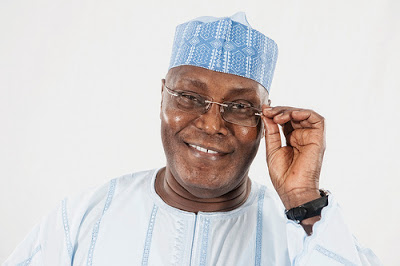
The Story of my Life by Alhaji Atiku Abubakar
Published
7 years agoon
By
Eric
Below is a brief autobiography of the Peoples Democratic party presidential candidate for the 2019 election, Alhaji Atiku Abubakar, as at 2014.
Childhood:
I was born on the 25th of November 1946 in Jada village, Adamawa State Like many of my generation, my father was opposed
to Western education and tried to keep me out of school. When the government discovered this, my father spent a few days in jail. I was then enrolled in
Jada primary school.
When I was only 11 years old, my father drowned and died while trying to cross a small river. The task of raising me then fell on my mother. At that age I resolved to work hard, remain focused and be
successful in life to make my her proud.
In 1960, I was admitted to Adamawa Provincial Secondary School in Yola.
Academically, I did well in English Language and Literature but I struggled with Physics, Chemistry and Mathematics. I spent most holidays working to earn extra money. In 1961, when I was 15 years old, my mother’s elder brother sold the family house in Jada without her knowledge and rendered us homeless. I spent that holiday working and from my earnings, I bought a house for my mother in Ganye.
I became an orphan when my mother suffered a heart attack and died in 1984.
Post Secondary School:
I graduated from secondary school in 1965. After that, I studied at the Nigeria Police College in Kaduna for a short while. I left when I was unable to present an O-Level Mathematics result. I worked briefly as a Tax Officer in the regional Ministry of Finance, from where I gained admission to the School of Hygiene in Kano in 1966.
I graduated with a Diploma in 1967, having served as Interim Student Union President at the School. In 1967 I enrolled for a Law Diploma at the Ahmadu Bello University Institute of Administration, on a scholarship from regional government. After graduation in 1969, I was employed by the Nigerian
Customs Service.
Family:
I met nineteen year old Titilayo Albert when I was serving at Idiroko, Lagos, and in December 1971 I married her secretly, because her family was initially opposed to the union. On 26 October 1972, Titi
delivered a baby girl and we named her Fatima. Titi later gave birth to Adamu, Halima and Aminu.
In January 1979 I married Ladi Yakubu as my second wife. I wanted to expand the Abubakar family. I had no siblings and I felt extremely lonely as a child. I did
not want my children to feel that way.
This is why I married more than one wife. My wives are my sisters, my friends, and my advisers and they complement one another. Ladi gave birth to Abba, Atiku, Zainab, Ummi-Hauwa, Maryam and Rukayatu.
In 1983 the late Lamido of Adamawa who had become like my father made me the Turaki of Adamawa. This position was usually reserved for one of the Emir’s favorite sons and was rarely given to non-royals like me. To ensure that I met the ‘blood tie’ requirement for the title, the Lamido gave me one of his daughters, Princess Rukaiyat, to marry.
She gave birth to Aisha, Hadiza, Aliyu, Asmau, Mustafa, Laila and Abdulsalam.
I married Fatima Shettima in 1986. She gave birth to Amina (Meena), Mohammed and two sets of twins Ahmed and Shehu, Zainab and Aisha and then Hafsat.
Jennifer Jamila Atiku-Abubakar is my last wife. She gave birth to Abdulmalik, Zara and my youngest child, Faisal.
Customs:
My Customs career commenced on 30 June 1969. My first posting was at Idi-Iroko, a border town between Nigeria and Benin Republic. My other assignments
included the Lagos Airport, Apapa Ports (1974), Ibadan Customs Command (1975), Kano Command (1976), Maiduguri (Area Comptroller, 1977), Kaduna (1980) and the Apapa Ports in 1982.
In April 1984, when I was the Murtala Muhammed Airport Area Administrator, my name was associated with a scandal that made headlines. As part of efforts
to cripple corrupt politicians who had stashes of stolen cash in their possession, the new military government had phased out the old naira currency and replaced it with new ones. Orders had been given to ensure that all luggage entering the country was properly screened to prevent smuggling of the old notes. The Emir of Gwangu and Ambassador
Dahiru Waziri had arrived from Saudi Arabia with many suitcases. As is customary, the suitcases were supposed to pass through Custom officers for check
but the Emir’s son, who was a Major in the Army and also ADC to Head of State Gen Buhari drove straight to the Tarmac with soldiers, off-loaded the suitcases
there, picked up his father and the Ambassador and drove away. The soldiers had threatened to shoot the Custom officers who had protested and tried to stop them. My officers reported in writing to me and I in turn reported the incidence to my boss, the Director of Customs. A few days later, one of the officers leaked the story to Guardian Newspapers and their correspondent called me to confirm if it was true. I did.
Soon after, Newspaper Headlines read,
“Passenger with 53 suitcases leaves airport unchecked”. This scandal embarrassed the government and they tried to make me deny it happened. I refused and they threatened to throw me
out of service. The Minister of Finance then, Soleye, who oversaw the Customs Service played a big role in ensuring I wasn’t dismissed. He had said it would
be unfair to punish me for being honest and standing by my officers.
In 1987 I was promoted to Deputy Director of Customs and Excise in charge of Enforcement and Drugs. In April 1989, when I was 43, I voluntarily retired from Customs after 20 years of meritorious
service.
Business:
I’ve always had a good nose for business. In my early years as a Customs officer, I received a 31,000 naira Housing Loan, built a bungalow in Yola, and rented it
out. With the rent I collected in advance, I bought a second plot and built another house. I continued building new houses with rent from completed ones and after a few years I had built 8 houses in choice
areas in Yola. When I was transferred to Kaduna, I continued this process and in a few years I had 5 houses there.
In 1981, I moved into agriculture. I became the largest maize farmer in the whole Gongola state..
Unfortunately, due to Government policies that increased the cost of production, the business fell on hard times and closed in 1986.
The most successful business I ever ventured into was with Gabrielle Volpi, an Italian businessman. He intimated me about how profitable Oil and Gas Logistics business could be and, trusting his abilities, I partnered with him to form NICOTES which started operating from a container office at Apapa ports.
When the business began to grow, we relocated to Onne, Rivers State. The company, now known as INTELS (Integrated and Logistics Services) is a multi-billion naira company that has a staff of over 15,000 people and pays huge dividends to its shareholders.
My other businesses include agriculture, feed making, plastics, printing, TV/radio media, and beverages.
Politics:
I met Shehu Musa Yar’Adua towards the end of my Customs career. He invited me to the political meetings that were happening regularly in his Lagos home; and that was how my foray into politics began.
In 1989 the political meetings became Peoples Front of Nigeria and I was elected as the National Vice- Chairman.
First Governorship Run (1990):
I won the Adamawa state SDP gubernatorial primaries in November 1991, but the FG later disqualified me from contesting the election.
First Presidential Run (1992):
When Shehu Yar’Adua was disqualified from contesting the 1992 presidential primary of the SDP, he pushed me forward as the focal point of SDP’s
ambitions. I came third in the convention primary. But because MKO Abiola, the winner, had won by only about 400 votes a run-off was due. I stepped down for Abiola, asking my supporters to cast their
votes for him, with an unwritten agreement that Abiola would announce me as his running mate. He eventually won the SDP ticket, but announced
Babagana Kingigbe as his running mate.
Second Governorship Run (1998):
I won the Adamawa State governorship elections in December 1998, but before I could be sworn in I was chosen by Olusegun Obasanjo, as his vice-presidential candidate. We won the 27 February 1999 Presidential Elections with 62.78 percent of the votes.
Vice Presidency (1999–2007):
I was sworn in as Vice-President of Nigeria on 29 May 1999. Coming in after decades of military rule, Nigeria was in a very bad shape all round. Priorities were decided. We started by stabilizing the polity. I was put in charge of the economy in the first tenure. I oversaw the sale of hundreds of loss-making and poorly managed public enterprises. We curbed
inflation, fixed our foreign debts and consolidated the banks. I supervised the telecoms reforms which brought us GSM. In my second tenure, due to issues like fighting the bid to amend the constitution that would allow the President run a third term, so many things went wrong. At a point, all my staffs were even withdrawn. But I have put all that behind me.
Second Presidential Run (2006–2007):
On 20 December 2006, I was chosen as the presidential candidate of the Action Congress. On 14 March 2007, INEC released the final list of 24 aspirants for the 21 April presidential election and
my name was missing from the ballot. INEC issued a statement stating that my name wasn’t there because I was on a list of persons indicted for corruption by a panel set up by the government. I headed to the courts on 16 March to have the disqualification overturned and on the 16th of April, the Supreme Court unanimously ruled that INEC had no power to disqualify candidates. This was barely 5 days to the election, when most people had given up hope that I would be allowed to contest. In the end, as announced by INEC, I came third, behind Umaru. Yar’Adua and Muhammadu Buhari.
Third Presidential Run (2011):
On the 22nd of November 2010, a Committee of Northern Elders selected me as the Northern Consensus Candidate, over former Military President
Ibrahim Babangida, former National Security Adviser Aliyu Gusau and Governor Bukola Saraki of Kwara
State. In January 2011, I contested for the Presidential ticket of the PDP alongside President Jonathan and Sarah Jubril. I came second.
All Progressives Congress:
On 2 February 2014, I joined the All Progressives Congress, and on this platform, I hope to run for Presidency of the Federal Republic of Nigeria.
-AA
Related
You may like
Featured
Ribadu’s Office Denies Arming Miyetti Allah in Kwara
Published
7 hours agoon
December 19, 2025By
Eric
The National Counter Terrorism Centre (NCTC), under the office of the National Security Adviser Mallam Nuhu Ribadu, has refuted claims that it armed members of the Miyetti Allah group for counter-terrorism operations in Kwara State.
The Head of Strategic Communication at NCTC, Mr. Michael Abu, issued the rebuttal on Wednesday in Abuja.
Abu described the reports circulated by some online platforms as false and misleading, saying they misrepresented ongoing security operations in forested areas of the state.
He said that in line with the Terrorism Prevention and Prohibition Act, 2022, it continued to coordinate and support law enforcement, security and intelligence agencies in countering all forms of terrorism across the country.
NCTC spokesman explained that Nigeria’s counter-terrorism efforts guided by the National Counter Terrorism Strategy (NACTEST), involved the deployment of hybrid forces comprising regular security personnel and trained auxiliaries such as hunters and vigilante elements, particularly in difficult terrains.
According to him, the hybrid approach, which was previously deployed with the Civilian Joint Task Force in the North-East, is currently being applied in parts of the North-West and North-Central, including Kwara State, and has recorded several successes against banditry and other criminal activities.
He stressed that the Federal government was not conducting kinetic operations with any socio-cultural group, adding that claims that the Office of the National Security Adviser provided arms to such organisations are unfounded and should be disregarded.
According to him, all auxiliary personnel involved in hybrid operations were recruited directly by authorised security and intelligence agencies after due diligence, and that all operations were conducted strictly in line with the law and established standard operating procedures.
He urged the media to exercise responsibility by protecting sensitive security information and seeking clarification through designated official spokespersons, while advising the public to ignore unverified reports capable of undermining ongoing operations.
He reaffirmed the centre’s commitment to transparency and stakeholder engagement to deepen public understanding of Nigeria’s counter-terrorism efforts.
Related
Featured
Respite As Court Stops Police, IGP from Enforcing Tinted Glass Permit Nationwide
Published
10 hours agoon
December 19, 2025By
Eric
A Delta State Court sitting in Orerokpe has restrained the Inspector General of Police (IGP) and the Nigeria Police Force from resuming the enforcement of the tinted glass permit policy nationwide.
Justice Joe Egwu, while ruling on a motion ex-parte in a suit marked HOR/FHR/M/31/2025 filed by Isreal Joe against the IGP and two others, through his counsel, Mr. Kunle Edun (SAN), who led other lawyers, restrained, stopped and barred the respondents from resuming the enforcement of the tinted glass permit policy nationwide.
The order was sequel to the announcement by the Nigeria Police of its decision to resume the tinted glass permit enforcement on January 2, 2026.
Aside from the IGP, the court also restrained the Nigeria Police Force and the Commissioner of Police, Delta State Police Command, from resuming the enforcement of the tinted glass permit policy nationwide.
Justice Egwu also barred the police from harassing, arresting, detaining or extorting citizens and motorists on account of the said policy, pending the hearing and determination of the substantive suit.
The case has also reignited a dispute between the Nigeria Police and the Nigerian Bar Association (NBA). The NBA has maintained that the matter remains before the courts and warned that enforcement could constitute contempt.
The association said a suit challenging the constitutionality of the policy had been filed at the Federal High Court, Abuja, and that a judgment had been reserved following the conclusion of hearings.
The NBA further cited a Federal High Court order in Warri directing parties to maintain the status quo pending an interlocutory injunction. The association accused the police of disregarding the rule of law and urged President Bola Tinubu to intervene. “Any contrary executive action amounts to overreaching the Court and undermines the rule of law,” NBA President Mazi Afam Osigwe (SAN) said.
The police, through Force Public Relations Officer CSP Benjamin Hundeyin, insisted that no court order barred enforcement and defended its planned resumption on grounds of public security. Hundeyin noted a rise in crimes facilitated by vehicles with unauthorised tinted glass, citing incidents ranging from armed robbery to kidnapping.
“The Inspector-General of Police, out of respect and understanding, temporarily suspended enforcement to give Nigerians additional time to regularise their tinted glass permits.
That decision was not based on any court order but was a discretionary move to accommodate public concerns,” he said.
The announcement prompted warnings from the NBA that enforcement could trigger committal proceedings against the IGP and the Force spokesperson. The police, however, maintained that enforcement continues until directed otherwise by a court, highlighting recent incidents in which occupants of vehicles with tinted glass allegedly attacked officers.
The ruling by the Delta State High Court now legally bars the police from implementing the tinted glass permit policy nationwide while litigation on the policy’s constitutionality continues.
Related
Featured
Operation Wetie of the Western Region in Sweet Retrospect: Its Metaphors and Lessons
Published
12 hours agoon
December 19, 2025By
Eric
By Hon. Femi Kehinde
History, it has been said, is a reflection seen through the eyes of others into events of the past.
The world rotates around its history, and the universality of its lessons and constancy. Like beauty, history is in the eyes of the beholder.
In the old Western Region, attempts were made to stifle democracy, and give the region a government she did not vote for; that really drove the people wild, and justifiably so.
The disturbance was confined to the floor of the House; it did not extend to other parts of the city, and all other parts of the region were completely at peace and were not in the least aware of what was happening in the House of Assembly, until they heard the broadcast of the Prime Minister from Lagos.
The trail that started from the crisis in the Action Group went on to cause at the federal level, a major crisis between the coalition partners that destabilized the Western Region, ultimately leading to the intervention of the military and the collapse of the First Republic. The ramifications and scars of that crisis are still visible today.
The crisis in the Action Group was in retrospect, a watershed in the course of Nigeria’s journey to nationhood. All countries that became Nation-states have their watersheds, which at the time they were happening looked insignificant. Their significance is usually realized long after they have happened. The storming of the Bastilles in France was a spontaneous reaction to the excesses of the monarch and his wife, but it led to a revolution. This revolution, which caused the death of Louis the sixteenth and his wife – Marie Antoinette.
The Action Group crisis which started as a localized brawl, catalyzed into a bloody civil war and much more. During the debate on the motion which was to authorize the state of emergency in the western region, Chief Anthony Enahoro warned against setting in motion a chain of events, the end of which nobody could see or desire. What a prediction! So prophetic, so profound and so historic. He was not taken seriously then. The protagonist of the state of emergency could not see through their noses. They forgot to take to heart the lessons of history.
Ibadan is anything but far away, in fact below 100 miles to Lagos. Just about three years later, not only the prime minister, but two regional premiers, several civilians and military leaders lost their lives. Had the warning of Chief Anthony Enahoro been heeded and had there been no precipitous rush to declare state of emergency in the region, the course of Nigerian history might have been different and certainly less bloody.
A French philosopher, Paul Valery said “History is the science of things which do not repeat themselves”. History does not repeat itself. It is fools who are forced by their folly to repeat history.
The West was demonized and the plot to create disorder was hatched to give a pretext to take over running of the government and use that period to install a puppet government.
Nigeria has always suffered for lack of courage and conviction on the part of those whose duty it is to advise and counsel. Sycophancy, spinelessness, and lack of moral courage, intellectual dishonesty in the ivory tower are commonplace characteristics in all echelons of life in the country and the leadership has to be acutely focused, courageous and discerning not to fall victim.
The leaders did have moments to pause and reflects on the catastrophe they were about to unleash on themselves, but they failed to utilize these opportunities because they were blinded by their own self-interest and personal aggrandizement. They walked into the trap set for them with their eyes wide open. It was a tragedy of errors.
The Western Region, gradually going into the abyss, formally inaugurated the Egbe Omo Olofin, as against the well known Egbe Omo Oduduwa at the Mapo hall, Ibadan. Very prominent dignitaries and first class Yoruba Obas, Oba Akran, Oba Olagbegi, Oba Gbadegbo, the Alake of Egba Land, Oba Abimbola, the Oluwo of Iwo, were very prominent. Chief S.L.A Akintola and the highly partisan Chief Justice of the Federation- Justice Adetokunbo Ademola were the host. The leader of the opposition, Alhaji D.S Adegbenro, a man with few words, regarded these developments as “a sad mistake”. It should be well noted that the Supreme Court of Chief Justice Adetokunbo Ademola had in 1964 affirmed the treasonable felony jail sentence imposed on Obafemi Awolowo by Justice George Sodeinde Sowemimo in 1963.
The Federal Cabinet in its super belief of being all in all, accepted the census result and asked NCNC members, unwilling to accept the result to resign.
The Ogunde Concert Party organized a theatre tour of the Western Region, to show Yoruba Ronu, its new play from March 28 to April 25, 1964. The concert was to kick off at Ile-Ife and thereafter, move to Abeokuta, Ibadan, Oyo, Owo, Shagamu, Ilesha Ikare, Oka, Osogbo, Gbongan, Iwo, Ado-Ekiti, Ijebu Ode. In the midst of this Concert Tour, the epic play, Yoruba Ronu, was banned by the Government of the Western Region and thus, another gradual descent into anarchy.
Earlier, on the 27th of March, 1964, Kola Balogun lost his seat as a special member of the House of Chiefs, following the withdrawal of recognition of his Chieftaincy title as Jagun of Otan Ayegbaju, by the NNDP Government of the Western Region. Kola Balogun had lost face with the Akintola Government. The electioneering campaign towards the 1965 election had started. The Premier, Samuel Ladoke, was on tour of Ijesha Division on Saturday, the 4th of April, 1964. At Ilesha, in front of Ilesha Grammar School, the Premier and his entourage were booed by students of Ilesha Grammar School, perhaps with the encouragement of their principal – Rev. Josiah Akinyemi, a staunch member of the Action Group and father of Prof. Bolaji Akinyemi.
Rev. Akinyemi was the following morning, transferred to Oyo to replace Bishop Seth Kale as Principal of St. Andrews College, Oyo. An NNDP Chieftain in llesha and a member of the Western House of Assembly- Barrister Oladiran Olaitan, had his car severely damaged and in an attempt to escape the onslaught, bottles and stones were thrown at him.
Ilesha Grammar School was eventually shut down and was only reopened after the intervention of prominent Ilesha elites, like Chief S.T Adelegan, the Deputy Speaker of the House of Assembly and also Principal of Ipetu-ljesha Grammar School, the Attorney-General, Chief Olowofoyeku and the Governor, Sir Odeleye Fadahunsi.
Also in April, 1964, a scion of the Agbaje Family, Mojeed Agbaje, was removed as Minister for Information and the Odemo of Isara, Oba Samuel Akisanya, a first class Oba, was removed as a member of the House of Chiefs.
On the 8th of June, 1964, Chief SLA Akintola, the Premier, was driving to Mapo hall, when a pregnant woman hopped her head out of the crowd and shouted, “SLA OLE! SLA THIEF!” The visibly disturbed Premier, ordered his driver to detain the woman, who was put in the Land Rover that carried the Premier’s Body guards. The accused, Kehinde Arowolo, a native of Ikenne, was charged before the Ibadan Magistrate Court for conduct likely to disturb public peace. The accused pleaded not guilty, and she denied the charge. The case was subsequently adjourned to the 4th of November, 1964.
Alhaji Busari Obisesan for the defence said, “don’t forget to bring Chief Akintola to court as his evidence would be vital to the case!” What an audacious statement.
Around this period, an Oba in one of the Ijebu towns was burnt to ashes for being sympathetic towards Akintola’s cause. Ayo Rosiji, an Akintola apologist in July 1964, had his car stoned at a car park in Marina Lagos. His confidant in his constituency, Shittu Bamidele, had also been killed by thugs, who drove a six-inch nail through his forehead. Rosiji eventually lost the Federal Election in 1964.
When there is a quarrel, even ordinary songs would have added meanings and political songs, drums, its coinages and interpretations were now being stronger than even bazooka guns. To Awolowo’s loyalist, the popular sing song was “Se lo lo ko ogbon wa o hee, Se lo lo ko ogbon wa haa, Awolowo, baba layinka i.e. Awolowo has gone to the Prison to be fortified. Interestingly, Awolowo had no child by the name Layinka.
The Federal General Election of 1964 conducted by E. E. Esua as Federal Electoral Commissioner had showed that the Government had lost control of the Western Region, but it also introduced violence throughout the electioneering campaign, arson and assault featured throughout the election. It was a precursor of what was to be expected at the Regional General Elections coming up in 1965.
In some towns and communities, arson visited upon dwelling houses, and public buildings were also added to public roasting of government supporters in the so called “operation weti e”.
The petrol poured on human beings, and such individuals were left to be burnt to death. Indeed, law and order had broken down and perhaps irretrievably and yet, NNDP was declared the winner of a massively rigged general election and his leader, was called upon by the Governor of the Western Region, Sir Odeleye Fadahunsi to form the new government.
Undoubtedly, the region was in an uproar and tumoil. Security had broken down and no one was safe on the road. There were several unofficial road blocks, everywhere and the high level of fear, indignation and security was heightened. When the Chief Justice of the Federation, Sir Adetokunbo Ademola was manhandled on the road between Abeokuta and Lagos, the gravity of the situation became very apparent to all. It became urgent that something must be done to restore law and order to the Western Region. The NNDP was a member of the COALITION – the Nigerian National Alliance (NNA), which it had formed with the ruling NPC and so it was difficult for the Federal Government to intervene to remove a regional Government formed by its surrogate, the NNDP. Yet, something must be done.
The events in the Western Region was certainly laying the foundation to the apocalypse, that was to engulf the country. The Premier of the Eastern Region, Dr. Michael Okpara told his counterpart in the Western Region, Chief SLA Akintola, that he was coming on a visit to Ibadan. SLA Akintola told him he would not be welcome, because he could not guarantee his safety.
The visit took place nevertheless, and as an act of defiance, Premier Michael Okpara still went ahead to visit the Premier at the Premier’s lodge, Iyaganku, Ibadan. The host Premier, SLA Akintola, was nowhere to be found. Michael Okpara nonetheless, signed the visitors register and left.
It was an irony of circumstance, that Premier Ladoke Akintola, who in 1962 was prepared to defile his Party, to welcome a Northern Premier and aristocrat, on the grounds of protocol and hospitality, could not do the same thing for the Premier of the Eastern Region, who was his ally not too long ago. It would be recalled that Okpara had now joined forces with the Action Group, led by Chief (Mrs) H.I.D Awolowo and Alhaji D.S Adegbenro to form UPGA.
In the north, in the west, and in the mid-west, all was confusion. A team of lawyers sent to northern Nigeria by the United Progressive Grand Alliance (UPGA) for the purpose of looking after the legal interest of AG members was not allowed to function.
In the Western Region, trenches were dug, all in order to prevent political opponent the freedom of expression and movement. In October 1965, the Western Region went to the polls to elect a new House of Assembly, the first regional election since the Action Group crisis, an opportunity for Chief Akintola to test his popularity.
The conduct of the election caused wide spread anger which resulted in so much incidence of arson, murder, rioting and general insecurity that the army was sent to the region to maintain law and order. More than 2000 people were killed during and after the election.
After winning the 1965 election, Samuel Ladoke Akintola was called by the governor, Sir Odeleye Fadahunsi to form the new government in October 1965. His taped recorded acceptance speech and message to the people of western region to be rebroadcast by the Nigerian broadcasting corporation (NBC) had been removed and replaced with another recorded message by a mystery gunman who had stepped into the studio and made his own broadcast, denouncing Akintola. This popular gunman was later alleged to be a popular playwright, Wole Soyinka.
On the 15th of October, the newsroom of the Nigerian Broadcasting Corporation (NBC) was more fortified than ever. It was a fortress which was armed to the teeth. In the newsroom was a cubicle where the whole activity normally took place. That evening, the occupants of the cubicle, apart from the leader of the crew were Lajide Ishola, Stephen Oyewole and John Okungbona. The crew men had in their possession the recording of the speech of the Premier of the western region of Nigeria, Chief Ladoke Akintola, which had earlier been recorded at the premier’s lodge at lyaganku. The recordings which contained the message of the premier were made in both English and Yoruba. The premier had finished with the recording a few minutes before 7 o’clock in the evening and he was looking forward to listening to his speech which he had regarded as a masterpiece that will explain the situation of things in the western region.
At about quarter past 7 in the evening, Oshin breezed in into the studio cubicle with his crew men, taking with him the 2 recorded tapes which contained the premier’s speech i.e. both the English and the Yoruba version. Funnily and interestingly, just as Oshin was about to slot in the first tape, a bearded man appeared at the door, and suddenly from nowhere produced a gun and held it to Oshin’s head. There was an abrupt silence. The gunman, goatee-bearded and unmasked, demanded that the radio technician hand over the two tapes he was holding. Oshin quietly handed over the tapes to him, while the other three men in the cubicle, watched the unfolding drama with apparent shock and disbelief.
The gunman handed a tape over to Oshin and ordered him to play it. For fear of his life, Oshin slotted in the gunman’s tape and played it. The gunman listened to part of the content and quietly disappeared as mysteriously as he had come in. The whole operation was swift, brief, effective and decisive.
Pandemonium broke in as soon as members of the public heard the recording on air. Oshin had apparently run out of the studio and the gunman was nowhere to be found. The other three occupants of the cubicle were arrested and taken to the police station, where they made statements to the effect that they had no clue to who the gunman was. They had a clinical description of what exactly happened and the near unanimity about the description of the unmasked mystery gunman. The mystery gunman was eventually arrested and brought before a newly appointed Judge of the High Court, Justice Kayode Esho, sitting in High Court 6. Justice Esho was a stern, disciplined and incorruptible judge. Before the trial, the Chief Justice of the western region, Justice Adeyinka Morgan called Kayode Esho, and straight to the point said, “I have an assignment for you. It is this very important case of the hold-up of the radio station and the robbery of the premier’s tapes. It is a very sensitive assignment, which I would have undertaken myself, having regard to the importance and sensitivity, but the accused person, Wole Soyinka, is a relation of mine. I have full confidence that you will handle it very well’.
Interestingly, the Chief Justice further said, “by the way” and in a measured tone said “they are already saying you will not be able to jail this man”, Justice Kayode Esho wondered ” who are the “they”, “they” “they”. Who are those that the pronoun “they” represent.
According to Esho, why should those “they” be talking to the Chief Justice? why according to Esho? If the “they” talked to the Chief Justice, should he mention it to me while I was trying such a sensitive case, or even any case, for that matter? I got up, pretending not to have been ruffled by the statement, thanked the Chief Justice again, and left for my chambers.”
On the 26th of October, 1965, i.e exactly two weeks after the general election, Akintola lost his most cherished daughter and confidant, Omodele. Omodele died as a result of an overdose of sleeping pills.
After Omodele’s death, Akintola was beginning to have a second thought about his ability to continue with the crisis, and asked rhetorically “whether the whole warfare was worth it at all”. It was apparent then that Ladoke Akintola was greatly distressed.
According to one of the sentries at the Government house, Mr Olabode, a regional police officer attached to the government’s lodge, the premier was in a state of utter confusion, and after meetings, however late, will still travel to Ogbomoso to sleep, and come back to Ibadan in the morning. The Premier’s driver confided in the young police officer, Olabode, that the premier was fond of this trip, because the late night trip from Ibadan afforded him the opportunity of a thoughtful silence and a deep sleep.
Prince Adewale Kazeem, another known confidant of the Premier, also noticed a premier whose hands were shivering and could no longer append his signature on a straight line. Prince Adewale noticed this again and advised the premier, “Baba, why don’t you resign?” and the soberly premier replied “Adewale, O ti bo, iku lo ma gbeyin eleyi- Adewale, it is too late, it is only death that will end this feud.”
Chief Samuel Ladoke Akintola was in this state of disillusionment when on the 14th of January 1966, he asked his aide, R.A Obaleke, upon resumption of duty to get prepared for a trip to Kaduna. There was a plane already waiting for them at the Ibadan Airport, arranged from Lagos. On the premier’s entourage to Kaduna were Chief Lekan Salami, Alhaji Lamidi Adedibu, R. A. Obaleke, N.A.B Kotoye and a host of others, to meet with the Premier of the Northern Region, Sir Ahmadu Bello. At this meeting at the Premier’s lodge in Kaduna, the two premiers went into a long private session. Before the commencement of the meeting, Premier Ladoke Akintola had given some money to his Personal assistant, R.A Obaleke to buy some books for him at the bookshop.
After a long while, Obaleke came back to still find the two premiers in a very serious dialogue. Obaleke informed the premier of the need to go back to Ibadan in a good time, because there was no night landing facility at the Ibadan Airport. Premier Ladoke Akintola immediately proceeded to the Kaduna airport and was seen off by his host- the Premier of the Northern Region, Sir Ahmadu Bello. On arrival in Ibadan, the Premier and his entourage proceeded to the premier’s lodge. The cook, Effiong, a Calabar man, provided dinner for the premier, before their departure. On the 14th of January 1966, the Premier had earlier told his wife, Faderera to proceed to Ogbomoso to prepare their Ogbomoso residence for a private visit of Emperor Haile Selassie of Ethiopia. In the Premier’s lodge were Yomi, his eldest son and his wife Dupe, and their son, Akinwumi, and Gbolahan Odunjo, Omodele’s son, and the visiting Tokunbo Akintola, who came in on holidays from Eton College London. It will be recalled once again, that the British Prime Minister, Harold Wilson, at the Commonwealth Prime Ministers’ Conference in Lagos in January 1966, warned the host of the conference of an impending military insurrection and offered the Prime Minister, Tafawa Balewa, asylum in one of the British frigates on the Atlantic water.
The Prime Minister rebuffed this intelligence report and Akintola’s report, fears and apprehensions, as mere hearsay and unfounded.
In the early hours of January 15, at about 2am, and as predicted, the army struck like a thief in the night. The army mobilized from the Alamala Abeokuta Garrison of the Nigerian Army. It was led by Captain Nwobosi, to effect a change of government in the Western Region.
The Military officers after picking Deputy Premier, Fani Kayode, moved to the Premier’s Lodge. At the Premier’s lodge, with their Military trucks, they forcibly entered the lodge. The head of sentries/Police security, Chief Inspector Sokunbi, an Ijebu man, immediately put off the flood light and was chased by the soldiers. The officer manning the back of the premier’s lodge, Police Corporal Bernard Olabode, a native of Gbongan, was equally chased, but was not discovered inside the drainage where he hid.
The Military officers, immediately put off the electricity supply to the Premier’s lodge. The officer from the ministry of works, posted to the Premier’s lodge, and whose responsibility was maintenance of the two generators at the Premier’s lodge, thought it was a power outage and immediately went to put on the manual generator, since the automatic generator could not come up immediately after the power outage. He was shot on the forehead by one of the officers and he died instantly.
The leader of the Military officers, shouted the name of the Premier, “Akintola come out you are under house arrest.” They also asked his Deputy, already in their custody, to call him, “Sir, Ladoke Akintola, it is me Fani Kayode please come out.” After hearing this voice, the Premier who had immediately upon the arrival of the army officers moved his family through the walkway from the official residence, to his office in the Premier’s lodge, knew there was real danger.
A maid of one of his children, started crying saying “E jo woooo E jo woooo” meaning “please please.” The outcry of this maid exposed the location of the Premier. There was then a gunshot from the Premier to the rampaging soldiers.
According to the Police Officer, Bernard Olabode, in his hiding location he saw bullet shots going towards the Premier’s Office. One of the shots, hit the Premier on the wrist and the Officers were still insisting that he must come out of hiding. They had promised to finish the entire family.
For the Safety of his children, the Are Ona kankanfo of Yoruba land had no choice, but to come down. He was instantly arrested by the soldiers. The leader of the group according to PC Olabode, asked Fani Kayode to identify the Premier. Apparently, they didn’t even know him. Fani Power identified him as the Premier.
According to Olabode, two Officers were placed on his right and left hand, as if facing a firing squad and volley of bullets were hurled at him. The first shot hit the Premier on his forehead, some on his chest and later the Premier gave up.
When he fell down, the leader of the group placed his leg on the Premiers forehead and asked some of his soldiers to rain further bullets on the lying Premier. The group leader, speaking in various languages, said according to Olabode, “he is a juju man, perforate him further with bullets” and thus the end of Are-Ona Kankanfo, who had fought a bitter struggle with his tongue, pen and strength.
The army had also arrested Lt. Col Largemma of the Ibadan Garrison and killed him. Col. Largemma was very close to the Premier of the Western Region, and also Premier of Northern Region. The Federal Brigade of Guards Commander in Lagos, was also killed. Major Okafor had ordered the abduction and eventual murder of the Prime Minister, Tafawa Balewa, the Minister of Finance, Okotie-Eboh, whilst Major Chukwuma Nzeogwu, also invaded the Premier’s lodge in Kaduna and killed Sir Ahmadu Bello, one of his wives, Hafsat and some Military Officers, like Brigadier Ademulegun, Col. Ralph Sodeinde and several other officers and thus the end of Civil Government in Nigeria and the beginning of Military interregnum, that did not end effectively until the 29th of May 1999, when another Military man and former Head of State, Olusegun Obasanjo, became President of the Civilian Government.
In retrospect, the state of emergency on the Western Region was declared on the 29th of May 1962 by the Federal Government of Prime Minister Tafawa Balewa. No wonder, George Santyana rightly said- “those who do not know history are doomed to repeat its failures”. The “operation weti e” of Western Region certainly left its metaphors and lessons for the discerning minds!
Hon. (Barr.) Femi Kehinde is the
Principal Partner, Femi Kehinde & Co (Solicitors), and Former Member, House of Representatives, National Assembly, Abuja, representing Ayedire/Iwo/Ola-Oluwa Federal Constituency of Osun State, (1999-2003).
Related


The Oracle: The University As a Catalyst for Societal Development (Pt. 2)
Defence Gulps Lion Share As Tinubu Presents N58.47trn 2026 Budget to NASS
Ribadu’s Office Denies Arming Miyetti Allah in Kwara
NNPCL Slashes Fuel Price by N80
Respite As Court Stops Police, IGP from Enforcing Tinted Glass Permit Nationwide
Friday Sermon: Religion: Reflecting the Violence and Desperation of Our Time
Operation Wetie of the Western Region in Sweet Retrospect: Its Metaphors and Lessons
Corruption! Tinubu Tackles ‘Buhari Boys’
Threat Against Nigeria’s Multi-Party Democracy: Atiku, Obi, George, Others Accuse Tinubu of Plot to Annihilate Opposition
Voice of Emancipation: Nicolas Maduro is a Goner
Alleged Corrupt Practices: Dangote Petitions ICPC Against NMDPRA MD Farouk
OAU: MicCom Institutes Financial Awards for Best Graduating Student, Producing Dept
Book Launch: Tinubu Vows to Sustain Buhari’s Legacies
Senator Olubiyi Fadeyi, Wife Olajumoke, Bag Top Yoruba Titles in Ile-Ife
Trending
-
Headline5 days agoCorruption! Tinubu Tackles ‘Buhari Boys’
-
Headline5 days agoThreat Against Nigeria’s Multi-Party Democracy: Atiku, Obi, George, Others Accuse Tinubu of Plot to Annihilate Opposition
-
Voice of Emancipation5 days agoVoice of Emancipation: Nicolas Maduro is a Goner
-
Headline3 days agoAlleged Corrupt Practices: Dangote Petitions ICPC Against NMDPRA MD Farouk
-
News5 days agoOAU: MicCom Institutes Financial Awards for Best Graduating Student, Producing Dept
-
National4 days agoBook Launch: Tinubu Vows to Sustain Buhari’s Legacies
-
Events5 days agoSenator Olubiyi Fadeyi, Wife Olajumoke, Bag Top Yoruba Titles in Ile-Ife
-
Headline4 days agoTinubu Didn’t Win 2023 Election, Will Lose in 2027 – Abaribe