Connect with us

Headline

APC: Buhari Approves February 2022 for Convention As Crisis Persists in 12 States

Published

on

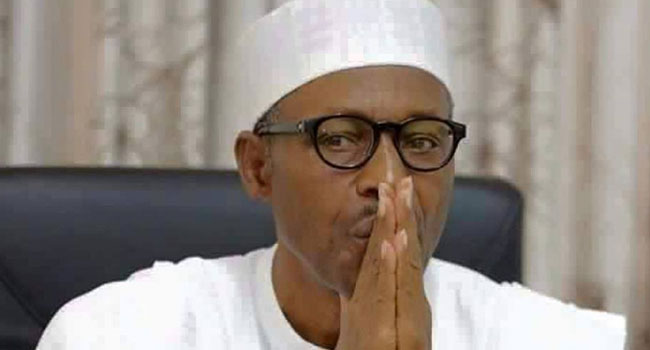
President Muhammadu Buhari on Monday, approved February 2022 for the All Progressives Congress’ national convention. However, there was no specific date when the convention would hold next February, meaning that nothing was cast in stone.

This comes just as The PUNCH learnt that crises had continued to rock 12 state chapters of the APC with many individuals and groups instituting court cases against the ruling party and its Caretaker Chairman, Mai Mala Buni, who is also the Governor of Yobe State.

The states facing crises are Rivers, Ekiti, Ogun, Oyo, Cross River, Akwa Ibom, Delta, Osun, Kano, Abia, Zamfara and Kwara, where factions are battling for supremacy.

Buhari had in June 2020 inaugurated the Caretaker/Extraordinary National Convention Planning Committee led by Buni with the primary aim of conducting the national convention of the party in December of that year after which the Yobe governor would step aside and a new chairman would have emerged.

However, in December 2020, the tenure of Buni’s committee was extended by six months to June 2021. In June, the convention was again shifted and was expected to hold in December. However, the congresses preceding the convention, which were conducted in the states, ended in rancour with many states producing factional chairmen.

Some of the factions are being led by serving ministers in Buhari’s government.

For instance, in Rivers State, factions led by the Minister of Transportation, Rotimi Amaechi, and Senator Magnus Abe elected different executive councils. While Abe’s faction has as its chairman a former member of the state House of Assembly, Golden Chioma, the Amaechi faction elected Emeka Beke as chairman.

In Kwara State, the party is divided into factions led by Governor AbdulRahman AbdulRazaq and the Minister of Information and Culture, Lai Mohammed.

The Chairman of the APC in Ekiti State, Paul Omotoso, and the state Chairman, South West Agenda for Asiwaju 2023, a pro-Bola Tinubu group, Senator Tony Adeniyi, disagreed over the suit filed by aggrieved party members challenging the conduct of ward congresses in the state.

In Kano State, two factions led by Governor Abdullahi Ganduje and Senator Ibrahim Shekarau have continued to tear the party apart, while in Osun State, factions loyal to Governor Gboyega Oyetola and the Minister of Interior, Rauf Aregbesola, produced parallel state executives.

Addressing State House correspondents after a meeting with Buhari on Monday, the Chairman of the Progressives Governors’ Forum and Kebbi State Governor, Atiku Bagudu, announced that the convention might hold in February.

Bagudu was accompanied to the Villa by Buni as well as Governor Abubakar Badaru of Jigawa State. The three are believed to be the most influential governors in the party and run its affairs.

Bagudu disclosed to State House correspondents that the meeting was to brief the President on the decision of the Progressives Governors’ Forum when the members met on Sunday night.

According to him, the governors have resolved that the convention should hold in February 2022 and the same suggestion was proposed to the President for approval.

He said, “On November 21, the Progressive Governors’ Forum met and as some of you may have seen in press reports, I spoke after the meeting, where, in addition to congratulating and thanking the caretaker committee for a wonderful job of their leadership of the party and thanking Mr President for supporting them to deliver on their mandate; I also explained that the Progressive Governors’ Forum discussed the issue of the national convention of the party.

“They mandated us to come and discuss with the President, as the party’s leader, to give the inputs of the governors so that the party and the President will consider agreeing on a date for the national convention.

“Yesterday (Sunday), part of the inputs we got was that we still have four states, which are in the process of completing their congresses; Anambra, understandably, because of the election; Zamfara and two others, because of logistic challenges are yet to complete theirs, and then, Christmas is around the corner, and then, early January we’ll be very busy with Ekiti.”

He said the governors, based on all that, agreed that the party and the President might consider February for the convention.

The President, Bagudu stated, was favourably disposed to it, adding, “The chair of the caretaker committee was part of the delegation and I’m sure there will be a conclusion between him and the President.

“But we have made the input of the governors known. It was favourably considered by Mr President.”

When asked for a specific date in February, Buni said, “Well, we’ll let you know; you know, we have to work on a timetable, which of course has to be communicated to our various state chapters for them to be ready for the convention.”

He also dispelled fears that the tentative date was just an idea of the governors and excluded other caucuses within the party, explaining that there was wide consultation over it and it was a result of good planning.

“Of course, we have to consult widely and it was part of the reasons why the governors met yesterday (Sunday); 20 of the 22 governors attended the meeting. So, it is in consultation to that effect. So, it is a well consulted and a well thought out plan,” he said.

Asked for a response to those who accused him of trying to elongate his stay as chairman of the caretaker committee of the party, Buni stated, “How? Am I a jobless person, who is always trying to extend his tenure? To do what?

“I have my primary responsibility as a governor to go back to my state and carry out my primary responsibility. What I’m here to do is ad hoc, and of course, to reposition the party, and that is exactly what we’re able to achieve.”

Quizzed about what Nigerians should expect from the party after the convention, he said, “Well, they will expect more unity and progress. Like the PGF chairman said, they have suggested to the party and Mr President has concurred; so, we are going ahead to plan for the convention in February.”

The governor said the party would notify the Independent National Electoral Commission, while it would draft a timetable.

The Punch

Continue Reading
Click to comment

Leave a Reply

Your email address will not be published. Required fields are marked *

Headline

South Africa Nothing Without Africa – MTN Boss, Mcebisi Jonas

Published

on

By

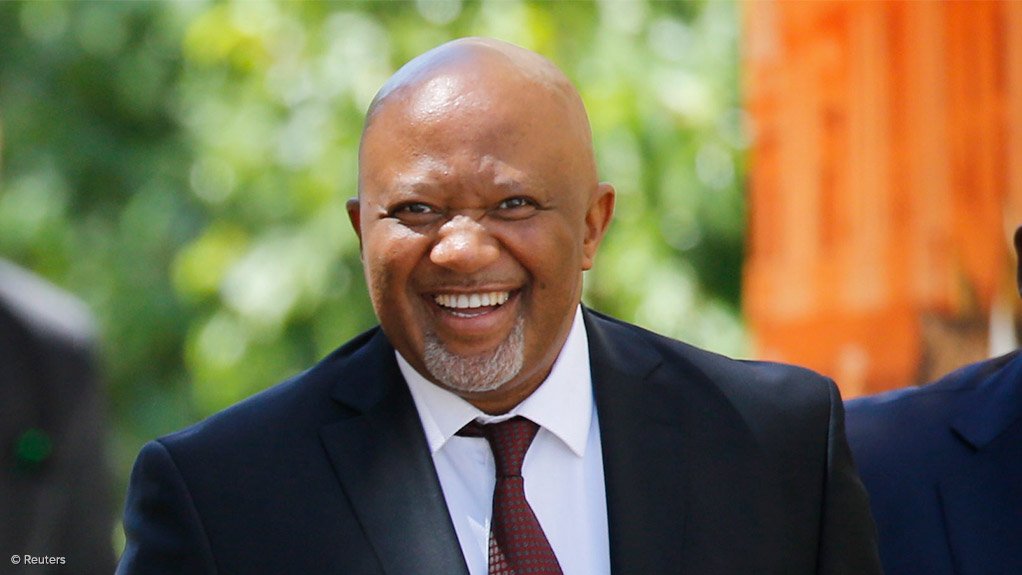
The MTN Group Chairman, Mcebisi Jonas, has condemned the ongoing anti-foreigner sentiment in South Africa, describing it as a symptom of State failure being cynically exploited by politicians with no interest in genuine solutions.

The speech is seen as one of the most substantive interventions by a senior business figure into xenophobic crisis currently plaguing South Africa.

Delivered during the funeral service of Zimbabwean-born activist and public servant, Thokozani Damasane, Jonas’ words have sparked a wave of discussion across South African civil society.

“I was thinking, what is home to Damasane?” he said. “Because I understand, and I understood very early in life, that home is where humanity is. Home is about humanness. It is about the good of humanity and striving for the good of humanity.”

Thokozani Damasane was born and educated in Zimbabwe before relocating to South Africa during the post-apartheid transition period. Jonas described him as arriving “as an outcast” into a country still finding its post-liberation footing – and choosing, nonetheless, to commit himself entirely to its struggles and its people.

“He immersed himself deeply into the struggles, into the pains of South Africans, and he became one of us,” Jonas said.

“In Damasane’s strength, our strength as South Africa and South Africans is reflected. And in his weaknesses, our own weaknesses are reflected.”

Speaking further, Jonas blamed the state for the failure being witnessed, emphasising that if foreigners leave South Africa today, the country’s problems will still persist.

“Foreigners can leave tomorrow – inequality will be with us,” he told the congregation.

“Foreigners will leave tomorrow – unemployment will be with us. Foreigners will leave tomorrow – our police will remain corrupt. Foreigners will leave tomorrow – our politicians will still be concerned with one thing: being elected and re-elected.

“The problem is the failure of the state. The State doesn’t manage immigration. It doesn’t manage its borders. It doesn’t enforce
law enforcement. It doesn’t manage education. What are you expecting?”

Jonas argued that this failure created fertile ground for political manipulation. “When people feel the burn, they become vulnerable to politicians whose sole purpose is to be elected and re-elected. Some of them have no credibility whatsoever. But they lead marches and tell our people that the problem is not us – it is foreigners.”

Jonas recounted a conversation he had witnessed between Damasane and a young man who had challenged the right of foreigners to be in South Africa. Damasane’s response, Jonas said, had stayed with him ever since.

“Damasane said to this guy: Just wait fifteen or twenty years. You will also want to leave your country.”

Jonas told mourners those words now carry a weight Damasane may not have anticipated. “As I stand up today, I look at South Africa. The level of oppression and inequality, the level of exclusion of our people, the level of corruption, the betrayal of the dream of liberation – those words of Damasane ring very loud in my ears.”

South Africa is nothing without Africa

Jonas closed with a call for what he described as a return to “national consciousness” – one rooted in continental solidarity and economic interdependence rather than ethnic exclusion.

“We are a nation embedded in Africa,” he said. “And without Africa, our growth as a country – economically – our fortune is intertwined with the growth of Africa. South Africa is nothing without Africa. And Africa is nothing without South Africa.”

He also reframed the question of legacy and identity for Damasane’s children, who were present. “Sometimes this thing called meritocracy is measured in wealth. No. It is values, it is principles, it is integrity. And your father had all of that.”

“We cannot judge people by their origin,” he told mourners. “We cannot determine the legal status of people by their origin.”

Continue Reading

Headline

NDC Rejects Court Ruling on Party’s Registration, Heads to Appeal Court

Published

on

By

The Nigeria Democratic Congress (NDC), on Friday, vowed to challenge the judgment nullifying its registration by the Independent National Electoral Commission (INEC), insisting that it would exercise its constitutional right of appeal.

Reacting to the ruling on Thursday, the party’s spokesman, Osa Director, said the NDC was still awaiting the certified copy of the judgment before making a comprehensive statement on the court’s decision.

He, however, confirmed that the party had resolved to head to the appellate court.

“We are still waiting to obtain a copy of the judgment. After reading the comprehensive judgment, we will make a detailed statement,” he said.

The spokesman added: “For now, what is certain is that we will exercise our right of appeal.”

Insisting that the party would challenge the ruling, he said: “It is our constitutional right to appeal, and we intend to exercise that right.”

When asked specifically whether the NDC would appeal the judgment voiding its registration, the spokesman replied: “Yes, the party will appeal the case.”

The party’s reaction came shortly after a Federal High Court sitting in Lokoja, Kogi State, in a judgement that nullified its registration by INEC, a development that could have significant implications for the NDC’s participation in the country’s political process ahead of the 2027 general elections.

The NDC, however, maintained that it would refrain from making further comments on the substance of the judgment until it had studied the full text of the court’s decision.

The party’s planned appeal is expected to set the stage for a fresh legal battle over its status and continued existence as a registered political party.

Continue Reading

Headline

Setback for Peter Obi, Others As Court Orders Deregistration of NDC

Published

on

By

A Federal High Court in Lokoja has set aside an earlier judgment that compelled the Independent National Electoral Commission (INEC) to register the Nigeria Democratic Congress (NDC) as a political party.

The latest ruling by the presiding judge, Justice Isah Dashen comes days after a Federal High Court in Abuja ordered INEC to register the Citizens Democratic Alliance (CDA) as a political party.

Justice Obiora Egwuatu, who presided over the Abuja case, had directed INEC to issue the party with a certificate of registration within seven days after ruling in a suit filed by Tamunotonye Samuel Solomon Inioribo and two others.

Continue Reading

Trending