
Opinion
Is Our Police Force Well Equipped and Motivated to Take on the Role of State Policing?

Published
2 hours agoon
By
Eric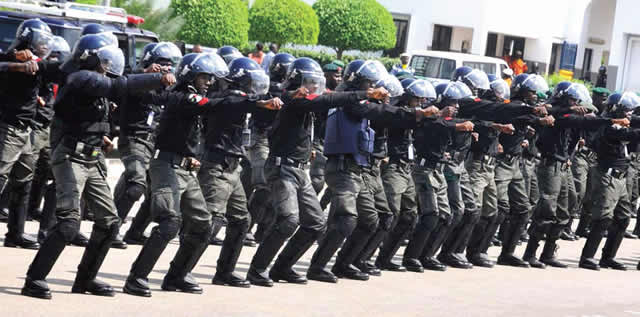

By Magnus Onyibe
As the quest for state and local policing in Nigeria gains traction, following the urgency with which both the executive and legislative branches of government are treating the proposal, it is unsurprising that the constitutional amendment has already scaled several hurdles at the national level even as governors are also prepared to expedite the process through their respective state legislatures.
Against this backdrop, it is appropriate to state that the Nigeria Police Force, in its current state, is neither adequately equipped nor sufficiently motivated to effectively take on the task of policing the country should the military, which is presently playing a leading role in internal security, step back and yield that responsibility to state and local police formations as envisaged.
The 1999 Constitution of the Federal Republic of Nigeria (as amended) clearly assigns the responsibility for internal security to the police. However, this role is currently being performed largely by the military due to the ongoing siege on our country by anti-social elements that have taken up arms against society whose attacks on innocent Nigerians have been ferocious and brutal. The reintroduction of state and local policing, following the amendment of the relevant constitutional provisions, would compel the military to relinquish much of that responsibility of ending insecurity and stabilizing the polity.
However, unless the ongoing legislative process of decentralizing Nigeria’s policing system through the amendment of Section 214(1) of the 1999 Constitution—which currently provides for only one police force—is accompanied by comprehensive reforms in police welfare, motivation, training, and operational capacity, the return of state and local policing alone may produce disappointing results.
This is why, in my new book, The Imperative of State Police in Nigeria, which is intended as a guide for lawmakers and policymakers engaged in the constitutional amendment process to accommodate the decentralization of policing by moving it from the Exclusive Legislative List to the Concurrent Legislative List, thereby placing it partly under the purview of state governors, I devoted significant attention to the preparedness and welfare of the Nigeria Police Force.
Currently, the force has a strength of approximately 370,000 personnel, whereas it ought to have at least one police officer for every 450 citizens, based on the United Nations’ recommended ratio. This translates to about 222 officers per 100,000 people.
Apart from the UN benchmark, there are other international standards. For instance, the INTERPOL/UNODC global average is approximately 300 officers per 100,000 people. In the United States, the ratio is about 240 officers per 100,000 people, while the United Kingdom records approximately 235 officers per 100,000 people (as of September 2025). South Africa, a fellow African nation, has a ratio of about 330 officers per 100,000 people.
In contrast, Nigeria’s current ratio stands at approximately 185 officers per 100,000 people, with a police force strength of only 370,000 officers serving a population exceeding 200 million.
As we would all agree, numbers alone do not guarantee effective policing. Training, equipment, welfare, accountability, and professionalism are equally important. Even with a significant increase in personnel, crime rates may remain high if these critical factors are neglected.
That is why I am drawing attention to these essential elements, which must be incorporated into the reforms currently underway. Doing so will ensure a holistic approach to the constitutional amendment process and enhance the prospects of achieving meaningful and sustainable outcomes.
The point I am making is that some countries with lower police-to-population ratios than the recommended standard can still maintain relatively low crime rates because their policing systems are more efficient. Such efficiency is achieved through sustained investment in equipment, training, improved welfare, and stronger accountability mechanisms—areas in which Nigeria still faces significant challenges.
To avoid the disappointment and frustration that may arise among long-suffering Nigerians if the return to state and local policing fails to become the anticipated solution to the country’s alarming insecurity, it is imperative to adopt a broader reform agenda.
This is particularly important because insecurity is likely to be a major determining factor in the 2027 general elections. Consequently, I advocate a more comprehensive approach that takes into account police training, equipment, welfare, motivation, and the integration of traditional rulers into the grassroots security architecture—a case I made in my previous intervention on this subject.
By incorporating these critical factors into the ongoing reforms, Nigeria can strengthen its policing system at the grassroots level and significantly improve the chances of achieving the desired security outcomes.
Below is how this advisory on the need to adequately prepare the police is detailed in my book, The Imperative of State Police in Nigeria.
The Perils of Policing in Nigeria: Police Officers Are Not Only Poorly Remunerated but Also Ill-Equipped
“There were approximately 2,000 police stations nationwide as of January 2026. This figure was provided by the current Inspector-General of Police, IGP Olatunji Disu, who was quoted earlier in the year as stating that there are “only about 2,000 police stations nationwide.”
For a country with a population exceeding 200 million—estimated by some sources at roughly 230 million—this number of police stations is abysmally low and grossly inadequate.
According to projections by the Infrastructure Concession Regulatory Commission (ICRC), Nigeria requires an additional 3,000 police stations on top of the existing 2,000 to adequately bridge its security gaps.
Statistically, there is at least one police station or division in each of Nigeria’s 774 Local Government Areas (LGAs). However, while some LGAs have multiple police divisions, many rural communities have none. To appreciate the inadequacy of police presence across the country, one only needs to consider the vast areas where criminals and insurgents strike repeatedly because they are, quite simply, ungoverned spaces in our hinterlands.
Essentially, 2,000 police stations serving a population of between 200 and 230 million people translates to approximately one police station for every 100,000 Nigerians.
To put this into perspective, let us compare Nigeria with the United Kingdom—the country that colonized Nigeria until 1960 and whose policing system largely served as a model for ours.
The UK has approximately 1.7 police stations per 100,000 people, compared with Nigeria’s one police station per 100,000 people.
Mathematically, this disparity becomes even clearer. The UK has about 1,139 police stations as of May 2026 and a population of approximately 67 million people (although some estimates place it closer to 69 million). Nigeria, on the other hand, has roughly 2,000 police stations serving a population in excess of 200 million—nearly three times the UK’s population.
Consequently, despite having a higher absolute number of police stations, Nigeria has fewer police stations on a per-capita basis. While the UK has about 1.7 police stations per 100,000 people, Nigeria has only one per 100,000 people. Clearly, this level of police infrastructure is inadequate for a country of Nigeria’s size and security challenges.
Beyond the shortage of police stations, funding for policing in Nigeria remains deeply troubling.
According to available data, the breakdown of allocations for internal security in the 2026 Federal Budget is as follows:
- Federal Ministry of Police Affairs – ₦1.329 trillion
This is the primary allocation to the ministry responsible for overseeing the Nigeria Police Force (NPF). The funds cover personnel costs, overhead expenses, and capital projects.
- Police Service Commission – ₦2.397 billion
This allocation is for the agency responsible for the recruitment, promotion, and discipline of police officers.
- Nigeria Police Force Formations and Commands – ₦1.302 trillion
This represents the budgetary allocation for the operational activities, formations, and commands of the Nigeria Police Force nationwide.
Despite these allocations, the persistent shortage of police stations, inadequate equipment, insufficient logistics, and poor welfare conditions for officers continue to undermine the effectiveness of policing in Nigeria. As a result, many communities remain under-policed and vulnerable to criminal activities, highlighting the urgent need for both increased investment and structural reforms in the nation’s security architecture.
Now, attempts have recently been made to boost funding for the police through the Nigeria Police Trust Fund (NPTF).
Under the current law, 0.5% of Federation Account revenue is supposed to be channelled into the NPTF. To that end, the Senate has proposed a bill to double the allocation to 1% of Federation Account revenue. The bill has passed its second reading, although a High Court ruling in 2022 held that direct deductions from the Federation Account Allocation Committee (FAAC) were unconstitutional. Hopefully, the new 2026 bill will address that legal snag.
Although the total sum allocated to internal security in the 2026 Federal Government of Nigeria (FGN) budget is ₦5.41 trillion—a substantial share of the national budget—much of it is directed towards personnel costs, overheads, and capital expenditures.
As a result, underfunding remains a reality within the Nigeria Police Force, which is constitutionally responsible for internal security. Ironically, this responsibility has increasingly been usurped by the military, which over the past two decades has been engaged in combating heavily armed criminal groups and insurgents who have taken up arms against innocent citizens and, by extension, the state itself.
Even if the sum of ₦2.63 trillion were to go directly to the police for the operation of their approximately 2,000 police stations nationwide, the reality remains grim. Reports indicate that some police stations receive only about ₦45,000 per quarter for operational expenses. This amounts to just ₦15,000 per month, or roughly ₦500 per day, to cover their day-to-day operations.
This money is meant to serve as the equivalent of an imprest in public and private organizations. In practical terms, it means that many police stations across the country are expected to fuel their vehicles—where such vehicles even exist—purchase stationery, and pay electricity and telephone bills with a mere ₦500 per day.
How ridiculous!
In light of this reality, is anyone still wondering why police officers are often accused of mounting illegal roadblocks to extort money from motorists? Or why individuals facing imminent attacks from criminals frequently receive no response after making distress calls—sometimes simply because police vehicles have no fuel?
It also helps explain why young Nigerians working in the emerging gig economy were often profiled and extorted by the now-disbanded Special Anti-Robbery Squad (SARS). Young people who lacked conventional employment identification cards from sectors such as oil and gas, financial services, or telecommunications, yet drove luxury cars or maintained affluent lifestyles, were frequently targeted.
This continued until Nigerian youths revolted through the #EndSARS protests of October 2020—demonstrations that brought large parts of the country to a standstill for several days before eventually ending following the reported fatal shooting of protesters at the Lekki Toll Gate in Lagos. Until then, much of the world remained unaware of the challenges faced by many innocent young Nigerians striving to earn a living through unconventional means in the country’s rapidly expanding informal economy.
Apparently, denied adequate remuneration and often living in dilapidated barracks while being tasked with protecting Very Important Persons (VIPs), many Nigerian police officers find themselves operating under difficult conditions. Poor pay, inadequate welfare, and the absence of essential tools and equipment have, in some cases, pushed officers toward bribery and corruption as a means of supplementing their income.
Without doubt, this has contributed to Nigeria’s reputation for corruption, both at home and abroad. It recalls the infamous remark attributed to former British Prime Minister David Cameron, who, during an anti-corruption summit in the United Kingdom, described Nigeria as a “fantastically corrupt” country while discussing then-President Muhammadu Buhari with Queen Elizabeth II.
Invariably, Nigerians continue to be tarred with the brush of corruption both domestically and internationally, partly because public servants—including police officers—are often poorly remunerated and therefore more susceptible to the temptations of bribery and corruption.
The purpose of drawing attention to the sorry state of the Nigeria Police Force is to emphasize that, alongside the ongoing reforms aimed at transitioning from a centralized policing structure to a state and local policing system, the operational capacity of the police must also be comprehensively reviewed and strengthened.
Otherwise, Nigerians may be disappointed if the eventual implementation of state policing proves to be an exercise in futility rather than an effective solution to the debilitating insecurity that continues to plague the nation.
My point is that the reform agenda should be threefold and holistic in nature.
First, state and local policing should be established as the cornerstone of the reform process.
Second, traditional rulers should be incorporated into Nigeria’s security architecture—not necessarily as a formal arm of government as they were before 1966, but as community-based first responders and custodians of local intelligence.
Third, the operational readiness of the police must be significantly enhanced by equipping officers with modern, technologically advanced tools, as has been demonstrated in Enugu State under Governor Peter Mbah. At the same time, their welfare must be improved to boost morale and attract highly qualified personnel into the force.
Ultimately, as Nigerians may soon discover, reinstating state and local policing and integrating traditional rulers into the nation’s security framework could help restore effective grassroots governance and dispute-resolution mechanisms that proved successful during the colonial era.
Such reforms could also help address the insecurity crisis that has engulfed the nation—a crisis that some analysts trace to the centralization of policing by the military government in 1966 and the subsequent erosion of the traditional rulers’ governance role. By the time local government reforms were introduced in 1976 and later strengthened in 1988, traditional institutions had largely been sidelined.
The consequences of those decisions, it may be argued, are reflected in the unprecedented security challenges currently confronting our beloved country.”
Based on available research, poor welfare and low motivation among police officers can significantly weaken internal security because they directly affect the performance of the law enforcement agencies responsible for maintaining law and order. This manifests itself in several ways:
- Corruption and Extortion
When salaries are delayed, allowances remain unpaid, barracks are dilapidated, and healthcare and insurance benefits are inadequate, some officers resort to extortion simply to survive. This erodes public trust in the police. Citizens become reluctant to report crimes because they fear the police as much as, or even more than, the criminals. For internal security, this means that critical intelligence dries up, making crime prevention and detection much more difficult.
- Low Morale and Absenteeism
Demotivated officers are less likely to patrol effectively, respond promptly to distress calls, or take initiative in the discharge of their duties. A culture of complacency develops, where remaining in the station becomes the default option. Consequently, response times to incidents of banditry, kidnapping, and cult-related violence increase, especially when criminals become aware that police intervention is unlikely or delayed.
- High Turnover and Loss of Experience
Talented and experienced officers often resign, move into private security services, or seek opportunities elsewhere. The force is then left with fewer experienced personnel and a growing number of undertrained recruits. Valuable institutional memory is lost when detectives familiar with local criminal networks or Divisional Police Officers (DPOs) who have established relationships with community leaders leave the service. As I have consistently emphasized, effective internal security depends heavily on such local knowledge.
- Poor Discipline and Police Brutality
Frustrated, underpaid, and poorly equipped officers are more likely to vent their anger and frustrations on civilians. This was one of the major factors that fueled the #EndSARS protests. Police brutality destroys community trust and cooperation, both of which are essential to effective policing. According to several security studies, community cooperation accounts for a substantial portion of successful internal security operations because, without community intelligence and tips, the police are effectively blind.
- Vulnerability to Criminal Infiltration
Underpaid and overworked officers can become vulnerable to compromise by drug cartels, kidnappers, bandits, and other criminal elements. In conflict zones, financial inducements can undermine operations before they even begin. A single leaked operational plan can result in a failed mission, the escape of suspects, and even the loss of officers’ lives.
- Inadequate Training and Operational Fitness
Poor welfare often translates into inadequate investment in continuous professional training, firearms proficiency, physical fitness, and mental health support. As a result, officers frequently find themselves confronting heavily armed criminals while equipped with obsolete weapons and lacking basic protective gear such as bulletproof vests. We often hear reports of bandits outgunning police units, forcing them to retreat or suffer casualties. Such outcomes further damage morale and operational effectiveness.
The immediate past Inspector-General of Police, in January 2026, identified “dilapidated police stations and barracks, limited forensic laboratory capacity, and shortages of protective equipment” as major obstacles to effective policing.
Given these realities, it is becoming increasingly clear that the system cannot continue to ask police officers to risk their lives for relatively low wages, poor housing conditions, inadequate pensions, and a lack of modern equipment, while expecting them to deliver the professional level of internal security that Nigerians anticipate from the reintroduction of state and local policing.
It is widely acknowledged that motivation is a force multiplier. The same number of officers can produce significantly better results when they are properly trained, adequately equipped, fairly compensated, and highly motivated.
This is why the current reform process must go beyond merely transferring policing from the Exclusive Legislative List to the Concurrent Legislative List through constitutional amendment. While decentralizing policing is an important step, it is not, by itself, sufficient to address the enormous insecurity challenges confronting our nation.
To achieve meaningful and sustainable improvements in internal security, equal attention must be given to enhancing police training, modernizing equipment, improving welfare packages, and strengthening motivation. Without these complementary reforms, the return of state and local policing may fall short of the expectations of Nigerians and fail to deliver the security outcomes the country desperately needs.
Magnus Onyibe, an entrepreneur, public policy analyst, author, democracy advocate, development strategist, an alumnus of the Fletcher School of Law and Diplomacy, Tufts University, Massachusetts, USA, a Commonwealth Institute scholar, and a former commissioner in the Delta State government, sent this piece from Lagos.
Related
You may like
Opinion
Jega’s Legacy and the Erosion of Electoral Trust
Published
23 hours agoon
June 22, 2026By
Eric
By Boma Lilian Braide
For a generation of Nigerians who came of age under the shadow of rigged elections, the year 2011 carries a particular significance. That was the year Professor Attahiru Jega arrived at the helm of the Independent National Electoral Commission and quietly began dismantling the infrastructure of electoral fraud that had been perfected over decades. The story of what he built, and what has since been allowed to erode, is not merely an institutional history. It is the defining moral and political story of Nigerian democracy in the twenty-first century, and it demands to be told plainly.
The fraud of the pre-Jega era was not primarily a story of what happened on election day. It was a story of what happened months before, in the ledgers and notebooks that determined who was permitted to vote at all. Nigeria’s voter register before 2011, was an open scandal; a sprawling paper record bloated with phantom names, deceased citizens, and fabricated identities that had accumulated over successive election cycles with the active connivance of party operatives and electoral officers. Politicians from across the spectrum had learned to exploit this system with brutal efficiency. Millions of ghost voters could be inserted into a constituency register overnight, and on election day, ballot boxes would be stuffed with papers bearing those invented names. Because the cheating was embedded in the system’s foundation rather than its surface, ordinary citizens had no real mechanism for overturning leadership they had not chosen.
The election was a ritual that confirmed what had already been decided elsewhere.
Jega understood that you cannot construct a credible democratic process on a corrupted foundation. His response was not incremental. In early 2011, the commission made the decision to discard the old register entirely and build a new one from the ground up, using digital biometric technology. Thousands of direct data capture machines were deployed across every geopolitical zone, reaching communities that had never previously participated in a credible registration exercise. Over seventy three million Nigerians had their fingerprints scanned and their photographs recorded in a database that was transparent, verifiable, and resistant to overnight manipulation. The achievement was logistical, but its democratic significance ran deeper than logistics. For the first time, the Nigerian voter had an identity that could not be replicated, forged, or multiplied by a party operative working through the night.
What distinguished Jega as an administrator, however, was not merely the ambition of the project. It was his conduct when things went wrong. During the early pilot exercises in local government areas across Niger, Enugu, and Rivers states, the direct data capture machines encountered software failures and slow biometric scanning. In most Nigerian institutions, such setbacks would have been buried in bureaucratic language or quietly managed away from public scrutiny. Jega did the opposite. He acknowledged the failures openly to the press, adjusted operational timelines, and compelled the technology vendors to upgrade the machines’ memory capacity before the national rollout was permitted to proceed. This transparency was not merely admirable; it was strategically essential. The credibility that the 2011 exercise earned with ordinary Nigerians rested precisely on the fact that they had been shown its imperfections and seen those imperfections corrected in full public view. That credibility made the 2015 general election possible; the first in Nigeria’s post-military history in which an opposition party unseated an incumbent administration through the ballot box, with the result accepted by the losing side without a resort to violence or prolonged litigation.
The years since Jega’s departure have told a different and more troubling story. The digital infrastructure he bequeathed has been expanded in form while being quietly hollowed out in substance. The 2023 general elections brought the Bimodal Voter Accreditation System and the online result viewing portal, both presented as significant upgrades of the 2011 framework that would ensure real time transmission of polling unit results directly to the public. The promise was significant, because the manipulation of results during collation, rather than at the point of voting, has long been the most sophisticated and difficult to prosecute avenue for electoral fraud in Nigeria. If results could be uploaded instantly and verified by any citizen with a mobile phone, the window for interference at the collation stage would effectively close. Instead, when the presidential results transmission system collapsed, the digital promise became a political battlefield. The ruling party argued that the technical failure was a malfunction rather than a manipulation, and that the votes counted physically on the ground remained valid.
The opposition parties maintained that the selective nature of the breakdown, with presidential tallies affected in ways that governorship results were not, in high-connectivity with the urban areas including Lagos, Rivers, and Kano, pointed to something other than a routine system failure. Neither position could be satisfactorily resolved because the institution at the centre of the dispute lacked the credibility to arbitrate its own failures. The lesson was uncomfortable but unavoidable, digital technology does not neutralise human dishonesty. It only relocates the point at which dishonesty can intervene. When the technology fails, deliberately or otherwise, the election reverts to exactly the analogue vulnerabilities it was designed to eliminate. A biometric database cannot protect a process whose human custodians are unwilling to honour their obligations.
The contrast between the institutional culture Jega built and the one that has since developed under the commission’s subsequent leadership, including under its current chairman, Professor Joash Amupitan, is not a matter of partisanship. It is a matter of observable conduct. Under Jega, a failed pilot was an occasion for immediate, public accountability. Under the post-Jega commission, systematic transmission failures in precisely the constituencies where results are most contested have been explained away as unforeseen technical glitches, a phrase so routinely deployed that it has ceased to carry any analytical meaning. The selective geography of these glitches, which appear with disturbing consistency around the highest stakes contests rather than the lower visibility races, has not received the rigorous institutional explanation that the public is entitled to demand.
Beyond the management of technical failures, there is a more fundamental perception problem that the commission cannot afford to ignore. Jega was meticulous about maintaining, and being seen to maintain, the independence of the electoral body from executive influence. He challenged powerful political interests openly and at measurable personal cost. His successors have not always been able to sustain that posture, and the commission under Amupitan has attracted persistent criticism for what many observers characterise as an uncomfortable proximity to the executive arm of government, accepting infrastructure from the presidency, tolerating premature campaign activities by all parties, and managing controversy in ways that appear reactive and defensive rather than principled and proactive. Whether or not every element of this criticism is ultimately fair, the public impression carries consequences that are themselves real. Electoral commissions derive their authority not from the legal instruments that establish them but from the trust of the citizens whose franchise they administer. When that trust is in question, the institution’s technical capabilities become irrelevant, because no digital result it produces will be accepted as final by those who doubt its independence.
There is a third dimension to this crisis that is often under emphasized in discussions of electoral reform; the catastrophic failure of internal party democracy. The digital biometric framework that governs general elections has no counterpart inside the political parties themselves. None of the major parties maintains a credible, independently verified membership register. Their primary elections remain, almost without exception, chaotic exercises in which outcomes are predetermined by party leadership structures and results are adjusted to reflect those predetermined conclusions. This is not incidental to the system. Party leaders resist internal digitalisation deliberately, because a clean membership register would constrain their ability to handpick candidates and override the preferences of ordinary party members.
The consequence for the general public is severe. Nigeria now operates a system in which a sophisticated digital voter register is used to choose among candidates who were themselves selected through processes that would fail any credible scrutiny. The integrity of the general election cannot compensate for the corruption of what precedes it.
The commission’s posture toward minor political parties adds a further and deeply troubling dimension. The pattern of deregistering smaller parties in the period immediately preceding elections, rather than through a consistent regulatory process applied at predictable intervals, has attracted legitimate and sustained criticism from civic society. When the exercise of regulatory authority is concentrated in the electoral season and results in the narrowing of ballot choices available to voters, it is not unreasonable for citizens to ask whether the intent is genuine housekeeping or the consolidation of a political duopoly that serves the interests of the two dominant parties at the expense of meaningful democratic competition. Millions of Nigerians who wish to vote for alternatives outside the two establishment blocs are constitutionally entitled to exercise that preference. A commission that reduces their options through administrative action in the weeks before they vote is not protecting their franchise. It is limiting it.
The road to the 2027 general elections is shorter than it appears, and the margin for further institutional drift is narrower than the commission’s present conduct suggests it understands. If the body intends to restore the credibility that the Jega era established, the work must begin immediately and its results must be visible to ordinary citizens, not merely announced through press releases. Vague commitments to technical improvement will not restore confidence that has been eroded over successive electoral cycles. The commission must codify explicitly in its operational regulations that electronic transmission of results from polling units is mandatory and not discretionary, and that any official who fails or refuses to transmit results electronically will face swift prosecution with the affected returns discarded from the collation process. This standard must be applied uniformly across ruling party strongholds and opposition constituencies without distinction. The pattern of deregistering minor parties must give way to a framework of consistent, published criteria administered on a schedule that is independent of electoral timelines.
Above all, the commission must recover the institutional disposition that made the Jega era consequential. The willingness to expose its own failures before they are exposed by others, absorb the criticism publicly, and correct the errors in full view of the citizens it serves. That disposition is not a personal virtue that one administrator either possesses or does not. It is an institutional culture that can be built deliberately and consciously, if the leadership chooses to build it. The alternative is a continued and accelerating drift in which each electoral cycle produces a new variant of the same crisis; technology that does not transmit, results that are disputed across party lines, courts that are overwhelmed with petitions, and citizens who conclude that their votes carry no more weight than the goodwill of whoever controls the collation room.
Chief Gani Fawehinmi once observed that a people who accept the erosion of their rights in silence become complicit in their own oppression. That observation applies with particular force to the present electoral moment. The gains of 2011 were real, hard-won, and consequential. They were produced not by goodwill from above but by institutional discipline combined with genuine public accountability. Those gains can be recovered, but only if the citizens who are meant to benefit from them refuse to be placated by a system that performs the procedures of democracy without delivering its substance. The ballot belongs to the people of Nigeria. The commission exists solely to protect and administer that ownership on their behalf. That order of priority must be restored, with full transparency and without further delay, before the country arrives at another election it cannot trust.
Related
Opinion
The Father We Need, the Father We Have, and the Father We Hope to Become
Published
2 days agoon
June 21, 2026By
Eric
By Anjorin Fehintola Stella
Father’s Day is often filled with celebration, gratitude, and family photographs shared across dining tables and social media feeds. There are cards and phone calls, gifts and warm ritual of telling the men who raised us that we are grateful they did. For many people, the day carries genuine and uncomplicated joy. But for many others, it arrives with something more complicated, a quieter, more private kind of reflection that does not always make it into the public celebrations.
Not everyone had the father they needed.
Some grew up with fathers who were present in every meaningful way, providing guidance, protection, encouragement, and love. Men who showed up not only at celebrations and milestones but in the ordinary, unglamorous moments of daily life. Who sat with their children through homework and heartbreak, who modelled patience and responsibility not through speeches but through consistent action, and who made their children feel seen, valued, and safe. For those who had such fathers, the day is uncomplicated. It is simply a chance to say thank you to someone who deserved it.
Others grew up with fathers who were physically present but emotionally unreachable. Men who provided materially but who never learned, or never felt permitted, to express tenderness or vulnerability. Who sat at the head of the table every evening but left their children feeling strangely alone. Whose love, if it existed, was never translated into the words or gestures that children need in order to feel it. This kind of presence can be its own particular form of absence, and the confusion it leaves behind, the love mixed with longing, the gratitude mixed with grief is something many adults carry quietly for years.
And then there are those who never knew their fathers at all. Whose fathers left before memory could form, or were taken by circumstances beyond anyone’s control. Who grew up answering questions about their fathers with rehearsed sentences designed to protect themselves from the weight of the real answer. For them, Father’s Day can feel like a celebration happening in a language they were never quite taught to speak.
The truth is that fathers shape lives in ways that often go unnoticed until much later, sometimes not until we ourselves are grown and standing at the crossroads of our own choices, only then recognizing how deeply the paths laid before us were shaped by the man who either walked beside us or was nowhere to be found.
A father’s words can become a child’s inner voice. The encouragement he gives, or withholds, can determine whether a child approaches the world with confidence or with a perpetual need to prove themselves. His actions can become a blueprint for how relationships are conducted, how conflict is navigated, how responsibility is understood, and how love is expressed or suppressed. Research in developmental psychology and sociology consistently shows that the presence, quality, and emotional availability of a father figure are among the most significant predictors of a child’s long-term emotional wellbeing, self-esteem, and capacity for healthy relationships. His absence, too, leaves its mark, not as destiny, but as questions. Questions about worth, about belonging, about what it means to be loved by someone who was supposed to stay.
There is also the man who loved his children deeply but never knew how to show it, shaped by a generation or a culture that taught men to equate silence with strength and emotion with weakness. Who worked long hours in the belief that provision was the fullest expression of love available to him. Who would have been bewildered by the idea that his children needed something from him beyond a roof and a meal. He is not a villain. He is a product of his own formation, of fathers and societies that never gave him the tools to do better. Understanding this does not erase the longing. But it can begin to make room for something other than bitterness.
And there is the man who broke the cycle. Who grew up without a father, or with one who caused harm, and who made a quiet and daily decision not to pass that on. Who had no template to follow and had to build his understanding of fatherhood from scratch, from instinct, from observation, from the determined conviction that his children would not carry what he carried. These men rarely receive enough recognition. Their victory is invisible because it consists of things that did not happen, the harsh word that was not spoken, the absence that did not repeat itself, the wound that stopped with them.
Yet fatherhood, it must be said, is not simply about biology. It never has been.
Throughout history and across cultures, countless children have been guided, protected, and shaped by men who stepped into the role of father without sharing a bloodline. Grandfathers who became the steady presence when everything else was uncertain. Uncles who showed up consistently enough to become something more than relatives. Teachers who noticed a child struggling and chose to stay a little longer. Coaches, neighbours, older brothers, family friends, and community elders who offered time, attention, wisdom, and the simple but profound gift of being present. These men are fathers in the truest and most meaningful sense of the word. Biology establishes a connection. Choice sustains it.
Perhaps that is why Father’s Day means genuinely different things to different people. For some, it is a day of uncomplicated gratitude, a chance to honour a man who gave them a foundation they are still building on. For others, it is a day of healing, of sitting gently with old wounds, of choosing not to let unresolved pain define the present. For many, it is both at once, gratitude and grief, celebration and quiet mourning, honour and longing all woven together in the complicated fabric of what family actually looks like for most people.
Fatherhood is not a fixed or finished thing. It is an intergenerational conversation, passed down through behaviour, attitude, silence, and example. The fathers we had, whether present or absent, nurturing or withholding, intentional or oblivious shaped us. And in turn, we will shape the next generation, whether or not we are aware of doing so. This is both the weight and the opportunity of being human in relationship with one another.
As we celebrate fathers today, we can also turn our attention to a larger and more urgent question; What kind of fathers are we raising for tomorrow? The boys who are learning about responsibility, respect, and relationships right now will become the fathers of the next generation. The young men who are taught that emotional strength is not the absence of feeling but the courage to feel and still act with integrity, who are shown that love is expressed through presence and consistency and not only through provision, who grow up in environments where fatherhood is modelled as something active and intentional rather than merely biological, these are the men who will change the story for their own children.
This means that investing in boys and young men today is not separate from the conversation about fatherhood. It is central to it. How we socialize boys, what we teach them about masculinity, emotion, responsibility, and relationship, will determine the kind of fathers they become. Societies that raise boys to suppress vulnerability, to equate manhood with dominance, and to view emotional expression as weakness are, in the same breath, producing fathers who will struggle to give their children what they need most. Changing this is not a small task. But it is a necessary one.
Maybe the goal, on a day like today, is not to dwell only on the fathers we had or the fathers we lacked. Maybe it is to learn from both, to carry forward what was given with love, and to gently set down what was passed on through pain. To honour the fathers who showed up fully and consistently, whose presence was a gift that not everyone received. To extend compassion, difficult as it may be, to those who did not know how, or who were never taught. To recognize and celebrate the men who are not biological fathers but who fathered nonetheless, through choice and commitment and quiet devotion. And to invest, with intention and urgency, in building a world where more children grow up with the guidance, safety, and love they deserve, not as a privilege for the fortunate few, but as a foundation available to all.
Today, we celebrate the fathers we needed, appreciate the fathers we had, and invest wholeheartedly in the fathers we hope to become.
Related
Opinion
Nigeria’s Youth Crisis: When Education No Longer Guarantees Opportunity
Published
4 days agoon
June 19, 2026By
Eric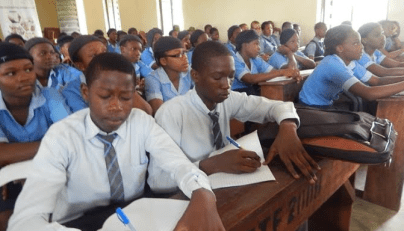
By Anjorin Fehintola Stella
Education has been regarded as the golden ticket to a better life in Nigeria for decades. Parents worked tirelessly, often sacrificing their personal comfort and long-term financial stability, to ensure their children acquired formal education. Mothers sold produce in markets at dawn. Fathers took on multiple jobs. Entire extended families pooled resources together to pay school fees, buy textbooks, and keep a child in school. The promise that sustained all of this sacrifice was simple and seemingly unbreakable, work hard in school, obtain a degree, secure a good job, and achieve upward social mobility. For many families, education was not merely an academic pursuit. It was the single most important investment they could make in the future.
Today, that promise appears increasingly uncertain.
Across the country, hundreds of thousands of young Nigerians graduate annually from universities, polytechnics, and colleges of education, only to encounter a labour market that is structurally unable to absorb them. According to the National Bureau of Statistics, Nigeria’s youth unemployment and underemployment rate has hovered at alarming levels for years, with a significant proportion of young people between the ages of fifteen and thirty-five either jobless or working in conditions far below their qualification and potential. The result is a growing population of educated but unemployed and underemployed youths navigating a future marked by uncertainty, frustration, and diminishing hope. They have done everything society asked of them, and it has not been enough.
While unemployment is frequently discussed as an economic challenge best addressed through fiscal policy and job creation schemes, its implications extend far beyond income and employment statistics. It is fundamentally a social issue with profound and far-reaching consequences for individuals, families, communities, and national development. To understand the youth unemployment crisis only through the lens of economics is to miss much of what makes it so damaging and so difficult to resolve.
The relationship between education and opportunity has historically been one of the cornerstones of social stability in modern societies. Education serves not only as a means of acquiring knowledge and technical skills but also as a primary pathway to social mobility. It enables individuals to improve their socioeconomic standing, participate meaningfully in civic life, and contribute to the development of their communities. In societies where this relationship functions well, education acts as a great equalizer, offering individuals from modest backgrounds a realistic chance at advancement. When it functions poorly, the consequences ripple through every dimension of social life.
However, when educational attainment consistently fails to translate into employment opportunities, the social contract between institutions and citizens begins to weaken. People start to question the value of the systems they were taught to trust. They begin to wonder whether the sacrifices made in the name of education were worthwhile. And when enough people arrive at that conclusion simultaneously, it produces a shift with serious implications for social cohesion, institutional legitimacy, and collective purpose.
Many young Nigerians today find themselves trapped in what can only be described as a painful paradox. They have fulfilled society’s expectations by obtaining academic qualifications, sitting through years of lectures, passing examinations, and earning certificates. Yet the rewards traditionally associated with those qualifications remain stubbornly elusive. Consequently, many graduates are compelled to accept jobs entirely unrelated to their fields of study, engage in low-paying informal work to survive, or remain economically dependent on parents and relatives long after completing their education. The degree hangs on the wall. The opportunities it was supposed to unlock remain firmly closed.
This reality has given rise to what many social observers describe as a crisis of expectations. Young people who once envisioned stable careers, financial independence, and steady social advancement now struggle to achieve milestones that previous generations considered not only attainable but expected. The gap between what was promised and what is delivered has become one of the defining social tensions of contemporary Nigerian life. And that gap is widening.
One of the most visible consequences of this situation is the widespread delay in major life transitions. Marriage, home ownership, family formation, and financial independence are being postponed not by choice but by economic necessity. In many Nigerian communities, adulthood has traditionally been defined by the achievement of certain milestones: securing employment, establishing a household, and taking on family responsibilities. Today, many young adults in their late twenties and thirties are unable to meet these social expectations, not because they lack ambition or discipline, but because the economic infrastructure that would enable such transitions no longer exists in a reliable form. The social weight of this inability is significant. It generates feelings of shame, inadequacy, and frustration that many young people carry privately and silently.
The psychological effects of prolonged unemployment are equally significant and deserve greater public attention. Extended periods of joblessness are strongly associated in research literature with increased rates of anxiety, depression, and diminished self-worth. In a society where success is frequently measured by economic achievement and visible material progress, unemployment can quickly become a source of social exclusion and deep emotional distress. Young people who cannot find work often withdraw from social engagements, avoid family gatherings, and distance themselves from peers who appear to be progressing. The isolation compounds the suffering. What begins as an economic problem gradually becomes a mental health crisis, and Nigeria’s mental health infrastructure is poorly equipped to respond to the scale of what is emerging.
Another notable and deeply consequential outcome of this crisis is the growing appeal of emigration. The phenomenon popularly known as the Japa movement reflects the strong and increasingly urgent desire of educated Nigerians to seek better opportunities abroad. The word Japa, derived from Yoruba slang meaning to run or escape, has become a defining cultural phrase of an entire generation. It is spoken with a mixture of aspiration, resignation, and bitterness. While migration has always existed as a human response to constrained opportunities, the current scale and demographic profile of Nigerian emigration is alarming. It is no longer only the unemployed who are leaving. Doctors, nurses, engineers, academics, and experienced professionals are departing in significant numbers, drawn by better pay, functional systems, and the basic assurance that their qualifications will be recognized and rewarded.
Reports from the United Kingdom, Canada, and various European countries consistently show rising numbers of Nigerian-born professionals entering their labour markets. Nigeria’s healthcare sector in particular has been severely affected, with hospitals struggling to retain staff as medical professionals seek greener pastures overseas. While migration offers individuals better prospects, and while the remittances sent home by the diaspora contribute meaningfully to household incomes and the national economy, the long-term implications for national development are troubling. The departure of skilled and educated young people represents a significant loss of human capital, talent, and innovation capacity that Nigeria urgently needs to address its own development challenges.
It is worth acknowledging that some analysts argue the relationship between education and unemployment is more complex than it appears, and that informal economies represent legitimate and sometimes vibrant pathways to livelihood and even prosperity. There is truth in this. Nigeria’s informal sector is enormous, creative, and resilient. It employs millions of people and drives significant economic activity. However, the existence of informal pathways does not diminish the legitimate grievance of young people who invested years and resources into formal education specifically because they were told it would open doors. The issue is not whether informal work has value. The issue is whether society kept its promise.
At the same time, many young Nigerians have turned to entrepreneurship as an alternative response to unemployment. Entrepreneurship is widely celebrated in public discourse as both a solution to joblessness and a driver of innovation and economic growth. While this is true in certain contexts, it is essential to draw a careful distinction between entrepreneurship driven by genuine innovation and market opportunity, and entrepreneurship driven purely by necessity and survival. A significant and growing number of young Nigerians are not starting businesses because they have identified a compelling product idea or underserved market. They are doing so because formal employment is simply not available, and they have no other viable option.
This form of survival entrepreneurship is a testament to the extraordinary resilience and creativity of Nigerian youth. Young people are finding ways to generate income through e-commerce, digital services, creative arts, fashion, food vending, logistics, and countless other ventures. They are adapting, innovating, and persisting under difficult conditions. But it would be a mistake for policymakers and institutions to celebrate this resilience as a substitute for structural reform. Resilience in the face of systemic failure is admirable, but it is not a policy. Young Nigerians deserve systems that support their potential, not just conditions that test their endurance.
The social consequences of widespread youth unemployment extend well beyond individual experiences of hardship. Communities affected by persistent and concentrated unemployment often experience increased social tensions, weakening of communal bonds, declining trust in institutions, and heightened vulnerability to various forms of social instability. When young people have little to do and little to look forward to, the social fabric of communities becomes strained in ways that are difficult to quantify but impossible to ignore.
Research in sociology and criminology consistently demonstrates that when legitimate pathways to economic and social success become inaccessible over a sustained period, individuals may become more susceptible to alternative means of meeting their needs and asserting their worth. This does not mean that unemployment causes crime in any simple or deterministic sense. The vast majority of unemployed young people in Nigeria are not engaged in criminal activity. However, persistent economic exclusion creates conditions of social strain, frustration, and disillusionment that can increase vulnerability to recruitment by criminal networks, extremist groups, or political actors who offer financial incentives in exchange for participation in activities that destabilize communities and institutions.
Nigeria has already seen the consequences of this dynamic play out in various regions of the country. Insurgency in the northeast, banditry in the northwest, and rising crime in urban centers all have complex causes, but economic exclusion and the absence of legitimate opportunity for young people consistently appear as contributing factors in analyses of these crises. Addressing youth unemployment is therefore not only a matter of economic policy. It is a matter of national security and social stability.
Addressing this challenge requires more than short-term employment programmes and token interventions. It demands a comprehensive, long-term, and genuinely committed approach that begins with an honest reckoning about the state of Nigeria’s educational system and its relationship to the labour market. Nigerian universities currently produce graduates in large numbers, but the curriculum in many institutions remains outdated, theoretically heavy, and disconnected from the practical demands of contemporary employers. Graduates emerge with certificates but without the technical competencies, digital literacy, critical thinking skills, or entrepreneurial mindset that the modern economy increasingly demands.
Educational institutions must undergo meaningful and substantive reform, not cosmetic adjustments. This means redesigning curricula to integrate practical skills, industry-relevant training, and technology competencies at every level of education. It means creating genuine partnerships between universities and industries so that students graduate with real-world experience and established professional networks. It means investing in vocational and technical education, which has long been underfunded and culturally undervalued in Nigeria despite its enormous potential to equip young people with marketable and immediately deployable skills.
Beyond education, the private sector must be incentivized and enabled to expand and create jobs at the scale that Nigeria’s youth population demands. This requires a business environment characterized by stable macroeconomic policy, reliable power supply, accessible credit, functional infrastructure, and a regulatory framework that encourages investment rather than discouraging it. Nigeria cannot produce jobs in sufficient numbers within a hostile business environment. Economic reforms that make it genuinely easier to start, grow, and sustain businesses are therefore inseparable from any serious effort to address youth unemployment.
Government also has a direct and irreplaceable role to play, not only as a regulator and policymaker but as an employer and investor in public infrastructure. Large-scale investment in roads, railways, housing, hospitals, schools, and digital infrastructure creates employment directly while also improving the conditions under which private enterprise can flourish. Social protection programmes that provide basic income support to the most vulnerable unemployed young people can also serve as a buffer, preventing the most desperate consequences of joblessness while longer-term structural reforms take effect.
The youth unemployment crisis should not be viewed solely through economic indicators and statistics, as important as those are. It represents a deeper social challenge that touches on social mobility, family structures, gender dynamics, community development, mental health, and national cohesion. It is a crisis of meaning and belonging as much as it is a crisis of income. Young people who cannot find their place in the economic life of their country often struggle to find their place in its social and civic life as well. Disengagement from society is a predictable and understandable response to repeated exclusion. But disengagement at scale carries enormous risks for the quality of democracy, the strength of civic institutions, and the social trust upon which stable societies depend.
The voices and experiences of young Nigerians themselves must be central to any serious conversation about solutions. Too often, young people are discussed as a problem to be managed rather than as citizens with agency, insight, and legitimate demands. They understand the realities of the labour market, the gaps in their education, the barriers to entrepreneurship, and the frustrations of navigating a system that frequently fails them. Platforms that genuinely listen to and incorporate their perspectives are not only more democratic but are also more likely to produce policies and interventions that actually work.
The future of any nation depends significantly on the opportunities available to its young people. When a generation begins to lose confidence in the ability of education and hard work to improve life chances, society risks undermining one of its most important mechanisms for progress, cohesion, and stability. That loss of confidence, once entrenched, is extraordinarily difficult to reverse. For Nigeria, the challenge is not merely to create jobs, although jobs are urgently needed. It is to restore confidence in the fundamental social promise that effort, education, and talent can still lead to opportunity and dignity. The extent to which this challenge is honestly confronted and adequately addressed may well determine not only Nigeria’s economic trajectory but the kind of society it becomes in the decades ahead. The clock is running, and the young people waiting for answers deserve more than silence.
Related




The Solo-Collaborators: How a New Wave of Nigerian Creatives is Redefining the 9-to-5 Tradition

Is Our Police Force Well Equipped and Motivated to Take on the Role of State Policing?

Jega’s Legacy and the Erosion of Electoral Trust

Court Remands Sowore in Kuje Prison

ICYMI: I Did Not Steal Nigeria’s Money – Former Minister, Diezani Cries Out

Diezani Alison-Madueke: Long Walk to Freedom

British Prime Minister Keir Starmer Resigns

Conoil Profit Hits N3.89bn in First Quarter of 2026 Despite Revenue Decline

When Subsidy Removal Meets Responsible Leadership: Why Tinubu Owes Gov Adeleke a Big Thank You

Xenophobia: Stranded Nigerians in South Africa Cry Out, Says We Are Hungry, Homeless

Abiola and the Ancient Journey of June 12

Nigeria’s Youth Crisis: When Education No Longer Guarantees Opportunity

What’s the Proof That Bandit Kingpin’s Mother, Sister Got 40-Years Combined Jail Term?

UK Court Clears Ex-Petroleum Minister Alison-Madueke of All Corruption Charges
Trending
-
 Business6 days ago
Conoil Profit Hits N3.89bn in First Quarter of 2026 Despite Revenue Decline
-
 Opinion4 days ago
When Subsidy Removal Meets Responsible Leadership: Why Tinubu Owes Gov Adeleke a Big Thank You
-
 National3 days ago
Xenophobia: Stranded Nigerians in South Africa Cry Out, Says We Are Hungry, Homeless
-
 Opinion5 days ago
Abiola and the Ancient Journey of June 12
-
 Opinion4 days ago
Nigeria’s Youth Crisis: When Education No Longer Guarantees Opportunity
-
 Featured3 days ago
What’s the Proof That Bandit Kingpin’s Mother, Sister Got 40-Years Combined Jail Term?
-
 Headline6 days ago
UK Court Clears Ex-Petroleum Minister Alison-Madueke of All Corruption Charges
-

 Boss Of The Week2 days ago
Obi of Onitsha, Igwe Nnaemeka Alfred Achebe, Revels at 85