By Hon. Femi Kehinde
A meteor is like a shooting star. It sparkles, it dazzles, it brightens up, but it is also a falling star. They are also like joy, that has a slender body, that breaks so soon-Ayo abara bin tin, as was depicted in Ola Rotimi’s epic play- The gods are not to blame. A meteor rises fast and disappears at the apogee (height) of its glory.
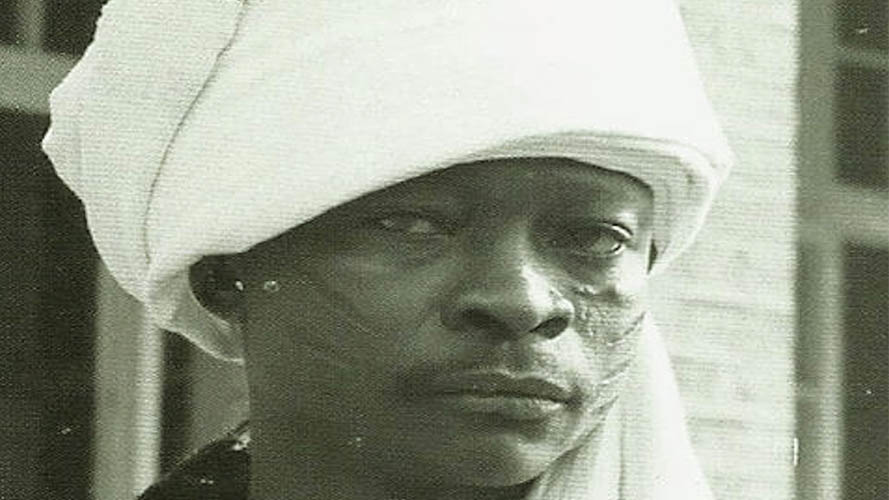
Joseph Sanusi Gbadamosi Adegoke Adelabu, born on the 3rd of September, 1915 and died on the 25th of March, 1958, certainly lived like a meteor and his rise was meteoric. He was Ibadan’s most prominent politician of his time. He was born in Oke-Oluokun, Ibadan, to Sanusi Ashiyanbi Adeyege Adelabu and his mother was Awujola Ajoke, who died in 1920, when Adegoke was still an infant.
HIS EARLY EDUCATION
Although born a Muslim, he was sent to a secular school- The Saint Davids CMS Elementary School, Kudeti Ibadan, between 1925 and 1929 and the CMS Central School, Mapo Ibadan in 1930. He had double promotions in the elementary and primary schools, he proceeded to the Government College Ibadan, where he also had double promotion. He left Government College in Form 4, and proceeded on a U.A.C scholarship to Yaba Higher College, Yaba Lagos, in 1936, which was then Nigeria’s only higher college.
Adelabu Adegoke had said of his educational exploits-
“I had a brilliant scholastic career, earning accelerated promotions on three occasions in the elementary, primary and secondary schools respectively. Despite this, I never took a second position throughout my school days. Instead, I was always several laps ahead of my runner up and not infrequently, saved tutors from tight holes.”
He was perhaps the most brilliant scholar that had passed out of the Government College, Ibadan. As was attested to by his contemporary and colleague in Government College- Professor Sabori Biobaku, who attested of his educational brilliance as thus-
“Adelabu was not much good at sports, although he subsequently distinguished himself at the long distance events, especially the half mile and mile races. It was in his studies that he excelled. At the end of his second year, he received a double promotion from class two to class four and was top of that class from the first term till the end of his time at the college. He was perhaps the brightest boy that Government College Ibadan has ever produced.”
His head master at the Central School Mapo- Chief James Ladejo Ogunshola was bereaved and Adegoke, despite being a pupil, quickly came to the rescue by taking up the classes in the absence of the bereaved headmaster. The headmaster, a diarist, wrote in his diary of Wednesday, the 15th of February 1935-
“Master Adegoke Sanusi, an old boy of central School and a pupil of Ibadan Government College who had been helping me since Monday in the school also rendered help today; he took my class in all the subjects for today”
Adegoke was simply non-pariel; he was in fact a genius. Despite all these academic attainments, he also believed that the best of him had not come, he said-
“I had everything to rejoice over, but I lamented. I was successful, but I was dissatisfied. Happiness eluded me like the miraculous mirage of the desert.”
Despite being a studious and serious student at the Yaba College and also on U.A.C scholarship, he quit his studies according to him-
“To prove my mettle”
HIS UAC DAYS
He was instantly employed by the U.A.C, as its first African Manager in the produce section and later the singlet factory section of the Haberdashery department. He was in the U.A.C for four years and later joined the civil service for seven years in the cooperative department and eventually, for another five years, was doing his own business as a private entrepreneur. He later took sojourn in partisan politics, from where he rose from comparative obscurity, into so strong a lime light, that he had completely dazzled and baffled his opponents and admirers.
ADELABU, THE POLITICIAN
At the first meeting with Adelabu, one would be easily amazed about his strength, resourcefulness and also how he managed to get his magnetic force with which he captured his followers to the point of fanaticism. His admirers usually called him “portable Ade” and you would also easily wonder, according to him-
“how my enemies would enjoy carrying a small keg of explosives?”
There was a common saying in Ibadan then that-
“if you do not know Adelabu, then you do not know any man worthy of his name”
To the native Ibadan man then, Adelabu is the only “Omo Okunrin” or better still “Alagbara” (the strong one). Adelabu, easily dazzled by his own accomplishments had said
“Despite an unparallel record of intellectual achievements in the classroom, considerable success in recreational games and athletic sports, respect from my subordinates, encouragement from my masters, I had everything to rejoice over, but I lamented, I was successful but dissatisfied.”
He had a steady and turbulent rise in politics. He was a councillor, chairman of the Ibadan Divisional Council, member of the Western House of Assembly and Federal House of Representatives, on the platform of the NCNC, Western Secretary of the NCNC and later rose steadily from the rank and file of the everyday politician to hold the post of Minister of Natural Resources and social services after the Federal Election of 1954.
The story goes that during campaigns for election, while others were talking themselves hoarse, Adelabu won over his supporters with inspiring songs to which all and sundry danced along the streets of his constituency.
Adelabu reveled in the pomp of the worshiped and did not intend to conceal his love for their worship. As a restless and busy politician, he told a journalist during a press interview- “I can only spare you a few minutes”; and when he really got down to business, he refused to sit down, and he said- “I talk better when walking about.”
Adegoke Adelabu admits egotism. In his book- “Africa in Ebullition” he said-
“I am a deliberate egotist. I do not regret it, I do not apologize. My philosophy is that the world would be much better and happier if we would only dare to be ourselves completely instead of being faded copies of other unknown and misunderstood mythical heroes.”
Adegoke Adelabu was ambitious and introspective. Once, he shouted to an Ibadan crowd- “I am greater than Zik!” Not even as a Federal Minister, did he show any inhibitions. He converted his ministerial quarters- No 15, Alexander Road, Ikoyi Lagos, to a meeting place of the Declass or the Talakawas or the common man or the beggars.
Every morning, the drummers and praise singers he took to Lagos from Ibadan, would wake up the elitist neighborhood of Ikoyi, with drumming and singing, eulogizing the exploits of the Ibadan great man and grass root politician. The Europeans or “Oyinbos” in the neighborhood, protested vehemently against this early morning nuisance and they also addressed a press conference. Adelabu in his usual style, made a mince meat of this protest, asking them to go back to their country, if they did not like his style and that was the end of the protest.
As minister in the Federal Government, Adelabu was given an official car. He took the car to his constituency in Ibadan and summoned a meeting. After the meeting at his Oke-Oluokun residence, he asked his constituents at the meeting, to be riding in the car in a group of four, from his Oke-Oluokun residence in Ibadan, to Beere round about, to savour the joy of ministerial ride. This audacious act hit the newspaper headlines the following day- “Talakawas ride in ministerial car”.
In 1956, Adelabu Adegoke left the Federal Parliament, soon after; he faced a series of criminal charges, ranging from bribery and corruption to disturbing the peace. From all these, Adelabu emerged unblemished to continue his fight for the down trodden.
During this trial, his admirers went on the street of Ibadan to sing and eulogize him with the popular song-”Adelabu ma ko owo wa na!
Igunnu loni Tapa, tapo loni igunnu!”
i.e. “Adelabu steal our money the more!
Igunni owns Tapa, Tapa owns Igunni! “
MEETING NNAMDI AZIKWE
Adelabu’s first voyage into politics was at the meeting of an NCNC mission led by Dr. Nnamdi Azikiwe, who came to Ibadan on a fund raising mission for the party. Adegoke listened to the missionaries, donated four guineas, but did not join the party as a card carrying member, until about five years later, when Dr. Nnamdi Azikiwe was called again, with other party members to help solve the Fijabi/Agbaje chieftaincy tangle. Adegoke was one of the citizens who sailed forth to welcome Dr. Azikiwe; but he did not stop there. When Dr. Nnamdi Azikiwe got up to make his speech, Adegoke got up to interpret the speech to the Yorubas.
The two prophets had met and there was no parting of ways until death. Before Dr. Nnamdi Azikiwe left Ibadan to Lagos, they had formed the Ibadan Grand Alliance and Adegoke had been appointed as its first secretary. A year later, he became Vice President of the Western Committee of the NCNC and a leading NCNC member in the Ibadan People’s Party, which later merged with the NCNC. He did not find things easy. Within his party, were a few elements with dual loyalties- to the NCNC and the Egbe Omo Oduduwa, a cultural organization.
On the 1st of December, 1951, Adegoke Adelabu, who had described himself as-”A strong man and the political voice of the west”, suffered a political master stroke. Five of the elected members- 1. Chief A.M.A Akinloye. 2. Chief D.T Akinbiyi. 3. Chief S. Owoola Lanlehin. 4. Chief Moyosore Aboderin 5. Chief S.A Akinyemi, all of the Ibadan People’s Party- NCNC Alliance, attended an Action Group rally. Adegoke commented acidly- “the long awaited proof of treachery has arrived”
Adegoke resented this, by opening up a salvo in the Southern Nigeria Defender Newspaper, with a serialized, devastating and documented attack, titled – “A stab on the back”
The Ibadan desertion blasted his hope of an NCNC majority in the Western House of Assembly. On the 7th of January, 1952, only 25 NCNC members could be mustered in the assembly. Adegoke wrote-
“On the Day of Shame-January 7, 1952-only 25 NCNC members could be mustered in the Assembly. The motley crew of mercenary careerists trooped in with their badge of shareholding in Political Booty Ltd. And among them, pale and guilty, the five deserters from Ibadan! Everyone held their breath at the shamelessness of men born of women and the whole house sat spell-bound.”
But if Adegoke Adelabu had failed to become the leader of the government of Western Nigeria, he had, through his steadfastness to the NCNC, become the leader of the people of Ibadan. In his speech to his loyal followers, he bade defiance to the Action Group and took an oath to fight it, until his last day on earth. He kept his oath. Then came, in 1954, the local government election to the Ibadan District Council. During the electioneering campaign, Adegoke was everywhere. He was seen by the people, taking time off from the political campaign and speech making to drinking Tombo (native wine) with the masses of the people. Adelabu had become a one man political circus. He knew to his fingertips what the people wanted; above all, he had learned one lesson in mass psychology: that being ridiculous is the only form of notoriety that does not kill a politician. When the results of the council elections were announced, Adelabu and his grand alliances had won all the seats. A few days later, he was made the chairman of the Ibadan District Council.
The year 1955 saw him at the Zenith of his powers. He was appointed a Federal Minister of social services. But political enemies were at work and an enquiry into the workings of the Ibadan District Council was appointed. The commission found heavily against him and the council. He reluctantly resigned his post as federal minister, but refused to resign as Council Chairman, until the Council was dissolved two months later.
The people of Ibadan were shocked and displeased, but a bigger shock was in store. A few months after the dissolution, Adegoke, together with other councillors were charged with corruption.
He was acquitted and discharged, only to be rearrested and charged with many offences. Again, he was acquitted and discharged and the whole cacophony of arrests, charges, acquittals and discharges ran into a couple of tens and built themselves up to a legend, that their victim and hero, Adegoke Adelabu was a man “they can never get”
After his trials, Adegoke found himself in the political doldrums. The fire of his enemies had pinned him down. A chance for further activity did not occur until 1957. The political leaders of Nigeria had been summoned to London, to review the constitution of the country. Adegoke went with his party’s delegation. After this, nothing substantial was heard of Adegoke Adelabu for many months- except that he had gone to Mecca and returned an Alhaji. It was said that he was biding his time, resting.
HIS DEATH
Then on March 25, 1958, came another sensational story about the man whose whole life had been like a meteoric flame. The story was that Alhaji Adegoke Adelabu was dead!
How did he die? Some said he had been shot. Some said he was killed with juju. Many others said he was run over by political enemies.
But the fantastic story of his death had gone around Ibadan. Alhaji Adelabu dead? Impossible! But if he’s dead, others will surely die with him! Down with his killers! Down with all those who have hands in his death! Kill and burn them. Spare no one. Let no one live after Ade! Over his grave let us March!
That was the shout of the Ibadan masses and it was no idle cry, Ibadan became a besieged and enraged city. To avenge his death, twenty people, possibly including those who did not know him in person, were done to death by the irate crowd. Many houses were set on fire. Much property was lost.
When the law recovered from the shock, it recovered by arresting 564 persons. Of these, 102 stood trial for murder, 25 were acquitted and discharged by the lower court, and seventy seven were sent to face the Assizes.
After a volcanic life and a volcanic death, with the souls of twenty men keeping him company, Alhaji Adegoke Adelabu- the colossal egotist, the god and prophet of Ibadan- must still now, if there is an afterlife, be stepping it off to brass band and bugle to keep his rendezvous with the noble and gallant band, composed of all the manic personages who had, with lines of fire, stamped their names on the face of our all-too-sane world.
Adegoke Adelabu was certainly the architect of grass root politics in Ibadan and with him went a certain glamour from Ibadan politics. He was popularly known as “Penkelemensi”, ie peculiar mess, which was his usual refrain when making contributions on the floor of the Western Region House of Assembly.
It is also interesting to note that a number of Ibadan Politicians and elites have benefited tremendously from Adegoke Adelabu’s political legacy.
Chief Mojeed Agbaje, Richard Akinjide, Adeoye Adisa and many others, would forever remember him in glowing tributes.
Akinjide, who qualified as a lawyer on the 4th of March, 1956, came back home to join the grass root politics of Adelabu. Adelabu had found Akinjide’s legal prowess amazing, in the celebrated case of slapping a Customary Court Judge – D.T Akinbiyi (later Olubadan). Akinjide was the younger counsel to Dingle Foot Q.C- the British lawyer, hired by Adelabu for his defense. As a payback, Akinjide was elected into the Federal Parliament at the age of 27, in 1959, with an official emolument of £840 per annual, i.e. £70 a month. He later became a minister in 1965 at the age of 34.
TRIBUTES
Adelabu’s sudden exit ignited a volcanic eruption in Ibadan’s political firmament and a lot of distinguished personalities paid glowing tributes to this stormy petrel.
Chief H.O Davies, a front line Nigerian Nationalist painted this epithet-
“Adelabu’s life in my mind, appears to have been something like a meteor, which shines with conspicuous brilliance for a short period and disappears again into the unknown”
This was further corroborated by his friend and classmate in Government College- -Professor Saburi Biobaku who also commented in his condolence remarks-
“maybe he was one of those rare phenomena who dazzled the world by their brilliancy only to leave behind memories of what might have been”
Anthony Enahoro- a colleague parliamentarian, also said of Alhaji Adelabu as a man- “Who fought for his successes and he never seized to rise above his misfortunes”
His friend and colleague in the Federal Parliament and also prime minister of Nigeria- Abubakar Tafawa Balewa, in his tribute in the Daily Times of 27th March, 1958 said-
“Alhaji Adegoke Adelabu was an intellectual and his capacity was recognized by his opponents” and that … “if anybody died fighting for a cause, it was Adelabu. His death was not only a loss to NCNC, but to all politicians in the country. I am really sad about his death.”
His friend and leader, Dr. Nnamdi Azikiwe while expressing his regret on the painful exit of Penkelemensi, also said of him-
“A man of conviction and did not disguise his feelings on any particular issue” and that he was- “a man of amazing intelligence, ready wit and uncanning understanding of human nature.”
Chief Remi Fani Kayode, the then Action Group Chief Whip in the Federal House of Representatives also had this eulogy-
“Forget the man’s faults, which of us is faultless? Remember his courage, his dogged will, his ardent belief in the masses, in the common people of our father land and the great faith of his own people on him.”
Chief Obafemi Awolowo, the then Premier of the Western Region, summed it up, when he said-
“Alhaji Adegoke Adelabu was, in his life time, and ever since he entered politics, a fighter first and last, with all the characteristics of a fighter. He was fearless, formidable, forthright, often caustic and uncompromising. In his death, the NCNC had lost a very able, indomitable and extremely resourceful leader and Nigeria, a most colourful, versatile and undoubted nationalist.”
HIS DIARY
Penkelemensi lived a highly organized life. At the beginning of 1955 in his diary, he had calculated his expected earnings and expenditure of the New Year and he wrote –
- As federal minister- £3,200
- Various allowances to cover entertainment, ministerial house upkeep – £1,700
- As chairman of Ibadan Local Council – £1,500
- Profit from business ventures- £600.
On another paper, he wrote out his expected expenditure for the New Year
- Vehicle maintenance- £900
- Social obligations-£600
- Food- £480
- Drinks-£360
- Light- £120
- Tax- £60.
The death of Adegoke Adelabu pained the Ibadan folks so much, that when Chief S.L.A Akintola faced similar recriminations and despair, after he was expelled from the Action Group Party, at the National Conference of the Action Group in Jos in February 1962, he was derided by some party members; he had begged the leader, Chief Obafemi Awolowo, the Yoruba Traditional Rulers and religious leaders, like Bishop Odutola, Bishop Akinyele, Bishop Jadesinmi and a host of others had waded in, but the rift could not be settled.
When they got back from Jos, Akintola’s supporters went on a mass protest, carrying placards and singing derisive political songs –
“Akintola Ose Pa! Eyin tee pete pero te pa Adelabu, Akintola Osee pa.”
Meaning ”Akintola cannot be killed. Those of you who conspired to kill Adelabu, Akintola cannot be killed”; insinuating that Adelabu’s death on the 25th of March, 1958 was not natural.
The story of the passage of Adegoke Adelabu was equally strange and interesting. Unusually, he woke up his household at about 4:30am, had his morning prayers, had his shave, bath and toiletries, had his usual breakfast of Akamu (pap) and summoned his young children for a meeting.
As recalled by his first daughter, Adedoyin Jagun, who was about 8 years old then; her father, Adegoke Adelabu admonished them early in the morning-
“Elo mu ara yin se giri
Ori lomo ibi ti ese nre”
– “you should all work hard and be up and doing, it is only the head that knows where it is to go with the feet.”
At about 7:00 am, he entered a Peugeot 205 car that belonged to his white friend- a Syrian British national, who had come from Lagos to pick him on a business trip.
He called his aides- Adeleke and Ganiyu and he bid them goodbye. Adegoke Adelabu left no single penny or kobo in his bank account. The two houses he had at Oke Ado, he had sold and kept the money in the bank until later, when he withdrew the money gradually, to cater for the poor of Ibadan. He left his Oke-Oluokun residence as his only property. Adelabu also took loans from the bank to buy the Auxmobile car with Registration Number- IB-121, which he used as a private car.
HIS CHILDREN
After his death, a number of his political aides, supporters and admirers came to the instant aid of his children. The late Aminu Kano helped to train one of Adelabu’s children in secondary school, the Late Vincent Ikeotunonye trained Adedoyin-his daughter, K.O Mbadiwu trained Aderemi, and the NCNC Central Committee trained Adekumbi up till secondary school and the late Rev. Akin Aduwo also gave a scholarship to one of the children.
The late Chief Bola Ige, Dr. Nnamdi Azikiwe, Alhaji Arisekola Alao and Alaafin of Oyo, Oba (Dr.) Lamidi Olayiwola Adeyemi III and other early admirers of the politics, learning, diction, erudition and brilliance of penkelemesi, had also at one point or the other, assisted the family.
Oba Lamidi Olayiwola Adeyemi III, being so enamoured with the life and times of Adegoke Adelabu, would easily, always, regale his audience, at any given opportunity, with memorized verses of Adegoke Adelabu’s memorable quotable quotes.
The glory of Adegoke Adelabu Penkelemensi, will continue to gather legendary coatings as the years go by and as the story of his greatness passes from one generation to another.
Akande Iji Oloye Igbetti, may your soul continue to rest in peace.
Barr. Femi Kehinde, former member House of Representatives for Ayedire/Iwo/Ola-Oluwa Fed. Constituency (1993 – 2003)








 News4 days ago