
PROF YEMI OSINBAJO
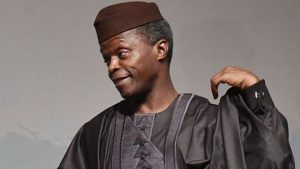
Professor Yemi Osinbajo, the current Vice President of the Federal Republic of Nigeria wears the toga of a perfect, cerebral gentleman. Osinabjo who is the highest-ranking Yoruba office holder in the country today should be the easiest choice for the Yoruba if everything was equal. But everyone knows that in politics, things are usually not as they seem.
The Amiable VP, respected and learned, is no push over in any ramification. He has proved his mettle in the few areas he been allowed to perform, and knows his onions.
Many believe that the former Attorney General and Commissioner for Justice of Lagos has the capacity and ability to unite the nation, especially at this time that the drums of succession and banditry has filled the air.
What gives Osinbajo an edge is the fact that he has acted in the position of president and passed with flying colours.
When his principal, President Buhari was away for about 150 days on medical vacation, Osinbajo showed his stuff. He was firm and fair and took decisions that won him accolades even among his most vociferous critics. The positive impact his decisions had on the economy is a trump card he could use when the chips are down.
Osinbajo is not a hardcore politician, and many Nigerians believe that the country does not need another career politician at this time, but a tested technocrat, who has academic prowess and mental depth. Osinbajo is certainly the man.
Another plus for the number two man is the fact that having spent six years, and soon will be spending eight years, in the corridors of power, Osinbajo is now an insider, who knows the working of the presidency and can correct the wrongs of the present administration as well as conduct a veritable surgical operation on all malfunctioning areas.
Recall that in 2020, a group under the aegis of Friends of Prof gave out N1 million each to twenty businesses as Initiative for Small Businesses, to celebrate the 63rd birthday of Vice President Yemi Osinbajo. Observers say that the effort is only geared towards creating relevance for the Vice President as 2023 approaches.
And then of course, being a Christian, the issue of getting a northern running mate will not pose any challenge for the Redeemed Pastor.
On the downside, the VP is seen as lacking political capital even in his native Ogun State. Many also believe he may not have the muscle to take serious decisions and stand up to the Northern cabal.
They allege that his golden silence regarding the poor performance of the Buhari administration has shown that he may not be able to be his own man.
Many of our respondents are of the opinion that an Osinbajo Presidency will definitely be different from the current Osinbajo Vice Presidency.
BABATUNDE FASHOLA, SAN
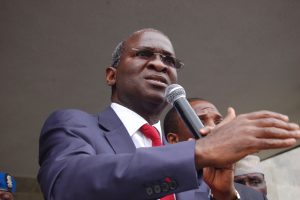
From an outstanding performance as Governor of Lagos State, Babatunde Raji Fashola SAN, became a Super Minister, supervising three stand alone ministries: Power, Works and Housing.
He is seen as a silent performer and a technocrat who is trusted by President Buhari, and that explains why he was saddled with the responsibility of managing three powerful ministries in the first tenure of the administration.
His eight years as governor in Lagos, with executive powers, is enough to prove the kind of administrator he is, and would be as president. The fact remains that given the estate called Nigeria to run, he would do more than a good job to get the country back on track.
Though many say Fashola’s sterling profile shrank big time with his seeming poor performance as Super Minister, many still adjudge him as fit for the job of president.
They are of the opinion that as Minister, he had no free hand and thus as President, he would be able to exhibit his can-do spirit as he did when he ran Lagos.
DR KAYODE FAYEMI
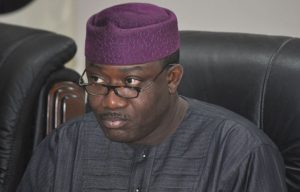
The Governor of Ekiti State, John Kayode Fayemi, is another technocrat, who is well versed and equipped to take up the mantle of president.
Presently serving the second term of his tenure as governor, Dr Fayemi has first-rate credentials as a good administrator.
His supporters say that as the current Chairman, Nigeria Governors’ Forum, the next place for him after leaving office is Aso Rock. This position has also helped him forge alliances across the nation that could be critical in the quest for the presidency. And more importantly, it will be easier for him to mobilize his colleagues to his side at the APC primaries.
Furthermore. It is also said that his experience and expertise in Military Studies would be excellent points to consider since the country is currently battling severe insecurity challenges.
Also, Governor Fayemi’s persona as a fighter and a respecter of the rule of law are attributes that would add to his suitability for the big position.
The only problem with Fayemi is that as Minister of Solid Minerals, he had very little impact, many were of the opinion that if he could not excel at a small assignment like that, how would he be able to run the nation?
Again, his second coming in Ekiti State has not witnessed the kind of massive turn around that would position him as a performer par excellence.
AKINWUNMI AMBODE
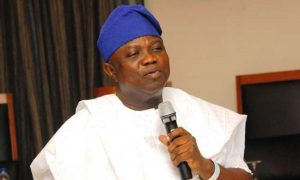
Akinwunmi Ambode, the immediate past Governor of Lagos State, who was unceremoniously sent packing may be the dark horse of this race.
Ambode, who in his short stint stamped his signature on Lagos with many audacious and legacy projects, managed to gain the sympathy of the Presidency, the APC and the North.
He reportedly mobilized resources for the party during the general election and the party eggheads are still grateful till tomorrow.
An Accountant by training, who has supervised meticulously the accounts of Lagos State over the years, retiring as Accountant General, Ambode is a man who has shown capacity as an excellent manager of men and resources.
With his appointment as Member of the APC Contact and Strategy Committee, tongues have begun to wag about the possibility of an Ambode presidency. This appointment has birthed more appointments to his favour, signifying that he has a more stronger backing than his immediate Lagos constituency.
AMINU TAMBUWAL
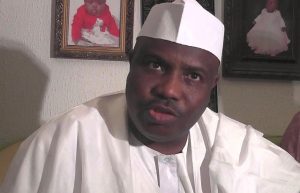
Tambuwal would have gone down in the history books as one of the trusted if not the only trusted northerner among the lot seeking the seat of power but for his abandonment of the oligarchy when he defected to the PDP. However, he is still seen as the person who will work 100 per cent in the interest of the north.
As a prelude to the 2019 General Elections, The Boss authoritatively reported that the Peoples’ Democratic Party (PDP) was concluding plans to adopt Tambuwal, as its flag bearer.
Though that was not to be, the report was based on reliable sources which told TheBoss that the rank and file of the main opposition party is wooing the governor, who just before the 2015 election, ditched the party for the APC where he won the Sokoto State governorship election. Today, Tambuwal is back to the party with clear intentions of taking the party back to the power they lost.
Tambuwal, who until May 2015, was the Speaker of the House of Representatives, has maintained a low profile, speaking only when it is absolutely necessary even as the Chairman of the exalted PDP Governors’ Forum.
Touted as one of the most qualified to wear the crown of presidency come 2023 because of his youth and sundry achievements within a short period of time, Tambuwal was born on January 10, 1966 in Tambuwal village, Sokoto to Alhaji Waziri Tambuwal.
He attended Town Primary School, Tambuwal, Sokoto State, where he obtained Primary School Leaving Certificate in 1979 before moving to Government Teachers’ College, Dogon-Daji, where he equally obtained the Teachers Grade II Certificate in 1984.
Connected and versed in national and world politics, Tambuwal had his tertiary education at the rated Usman Dan Fodio University where he studied Law, and graduated with a LLB (Hons) degree in 1991. He was called to the bar in 1992 after completing his one year compulsory legal studies at the Nigerian Law School.
From the influential Sokoto Caliphate, those who see Tambuwal as a potential believe that his origin will stand him in good stead to gain the confidence of the Hausa/Fulani traditional rulers as well as gain the trust of the powerful political class. And this happen to be one of the major reasons he is thrust forward.
Another strong point that makes him an attractive candidate is the immense connection that he has across the country. On account of his former position as speaker he has contacts in all parts. In addition, his energy and youthfulness is a big plus. More so, the clamour for a youth president will somehow give me an edge over his closest rival.
Tambuwal’s immense support among the opposition’s inner circles stems from the fact that he is seen as an untainted politician, who can be firm when necessary and also has a squeaky clean image that will adhere him to floating voters.
He started learning the legislative ropes since 1999 while working as Personal Assistant on Legislative Affairs to Senator Abdullahi Wali, the then Senate Leader.
In 2003, he decided to run for a legislative seat as representative of the Kebbe/Tambuwal Federal Constituency. He was elected into the House of Representatives on the platform of the All Nigeria Peoples Party (ANPP).
Articulate and savvy, Tambuwal held several positions in the House. In 2005, he became the Minority Leader of the House until he defected to the PDP. Upon his re-election to the House in 2007, he was also elected to the office of the Deputy Chief Whip.
Tambuwal’s experiences at the bar and in politics have propelled him to enviable of position of one of the most recognizable politicians in Nigeria.
But again, Tambuwal is a core northerner who has little or no influence in the south; either west east or south. His influence do not even cut across the north central. It is therefore, difficult for Tambuwal to pick the much desired ticket not to talk of defeating Buhari in 2019.
RABIU KWANKWASO
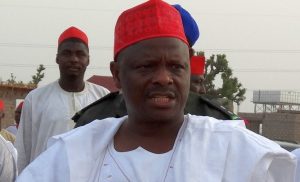
Among the political heavyweights in the ring of wrestling the presidency from the APC come 2023 is the strong man of Kano politics, Alhaji Rabiu Musa Kwakwanso. He is the subject behind the popular Kwankwasiyya Movement that has made and continued to make waves in the Northern political arena and beyond; the reputed former governor of Kano State, who posterity gave pass marks for his eight years stewardship in the ancient city-state.
The first time Kwakwanso gave a hint of his presidential intention was at the much attended funeral ceremony of late elder statesman, Dr. Alex Ekwueme in Anambra State, prior to the 2019 election. And since then, he has not looked back. Kwankwaso is a serious contender.
It would not be forgotten in a hurry that In the prelude to the 2015 General Elections, Kwankwazo narrowly lost to the incumbent President, Muhammadu Buhari, at the party primaries held at the Teslim Balogun Stadium in Lagos. He beat former Vice President, Alhaji Atiku Abubakar to the third place. Today, followers of the Kano politician believe that there is a paradigm shift in the affairs of things, and the coast is clear to give anyone else eyeing the president a trouncing.
His advantage lies in earlier approval by Ex-President Olusegun Obasanjo and former Military President, Ibrahim Badamosi Babangida, to take over from Buhari should his illness become irredeemable Though Buhari made it back hale and healthy, is not record yet that the plan has changed
According to an APC chieftain at the time: “They may have settled for Kwankwaso, because of certain factors; part of the reasons is that more than any other politician in the North, Kwankwaso is seen as commanding a large followership in Kano and most states of the North-West.’’
Kwankwaso is believed to have the vigor to carry the weight of governance if elected as president as he is said to be very hard working, philanthropic, charismatic, faithful and sincere concerning all his commitments. His followers are also of the view that he will also carry everybody along.
Kwankwaso was born on October 21,1956 in Kwankwaso village of Madobi Local Government Area of Kano State. He attended Kwankwaso Primary School, Gwarzo Boarding Senior Primary School, Wudil Craft School and Kano Technical College before proceeding to Kaduna Polytechnic where he did both his National Diploma, and Higher National Diploma. He did postgraduate studies in the United Kingdom a Middlesex Polytechnic (1982-1983) and Loughborough University of Technology (1983 -1985) where he got his master’s degree in Water Engineering. Kwankwaso was an active student leader during his school days and was an elected official of the Kano State Students Association.
Kwankwaso started work in 1975 at the Kano State Water Resources and Engineering Construction Agency (WRECA), serving as a civil servant for 17 years in various capacities and rising through the ranks as the principal engineer.
In 1992, Kwankwaso was elected as a member of House of Representatives representing Madobi Federal Constituency. His subsequent election as Deputy Speaker in the House brought him to the limelight of national politics.
During the 1995 Constitutional Conference, Kwankwaso was elected as one of the delegates from Kano, as a member of the Peoples Democratic Movement led by Yar’adua. He joined the PDP in 1998 under the platform of Peoples Democratic Movement in Kano led by Mallam Musa Gwadabe, Senator Hamisu Musa and Alhaji Abdullahi Aliyu Sumaila. He was elected governor of Kano State in 2007 and served for two terms before being elected as a senator. He defected from the PDP in 2014 and returned on July 24, 2018.
ABUBAKAR BUKOLA SARAKI
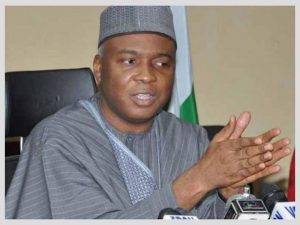
At 58, young and very experience, the President of Senate, Bukola Saraki, like Atiku, is one aspirant who can boast of structures all over the country capable of giving him a solid ground to canvass for votes from Nigerians. Among his strongest selling point is the disillusionment that has so encompassed the Nigerian people that they clamour for urgent attention.
In a bid to provide good and impartial leadership, Saraki has on many occasions come head to head with his former party, the APC, and that explained their continued loggerhead till the day he finally called it quits.
Dr. Saraki is reputed as a leader who does not have any qualms when it comes to working with and giving youths opportunity to prove their mettle. He has that uncanny ability to spot and deploy good talents. This is evident in his ability, during his tenure to give youths in their 30s and early 40s such as Mallam Bolaji Abdullahi, Governor Abdulfatah Ahmed, Zakari Mohammed and Razak Atunwa who was the governorship candidate of the PDP in Kwara State among others the opportunity to flourish and showcase their potentials.
As a result of his sterling achievements, his colleagues did not think twice in electing him Chairman of Nigerian Governors Forum.
His achievements as governor and senate president speak for themselves, and are very glaring.
The major highlight of his administration as governor could be traced to Kwara becoming the first state to complete the Nigeria Independent Power Project, as well as re energised the Ganmo Power Station, Ilorin in collaboration with PHCN, connecting over 3750 rural communities to the national grid through the development and installation of 725 transformers and 7 substations.
Kwara also completed four electrification projects which meant power became stable 18–22 hours a day. 70% of people living in Kwara had access to electricity, compared to a national average in Nigeria of 30% at the time.
As Senate President, he has passed more bills within his first three years than any leader of the senate ever come close to doing for a whole tenure.
Abubakar Bukola Saraki was born on December 19, 1962 to the family of Olusola Saraki, a senator (1979–1983) and onetime Senate Leader of the Federal Republic of Nigeria, and his mother Florence Morenike Saraki. He attended King’s College, Lagos, from 1973 to 1978, and Cheltenham College in the United Kingdom from 1979 to 1981 for his High School Certificate. He then studied at the London Hospital Medical College of the University of London from 1982 to 1987, where he obtained his M.B.B.S (London).
Saraki worked as a medical officer at Rush Green Hospital, Essex, from 1988 to 1989. He was a director of Société Générale Bank (Nig) Ltd from 1990 to 2000.
In 2000, President Olusegun Obasanjo appointed Saraki as Special Assistant to the President on Budget. During his tenure, Saraki initiated the Fiscal Responsibility Bill. Saraki also served on the Economic Policy Coordination Committee, where he was responsible for the formulation and implementation of several key economic policies for Nigeria.
In 2003, he ran for the office of governor of Kwara State on the platform of the People’s Democratic Party (PDP), and won. He was sworn into office in May 2003. He ran again for re-election in 2007 and won his second term. As governor of Kwara, he led reforms in agriculture, health, education, finance and environment policy. One of his major achievements was inviting displaced white farmers from Zimbabwe to Kwara State and offering them an opportunity to farm. This led to the establishment of Shonga Farms programme, which is now being replicated across Nigeria. He also served as chairman of the Nigeria Governors’ forum.
NGOZI OKONJO-IWEALA

According to Wikipedia, Okonjo-Iweala was born on June 13, 1954 in Ogwashi-Ukwu, Delta State, Nigeria where her father Professor Chukwuka Okonjo is the Eze (King) from the Obahai Royal Family of Ogwashi-Ukwu.
Okonjo-Iweala was educated at Queen’s School, Enugu, St. Anne’s School, Molete, Ibadan, and the International School Ibadan. She arrived in the US in 1973 as a teenager to study at Harvard University, graduating magna cum laude with an AB in Economics in 1976. In 1981, she earned her Ph.D in regional economics and development from theMassachusetts Institute of Technology (MIT) with a thesis titled Credit policy, rural financial markets, and Nigeria’s agricultural development. She received an International Fellowship from the American Association of University Women (AAUW), that supported her doctoral studies.
Okonjo-Iweala spent a 25-year career at the World Bank as a Development Economist, scaling the ranks to the Number two position of Managing Director, Operations between 2007 and 2011. She also served two terms as Finance Minister of Nigeria (2003–2006, 2011–2015) under the leadership of President Olusegun Obasanjo and President Goodluck Jonathan respectively. She also had a stint in the external affairs ministry as minister.
She is a seasoned economist and international development expert. She sits on the Boards of Standard Chartered Bank, Twitter, Global Alliance for Vaccines and Immunization (GAVI), and the African Risk Capacity (ARC).
She is married to Dr. Ikemba Iweala, a neurosurgeon. They have four children – one daughter, Onyinye Iweala (AB, MD, PhD, Harvard) and three sons, Uzodinma Iweala (AB, Harvard, MD, Columbia), Okechukwu Iweala (AB, Harvard) and Uchechi Iweala (AB, MD, MBA, Harvard).
Okonjo-Iweala became a US citizen in 2019 after spending several decades working and studying in the United States. Many believe that given the ongoing trade tensions between China and the US, the disclosure may be a contributing factor in shaping China’s attitude towards her considering the trade conflict between the United States and China, the two largest economies in the world.

It is not every day that spotlessly honest Nigerians walk the space of leadership within the country’s administrative atmosphere. Akinwunmi Adesina is one Nigerian who has left the footprint of achievements, accomplishment and determination on the sands of time.
It is believed in various quarters that an Akinwunmi Adesina presidency will restore the lost glory of the country. The way he stood and fought the international community when his mandate to return as the President of African Development Bank (AfDB), is a clear indication of how astute a person he is, and will stand to uphold the dignity and progress of the nation.
Born to a Nigerian farmer in Ibadan, Oyo State, on February 6, 1960, Adesina attended a village school and graduated with a Bachelors in Agricultural Economics with First Class Honors from the University of Ife, Nigeria in 1981. He was basically the first student to be awarded this distinction by the university. He followed up his studies at Purdue University in Indiana, briefly returning to Nigeria in 1984 to get married.
Afterwards, he returned to school, obtaining his PhD (Agricultural Economics) in 1988 from Purdue, winning the Outstanding PhD Thesis for his research work in the bargain.
Adesina’s professional career kicked off proper in 1990, when he served as a Senior Economist at West African Rice Development Association (WARDA) in Bouaké, Ivory Coast. He served till 1995.
He worked at the Rockefeller Foundation since winning a fellowship from the Foundation as a senior scientist in 1988. From 1999 to 2003 he was the representative of the Foundation for the southern African area. And from 2003 until 2008, he was an Associate Director for food security.
In 2010, he was appointed Nigerian Agriculture Minister, a post he held till 2015 when the administration of former President Goodluck Jonathan ended.
Adesina was named as Forbes African Man of the Year for his reform of Nigerian agriculture. He introduced more transparency into the fertiliser supply chain. He also said that he would give away mobile phones to farmers but this proved too difficult as a result of lack of mobile network in rural areas.
In 2010, United Nations Secretary General, Ban Ki-moon appointed him as one of 17 global leaders to spearhead the Millennium Development Goals.
On May 28, 2015, Adesina was elected the presumptive President of the African Development Bank. He began his tenure of the office on 1 September 2015. He is the eighth president in the organization’s history, and the first Nigerian to hold the post.
He launched a strategy based on energy, agriculture, industrialization, regional integration and bettering Africans’ lives. The Board of Executive Directors approved the reorganization of the structure around these five priorities.
In September 2016, Adesina was appointed by United Nations Secretary-General Ban Ki-moon to serve as member of the Lead Group of the Scaling Up Nutrition Movement.[10]
In 2017, he was awarded 2017 World Food Prize.[11] Upon receiving the prize on October 21, 2017. Adesina donated the $250,000 he received to the development of African youth in agriculture.
Adesina is not all work; he is very close to his God. While at Purdue University, he, his wife, along with another couple, started a Christian group called the African Student Fellowship. He and his wife Grace have two children, Rotimi and Segun.
As an Agricultural Economist, Dr. Akinwumi Adesina has been a leader in agricultural innovation for over 30 years. He has contributed greatly to food security in Africa, aimed at improving the lives of millions currently living in poverty, throughout the African continent. The Sunhak Committee acknowledges Dr. Akinwumi Adesina’s achievements in promoting Good Governance of Africa, which boosts Africa’s capacity to feed itself and transform its total economies for generating wealth for millions of rural and poor African farmers.
At the Cape Town International Convention Center, the Sunhak Peace Prize Committee announced him as a co-winner of the 2019 Laureates for the Sunhak Peace Prize, the other person was Waris Dirie, 53 year-old world-class supermodel and anti-FGM activist.
Dr. Akinwumi Adesina has been a leader in agricultural innovation in Africa for over 30 years, bringing great improvement to Africa’s food security. contributing to Africa’s dynamic growth. His leadership is building stepping-stones for Africa’s dynamic growth.
Chairman of the Sunhak Peace Prize Committee, Dr. Il Sik Hong, stated that “the Sunhak Peace Prize was established based upon the vision of “One Family Under God.” The 2019 Sunhak Peace Prize gives special attention to peace and human development in Africa.”
Dr. Hong added “in order for us to build an era of peace and coexistence in the 21st century, we want to encourage continuous development in Africa. Africa is a rising star and its growth will contribute global progress and development throughout the 21st century.”
The Sunhak Peace Prize honors individuals and organizations who have made significant contributions to the peace and the welfare of the future generations. The Sunhak Peace Prize includes a cash prize totaling one million dollars. The 2019 Sunhak Peace Prize Award Ceremony took place in February, 2019 in Seoul, Korea.
Dr. Akinwumi Adesina pioneered major transformations in the agricultural field, including expanding rice production by introducing high yielding technologies, designing and implementing policies to support farmers’ access to technologies at scale, increasing the availability of credit for millions of smallholder farmers, attracting private investments for the agricultural sector, rooting out the corrupt elements in the fertilizer industry, and assisting in establishment of major agricultural policies for Africa’s green revolution.
The “Africa Fertilizer Summit,” which he organized in 2006, was one of the largest high-level meetings in Africa’s history that had a focus on solving Africa’s food issues. During this Summit, Dr. Adesina was instrumental in developing the “Abuja Declaration on Fertilizer for the African Green Revolution,” whereby the participants stated their commitment to the “eradication of hunger in Africa, by 2030.”
Dr. Adesina worked with various banks and international NGOs in order to create an innovative financing system, providing loans to small farmers, providing a way for them to rise out of poverty. This move leveraged $100 million in loans and provided opportunities for small farmers to increase their agricultural productivity, and their income.
Dr. Akinwumi Adesina currently serves as the president of the African Development Bank Group which plays a central role in Africa’s development. As an “economic commander” of Africa, he promotes the “High 5 Strategy” that include: light up and power Africa, feed Africa, industrialize Africa, integrate Africa and improve the quality of life for the people of Africa. As a result of his work, the lives of millions of people throughout Africa have been improved.
The incumbent governor of Rivers State is arguably the best performing governor in today’s Nigeria. With six years in his kitty, and two more years to go, he has proven that turning things around is not actually rocket science. Today’s Rivers State is an evidence that governance is possible, and a host of Nigerians believe he can reciprocate the gesture when he occupies the number one seat of power.
Wike has delivered back to back dividends of democracy, cutting across all sectors of administration and human endeavours, and has earned for himself the sobriquet, Mr Project.
An Ikwerre man from Rumuepirikom in Obio-Akpor, Rivers State, Wike was born on December 13, 1963. He is an astute politician, irrepressible lawyer and undaunted hard worker, who is the sixth and current Governor of Rivers State. He is a member of the opposition Peoples Democratic Party and had his university education at the Rivers State University of Science and Technology after passing through De-General E-Processing Center and Government Secondary School, Eneka at various times.
A lover of education, Wike made elaborate plans for educational reform. He declared public primary and secondary education free. This he did shortly after he took the oath of office to start his second term, and refused to bulge even as complaints trailed his decision.
In 2019, Wike through the State Ministry of Education announced free registration for participating locals of the state in the annual JAMB examination.
He was considered a superman when he kicked-off the construction of three (3) major flyovers simultaneously in Port Harcourt. The location of the flyovers are at Garrison, Rumoukoro and Artillery. These are all completed today, commissioned and in use. In fact, that superhuman effort became the prelude to unending projects which bestride the nooks and crannies of the state
In his words: “I can walk around the entire Rivers State today without security because my administration and the PDP have fulfilled their promises to transform the state for the benefit of all.
“I have not disappointed the people of Rivers State and I have not disappointed the party that gave me the privilege to contribute my own quarter to the development of the state.”
Many people refer to Wike as stubborn, fearless and unbridled, and of course he is not far from any these by the way he conduct his affairs to ensure the people of Rivers State have the best of administration, and that no one is cheated. His detractors have unknowingly given him pass marks, making him one of the best candidates for the Nigerian presidency come 2023.
You only need to take a short trip to Rivers State, especially the capital, Port Harcourt, to fully come to grasp the magic the Governor of the state, Nyesom Ezenwo Wike is performing. It will never be an exaggeration to say that the outspoken governor has not only handed over the dividend of democracy to his people within his six years spell as governor, but has done it with much panache and fanfare, giving glory to God for all he has been able to do.
Between December 21 and 24, 2020, some road projects constructed by Governor Wike’s administration under the urban renewal programame were inaugurated.
Beginning with the Emeyal Elelenwo, Ndoni and General Diriyai Streets, which were commissioned by the Governor of Adamawa State, Ahmadu Umaru Fintiri, the team moved to the dualized Tombia Road and Amaji Street the next day, and they were commissioned by the Governor of Benue State, Samuel Ortom.
Following in the same track, Woji Road and Obaji Street were commissioned on wednesday, December 23 with the Governor of Oyo State, Seyi Makinde as Special Guest of honour, while the reconstructed Aker Base Road Rumuolumini was commissioned on Thursday December 24 by the Abia State Governor, Okezie Ikpeazu.
He is passionate about seeing a Nigeria that is better than what is presently obtainable.
“I regret that the yearning of Nigerians for better life, better education, health care system, basic infrastructure, have remained illusive because of the insensitivity of the incumbent Federal government,” he tweeted. He has therefore, not bothered to be on the good books of the ruling party, and has ceaselessly carried out his mandate to his people without fear or favour
Between December and date, the governor, has also commissioned projects running into tens, not to mention hundreds of others still under construction. some of these projects include but not limited to Rumuekini-Aluu Road, Dualized Saakpenwa-Bori Road, Bolo Internal Roads, Internal Roads In Isiokpo, Ikwerre LGA, Isiodu Road In Emohu LGA, Eleme-Afam (Oyigbo) Road, GRA Phase Two Roads, Rebisi Flyover, Government House Clinic, which has been ‘ambitiously equipped to keep leaders at home instead of flying abroad for medicals, Port Harcourt Pleasure Park, Ecumenical Centre, Cinema and Restaurant.
The new Government House Clinic is fully equipped with state-of-the-art operating theatre, top anesthesia ventilator, ICU Room, Endoscopy Suite, MRI Machines, Laboratory, Pharmacy and 24 hours ambulance service to serve elder statesmen, Government House personnel, judges and legislators. The clinic is endowed with a host of other equipment that perfectly conform to international standards.
Wike confessed that he was privileged to achieved all he has achieved because “no godfather is controlling me”.
Wike is not just a good party man, but very cordial. Behind that tough look is a man, who cares about his fellow man. In March, the Governor hosted some his colleagues from the Niger Delta including Edo State governor, Godwin Obaseki, Delta State governor, Ifeanyi Okowa, and Bayelsa State governor, Douye Diri during the commissioning of the Real Madrid Football Academy, which was done by the honorable Sports Minister, Mr. Sunday Dare. It was one moment of togetherness devoid of party politics; that is the vintage Wike. It must be noted that all majority of his projects have been commissioned by different notable personalities from across the country, and across party affiliations.
With humility, he has said that he is rushing projects ‘so as not to leave liabilities for my successor’. He is married to Eberechi, a high court justice, and they are blessed with three adorable children.

This former Deputy Governor of the Central Bank of Nigeria is without question an administrator par excellence, whose footprints in the sands of time, have elevated to the height of the most preferred in our today’s society. He is one of the reputable exports from the southeast, a position that may work against him as the 2023 presidential race gains momentum, in addition to not belonging to any of the two major political parties.
Born in Lagos on May 7, 1963 to a diplomat father by virtue of his profession, Isaac Moghalu, and a school teacher mother, Vidah Moghalu, the Kingsley spent his early childhood in Switzerland and Washington DC, where his father was posted.
Kingsley received his secondary school education at Eziama High School, Aba, Government College Umuahia, and Federal Government College Enugu. He later attended the University of Nigeria, Nsukka and earned a Law degree in 1986, and the Barrister at Law from the Nigerian Law School, Lagos.
A man with a great quest for learning, Kingsley obtained a Master of Arts degree in 1992, at The Fletcher School of Law and Diplomacy, Tufts University, Massachusetts, USA where he was the Joan Gillespie Fellow and a research assistant in the International Political Economy programme. He later obtained his Doctor of Philosophy in International Relations at the London School of Economics and Political Science at the University of London. As Professor of International Business and Public Policy at The Fletcher School of Law and Diplomacy he has taught, trained and inspired graduate students from more than 40 countries in North America, Europe, Africa.
Kingsley also earned the International Certificate in Risk Management from the Institute of Risk Management in London, and received advanced executive education in Macroeconomics and Financial Sector Management, Corporate Governance, and Global Strategic Leadership at the International Monetary Fund Institute, Harvard University’s Kennedy School of Government, Harvard Business School, and the Wharton School at the University of Pennsylvania. He is a niche higher than a bookworm, a classical egghead.
He joined the United Nations in 1992. His first recorded assignment was in Cambodia as a UN human rights and elections officer with the United Nations Transitional Authority in Cambodia.
Having distinguished himself in the field, he was a year later, appointed the political affairs officer in the Department of Peacekeeping Operations at the UN Headquarters in New York. He is for all intent and purpose, a well travelled professional, and by all means an international man.
A global leader who has made contributions to the stability, progress and wealth of nations, societies and individuals across such domains as academia, economic policy, banking and finance, entrepreneurship, law, and diplomacy, he served in the former Yugoslavia as Political Advisor to the special representative of the UN Secretary-General in Croatia between 1996 and 1997. He was assigned as legal adviser to the United Nations International Criminal Tribunal for Rwanda (UNICTR) in Arusha, Tanzania, in 1997 and later promoted to the role of the international tribunal’s spokesman.
As special counsel and spokesman, he was responsible for policy development, strategic planning and external relations. The UNICTR delivered the first-ever judgement by an international court on genocide.
In 2002, the finance expert was appointed to the World Health Organization in Geneva, Switzerland, as head of global partnerships and resource mobilization at The Global Fund to Fight AIDS, Tuberculosis and Malaria (GFATM), a public-private international development finance organization and social investment fund with $20 billion in assets and investments in 140 developing and middle-income countries. He was a member of the Global Fund’s senior management group that set corporate strategy, a member of the risk management committee, and was promoted to the rank of director in 2006.
In 2006, United Nations Secretary-General Kofi Annan appointed Moghalu as a member of the UN General Assembly-mandated Redesign Panel on the United Nations Internal Justice System. Working at the UN Headquarters in New York for six months in the first half of 2006, the Redesign Panel reviewed and made recommendations on how to improve the system of administration of justice at the United Nations.
The United Nations Conference on Trade and Development (UNCTAD) in Geneva, Switzerland appointed Kingsley him, in 2017, as a member of its high level Independent Expert Group on Financing for Development. The Expert Group reviewed and made recommendations on how to better achieve the Sustainable Development Goals and effective domestic resource mobilization for development in developing countries.
In December, 2008, Moghalu called it quits with the United Nations, and went ahead to establish Sogato Strategies S.A., a global strategy and risk consultancy, in Geneva.
While Moghalu was making international impact oversees, his activities were monitored back home as the then President, Umaru Yar’Adua, appointed him Deputy Governor of the Central Bank of Nigeria in November 2009 in recognition of his sterling services. He was saddled with the responsibility of managing Financial System Stability in addition to Operations, with supervisory responsibility for currency and branch operations, payment systems, and the management of Nigeria’s foreign reserves of $37 billion. Among his avalanche of achievements was leading the rollout of payment systems reforms including the development and introduction of the unique identifier Bank Verification Number (BVN).
It was also during his tenure that Islamic (non-interest) banking was introduced. He defended the decision explaining that it was one of several measures to expand financial inclusion and not Islamization agenda. He was a member of the Bank’s Monetary Policy Committee that brought inflation down into single digits.
His large image has seen him serving as a member of the board of directors of Opportunities Industrialization Centers International in Philadelphia, a non-profit global entrepreneurship development organization founded by the late US civil rights leader, Reverend Leon Sullivan.
He was also a member of the Monetary Policy Committee (MPC), the Committee of Governors (CoG), and the Board of Directors of the CBN, and also served as a member and representative of the CBN in the Economic Management Team of President Goodluck Jonathan. He served as the Chairman of the Boards of Directors of the Nigerian Export-Import Bank (NEXIM) and the Financial Institutions Training Centre, and as a member of the boards of the Asset Management Corporation of Nigeria, Securities and Exchange Commission (SEC), and the Kuala Lumpur-based Alliance for Financial Inclusion (AFI). He also represented the CBN as a member of the Board Executive Committee of the International Islamic Liquidity Management Corporation, headquartered in Kuala Lumpur.
He has been known to stand for truth and professionalism, and this at one time put him at loggerheads with his boss, Lamido Sanusi, who was the CBN governor. Sanusi was to praised his contributions later, and endorsed his presidential ambition, the same way the Ooni of Ife, Adeyeye Enitan Ogunwusi and nobel laureate, Wole Soyinka, did during the 2019 Presidential election.
In October 2019, he resigned his membership of the Young Progressives Party, to focus in the immediate future on advocacy for electoral reform through the non-partisan citizens movement To Build a Nation (TBAN).
In 2019, the Federation of West African Freelance Journalists Association named him “Nigerian Political Icon of the Year” in what the association called “the Nigerian Political Achievers Hall of Fame”.
A visionary thinker and philanthropist, Moghalu has founded the Isaac Moghalu Foundation, a non-profit organisation that provides support for literacy, educational institutions, and access to education for underprivileged children in rural communities in Nigeria. Moghalu has all the pluses.
DONALD DUKE

He was born on September 30, 1961 in Calabar to Henry Etim Duke, the second indigenous and longest ever serving Controller General (then referred to as Chairman board of Customs and excise duties) of the Nigerian Customs service.
He had his education at Corona School, Lagos and Federal Government College, Sokoto, before attending Ahmadu Bello University, Zaria, where he bagged LLB degree in 1982. He got his B.L in 1983 from the Nigerian Law School, Lagos and a L.L.M. in Business Law and Admiralty in 1984 from University of Pennsylvania.
He was once quoted as saying that “What got the military out of power was not democracy but the dreadful state of the economy. If we, the democratic government, cannot deliver food for the mass of people we can forget about democracy.” He is desirous of the best for the people of Nigeria.
Duke received praises for his contributions to the fields of agriculture, urban development, government, environment, information and communication, investment drive, and tourism and making Calabar the cleanest city in Nigeria during his tenure.
The Obudu Ranch International Mountain Race which attracted contestants and visitors from other countries, is to his credit. In 2005, he created a special reserve fund for the state meant to ‘‘hedge against economic downturn, and the inevitable rainy day’’. He is absolutely visionary.
He also initiated the Calabar Carnival which started in 2004 and is popularly referred to as “Africa’s biggest street party” as well as the Tinapa Resort project as a way to boost business and tourism in the state.
Duke announced that he would run for the presidency in the 2007 presidential election, but stepped aside in favour of the eventual winner, Umaru Yar’Adua. He is bent on repeating the feat that saw become the toast of Cross River people and Nigerians at large when he eventually mounts the exalted Aso Rock seat.
CHIBUIKE ROTIMI AMAECHI

The total personality of two term Governor of Rivers State, and current Minister of Transport, Rotimi Chibuike Amaechi, is captured in this brief description by the Governor of Kaduna State, Mallam Nasir El-Rufai:
“Amaechi’s key leadership quality is his sense of inclusion, he likes to bring everyone on board, he loves teamwork, he empowers people to put in their best, he doesn’t pretend to know it all or try to do everything.
“He is one of the few politicians from the Niger Delta that is Pan Nigeria.
“I think in the history of Nigeria there hasn’t been any Minister of Transportation that has been able to achieve the landmark Amaechi has achieved in very difficult circumstances.
“I am very proud of you, am very proud to be associated with you, I am a beneficiary of your friendship, your love and your generosity.
“You have helped me a lot in my campaign, you have raised money for me, you have given me ideas on how to be a better politician and I have learnt a lot from you.
“I am confident that if and when Nigeria is looking for a leader that will take us to a higher level, you will be up there on the frontline among those that will be counted.”
And of a fact, Amaechi cannot be missing from the list of those seeking to be president come 2023. And of course, his close relationship with President Buhari is a plus for his quest to move into the vllla. Little wonder that he is the only Transport Minister to be reappointed.
Born on May 27, 1965 in Ubima, Ikwerre Local Government Area of Rivers State to the family of the late Elder Fidelis and Mary Amaechi, he had his early education at St Theresa’s Primary School between 1970 and 1976 before proceeding to Government Secondary School Okolobiri, where he obtained his West African Senior School Certificate in 1982. He was subsequently admitted into the University of Port Harcourt, and graduated in 1987 with a Bachelors of Arts degree (Honours) in English Studies and Literature. His political sagacity was nurtured while in the university, and he rose to become the President of the National Union of Rivers State Students (NURSS). Since then, he has not looked back on politics. He is a completely cooked administrator.
Upon graduation, Amaechi completed the mandatory National Youth Service Corps in 1988, and kick started his career almost immediately when he joined Pamo Clinics and Hospitals Limited owned by Peter Odili, where he worked until 1992. It was at this stage that he earned the trust of Mr Odili with his loyalty, diligence and commitment. It was not a surprise that he found himself in the corridors of politics as political events began to unfold, under the tutelage of Peter Odili. He was later to emerge Speaker of the Rivers State House of Assembly while Odili was the state governor, and both enjoyed the best of relationships.
As civil rule returned in 1999, signaling the beginning of the 4th Republic, he contested and won a seat to become a member of the Rivers State House of Assembly to represent his Ikwere constituency.
His accumulated experience in grassroots politics and went on to become the Chairman of Nigeria’s Conference of Speakers of State Assemblies. He was reelected into the State House of Assembly in May 2003 and was also re-elected as the Speaker.
Amaechi is known to use the instrumentality of the judiciary to fight his battles. In 2003 when the National Assembly moved to hijack the legislative functions of the State house of Assembly as enshrined in the constitution, he went to the Supreme Court and got a verdict stipulating that the control and supervision of local government is the prerogative of the State House of Assembly.
In 2007, he contested and won the Peoples Democratic Party Rivers State Governorship primary, but his name was substituted by the party. Again, like a man of peace, he went to court, and won. He became governor on October 26, 2007, without campaigning or standing for election. He was re-elected for a second term of four years in April 2011.
On November 27, 2013, he defected to the All Progressives Congress, and was the Campaign Director for General Muhammadu Buhari at the prelude to the 2015 election, and after the victory, he was appointed the Minister of Transportation, a position he holds till date.
In 2019, he was found worthy to again head re-election campaign of Buhari. He succeeded, and was re-appointed Minister for Transport.
Amaechi’s eight years as the Speaker of Rivers State House of Assembly saw the best of harmonious relationship between the legislature and judiciary, paving the way for wholesome development of the state.
Amaechi may have made enemies in the course of his duty, especially with the scandalous removal of former Managing Director of the Nigerian Ports Authority (NPA), Hadiza Bala Usman. He is also at loggerheads with the government of his home state, Rivers. These can work against his ambition.
YAHAYA BELLO

Kogi State governor, Yahaya Bello, has already declared his presidential ambition and he stands as one of the youngest office holder to take a shot at occupying the Aso Villa.
Born on June 18, 1975 in Okene, Kogi State, as the youngest of six children, Bello attended Local Government Education Authority (Nigeria) (LGEA) Primary School, Agassa in Okene LGA where he was the headboy in his final year. He later attended high school at Agassa Community Secondary School, Anyava, Agassa-Okene and obtained his Junior Secondary School Certificate Examination (JSSCE) and Senior Secondary Certificate Examination (SSCE) certificates from Government Secondary School, Suleja-Niger State in 1994. Bello studied at Kaduna State Polytechnic Zaria in 1995 and obtained an accounting degree from Ahmadu Bello University ABU Zaria in 1999. Yahaya Bello further enrolled for a Masters program in Ahmadu Bello University in Zaria where he obtained Masters in Business Administration (MBA) in 2002. Bello became a chartered fellow of the Association of National Accountants of Nigeria in 2004.
Governor Bello, who is a lover of sport and fitness, especially boxing, will be the toast of the youths if they mean business to wrestle power from the elderly.
However, the governor, who came to power courtesy of the death of Abubakar Audu, after winning the election, is not well reputed on the international scene. In 2020, he was among politicians placed on visa ban by the United States Department of State for undermining democracy in Nigeria.
He came head to head against a government agency during the COVID-19 pandemic, refusing the NCDC access to his state, saying he does not believe in the existence of the disease., and that it was ‘an artificial creation’. He has maintained that claim till date.
“Whether medical experts and scientists, believe it or not, COVID-19 is out to shorten the lifestyle of the people, it is a disease propagated by force for Nigerians to accept,” he was quoted as saying.
NASIR EL-RUFAI

Born on 16 February 1960 to a Fulani family in Daudawa, El-Rufai is serving his second term as the Governor of Kaduna State, and considered a presidential material for 2023.
Though he grew up as an orphan, whose father died when he was just eight years, El-Rufai is well educated. He attended Barewa College with late President Umaru Yar’Adua, who he criticised heavily in later years. In 1976, he graduated at the top of his class, winning the “Barewa Old Boys’ Association Academic Achievement” Trophy. before attending Ahmadu Bello University in Zaria, where he received a bachelor’s degree in quantity surveying with first class honours.
In 1984, he received a Master of Business Administration from Ahmadu Bello University. He has since attended several professional and post-graduate programs, including the Georgetown School of Foreign Service of Georgetown University in Washington, D.C and programs on privatization and leadership. In fact, he is well grounded, and has all it takes to be an aristocratic president
In August 2008, he received a law degree from the University of London; and a master’s degree in public administration from the John F. Kennedy School of Government of Harvard University in June 2009. He also received the Kennedy School Certificate in Public Policy and Management having spent 11 months as an Edward A. Mason Fellow in Public Policy and Management from July 2008 to June 2009.
In 1982, he founded El-Rufai & Partners, a quantity surveying consulting firm with three partners which he managed until 1998.
In 1998, following the death of military head of state, General Sani Abacha, his successor General Abdulsalami Abubakar appointed him as an economic advisor. In this role he worked with the World Bank and International Monetary Fund.
In November 1999, he was appointed the Director of the Bureau of Public Enterprises, and secretary of the National Council of Privatisation where he spear-headed the privatisation of several government owned corporations alongside Vice President Atiku Abubakar.
In July 2003, he was appointed the Minister of the Federal Capital Territory. During his tenure, he presided over a radical transformation of the federal capital earlier riddled with corruption and vast deviation from the original masterplan. With the establishment of the Abuja Geographic Information System, the capital became the first municipality in Nigeria with a computerised land register and information system.
The Kaduna governor carries trust wherever he goes, but his ability to manage ethnic crises in the state, has left sour taste in the mouth of most of his admirers. Many believe that he may not be a president for all as they see him as taking sides in the conflict that has engulfed the state in recent times.
PETER OBI

Proudly indefatigable, technologically savvy and former two term governor of Anambra State, Peter Obi, better known as ‘Okwute’ (Rock), is another important name on the presidential list.
Peter Obi is unassuming, amiable and boasts of a track record of prudence, performance and achievement.
Evidence of his shrewd administrative skills is the claim that when he was leaving office as Governor of Anambra State, a whopping $230 billion was sitting in the treasury and consequently inherited by his successor, Willie Obiano. The amount was broken down as follows: $156 million in bank, N25 billion cash and N25 billion in local investment.
The soft-spoken businessman born in 1961, was the Chairman of Nigeria Security and Exchange Commission. Obi is famous for being one of the few men to have swam in the murky waters of Nigerian politics and have come out smelling like roses. He fought the godfathers of Anambra politics and dealt decisively with rogue elements who have been feeding fat on government.
A corporate titan, he has held such positions as Chairman of Next International Nigeria Ltd, Chairman and Director of Guardian Express Mortgage Bank Ltd, Guardian Express Bank Plc, Future View Securities Ltd, Paymaster Nigeria Ltd, Chams Nigeria Ltd, Data Corp Ltd and Card Centre Ltd.
At the twilight of his professional financial career, he became the youngest Chairman of Fidelity Bank Plc.
In 2019, he was considered by Atiku Abubakar as running mate based on his very amiable disposition, uncanny acumen for stopping unnecessary spending, never-say-die spirit and ability to connect effortlessly with the youths.
He appears the likeliest benefactor if at the end of the day, Nigerian political gladiators agree that power should shift down east,
Obi has a combination of political sagacity and sterling achievements as businessmen and economy minded person, and is fully prepared to hit the ground running from day one as President of the Federal Republic of Nigeria.
OBY EZEKWESILI

She is simply an amazon, and can rightly be described as experience and performance personified, having served in high profile positions at both national and international stages.
Oby Ezekwesili holds a Bachelor degree from the University of Nigeria, Nsukka, Master degree in International Law and Diplomacy from the University of Lagos, as well as a Master of Public Administration degree from the Kennedy School of Government, Harvard University. She trained with the firm of Deloitte and Touche and qualified as a chartered accountant. She is simply many things in one.
She worked with Professor Jeffrey Sachs at the Center for International Development at Harvard prior to serving as Federal Minister of Solid Minerals and later as Federal Minister of Education. Subsequently, she served as the Vice-President of the World Bank’s Africa division from May 2007 to May 2012.
She was a co-founder of Transparency International, serving as one of the pioneer directors of the Global Anti-Corruption body based in Berlin, Germany.
Her eye for details earned her the nickname Madam Due Process when she served as the pioneer head of the Budget Monitoring and Price Intelligence Unit during Obasanjo’s administration. She was the architect of the Bureau for Public Procurement legislation, the Nigeria Extractive Industries Transparency Initiative (NEITI) legislation, and the new Minerals and Mining legislation during her six and a half years stint in government. She is full of initiatives.
In 2012, she successfully completed her stint as the World Bank Vice-President (Africa Division). As Vice President, she was in charge of the bank’s operations of 48 countries in Sub-Saharan Africa and supervised a lending portfolio of over $40 billion.

He was born on February 16, 1971, and is versed in human rights activism and pro-democracy campaigns. He is a former presidential candidate, and founder of an online news agency Sahara Reporters.
He is from Ese-Odo, Ondo State but was born in the Niger Delta region of the country, where he was also raised in a polygamous home with sixteen children. Sowore’s passion and desire in media was propelled during the military rule in Nigeria.
A graduate of Geography and Planning at the University of Lagos, he spent six instead ogf the mandatory four years (1989 to 1995) as his academic programme was extended by two extra years after being expelled twice for political reasons and student activism. He was the President of the University of Lagos Student Union Government between 1992 and 1994 where he was involved in anti-cultism and anti-corruption advocacy. He also holds a master’s degree in Public Administration from Columbia University.
He is the leader/founder of the RevolutionNow group, and has been arrested by the police and DSS on many occasions. On August 3, 2019, Sowore was arrested by the Nigerian State Security Service (SSS) for alleged treason after calling for a protest.
He contested the presidency in 2019. He is the firebrand type, who if elected will definitely call a spade a spade.

Born Bilkisu Abiodun Motunrayo Omobolanle Adekola on December 24, 1962, as the third child of seven children in Ibadan, Ibukun completed her primary and secondary school education at St. Paul’s African Church Primary School, Lagos and Methodist Girls’ High School, Yaba respectively before she proceeded to the University of Ife (now Obafemi Awolowo University) where she graduated with a B.Sc in Chemistry. She holds post graduate and MBA certificates upon the completion of several business programmes at the Lagos Business School and IESE Business School – University of Navarra.
She is a fellow of the African Leadership Initiative and Aspen Global Leadership Network, Ibukun Awosika is a member of the Nigerian Economic Summit Group, member of the board of Nigerian Sovereign Wealth Fund and former Chairperson, Board of Trustees of Women in Management, Business and Public Service. In 2011, she co-founded the Afterschool Graduate Development Centre, a career centre established in order to checkmate the high rate of unemployment in Nigeria.
A boardroom wizard, Awosika has chaired so many mind-blowing meetings, and has achievements as her end result at every step.
BABAGANA ZULUM

This is one governor who hit the ground running immediately on assumption of office as the Governor of Borno State. He belongs to the young generation of administrators, who can rightly be termed firebrand.
Born on August 25, 1969, Zulum inherited a crises ridden state, but has steadfastly turned it around. He refused to be an absentee governor, but has been everywhere, arranging and supervising governance. Here is a man, who has not allowed the disappointment of terrorism becloud his promise of democracy dividend delivery in every sector.
He had his elementary and secondary education at Mafa Primary School from 1975 to 1980 and Government Secondary School, Monguno from 1980 to 1985 respectively. Zulum studied at the University of Maiduguri, where he obtained a degree in Agriculture Engineering after which he served as a youth corps member with Katsina State Polytechnic. He proceeded to the University of Ibadan from 1997 to 1998, where he obtained a master’s degree in Agriculture Engineering. In 2005, he enrolled for a PhD in Soil and Water Engineering with the University of Maiduguri which he completed in 2009.
Zulum has proven to be a fearless leader, taking headlong the menace of terrorism and civil service inanities, and he has achieved everything he set out to do. His attitude is deserving of a presidential material.
SENATOR IBIKUNLE AMOSUN
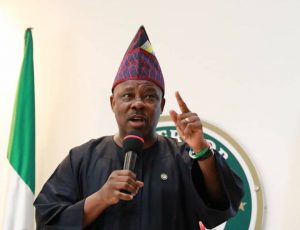
Presently in the National Assembly as a Senator representing Ogun Central, Ibikunle Amosun fca is arguably the closest southwest politician to President Buhari. He is known to be a good networker, and cannot be said to have much regard anyone, no matter how invincible.
Senator Amosun is a silent operator and has used his position to better the lots of Ogun Indigenes at that Federal level. He is also well respected by many in the party.
Despite his political clout, Amosun, according to our respondents, may just not have the political muscle to get the backing of the heavyweights of the south as was seen during the Gubernatorial primaries of the APC where his candidate of choice was roundly beaten.
That is not all, as a Muslim, he may also have the muslim-muslim challenge that the APC would rather avoid.
Amosun may have to come back home and put his house in order, and not depend on Buhari’s influence if he intends to actualise a dream bestriding the Aso Rock Villa in 2023.
YAKUBU DOGARA

Yakubu Dogara’s chances, according to most analysts appears brightest, as he seems to be the only Christian northerner, whose eyes, remotely or otherwise, are on the plum number one position.
He was born to Yakubu Ganawuri and Saratu Yakubu on December 26, 1967. He began his education in 1976 at Gwarangah Primary School in the then Tafawa Balewa Local Government Area of Bauchi State. Upon graduation in 1982, he proceeded to the Bauchi Teachers’ College for his secondary education, and obtained a Grade II Teachers’ Certificate in 1987. In 1988, he went on to the University of Jos, Plateau State, from where he obtained a Bachelor of Law (LLB Hons.) degree in 1992.
Wikipedia reports that ‘from 1992 to 1993, Dogara was a student at the Lagos campus of the Nigerian Law School and was called to the bar in 1993. He later obtained a Masters (LLM) in International Commercial Law at Robert Gordon University, Aberdeen, Scotland.
“Dogara also attended a course on Managing and Leading Strategic Change in 2006, the Oxford University Course on Negotiation in 2013, and a course on Leadership in Crisis at the Harvard Kennedy School in 2014. In October 2016, after he had become Speaker of the House of Representatives, he attended a course on transformational leadership in Cambridge University, United Kingdom.
“He first took up employment in April 1988 as a teacher at the ATBU Staff School in Bauchi. In 1993, during the mandatory National Youth Service Corps, he served at NCCF, Akwa Ibom state. Upon completion of the NYSC programme in 1994, he went into private legal practice until 2005 when he was appointed Special Assistant to the Minister of State for Transport.
“He held this position until 2006, when he decided to contest to represent the Bogoro/Dass/Tafawa-Balewa constituency at the Federal House of Representatives. His bid proved successful and he has been a member of the House since 2007.
“Dogara is a strong advocate for the independence of the legislature, and has been a member of the House of Representatives since 2007. His legislative interests include tenancy, regulating monopolies, company law, and intellectual property.”

In the midst of all the agitations for preferred candidates to assume the presidency of Nigeria, not a few Nigerians are calling on celebrated journalist and accomplished philanthropist, Chief Dele Momodu, to dust his political gown, and join the race. Their reason is based on the philanthropic gestures which the widely travelled father of four and man of the people has exhibited in recent times, using his Ovation Palliatives medium.
Much as Momodu has told as many that cared to listen that he is not interested in the exalted position since his first attempt in 2011, the generality of the public has maintained that Momodu deserves a shot at the presidency. Bob Dee, as he is fondly called, was born on May 16, 1960.
Whether he will yield or not, is probably a story for another day, but the big question now is, who will be the next President of Nigeria come 2023?



