The Nigerian government paid Boko Haram militants a “huge” ransom of millions of dollars to free up to 230 children and staff the jihadists abducted from a Catholic school in November, an AFP investigation revealed Monday.
Headline
Pendulum: Alhaji Atiku Abubakar and the Verdict of Man
Published
6 years agoon
By
Eric
By Dele Momodu
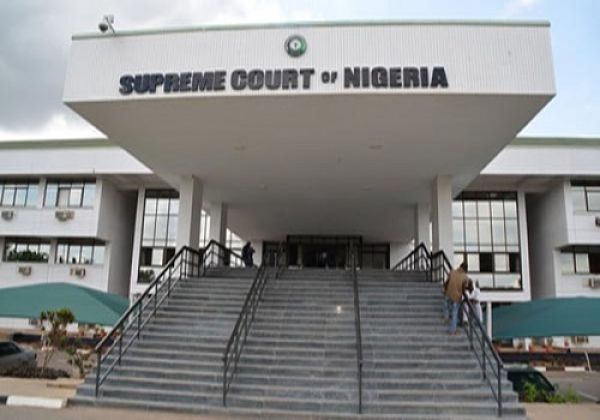
Fellow Nigerians, the cookie finally crumbled for Alhaji Atiku Abubakar two days ago as the highest court in Nigeria, the Supreme Court of Nigeria, threw his case out of the window, in a jiffy. He had approached the Supreme Court for a reprieve from what he claimed was the hellish decision of the Presidential Election Petition Tribunal dismissing his Petition on all grounds. He sought a declaration that he had won the last Presidential election against the incumbent President, Muhammadu Buhari, and that INEC, Nigeria’s electoral body had manipulated his rightful votes and dashed what belonged to him to his opponent. He said that he had the INEC server to prove the dastardly machinations of the electoral body and that his Petition should not have been dismissed, but upheld. He also made other allegations about the qualifications of the incumbent, President Muhammadu Buhari to contest the elections. His initial foray of laying his grouses before the Presidential Election Petition Tribunal had met a brick wall and his case was brushed off in a manner that stunned many observers as the Tribunal had simply pooh poohed all his frantic declarations and arguments, dismissed them out of hand as lacking any merit. The story was virtually the same at the Court of Appeal. Two days ago, the Supreme Court put the final nail into the coffin of the case. It did so in spectacular manner, not even adjourning for Judgment but instead delivering a short judgment with full reasons to be given later.
I never expected the case to go otherwise.
As a matter of fact, based on my deep knowledge of Nigeria, and a little bit of the law gleaned from some neutral friends skilled in such matters, I knew the case would eventually run into a cul-de-sac. In series of tweets, I had pleaded with the Wazirin Adamawa to concede defeat immediately after the election and leave the fight to God to fight on his behalf. Personally, I did not see the recent Presidential election as a credible one and I said so publicly. The elections were over-militarised and many voters were disenfranchised. The results declared in some areas clearly left much to be desired, recording nearly 100 percent turnout in particular instances. Prior to the elections, it was obvious that the ruling government was not going to be as generous and charitable as former President Goodluck Jonathan. There were clear indications that the government was willing and ready to compromise and control the INEC, the Judiciary, the Police, the Military and any of the other appurtenances of coercion and power.
The results that were declared dripped of abracadabra. It was like telling Nigerians to go to hell. The government understood the weakness and inherent nature of Nigerians, which is timidity. We do not have the courage or resilience of the people of Tunisia, Algeria, Egypt, Hong Kong and others. The few who take the risks often discover that they are on their own even before the chips are down. They are often dumped and discarded and deserted at the earliest sight of any resistance by the government. They are made to carry their own cross and the hero soon becomes the villain. This should not be the case, but that is a matter for another time.
This show of timorousness didn’t start in 2019, but began long ago. Most of those who died for Nigeria did so in vain, sorry for my brutal frankness but that is the sad truth. As soon as Buhari was declared by INEC as winner, I knew the game was over and no Jupiter was going to reverse that verdict. Naturally, it was a sad day for Atiku and his supporters, of which I am proud to say that I was an avowed member on this occasion. It was certainly a sad day for democracy in our land. We would not have minded if Atiku had lost a patently free and fair election. Nevertheless, and notwithstanding my strong misgivings, as a true and consummate Democrat, I was ready to accept the will of God. For me, as much as vox populi, vox Dei, so also vox Dei, vox populi – as much as it is said that the will of the people is the will of God which is the basis of democracy, more so is the will of God, the will of the people. Who are we to question the almighty?
In line with my view that man proposes and God disposes, I suggested to Atiku to accept defeat and congratulate Buhari. However, I stated further that this should not debar his party from going to court to seek redress. All hell broke loose, as usual, once this suggestion hit the airwaves. The so-called social media experts descended on me like a ton of bricks. For them, what I suggested was sheer humbug and pure heresy. If abuses alone could change a hopeless government for the better, Nigeria would have become the best country on planet earth. The intolerance and rudeness of some of our friends is incredible. They know it all and will not stomach any other views. But I saw beyond what they were seeing.
My explanation that Atiku needed to gain something out of nothing fell on deaf ears. And what did I wish for him? It was nothing other than statesmanship. But statesmanship comes at a huge price and sacrifice. It would not be easy, just remember the 27 years The Madiba, Nelson Mandela spent in prison before becoming the world’s greatest statesman. Those who would never contribute anything meaningful became the all-knowing advisers. They told Atiku he must fight all the way and to the death. This is akin to the kind of impractical pledge made by the British Prime Minister, Boris Johnson, to deliver Brexit on 31 October 2019 or die in the ditch. As it is that day has come and gone and Mr Johnson simply ditched his pledge. He did not as much as move near even a drain not to mention a ditch! This was my reason for giving my timely admonition to Atiku. One must never burn all their bridges especially where the high stakes of politics is involved. I preferred his party to fight on instead. That’s their responsibility. Atiku should have detached himself at that stage, as simple as that. He and his Vice Presidential candidate, Peter Obi, my dear friend, who enjoys my highest regards, should have stayed in the background and watched from the side-lines.
I knew how much the elections had taken its toll on them. They and their key supporters were harassed and blocked, here and there. They were hounded and arrested. It was like tying the hands and legs of a boxer in the ring while his opponent was free to throw heavy punches. Lord have mercy! Atiku and Obi suffered. They were oppressed and pummelled. But I knew going to court was going to compound their trauma. It was like throwing away the possibility of an honourable and distinguished points or majority decision for the humiliation of a technical knockout or straight knockout. There are times you must leave vengeance to God. In God’s time, everything will fall in place. After such a gallant fight, they should have retreated and hand over their battle to the greater one who giveth and taketh.
The pain of watching them go from court to court was unbearable for me. The temporary owners of the land had ensured a monumental blockade. The road led nowhere. It was virtually impossible for any court to reverse a Presidential election, in our unusual clime and circumstances. Even the law does not seem to be on the side of the loser in a Presidential election. The odds are truly stacked against such a person. This was the meat of the lecture delivered by the distinguished legal luminary, Chief Wole Olanipekun, at the University of Oxford, shortly after the elections.
Again, I didn’t need any power or gift of clairvoyance to know how the Supreme Court case would go, another dead end, a terminal one, and that was it. I expected our man to simply accept the final verdict, devoid of the stylish vituperation, and the veiled anger at the failure of the Supreme Court to declare him victorious. As for me and my house, once you decide to go to court, it is like a game of football. The moment the referee blows the final whistle, the game is over, even if you feel cheated and robbed by all the officials including the Video Assistant Referee (VAR).
Even now, at the end of the titanic battle fought through the Courts by the protagonist, Alhaji Abubakar Atiku, I believe that he has failed to seize the initiative and the opportunity presented by the Supreme Court decision. His tirade and invective after the decision is not what I would expect of someone who aspires to be one of the world’s leading Statesmen.
His denigrating and disparaging remarks about the judiciary and the apex court in Nigeria was ill-advised. The judiciary is the last bastion of the people. Even though there may be faults here and there, it is clear that they have been doing their best in a particularly difficult terrain. They have virtually become the whipping boys and girls of the Executive and veritable lambs of God who must carry away the sins of the world. Like journalists, everyone expects the sacrifice their everything while we sit comfortably in our homes.
I am aware that many PDP candidates have either had their elections confirmed or their appeals against electoral losses upheld. It cannot be the case that when court decisions favour you, then you trumpet the great admiration and respect you have for the judiciary, but when you lose, you harshly criticise the same institution. This was a chance for Atiku to call for the reform of those institutions he found wanting without heaping blames and subliminal insults on those presently occupying those institutions.
I would have expected Atiku to borrow a leaf from the distinguished and well-respected world statesman, Albert Arnold Gore Jr, former Vice President of the United States, who fought a similar battle all the way to the US Supreme Court. On 12 December 2000, the US Supreme Court, by a split decision, 5-4, decided that recounting the Florida votes beyond 12 December 2000 was unconstitutional. This meant that Gore had lost Florida by a meagre 537 votes and would eventually lead him to losing to George W Bush Jr in the Electoral College by only 6 votes. Gore conceded the election to Bush the following day even though he strongly disapproved of the US Supreme Court decision. As he stated, “for the sake of our unity as a people and the strength of our democracy, I offer my concession.”. I know that Atiku is a democrat and patriot which he mentioned in his release but he should have spared the rod on the Justices. He must understand that ultimately, this is not about him and his ambition. It is a test of Nigeria’s fledgling democracy and the unity of its people for which he must stand up and be counted. God’s will is always done eventually and Nigeria shall rise again.
Having said all this, I must sign off by extending my sincere congratulations to Alhaji Atiku Abubakar and Mr Peter Obi on a good fight. The forces they battled were heavy and monumental. Atiku is a man and half, in my view. He is a case study in courage and confidence. May they and their families be blessed…
DELE AGEKAMEH: AND MY CHILDHOOD FRIEND DIED
Every now and then, everyone receives a piece of news that shatters him completely. Such was the story that my childhood friend and Brother, Dele Agekameh, has passed on. My initial reaction, naturally, was shock, then incredulity and denial and finally, grief. How can Dele die? A man I have known for nearly five decades. We both attended the famous St. John’s Grammar School, Ile-Ife where our paths crossed and were of course close friends with the children of the royal household of Ooni Adesoji Aderemi KBE, KCMG, where Dele’s father worked as Baba Aafin’s Major Domo. Dele was treated by Baba Aafin like one of his last sons. Indeed, one of the last gestures of Ooni Aderemi, was to pay for Dele to proceed for further education in Greece even before he sorted out his own last born who was Dele’s friend and age mate. Baba treated everybody in his household in the same way, whether they were his children or his staff, and I recall that Dele lived with his father within the precincts of the Palace and moved to Atobatele, Ooni Aderemi’s stately mansion, a stone throw from the palace, when the highly revered monarch joined his ancestors.
It was impossible to be at St. John’s Grammar School, where I joined them from 1973-76, and not know Dele. His command of English language was second to none. He enjoyed grandiloquent and bombastic language, which was a reflection of his personality. Dele was warm and colourful.
As soon as he left Ife, he found a job and was offered an official car. Dele would drive to Ife and make sure he blew money on us his friends. He was so generous.
I wasn’t surprised when Dele subsequently found his way to Newswatch magazine and later Tell magazine. His stories and editorial interventions were always written from the heart. We were both very busy and didn’t speak much, but every time we did, Dele was forever his effervescent self. He joked a lot.
I never knew he battled any ailment. Dele never liked to push his burden on anyone. He had passed on before I ever knew anything. I was totally devastated that Nigeria has lost yet another brilliant son and I have lost a dear friend and colleague.
My condolences to the family he left behind. May God almighty be with everyone of them. And may his kind soul rest in peace…
Related
You may like
Headline
Opposition Parties Reject 2026 Electoral Act, Demand Fresh Amendment
Published
10 hours agoon
February 26, 2026By
Eric
Opposition political parties have rejected the 2026 Electoral Act recently passed by the National Assembly, which President Bola Tinubu swiftly signed into law.
The parties called on the National Assembly to immediately begin a fresh amendment process to remove what they described as “all obnoxious provisions” in the law.
Their position was made known at a press briefing themed “Urgent Call to Save Nigeria’s Democracy,” held at the Transcorp Hilton Hotel in Abuja on Thursday.
In a communiqué read by the Chairman of the New Nigeria Peoples Party (NNPP) Ahmed Ajuji, the opposition leaders stated:
“We demand that the National Assembly immediately commence a fresh amendment to the Electoral Act 2026, to remove all obnoxious provisions and ensure that the Act reflects only the will and aspiration of Nigerians for free, fair, transparent and credible electoral process in our country. Nothing short of this will be acceptable to Nigerians.”
Some of the opposition leaders present in at the event include former Senate President David Mark; former Governor of Osun State, Rauf Aregbesola; former Vice President Atiku Abubakar; former Governor of Rivers State, Chibuike Rotimi Amaechi; and former Governor of Anambra State, Peter Obi, all from the African Democratic Congress (ADC).
The National Chairman of the New Nigeria Peoples Party (NNPP), Ahmed Ajuji, and other prominent members of the NNPP, notably Buba Galadima, were also in attendance.
The coalition said the amended law, signed by Bola Tinubu, contains “anti-democratic” clauses, which they argue may weaken electoral transparency and public confidence in the voting system.
At the centre of the opposition’s concerns is the amendment to Section 60(3), which allows presiding officers to rely on manual transmission of election results where there is communication failure.
According to the coalition, the provision weakens the mandatory electronic transmission of results and could create loopholes for manipulation.
They argued that Nigeria’s electoral technology infrastructure is sufficient to support nationwide electronic transmission, citing previous assurances by officials of the Independent National Electoral Commission (INEC).
The parties also rejected the amendment to Section 84, which restricts political parties to direct primaries and consensus methods for candidate selection.
They described the change as an unconstitutional intrusion into the internal affairs of parties, insisting that indirect primaries remain a legitimate democratic option.
The opposition cited alleged irregularities in the recent Federal Capital Territory local government elections as evidence of what they described as a broader pattern of electoral compromise.
They characterised the polls as a “complete fraud” and said the outcome has deepened their lack of confidence in the ability of the electoral system to deliver credible elections in 2027.
The coalition also condemned reported attacks on leaders of the African Democratic Congress in Edo State, describing the incidents as a serious threat to democratic participation and political tolerance.
They warned that increasing violence against opposition figures could destabilise the political environment if not urgently addressed.
In their joint statement, the opposition parties pledged to pursue “every constitutional means” to challenge the Electoral Act 2026 and safeguard voters’ rights.
“We will not be intimidated,” the leaders said, urging civil society organisations and citizens to support efforts aimed at protecting Nigeria’s democratic system.
On February 18, 2026, President Bola Tinubu signed the Electoral Act (Amendment) 2026 into law following its passage by the National Assembly. The Act introduced several reforms, including statutory recognition of the Bimodal Voter Accreditation System and revised election timelines.
However, opposition figures such as Atiku Abubakar and Peter Obi have also called for further amendments, particularly over the manual transmission fallback clause, which critics say leaves room for manipulation.
The president said the law will strengthen democracy and prevent voter disenfranchisement.
Tinubu defended manual collation of results, questioned Nigeria’s readiness for full real-time electronic transmission, and warned against technical glitches and hacking.
The Electoral Act sparked intense debate in the National Assembly over how election results should be transmitted ahead of the 2027 general elections.
Civil society groups under the “Occupy NASS” campaign demanded real-time transmission to curb manipulation.
In the Senate, lawmakers clashed during consideration of Clause 60, which allows manual transmission of results if electronic transmission fails.
Senator Enyinnaya Abaribe (ADC, Abia South) demanded a formal vote to remove the proviso permitting manual transmission, arguing against weakening real-time electronic reporting.
The move led to a heated exchange on the floor, with Senate President Godswill Akpabio initially suggesting the demand had been withdrawn.
After procedural disputes and a brief confrontation among senators, a division was conducted. Fifteen opposition senators voted against retaining the manual transmission proviso, while 55 supported it, allowing the clause to stand.
Earlier proceedings had briefly stalled during clause-by-clause review, prompting consultations and a closed-door session.
In the House of Representatives, a similar disagreement came up over a motion to rescind an earlier decision that mandated compulsory real-time electronic transmission of results to IReV.
Although the “nays” were louder during a voice vote, Speaker Tajudeen Abbas ruled in favour of rescinding the decision, triggering protests and an executive session.
Related
Headline
AFP: How Tinubu’s Govt Paid Boko Haram ‘Huge’ Ransom, Released Two Terrorists for Kidnapped Saint Mary’s Pupils
Published
3 days agoon
February 24, 2026By
Eric
Two Boko Haram commanders were also freed as part of the deal, which goes against the country’s own law banning payments to kidnappers. The money was delivered by helicopter to Boko Haram’s Gwoza stronghold in northeastern Borno state on the border with Cameroon, intelligence sources told AFP.
The decision to pay the militants is likely to irritate US President Donald Trump, who ordered air strikes on jihadists in northern Nigeria on Christmas Day and has been sent military trainers to help support Nigerian forces.
Nigerian government officials deny any ransom was paid to the armed gang that snatched close to 300 schoolchildren and staff from St. Mary’s boarding school in Papiri in central Niger state on November 21. At least 50 later managed to escape their captors.
Boko Haram has not been previously linked to the kidnapping, but sources told AFP one of its most feared commanders was behind the mass abduction: the notorious jihadist known as Sadiku.
He infamously held up a train from the capital in 2022 and netted hefty ransoms for the release of government officials and other well-off passengers.
Boko Haram, which has waged a bloody insurgency since 2009, is strongest in northeast Nigeria.
But a cell in central Niger state operates under Sadiku’s leadership. The St. Mary’s pupils and staff were freed after two weeks of negotiations led by Nuhu Ribadu, Nigeria’s National Security Adviser, with the government insisting no ransom was paid. Nigeria’s State Security Service flatly denied paying any money, saying “government agents don’t pay ransoms”.
However, four intelligence sources familiar with the talks told AFP the government paid a “huge” ransom to get the pupils back. One source put it at 40 million naira per head – around $7 million in total.
Another put the figure lower at two billion naira overall. The money was delivered by chopper to Ali Ngulde, a Boko Haram commander in the northeast, three sources told AFP.
Due to the lack of communications cover in the remote area, Ngulde had to cross into Cameroon to confirm delivery of the ransom before the first group of 100 children were released.
Nigeria has long been plagued by mass abductions, with criminals and jihadist groups sometimes working together to extort millions from hostages’ families, and authorities seemingly powerless to stop them.
Source: Africanews
Related
Headline
Unlawful Invasion: El-Rufai Drags ICPC, IGP, Others to Court, Demands N1bn Damages
Published
4 days agoon
February 23, 2026By
Eric
Former Governor of Kaduna State, Nasir El-Rufai, has slammed a ₦1 billion fundamental rights enforcement suit against the Independent Corrupt Practices and Other Related Offences Commission (ICPC) for what he claimed was an unlawful invasion of his Abuja residence.
El-Rufai, in a suit filed at the Federal High Court in Abuja, also listed the Chief Magistrate, Magistrate’s Court of the FCT, Abuja Magisterial District; Inspector-General of Police, and the Attorney-General of the Federation (AGF) as 2nd to 4th respondents respectively.
According to the suit filed through his lawyers, led by Oluwole Iyamu, El-Rufai prayed the court to declare that the search warrant issued on February 4 by the Chief Magistrate, Magistrate’s Court of the FCT (2nd respondent), authorising the search and seizure at his residence as invalid, null and void.
Security operatives had stormed and searched the former Governor’s residence in the ongoing investigations against him.
However, he argued in the case marked: FHC/ABJ/CS/345/2026, that the search was in violation of Section 37 of the Constitution, and urged the court to declare that the search warrant was “null and void for lack of particularity, material drafting errors, ambiguity in execution parameters, overbreadth, and absence of probable cause thereby constituting an unlawful and unreasonable search.”
In the suit dated and filed February 20 by Iyamu, ex-governor, who is currently under detention, sought seven reliefs.
He prayed the court to declare that the invasion and search of his residence at House 12, Mambilla Street, Aso Drive, Abuja, on Feb. 19 at about 2pm and executed by agents of ICPC and I-G, “under the aforesaid invalid warrant, amounts to a gross violation of the applicant’s fundamental rights to dignity of the human person, personal liberty, fair hearing, and privacy under Sections 34, 35, 36, and 37 of the Constitution.”
He urged the court to declare that “any evidence obtained pursuant to the aforesaid invalid warrant and unlawful search is inadmissible in any proceedings against the applicant, as it was procured in breach of constitutional safeguards.”
El-Rufai, therefore, sought an order of injunction restraining the respondents and their agents from further relying on, using, or tendering any evidence or items seized during the unlawful search in any investigation, prosecution, or proceedings involving him.
“An order directing the Ist and 3rd respondents (ICPC and I-G) to forthwith return all items seized from the applicant’s premises during the unlawful search, together with a detailed inventory thereof.
“An order awarding the sum of N1,000,000,000.00 (One Billion Naira) as general, exemplary, and aggravated damages against the respondents jointly and severally for the violations of the applicant’s fundamental rights, including trespass, unlawful seizure, and the resultant psychological trauma, humiliation, distress, infringement of privacy, and reputational harm.”
The breakdown of the ₦1 billion in damages includes “a N300 million as compensatory damages for psychological trauma, emotional distress, and loss of personal security;
“A ₦400 million as exemplary damages to deter future misconduct by law enforcement agencies and vindicate the applicant’s rights.
“A ₦300 million as aggravated damages for the malicious, high-handed and oppressive nature of the respondents’ actions, including the use of a patently defective warrant procured through misleading representations.”
He equally sought ₦100 million as the cost of filing the suit, including legal fees and associated expenses.
Iyamu argued that the search warrant was fundamentally defective, lacking specificity in the description of items to be seized, containing material typographical errors, ambiguous execution terms, overbroad directives, and no verifiable probable cause.
He added that the warrant violated Sections 143-148 of the Administration of Criminal Justice Act (ACJA), 2015; Section 36 of the Corrupt Practices and Other Related Offences (ICPC) Act, 2000, and constitutional protections against arbitrary intrusions and several other constitutional provisions.
“Section 146 stipulates that the warrant must be in the prescribed form, free from defects that could mislead, but the document is riddled with errors in the address, date, and district designation;
“Section 147 allows direction to specified persons, but the warrant’s indiscriminate addressing to “all officers is overbroad and unaccountable.
“Section 148 permits execution at reasonable times, but the contradictory language creates ambiguity, undermining procedural clarity,” he submitted.
Iyamu stated that the execution of the invalid warrant on Feb. 19 resulted in an unlawful invasion of his client’s premises, constituting violations of the rights to dignity (Section 34), personal liberty (Section 35), fair hearing (Section 36), and privacy (Section 37) of the Constitution.
He further argued that the search was conducted without legal justification and in a manner that inflicted humiliation and distress.
“Evidence obtained without a valid warrant is unlawful and inadmissible, as established in judicial precedents such as C.O.P. v. Omoh (1969) NCLR 137, where the court ruled that evidence procured through improper means contravenes fundamental rights and must be excluded,” he said.
In the affidavit in support of the application, Mohammed Shaba, a Principal Secretary to the former governor, averred that on Feb. 19 at about 2p.m., officers from the ICPC and Nigeria Police Force invaded the residence under a purported search warrant issued on or about Feb. 4.
According to him, the said warrant is invalid due to its lack of specificity, errors, and other defects as outlined in the grounds of this application.
He said the “search warrant did not specify the properties or items being searched for.”
Shaba stated that the officers failed to submit themselves for search as provided by the law before proceeding with the search.
“That the Magistrate did not specify the magisterial district wherein he sits.
“That during the invasion, the officers searched the applicant’s premises without lawful authority, seized personal items including documents and electronic devices, and caused the applicant undue humiliation, psychological trauma, and distress.
“Now shown to me and marked as ‘EXHIBIT B’ Is the list of the items carted away.
“That no items seized have been returned, and the respondents continue to rely on the unlawful evidence.
“That the applicant suffered violations of his constitutional rights as a result, and this application is brought in good faith to enforce same,” Shaba said.
Source: Naijanews.com
Related


INEC Moves Presidential, Guber Elections to January and February Respectively
Opposition Parties Reject 2026 Electoral Act, Demand Fresh Amendment
FCCPC Uncovers Patterns of Price Manipulation by Local Airlines
Many Killled, Houses Torched As Terrorists Unleash Deadly Attacks on Adamawa Communities
Fubara Appoints New SSG, Chief of Staff
Bill Gates Denies Involvement with Epstein, Admits Dating Two Russian Ladies
Tiwa Savage Launches Music Foundation in Lagos
In Death, Charles Taylor Jr. Reunites Liberians
The Power of Strategy in the 21st Century: Unlocking Extraordinary Possibilities (Pt. 2)
Princess Olufunmilayo Omisore Celebrates Grand 80th Birthday in Lagos
How an Organist Can Live a More Fulfilling Life
Adding Value: Confidence and Succces by Henry Ukazu
Vote Buying, Low Turnout Mar FCT Polls – Yiaga Africa
Vexatious and Meddlesome: ADC Condemns Wike’s Tour of FCT Polling Units
Trending
-
Boss Picks4 days agoIn Death, Charles Taylor Jr. Reunites Liberians
-
Opinion6 days agoThe Power of Strategy in the 21st Century: Unlocking Extraordinary Possibilities (Pt. 2)
-
Events4 days agoPrincess Olufunmilayo Omisore Celebrates Grand 80th Birthday in Lagos
-
Opinion4 days agoHow an Organist Can Live a More Fulfilling Life
-
Adding Value5 days agoAdding Value: Confidence and Succces by Henry Ukazu
-
Featured5 days agoVote Buying, Low Turnout Mar FCT Polls – Yiaga Africa
-
News5 days agoVexatious and Meddlesome: ADC Condemns Wike’s Tour of FCT Polling Units
-
Headline3 days agoAFP: How Tinubu’s Govt Paid Boko Haram ‘Huge’ Ransom, Released Two Terrorists for Kidnapped Saint Mary’s Pupils