Connect with us

Featured

ICYMI – South East: In search of Political Freedom

Published

on

By Eric Elezuo

When the events of Nigeria’s political independence began to unfold in the late fifties culminating in the proper independence in 1960, it looked very obvious that the south easterners of Igbo extraction were sure to lead the political affairs of the country. With the likes of Dr. Nnamdi Azikiwe, Matthew Mbu, Michael Okpara and others, the stage was set for the very enlightened Igbo men and women to dominate the political climax of the Nigerian nation.

But the expected was not to be as the dominance of the sect was cut short with the ambition of the Northerners who took up the mantle immediately, relegating the Igbo race to playing the second fiddle then; a situation that has today worsened, relegating the race further down the lane to utmost oblivion with the coming of President Muhmmadu Buhari.

Since the post-independence era, leading to the first coup in 1966 by Major Chukwuma Kaduna Nzeogwu, the Igbo race has lost its pride of place in the affairs of the Nigerian nation, following distantly behind the northerners and the westerners, and recently, the people of the South South, which has always been known as the minority.

In 1960, the formidable, but unfavourable alliance of the National Council of Nigerian Citizens (NCNC) led by Dr. Nnamdi Azikiwe and the Northern Peoples Congress (NPC) led by Alhaji Almadu Bello, the Sarduana of Sokoto created the way for the in balance in political leanings where Azikiwe and his bunch of followers, majorly of Igbo extracts, played second fiddle to the NPC.

This imbalance was to continue in 1963 when Nigeria became a republic. Dr. Azikiwe became the ceremonial President while the north produced Abubakar Tafawa Balewa as the Prime Minister, with all the powers.

Events came to a head with the coup of 1966 which saw the killing of top government officials, notably from the north, and the counter coup six months later which claimed the life of General Aguiyi Ironsi, the first and last Igbo man to hold the exalted position of first citizen in Nigeria.

The holocaust that followed afterwards in the north further demoralized the average Igbo man, and created an untold fear in him towards believing that someone else owns the entity called Nigeria.

This therefore, prompted the young Major in the Nigerian army, Odimegwu Ojukwu, to secede from the entity called Nigeria, creating another, called Biafra; a move that was rebuffed by Nigeria, supported by most major world powers. And for 30 months, the bloody struggle to either keep or destroyed Biafra was undertaken. In the end, Biafra was subdued!

Though the administration of General Yakubu Gowon then pledged total reconciliation, the South easterners have felt neglected political and otherwise since then.

However, on two different occasions, the geo-political zone has produced number two citizens; first in 1979 during the Second Republic with Dr. Alex Ekwueme as the Vice President to Alhaji Shehu Shagari and in 1985 with Commodore Ebitu Ukiwe, during the Administration of General Ibrahim Babangida. On those occasions, the administrations were truncated; the first through a military coup, and the second through un-ceremonial removal.

Since then the region has been embroiled in the search for political freedom and relevance in an entity that ‘scarcely recognized their existence’.

Consequently, the craze to join the party in power has become the in thing as the politicians of the region has joined the maddening crowd in the quest to cross carpet from one ruling party to another. While on the other hand, remnant groups have been formed to bring about secession from the ‘geographical expression’ better known as Nigeria. This is the reason the most vocal of all secessionist groups ever formed, the Indigenous Peoples of Biafra (IPOB) led by the maverick Mazi Nnamdi Kanu, came into existence.

Recently in 2016, a former National Chairman of the Peoples Democratic Party (PDP), Dr. Okwesilieze Nwodo, former Minister of Labour and Productivity, Dr. Emeka Worgu and former House of Representatives Speaker, Agunwa Anakwe, defected to the All Progressives Congress (APC) in Enugu.

Others who defected were Senators Emma Agboti, Chris Adighije, Nkechi Nwogu and Ifeanyi Ararume. Senator Jim Nwobodo, Gbazuagu Nweke Gbazuagu, former Imo State House of Assembly Speaker, Benjamin Uwajumogu, and Dr. Ezekiel Izuogu also joined the ruling party.

On hand to receive the decampees, which has hitherto become the name of most Igbo politicians, were chieftains of the APC in South-East including the national vice-chairman and convener of the meeting, Emma Eneukwu; National Organising Secretary of the party, Senator Osita Izunaso; National Auditor, George Moghalu; Deputy National Women Leader, Tina Adike and the standard bearer of the party in Enugu State, Okey Ezea, men and women who at one time or another been in the PDP.

The reason for this decamping according to one of the South East political heavyweight, Emma Eneukwu, is principally for the benefit of becoming politically relevant, saying that most of the juicy positions due the South-East were “being denied us because of our poor performance in 2015 elections”.

“With the array of prominent politicians from South-East joining us now, we shall work hard this time and turn things around,” he assured.

Enekwu’s assertion has been an age long thing which happens dispensation after dispensation in the political circuit, yet nothing of repute since to take place.

The frustration of the political alienation has therefore created agitations and agitators for the defunct state of Biafra.

According to a political analyst, Dike Uguru, based in Aba, the rise of various State of Biafra agitators is as a result of the hard to swallow knowledge that nothing positive can happen to the Southeasterner again in the Nigerian society so the desire to have a separate state.

“The frustration of alienation is the only reason for the renewed call for the state of Biafra. The Igbo man is sadly aware that there is no future for him in the Nigerian entity, politically, so the desire to create his own state,” he said.

However, he added, “the disunity and lack of trust that has come to become a trademark among the collective body will surely not allow the average Igbo man to gain the political freedom he so much desired.”

It will be recalled that if not for the home town of Odumegwu Ojukwu, who founded the All Progressives Grand Alliance (APGA), no other state considered it wise to follow the warlord, who claimed to have come to give the Igbo man identity. APGA, as a party, is only alive in Anambra State where Chief Willie Obiano is the governor. The other states that make up the five states in the region are also separated along party lines. While Rochas Okorocha of Imo State belongs to the APC, Dave Umahi, Okezie Ikpeazu, and Ifeanyi Ugwuanyi of Ebonyi, Abia and Enugu states respectively belong to the Peoples Democratic Party (PDP).

This inability to forge one common front in spite of the of the existence of the Ohaneze Ndigbo, a pan-Igbo cultural organization, led to the formation of the Movement for the Actualisation of the Sovereign State of Biafra (MASSOB) led by Ralph Uwazuruike. Uwazuruike’s movement was still in existence when Nnamdi Kanu founded the Indigenous People of Biafra (IPOB).

Hear Uguru: “One would have expected that Nnamdi Kanu would meet Ralph Uwazuruike, since he was there before him, and robbed minds as to how their quest could be actualized. But because everyone wants to be the very leader, that was not done, and today, both are at each other’s throat. Tell me how the mandate would be actualized? The easterners are not just ready to free themselves.”

With the sound of discordant tunes coming from all quarters of the South East, stakeholders believe that it will take forever before the political liberty the region so much demand will belong reality.

“I think this issue of political liberty is within our finger tips, and we are busy searching for it far away from where it is. There are sovereign governors among us, who have been bestowed with political powers but lack something very minute but important – political will power; the governors lack political willpower. If they do, they would have come together, not minding party affiliation, and forge a way forward for the geo-political region,” said Innocent Egbuchu, a Political Scientist.

He added that though it is fair in all its ramification if the Southeast is given a shot at the Presidency, they don’t however, need the Presidency to do their region well.

It is only then that the expected desire of the region for 2023 will become a reality as in the word of the National Vice Chairman of the APC, Emma Eneukwu: “We believe by 2023, the President of a united Nigeria will be a Nigerian of Igbo extraction from the South-East.”

Continue Reading
Click to comment

Leave a Reply

Your email address will not be published. Required fields are marked *

Featured

How I Made Buhari President in 2015 – Amaechi

Published

on

By

Former Rivers State Governor and ex-Minister of Transport, Rotimi Amaechi, has said that he, and not President Bola Tinubu, played the pivotal role in making late Muhammadu Buhari president in 2015.

In a Friday interview on Arise News’ Prime Time, Amaechi, who is now a presidential aspirant under the African Democratic Congress, addressed longstanding claims by Tinubu.

During his pre-2023 campaigning, Tinubu said Buhari would not have become president without him and that it was his turn to become one too.

But Amaechi explained that as a serving minister under Buhari, he could not publicly challenge Tinubu’s assertions to avoid risking his position.

“When we decided to form the APC, while I was a minister, (Tinubu) was claiming he made Buhari president and I couldn’t respond because I was a minister under President Buhari. That would have been suicidal because Buhari could fire you,” Amaechi said.

He continued, “So I couldn’t have said, ‘You are wrong.’ He didn’t make President Buhari president. Not only was I the DG of the campaign, but everybody will bear witness that I did all the battle.

“I led the Governors’ Forum, criss-crossed the country fighting here and there trying to get Nigerians to know that this is the time for change.”

Amaechi served as Director-General of Buhari’s 2015 and 2019 presidential campaigns.

He was a key figure in the 2013–2014 defection of PDP governors that helped form the APC alliance, which ultimately defeated President Goodluck Jonathan.

However, Tinubu was also instrumental in Buhari’s emergence, leading the merger of major opposition parties, including his Action Congress of Nigeria, to form the All Progressives Congress, which challenged and defeated the then-ruling PDP.

The remarks come amid Amaechi’s positioning for the 2027 presidential race as part of the growing opposition coalition under the ADC.

He has been vocal in recent months criticising the Tinubu administration over economic hardship.

Continue Reading

Featured

GLO: The Undisputed Digital Oxygen

Published

on

By

By Dr. Sani Sa’idu Baba

In medicine, oxygen is the invisible molecule upon which all human life depends. Remove it, and the body shuts down almost instantly. The brain weakens, the heart struggles, and every organ begins to fail. As someone who studies how the human body works, I have always understood the centrality of oxygen to biological existence. But in recent years, watching Nigerian society evolve in the digital age, I have arrived at another conclusion: connectivity has become the oxygen of modern civilisation.

Without network connectivity today, businesses freeze, students lose access to learning, hospital records fall into jeopardy, POS transactions struggle, markets slow down, and families become disconnected. Digital access is no longer a luxury; it is the infrastructure upon which modern life breathes.

And in Nigeria, one network increasingly stands out as the supplier of that digital oxygen: GLO.

Across campuses, markets, offices, villages, and urban centres, millions of Nigerians now depend on the Glo network for the daily rhythm of their lives. For students, it powers e-learning, research databases, virtual classrooms, and academic collaboration. For traders and entrepreneurs, it sustains mobile banking, online transactions, advertising, and customer communication. For farmers in rural communities, it ensures communication with farmland workers. For doctors and healthcare professionals, it enables telemedicine and rapid information exchange. In many homes, Glo is the invisible bridge connecting families separated by distance.

This is why many Nigerians increasingly describe Glo not merely as a telecom company, but as a necessity.

What is even more fascinating is the growing public confidence in Glo’s reliability, something I have personally witnessed. I recently observed a man asking a shop attendant to call his boss. After placing the call once, the attendant calmly replied, “Sir, his phone is switched off.” The man insisted he should call repeatedly before concluding. The attendant smiled and responded, “Sir, I am using Glo network. If Glo says the phone is unavailable, then it is unavailable.” Everyone around laughed, but beneath the humour was a powerful reality: people increasingly trust the reliability and clarity of the Glo network. That brief moment was more than a casual conversation; it was a testimony to the confidence Glo has quietly built among Nigerians.

The reality becomes even clearer during moments of national stress. In an era defined by climate change, unstable electricity supply, flooding, extreme heat, and infrastructural disruption, telecommunications networks face enormous pressure. Floodwaters damage fibre optic cables. Heat weakens sensitive electronic systems. Power failures destabilise base stations. Yet despite these challenges, millions of Nigerians continue to experience remarkable connectivity stability on Glo.

That stability is not accidental. Globacom has continued to invest heavily in infrastructure upgrades and network improvement projects aimed at enhancing customer experience nationwide. For millions of Nigerians, clearer calls and faster internet are no longer wishes but daily realities because of the company’s sustained commitment to expanding and strengthening its network systems.

What makes Glo exceptional is not simply its coverage, but its resilience. The company has increasingly embraced hybrid energy solutions involving solar systems and battery storage technology to reduce dependence on diesel-powered infrastructure. This improves network reliability during grid failures while simultaneously reducing environmental pressure. Glo has also undertaken extensive fibre reconstruction and relocation projects across Nigeria, redesigning network routes to withstand environmental disruptions such as flooding, erosion, and climate-related damage. Its investments in expanded spectrum capacity and advanced technologies have further improved efficiency, enabling stronger data delivery and smoother connectivity for subscribers across the country.

From my vantage point in Kano, a region experiencing intense heat and significant environmental pressure, the importance of resilient connectivity cannot be overstated. For traders in Sabon Gari Market, network access means economic survival. For students at Bayero University, it means uninterrupted learning and research. For countless young Nigerians trying to build digital businesses, it means opportunity itself.

In many respects, Glo functions like the respiratory system of Nigeria’s digital society. The Glo-1 submarine cable and Glo fibre optics act like lungs, bringing global bandwidth into the country. The national fibre network resembles blood vessels distributing connectivity nationwide. The 4G LTE base stations function like capillaries, delivering data directly to the individual user whether in Kano or far beyond.

The subscriber shouting “Glo Unlimited!” during a blackout while data continues flowing is not merely celebrating affordable internet. They are experiencing the result of years of investment, resilience engineering, and technological foresight.

Calling Glo “The Digital Oxygen” of Nigeria is therefore not poetic exaggeration, it is an acknowledgment of reality. In a country where millions now live, learn, trade, communicate, and dream through digital connectivity, Glo has become more than a network provider. It has become the vital breath upon which modern Nigerian life increasingly depends…

Dr. Sani Sa’idu Baba writes from Kano, and can be reached via drssbaba@yahoo.com

Continue Reading

Featured

Ooni of Ife, Wife Welcome Twin Sons

Published

on

By

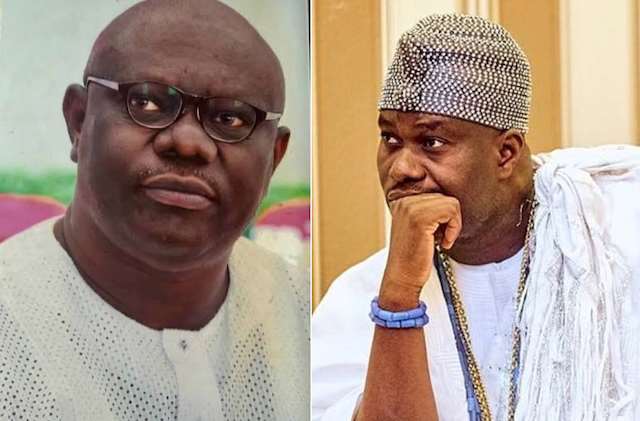
The Ooni of Ife, Adeyeye Ogunwusi, has announced the birth of twin princes with his wife Mariam Ajibola, to the Royal House of Oduduwa.

The monarch disclosed this in a post shared on his official Facebook page on Friday, expressing gratitude to God for the safe delivery of the children and the wellbeing of their mother.

“To God be all the glory and adoration for His wondrous works and abundant blessings once again.

The announcement has drawn congratulatory messages from admirers and members of the Yoruba royal institution celebrating the arrival of the newborn princes.

After his marriage to Naomi Silekunola ended, the Ooni married several queens within a short period in 2022.

Among the queens are Mariam Anako, Elizabeth Akinmuda, Tobiloba Phillips, Ashley Adegoke, Ronke Ademiluyi and Temitope Adesegun.

During celebrations marking his 48th birthday and seventh coronation anniversary, the monarch explained that his marriages were connected to the traditional heritage and responsibilities attached to the throne of Ile-Ife.

Continue Reading

Trending