
Featured
Memo to the President: COVID-19: Significance of Lockdown Measure: A Clarion Call For Alternate and Desperate Measures


Featured
Responsible Media, Drug-Free Nigeria: NOMA, Stakeholders Rally Journalists on Prevention, Advocacy


By Eric Elezuo
As Nigeria joined the global community to commemorate the 2026 International Day Against Drug Abuse and Illicit Trafficking, stakeholders from the media, healthcare, law enforcement, government and the private sector gathered in Lagos to chart a new course in the fight against substance abuse.
The Media Practitioners’ Capacity Building Programme, organized by the Nigerian Online Media Alliance (NOMA), a coalition of digital media publishers and journalists committed to promoting ethical journalism, media development, and impactful public advocacy across Nigeria, on Thursday, 25th June, 2026, at the Federal Neuro-Psychiatric Hospital, Yaba, Lagos, chart a new order to deal with the monster ravaging the society.


The conference, which was organized in collaboration with the International Society of Substance Use Prevention and Treatment Professionals (ISSUP Nigeria), the National Drug Law Enforcement Agency (NDLEA), and the Federal Neuro-Psychiatric Hospital, Yaba, provided a platform for experts to examine the role of journalism in promoting prevention, advocacy, and public awareness.
With the theme: “Responsible Media, Drug-Free Nigeria: The Journalist’s Role in Prevention and Advocacy,” the programme brought together policymakers, public health experts, anti-drug advocates, security agencies, media executives, and journalists, all united by a common goal: reducing the devastating impact of drug abuse on Nigerian society.


In her welcome remarks, the Chairperson of the Nigerian Online Media Alliance (NOMA), Theresa Moses, described the event as a strategic intervention aimed at equipping journalists with the knowledge and skills required to address one of Nigeria’s most pressing social challenges.
She noted that drug abuse and illicit trafficking has continued to threaten families, communities, educational institutions, and national development.
Moses emphasized that journalists occupy a unique position in society as educators, agenda-setters, storytellers, and advocates capable of influencing public perception and behaviourial change.
“The stories we tell, the language we use, the facts we verify, and the issues we prioritize all contribute to shaping public understanding and influencing behaviour,” she stated.


She urged media practitioners to embrace ethical journalism and evidence-based reporting while avoiding sensationalism and misinformation that could undermine prevention efforts.
Theresa stressed that responsible journalism can help strengthen public awareness, reduce stigma, promote recovery, and support national efforts aimed at creating a drug-free Nigeria.
In a keynote address, Dr. Olugbenga Owoeye, the Chief Medical Director of the Federal Neuro-Psychiatric Hospital, Yaba, described drug abuse and illicit trafficking as a major public health challenge affecting countries across the world.
He noted that Nigeria has continued to grapple with high prevalence of substance abuse, making it imperative for all stakeholders to join forces in addressing the menace.


According to him, prevention remains the most effective and cost-efficient strategy.
Dr. Owoeye emphasized that the shortage of mental health professionals in Nigeria makes public education and awareness even more critical.
He disclosed that through international collaborations and professional training programmes, more than 1,200 substance use prevention and treatment professionals have been trained across Nigeria.
On his part, the Chairman and Chief Executive Officer of the National Drug Law Enforcement Agency, Mohamed Buba Marwa, warned that Africa faces a rapidly growing drug problem and that Nigeria remains at the centre of the challenge.
According to him, while global drug use is expected to rise moderately by 2030, Africa could witness an increase of up to 40 percent.


Marwa noted that Nigeria’s drug use prevalence remains significantly higher than the global average, citing figures that place national prevalence at 14.4 percent compared to the global average of 5.6 percent.
While highlighting the NDLEA’s achievements in recent years, disclosed that over 77,000 arrests have been made, more than 14,000 convictions secured, and the seizure of over 15 million kilograms of illicit substances carried out nationwide.
Despite these successes, he stressed that law enforcement alone cannot solve the problem.
“Reducing demand remains the ultimate solution, and this is where the media becomes indispensable,” he said.
He described journalists as strategic partners capable of influencing attitudes, choices, and behaviours, particularly among young people.

In that breathe, President of ISSUP Nigeria, Dr. Olajumoke Koyejo, challenged prevailing misconceptions about addiction and called for a more compassionate, science-based approach to prevention and treatment.
Speaking on “Breaking the Stigma: Public Health and Digital Approaches to Addiction Prevention in Nigeria,” she explained that addiction is a chronic and relapsing brain disease rather than a moral failure.
She revealed that approximately 14.4 percent of Nigerians aged between 15 and 65 use psychoactive substances, while behaviourial addictions such as gambling are also becoming increasingly prevalent.
According to Koyejo, stigma remains one of the biggest barriers preventing people from seeking treatment.
“When addiction is viewed as a personal weakness or criminal behaviour, individuals become afraid to seek help, families hide the problem, and communities deny its existence,” she explained.
She introduced participants to ISSUP Nigeria’s VIBECHECK platform, a digital screening and referral tool designed to help individuals assess substance use risks and access professional support.
The Lagos State Commissioner for Youth and Social Development, Mobolaji Abubakre Ogunlende, expressed concern over the growing influence of social media in normalizing substance abuse among young people.
He noted that drug-related content continues to gain traction online, exposing young people to harmful behaviours and lifestyles.
According to him, economic pressures, unemployment, and peer influence have also contributed to increasing substance use among vulnerable youths.

Ogunlende highlighted initiatives implemented by the Lagos State Government, including the Lagos State Kick Against Drug Abuse (LASKADA) programme, school sensitization campaigns, rehabilitation services, and digital mental health support platforms.
Adding an economic perspective to the discussions, Prince Joseph Idiong, Director General of the Association of Nigerian Exporters (ANE), highlighted the impact of drug trafficking on legitimate business activities.
According to him, when ports become associated with drug trafficking activities, legitimate exporters face increased scrutiny, shipment delays, demurrage charges, and reputational damage.
Idiong urged journalists to collaborate with international organizations such as the United Nations Office on Drugs and Crime, the World Health Organization, and United Nations Children’s Fund in promoting evidence-based prevention campaigns.
In a goodwill message delivered on behalf of the Lagos State Commissioner for Information and Strategy, Obafemi-Ajayi Ademuyiwa reminded participants that drug abuse and illicit trafficking are not merely health or security issues but developmental challenges with far-reaching consequences.
According to the Commissioner, responsible reporting requires avoiding sensationalism, promoting accurate information, and protecting the dignity of individuals undergoing treatment and recovery.
It also pledged continued collaboration with the media, NDLEA, healthcare institutions, and civil society organizations to promote prevention-focused messaging across communities.
While calling for a Collective Responsibility to deal with drug-related problems,
Speakers agreed that parents, teachers, healthcare professionals, community leaders, faith-based organizations, civil society groups, security agencies, and journalists all have important roles to play.
As the programme concluded, stakeholders expressed optimism that through stronger collaboration and sustained commitment, Nigeria can significantly reduce the prevalence of substance abuse and create safer, healthier communities.
Featured
Prof. Abiodun Adeniyi Visits Dele Momodu Leadership Centre, Hails Founder on Remarkable Journey, Achievements
By Shakira Akintola
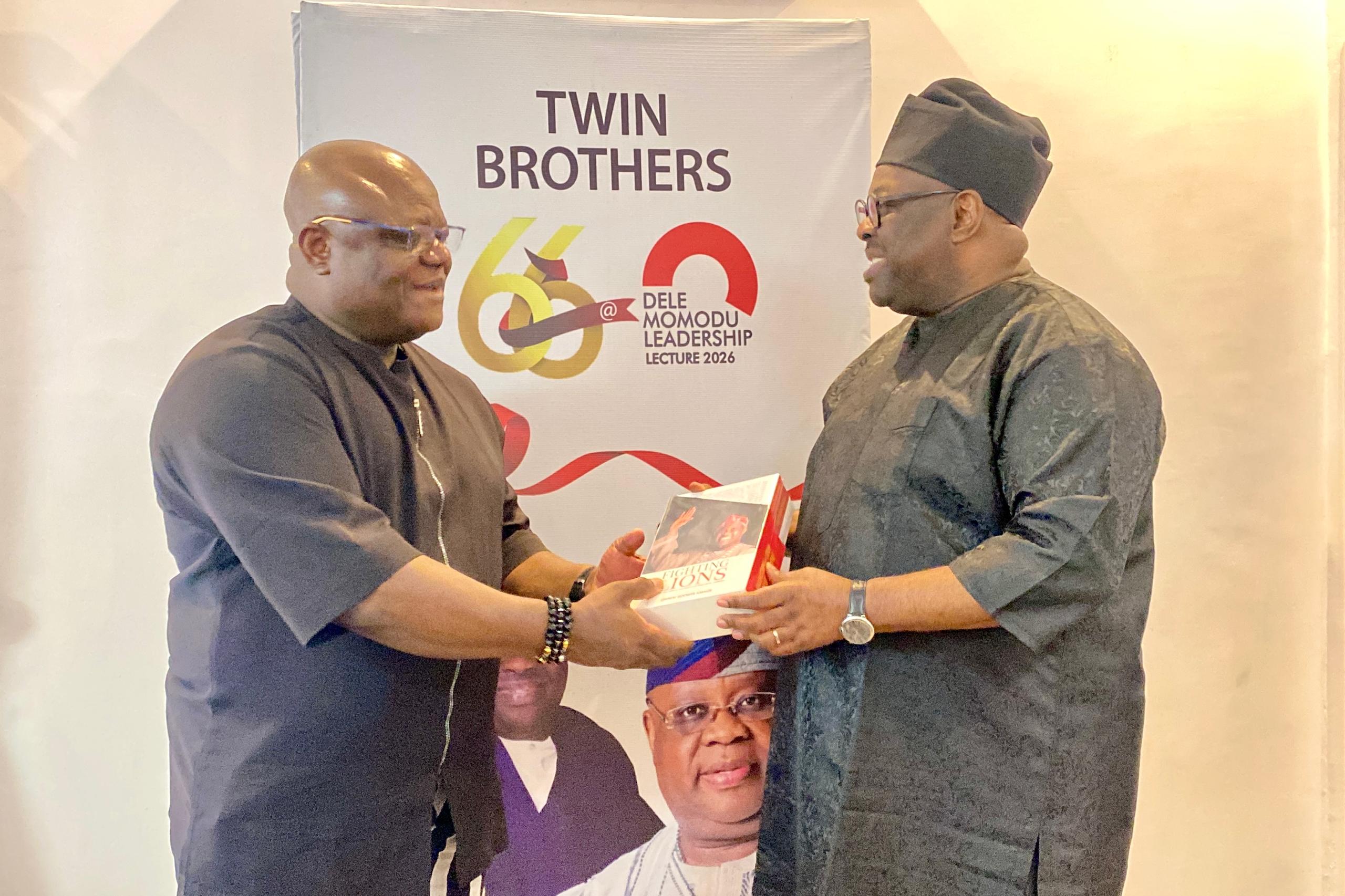
It was an afternoon of reflection, intellectual exchange and mutual respect at the Dele Momodu Leadership Centre in Ibadan on Saturday as the Vice Chancellor of Baze University, Professor Abiodun Adeniyi, paid a courtesy visit to veteran journalist, media entrepreneur and public intellectual, Aare Dele Momodu.
The conversation, which traversed journalism, politics, literature, scholarship and leadership, evolved into a compelling discourse on legacy, with Professor Adeniyi encouraging Momodu to document the wealth of knowledge and experiences he has accumulated over decades of public life.


According to the academic, while many people make an impact during their lifetime, only a few intentionally preserve their ideas for generations yet unborn.
“One of the most difficult things for anybody to do, sir, is to think consistently and put your thoughts down,” Adeniyi observed. “People may leave this world, but their thoughts remain. Even in those days when it was not possible to document ideas the way we do today, generations still found ways to preserve them because of the substance they contained.”

He noted that Momodu’s influence extends beyond journalism and politics, saying his experiences deserve to be captured in books and memoirs that will continue to educate and inspire future generations.
Responding, Momodu reiterated that while politics remains an important aspect of his life, it has never defined the totality of his purpose.


“Politics for me is part-time,” he said. “If you have a voice, then use it well.”
He also reflected on his formative years in Ile-Ife, recalling how growing up in the ancient town exposed him to some of Africa’s greatest literary minds, particularly Nobel laureate Professor Wole Soyinka.
“My first encounter with Soyinka was political in nature,” Momodu recalled, explaining how reading the works of renowned African writers helped shape his worldview and deepen his appreciation for literature, public discourse and leadership.
The discussion later shifted to scholarship, with Momodu revealing that he still hopes to pursue a doctoral degree.

“I am hoping to do a PhD one of these days,” he said. “A lot of people say I’m not a journalist anyway, but I try my best to remain a writer, even if not a career journalist.”
While applauding the aspiration, Professor Adeniyi encouraged him to view academic fulfilment beyond the acquisition of certificates.
“I’m not discouraging you from doing a PhD,” he said. “But there are so many routes to it. The reason why you want to do a PhD should not simply be because of the certificate. It should be professional.”
The Vice Chancellor argued that Momodu’s decades of international exposure already constitute a unique body of knowledge that deserves to be documented.
“I was telling your staff when we were going round that you are one of the most travelled Nigerians,” Adeniyi said. “One of the best ways to be educated as a human being is travelling because it is very exposing; it is civilising. You have been exposed to all these opportunities. The plan is not to forget to document them.”
He described Momodu’s remarkable journey—from journalism and publishing to business, diplomacy and public engagement—as an invaluable repository of experiences capable of enriching scholarship and inspiring younger generations if carefully preserved.
Momodu disclosed that he has already begun taking steps in that direction.
“I have someone working on my biography now,” he revealed, drawing an approving response from the Vice Chancellor, who described the decision as timely and significant.
The exchange also underscored the enduring relevance of journalism and ideas in shaping society. Adeniyi praised Momodu’s ability to remain influential across different spheres of national life, while Momodu maintained that the greatest responsibility of anyone blessed with influence is to use it in service of society.
The visit concluded with Momodu expressing appreciation to Professor Adeniyi for making the journey to Ibadan despite the heavy traffic before inviting guests at the Leadership Centre to engage the scholar during an interactive question-and-answer session.
More than a conversation between two accomplished Nigerians, the encounter served as a thoughtful reminder that while achievements may define a lifetime, it is the deliberate preservation of ideas, experiences and lessons that ultimately secures an enduring legacy.




Intellectual Tour of DMLC: Baze University VC Professor Adeniyi Pours Encomium on Dele Momodu

How GLO’s Customer-Centred Innovations’ Keeping Nigerians Connected to the 2026 FIFA World Cup

Responsible Media, Drug-Free Nigeria: NOMA, Stakeholders Rally Journalists on Prevention, Advocacy

Voice of Emancipation: Can the FIFA World Cup Bring Nations Together

Prof. Abiodun Adeniyi Visits Dele Momodu Leadership Centre, Hails Founder on Remarkable Journey, Achievements

Nigeria Needs More Taxpayers, Not Higher Taxes, Says Finance Minister Taiwo Oyedele

Trump Declares Trade War on Nations Imposing Digital Tax on US Tech Firms

Senate Passes Bill Establishing State Police in Nigeria

US Govt Releases Names of Terrorism Financiers Amid Growing Insecurity

Alleged Coup: Court Orders DSS to Probe VDM over Leaked Trial Video

The Dreams That Died, and the Son Who Was Worth More Than All of Them
Trump Declares Trade War on Nations Imposing Digital Tax on US Tech Firms

Hardship: Remi Tinubu Asks Poor Nigerians to Start Akara, Roasted Corn Business

FG Seeks Foreign Collaboration to Rescue Abducted Oyo Pupils, Teachers
-
 National4 days ago
Senate Passes Bill Establishing State Police in Nigeria
-
 World4 days ago
US Govt Releases Names of Terrorism Financiers Amid Growing Insecurity
-
 National4 days ago
Alleged Coup: Court Orders DSS to Probe VDM over Leaked Trial Video
-
 Tech and Humanity1 day ago
The Dreams That Died, and the Son Who Was Worth More Than All of Them
-
 World22 hours ago
Trump Declares Trade War on Nations Imposing Digital Tax on US Tech Firms
-
 Featured1 day ago
Hardship: Remi Tinubu Asks Poor Nigerians to Start Akara, Roasted Corn Business
-
 National2 days ago
FG Seeks Foreign Collaboration to Rescue Abducted Oyo Pupils, Teachers
-

 Opinion1 day ago
Elevating Societies: Leadership As Enduring Bridge from Ruler-ship to Generational Prosperity