Connect with us

Featured

COVID-19: Runsewe Pledges Solidarity with Buhari, Urges Nigerians to Be Strong

Published

on

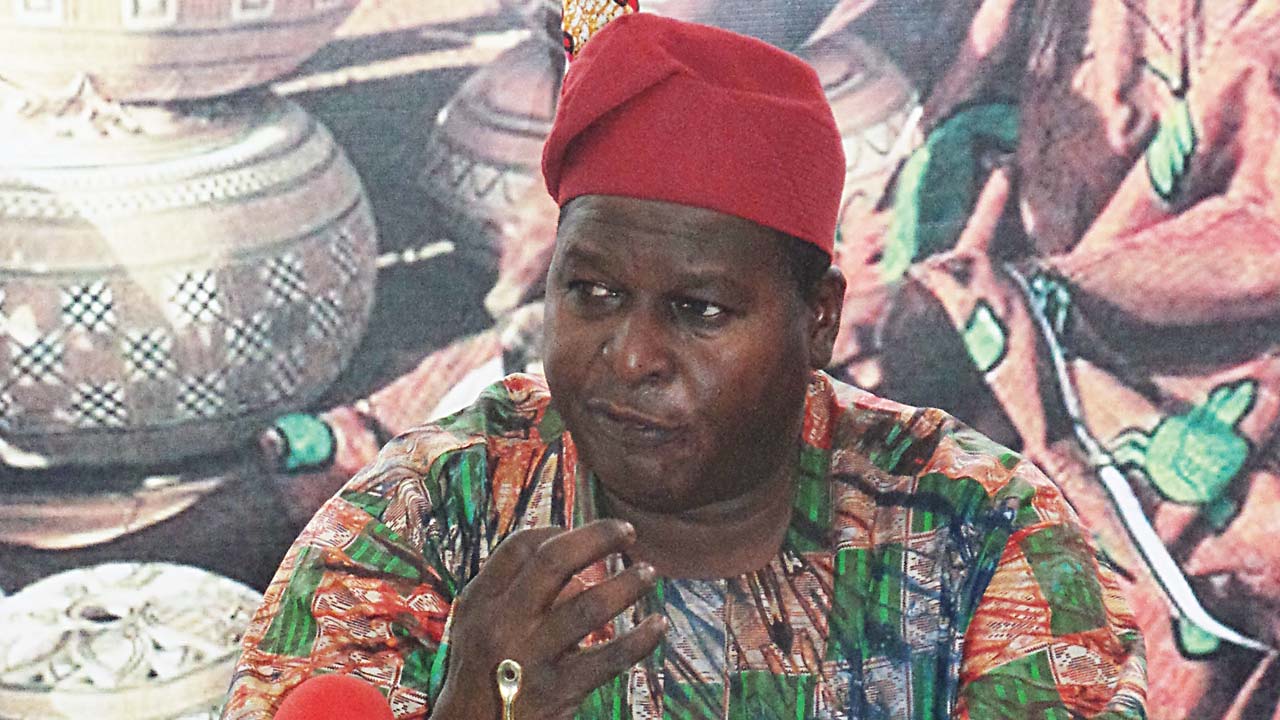
Director General, National Council for Arts and Culture (NCAC), Otunba Segun Runsewe, has called on Nigerians, particularly residents of Lagos, Ogun and FCT, to brace up and fight off the COVID-19 pandemic through strategic protocols already in place.

The custodian of federal cultural initiative and President, World Craft Council (WCC), Africa region, explained that President Buhari as the father of the nation is pained about the effects of pandemic on the Nigerian people, hence the very visible interventions and public engagement to discourage panic and fear.

Otunba Runsewe further appealed for calm as additional two weeks lockdown takes off again, adding that necessary intervention projects will get to the people if we must all see ourselves as stakeholders in the effort to kick coronavirus out of nigeria.

” I must confess that the scenario is difficult for everyone, government losing revenue fast than ever before, the budget been slashed which again will affect project deliveries and the effects on those who work to eat. It’s a humongous reality but as a people, Nigerians have always in one accord, risen to put down clouds of darkness which threatened our collective existence in the past and this covid 19 cannot be an exception.'” NCAC boss stressed.

He recalled the many values of our cultural history, obedience to constituted authorities and respect for the welfare and safety of neighbors as face of several culture value chain which Nigerians from all works of life must put to practice by observing social distancing, regular cleaning of our hands and other protocols meant to mitigate the spread of covid 19.

Otunba segun Runsewe urged the traditional rulers, clergy men and Moslem leaders not see the covid 19 protocols and consequent lock down across country as targeted against them but a sacrifice which we must all bear to keep our people and our future safe.

“Take a global look at what is happening today and every one can see even the greater impact. The Saudi Arabia government cancelled the Hajj activities and programs, the pope also shut down the Vatican and other grounding of travel, culture and tourism structures, so we cannot pretend these clear potential dangers and damage of covid 19 in our country and take to behaviours that will endanger the life of our people.” Otunba Runsewe further explained.

He disclosed that NCAC will unfold a post covid 19 cultural intervention through skills acquisition across the nation to help unskilled Nigerians, particularly women to support the their families and to help rural economy to rebound.

The NCAC boss commended the FCT minister for the structures put in place to secure the city of government as evident in the hard work of the police commissioner and the lockdown Task Force.

“Lagos Governor is doing great too and he needs the backing of security architecture to reduce the incidence of communial transmission and also to check crime., Otunba Runsewe further stressed, adding that nigerians must be strong and prayerfully acknowledge that the president cares and is deeply concerned about our welfare and safety.

“As officials of government, we must all be seen to do our best to help our people. It’s trying time for us all no doubt, so we must wake up to help Mr President reach out to the people and stem the tide of fear about the pandemic and bridge gaps where necessary. It is our people and our country first and no sacrifice is too small.” Otunba Runsewe stated.

Continue Reading
Click to comment

Leave a Reply

Your email address will not be published. Required fields are marked *

Featured

Nigeria Needs More Taxpayers, Not Higher Taxes, Says Finance Minister Taiwo Oyedele

Published

on

By

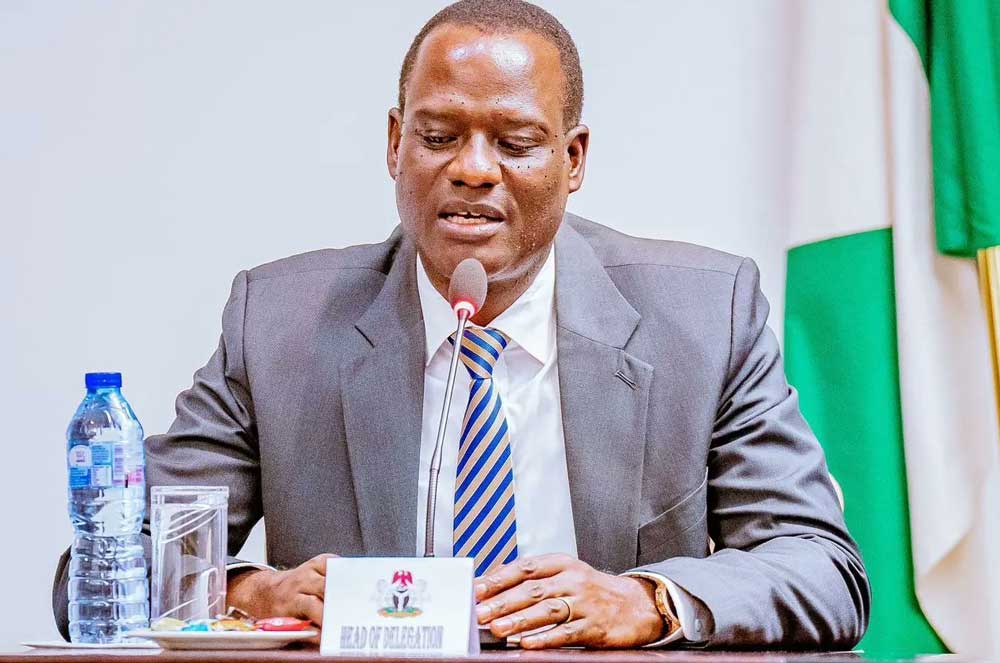
The Minister of Finance and Coordinating Minister of the Economy, Taiwo Oyedele, on Thursday said Nigeria’s revenue challenge lies in expanding the tax net rather than increasing tax rates, stressing that the country needs more taxpayers, not higher taxes.

Oyedele spoke in Abuja while receiving the leadership of the Chartered Institute of Taxation of Nigeria during a courtesy visit to the Federal Ministry of Finance at the end of the Institute’s maiden National Tax Awareness Day, which featured a road walk and taxpayer sensitisation at Wuse Market as well as a visit to the headquarters of the Nigerian Revenue Service.

The awareness campaign coincided with one year since President Bola Tinubu signed Nigeria’s landmark Tax Reform Acts into law on June 26, 2025.

Commending the Institute for supporting the Federal Government’s tax reform agenda, Oyedele said public misunderstanding of taxation remained one of the biggest obstacles to improving compliance. According to him, many Nigerians still believe that whenever the government talks about taxation, it is simply seeking to collect more money from citizens.

“We are still not getting enough revenue from taxes; it is not about increasing taxes, but making sure that those who are supposed to pay taxes pay.

We want to promote fairness in tax administration,” he said.

The minister added that getting Nigeria’s tax system right would have a transformative impact on national development. He also urged the Institute to establish annual awards to recognise the country’s most compliant taxpayers as a way of encouraging voluntary tax compliance.

Earlier, the tax awareness campaign commenced at Wuse Market, where the 17th President of the Chartered Institute of Taxation of Nigeria, Innocent Ohagwa, said the initiative was introduced to bridge the information gap surrounding the country’s tax reforms and improve voluntary compliance.

He explained that although the reforms had been in force for one year, many Nigerians were still uncertain about the changes and how they would affect businesses and individuals.

“The laws have been signed, implementation has begun, yet many taxpayers and stakeholders are still grappling with what has changed, what remains the same, and how these provisions affect their businesses and personal affairs,” he said.

According to Ohagwa, widespread misconceptions have continued to fuel anxiety, with some people believing the reforms introduced new taxes across all aspects of economic activity, while others assume they were designed solely to raise government revenue.

He, however, said the reforms contain significant reliefs and incentives for both individuals and businesses. Among the benefits, he said, individuals can now claim rent relief of up to 20 per cent of annual rent paid, subject to a maximum of N500,000, while essential goods and services, including food, education, healthcare, electricity transmission, and non-oil exports, now enjoy zero-rated Value Added Tax treatment.

He added that compensation for loss of employment or personal injury now attracts higher tax exemption thresholds. For businesses, Ohagwa said companies with annual turnover not exceeding N100m and fixed assets of not more than N250m are exempt from Companies Income Tax, Capital Gains Tax, and the Development Levy.

“This means thousands of small businesses can now reinvest in growth, job creation, and innovation,” he said.

He added that targeted tax incentives had also been introduced for agriculture, aquaculture, dairy production, cocoa processing, and animal feed manufacturing, while eligible investors could benefit from tax credits under the Economic Development Incentive.

Despite the incentives, the CITN president reminded taxpayers that compliance remained a legal obligation.

“Compliance is not a burden; it is a civic duty. It is our collective contribution to nation-building. And taxation works best when there is trust — taxpayers must fulfil their obligations, while the government must uphold accountability, transparency and the effective use of public resources,” he said.

He urged traders, entrepreneurs, and business owners to obtain Tax Identification Numbers, keep proper records, file accurate returns on time, and seek professional guidance from the Nigerian Revenue Service, the FCT Internal Revenue Service, or members of the Institute whenever necessary.

Explaining the rationale for the awareness campaign, Ohagwa said the Institute approved an annual National Tax Awareness Day after observing that many Nigerians remained uninformed about the reforms despite ongoing sensitisation.

He said Wuse Market was deliberately chosen because it represented one of the country’s key grassroots commercial hubs where taxpayer education was most needed, adding that the campaign was held in June because it coincides with the peak filing period for many corporate taxpayers.

After the market sensitisation, the CITN delegation proceeded to the headquarters of the Nigerian Revenue Service, where both organisations reaffirmed their commitment to strengthening tax awareness, voluntary compliance, and the implementation of Nigeria’s tax reforms.

Receiving the delegation on behalf of the Executive Chairman of the NRS, Dr Zacch Adedeji, the Executive Director, Finance and Corporate Services, Mohammed Abubakar, described the occasion as significant because it marked one year since the signing of the country’s landmark tax reform legislation.

“That historic milestone signalled the beginning of a new era in Nigeria’s tax administration, one anchored on simplicity, fairness, transparency, efficiency, and service delivery,” he said.

According to Abubakar, the reforms are intended to build a tax administration system that is trusted, technology-driven, and responsive to the needs of taxpayers and businesses.

He added that sustainable revenue mobilisation depends not only on enforcement but also on public awareness and confidence in tax institutions. “Taxpayers are more likely to comply when they understand their obligations, appreciate the value of taxation and have confidence in the institutions administering our tax laws,” he said.

The visit also highlighted the Service’s digital transformation agenda, with officials pointing to initiatives such as Rev360 and other technology-driven platforms aimed at delivering more efficient tax administration.

Also speaking, the Group Director, Medium Tax Group, Dr Gbenga Daniel, said the NRS would continue collaborating with professional bodies to deepen taxpayer education and improve service delivery.

“The Nigerian Revenue Service values its longstanding partnership with CITN. Together, our institutions share a common vision of improving tax administration and fostering voluntary compliance for national development,” he said.

The reception brought together Executive Directors of the NRS, members of the CITN Governing Council, senior management staff, tax professionals, and industry stakeholders before the delegation proceeded to the Federal Ministry of Finance for the courtesy visit, where Oyedele urged Nigerians to embrace the country’s evolving tax system through greater compliance rather than misconceptions about higher taxation.

In June 2025, President Bola Tinubu signed four sweeping tax reform bills into law, including the Nigeria Tax Act and related statutes that together overhaul decades-old tax statutes and modernise the country’s tax system.

The Punch

Continue Reading

Featured

Hardship: Remi Tinubu Asks Poor Nigerians to Start Akara, Roasted Corn Business

Published

on

By

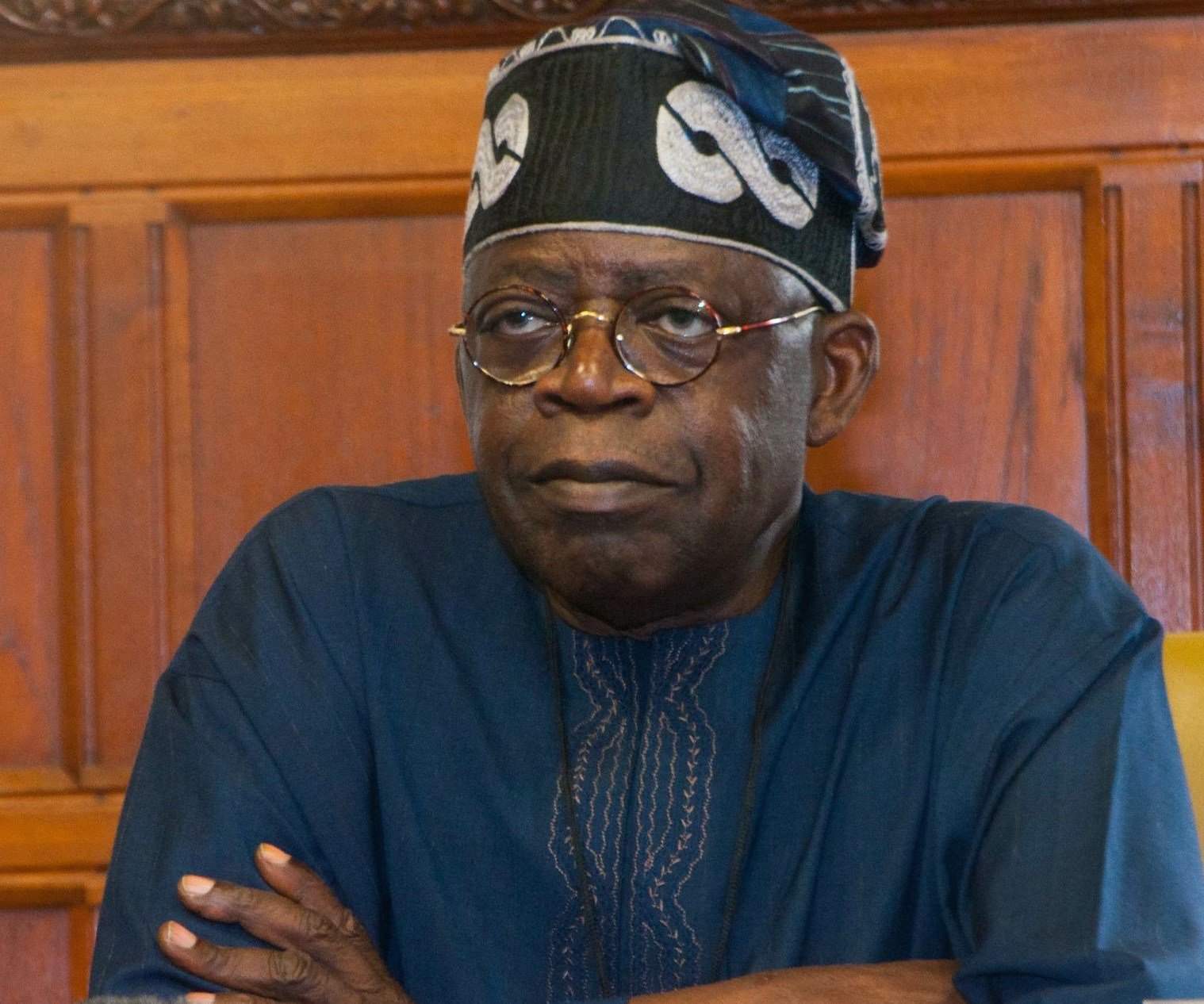
Wife of the President, Senator Remi Tinubu, has urged economically disadvantaged Nigerians to consider small businesses such as selling akara, roasted corn and kulikuli as viable sources of income, saying they require little capital to start and can help families cope with the country’s economic challenges.

She gave the advice after hosting the wives of the 36 state governors in Abuja, where she highlighted empowerment programmes and financial support provided through her office to assist vulnerable Nigerians.

According to the First Lady, her interventions are centred on providing grants rather than loans to enable beneficiaries to establish small-scale businesses without the burden of repayment.

“We’re trying to give hope, and to start an akara business doesn’t take a lot of money. To start roasting corn… somebody even said about grants, you see, they’re saying that kulikuli doesn’t take much. We didn’t give them a loan; we gave it to them as a grant,” she said.

Senator Tinubu said her office has continued to support Nigerians through various empowerment initiatives designed to improve livelihoods and promote self-reliance.

“So we’ve encouraged Nigerians as best as we could. What is within our hands, I have given, and I keep giving, and those are the things we’ve done,” she added.

The First Lady also outlined some of the financial interventions she has personally supported, including ₦2 billion for tuberculosis treatment, N1 billion for breast cancer interventions and N500 million to address food malnutrition.

“I remember giving for TB when I heard there’s so much TB cases, I gave two billion (naira). To breast cancer, I gave a billion (naira). To food malnutrition, I gave half a billion (naira),” she said.

She added that her office has also supported programmes in agriculture, education, social investment and digital skills development, including scholarships and ICT training in collaboration with the National Information Technology Development Agency (NITDA).

According to her, the interventions are intended to complement the Federal Government’s efforts to improve the welfare of citizens and create more economic opportunities.

Senator Tinubu also appealed to Nigerians not to lose hope despite the country’s economic difficulties, arguing that negative narratives have worsened public anxiety.

“The narrative has really changed. The average man is supposed to have hope. So I like the idea that Mr. President said this is the Renewed Hope Agenda.

“We have to renew our hope. They don’t give up. We’re a very proud nation,” she said.

Continue Reading

Featured

Don’t Vote for Me If I Fail to Fix Power Comment: Onanuga Claims Tinubu Was Quoted Out of Context

Published

on

By

Special Adviser to President Bola Tinubu on Media and Publicity, Bayo Onanuga, has described as ‘out of context’ the assertion that President Bola Tinubu told Nigerians he would not seek re-election if he failed to provide constant power supply for the citizens.

Onanuga dismissed the claims which have recently resurfaced in many circles, and explained that the statement credited to the president was conditional, and not an outright pledge.

Onanuga spoke during an interview on Arise News on Tuesday, where he further insisted that the President’s remarks on power sector reforms had been misrepresented, as it was not an outright pledge to forgo a second term.

Reports had quoted Tinubu during a business luncheon in December 2022 ahead of the 2023 presidential election, to have said: “If I don’t give you constant electricity for four years, when I come back for a second term, don’t vote for me.”

But the presidential aide argued that critics often quote only a portion of the President’s remarks while ignoring the context in which they were made.

Asked whether the President had promised not to seek re-election if the electricity supply did not improve dramatically, Onanuga said: “That is not exactly what he said. He said he will give Nigerians power. I’m paraphrasing now. He said he will also will end the area of estimated billing. A problem that he has largely solved because it should not be his business, but his government is producing meters, asking the DISCOS to give people meters free of charge.

“And he said, if by any chance he has reasons not to give Nigerians adequate power, then they should understand the problem that he inherited.”

When he was told that the President said he should not be reelected if the electricity supply did not improve, Onanuga said, “He didn’t say that way. Let me see if I can open my phone and tell exactly what he said.”

Onanuga argued that Tinubu had demonstrated commitment to power sector reforms since assuming office, citing the signing of the Electricity Act as one of the administration’s major achievements.

“The first thing he did when he came to office was sign the Electricity Act, which enables states to generate power, transmit power and distribute power,” he said.

The presidential spokesman noted that the legislation has opened up the electricity sector and encouraged competition, with several states already taking advantage of the opportunities created by the law.

“That is a good thing. Some of the states are taking advantage of that, and more are going to do so. That will make the electricity sector open and competitive,” he added.

The presidential spokesman also pointed to efforts by the administration to address the metering gap across the country, saying the government had intervened to ensure more Nigerians receive meters free of charge.

“He also learnt the error of estimated billing, a problem that his government is largely solving because the government is producing meters and asking distribution companies to give people free of charge,” Onanuga said.

While acknowledging that electricity supply has yet to reach the level envisioned by the President, Onanuga attributed the challenge to long-standing structural problems in the sector.

“We are not at the level that the President meant it. I can tell you that,” he said.

He explained that although Nigeria has an installed generation capacity of about 13,500 megawatts, constraints such as gas shortages, legacy debts and weak transmission infrastructure have limited performance.

“What people don’t know is that we already have an installed capacity of 13,500 megawatts. What are the problems? No gas. The players in the sector owe the gas companies legacy debts of over four trillion naira,” he said.

According to Onanuga, the Tinubu administration is working to resolve these issues while pursuing reforms aimed at improving generation and transmission capacity.

“The transmission grid is outdated, but that is part of the reforms that need to be put in place,” he said.

He added that the government was exploring additional initiatives to optimise existing power assets and improve electricity delivery across the country.

Onanuga maintained that despite the challenges, the administration remains committed to delivering on its promise of improving electricity supply and strengthening the nation’s power sector.

Continue Reading

Trending