Connect with us

Featured

Joel Oyeyinka Popoola: Another Gbongan Gift to the World

Published

on

As many that knows the agrarian town of Gbongan will not be surprised that yet another wonder in the person of Joel Oyeyinka Popoola, Founder, Digital Democracy Project and Rate Your Leader app, has been produced for the good of humanity. This is because Gbongan is famous, you can say notorious if you like, for producing egg heads who have stood the test of time in terms of proficiency, research, achievement, academic prowess and inventions.

Gbongan is a small community in southwestern part of Nigeria, Osun State to be specific. But as small as Gbongan is in size, she has produced more academics than any community in her category.

As a convention, Gbongan is in the business of crowning only the academically best as paramount rulers, and it is on record that its obas have had a minimum qualification of Ph.D. From the days of late Oba (Dr.) Solomon Babayemi Akinrinola 1, who was an Associate Professor of African Studies, University of Ibadan to the present Kabiyesi,  Oba (Dr.) Adetoyese Oyeniyi Odugbemi 1, an Agronomist, only the best has sat on the throne. The town could as well be described as a harbinger of Professors and Doctors of Philosophy. This has been since the 1950s.

Among prolific academics produced by the great Gbongan community include: Late Dr. Akinrefon, a Molecular Biologist;  Late Prof. Timothy Adegboye, a Professor of land Economics, who during his life time was always referred to as the Professor of Professors; and at a point, was christened ‘Baale UI’ because he was the oldest in the University Community; this was the man who founded the Agric Economics Department of the then University of Ife,  now Obafemi Awolowo university. There was also Late Dr. Akintola, a renowned Consultant to WHO, UNICEF, FAO; Prof Akinwumi, former Deputy Vice Chancellor Academics, University of Ibadan; Prof Dupe Makinde, Prof. Alani Adeagbo Amusan, Prof Ojewole, the first Professor and Dean of Faculty of Pharmacy, Obafemi Awolowo University; Prof Ilori; Prof Lekan Dairo; Prof Lekan Oyeleye, former Dean Faculty of Arts University of Ibadan; Prof Seye Bolaji; Prof Wale Ajayi; Prof Ademola Olaniran; Prof O.B. Ajayi; Prof Clement Adebooye, Deputy Vice Chancellor Academics Osun State University; Prof Tunde Makanju; Prof. Ekanade, among many others.

Gbongan’s prowess is not only in the academia, the town is also home to jurists and legal luminaries such as Justice Oyegoke Bolarinwa Babalakin (Honorable Justice of the Supreme Court, Federal Republic of Nigeria); Late Barrister Adedeji; Dr. Olawale Babalakin SAN, Barrister Funminiyi Oyebamiji Agbaye and Barrister Dapo Adekunle.

In the field of Medicine, Banking, Insurance, Media and Security, Gbongan boasts of citizens.

The rave of the moment in the person of an accomplished Techpreneur, Joel Oyeyinka Popoola, who had been described by Sunderland Echo as ‘the City man’, is a proud product of Gbongan.

Popoola is a United Kingdom citizen, who has developed an App to solve one of the challenges confronting democracy, even in developed democracies like the United kingdom. The App is meant to bridge the gap between elected leaders and the electorate, and at the same time eliminate the hassles of physical town hall meetings. He has put in place electronic platform through which Electors and Electorates will constantly interact to discuss matters relating to their constituencies in an abuse-free manner and bringing a win-win situation to both the leaders and the subjects.

The rate of acceptability of the app in the United Kingdom has been encouraging, making Yinka, as he is fondly called the cynosure of all eyes among all levels of communities and nationalities in the country. In all these, Yinka is always quick to make reference to his country, Nigeria; and his town of birth, Gbongan as opportunity presents itself.

His Rate Your Leader App has solved the problem of accountability among political office among holders. And will open channels of interactions between the elected public office holders and the electorates thereby mitigating challenges associated with lack of communication between a particular representative and his/her constituents, fake news and fabrications or half truths, which are known to be the bane of democracy.

With constant interactions between the elected officials and people of their constituencies, needs are therefore prioritised and even development across borders ensured.

Popoola, in a chat with Score Express Magazine, said that “the irony is that the technology is now in place to allow both the electors and elected to connect at the touch of a button but that technology all too often falls into modern mob rule. Whether it’s Brexit in Britain, Trump in America or Jeune Gillets in France, voters no longer believe that politicians represent them– it’s time to take back democracy with technology,”.

Popoola stated further, “Across the world, democracy is changing forever, and Nigeria would not be an exception. Voters expect to have more influence on politics than our traditional representative democracy can necessarily accommodate. As a result, voters are either defecting to anti-establishment parties or becoming more and more attracted by direct action.”

He also averred, “People’s political priorities and motivations are becoming more and more disparate and unpredictable, and politicians are clearly failing to ascertain what voters really want.”

The Publisher of the Score Express Magazine, who also is a childhood friend of Popoola, called on all Gbongan citizens, home and abroad, to rise and honour one of their own, Joel Popoola, as he arrives Nigeria this January to launch the App.”if Ijebu people could honour Anthony Joshua, being their own, then Gbongan people wouldn’t fail in doing more,” he said.

Continue Reading
Click to comment

Leave a Reply

Your email address will not be published. Required fields are marked *

Featured

Don’t Vote for Me If I Fail to Fix Power Comment: Onanuga Claims Tinubu Was Quoted Out of Context
Published

on

By

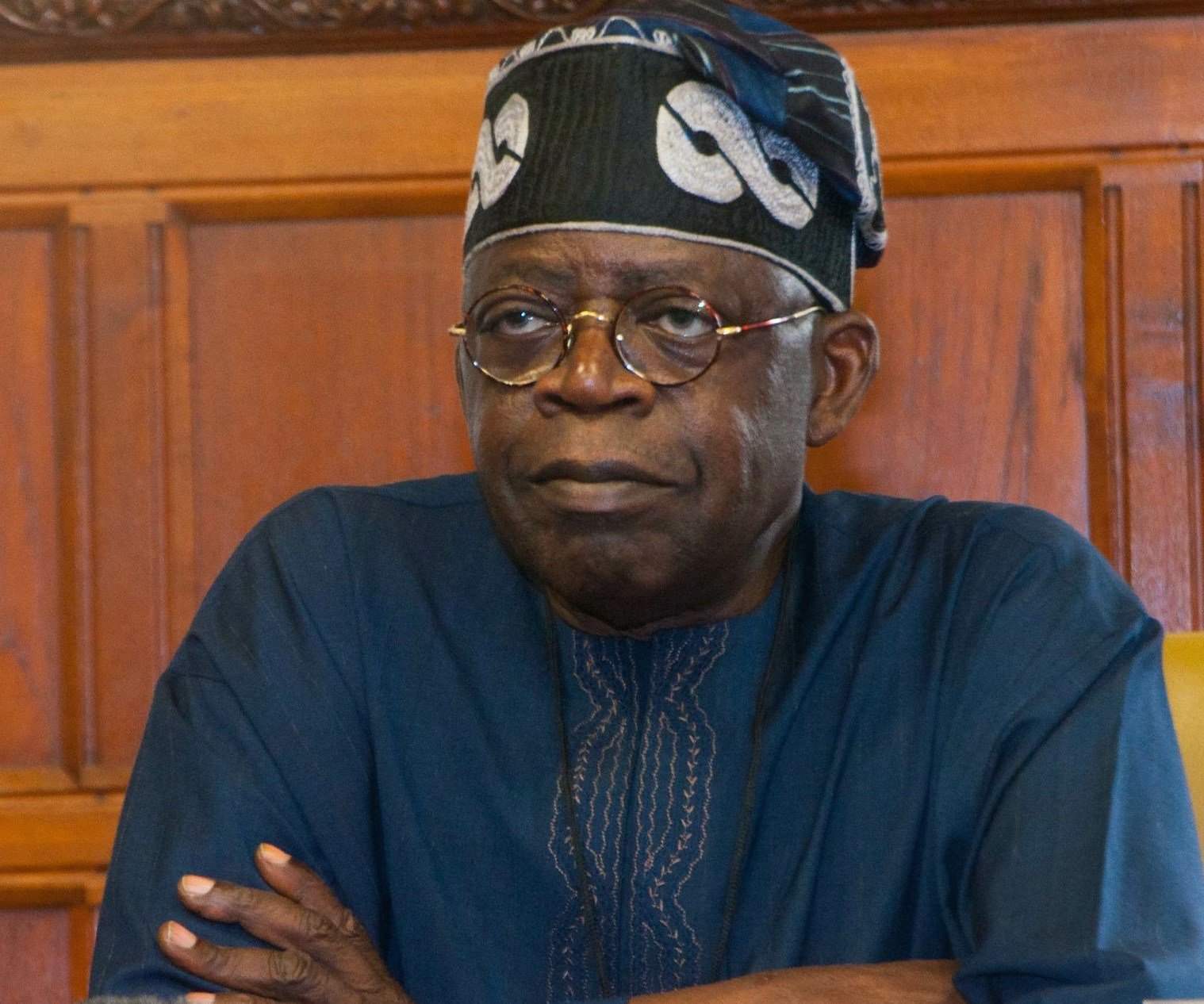
Special Adviser to President Bola Tinubu on Media and Publicity, Bayo Onanuga, has described as ‘out of context’ the assertion that President Bola Tinubu told Nigerians he would not seek re-election if he failed to provide constant power supply for the citizens.

Onanuga dismissed the claims which have recently resurfaced in many circles, and explained that the statement credited to the president was conditional, and not an outright pledge.

Onanuga spoke during an interview on Arise News on Tuesday, where he further insisted that the President’s remarks on power sector reforms had been misrepresented, as it was not an outright pledge to forgo a second term.

Reports had quoted Tinubu during a business luncheon in December 2022 ahead of the 2023 presidential election, to have said: “If I don’t give you constant electricity for four years, when I come back for a second term, don’t vote for me.”

But the presidential aide argued that critics often quote only a portion of the President’s remarks while ignoring the context in which they were made.

Asked whether the President had promised not to seek re-election if the electricity supply did not improve dramatically, Onanuga said: “That is not exactly what he said. He said he will give Nigerians power. I’m paraphrasing now. He said he will also will end the area of estimated billing. A problem that he has largely solved because it should not be his business, but his government is producing meters, asking the DISCOS to give people meters free of charge.

“And he said, if by any chance he has reasons not to give Nigerians adequate power, then they should understand the problem that he inherited.”

When he was told that the President said he should not be reelected if the electricity supply did not improve, Onanuga said, “He didn’t say that way. Let me see if I can open my phone and tell exactly what he said.”

Onanuga argued that Tinubu had demonstrated commitment to power sector reforms since assuming office, citing the signing of the Electricity Act as one of the administration’s major achievements.

“The first thing he did when he came to office was sign the Electricity Act, which enables states to generate power, transmit power and distribute power,” he said.

The presidential spokesman noted that the legislation has opened up the electricity sector and encouraged competition, with several states already taking advantage of the opportunities created by the law.

“That is a good thing. Some of the states are taking advantage of that, and more are going to do so. That will make the electricity sector open and competitive,” he added.

The presidential spokesman also pointed to efforts by the administration to address the metering gap across the country, saying the government had intervened to ensure more Nigerians receive meters free of charge.

“He also learnt the error of estimated billing, a problem that his government is largely solving because the government is producing meters and asking distribution companies to give people free of charge,” Onanuga said.

While acknowledging that electricity supply has yet to reach the level envisioned by the President, Onanuga attributed the challenge to long-standing structural problems in the sector.

“We are not at the level that the President meant it. I can tell you that,” he said.

He explained that although Nigeria has an installed generation capacity of about 13,500 megawatts, constraints such as gas shortages, legacy debts and weak transmission infrastructure have limited performance.

“What people don’t know is that we already have an installed capacity of 13,500 megawatts. What are the problems? No gas. The players in the sector owe the gas companies legacy debts of over four trillion naira,” he said.

According to Onanuga, the Tinubu administration is working to resolve these issues while pursuing reforms aimed at improving generation and transmission capacity.

“The transmission grid is outdated, but that is part of the reforms that need to be put in place,” he said.

He added that the government was exploring additional initiatives to optimise existing power assets and improve electricity delivery across the country.

Onanuga maintained that despite the challenges, the administration remains committed to delivering on its promise of improving electricity supply and strengthening the nation’s power sector.

Continue Reading

Featured

How I Made Buhari President in 2015 – Amaechi

Published

on

By

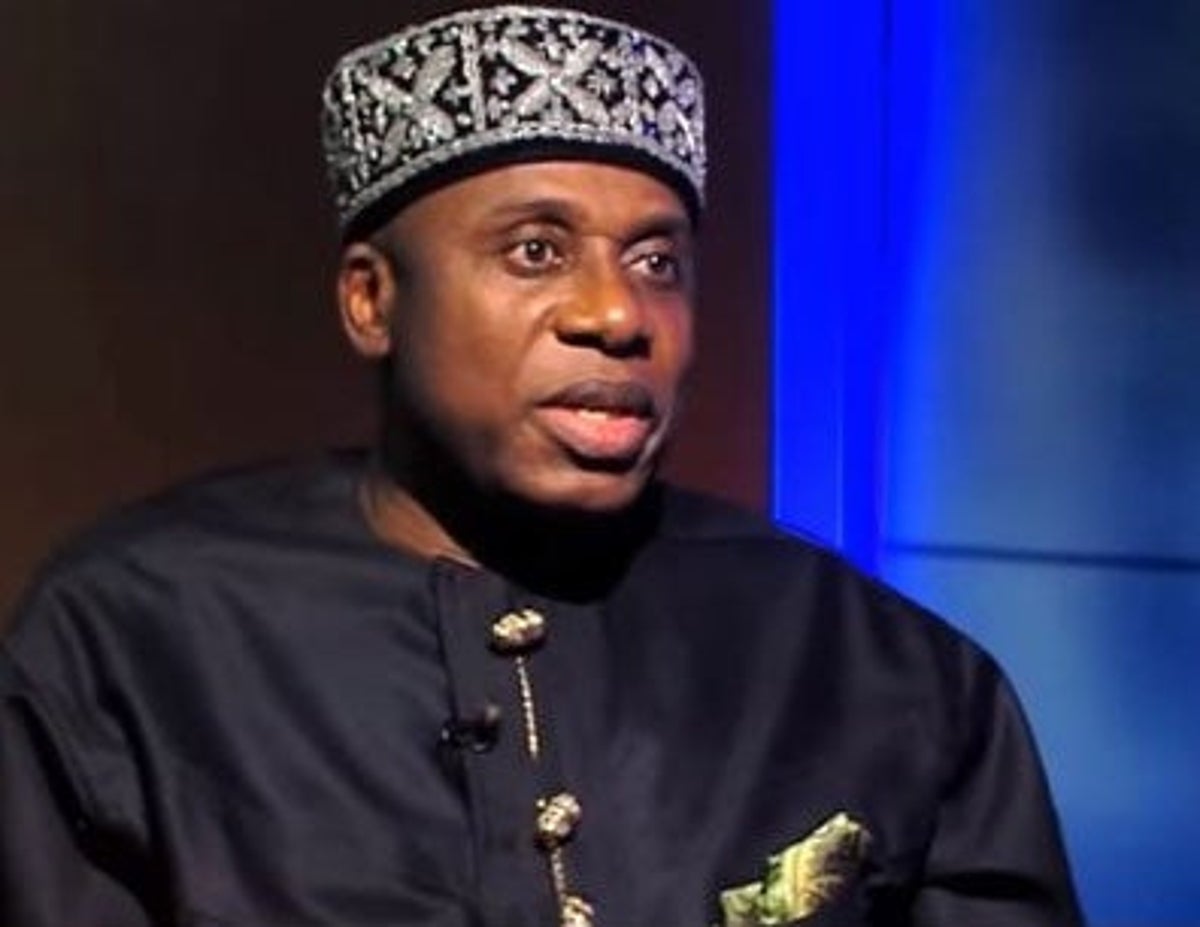
Former Rivers State Governor and ex-Minister of Transport, Rotimi Amaechi, has said that he, and not President Bola Tinubu, played the pivotal role in making late Muhammadu Buhari president in 2015.

In a Friday interview on Arise News’ Prime Time, Amaechi, who is now a presidential aspirant under the African Democratic Congress, addressed longstanding claims by Tinubu.

During his pre-2023 campaigning, Tinubu said Buhari would not have become president without him and that it was his turn to become one too.

But Amaechi explained that as a serving minister under Buhari, he could not publicly challenge Tinubu’s assertions to avoid risking his position.

“When we decided to form the APC, while I was a minister, (Tinubu) was claiming he made Buhari president and I couldn’t respond because I was a minister under President Buhari. That would have been suicidal because Buhari could fire you,” Amaechi said.

He continued, “So I couldn’t have said, ‘You are wrong.’ He didn’t make President Buhari president. Not only was I the DG of the campaign, but everybody will bear witness that I did all the battle.

“I led the Governors’ Forum, criss-crossed the country fighting here and there trying to get Nigerians to know that this is the time for change.”

Amaechi served as Director-General of Buhari’s 2015 and 2019 presidential campaigns.

He was a key figure in the 2013–2014 defection of PDP governors that helped form the APC alliance, which ultimately defeated President Goodluck Jonathan.

However, Tinubu was also instrumental in Buhari’s emergence, leading the merger of major opposition parties, including his Action Congress of Nigeria, to form the All Progressives Congress, which challenged and defeated the then-ruling PDP.

The remarks come amid Amaechi’s positioning for the 2027 presidential race as part of the growing opposition coalition under the ADC.

He has been vocal in recent months criticising the Tinubu administration over economic hardship.

Continue Reading

Featured

GLO: The Undisputed Digital Oxygen

Published

on

By

By Dr. Sani Sa’idu Baba

In medicine, oxygen is the invisible molecule upon which all human life depends. Remove it, and the body shuts down almost instantly. The brain weakens, the heart struggles, and every organ begins to fail. As someone who studies how the human body works, I have always understood the centrality of oxygen to biological existence. But in recent years, watching Nigerian society evolve in the digital age, I have arrived at another conclusion: connectivity has become the oxygen of modern civilisation.

Without network connectivity today, businesses freeze, students lose access to learning, hospital records fall into jeopardy, POS transactions struggle, markets slow down, and families become disconnected. Digital access is no longer a luxury; it is the infrastructure upon which modern life breathes.

And in Nigeria, one network increasingly stands out as the supplier of that digital oxygen: GLO.

Across campuses, markets, offices, villages, and urban centres, millions of Nigerians now depend on the Glo network for the daily rhythm of their lives. For students, it powers e-learning, research databases, virtual classrooms, and academic collaboration. For traders and entrepreneurs, it sustains mobile banking, online transactions, advertising, and customer communication. For farmers in rural communities, it ensures communication with farmland workers. For doctors and healthcare professionals, it enables telemedicine and rapid information exchange. In many homes, Glo is the invisible bridge connecting families separated by distance.

This is why many Nigerians increasingly describe Glo not merely as a telecom company, but as a necessity.

What is even more fascinating is the growing public confidence in Glo’s reliability, something I have personally witnessed. I recently observed a man asking a shop attendant to call his boss. After placing the call once, the attendant calmly replied, “Sir, his phone is switched off.” The man insisted he should call repeatedly before concluding. The attendant smiled and responded, “Sir, I am using Glo network. If Glo says the phone is unavailable, then it is unavailable.” Everyone around laughed, but beneath the humour was a powerful reality: people increasingly trust the reliability and clarity of the Glo network. That brief moment was more than a casual conversation; it was a testimony to the confidence Glo has quietly built among Nigerians.

The reality becomes even clearer during moments of national stress. In an era defined by climate change, unstable electricity supply, flooding, extreme heat, and infrastructural disruption, telecommunications networks face enormous pressure. Floodwaters damage fibre optic cables. Heat weakens sensitive electronic systems. Power failures destabilise base stations. Yet despite these challenges, millions of Nigerians continue to experience remarkable connectivity stability on Glo.

That stability is not accidental. Globacom has continued to invest heavily in infrastructure upgrades and network improvement projects aimed at enhancing customer experience nationwide. For millions of Nigerians, clearer calls and faster internet are no longer wishes but daily realities because of the company’s sustained commitment to expanding and strengthening its network systems.

What makes Glo exceptional is not simply its coverage, but its resilience. The company has increasingly embraced hybrid energy solutions involving solar systems and battery storage technology to reduce dependence on diesel-powered infrastructure. This improves network reliability during grid failures while simultaneously reducing environmental pressure. Glo has also undertaken extensive fibre reconstruction and relocation projects across Nigeria, redesigning network routes to withstand environmental disruptions such as flooding, erosion, and climate-related damage. Its investments in expanded spectrum capacity and advanced technologies have further improved efficiency, enabling stronger data delivery and smoother connectivity for subscribers across the country.

From my vantage point in Kano, a region experiencing intense heat and significant environmental pressure, the importance of resilient connectivity cannot be overstated. For traders in Sabon Gari Market, network access means economic survival. For students at Bayero University, it means uninterrupted learning and research. For countless young Nigerians trying to build digital businesses, it means opportunity itself.

In many respects, Glo functions like the respiratory system of Nigeria’s digital society. The Glo-1 submarine cable and Glo fibre optics act like lungs, bringing global bandwidth into the country. The national fibre network resembles blood vessels distributing connectivity nationwide. The 4G LTE base stations function like capillaries, delivering data directly to the individual user whether in Kano or far beyond.

The subscriber shouting “Glo Unlimited!” during a blackout while data continues flowing is not merely celebrating affordable internet. They are experiencing the result of years of investment, resilience engineering, and technological foresight.

Calling Glo “The Digital Oxygen” of Nigeria is therefore not poetic exaggeration, it is an acknowledgment of reality. In a country where millions now live, learn, trade, communicate, and dream through digital connectivity, Glo has become more than a network provider. It has become the vital breath upon which modern Nigerian life increasingly depends…

Dr. Sani Sa’idu Baba writes from Kano, and can be reached via drssbaba@yahoo.com

Continue Reading

Trending