Connect with us

Featured

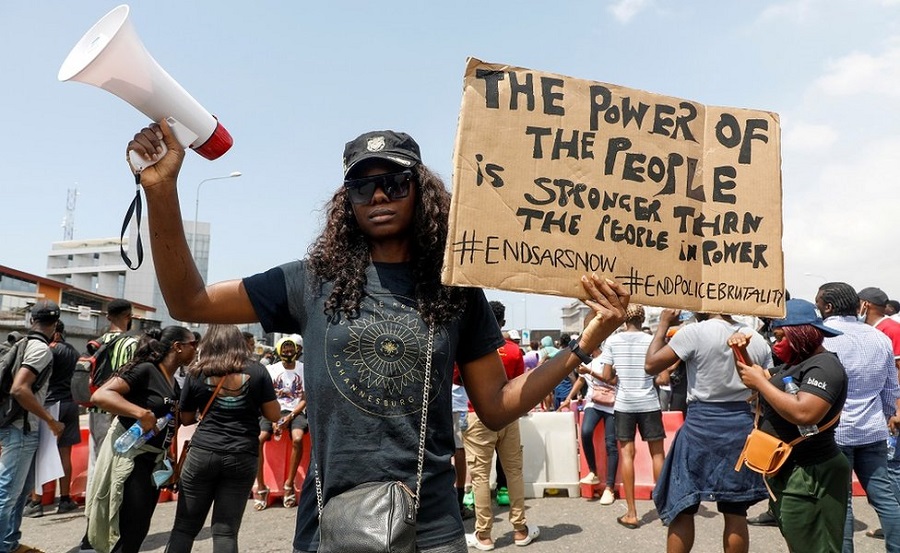
ECOWAS Court Finds FG Guilty of Violating Rights of #EndSARS Protesters

Published

on

The Community Court of Justice, ECOWAS, has ruled that the Federal Republic of Nigeria violated the human rights of Obianuju Udeh and two others.

The court found Nigeria in breach of Articles 1, 4, 6, 9, 10, and 11 of the African Charter on Human and Peoples’ Rights, specifically on the right to life, security of person, freedom of expression, assembly and association, prohibition of torture, the duty of the state to investigate, and the right to effective remedy.

The applicants, Obianuju Udeh, Perpetual Kamsi and Dabiraoluwa Adeyinka, alleged that these violations occurred during the peaceful protests at the Lekki Toll Gate in Lagos State on October 20 and 21, 2020.

The presiding judge, Justice Koroma Sengu, who delivered the judgment, dismissed the allegation that the right to life as guaranteed under article 4 of the ACPHR is violated.

He, however, said that the Federal Government must pay each applicant N2 million as compensation for violations of their security of person, prohibition of torture and cruel, inhuman, and degrading treatment, rights to freedom of expression, assembly, and association, duty to investigate human rights violations, and right to effective remedy.

Additionally, he said the Federal Government must adhere to its obligations under the African Charter on Human and Peoples’ Rights, investigate and prosecute its agents responsible for these violations, and report to the court within six months on the measures taken to implement this judgment.

The applicants alleged that during the peaceful protests against the SARS unit of the Nigerian Police Force at Lekki Toll Gate on October 20 and 21, 2020, the respondent committed several human rights violations.

Triggered by the alleged killing of Daniel Chibuike, the protests aimed to address police harassment and brutality.

The first applicant’s claims include that the soldiers shot protesters, resulting in deaths and injuries, which she live-streamed, subsequently receiving threatening phone calls that forced her into hiding and eventual asylum.

The second applicant, responsible for protesters’ welfare, described how soldiers began shooting after a power cut, leading to her hospitalisation due to police tear gas.

The third applicant recounted narrowly escaping being shot, observing the refusal of ambulance entry by soldiers, and later witnessing inadequate hospital care for victims.

She argued that she and her colleagues took over the victims’ care and she faced ongoing threats and surveillance, believed to be by respondent’s agents.

The applicants sought declaratory relief and compensation from the court for these violations.

The respondent denied all claims made by the applicants, asserting that the protesters unlawfully assembled at the Lekki toll gate on October 20, 2020, under the guise of protesting against SARS.

The respondent also maintained that its agents followed strict rules of engagement and did not shoot or kill protesters.

It argued that the first applicant incited the crowd by playing music and using her Instagram page to stir disaffection against law enforcement, who were targeting escapee members of Boko Haram and bandits.

The respondent contended that the second applicant’s logistics and welfare support provision indicated her support for the violent protest.

It claimed that soldiers were present to restore peace until the police arrived, denying any harm inflicted on protesters and the refusal of ambulance access.

The respondent also denied that the third applicant’s presence was peaceful, asserting it was meant to escalate violence.

It argued that the Lagos State Government managed the treatment and care of the injured and submits that the applicants have not provided credible evidence to support their claims, or the reliefs sought.

In its judgment, the court found there was no violation of the right to life.

However, the court held that the respondent breached several articles of the ACPHR which occasioned fundamental breaches of human rights violation therein.

Furthermore, the court declared that the applicants were denied the right to an effective remedy.

The court ordered that the respondent make reparations to the applicants for the violation of their fundamental human rights.

Continue Reading
Click to comment

Leave a Reply

Your email address will not be published. Required fields are marked *

Featured

Tinubu Nominates Oyedele As Minister of State for Finance, Moves Anite-Uzoka to Budget Ministry
Published

on

By

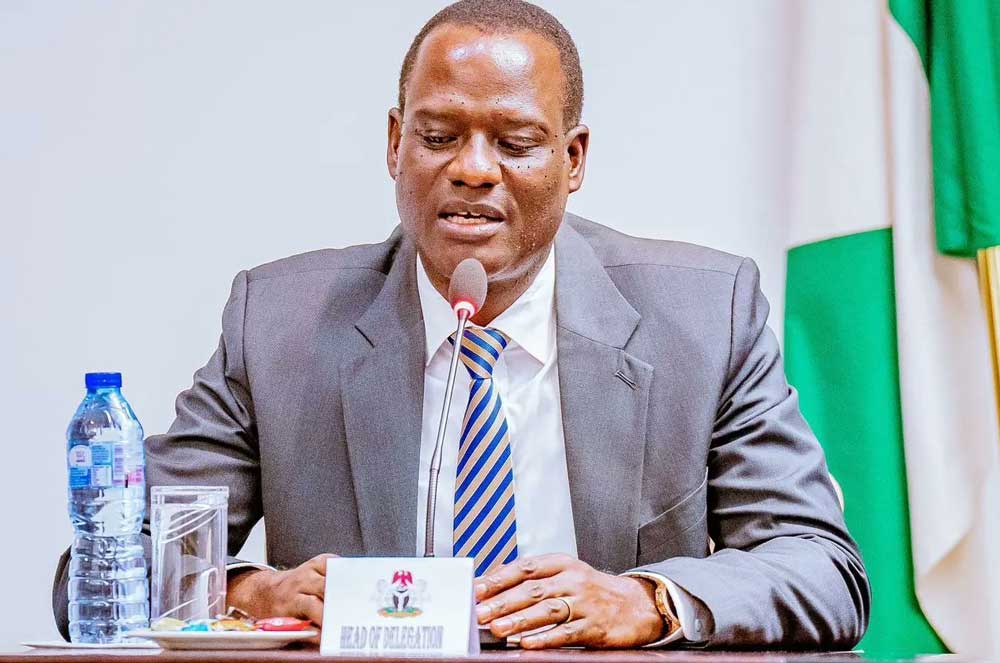
A statement signed by the Special Adviser to the President on Information and Strategy Bayo Onanuga, has announced that “President Bola Tinubu has nominated Taiwo Oyedele as the minister of state for finance, replacing Doris Anite-Uzoka.

“Mrs Anite-Uzoka will now move to the Ministry of Budget and National Planning, as the Minister of State, her third portfolio in the administration.

“President Tinubu has today conveyed the nomination of Mr Oyedele to the Senate for confirmation in a letter to the Senate President, Godswill Akpabio.

“Until President Tinubu nominated him as a minister, Mr Oyedele from Ikaram, Akoko, Ondo State, was the chairman of the Presidential Committee on Fiscal Policy and Tax Reforms, which overhauled Nigeria’s tax system.

“Mr Oyedele, 50, is an economist, accountant and public policy expert.

“He attended Yaba College of Technology, where he obtained a Higher National Diploma (HND) in accountancy and finance. He attended Oxford Brookes University and earned a BSc in applied accounting.

“He also completed executive education programmes at the London School of Economics, Yale University, the Gordon Institute of Business Science, and the Harvard Kennedy School.

“Mr Oyedele spent 22 years of his working career at PwC, joining in 2001 and rising to become the Fiscal Policy Partner and Africa Tax Leader.

“Mr Oyedele is also a professor at Babcock University in Ogun State and a visiting scholar at the Lagos Business School.”

Continue Reading

Featured

Defection: Atiku’s Son, Adamu, Resigns As Adamawa Commissioner

Published

on

By

Adamu Abubakar, the first son of former Vice-President Atiku Abubakar, has resigned as Adamawa State’s commissioner for works and energy development, days after Governor Ahmadu Fintiri defected from the Peoples Democratic Party to the All Progressives Congress.

Abubakar’s resignation letter, dated 2 March 2026, was addressed to the governor through the Secretary to the State Government. He gave no reason for his departure.

The timing is pointed. Fintiri announced his defection to the APC in a statewide broadcast last Friday, saying his cabinet and the PDP’s state structure had moved with him. Within 24 hours, 22 commissioners and special advisers publicly announced they were following suit. Abubakar, whose father remains one of the PDP’s most prominent national figures, was not among them.

In a statement issued Monday night, Abubakar’s media aide Abdulaziz Jauro said the former commissioner thanked the governor for the opportunity to serve and pledged continued loyalty to the administration’s developmental agenda. He also expressed gratitude to his father “for granting him the moral support and blessing to serve the people of Adamawa State” — a line that, read in context, suggests Atiku was consulted on the decision.

Abubakar said his resignation was not a withdrawal from public life. “This does not mark the end of his commitment to public service,” the statement read, “but rather the beginning of new avenues for developmental collaboration.”

The resignation leaves unresolved the question of whether it reflects a political break with the governor over his defection or a personal decision unconnected to the broader party realignment now reshaping Adamawa’s political landscape.

Continue Reading

Featured

DSS Nabs Man over Assassination Attempt on Peter Obi

Published

on

By

Nigeria’s Department of State Services (DSS) has detained a man in connection with the recent attack and alleged assassination threats targeting Labour Party’s 2023 presidential candidate, Peter Obi.

According to AIT, the shooting incident took place on February 24, 2026, in Benin City, Edo State, during a political gathering attended by Obi and several figures from the African Democratic Congress (ADC). The meeting was hosted by former APC National Chairman, John Oyegun. Gunmen reportedly opened fire at the venue, causing panic and forcing attendees to disperse for safety.

According to security sources, shortly after the attack, an individual identified as Udeme Monday Stephen allegedly took to social media claiming responsibility and issuing additional threats against Obi, warning of further violence.

Intelligence officials reportedly initiated swift investigations, employing digital tracing and forensic tools that led to the arrest of the 26-year-old suspect in Rivers State. He is said to be a teacher at a private secondary school in the Eliozu area of Obio-Akpor Local Government Area.

The suspect remains in DSS custody and is expected to face prosecution. The agency reiterated its commitment to responding to credible threats and safeguarding lives and national interests without bias.

Continue Reading

Trending