
Headline
World Exclusive: Kola Abiola’s Secret Pains

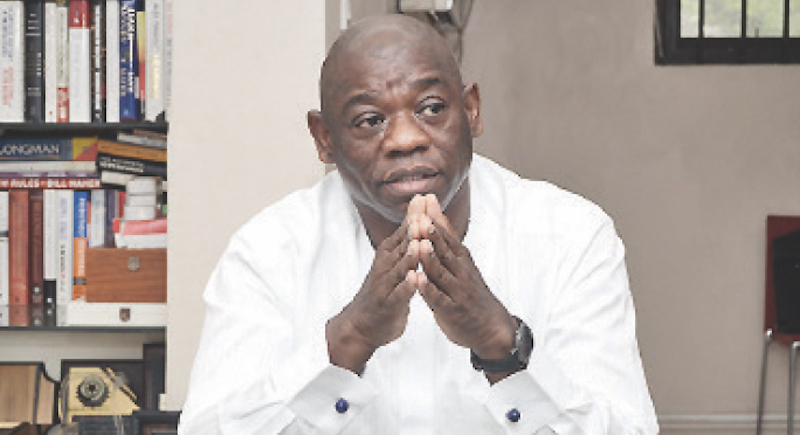

Abdulateef Kolawole Abiola is the eldest son of late billionaire businessman, philanthropist and politician, Bashorun MKO Abiola who died in detention following the annulment of the 1993 presidential election that he overwhelmingly won.
In this interview, with our Publisher, Aare Dele Momodu, Kola Abiola as he is fondly called, spoke candidly about his parents, the June 12 debacle, his secret pains and his dream for Nigeria.
This is a very rare interview. And for me it is a great honour and privilege to have you. And I like the fact that about two days ago when we spoke, you told me that I could feel free and ask anything. So tell us about yourself from the very beginning
Kola Abiola: Thank you. I am Abdulateef Kola Abiola. I was born into humble beginnings to late Bashorun MKO Abiola and Alhaja Simbiat Abiola. I am one that has been further humbled by events in my life and that makes me what I am today. That more than describes me as per who I am and why I do what I do today.
Can you take it further back to when you were in school and all that?
Kola Abiola: I came back from England, and started at the University of Lagos Staff School, Akoka. At that time, my late mum was a Lecturer at Yaba College of Technology and my father was an Accountant. She was teaching Textiles Design. I remember that me and my younger ones will walk all the way from University of Lagos to YabaTech to wait for my mum to finish before we could go home. From there I went to Baptist High School , Abeokuta where I lived with the principal then; did a bit there before going to Ibadan Grammar School. When I came back on holidays, I had severe Jaundice, and couldn’t go back. I ended up spending six months at home recuperating. Later, I did a term at Maryland Comprehensive Secondary School before my mum shipped me all the way to Aiyetoro in form three. Well, I finished secondary school in Aiyetoro, and went to San Francisco State. Then I went to Unversity of California, Berkeley and then to Colorado State University. I have a Bachelors in Finance and MBA in Business Administration. That’s me!
What were the things that molded you knowing very well that daddy was busy, and you stayed with mum?
Kola Abiola: I thank God for her. She always told all five of us that we are not MKO kids, and that we are Simbiat’s kid, especially when dad became polygamous, and as a result of that, the discipline was extra. She was very religious, and she made sure we were religious as well. She was a Taliban in the house. The moment you were able to convince and get her on your side, she will be with you one hundred percent. I owe a preponderance of who I am today to her.
It is a shame that she didn’t live long enough to see us achieve. By the time she left, the youngest of us, Wura, was doing a PHD. In that respect, so she saw us to a point where we could handle things for ourselves. It has been 29 years since she left, and like I said, one has been humbled by events in my life. She died at 54. She was the one who taught me to be careful, and she’s been very very deep in my thoughts. I took from her that once I have decided on what to do, I do it though it takes a while and lot of consideration.
My father and I also connected so well.
I grew up in an environment that I couldn’t see anybody by way or religion but purely by just being Nigerian. We have been to remote places for employees on functions just to support them. So that was just one of many things he did back then… To me it is a norm. He was a good man.
They say when you look so much like your father, you make enemies for yourselves, certainly not in my case. I think it was by design and my mother ensured that the friendship was there, to a point my father couldn’t do anything without calling Kola. In its own little way, it became a problem in the family. She made me come home early just to be around him. The relationship between me and my dad is a design created by Simbiat
Your father started and grew so many businesses. Could you tell us some of the businesses because I know you were involved in some of them?
Kola Abiola: It all started with ITT which he was a part owner. He was an employee, but became a part owner. From that came Radio Communications Nigeria, RCN and from there came the Bakery (Wonderloaf), and then Concord Press, and then Abiola Farms, Concord Airlines and African Concord. Basically, that is it. Yes, I was involved in a lot of them. A lot of them have been around before I got back. It took me all my Youth service years in Zaria to go back and forth; to restructure and reorganise a lot of the entities. I had to clean them up prior to the arrival of my other brothers so they could step in and take it from me to better heights. Unfortunately, collectively, they became victims of our political history or June 12.
We all knew what happened back then. But more importantly, the government fought us with all their might and the businesses itself became casualties of life. I am not sure anything survived by that time. At the height of it all, we were the highest employers of labour in the country. We had offices in every state. The Concord Press, Airlines, RCN, ITT etc. Like I have said in the past, MKO was well ahead of his time, not to talk about the Abiola Babes FC etc. He was well ahead of his time. Unfortunately, he paid the price for that also.

What happened to Summit Oil? I know You spent about N400 million or more when money was money, but suddenly...
Kola Abiola: Well, we were one of the first indigenous companies to drill and find oil, and that was when we launched. It created a lot of excitement, not just for my family, but for the industry as a whole because it was fully indigenous. And MKO was a strong believer in indigenous challenge. So it was a wholly Nigerian affair. That also extended to the equity and funding of the operation. Now, when the election was annulled, the licence was cancelled. We had two concessions back then; they were cancelled.
We started with one that was split into two, and we paid for the second one. And it is funny how things work. We paid for both, and when the then government of General Sani Abacha came in, he cancelled the licence; we waited till he left office when President Olusegun Obasanjo was sworn in to get back both licences.
We had to do that by reclassifying the concession. We are a Niger Delta-based concession with 55 years of exploration time to convert to oil mining licence to Oil prospecting licence. Now, by the time General Abacha left, there was no way we could still run that concession under that regime, so we had to reclassify it to another basin, which took 10 years to prospect and convert the licence.
There are some details I can’t tell now, but anyway, after we reclassified it, we still had another problem with the regime. President Obasanjo didn’t quite understand why we had two concessions. We tried to show him that we didn’t operate the second concession because the licence was suspended. And we actually paid for the two concessions. Anyway, the long and short of the matter is that he actually cancelled one and left us with one. And we continued operating on the one that we had.
But fortunately when late President Musa Yar’dua came to power, I approached him; but before then, we had taken DPR to court because we paid for the concessions.
So when President Yar’dua came, I approached him and explained the situation, which he knew about anyway. And he returned the concession to us. So we had an out of court settlement, and that’s how we got it back. We have been trying ever since to make it work. We have gone from the first, and we are virtually on the last because it is a long tedious governmental process just to get it operational again.
But I have a total commitment to sum it up because of one particular thing; when we signed the signature bonus back then, and we were going to pay for it, my father was approached by family members who didn’t quite understand why he would leave so much and give so much in my hands to go and take the risk, he said well, he believed so much in Kola, and that Kola can achieve this thing, and as Kola has said, ‘we are going from being rich to being wealthy’. He honestly believed I knew what I was talking about – that’s number one. Number two. He said everything was my headache. I said yes, but the only difference was that I didn’t take it as my headache sooner.
He told me if you make this work, you will make my burden a lot easier. I took up the challenge, and when we struck oil, I proved everybody right. I proved to everybody that this thing will work. Events that happened subsequently were totally out of my control, and because of that till date, I have been travelling to make it work, and that is why I am stuck at it. I have put in a lot of my resources just to make it work. Despite all the setbacks, I’m still at it, and insha Allah, I am almost there.
Amen! Now, your dad was almost into everything. Could you tell us the story of Concord Airlines?
Kola Abiola: Concord Airlines came by default actually. We had two aircrafts- two HS125. And while it was for personal usage, we also used it as private charter. Along the line, the whole idea came that since we are running private charter, why don’t we start an airline, and that was it. It wasn’t my idea; it was sold to him, but once he said he was going to be doing it, I followed him, and made it happen.
But I was going to do it differently. The idea was to have as many stops as possible, we did that until it was also shut down.
Do you think it is something you would like to resurrect?
Kola Abiola: Good question. For me, it’s like fine China; You drop it on the floor, and its so difficult to get the pieces together again. There are some things I don’t feel happy with, some that have a possibility, there are some that are still running, but I don’t think the airline is one of those things in my book.
I started life in Lagos at the Concord Newspapers. What happened to Concord Newspapers because as at the time you invited me, you also wanted to resurrect it. What happened?
Kola Abiola: Concord was proscribed by the military government then, and while they occupied the premises, they virtually stole all the things there and most of the ones left became useless – that’s one. Two – I also felt that I could resuscitate it, which I still plan to resuscitate, using a totally different model. We are in a new age now; the days of having a huge printing press and a thousand and one people all over the place are gone. I discussed that with you, and I gave you the blue print on how I intend to do it. While it came back from date, it still has the problem of feeding its own self because the management then was still trying to maintain that old order. I even recall that we went to the state government of the day for help, and their own idea of helping then was to buy up the generators. I wondered how that would help; how a press would run without generators.. That’s another story entirely. It is doable. I know it’s going to come back. It is not going to come back in the guise which it went, but it’s going to come back in a hybrid of some sort. I am working on it.
And you lock up such a man for four years and think he is not going to die. Of course he is going to die. So he was killed, period. No matter the circumstances or how you want to peddle it.
One of the saddest things that happened was the story of the Abiola Farms. At a time there were fisheries and many more. What happened to all these?
Kola Abiola: The same thing. The farms collapsed because the military government believed that I had a secret airstrip on the farm – the one at Lafiagi and Taraba, and that I was flying in arms and training commandoes there. We didn’t have Boko Haram then let alone training commandoes (laughs).
As a result, they shut it down – the same thing with the equipment. I even heard that some family members went in there to break down some of the the equipment and sell the stuff. The farms were something very dear to me. If there is one thing I have put hands into, the farms were the biggest satisfaction I ever had. You truly reap what you sow. I got so involved that at the height of it, I was doing about 3000 hectares of maize, another thousand of corn flour. I had my hybrid for sorghum etc. I was really passionate about it. I really really enjoyed working on it. Of all the companies, that was number one for me – there were all kinds of value added, changes to the environment, to the people in those remote areas. The government of the day ended up hurting all these people thinking they were punishing MKO or me.
In Taraba for example, and because of the contributions I made there, there is a local government named after me. It is something that was so close to my heart. I felt so bad; there was nothing I could do. There is a limit one can take on government. I hear people say, you didn’t do this, you didn’t do that, you could have done this, you could have done that – I pray to God they never have to face government; they will always find a way to chop off your knee caps. And the system wants to bring you down. For me to be standing, and have survived it, I think I have done a great job so far.
Your dad was a global citizen. He touched lives everywhere, especially in Nigeria. I remember the case when Sultan Abubakar of Sokoto passed on, and he had to get involved in Maccido/Dasuki fiasco. Are you able to recollect what happened at that time?
Kola Abiola: My father was very close to the late Sultan Abubakar. The son is the present Sultan of Sokoto. He is very very close to me. When the issue came up and there were burnings and killings in Sokoto, my father and I got into an aircraft and went to Sokoto. We met with the Sultan, and went to see Maccido also, and he was able to broker peace.
You know in Islam, you must have faith; God gives, God takes away. We’ve seen what happened subsequently. But the truth of the matter is there was peace, Sultan Dasuki had been the Sultan of the Emirate at some point in time so was his brother, Maccido. Everything is prescribed and ascribed by God. His going there doused a lot of the storm. He met with quite a lot of people in Sokoto that day, and by the time we left, there was a change, and peace returned. You see that goes to show why and what I believe about Nigeria. I have offices in every state. I am at home in every state in Nigeria because we reached out as Nigerians.
I grew up in an environment that I couldn’t see anybody by way or religion but purely by just being Nigerian. We have been to remote places for employees on functions just to support them. So that was just one of many things he did back then. When a Nigerian was given an award in Saudi Arabia, we chartered a plane and flew everybody there. To me it is a norm. He was a good man.
You did your national service in Zaria. Today, a lot of people in your position will never do that
Kola Abiola: I came home on holiday. My mum wanted me to go back for PhD but I just was ready to stay at home and do something. I worked at the Chemical company back then, but I wasn’t just fulfilled. I knew I could do a lot more coming back to Nigeria. So, I went and filed for my NYSC on my own ,but my mum was like when are you going back, Kola.
I was posted to Kaduna, and as God would have it, the camp was in Zaria. Zaria was second home to me. He has a house there and the Emir was like his brother and godfather to me. And I was at home. Not just that, I went to Taraba, the place was so remote, and I had no problems there. I was at home, and like I said, I have a local government named after me. I had no problems. The day my mum came to the farm to see what I was doing, she was like, Kola, what are you doing here. Your mates are out there in Lagos, working in banks and oil companies. I answered her that dad said I should do it, and I am loving it.
She said, I’m telling you you can’t continue here, but I reminded her that she was the one that said I should do whatever dad said, so why would she now want me to do otherwise. I made her understand that I was creating things there; I was making things out of nothing, and that’s where I thrive the most. I don’t think I’m a good trader, but when it comes to creating something from zero, I think that’s my strength. When she returned to Lagos, she got my dad to come down and see what I was doing in the place (laughs), and the same scenario played out in Lafiagi, I was comfortable everywhere. Even when I went to Edo State to start drilling oil. I am not afraid to invest or do business anywhere. We all see ourselves as one, and that is what it is all about.
Your dad was involved in the fight for reparations against the many decades of slavery, and a lot of people has said the West was not comfortable with some aspects of his life. What informed the decision to go for reparation
Kola Abiola: You see my father always fought for justice for the underdog. He felt he had to make a difference. He would always put his best foot forward. Besides being a true Nigerian, he is very much a Pan Africanist, and he felt that you can’t become a strong economic unit if you don’t have the infrastructure, policies and things that could make it convenient for ease of trade and movement.
As a result, drop all the barriers that hinder entry and exit of any country. You cannot create the economies if the entry cost is so high; when I have to fly to Italy to get to Gabon or fly to France to get to Cameroun when they are just next door. He felt by doing this, let them pay for that infrastructure that they deprived us because it was on our backs that those infrastructures were built – the cotton fields in America, the plantain fields in the Caribbean. He felt that if they can provide a Marshal Plan for the Germans, and give the Israelis something every year, why not do something that will make up for all we have lost overtime and generations. And he was very very passionate about that. He just felt that somebody had to start this, and overtime, it would crystalise, and it is beginning to. Like you said, the man had a foresight, and everything he did was not by error. We are slowly but surely getting there.
At the end of January 1993, your dad suddenly went into politics, and I remember leaving Nduka Obaigbena’s house that night when we picked up the information, and I came to your house in Anthony Village to ask you. I’m sure you remember that night?. (Long laughter)
Kola Abiola: Of course I remember…
Exactly, could you please tell us everything that transpired?
Kola Abiola: Few months before that, we had a meeting at the hospital with my mum. My dad hinted about him running for president and politics. Her take was that “I wholly support you to do this, but there was a big but, allow President Ibrahim Babangida finish his programmes and do what he wants to do, and then you can step in and run”.
She had reservations about the process. I think Deji, Agbo, myself, himself, I think Bolaji was also there. We agreed to let the process end; once it was done, we will take it up from there and run for the president. We wanted to see how far he would go with the process. About a week or two after, she passed away, and we were dealing with that. He couldn’t tell me what he was doing because he knew we had an understanding, but I was reading it and heard of it exactly the same way you heard of it. A lot of people were calling to know my whereabouts, I responded that I didn’t know anything about it. So, I came down. He couldn’t call me. Normally, I use to stop by on my way home before going to Anthony. He didn’t call me. I didn’t go.
Some people were like daddy said he hasn’t seen you, and I answered that he should call me (laughter). But I came down, and I resigned from the company, and said it was time for me to equally move on. Then the process was going on and election format and strategies and so on and so forth. All along he kept on telling some people that this thing is not right – “where is Kola?. If he gets here, we will get the answers to all the questions I am having”
Then one late night, around 2:30am, he came by my house. He called me (he used to call me Kay). He said he was on his way home, and stopped to see his grand kids. I answered that his grand kids are upstairs. I took him upstairs, and we came back downstairs. He got into his car, came down again to hug me, and said in Yoruba, ‘are you just going to leave this to me to do, and you will not participate in it?
Before that, Olu Akerele and I had talked about the election, and I told him I wasn’t interested but I would give him a blue print on what he needed to do.
I advised him to take it to him, and he would like it. Now, this was at the lobby downstairs. I sat him down and gave him step by step of what has to be done and how it needed to be done. I also predicted who was going to be VP. I think Olu still has a copy of that thing. I read it line by line. I felt Olu must have gone to tell him that he needed to call Kola. He read and said it was making sense and ordered that I be called. Those were the decoy he used to come and see me that night. That was how I got involved.
You know what. Honestly, I’m not sure Babangida was held hostage by anybody. I think he was held hostage by a process he created himself. That process had dragged for too long that he had no choice
Is it true that your mum ever told daddy not to go into politics?
Kola Abiola: No. She said he can go into it but let the IBB programme come to conclusion first.
But the programme was elongated. Do you think your dad got impatient with the transition programme, and is it true that he sent people to Babangida to find out if he was ready to go finally?
Kola Abiola: Yes, but either way, it is neither here nor there. The difference in us, the five of us, was there was no Simbiat, and that told on us, and is still telling on us till today. I really don’t know how best to explain that but you see I was very very close to dad, but there was a limit to how I can look at him and say my mind with the kind of training she had given to us. There is a limit I can confront him. In the past, I could speak to him, and he could tell where I was coming from. If I had a sense that he was not fully on board, I could go to mum. But I seem to be the only one in the room that seems to say things differently. Everybody around him were not saying things based on my perspective; based on the love I have for the man. I think deep about things, and rarely do I speak on things and they don’t come to pass. It is just a gift. I don’t just open up and say things. And that is the reason I don’t give too many interviews as well.
This is because my views can be very extreme. I have learnt overtime to manage my tongue and be restraint. Still, there is a limit to how confrontational you can be with your dad. That will be a bit too much. I think that created a circumstance where I was alone in that room so to speak, and there was a limit to what I could achieve.
I am very interested in the SDP (Social Democratic Party) primaries in Jos. There was a lot of work to be done; horse trading, sleepless nights and I am sure daddy didn’t sleep for weeks. Could you recapture the essence of that marathon campaign to get the SDP ticket?
Kola Abiola: Well, no one, what we did was not conventional. We really planned a coup against the establishment. We were never meant to get that far but because we did things in a very unconventional manner. They couldn’t tell where we were going at any given time, and that gave us a heads up.
Now, I got very involved with the Yar’dua group. I was about 28, 29, and I had to learn very fast. And I am thankful to that whole process till tomorrow to late General Yar’dua and even late President Yar’dua. I really had a lot to learn at a very short time. We came in a little late in the game. I needed to figure out where the power play was, and how we could use that power to achieve the objective. At every given point, we were betrayed. But because of my innocence, I think there was an advantage in that. I saw things and brushed it aside and move to the next thing.
I was moving from one person to another, and because they viewed me as a small boy, wondering what I wanted, they listened. In the cause of that, it gave dad an advantage that a lot of what they won’t say to him, or find out, I could.
And he trusted me a lot, even at that age. He was so sure it was working in the best interest of the objective. I wanted noting but to deliver the ticket, and I knew it. We paid for every hotel and guest houses in Jos to find out that Baba Kingibe’s camp had governors on their side, and they were threatening every hotelier not to allow me put any delegate in their hotel or their licences would be cancelled.
But thank God, we had camped everybody in Kaduna first. We moved them on the day of the election straight to the stadium. So whatever we paid then was gone. I couldn’t even find a place to sleep myself. It was a problem in Jos then. I was determined to make sure things worked. So it was an exercise I will have to write about because of the kind of games that played out. Someone that comes to mind is Baba Adedibu for example. I have the highest respect for the man. As young as I was, he would sit me down and say in Yoruba, ‘Kola, what exactly do you want’. I will lay them out, and he will make sure they are achieved. At no given point did he do otherwise. Never! And even when some were playing games, he would say ‘don’t worry, you would get what you want. It may not come out exactly, but you will get what you want’. And I got what I wanted back then. Even in my voting party, it was meant to be different at the stadium. The games were played across states, even in my home state, Ogun.
Now, your dad got the ticket. Let’s move on to the general election. I was not in Nigeria on the day of the election because your dad had sent me to Vienna to represent him as Gani Fawehinmi was getting an award. But on Monday, June 14, I called Nduka Obaigbena in Nigeria, and he told me he has been trying to reach me, and if I could reach Chief Abiola, I should tell him to reach President Babangida urgently. I said why, and he said because he was going to win but they are not going to give it to him. And I said how can someone win an election and they won’t give it to him. Do you think in retrospect that it was an error that daddy did not reach out to Babangida early enough?
Kola Abiola: Well, I did. I did the reaching out on his behalf. We did. It’s just that both sides allowed too many people to get in the middle of friendship. I have always felt the two of them could have sorted things out for themselves. It’s destiny I guess. There was even a particular case where after the annulment and everything, I actually approached General Babangida, and I said ‘sir, are you going to leave?’ And he said, ‘Kola, yes, I am going to go’. That was the day I believed he was going to go. Everybody around him didn’t believe he was going to go. Those around my dad didn’t believe he was going to go. Unlike the Yar’Adua group, those around my dad didn’t have a plan in case Babangida goes. I tried to make them see otherwise.
Talking about Babangida, do you believe that some people worked on him not to hand over to your dad because I later learnt around 1998/99 from Dr. Rilwanu Lukman, whom I visited when Chief Olu Falae was running against Chief Obasanjo, and he told me that the owners of Nigeria (that was the first time I heard the term, owners of Nigeria) have decided on Obasanjo not Falae. Do you think the owners of Nigeria intervened at that point?
Kola Abiola: You know what. Honestly, I’m not sure Babangida was held hostage by anybody. I think he was held hostage by a process he created himself. That process had dragged for too long that he had no choice. He started with registering multi-parties, and returned to cancel it. After that, he created two parties, and built party offices for everybody nationwide. There was no way he could walk back from it He was already hostage to a process that was so dragged out and was about to consume him. That is what leadership is all about.
You have to be objective enough to take decisions even at your own expense. For a process that has dragged out for so long, I want to believe that; yea, there might be people who would not want to go for their own selfish reasons. But for the leader himself, he had to make that call irrespective. I think he was held hostage by the process he had created that was endless as opposed to individuals. That’s my summary there.
President Babangida stepped aside, and Ernest Shonekan, and Egba man like your dad stepped in. Why do you think they invited him, and why do you think he accepted?
Kola Abiola: Well, I really don’t know. You see, governance will never allow a vacuum. Never! Like I said earlier, I had a meeting with him (Babangida), and he said to me directly and said, ‘Kola, I want to go’. I went back and conveyed this to my side, and they didn’t believe me, and made no plans whatever for plan B. We had another group – the Yar’Adua group, who were saying let’s have this in place in case he goes. There will never be a vacuum – somebody will step in at some point. If the objective is for him to leave, let’s make sure he leaves first, and then we take the next step. But our own side of the fence didn’t believe he would leave, and so made no plan B, and that’s what happened. Now, as to why they picked Chief Shonekan, he was kind of in there, already holding a position in IBB’s government. It was easier to move from there. It was not they went somewhere to fetch him, no, he was already in government. Maybe that was convenient, I don’t know. Like I said, we had no plan B.
It has been alleged that Chief Abiola was one of those who said Chief Shonekan should be sacked, and then Abacha took power because he promised to return power…
Kola Abiola: That was a mistake, and I said that back then. It’s treason – whether it is a military or civilian person involved, it is treason. No military man will do that. If he fails he is dead. We won’t plan a coup to get a handover. I didn’t see that coming, and I said that was a big mistake. To call him to take over government to do the right thing? Who does that? If he fails, he dies. If he takes that risk, he did that for himself.
Two days after the Abacha coup, we were with your dad in his study. I remember Prof Agbalajobi, Alhaji Tele Olukoya, Alhaji Adetona and a few others were there with him, and he actually wanted to issue a strong statement against Abacha, and they advised him against it, and actually advised him to reach out to Gen Abacha. That night, your dad asked me to drop some documents, and by the following morning his vice, Babagana Kingibe, Ebenezer Babatope and others had decided to join the Abacha government.
Kola Abiola: I actually told him that myself. You see, before that, I knew. It was more like window dressing to make it look like sanction. I had already told my dad that this guy was already in the government, and when I told him, it was a very difficult thing for him to swallow. I could feel for him. He said they are all going to be the biggest losers. I really felt so bad, but I had to tell him. But when the meeting was called, he just flowed with it, and didn’t say anything.
Do you think that was the night everything ended?
Kola Abiola: I don’t think it ever ended for him. It never ended for him. During one conference that Abacha organised, we were having a debate, and it was said that an exit date of the Abacha regime will be revealed at the conference. On our part, we were contemplating boycotting the conference, but I was like this is a military government, and as a result boycotting the conference will be of no consequence
After Abacha, your dad went to Epetedo to make his declaration. Were you in support of that declaration?
Kola Abiola: There was a proviso because we were then under a military regime, and anybody who said we should do this must have somebody behind us. I think he had a press conference where he said he was going to appoint his own cabinet and all that. I was like all of us should go to the Epetedo place. It wasn’t all about him alone. Let all of them forming the cabinet come there and declare the government with him. That was my own view. When he left – I only found out afterwards. That was my condition. I didn’t say they should not do it. I said if they are going to do it, let every one of them go with him to do it.
He disappeared for about 13 days. He went into hiding, and I remembered he came out from Surulere to go home before he was finally arrested that night. Are you able to capture those moments
Kola Abiola: I wasn’t there unfortunately. By the time I got there, he had been taken. I knew he was going to leave. He was coming home that day. I was meant to be at the house that day, but I had some personal things I had to take care of before heading there. But before I got there, the whole place had been sealed up and I couldn’t get to him.
For 13 days, you were not with him?
Kola Abiola: I was. I even went to see General Abacha in Abuja. The late Isa Funtua was with him. Once they announced that I was around, he told me that I should wait. Alhaji excused himself, and said the General should see me because what I was coming for was very important. We had a discussion, and I said we shouldn’t allow this event to corrupt the friendship they had for each other. It was a long talk. We mentioned things I felt I couldn’t do. So I left, and that was the last time I saw him.
Power play doesn’t understand friendship. That’s it. Once you sit on that seat – even if you see things differently, the guys around you will tell you it’s not what it is. And I saw a lot of that back then. I’m even surprised they gave me the access I had back then. Maybe my innocence then was an advantage. I had nothing to hide, and I was honest with everybody. Even at my young age, I had always interacted with them at that level. That was the kind of exposure I got being with my dad.
And so your dad was arrested. Could you tell us what you were doing in those four years since you were at home. For me, I escaped to England
Kola Abiola: I was meant to be have been arrested in the alleged Obasanjo/Yar’dua coup. But I opted not to go. My father had been incarcerated, and if I leave, there was no one around. I decided to stay, and waited for them to arrest me in my house. But for some reason, it didn’t happen. Yes, it was a very difficult four years. For me, it was a learning process because I got to know his friends for what they truly are. I got to know family for what they truly are. I needed to sift a lot of things fast. I got to know a lot of truths that I didn’t know. What I thought will be a temporary thing became permanent when he passed away. There was a lot to absorb. I went to Abuja for two to three weeks trying to see him with Mustapha tossing us back and forth. But as God would have it, he ended up doing more time than anybody. As long as you stand for the truth, things will sort themselves out. The only thing we had running then was the bank, not like they didn’t try to take it over. It was a tough four years. Thank God for some investments we made back then in Dubai. It was tough, it was really tough. I had a small tutelage of my mum’s passing away before his incarceration – it was a small bit of it, but at least I had an idea of what it entails. But my dad’s situation was a full blown one; a case study.
You were arrested at some point. That was after the death of Alhaja Kudirat Abiola – God bless her soul – why were you arrested?
Kola Abiola: What happened back then was – the last time I saw dad, he said we should change counsel. It was very funny that it came up because from day one, I was opposed to Chief GOK Ajayi as counsel because I know a bit of antecedence between the two of them – the man never liked my dad. I didn’t think he would be there to truly do his judiciary responsibility in that case. I think I was right. I knew I was right. So, I really never went to court when that guy was around. So when we saw the last time, he said I was right, and should change the counsel, I started the process and along the line, Alhaja Kudirat – his friends were with Aka-Bashorun – he came in with JGK Ajayi. And he found it difficult to withdraw his services, and I was bent on carrying out my instructions anyway. So we had an agreement with the late Supo Adetona. Dr Ore Falomo was there. She finally agreed that we withdraw his services, Before we left the meeting we agreed that we would have her write that letter, and then go with her, I sensed conspiracy. But they went and came back without her writing that letter. They came back and said I was right. And we just moved on and started the process. We had a scenario where he (Ajayi) continued with his services while Chief Afe Babalola came in with Chief Williams and decided to write this thing. the irony of it is that this man made it impossible. Ajayi lodged the case in every court possible, and we had to start unwinding and undoing things before we now got to Supreme Court. He also came to the Supreme Court. When she was shot unfortunately, I was invited to make statement so I went, and got locked up claiming I was part of conspiracy that killed her, which is really unfortunate. Time has shown that I had nothing to do with it. Unfortunately, even her kids accused me of being a party to killing their mum. I don’t think they remembered that I was even locked up for that case, but its another story entirely. It was one of the difficult times I had to go through back then. What I have been doing is to hold the family together, but the system decided to split the family by accusing me of being part of the conspiracy that killed my own father’s wife. But also, I learnt one thing. The same group that was in support of Chief Ajayi then were all also incarcerated – Chief Adesanya and all of them. I think Chief Bola Ige was their lawyer. They went to court, but I refused to go to court because I didn’t do anything. I didn’t want to play into the hands of the military. I was released before all of them. I did about six months while they did about a year. I found out that the bigger the head, the bigger the headache.
And then, two days to July 7, 1998. Again, I was in London with Tokunbo Afikuyomi. We just left Nduka Ogbaigbena’s house (he has fled into exile then). We left very early in the morning – walked from Park Lane to Marble Arch. We saw a story on Chief Abiola in the Sunday Times of London that someone came to Nigeria with the then UN Secretary-General, Kofi Anan, and they said the condition they met your dad in prison was very bad. Then two days after we read that story, your dad passed on. Could you recollect what happened the last 24 hours before you got the news of his death.
It was very funny that it came up because from day one, I was opposed to Chief GOK Ajayi as counsel because I know a bit of antecedence between the two of them – the man never liked my dad
Kola Abiola: It was like any other day to me. I had gone for my usual workout and came back. I got a call from a friend of mine asking me if I have heard what was going on. This was before it became public. She was crying on the phone, and she broke the news to me. At that point, I didn’t even know that the government of the day – Abdulsalami Abdulsalami had invited us to come and see him a day or two before. Conveniently, I was left out of that trip. I didn’t realise till I got to Abuja to mop up things that I got the news, and I spoke to Dr. Falomo.
Then I got call from Abuja that I should come. Then it was all over the news that it has happened. I just sat back, and you know, I had always felt it was just a temporary thing. I put a lot of things on hold because I have had some discussions with him, businesswise. If you recall, I had said that I wouldn’t get involved in whatever the family is involved in businesswise. So I was knocking out some things waiting for the right time to discuss them with him first, and get the clearance before moving on.
My situation with the family was that what was temporary became real. I thank God that I had a space of time to get into where I understand things a little better and the difference – it hit me real hard. And before then, because of all these dispute about changing counsel, and for the last one year before then, they didn’t give me access to him because I needed him to sign some papers so they refused to give me access to him. And, I also felt empty because dad was really my friend. He was my dad, he was my friend. I didn’t talk to him – yes – we all have our flaws, but he was a generally good man. He had no hatred in him at all. Some will call it naive to have a heart like his, but it is not naivety – giving everybody a chance to prove themselves. On getting to Abuja, kept telling myself so this thing is really real. I met with Abdulsalami. We went to what they called the State House Clinic, and I saw the condition they put him (laments).
This country ehn… Two things that Nigeria does very well is to rubbish its leadership – if a man wins an election, and in the cause of the election, he is taken in a Black Maria to court. The other thing we also do very well is that we have become a country that does not care about our youths. That can’t be good. Once you rubbish such people, what are the youths supposed to look up to. They rubbish you if you have principles, and then expect the younger ones to respect them.
A man wins an election nationwide, and you take him to court in a Black Maria?. Then I went to the State House to see where they kept his corpse; the place was nasty, half refrigerated. The state House for God’s sake! It reminded me of my days in detention when I will sit out in the evenings and look at the Police Barrack and see the nastiness and I ask myself how do you expect these guys to show empathy to people if you put them in this condition?
I have seen scenarios where if you are cooking in the kitchen and decide to leave your room to collect salt, there is a possibility that your half cooked food might disappear. A guy dies on duty, and before his wife or parents know, someone is already there sending her packing. I saw these things live there. Even in death, the treatment they gave him was disgusting. Just because he won an election? It doesn’t make any sense.
On the morning your dad passed on, a certain man, woke me up from bed in London just after 7am. He had been calling. He said they want to kill your father, and you are sleeping? and I said my father died in 1973. Which father again do they want to kill. He said your father, Abiola. I said who wants to kill him, he said he just listened to BBC World Service and there was an interview from Thomas Pickering and Susan Rice who came from America to see Chief Abiola, and they asked them why do you want to see Abiola, Kofi Anan came, and Abiola said he was not going to bargain his mandate, Emeka Anyaoku came from the Commonwealth, Abiola said no deal. So what do you hope to get from Chief Abiola, They said they were going to persuade him to forget his mandate to which they asked them, ‘if he tells you no, what will happen’, and they responded that he would have become a danger to Nigeria. And lo and behold that evening, I was on to your sister, Wura Abiola, and we were going to issue a press statement that all the human rights people who were saying that Abiola should not leave the prison unless they gave his mandate to him, that we should get them to let Abiola come home. At 4:03, it was a fax message, I got through to Wura, and she was saying ‘they have killed daddy, they have killed daddy’. I asked what she was saying. It turned out to be true. I know that there had been a documentary that you were involved in with Ose and others. Do you truly believe that your dad could have been killed?
Kola Abiola: You know MKO very well. If he drives down a street, he will stop by and tell them to check his battery. My dad is not that careless with his health. If he feels any inconvenience health-wise, he is on the next plane out. He will be like, Kola, I’m on BA flight tonight, I’m not feeling too well, and he is gone. Now, when you incarcerate a man like that for four years – he doesn’t have regular visitation of his doctor, even at the point we pleaded for him to go out for treatment, Chief GOK Ajayi came out to challenge the judge for being an NRC person (can you remember?) and aborted that whole drive. It was just a matter of time. You didn’t need to put a gun to his head. We all know he had blood pressure issue, and no check-up for four years. This is a man that gets a check-up everyday. Like I said, if he drives past a clinic, he will tell the driver to stop so he could check his blood pressure – any clinic and anywhere. And once it is more than normal, he is on the next flight out. Definitely, he was killed. I mean you don’t have to put a knife or gun to his head or spike his drink or whatever it takes. If you have malaria for two weeks, and you don’t get treatment, what’s going to happen? Not to talk about the number of tabs and vitamins dad pops in every morning. Maybe that is why I’m even not a believer in vitamins today because he pops vitamins regularly. He had a tablet for everyday in his bag. And you lock up such a man for four years and think he is not going to die. Of course he is going to die. So he was killed, period. No matter the circumstances or how you want to peddle it.
After his death, you have had a lot of family issues. How are you resolving the family issues. I am aware that there has been litigations. What happened to his will, for example. There was a time you were accused of forging and rewriting the will to favour you and your siblings. So, what has been happening?
Kola Abiola: Number one – I must say one thing – MKO not coming home was a blessing in disguise for a lot of family members because the man I saw last and the man that had gone through what he went through if he had come home, a lot of things would have changed. A lot of things. Two – would I change a will that doesn’t even benefit me. That will was dated quite alright, but wasn’t up to date, but that was the last will signed.
There was a will he wrote that gave me the right to do and undo everything. But thank God, it was not signed. If it was the one signed, I don’t think I would be here speaking with you today. But thank God it wasn’t signed. The copy is there in the file. Wouldn’t I rather forge the signature on that one and leave this one behind – I don’t get it. Number three – I don’t get anything from this will, the way it is now because everything that I could’ve possibly get that was going to my mum were given to me because my mum passed away before him. So whatever thing they are doing now is out of sentiments. Finish. The so-called DNA issue – these kids were doing a blood test in the man’s lifetime, not after death, and they know themselves. They have done it in his lifetime. Their mothers knew they did in his lifetime so why would I want to forge that – to the point that he wrote in his will specifically that a lady has two kids for him but only one (the lady had taken him to court in England) is his. How would I have known that. I can go on and on. But you see, leadership requires objectivity even at your own expense.
If I had wanted to manipulate – remember they were all very young while I was working in these companies – but because of my responsibility to him, his ideals and what he would like to see, that’s why there is something for them to keep. Everything I have inherited has come from my mother 100 percent. And I’m still getting it from her till tomorrow. Because my mum was always the entrepreneur in the house. Even I dare say that all the funding of ITT in those days was Simbiat Abiola. We know we had assets that weren’t utilised, and they were acquired by her. But I have a typical way of doing things. You put your husband as Chairman. Despite the fact that the man was polygamous, everything was the same. She didn’t change anything, and she didn’t even leave a will. So automatically, everything goes back to him.
She didn’t leave a will. I hear a lot of things. You see I can go to sleep at night, I can jog the streets, I drive myself around because I know I am doing everything right. I have nothing to fear. Nothing to fear. I’m doing things right and I’m doing it the only way I know. I am not saying I’m right across board, but I can look you in face and say I’m sorry if I wronged you because I did this based on what I felt was right at a given time. So, this issue of the will, I am going to address. I have kids now, and they are grown up. They are going to have kids, and I don’t want any child, cousin or half brother, half sister to accuse my kids of living off their grandfather because of what their father stole from their father. No! I have been working all my life. Even in the secondary school, I was working so I know a lot more detail than a lot of people know. And not only that. I met my grandfather, the Balogun of Ojo, and he would call me to elderly meetings. He used to call me Lati, and asked what I think – my opinion on matters. My grandfather was a tough man. I know a whole lot more history than a lot of people think. So, it is something I will definitely address, and I want to come out and address it with facts, papers, receipts and everything. Till this date, I’m still being owed a lot of money. Besides that, I even went out of my way to do certain things for a lot of them that they know. Unfortunately, it is a case of having a sense of entitlement. If I had that sense of entitlement, they won’t get anything. But I am trying to be fair and transparent. I think I got myself into a cul de sac. And that is why people can now make claims and all that stuff. If I had gone by the rules – in an English way – my mother was married in Glasgow, English court. But for me trying to be fair and transparent, I took on what I shouldn’t have done. Again, I went out of my way to do somethings because I thought it was the right thing to do. That’s why I got into this kind of trouble, but I have the fear of God, and I don’t have a problem doing what I did.
Let me call you Lati like your grandfather would have called you (general laughter). Many of your younger ones would have accused you of not looking after them?
Kola Abiola: The best thing I could have done was give them education, and I think I have done that very well. As to what happens after that foundation, it becomes personal. At the end of the day, you are speaking to me because I took my education seriously. I have a degree. Many of us went abroad but they came back with nothing including friends, siblings. They went and played the rich man’s kid and had a great life, and came back with nothing. Thank God we didn’t make that mistake. We couldn’t have anyway because in my own case, MKO didn’t pay our school fees, it was Simbiat. And if she pays your school fees, you had better make sure you came back with good grades. It is like my old friend from primary school, who keeps talking about me having repeated my class forgetting that I came fifth in school, and my mum made me repeat the class because I came fifth. Can you believe that? So I made sure majority of us had great education in Nigeria. It even got to a point that I paid their school fees. I didn’t pay my own kids school fees till I’ve paid the others put together. They cannot be wrong. I even went to my brother’s school (Corona) to fight them for kicking MKO’s kid from school, and they apologised and took them back in. They are not my kids. They are my brothers, and my responsibility. Even the ones that didn’t pass the DNA test also had their school fees paid. I don’t want them to be burdens to the ones that are ours. A wife had four kids; two were ours and two were not. I still paid for all the four kids. I didn’t want the other two to be a burden to the two that are mine. MKO during his lifetime didn’t know who you are, but when you walk up to him, he paid anyway. So why should I now separate those that were not his own.. I paid irrespective. It is the biggest asset I was given. They complained I don’t go their weddings and all that. Should I start separating those that were his kids and those that were not or sanction the woman that brought strange kids to the house. It’s not healthy to reel out everything I know.
Everything I have inherited has come from my mother 100 percent. And I’m still getting it from her till tomorrow. Because my mum was always the entrepreneur in the house. Even I dare say that all the funding of ITT in those days was Simbiat Abiola. We know we had assets that weren’t utilised, and they were acquired by her
At a stage, you attended a wedding in Zimbabwe of one of your brothers. Ovation covered that wedding. What happened that such a relationship no longer exist?
Kola Abiola: You know, I am as simple and as sincere as I can ever be. You have known me for years, and I say things as I see it. When I come to you and tell you exactly what I think and you would not listen but instead you use what I tell you against me even when I told you out of sincerity, exactly what I would tell my blood brother or sister. I am telling you what I would do in that situation myself, but you won’t listen. I went through it back and forth. I am responsible for my own branch for the collective good and I think I have been sincere enough and it has not been appreciated. We are no longer kids any more now; we are all grown up. My youngest sister is 49 years already and every other person is coming behind her. Where should I start. It is like chasing after a mad man; they won’t know who the man is and who is not.
What is the relationship between you and your sister, Mrs Lola Edewor?
Kola Abiola: I thought we use to have a good relationship, but I’m not sure we do nowadays. But it’s all these realities. I never had any grudges. Her kids and I are still the best of friends if I am right. I never told them anything. They have their own lives. Its like Deji and Shonekan’s son, who had been friends all their lives, and someone would say they should not be friends because of their fathers. They have their own lives to live, and that’s how we do it.
Okay, you were talking about Deboye?
Kola Abiola: Yes, as if the man has no head in his system.
It was the same way they said you shouldn’t be friends with Aisha Babangida?
Kola Abiola: Like I said, there are too many small minds out there, especially in our part of the world. When you start going trans-generational in your hate, at one point, you won’t stop. How do you get prosperity and how do you get peace. You will never. It is good enough to know your enemies for who they are. My kids have their own haters at their level, why should I want them to also take home their dad’s haters as well. That does not make any sense. They have their own lives to live. Maybe they know and imbibe a few things that come from an unbiased environment; keep it that way. Don’t stay in there because I have a grudge with your dad; I can see your dad tomorrow and greet him because I only have my limit with him. But do not add my palaver to their own. They should in their rightful mind take up theirs.
Let’s now talk about you, Abdullateef Olawale Abiola. There is something I find quite interesting about you. I remember when you had your daughter, Rabiat (my daughter as well) and despite the fact that you grew up in Britain and US, you had most of your kids in Nigeria when you can afford to go to the best hospitals in the world. What informed that?
Kola Abiola: We are Nigerians, and we honestly believe in the ingenuity of Nigerians. I have grown up with parents that had led by example. In the ITT days, I remember quite clearly, we had a lot of foreign engineers back then. The same thing with RCN, but they were only here for awhile, while our own staff were out there training. And in the quickest possible time, my father will always replace them with Nigerians. He honestly believed in our ingenuity. I remember in Habib Bank, the formula was to have a Pakistan MD and Nigeria DMD. But at a point when the Pakistan MD was completing his tour, and awaiting handover. During a particular meeting, my father just turned to the DMD, Adamu, and asked ‘can’t you do what he is doing’, and he answered that he could, and my father said it is about time. And that was how we got the first Nigerian MD of Habib Bank, and the DMD became a Pakistani. So it was like that. Where I think it can be done, we should do it, unfortunately, I must say, that the system has changed. It is a country without pride now. We have lost things, but we keep having faith that they would happen, and that has been the driving force. I really think there was a need to do what we could do at home. We should encourage us first, and that was the purpose
Personally, would you ever consider going into politics?
Kola Abiola: I am in politics. I was from my dad’s election. I have been a scholar ever since. I have been very observant ever since and I have been studying it. Yes, I am in politics.
Which one is your political party?
Kola Abiola: I am not a card carrying member of any party. I am not into party politics.
So would you go into party politics?
Kola Abiola: I don’t know. I don’t think so because what I saw when I was in tender age hasn’t changed now. What I saw then has got worse now, so we need a dynamic that totally turns the electoral process on its head. If we are truly going to have a changed leadership in Nigeria, we really need to turn it on its head. We have to disrupt the whole process, and I think we won’t get that in the whole parties of today. And congratulations, I hear you are back in PDP.
I was never in PDP. I only just joined because I believe you don’t play national politics with small, local parties
Kola Abiola: No, I think it is possible. I think it can be done. It is just a game of numbers. If you get the numbers, you could change the system.
Well, that is yet to be seen, I would love to see that. Do you want to speak on that?
Kola Abiola: Yea, we have a youth population of 90 percent, and INEC register today is almost 50% – about 80 million votes. Everybody comes to me and say I should run for president and more, and they forget that I am going to be 60 next year. The responsibility is not mine. The responsibility is that of 18 to 36 year olds. They have to, and I challenge them. It is not just good enough for your voice to be heard but your numbers must count. A few years back, there was this cold water challenge – I am challenging them honestly to go out and register to make your numbers count, and show us cause if you don’t go out, you will never change the system. Honestly, I love the courage and the outrage of the EndSARS thing. My kids were part of it. But you need another #Endgame, and on that put your PVCs to it. Let us go out there and show them the numbers. Once we have the numbers, we will change the system. Not about electing Kola; it is about electing people of your kind, and you can only do that with the numbers. How can we have an election in a state, and the governor is elected with 102,000 votes, 250,000 votes. For God’s sake, where is that mandate? When we have 50million registered voters; 18 – 36. The challenge is for them to go out there and show us that you can make that difference. Go out there and vote; nobody can victimise you if you have the numbers; nobody. And the only way you can change that system is to go out there and vote. And you must vote yourselves in. Don’t just make noise and will not turn up on election day. It has to stop. It is the youth’s responsibility now, not mine. I can tell you how far we can go or what you need to do, but you must be out there to register and vote
Kola, I want to take you to the US where you lived for so many years. The youths in the US will never think of forming new parties. They will operate within the existing parties. They shuttle within the two existing parties. Do you think the proliferation of parties in Nigeria is desirable or you think we should operate within the two mainstream political parties. Because one of the things I believed helped your dad was the fact that there were just two parties. It was a straight battle between him and Alhaji Bashir Tofa
Kola Abiola: Absolutely
If you are advising the youths to go and register, but without them operating within these platforms and structures. It will still be a waste because you are going to have 40 presidential candidates dividing all their votes while the APC and PDP will retain their own regular voters?
Kola Abiola: I think we are getting it wrong, today, we don’t have two political parties. We only have one party. We have a party of politicians. For sure. The rate at which they cross from party A – B is with impunity. What difference does it make? I sat with a group of people who were trying to talk with me about party. I said to them, you were in party A the last time I met you. How am I not sure that all eight of them by January would not have moved to the former party. That is it. They are all the same. They are just one party. So if these guys can prove to me they have the numbers – for sure, with the numbers they can make it. For the fact that we are no longer voting for the party but for the credibility of the candidate is what it is all about. If they pull their numbers behind the candidate, you will see that from that so-called two party or one party as I call them – people are going to drift from there and vote for the appropriate person. That is what it is all about. They are the same. Call them whatever.
You are talking ideology but I am talking strategy in terms of structures. In America, you will still have to operate within parties. Do you prefer multi party system or would you rather go two party system?
Kola Abiola: I’d rather have two parties for sure
Now, we have two party system. How do you build a third party structure?
Kola Abiola: We don’t have two parties. I keep saying we only have one party. Believe me, we only have one party. And that gives room for another party to come together with other parties to vote a credible person to make a difference provided these kids have that #Endgame and there PVCs to go with it. You could be the difference
Kola, let’s be realistic. The last time we had Sowore, Kingsley Moghalu, Tope Fasua, we had Alistair Soyode, Fela Durotoye. We had all the bright guys. They couldn’t agree within themselves on one candidate. So how do you now deal with it?
Kola Abiola: It’s all in the quality and credibility of the candidate. For as long as the candidate is not seen as a unifying candidate or seen across the land as a true Nigerian, all those will never work. The problem we have is we associate people who are rash or smart with maturity. No. Rash is not being a leader. Smartness doesn’t make you one. Maturity is what makes you are leader, and that’s what we are missing This is what they need to see. We all have to earn our take. These kids have to own the process. And it is more now than never in Nigeria.
We have failed the youths in this country. They didn’t have faith in those names that was why you had the outcome you had, and instead of us to come together and look at it differently, we still want to go ahead. Like what used to happen in the past; all the conservatives will come under one party and then the progressives will split themselves all over the place. That is it. With two party system, the progressives were forced to come under one umbrella, and that was why they won There was also no mistake. With an MKO as their presidential candidate, everybody saw him as a Nigerian and they went out to vote even across party lines. That’s what I’m talking about. So as far as I am concerned, PDP, APC are one party. Another party could spring up if these guys will just go and get their PVCs, you will see the difference. This is the time to change everything or not
I had this same conversation with my good friend, who I believed would have made a very good president in 2019, Donald Duke, and I can tell you he was so sure about this third force because what we are talking about here is a third force. I will wait to see how this third force will emerge. Until that happens, we are stuck for now with APC and PDP. How do you react to ethnic/religious politics in Nigeria because even in the Nigeria Bar Association (NBA) once my brother, who is my neighbour, Olumide Akpata, emerged the other day, the north threatened to create their own association. This is in a professional setting.
Kola Abiola: You can expect that because they haven’t woken up to the reality on ground. How did Olumide Akpata even win that election. Was it through the elder lawyers, and the SANs? No. It is still the numbers that voted him in because they had a voting system that allowed all that. He mobilised the younger lawyers, whose interest were not taken care of all these years, and that was how he won. And the same system is what will win a larger election in Nigeria today. For as long as these kids are ready to register, and make the numbers to count, the system is in for a serious shock. The NBA is a perfect example of what I am saying
Will you be willing to stand and organise a third force?
Kola Abiola: No, I have said it before in the past that I am committed to making the change happen I said that, with the launch of Tribe Nigeria. The app was meant to get us to discuss with each other from all spheres. At the end of the day, we come from different parts of Nigeria, but we have a common problem – leadership. You may think you are better off in Lagos as opposed to the guy in Sokoto but if you look at what is available in Lagos, and what you should be getting based on what is available in Lagos, the Sokoto guy is probably better than the guy in Lagos based on the little money he’s getting. For me , it is all about leadership at the end of the day. And I have committed to doing that, and the only way I can get this done is to get these kids to go and register. Like I said, Endgame – if they don’t vote, nothing will change, but if they come out , you will see what is going to happen. They can’t be bought because they are sick and tired of it. They can’t live in a bubble. The bubble they have created is for themselves not for Naija. Your kids and mine school abroad. They have to come home. We have failed them totally. We look down on them, and there is nothing to look forward to, and you are telling me they won’t take the initiative; they will of course. They need to come together and start changing that by registering and voting.
How can we have an election in a state, and the governor is elected with 102,000 votes, 250,000 votes. For God’s sake, where is that mandate? When we have 50million registered voters; 18 – 36. The challenge is for them to go out there and show us that you can make that difference
Let’s talk about what I know you love doing – mountain climbing. Is there anyone you are yet to climb?
Kola Abiola: Yes, insha Allah, I’m going to Mount Everest next year as my 60th birthday present. From there, I will go to Hajj.
Are you already training for that?
Kola Abiola: O yes, I am doing my homework.
How did you come into mountain climbing, and do you think it is extremely risky to your life
Abiola: I came into mountain climbing out of love for my late daughter. It’s now 14 years she passed away. Shortly before she passed away, we were talking about my upcoming birthday and a documentary on Kilimanjaro came up, and she said ‘dad, I think you can try that’. I said no, but it’s something to look into, and we left it at that. A few months later she passed away. The pain was eating me up. She was fantastic. Labake was a fantastic child. The pain was eating me up so much that I really didn’t know how to deal with it. I grew up to be very strong but this one hit me bad. It just occurred to me one day that maybe if I do this for her, I will have some release. So, I walked into a store, demanded the best possible gear and everything for the trip to Kilimanjaro. They put it together, and I went. I had never done it before in my life. That was my first go at it. I came close but didn’t make it to the top. I broke down, crying on that day. A few months later, knowing what to expect, I packed my gear, and went again. This time, I made it. I went back the second and third times, and I made it. And then from there, I have been going all over the place. Anything you do is going to be dangerous, even if you are playing football, it’s going to be dangerous. But for me, mountain climbing brings me closer to being real. And I want to do that as often as I can. Hopefully I will scale Everest. What I will do next, I don’t know yet. I will find a bigger challenge. I have been humbled in this life – it’s incredible. I lost my father-in-law on my birthday. My mum died – 29 years last Wednesday – my daughter died 14 years last Thursday, my father-in-law was three years on Friday. Back to back. My father passed away at 60, my mum at 52. Labake was 17. I bottled up so much, so climbing helps me with all my release. I never knew I would come to terms with all these. It is my own healing process.
May Labake’s soul continue to rest in peace. But before I go, there is something I have always wanted to ask you. I know many rich kids, and they find it difficult accepting non-biological people into their family. Your dad welcomed me into your family, and you also welcomed me. You bought me my first car. I mean, how were you able to manage that. You couldn’t debunk that I was already close to your dad, and I was very close to you. You heard that I lost my job and I needed a car. Chi Chi Belonwu told you. I must thank her, and I continue to thank her for letting you know, and you bought me my first car when you were under 30. How did that happen?
Kola Abiola: Ahamdulillahi I started off from very humble beginnings and I will never forget that. I went to school in Aiyetoro, and I was friendly with this guy. We came from different backgrounds, but you couldn’t tell the difference. My parents no matter who they are never looked down on anybody, so who am I going to get all the examples from. That is just what and who I am. If I have N10 and you have a problem, and we need to solve it. I will take N1 out of the N10 I have to solve your problem. That’s why people like me will never be rich (laughs)
You are already rich by God’s grace. You are very very comfortable
Kola Abiola: I just know, that like my dad would say, you can’t be the only arrowhead. For me, it is friendship first and foremost. I relate to everybody and I will always relate to you and my views could be strong a times; the voice could be loud a times, but not because I am trying to shout you down because I think you are any lesser than I am, but I think I am a passionate person and my passion comes through in all ways. If you look at my face sometimes, you can always tell that this guy has a lot of passion in him.
My mum died – 29 years last Wednesday – my daughter died 14 years last Thursday, my father-in-law was three years on Friday. Back to back. My father passed away at 60, my mum at 52. Labake was 17. I bottled up so much, so climbing helps me with all my release. I never knew I would come to terms with all these. It is my own healing process
Thank you Kola…thank you so much. Before we go, one of the things I want to thank you for, for the rest of my life is the Art and Science of Gratitude, and I want to say a whole load of gratitude to you. There are three other things you did and I have the opportunity to say it publicly today because we live in an era where people are too shy to admit that somebody helped them to get to where are, and you are one of those who helped me. The second one was after you bought the car, I wanted to start a magazine called Ovation in 1991. I approached you with my proposal in your house at Anthony Village. You looked at it, and liked it, and you said it looked good but “I won’t be able to invest in it because I don’t to compete with my dad”. That touched me. You could see I was very disappointed because you were my last hope. And you didn’t want me to leave with that disappointment, and you said ‘Is there nothing else we can do together apart from publication’. I said like what. You said like public relations, and I said of course that’s my first love. And on the spot, you gave me the account of Summit International to manage despite the fact that you had instructions from Chairman to get some other company. I will never forget that. And we did that job. You told me to bring an invoice, when I did, you said you will reduce it officially. But when we finished the job, you were so excited and approved the whole invoice and brought your own personal cheque. You gave me extra money. I will never forget that day. Thank you Kola.
Kola Abiola: Alahamdullillahi. Thank you
The third one for me was more emotional. I was going to London in November 1992. The flight was delayed; British Airways to Gatwick. And lo and behold, three of you came on board. They have delayed the flight for you, Deji and Agboola. And unknown to me, you were actually going to see your mother for the last time. When we landed at Gatwick, you took the Gatwick express to Victoria Station, and while on the train, you asked me if I had an account at Natwest Bank, No 266 Pentoville Avenue, Kings Cross, and you sent Two Thousand Pounds. Your mother was just about to pass on and you still had the time to send money to a friend. How would you be able to do such? I’m sure you can’t even remember, and that was what you did. And that last one was my wedding, which coincided with your mum’s 40th day prayer. Not only did your dad come, and my wife was handed over to your dad, you also came to Ijebu Ode that night. In the middle of the night, you came to support me. Kola, I can never forget those deeds – may God bless you and your family
Kola Abiola: Amen. Thank you. Whatever it is I do or done is not just you but for any other person. Walahi Talahi! It’s just strictly Bisimillahi. I know if it is the reverse, you will do the same for me. I did what I had to do. I do things and people end up reminding me. Most times, I don’t even remember. And that has always helped me all my life, and I thank God for life and for faith. And like they say (praying in Yoruba).
Amen…Kola, on this note, we must say goodnight. Thanks to your team at Tribe Naija and everybody should follow your #Endgame, and we can change Nigeria together.
Kola Abiola: It is a challenge. Let us rise up to it




Terrorism: Tinubu Seeks UK’s Assistance Amid Challenges

Bala Mohammed Debunks Defection Rumours, Affirms Loyalty to PDP

Reno, Fani-Kayode’s Brains Configured to Say Anything and Delete – Dele Momodu

Eid-el- Fitr: Interior Minister Announces Thursday, Friday As Public Holidays

AFCON 2025: Senegal Rejects CAF Verdict, Heads to CAS

Resign by March 31, Tinubu Tells Political Appointees Seeking Elective Offices in 2027

CAF Strips Senegal of AFCON 2025 Victory, Declares Morocco Winner

The Boss Newspaper Welcomes Folu Adebayo into Its League of Columnists

Fuel Importation Ban: Dangote Tackles NMDPRA over Continuous Issuance of Import Licences

The Oracle: The New Digital Colonialism: Navigating AI Policy Under Foreign Tech Dominance (Pt. 2)

The Billionaire Gang: The Quartet That Keeps Nigeria in Limelight

The Six Focal Dimensions of Leadership: A Holistic Framework for Personal Mastery

Operation Epic Fury: I’m No Longer Interested in Nobel Peace Prize, Says Trump

Wife’s Death: Mourners Throng Former Ovation Editor, Mike Effiong’s Home in Commiseration
-
 Boss Picks6 days ago
The Boss Newspaper Welcomes Folu Adebayo into Its League of Columnists
-
 Business5 days ago
Fuel Importation Ban: Dangote Tackles NMDPRA over Continuous Issuance of Import Licences
-
 The Oracle6 days ago
The Oracle: The New Digital Colonialism: Navigating AI Policy Under Foreign Tech Dominance (Pt. 2)
-
 Boss Picks3 days ago
The Billionaire Gang: The Quartet That Keeps Nigeria in Limelight
-
 Opinion5 days ago
The Six Focal Dimensions of Leadership: A Holistic Framework for Personal Mastery
-
 USA6 days ago
Operation Epic Fury: I’m No Longer Interested in Nobel Peace Prize, Says Trump
-
 Events3 days ago
Wife’s Death: Mourners Throng Former Ovation Editor, Mike Effiong’s Home in Commiseration
-

 Boss Of The Week5 days ago
Fola Adeola to Head Tinubu’s Petroleum Task Force