Connect with us

Headline

“How I got $500,000 from DSS To Nab Lawan”-Femi Otedola

Published

on

Billionaire businessman, Femi Otedola, on Monday told a court that he received the $500,000 used to bribe a former House of Representatives member, Farouk Lawan, from the State Security Service.

He said he got the cooperation of the DSS to carry out the sting operation and they gave him the funds to confirm the alleged bribe that had been demanded by the former legislator

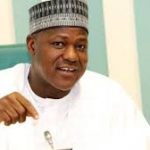
Otedola who adorned a white flowing Agbada made the revelation during his cross-examination by a defence lawyer, Mike Ozekhome, SAN at the Apo Division of the FCT High Court.

He appeared as the prosecution witness in Mr Lawan’s trial after the latter was arraigned for allegedly attempting to receive $3 million from the witness, while he chaired a committee of the House of Representatives in 2012.

Mr Lawan was then chairing the committee that investigated billions fraudulently diverted by some companies in thr petrol subsidy scheme.

Mr Otedola, a Forbes Listed billionaire had accused Mr Lawan of blackmailing him with a request of $3 million to remove the name of his company Zenon Petrolem from the list of indicted companies.

The businessman added that he was given money after he reported Mr Lawan to the SSS in a petition.

He said the money was given to him at his residence after seven SSS officials visited him, following a petition he wrote to complain about the alleged blackmail.

Responding to a question from Mr Ozekhome, a Senior Advocate of Nigeria, about the source of the money allegedly given to Mr Lawan, Mr Otedola said: “It was handed over to me by the DSS.”

Mr Otedola added that he gave the $500,000 to Mr Lawan in two tranches of $250,000. He said the SSS had informed him that they recovered the call logs between him and other parties in the matter.

Mr Otedola, however, said his only written communication with the SSS is the petition written to the agency.

According to Mr Otedola, he was interrogated verbally by the SSS and did not make a written statement, besides his petition. Mr Otedola further said that the camera used in capturing the disbursement of the bribe to Mr Lawan was removed shortly after the defendant left with the money.

He, however, responded in the negative when asked whether his companies, Zemon Oil and gas and Forte Oil, were in the list of companies investigated by Mr Lawan’s committee.

Mr Ozekhome questioned Mr Otedola’s account of the said bribery. He said the alleged collection of a bribe in a sting operation like that described by Mr Otedola should have included the arrest of Mr Lawan after receiving the money.
Queried by Ozekhome on why the defendant was not apprehended immediately he was caught red-handed, the witness said he did not know why DSS failed to arrest Lawan the moment he was receiving the said bribe.

The Independent Corrupt Practices and other related offences Commission, ICPC, had in the charge before the court, alleged that Lawan and the Secretary of the then Reps Committee, Mr. Boniface Emenalo, demanded an aggregate sum of $3 million, with a view to ensuring that Otedola’s company escaped prosecution.

Lawan was said to have pocketed $620,000 as part payment for the illegal deal.

Though the anti-graft agency initially charged the duo for bribery and corruption, it later amended the charge and converted Emenalo to a prosecution witness.

Mr Lawan was first arraigned in February 2013 along with Boniface Emenalo, for allegedly receiving $620,000 of alleged bribe from Mr Otedola.

Meanwhile, Justice Otaluka has adjourned the matter till March 8 for Otedola to be further cross-examined.

Continue Reading
Click to comment

Leave a Reply

Your email address will not be published. Required fields are marked *

Headline

INEC Heads to Appeal Court, Seeks Suspension of Judgment on Deregistration of ADC, Others

Published

on

By

The Independent National Electoral Commission (INEC) has asked the Court of Appeal in Abuja to stay the execution of the judgment that ordered the deregistration of the African Democratic Congress (ADC) and four other political parties.

The Commission also threw its weight behind a notice of appeal lodged by the political parties.

Addressing a three-member panel of the appellate court on Tuesday, the electoral body said it was shocked by the decision of Justice Peter Lifu of the Federal High Court in Abuja to deliver the judgment despite an order that stopped him from doing so.

INEC, through its team of lawyers led by Mr. Haliru Mohammed, decried that it was not notified that the judgment would be delivered, saying it only heard about the court’s decision through media reports.

“My Lords, we are aware of an order that this court made on May 22, which stopped the delivery of the judgment of the lower court, which was initially reserved for delivery on June 5.

“We were not aware of any notice from the court regarding the delivery of the judgment. We only saw it as breaking news in the media.

“We therefore do not oppose the application of the appellant to stay the execution of the judgment.”

Likewise, counsel to the ADC, Mr. Shuaibu Aruwa, SAN, told the appellate court that Justice Lifu notified the party of the delivery of the judgment via WhatsApp.

Insisting that the decision of the high court was an invitation to anarchy, counsel to the ADC urged the appellate court to invoke its powers and sanction Justice Lifu for disrespecting the judicial hierarchy.

“Sincerely, my Lords, a lot has happened to the judiciary and this profession. What the trial judge did was dare this Court of Appeal by insisting that no one could arrest his judgment, even after his attention was drawn to the stay order from this court.

“The action of the trial judge calls for swift and extraordinary measures from this court. We have come to the stage where this court should press the reset button.

“We are calling on this court to exercise disciplinary jurisdiction under Section 6 of the 1999 Constitution, as amended.

“We urge this court to take disciplinary steps by immediately suspending that judgment. This court has the power to protect its own integrity. We pray this court suspends the judgment immediately without further delay,” ADC’s lawyer submitted.

The other parties also drew the attention of the appellate court panel to the fact that on June 20, INEC would conduct by-elections across six states of the federation.

They contended that if the judgment were not stayed, it would create problems across the country, maintaining that the Court of Appeal has inherent powers to act in a supervisory capacity and not allow its orders to be disregarded by lower courts.

The appellate court is still hearing submissions from the other parties in the matter.

It will be recalled that aside from the ADC, the other parties the high court directed INEC to deregister are the Action Peoples Party (APP), Action Alliance (AA), Accord Party (AP), and Zenith Labour Party (ZLP).

According to the court, the five political parties failed to meet the constitutional requirements to warrant their continued existence and participation in future elections.

It barred INEC from further according recognition to the parties, accepting nominations of candidates from the affected parties, or giving effect to their activities for the purpose of participating in the 2027 general elections.

Moreover, Justice Lifu ordered the defendants to stop parading themselves as registered political parties in the country.
He held that there was merit in a suit filed against them by the National Forum of Former Legislators (NFFL).

The group, in the suit marked FHC/ABJ/CS/2637/2026, prayed the court to determine whether INEC has a constitutional obligation to remove political parties that fail to meet the electoral performance thresholds set out in Section 225A of the 1999 Constitution (as amended), as reinforced by the Electoral Act 2022 and INEC’s regulations.

It was the position of the plaintiff that the five political parties listed as defendants had persistently failed to meet the constitutional benchmarks required to retain their registration.

The former legislators stressed that the requirements include winning at least 25 per cent of votes in a state during a presidential election or securing at least one elective seat at the national, state, or local government level.

They told the court that the ADC and the four other parties performed poorly in both the 2023 general elections and by-elections conducted by INEC, thereby failing to win seats across key tiers of government.

The litigants insisted that the continued existence of the ADC and the other defendants as recognised political parties is unlawful and undermines the integrity of the country’s electoral system.

Continue Reading

Headline

2027: Atiku Picks Rotimi Amaechi as Presidential Running Mate

Published

on

By

The African Democratic Congress (ADC) presidential candidate, former Vice President Atiku Abubakar, has picked former Rivers State Governor and former Minister of Transportation, Rotimi Amaechi, as his running mate.

Announcing the decision, ADC National Publicity Secretary, Bolaji Abdullahi, said Amaechi’s emergence followed broad consultations within the party and reflected his strong performance as runner-up in the party’s presidential primaries as well as his track records of service to his state and the country.

According to the ADC, Amaechi’s extensive experience across both the legislative and executive arms of government, as former Speaker of the Rivers State House of Assembly, two-term Governor of Rivers State, and former Minister of Transportation, makes him uniquely qualified to complement Atiku’s leadership, strengthen the party’s national appeal, and bolster its campaign to offer Nigerians an experienced and credible alternative ahead of the 2027 presidential election.

The party said the choice of Amaechi underscores its commitment to presenting a leadership team with proven governance experience and national appeal as it prepares for the 2027 presidential contest.

ThisDay

Continue Reading

Headline

Abiola Was Not Poisoned, Says Abdulsalam Abubakar

Published

on

By

By Eric Elezuo

The truth surrounding the circumstance behind the death of the presumed winner of the June 12, 1993 Presidential Election, Chief MKO Abiola, may have finally been unveiled if the contents of the book written and presented by former Nigerian Head of State, General Abdulsalam Abubakar, is anything to go by. The death of Abiola, which came exactly one month after that of the maximum leader, General Sani Abacha, had fueled widespread speculation that he had been eliminated to prevent his release from prison, and eventual inauguration.

General Abdulsalami Abubakar (retd.), has dismissed claims that Chief MKO Abiola was poisoned, insisting that an autopsy conducted by pathologists from four different countries attributed his death to natural causes.

Abubakar’s revelations are contained in Chapter 21 of his 264-page, 27-chapter autobiography titled ‘Call of Duty,’ which was publicly presented, alongside two others at the Aso Rock Villa, Abuja.

The presentation was held to mark the former Head of State’s 84th birthday and was attended by President Bola Tinubu, who was represented by Vice President Kashim Shettima as Special Guest of Honour.

TheCable, which had the privilege of publishing the book, had exclusively reported that on the events leading to Abiola’s death on July 7, 1998, Abubakar said the Bashorun collapsed during a meeting with a visiting American delegation comprising Mr Tom Pickering, then U.S. Undersecretary of State for Political Affairs, and Ms Susan Rice, then Assistant Secretary of State for African Affairs.

Abubakar wrote:

“I do not believe Abiola was poisoned. The family requested an autopsy and we assembled American, British, Nigerian and Canadian pathologists to conduct it. The autopsy report attributed his death to natural causes.”

The former Head of State further disclosed that Abiola had been managing pre-existing medical conditions, including hypertension and a heart ailment, dating back to 1994 when he was first detained.

The former Head of State said, “As far back as 1994 when he was arrested by the Abacha Administration for declaring himself President, it was public knowledge that Abiola was managing certain medical conditions which could seriously affect the quality of life of any human being.”

According to Abubakar, a radiological report by Colonel (Dr) O. Awofeso, then Chief Consultant Radiologist at the Nigerian Army Defence Hospital, Sokoto, dated September 28, 1994, found that Abiola’s heart was enlarged with “right ventricular preponderance” consistent with hypertensive cardiac disease.

The former military leader narrated how the fatal meeting unfolded, citing Rice’s 2019 memoir, ‘Tough Love: My Story of the Things Worth Fighting For,’ in which she recalled that Abiola began coughing mildly about five minutes into their conversation before it became “wracking” and “dramatic.”

“Rice said she noticed Abiola’s ankles were swollen. About five minutes into their conversation, according to her, ‘Abiola started to cough, at first mildly and intermittently, and then wrackingly with consistency,’” Abubakar wrote, quoting the memoir.

He said Abiola complained of feeling hot and asked that the air-conditioning be turned up, after which a doctor was summoned and diagnosed a heart attack.

Quoting Pickering’s account in a BBC interview shortly after Abiola’s death, Abubakar wrote that the politician “had trouble breathing, went into the toilet and came out obviously very distressed,” before being moved to a couch where he removed his shirt and asked for the room to be ventilated.

“A doctor arrived within 10 minutes and called for immediate hospital attention.

“We all helped to put him in a car, there was no ambulance immediately available. We followed him to the clinic of the Head of State of Nigeria, where doctors immediately began to work on him…but unfortunately at the end of their efforts it was not possible and he died,” Abubakar quoted Pickering as saying.

Abubakar recalled receiving the news from his Chief Security Officer, Abdulrasheed Aliyu, who had led the American delegation to the meeting.

“Aliyu, my CSO, called me. As soon as I picked, he said, in a shaky voice, that there was a problem. I asked: ‘What problem again?’ He said Abiola was dead. My head went blank,” Abubakar wrote.

He described breaking the news to Abiola’s family, recounting how one of the politician’s daughters broke down in tears and was consoled by Rice.

“If we had not allowed the American delegation to see him and he had died in custody, it would have been a different story. It would have been insinuated that he had long died and we were trying to cover it up,” he stated.

The former Head of State also addressed allegations that he received $500m in cash following Abacha’s death, describing the claim as “pure fantasy” and “an absolute imagination.”

He narrated, “I want to put it on record that nobody gave me $500 million or any amount, bigger or smaller.

“Is it possible to collect half a billion dollars in cash and only one person in the world would know about it?”

General Abubakar became the emergency Nigerian rulers at the sudden of General Abacha on June 8, 1998. He was just a month old in office when Abiola also unceremoniously slumped and died right inside the State House clinic.

Abubakar takes the credit for shepherding the nation through a swift transition that lasted less than 12 months, bring Chief Olusegun Obasanjo back to power as a civilian president on May 29, 1999.

Abubakar is respected today as one Nigerian, who is not greedy or overtly ambitious for power.

Continue Reading

Trending