Connect with us

Headline

Will ‘Big Ego’ Bury Opposition Again?

Published

on

By Eric Elezuo

Those, who are of the impression that the Nafiu Bala Gombe factor is the only crisis bedeviling the major opposition party, the African Democratic Congress (ADC), should probably begin to rethink. The reasons are obvious; the cankerworm of treachery, me, me and me factor, wings of undemocratisation, and loss of focus have continued to haunt the nascently developing party, and observers are of the agreement that the process may again go the way of 2023 if the constant bickering of who takes what continue to fester.

It is noteworthy that the Supreme Court has been judicially lenient to the ADC, in its judgment regarding leadership, where the popularly advocated David Mark and Rauf Aregbesola leadership was sustained. But the judgment, much as it brought a temporary relief, did not in any way drive away the crisis that the party has continued to ‘bring upon itself’ since its elaborated second launch in July, 2025.

While Nigerians had seen the ADC as a veritable alternative, a much better option to the existing ruling All Progressives Congress (APC) with its attendant and alleged failed policies, which have subjected the Nigerian people to untold hardship from day one when the ‘subsidy is gone’ declaration was made, it has hitherto failed to reciprocate the confidence reposed on them by putting their house in order and jettison person desires fir Nigerianism.

But from every indication it’s beginning to appear that the ADC came, not unprepared, but under-prepared, creating loopholes that have energized the infiltration of elements of destruction bent on ensuring that the party is not on the ballot paper come 2027. The Nafiu Bala Gombe angle is consistently fighting to ensure that the agenda comes to pass. The ADC has however, pointed accusing fingers at the President Tinubu-led Federal Government and the APC as the brain behind the crisis, and the general muffling and muscling of the opposition, as the window of election contest continue to open wider.

But beyond the alleged hand of Tinubu in the brouhaha, there’s the in-house dispute, not just among the superweights that joined the party, but also among their supporters.

The super politicians include former Vice President Atiku Abubakar, two-terms governor of Rivers State, and two-terms Minister of Transport, Mr. Rotimi Chibike Amaechi; two-terms governor of Kano State and former Minister of Defence, Alhaji Rabiu Kwankwaso and two-terms governor of Anambra State and business man, Mr. Peter Obi.

Till date, none of these prolific politicians has agreed to step down for another, creating a situation where the only door open to the aspirants is a transparent and all-agreeable primary election to determine who flies the party’s flag. But that is not to be again as the duo of Peter Obi and Rabiu Kwankwaso on Sunday ditched the party, enroute the newly formed Nigerian Democratic Congress (NDC). Observers say that Obi has an unexplained phobia for primary elections.

But observers have wondered if the opposition leaders are really interested in ousting the administration of Bola Tinubu, which they unanimously agreed has not impacted positively on Nigerians. They have dismissed the coalition as a gathering of highly ambitious politicians, whose real agenda is to grab power for themselves, otherwise they could have done everything within their power to settle for and support one individual if the intention is to actually dethrone Tinubu, and give Nigerians to good they deserve.

As part of the disagreements that have threatened to pull down the very fabrics of opposition plans, and drag the nation back to the mistakes of 2023, the existence of ego; a certain type of ego that analysts have described as ‘Big Ego’, has played a crucial roll.

From Atiku to Obi to Amaechi and to the newest entrant, Kwankwaso, none is willing to settle for the other to fly the party’s flag. Everyone of the candidates wants to be president .And much as Tinubu has been blamed for most the crises in many major political parties, it is still not known if Tinubu could be blamed for the inability of these political juggernauts to settle for a consensus candidate to wrest power from the present administration, that not a few Nigerians have condemned.

From various camps, especially the ‘Obidients’ (supporters loyal to Peter Obi), the slogan has remained it’s either Obi or nothing, a move that has made it impossible for the agreement towards consensus or primaries to be reached. The Obidients maintained that Atiku has no right to contest, and shouldn’t contest, citing excuses including that he is of northern extraction, and it’s not the turn of the North to produce a president.

However, the Atiku camp has countered the notion saying that there’s no constitutional provision to whoever should contest for the presidency at a particular time, stressing that the presidential contest is opened to all Nigerians of 40 years and above irrespective of tribe, religion or region. They therefore, wonder why the Obi supporters would insist that Atiku drops off without a legitimate primary election.

CONSTITUTIONAL PROVISION FOR PRESIDENTIAL CONTEST

According to Section 131 of the 1999 Nigerian Constitution (as amended), a person must be a citizen by birth, at least 40 years old, a member of a political party, sponsored by that party, and educated to at least School Certificate level or its equivalent.

The same section mentioned that disqualification of any aspirant would be based on allegiance to another country, previous two-term service as president, lunacy, or criminal conviction.

The Constitution did not at any section impose legitimacy on tribe, region or rotation. Atiku is eligible to stand for election.

Another angle Atiku’s detractors have tried to capitalise on is his stewardship as the Vice President.

However, a member of the Atiku, who prefers anonymity, explains that the Waziri Adamawa performed his functions as vice president creditably, and executed assignments as instructed. He added that at no time did the former sold any assets, rather he supervised privatization, which is the hallmark of development for any capitalist environment

The source said, “Sold national assets to who and as who? Was Atiku the president because as far as I know, he was the vice president and could not have acted without the consent of Mr President. Atiku never sold anything, those things were privatized and people, who wanted them, applied.”

Speaking on the most qualified of all the presidential aspirants, the source clarified that “having been a vice president for eight years, sustained credible institutions and businesses, none could compare to Atiku. He is the most senior, and most experienced”, he said

On the permutation of the likely winner of the 2027 election,  the source dismissed Kwankwaso, whose over million votes came largely from Kano State, and Peter Obi, who could not win any state in both the North East and West. He advised that Obi’s chances are slim in contrast to Atiku, who won across the five regions except Southeast.

He said, “Atiku, won election as the Governor of Adamawa State before he was selected as gor the vice president position by former President Olusegun Obasanjo, and he served for two-terms of eight years.

“Atiku, has since contested for president on the tickets of ACN, APC (primaries 2014), PDP, (2019 and 2023). He wants to be president, no doubt. That is not a man that can be hounded out of a race or intimidated by a small and vocal group.

“It is worthy of note that Peter Obi’s six million votes in the last election didn’t come strictly from the ‘Obidients’. In fact, not up to 30% came from them. The majority of the votes came from silent supporters of Obi who are members of other parties and from people not identified with any political party. Atiku can decide to step down for Obi or anyone, that is his choice to make. No one should hinge Obi’s success or failure on Atiku. He wants to be president too, and should not be intimidated, the source reiterated. 

HISTORICAL TRAJECTORY

Without mincing words, the survival of the opposition coalition depends solely on Atiku and Peter Obi. Most men must agree to support each if there must be a headway in booting Tinubu out of power. Anyway other than that is just another rehash of the 2023 scenario.

It would be recalled that Atiku and Obi formed an alliance that challenged late former President Muhammadu Buhari in 2019. While Atiku stood asthe substantive candidate, Obi operated as the running. Buhari won with a slim margin though observers believed that the election was greatly manipulated.

But in 2023, ambitions defeated expectations. While many had expected Atiku to support younger aspirants to run, but he threw his hat in the ring. It was his constitutional right. The likes of Peter Obi, who has created a picture of himself as being afraid of primaries, left the Peoples Democratic Party (PDP) for the Labour Party, where he picked up presidential ticket on a platter. He believed that with the completion of the Buhari era, it was the turn of the Southeast to produce a president. Even as the duo of Atiku Abubakar and Peter Obi pooled a collective total of over 12 million votes, both were still defeated by the candidate of the All Progressives Congress (APC) Bola Tinubu.

A cross section of opinion molders have remained divided as to what would have happened if both had teamed up again as candidate and running mate. While a section said that the duo would have beaten Tinubu hands down, others believe that the massive voters would not have come out from their hiding if Obi had not been on the ballot paper. But the way it stands, and having known their electoral capabilities and capacities, and with one goal of removing Tinubu from office, one would have expected the two candidates to drop their egos and work together. But that has become a tall dream!

With the bickering, and subsequent defection of Peter Obi and Rabiu Kwankwaso, to the NDC, ostensibly to actualize the new slogan of Obi-Kwankwaso (OK), an analyst has juxtaposed the previous election in 2023, and the fast approaching one of 2027 as follows:

As the 2027 election approaches, it’s good to give a highlight of the major conditions required for any candidate to be declared winner of the election according to the constitution of the Federal Republic of Nigeria. (1) Candidates must get the majority of the votes from the entire country. (2) Candidate must get at least 25% from at least 24/36 states plus the FCT. In 2023 for example, INEC declared Bola Ahmed Tinubu the winner of the election for securing 36.7% of the total votes and 25% from 29 states. Followed by Atiku Abubakar who secured 29.9% of the votes and got 25% from 21 states. And then Peter Obi who came third with 26.1% of the total votes and 25% from 15 states. What does that mean? Tinubu was declared winner not only because of the number of votes, but also because of the 25% rule, which he secured majority from Ondo, Ekiti, Kwara, Ogun, Oyo, Niger, Kogi, Benue, Jigawa, Zamfara, Borno and Rivers. On the other hand, Atiku Abubakar won states like Osun, Yobe, Gombe, Adamawa, Katsina, Bauchi, Kaduna, Sokoto, Kebbi, Taraba, Bayelsa and Akwa-Ibom bringing it to a total of 12 states. Similarly, Peter Obi won states like Enugu, Anambra, Abia, Ebonyi, Imo, Delta, Cross-River, Edo, Lagos, FCT, Plateau and Nassarawa bringing it to a total of 12 states with none from North-West and North-East. Kwankwaso dominated Kano State with more than a million votes. Based on this highlights, who do you think will win the 2027 presidential election?

WHY PETER OBI SHOULD HAVE REMAINED WITH ATIKU AS RUNNING MATE

A lot of narratives have been peddled as to why it would been a sound political decision for Peter Obi to remain with the ADC, and seek election as running mate to Atiku Abubakar.

Many believe that Peter Obi came to limelight in 2019 courtesy of the Atiku generosity, when he was nominated as the presidential vice candidate against the wishes and to the chagrin of major political heavyweights in PDP at the time. Both made a noticeable though did not win.

Secondly, Atiku has told the public that he was only concerned with serving for only one term, and promised to support Peter Obi to take afterwards. This is highly fundamental because across the world, many politicians have effortlessly crossed over to becoming the president after serving as vice presidents.

The case of the present President of Ghana, Dr. John Dramani Mahama, readily comes.to mind. He served as vice president to John Kuffour, and took over afterwards.

There’s also Nigeria’s Goodluck Jonathan, who served as vice president to Umar Musa Yar’dua, and became president at his death, and went ahead to win another term, even when it was the proverbial turn of the North.

In the United States, Joe Biden served as vice to Barack Obama, and became president at the end of his tenure. He served for one term, and voluntarily bowed out on health grounds.

In Kenya, incumbent President Willam Ruto served loyally as vice to Uhuru Kenyatta, and is today the president of Kenya.

In Liberia, Joseph Boakai served as vice president to Ellen Johnson Sirleaf for her two-terms of 12 years (2006 – 2018) before becoming president himself.

Just as the list is endless, it is believed that a little patience by Obi can help I  removing Tinubu, and making him president in 2031.

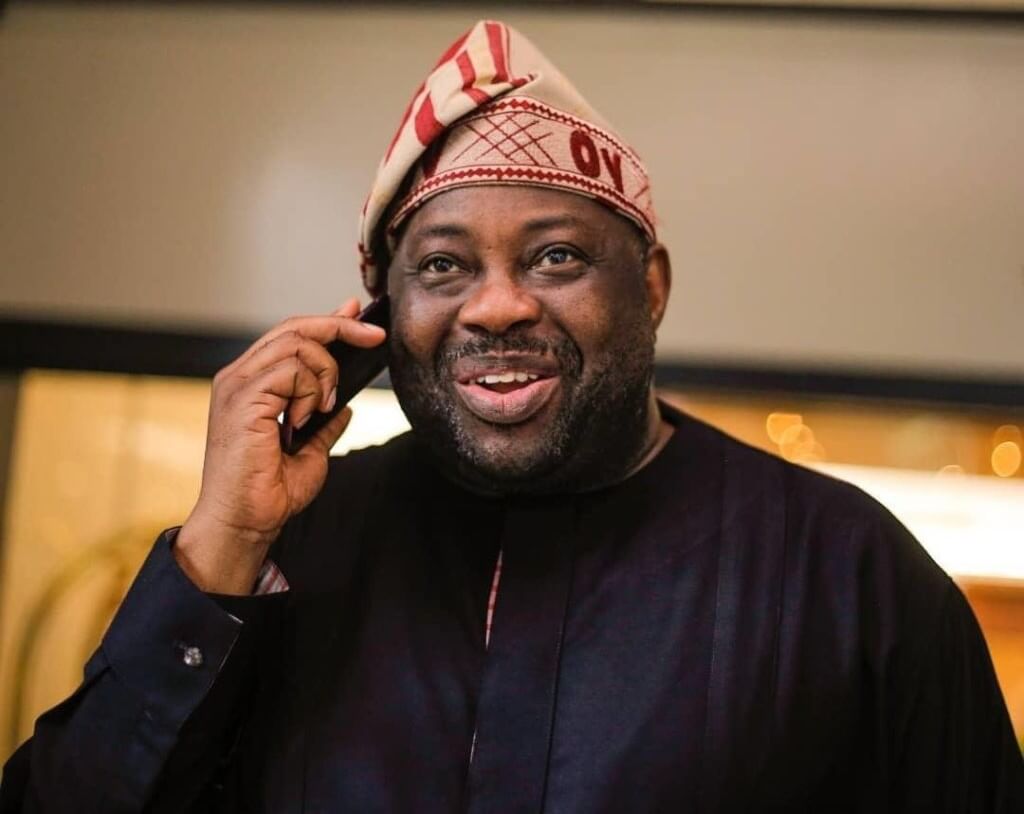
However, appearing quite upbeat about the happenstance, a chieftain of the ADC, Chief Dele Momodu, summarized as follows during a recent interview:

“I have no fear whatsoever, though there’s a bit of agitation everywhere. If you ask most people, they would tell you, Oh, Asiwaju will rig the election. They are sure Tinubu will do this and that. He has the power of life and death and so on and so forth, but I’m not bothered. As you get older in life, you begin to understand the God factor better. I believe that whatever APC likes, let them do. When it is God’s time, he will push them out and I think, this 2027, we are closer to it than ever.

“I said APC, whether they like it or not, the whole world knows that they have failed. And now the people are thinking it is political parties that chase away government? No, it is not parties; it is the people. When the people rise up and say it was the people that chased away PDP that time, it was the people. In this case, those who will chase Tinubu and APC away are not just members of ADC. They are Nigerians who are fed up, completely fed up, who will look back at the last three or four years and ask pertinent questions like, Was my life better in 2023 than it is in 2027? Was security much better in 2023 than it is in 2027? Was electricity better? Was water better? Was infrastructure better? Was our foreign policy better? Was the quality of ministers better? When you answer all those questions, you will see that the majority of the answers will be no, no, no. And that is what will determine why people will vote them out.”

With Obi now in NDC, and Atiku still in ADC, the shape of 2027 for the opposition may not be looking good because the way it stands, the OPPOSITION IS ABOUT TO BURY HOPE AGAIN, leveraging on the infamous ‘BIG EGO’.

It is now to your tent, O’ Israel. This is the real status quo ante bellum, and every candidate is now to test his own strength in isolation.

Continue Reading
Click to comment

Leave a Reply

Your email address will not be published. Required fields are marked *

Headline

Parties’ Deregistration: ADC, Not NDC, is the Target

Published

on

By

By Eric Elezuo

As the 2027 presidential election draws closer, intrigues, manipulations and maneuvers have continued to be the order of the day as political parties engage in one gimmick or another to outdo and undo one another.

While some are playing politics of numbers and conviction, others are engaging tendencies that tend to question the status quo and established principles under which genuine democracy is formed. As a matter of fact, fingers have been pointed at the President Bola Tinubu-led Federal government as the brain behind all machinations that have attempted to derail multi-party democracy, and institute a one-party state, which is alien to the Nigerian democratic roots. This is as a result of the constant imbroglio that has consistently engulf almost all the major political parties in the country.

Fresh facts have however, emerged to prove that every act of frustration thrown at the opposition has been indirectly aimed at the main opposition party, the African Democratic Congress (ADC), and its presidential candidate, Alhaji Atiku Abubakar.

According to reliable sources, the recent deregistration of parties, especially the Nigerian Democratic Congress (NDC), was actually targeted at the ADC.

Recall that the Federal High Court in Lokoja, Kogi State, on June, 26, set aside its earlier judgement directing the Independent National Electoral Commission (INEC) to register the NDC as a political party. A ruling that put a question mark on the eligibility of the party presenting candidates in the forthcoming 2027 elections

The presiding judge, Isah Dashen, held that all relevant parties must be heard before any substantive decision can be made in the matter.

The court upheld the application filed by a certain organization, the Peace Movement Party (PMP), ruling that the party was a necessary party to the suit.

According to the judge, the earlier judgement was constitutionally defective as it was delivered without hearing from all interested parties.

He declared that such an omission rendered the entire process null and void.

Mr Dashen further ruled that the status quo be restored to what it was before the December 10, 2025 judgement, pending the determination of the substantive suit.

He also observed that certain material facts were suppressed in the earlier proceedings, which justified the decision to set aside the judgment.

Consequently, the court ordered that the substantive suit should begin afresh, with the Independent National Electoral Commission (INEC), the PMP and the NDC as parties to the case.

According to NAN’s reports, the applicant’s lawyer, Chikezie Ekeocha, told journalists that the PMP approached the court after discovering that NDC’s registration was based on a logo it had previously submitted to INEC before the commencement of the suit.

According to Mr Ekeocha, the court agreed that the applicant’s rights had been affected and consequently vacated the earlier judgement.

“The court has ordered all parties to return to the position they occupied before the judgment of 10 December 2025, and directed the claimants to join all necessary parties to ensure the issues in dispute are effectually and completely determined,” he said.

He explained that the implication of the ruling is that every action taken by INEC in compliance with the now-vacated judgment stands reversed.

“The recognition of the NDC, the issuance of its certificate of registration, its inclusion in INEC’s records, and any appearance on ballot papers arising from that judgement must be withdrawn pending the final determination of the substantive suit,” Mr Ekeocha stated.

He, however, clarified that the substantive case remains before the court and has not been decided.

“The matter has not been concluded. The court merely set aside its previous judgment and directed that the party whose interests were affected be joined so that all sides can be heard before a fresh decision is reached.”

Mr Ekeocha also dismissed suggestions that the court merely ordered parties to maintain the status quo, insisting that the ruling specifically directed a restoration of the position that existed before the 10 December 2025 judgement.

The ruling effectively returns the dispute over the registration of the NDC to the Federal High Court for a fresh hearing, with all relevant parties expected to participate before a new determination is made.

It would also be recalled that a few weeks earlier, the Federal High Court in Abuja, had ordered the deregistration of five political parties including the African Democratic Congress (ADC). The others are Action People’s Party (APP), Action Alliance (AA), Zenith Labour Party (ZLP) and Accord Party.

However, on June 16, the Court of Appeal in Abuja halted the enforcement of the judgement, ruling that it violated its earlier ruling staying proceedings before the Federal High Court.

While INEC awaits the release of the Certified True Copy (CTC) of the judgment to deregister the NDC, the NDC has reacted, rejecting the judgment as travesty of justice.

Lending credence to the notion that the President Tinubu-led administration is basically targeting the establishment of the ADC as a party, and the candidature of its presidential flagbearer, former Vice-President Atiku Abubakar, who is also the presidential candidate of the ADC, has stated categorically that there are plots to prevent the party from participating in the 2027 general election.

Atiku’s position is stated in a statement issued by his Senior Special Assistant on Public Communication, Phrank Shaibu on Monday, notifying the public that he had received credible information suggesting that political and legal manoeuvres were being deployed against the ADC, stressing that the persecution that has been thrown towards the NDC was a clear distraction as the main target is the ADC.

Atiku alleged that anti-democratic elements within the ruling All Progressives Congress (APC) were working to ensure that the ADC is excluded from the ballot.

“We are fully aware of their plots. While they seek to sow confusion within the opposition, we know their real target is the ADC because it represents the most credible alternative,” he said.

Atiku called on Nigerians to reject any attempt to determine which opposition parties participate in the election.

“We therefore call on all Nigerians — not just ADC members and supporters — to rise in defense of democracy and reject any attempt by the ruling party to cherry-pick which opposition parties are permitted to participate in the next general election,” he said.

“Our message to the APC and the hooded men plotting in dark chambers is simple: you may conspire, but you will not succeed.

“If the APC is truly confident in its popularity, why is it so terrified of the ADC?”

He said he hoped the information available to him would not materialise but argued that recent political developments made such concerns difficult to dismiss.

“The pattern has become all too familiar. First, institutions that ought to be neutral are drawn into partisan contests,” he said.

“Then, frivolous litigations suddenly gain unusual momentum. Administrative powers are selectively deployed.

“Political pressure is mounted behind closed doors. Before long, democracy itself becomes the casualty.”

Atiku alleged that the ruling party has focused more on weakening the opposition than addressing the country’s economic and security challenges.

“The obsession with silencing the opposition has become so consuming that governance itself has taken a back seat,” he said.

“At a time when Nigerians are battling hunger, inflation, unemployment, insecurity, and collapsing purchasing power, those entrusted with public office appear preoccupied with political survival rather than national survival.”

Nigerians recall that ever since the official rejuvenation of the ADC in June/July of 2025, where the duo of Senator David Mark and Ogbeni Rauf Aregbesola emerged as the party’s chairman and secretary respectively, the party has not known moments of peaceful coexistence as litigations from corners unknown have sprang up in a bid to destabilize the party and deprive it of the opportunity of featuring on the ballot paper come 2027.

ADC, as a child of circumstance emerged from the rumbles of the litigation-ridden former main opposition party, the Peoples Democratic Party (PDP), where two factions have consistently remelained at loggerheads over leadership. While the Minister of the Federal Capital Territory, Nyesom Wike, who is working assiduously to ensure the reelection of Bola Tinubu, leads one faction, Oyo State Governor, Seyi Makinde, who became a defacto head, leads the other faction. In all, PDP appeared to have no direction, forcing many of its members to jump ship, thereby birthing the ADC, and to a large extent, the NDC, which is presenting Peter Obi as the presidential candidate, with former Kano governor, Rabiu Musa Kwankwaso, as his running mate.

Sources also informed The Boss that the hasty reading and passage of the Electoral Act 2026 by the Godswill Akpabio-led National Assembly, with many great areas left unattended to, were also part of the grand design to deprive the ADC the constitutional rights of presenting candidates for the 2027 elections.

But both the ADC and the NDC has vowed that they would follow every process to ensure that the crackdown on opposition parties by the Tinubu administration comes to an abrupt end.

But beyond the intrigues, Nigerians are gearing up to participate fully in the forthcoming election with cross sections of the population either hailing Tinubu for his policies or knocking him for the untold hardship in the land.

Continue Reading

Headline

South Africa Nothing Without Africa – MTN Boss, Mcebisi Jonas

Published

on

By

The MTN Group Chairman, Mcebisi Jonas, has condemned the ongoing anti-foreigner sentiment in South Africa, describing it as a symptom of State failure being cynically exploited by politicians with no interest in genuine solutions.

The speech is seen as one of the most substantive interventions by a senior business figure into xenophobic crisis currently plaguing South Africa.

Delivered during the funeral service of Zimbabwean-born activist and public servant, Thokozani Damasane, Jonas’ words have sparked a wave of discussion across South African civil society.

“I was thinking, what is home to Damasane?” he said. “Because I understand, and I understood very early in life, that home is where humanity is. Home is about humanness. It is about the good of humanity and striving for the good of humanity.”

Thokozani Damasane was born and educated in Zimbabwe before relocating to South Africa during the post-apartheid transition period. Jonas described him as arriving “as an outcast” into a country still finding its post-liberation footing – and choosing, nonetheless, to commit himself entirely to its struggles and its people.

“He immersed himself deeply into the struggles, into the pains of South Africans, and he became one of us,” Jonas said.

“In Damasane’s strength, our strength as South Africa and South Africans is reflected. And in his weaknesses, our own weaknesses are reflected.”

Speaking further, Jonas blamed the state for the failure being witnessed, emphasising that if foreigners leave South Africa today, the country’s problems will still persist.

“Foreigners can leave tomorrow – inequality will be with us,” he told the congregation.

“Foreigners will leave tomorrow – unemployment will be with us. Foreigners will leave tomorrow – our police will remain corrupt. Foreigners will leave tomorrow – our politicians will still be concerned with one thing: being elected and re-elected.

“The problem is the failure of the state. The State doesn’t manage immigration. It doesn’t manage its borders. It doesn’t enforce
law enforcement. It doesn’t manage education. What are you expecting?”

Jonas argued that this failure created fertile ground for political manipulation. “When people feel the burn, they become vulnerable to politicians whose sole purpose is to be elected and re-elected. Some of them have no credibility whatsoever. But they lead marches and tell our people that the problem is not us – it is foreigners.”

Jonas recounted a conversation he had witnessed between Damasane and a young man who had challenged the right of foreigners to be in South Africa. Damasane’s response, Jonas said, had stayed with him ever since.

“Damasane said to this guy: Just wait fifteen or twenty years. You will also want to leave your country.”

Jonas told mourners those words now carry a weight Damasane may not have anticipated. “As I stand up today, I look at South Africa. The level of oppression and inequality, the level of exclusion of our people, the level of corruption, the betrayal of the dream of liberation – those words of Damasane ring very loud in my ears.”

South Africa is nothing without Africa

Jonas closed with a call for what he described as a return to “national consciousness” – one rooted in continental solidarity and economic interdependence rather than ethnic exclusion.

“We are a nation embedded in Africa,” he said. “And without Africa, our growth as a country – economically – our fortune is intertwined with the growth of Africa. South Africa is nothing without Africa. And Africa is nothing without South Africa.”

He also reframed the question of legacy and identity for Damasane’s children, who were present. “Sometimes this thing called meritocracy is measured in wealth. No. It is values, it is principles, it is integrity. And your father had all of that.”

“We cannot judge people by their origin,” he told mourners. “We cannot determine the legal status of people by their origin.”

Continue Reading

Headline

NDC Rejects Court Ruling on Party’s Registration, Heads to Appeal Court

Published

on

By

The Nigeria Democratic Congress (NDC), on Friday, vowed to challenge the judgment nullifying its registration by the Independent National Electoral Commission (INEC), insisting that it would exercise its constitutional right of appeal.

Reacting to the ruling on Thursday, the party’s spokesman, Osa Director, said the NDC was still awaiting the certified copy of the judgment before making a comprehensive statement on the court’s decision.

He, however, confirmed that the party had resolved to head to the appellate court.

“We are still waiting to obtain a copy of the judgment. After reading the comprehensive judgment, we will make a detailed statement,” he said.

The spokesman added: “For now, what is certain is that we will exercise our right of appeal.”

Insisting that the party would challenge the ruling, he said: “It is our constitutional right to appeal, and we intend to exercise that right.”

When asked specifically whether the NDC would appeal the judgment voiding its registration, the spokesman replied: “Yes, the party will appeal the case.”

The party’s reaction came shortly after a Federal High Court sitting in Lokoja, Kogi State, in a judgement that nullified its registration by INEC, a development that could have significant implications for the NDC’s participation in the country’s political process ahead of the 2027 general elections.

The NDC, however, maintained that it would refrain from making further comments on the substance of the judgment until it had studied the full text of the court’s decision.

The party’s planned appeal is expected to set the stage for a fresh legal battle over its status and continued existence as a registered political party.

Continue Reading

Trending