
Featured
Lavishing Money on Your Kids not Best Way to Show Love – Dele Momodu

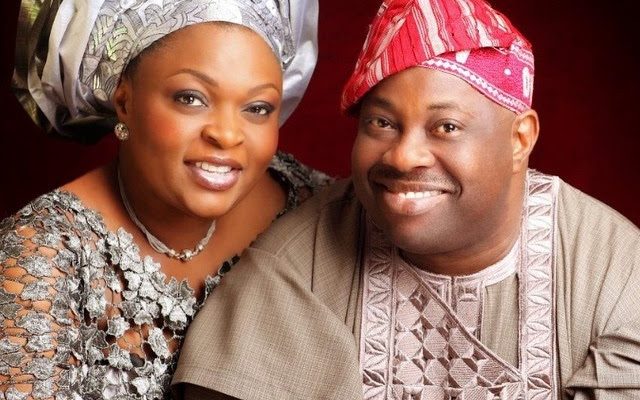

Media professional and a one-time presidential candidate, Chief Dele Momodu, talks about what fatherhood has taught him with TOPE OMOGBOLAGUN
What does fatherhood mean to you?
Fatherhood is everything in one. A father is like a pillar in a family and a mother is a foundation because the mother carries the baby in her womb for nine months but after the foundation, there must be pillars to a house. The role of a father is that of pillars, the pillars hold everything else and balance them properly. If you remove the pillars, usually, the building will collapse. The mother is the foundation and the father is the foundation you continue to build on.
The father is permanently kept on his toes. When there is a need for anything, they run to the father of the house and when you are not able to perform that role, you are no longer a father in most cases. That is why you see some fathers work harder than necessary. The children sometimes cannot understand why you are not always at home with them; it is because you always want to continue being a father. Any father, who wants to continue being a father, cannot rest properly. Your mind, body and soul cannot be at rest easily and you must still ensure that you give direct guidance to your children.
What do you enjoy the most about being a father?
I know the pain people go through when they don’t have children. That is the more reason why I appreciate what God has done in my life. I have four big boys who are amazing and very wonderful. I am ‘overblessed’ by Almighty God. I see being called a father as a blessing because it’s God’s undeserved kindness.
Did you ever wish you had a daughter?
I am sure we wanted girls. I would have still been fine if I had only girls. I am too cosmopolitan to worry about whether my children are girls or boys. The most important thing is to have wonderful kids and we are blessed in that aspect. From my first to the last son, they know that there are no billionaires in the family; we are all scholars. If my children want anything from me, they negotiate via education. My biggest investment in life is educating my children by sending them to the best schools anywhere I can find it.
My wife as the foundation has practically sacrificed her life for the children. She is a chartered accountant. She read accounting, earned ACCA and ICAN and yet, she is a full-time mother to five boys because I am her first son.
What were your fears before you became a father?

Of course, the fear of every man after marriage is if the children do not come on time, how do I cope with the pressure? Like in my case, it took us two years before we had our first child. We got married in 1992 and we had our first child in 1994. There was a bit of panic because people are definitely going to put you under pressure and there is even more pressure when you are famous because all eyes are on you. We had one of the most glamorous weddings in 1992. We were even rated by a newspaper firm as one of the top three weddings in Nigeria then. You can imagine the pressure. Everybody who sees your wife looks at her tummy. Along the line, such begins to get to you.
How did you feel when you eventually held your first child?
All my children are born in the same hospital in London. Unfortunately, when my first child was to be born, I could not travel because I was already in trouble over the June 12 crisis and the late Sani Abacha had already taken over. I couldn’t leave the country. We didn’t have telephones in those days like now.
My wife was already in London attending her pre-natal checks at the hospital. But I knew one of Abiola’s wives who was close to me and had a phone in her house, Dr. Doyinsola Abiola. I used to go to her every day to check if I had a message from my wife. My wife would call to tell her the next time she would call. I waited to be able to talk to her. Dr. Abiola was the first to know about the birth of my first son and she broke the news to me. Of course, I was very excited like every other father would on hearing that his wife had given birth.
How old were you when you became a father?
I was 34 in 1994 when I had my first child.
Do you think you married a bit late?
No. I got married at 32 and had my first child at 34. People felt I was getting late but for me, it didn’t matter. It is the women that worry about such. Once a woman crosses 25; in fact, once she finishes university education; the next certificate they are expecting is a baby. Even now, I am 58, I still feel like a young man, though I know I am old.
What are the values you learnt from your father?
I learnt hard work from my biological father and even from my adopted father, the late MKO Abiola. He used to tell us that hard work is prayer in action. My biological father was a workaholic. He worked till the last minute he died. My father’s death taught me to cherish and treasure every moment we spend with people especially our family members. I left my father to go to school in the morning and came back in the evening to find out that he was dead. I was 13 when he died in 1973. His death taught me that every day is precious. I was very close to my father. My father was a very spiritual man. He belonged to the Aladura sect and he didn’t allow women into his bedroom. I was the only boy at home at the time. My elder brother had travelled abroad then.
I slept on the same bed with my father for years. When he died, I was almost hallucinating then because he was everything to me. Nowadays, kids are free, more independent. I always tell my children that they must treasure all the time they spend with me. You won’t know now until I leave this world and the reality is that we will all leave this world.
Having learnt that from my father, I also teach my children to know the value of hard work. I want each of my children to have a PhD. I don’t know if they will all agree but at least, they must have a minimum of master’s degree. I invest a lot in books and education.
How do you inculcate the values you imbibed from your father in your children?
I do that through discussion; it’s not something one can force. I always tell them if we are talking. For example, if they stand to greet me, I tell them to prostrate. I never greeted my father like that. Or if they tell me okay without adding sir or dad to it, I tell them to correct themselves because I never spoke to my father like that. If I send them on an errand and they say things like oh! I am busy, I never said no to my father. You mustn’t say no to me. I always refer to my father as a way of training them that I will not be who I am if I did not obey my father’s instructions.
They need to know that is a chain of reaction, it has a domino effect. My grandfather disciplined my father, my father disciplined me and I must discipline my children, so that they can also discipline their children too.
How do you discipline your children?
They always say that I don’t beat them. I am a bit modern despite my traditional background. I am a democrat. I will say I am a compulsive democrat. I like to do things in a very democratic manner. I like persuasion; I don’t like the use of force. I believe there is nothing force can get that persuasion cannot get. I try to talk to them. If they take it, it’s for their own benefit.
Who is stricter between you and your wife?
My wife is the strict one; she is strict on all of us, including me. She is strict and very prudent while she believes I am very flamboyant. Although I think that is as a result of my closeness to the late Abiola; I served under his tutelage. I got the act of being a kind person from him. I give a lot as long as I know that a person is in need which sometimes could be very problematic. My wife is a chartered accountant from Ijebu, so she is very good at managing money.
How do you celebrate your children when they do well in their studies?
That is one way they get to win me whenever they need anything. For instance, my last son has been calling me that he needs an Apple laptop which is a bit expensive.
He got good grades and was admitted into one of the best schools in England which happens to be his dream school because his brothers also attended the school. For me, I just have to look for the money and buy him the laptop because we had a deal. If I am going to have a bet with them, it has to be about their academics. I tell them, if you get a particular number of distinctions, this is what you will get. If you are admitted into the school, I will give you that. When they keep their part of the agreement, I also endeavour to keep mine.
How do you teach them to value money?
I am very lucky in that aspect with my children maybe because their mother is very frugal and it has rubbed off on them. They will never ask for exorbitant money, except if they need to get a new phone or a laptop. If I give £50 to them, they will manage it well and if I give them £200, they are very grateful. I know children of big people who will ask their parents for £5,000. Such has never happened in my family. I can’t remember any of them even asking £1,000 from me. It is not possible.
Some parents use money to indulge their kids because they are not usually physically around. They believe they can buy the love. You can’t buy love. Giving a child all the money in the world does not mean the child would be happy. In fact, he might be more miserable and become depressed because if you are on drugs, you get depressed. That is one of the issues I will love to talk about if I get the chance. I would love to tell parents that lavishing money on their children is not the best way to show love. A lot of kids know how much their fathers have in their accounts. Some will go to their parents and ask “are we rich?” If any of my children should ask me such, I will tell him flatly, ‘no’ and that is the truth. I don’t have free money.
It is said that male children often bond more with their mothers than their fathers. Do you have the same experience with your four boys?
It is true, but in our case, because they are all males, they have no choice but to also deal with me and because their mother is tough; she doesn’t take nonsense from anybody. I think I will say that about two or three of them are very close to her; they would listen more to her than even to me. You know that someone, who will not beat you or shout at you, you are not likely to be afraid of that person. It is a natural psychological feeling. They are forced to bond with me; that is the way I see it.
Do they discuss their relationships with you?
No, not really because they have been in school most of the time and I have been in Nigeria. The person who can know more about that is their mother because she stays more in England with them. She can know who their friends are. I get to meet some of my first son’s friends once in a while. My second child is an easy-going person. All he does is football and he doesn’t really go out. And because they are four boys, I think they tend to be their own friends. They have formed their own inner circle. They are each other’s friends. If I want to know what is happening to the first one, the last one is like his son.
In fact, I call him daddy. I said that is your son. I’m like a grandpa because there is a gap of 10 years between them. If I want to know what is happening to the first, I call the last born and that one will tell me everything.
Why is there much age difference between the first and last child?
We had the first in 1994. The second child came in 1996, the third in 1997 and the last child in 2004. My wife would always say it was an error but I know it was planned because she was still trying for a girl.
Is any of your children following in your career path?
Yes, my third child, Eniafe Momodu. He loves literature like me. He is already a writer, a speaker, a photographer and also owns a blog.
Culled from The Punch
Featured
Harakati Za Holds Pan-African Conference on Economic Restructuring, Political Reforms, Regional Integration in Accra




UK PM Burnham Unveils 10-Year Plan, Begins Cabinet Overhaul

Where’s the Nigeria’s Oil Metering Fund?

ADC Tells Tinubu to Resign As World Bank Reveals 139million Nigerians Live in Poverty

Dominican University Hails Peter Obi on 65th Birthday

Ooni of Ife Loses Elder Brother Prince Adetunji

Spain Beat Argentina, Crowned 2026 FIFA World Cup Champions

Harakati Za Holds Pan-African Conference on Economic Restructuring, Political Reforms, Regional Integration in Accra

Argentina Stun England with Two Late Goals to Reach 2026 World Cup Final

Nigeria Doing Well Under My Watch – Tinubu

Tech and Humanity: Nigeria is Building the AI Ambition…

Investors at UBA Business Series Identify Africa’s Next Billion-Dollar Opportunities

Why GLO is the Gold Standard

Third Place Playoff: England Beat France in 10-Goal Thriller

Friday Sermon: The Sociology of Aging: Olusegun Osoba at 87
-
 Sports6 days ago
Argentina Stun England with Two Late Goals to Reach 2026 World Cup Final
-
 National5 days ago
Nigeria Doing Well Under My Watch – Tinubu
-
 Tech and Humanity3 days ago
Tech and Humanity: Nigeria is Building the AI Ambition…
-
 Business4 days ago
Investors at UBA Business Series Identify Africa’s Next Billion-Dollar Opportunities
-
 Opinion3 days ago
Why GLO is the Gold Standard
-
 Sports3 days ago
Third Place Playoff: England Beat France in 10-Goal Thriller
-
 Islam4 days ago
Friday Sermon: The Sociology of Aging: Olusegun Osoba at 87
-
 Featured2 days ago
Harakati Za Holds Pan-African Conference on Economic Restructuring, Political Reforms, Regional Integration in Accra