By Magnus Onyibe
As the quest for state and local policing in Nigeria gains traction, following the urgency with which both the executive and legislative branches of government are treating the proposal, it is unsurprising that the constitutional amendment has already scaled several hurdles at the national level even as governors are also prepared to expedite the process through their respective state legislatures.
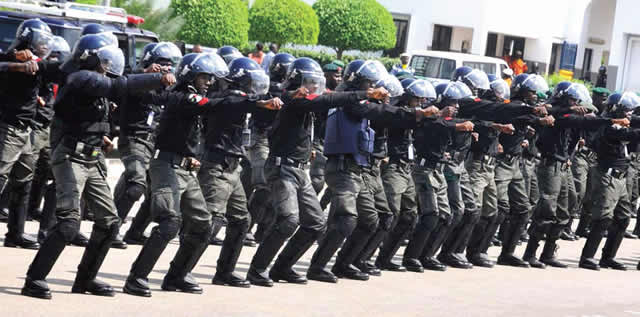
Against this backdrop, it is appropriate to state that the Nigeria Police Force, in its current state, is neither adequately equipped nor sufficiently motivated to effectively take on the task of policing the country should the military, which is presently playing a leading role in internal security, step back and yield that responsibility to state and local police formations as envisaged.
The 1999 Constitution of the Federal Republic of Nigeria (as amended) clearly assigns the responsibility for internal security to the police. However, this role is currently being performed largely by the military due to the ongoing siege on our country by anti-social elements that have taken up arms against society whose attacks on innocent Nigerians have been ferocious and brutal. The reintroduction of state and local policing, following the amendment of the relevant constitutional provisions, would compel the military to relinquish much of that responsibility of ending insecurity and stabilizing the polity.
However, unless the ongoing legislative process of decentralizing Nigeria’s policing system through the amendment of Section 214(1) of the 1999 Constitution—which currently provides for only one police force—is accompanied by comprehensive reforms in police welfare, motivation, training, and operational capacity, the return of state and local policing alone may produce disappointing results.
This is why, in my new book, The Imperative of State Police in Nigeria, which is intended as a guide for lawmakers and policymakers engaged in the constitutional amendment process to accommodate the decentralization of policing by moving it from the Exclusive Legislative List to the Concurrent Legislative List, thereby placing it partly under the purview of state governors, I devoted significant attention to the preparedness and welfare of the Nigeria Police Force.
Currently, the force has a strength of approximately 370,000 personnel, whereas it ought to have at least one police officer for every 450 citizens, based on the United Nations’ recommended ratio. This translates to about 222 officers per 100,000 people.
Apart from the UN benchmark, there are other international standards. For instance, the INTERPOL/UNODC global average is approximately 300 officers per 100,000 people. In the United States, the ratio is about 240 officers per 100,000 people, while the United Kingdom records approximately 235 officers per 100,000 people (as of September 2025). South Africa, a fellow African nation, has a ratio of about 330 officers per 100,000 people.
In contrast, Nigeria’s current ratio stands at approximately 185 officers per 100,000 people, with a police force strength of only 370,000 officers serving a population exceeding 200 million.
As we would all agree, numbers alone do not guarantee effective policing. Training, equipment, welfare, accountability, and professionalism are equally important. Even with a significant increase in personnel, crime rates may remain high if these critical factors are neglected.
That is why I am drawing attention to these essential elements, which must be incorporated into the reforms currently underway. Doing so will ensure a holistic approach to the constitutional amendment process and enhance the prospects of achieving meaningful and sustainable outcomes.
The point I am making is that some countries with lower police-to-population ratios than the recommended standard can still maintain relatively low crime rates because their policing systems are more efficient. Such efficiency is achieved through sustained investment in equipment, training, improved welfare, and stronger accountability mechanisms—areas in which Nigeria still faces significant challenges.
To avoid the disappointment and frustration that may arise among long-suffering Nigerians if the return to state and local policing fails to become the anticipated solution to the country’s alarming insecurity, it is imperative to adopt a broader reform agenda.
This is particularly important because insecurity is likely to be a major determining factor in the 2027 general elections. Consequently, I advocate a more comprehensive approach that takes into account police training, equipment, welfare, motivation, and the integration of traditional rulers into the grassroots security architecture—a case I made in my previous intervention on this subject.
By incorporating these critical factors into the ongoing reforms, Nigeria can strengthen its policing system at the grassroots level and significantly improve the chances of achieving the desired security outcomes.
Below is how this advisory on the need to adequately prepare the police is detailed in my book, The Imperative of State Police in Nigeria.
The Perils of Policing in Nigeria: Police Officers Are Not Only Poorly Remunerated but Also Ill-Equipped
“There were approximately 2,000 police stations nationwide as of January 2026. This figure was provided by the current Inspector-General of Police, IGP Olatunji Disu, who was quoted earlier in the year as stating that there are “only about 2,000 police stations nationwide.”
For a country with a population exceeding 200 million—estimated by some sources at roughly 230 million—this number of police stations is abysmally low and grossly inadequate.
According to projections by the Infrastructure Concession Regulatory Commission (ICRC), Nigeria requires an additional 3,000 police stations on top of the existing 2,000 to adequately bridge its security gaps.
Statistically, there is at least one police station or division in each of Nigeria’s 774 Local Government Areas (LGAs). However, while some LGAs have multiple police divisions, many rural communities have none. To appreciate the inadequacy of police presence across the country, one only needs to consider the vast areas where criminals and insurgents strike repeatedly because they are, quite simply, ungoverned spaces in our hinterlands.
Essentially, 2,000 police stations serving a population of between 200 and 230 million people translates to approximately one police station for every 100,000 Nigerians.
To put this into perspective, let us compare Nigeria with the United Kingdom—the country that colonized Nigeria until 1960 and whose policing system largely served as a model for ours.
The UK has approximately 1.7 police stations per 100,000 people, compared with Nigeria’s one police station per 100,000 people.
Mathematically, this disparity becomes even clearer. The UK has about 1,139 police stations as of May 2026 and a population of approximately 67 million people (although some estimates place it closer to 69 million). Nigeria, on the other hand, has roughly 2,000 police stations serving a population in excess of 200 million—nearly three times the UK’s population.
Consequently, despite having a higher absolute number of police stations, Nigeria has fewer police stations on a per-capita basis. While the UK has about 1.7 police stations per 100,000 people, Nigeria has only one per 100,000 people. Clearly, this level of police infrastructure is inadequate for a country of Nigeria’s size and security challenges.
Beyond the shortage of police stations, funding for policing in Nigeria remains deeply troubling.
According to available data, the breakdown of allocations for internal security in the 2026 Federal Budget is as follows:
- Federal Ministry of Police Affairs – ₦1.329 trillion
This is the primary allocation to the ministry responsible for overseeing the Nigeria Police Force (NPF). The funds cover personnel costs, overhead expenses, and capital projects.
- Police Service Commission – ₦2.397 billion
This allocation is for the agency responsible for the recruitment, promotion, and discipline of police officers.
- Nigeria Police Force Formations and Commands – ₦1.302 trillion
This represents the budgetary allocation for the operational activities, formations, and commands of the Nigeria Police Force nationwide.
Despite these allocations, the persistent shortage of police stations, inadequate equipment, insufficient logistics, and poor welfare conditions for officers continue to undermine the effectiveness of policing in Nigeria. As a result, many communities remain under-policed and vulnerable to criminal activities, highlighting the urgent need for both increased investment and structural reforms in the nation’s security architecture.
Now, attempts have recently been made to boost funding for the police through the Nigeria Police Trust Fund (NPTF).
Under the current law, 0.5% of Federation Account revenue is supposed to be channelled into the NPTF. To that end, the Senate has proposed a bill to double the allocation to 1% of Federation Account revenue. The bill has passed its second reading, although a High Court ruling in 2022 held that direct deductions from the Federation Account Allocation Committee (FAAC) were unconstitutional. Hopefully, the new 2026 bill will address that legal snag.
Although the total sum allocated to internal security in the 2026 Federal Government of Nigeria (FGN) budget is ₦5.41 trillion—a substantial share of the national budget—much of it is directed towards personnel costs, overheads, and capital expenditures.
As a result, underfunding remains a reality within the Nigeria Police Force, which is constitutionally responsible for internal security. Ironically, this responsibility has increasingly been usurped by the military, which over the past two decades has been engaged in combating heavily armed criminal groups and insurgents who have taken up arms against innocent citizens and, by extension, the state itself.
Even if the sum of ₦2.63 trillion were to go directly to the police for the operation of their approximately 2,000 police stations nationwide, the reality remains grim. Reports indicate that some police stations receive only about ₦45,000 per quarter for operational expenses. This amounts to just ₦15,000 per month, or roughly ₦500 per day, to cover their day-to-day operations.
This money is meant to serve as the equivalent of an imprest in public and private organizations. In practical terms, it means that many police stations across the country are expected to fuel their vehicles—where such vehicles even exist—purchase stationery, and pay electricity and telephone bills with a mere ₦500 per day.
How ridiculous!
In light of this reality, is anyone still wondering why police officers are often accused of mounting illegal roadblocks to extort money from motorists? Or why individuals facing imminent attacks from criminals frequently receive no response after making distress calls—sometimes simply because police vehicles have no fuel?
It also helps explain why young Nigerians working in the emerging gig economy were often profiled and extorted by the now-disbanded Special Anti-Robbery Squad (SARS). Young people who lacked conventional employment identification cards from sectors such as oil and gas, financial services, or telecommunications, yet drove luxury cars or maintained affluent lifestyles, were frequently targeted.
This continued until Nigerian youths revolted through the #EndSARS protests of October 2020—demonstrations that brought large parts of the country to a standstill for several days before eventually ending following the reported fatal shooting of protesters at the Lekki Toll Gate in Lagos. Until then, much of the world remained unaware of the challenges faced by many innocent young Nigerians striving to earn a living through unconventional means in the country’s rapidly expanding informal economy.
Apparently, denied adequate remuneration and often living in dilapidated barracks while being tasked with protecting Very Important Persons (VIPs), many Nigerian police officers find themselves operating under difficult conditions. Poor pay, inadequate welfare, and the absence of essential tools and equipment have, in some cases, pushed officers toward bribery and corruption as a means of supplementing their income.
Without doubt, this has contributed to Nigeria’s reputation for corruption, both at home and abroad. It recalls the infamous remark attributed to former British Prime Minister David Cameron, who, during an anti-corruption summit in the United Kingdom, described Nigeria as a “fantastically corrupt” country while discussing then-President Muhammadu Buhari with Queen Elizabeth II.
Invariably, Nigerians continue to be tarred with the brush of corruption both domestically and internationally, partly because public servants—including police officers—are often poorly remunerated and therefore more susceptible to the temptations of bribery and corruption.
The purpose of drawing attention to the sorry state of the Nigeria Police Force is to emphasize that, alongside the ongoing reforms aimed at transitioning from a centralized policing structure to a state and local policing system, the operational capacity of the police must also be comprehensively reviewed and strengthened.
Otherwise, Nigerians may be disappointed if the eventual implementation of state policing proves to be an exercise in futility rather than an effective solution to the debilitating insecurity that continues to plague the nation.
My point is that the reform agenda should be threefold and holistic in nature.
First, state and local policing should be established as the cornerstone of the reform process.
Second, traditional rulers should be incorporated into Nigeria’s security architecture—not necessarily as a formal arm of government as they were before 1966, but as community-based first responders and custodians of local intelligence.
Third, the operational readiness of the police must be significantly enhanced by equipping officers with modern, technologically advanced tools, as has been demonstrated in Enugu State under Governor Peter Mbah. At the same time, their welfare must be improved to boost morale and attract highly qualified personnel into the force.
Ultimately, as Nigerians may soon discover, reinstating state and local policing and integrating traditional rulers into the nation’s security framework could help restore effective grassroots governance and dispute-resolution mechanisms that proved successful during the colonial era.
Such reforms could also help address the insecurity crisis that has engulfed the nation—a crisis that some analysts trace to the centralization of policing by the military government in 1966 and the subsequent erosion of the traditional rulers’ governance role. By the time local government reforms were introduced in 1976 and later strengthened in 1988, traditional institutions had largely been sidelined.
The consequences of those decisions, it may be argued, are reflected in the unprecedented security challenges currently confronting our beloved country.”
Based on available research, poor welfare and low motivation among police officers can significantly weaken internal security because they directly affect the performance of the law enforcement agencies responsible for maintaining law and order. This manifests itself in several ways:
- Corruption and Extortion
When salaries are delayed, allowances remain unpaid, barracks are dilapidated, and healthcare and insurance benefits are inadequate, some officers resort to extortion simply to survive. This erodes public trust in the police. Citizens become reluctant to report crimes because they fear the police as much as, or even more than, the criminals. For internal security, this means that critical intelligence dries up, making crime prevention and detection much more difficult.
- Low Morale and Absenteeism
Demotivated officers are less likely to patrol effectively, respond promptly to distress calls, or take initiative in the discharge of their duties. A culture of complacency develops, where remaining in the station becomes the default option. Consequently, response times to incidents of banditry, kidnapping, and cult-related violence increase, especially when criminals become aware that police intervention is unlikely or delayed.
- High Turnover and Loss of Experience
Talented and experienced officers often resign, move into private security services, or seek opportunities elsewhere. The force is then left with fewer experienced personnel and a growing number of undertrained recruits. Valuable institutional memory is lost when detectives familiar with local criminal networks or Divisional Police Officers (DPOs) who have established relationships with community leaders leave the service. As I have consistently emphasized, effective internal security depends heavily on such local knowledge.
- Poor Discipline and Police Brutality
Frustrated, underpaid, and poorly equipped officers are more likely to vent their anger and frustrations on civilians. This was one of the major factors that fueled the #EndSARS protests. Police brutality destroys community trust and cooperation, both of which are essential to effective policing. According to several security studies, community cooperation accounts for a substantial portion of successful internal security operations because, without community intelligence and tips, the police are effectively blind.
- Vulnerability to Criminal Infiltration
Underpaid and overworked officers can become vulnerable to compromise by drug cartels, kidnappers, bandits, and other criminal elements. In conflict zones, financial inducements can undermine operations before they even begin. A single leaked operational plan can result in a failed mission, the escape of suspects, and even the loss of officers’ lives.
- Inadequate Training and Operational Fitness
Poor welfare often translates into inadequate investment in continuous professional training, firearms proficiency, physical fitness, and mental health support. As a result, officers frequently find themselves confronting heavily armed criminals while equipped with obsolete weapons and lacking basic protective gear such as bulletproof vests. We often hear reports of bandits outgunning police units, forcing them to retreat or suffer casualties. Such outcomes further damage morale and operational effectiveness.
The immediate past Inspector-General of Police, in January 2026, identified “dilapidated police stations and barracks, limited forensic laboratory capacity, and shortages of protective equipment” as major obstacles to effective policing.
Given these realities, it is becoming increasingly clear that the system cannot continue to ask police officers to risk their lives for relatively low wages, poor housing conditions, inadequate pensions, and a lack of modern equipment, while expecting them to deliver the professional level of internal security that Nigerians anticipate from the reintroduction of state and local policing.
It is widely acknowledged that motivation is a force multiplier. The same number of officers can produce significantly better results when they are properly trained, adequately equipped, fairly compensated, and highly motivated.
This is why the current reform process must go beyond merely transferring policing from the Exclusive Legislative List to the Concurrent Legislative List through constitutional amendment. While decentralizing policing is an important step, it is not, by itself, sufficient to address the enormous insecurity challenges confronting our nation.
To achieve meaningful and sustainable improvements in internal security, equal attention must be given to enhancing police training, modernizing equipment, improving welfare packages, and strengthening motivation. Without these complementary reforms, the return of state and local policing may fall short of the expectations of Nigerians and fail to deliver the security outcomes the country desperately needs.
Magnus Onyibe, an entrepreneur, public policy analyst, author, democracy advocate, development strategist, an alumnus of the Fletcher School of Law and Diplomacy, Tufts University, Massachusetts, USA, a Commonwealth Institute scholar, and a former commissioner in the Delta State government, sent this piece from Lagos.









 Islam5 days ago