
Opinion
The Oracle: Different People, Different Forms of Government (Pt. 21)

Published
5 years agoon
By
Eric

By Chief Mike Ozekhome
INTRODUCTION
MEANING
Bureaucracy is the administrative system governing any large institution, whether publicly owned or privately owned. It is a centralized form of management and tends to be differentiated from adhocracy, in which management is decentralized.
Some have argued that bureaucracy constitutes efficient and rational way in which human activity can be organized and that systematic processes and organized hierarchies are necessary to maintain order, maximize efficiency, and eliminate favoritism. On the other hand, others have seen bureaucracy as a threat to individual freedom, with the potential of trapping individuals in an impersonal “iron cage” of rule-based, rational control.
MODERN BUREAUCRACY MEANING
Modern bureaucracy has been defined as comprising four features: hierarchy (clearly defined spheres of competence and divisions of labor), continuity (a structure where administrators have a full-time salary and advance within the structure), impersonality (prescribed rules and operating rules rather than arbitrary actions), and expertise (officials are chosen according to merit, have been trained, and hold access to knowledge).
HISTORY
Although the term “bureaucracy” first originated in the mid-18th Century, organized and consistent administrative systems existed much earlier. The development of writing (c. 3500 BC) and the use of documents was critical to the administration of this system, and the first definitive emergence of bureaucracy occurred in ancient Sumer, where an emergent class of scribes used clay tablets to administer the harvest and to allocate its spoils. Ancient Egypt also had a hereditary class of scribes that administered the civil-service bureaucracy.
A hierarchy of regional proconsuls and their deputies administered the Roman Empire. The reforms of Diocletian (Emperor from 284 to 305) doubled the number of administrative districts and led to a large-scale expansion of Roman bureaucracy. The early Christian author Lactantius (c. 250 – c. 325) claimed that Diocletian’s reforms led to widespread economic stagnation, since the provinces were divided into minute portions, and many presidents and a multitude of inferior officers lay heavy on each territory. After the Empire split, the Byzantine Empire developed a notoriously complicated administrative hierarchy, and in the 20th century the term “Byzantine” came to refer to any complex bureaucratic structure.
In China, when the Qin dynasty (221–206 BC) unified China under the Legalist system, the Emperor assigned administration to dedicated officials rather than nobility, ending feudalism in China, replacing it with a centralized, bureaucratic government. The form of government created by the first emperor and his advisors was used by later dynasties to structure their own government. Under this system, the government thrived, as talented individuals could be more easily identified in the transformed society. The Han dynasty (202 BC – 220 AD) established a complicated bureaucracy based on the teachings of Confucius, who emphasized the importance of ritual in a family, in relationships, and in politics. With each subsequent dynasty, the bureaucracy evolved. In 165 BC, Emperor Wen introduced the first method of recruitment to civil service through examinations, while Emperor Wu (r. 141–87 BC), cemented the ideology of Confucius into mainstream governance installed a system of recommendation and nomination in government service known as xiaolian, and a national academy whereby officials would select candidates to take part in an examination of the Confucian classics, from which Emperor Wu would select officials. In the Sui dynasty (581–618) and the subsequent Tang dynasty (618–907) the shi class would begin to present itself by means of the fully standardized civil service examination system, of partial recruitment of those who passed standard exams and earned an official degree. Yet recruitment by recommendations to office was still prominent in both dynasties. It was not until the Song dynasty (960–1279) that the recruitment of those who passed the exams and earned degrees was given greater emphasis and significantly expanded. During the Song dynasty (960–1279) the bureaucracy became meritocratic. Following the Song reforms, competitive examinations took place to determine which candidates qualified to hold given positions. The imperial examination system lasted until 1905, six years before the Qing dynasty collapsed, marking the end of China’s traditional bureaucratic system.
JURISDICTIONS WHERE BUREACRACY ONCE EXISTED
ASHANTI EMPIRE
The government of the Ashanti Empire was built upon a sophisticated bureaucracy in Kumasi, with separate ministries which saw to the handling of state affairs. Ashanti’s Foreign Office was based in Kumasi. Despite the small size of the office, it allowed the state to pursue complex negotiations with foreign powers. The Office was divided into departments that handled Ashanti relations separately with the British, French, Dutch, and Arabs. Scholars of Ashanti history, such as Larry Yarak and Ivor Wilkes, disagree over the power of this sophisticated bureaucracy in comparison to the Asantehene. However, both scholars agree that it was a sign of a highly developed government with a complex system of checks and balances.
THE UNITED KINGDOM
The 18th Century Department of Excise developed a sophisticated bureaucracy. Pictured, the Custom House in the City of London.
Instead of the inefficient and often corrupt system of tax farming that prevailed in absolutist states such as France, the Exchequer was able to exert control over the entire system of tax revenue and government expenditure. By the late 18th Century, the ratio of fiscal bureaucracy to population in Britain was approximately 1 in 1300, almost four times larger than the second most heavily bureaucratized nation, France. Thomas Taylor Meadows, Britain’s consul in Guangzhou, argued in his Desultory Notes on the Government and People of China (1847) that the long duration of the Chinese Empire is solely and altogether owing to the good government which consists in the advancement of men of talent and merit only, and that the British must reform their civil service by making the institution meritocratic. Influenced by the ancient Chinese imperial examination, the Northcote–Trevelyan Report of 1854, recommended that recruitment should be on the basis of merit determined through competitive examination, candidates should have a solid general education to enable inter-departmental transfers, and promotion should be through achievement rather than preferment, patronage, or purchase. This led to implementation of Her Majesty’s Civil Service as a systematic, meritocratic civil service bureaucracy.
In the British civil service, just as it was in China, entrance to the civil service was usually based on a general education in ancient classics, which similarly gave bureaucrats greater prestige. The Cambridge-Oxford ideal of the civil service was identical to the Confucian ideal of a general education in world affairs through humanism.
FRANCE
Like the British, the development of French bureaucracy was influenced by the Chinese system. Under Louis XIV of France, the old nobility had neither power nor political influence, their only privilege being exemption from taxes. The dis-satisfied noblemen complained about this “unnatural” state of affairs, and discovered similarities between absolute monarchy and bureaucratic despotism. With the translation of Confucian texts during the enlightenment, the concept of a meritocracy reached intellectuals in the West, who saw it as an alternative to the traditional ancient regime of Europe. Western perception of China even in the 18th Century admired the Chinese bureaucratic system as favourable over European governments for its seeming meritocracy.
Napoleonic France adopted this meritocracy system and soon saw a rapid and dramatic expansion of government, accompanied by the rise of the French civil service and its complex systems of bureaucracy. This phenomenon became known as “bureaumania”. In the early 19th century, Napoleon attempted to reform the bureaucracies of France and other territories under his control by the imposition of the standardized Napoleonic Code. But paradoxically, that led to even further growth of the bureaucracy.
French Civil Service examinations adopted in the late 19th Century were also heavily based on general cultural studies. These features have been likened to the earlier Chinese model.
OTHER INDUSTRIALIZED NATIONS
By the mid-19th Century, bureaucratic forms of administration were firmly in place across the industrialized world. Thinkers like John Stuart Mill and Karl Marx began to theorize about the economic functions and power-structures of bureaucracy in contemporary life. Max Weber was the first to endorse bureaucracy as a necessary feature of modernity, and by the late 19th century bureaucratic forms had begun their spread from government to other large-scale institutions.
The trend toward increased bureaucratization continued in the 20th Century, with the public sector employing over 5% of the workforce in many Western countries. Meanwhile, in the Soviet Union and Eastern Bloc nations, a powerful class of bureaucratic administrators termed nomenklatura governed nearly all aspects of public life.
The 1980s brought a backlash against perceptions of “big government” and the associated bureaucracy. Politicians like Margaret Thatcher and Ronald Reagan gained power by promising to eliminate government regulatory bureaucracies, which they saw as overbearing, and return economic production to a more purely capitalistic mode, which they saw as more efficient. In the business world, managers like Jack Welch gained fortune and renown by eliminating bureaucratic structures inside corporations. Still, in the modern world, most organized institutions rely on bureaucratic systems to manage information, process records, and administer complex systems, although the decline of paperwork and the widespread use of electronic databases is transforming the way bureaucracies function.
VARIOUS THEORIES OF BUREAUCRACY
KARL MARX
Karl Marx theorized about the role and function of bureaucracy in his book, Critique of Hegel’s Philosophy of Right, published in 1843. In Philosophy of Right, Hegel had supported the role of specialized officials in public administration, although he never used the term “bureaucracy” himself. By contrast, Marx was opposed to bureaucracy. Marx posited that while corporate and government bureaucracy seem to operate in opposition, in actuality they mutually rely on one another to exist. He wrote that “The Corporation is civil society’s attempt to become state; but the bureaucracy is the state which has really made itself into civil society.
JOHN STUART MILL
Writing in the early 1860s, political scientist John Stuart Mill theorized that successful monarchies were essentially bureaucracies, and found evidence of their existence in Imperial China, the Russian Empire, and the regimes of Europe. Mill referred to bureaucracy as a distinct form of government, separate from representative democracy. He believed bureaucracies had certain advantages, most importantly the accumulation of experience in those who actually conduct the affairs.
Nevertheless, he believed this form of governance compared poorly to representative government, as it relied on appointment rather than direct election. Mill wrote that ultimately the bureaucracy stifles the mind.
FUN TIMES
There are two sides to every coin. Life itself contains not only the good, but also the bad and the ugly. Let us now explore these.
“My little nephew just arrived Nigeria from UK and was playing video game at night, immediately NEPA seize light he was shouting, uncle am blind, for my mind I say you never see anything. By the time we go on generator you go deaf”.
THOUGHT FOR THE WEEK
“In any bureaucracy, there’s a natural tendency to let the system become an excuse for inaction.” (Chris Fussell).
Related
You may like

By Boma Lilian Braide Esq.
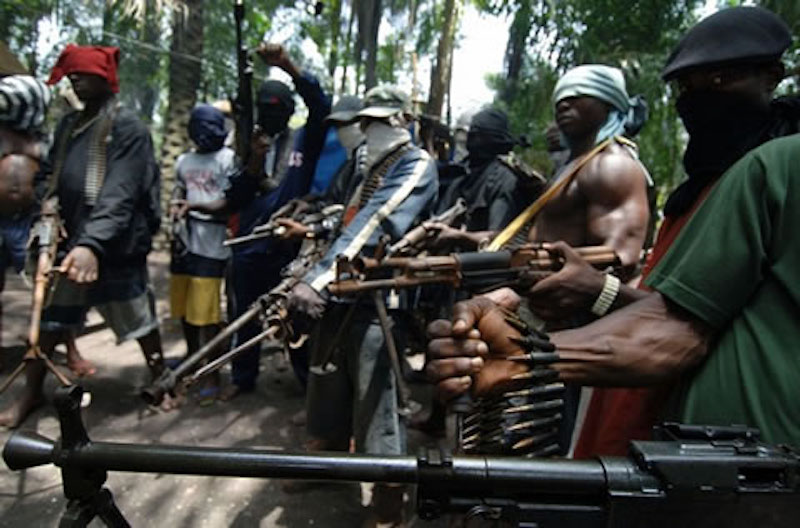
The water remembers. It remembers when we were queens and kings of the creeks, when our voices carried across the rivers like thunder, and when no external force could dictate the terms of our existence.
Today, as a daughter of the Ijaw nation, I look at our political landscape and my heart breaks into a thousand pieces. The recent withdrawal of Pastor Tonye Cole from the political race reopened a wound that never properly healed. I immediately texted him a single, urgent question: “Why?” His response was a resigned, familiar phrase; “It is well.” At that exact moment, my thoughts were screaming so loudly inside my head, “Not again!” It felt like a brutal repetition of an old script. Every single time, without fail, they treat the Ijaw man badly, pushing him out of the room where decisions are made.
This leadership class continually trades our birthright for political crumbs, leaving me with a profound sadness I cannot shake. Every four years, we are forced to watch the same exhausting, predictable cycle play out. We have become the laughing stock of the Nigerian politics. We roar like lions in the morning, only to allow ourselves to be led like sheep to the slaughter house by nightfall. This pattern is not merely a string of tactical errors. It is a structural and psychological condition that has calcified into our political culture. We begin every election season with unparalleled bravery, massive energy, clarity, and a list of demands. We mobilise, we protest, we declare our rights. Yet at the decisive moment we fold. We trade collective power for personal gain. We accept crumbs while the harvest is taken from our lands allowing our leaders to be used as mere pawns, chess pieces, and foot soldiers on a board completely controlled by outsiders.
Call it what it is, a political Stockholm syndrome. When a people are held hostage by extractive systems for generations, they can begin to see the captor as a provider. When political actors poison our rivers, burn our gas, and extract our wealth, then return during elections with token gifts, the damaged political imagination can mistake those gifts for benevolence. A motorcycle, a solar lamp, a bag of rice, or a ten thousand naira note becomes a substitute for structural justice. We applaud the giver and forget the theft.
This is not a partisan indictment. The major parties have all participated in this system. From the coastal edges of Ondo and Edo, through Rivers and Bayelsa, to the riverine communities of Delta and Akwa Ibom, the script is the same. Political machines arrive with cash and spectacle. They leave with votes. They do not stay to build roads, to clean oil spills, to fund health care, or to restore fisheries. They do not invest in education or in the infrastructure that would make our communities resilient. They know they do not have to. They know that the combination of poverty, fragmentation, and short-term survival instincts will deliver the votes they need.
The spectacle in Rivers State is instructive. The conflict between an incumbent and a predecessor is not only a personal rivalry. It is a mirror of a deeper structural problem. An Ijaw son may occupy the governor’s office, but the expectation of loyalty to an external power broker remains. When disagreements arise, the Ijaw polity does not close ranks. Instead, it fractures. Elders, youth groups, and political actors align with different external centres of power. We tear ourselves apart while the larger system remains intact.
Delta State offers another painful example. The region produces a disproportionate share of the oil wealth that sustains the state and the nation. Yet Ijaw communities are routinely relegated to secondary roles in governance. The highest offices are often out of reach. When an Ijaw candidate shows real ambition, the pressure to step down, to accept a consolation prize, or to be bought off intensifies at the last minute. The result is a steady stream of symbolic representation and token appointments that do not translate into structural change.
Even Bayelsa State, our most homogenous political home, has not been immune. The state has been turned into a dependent outpost. Political life there is often conducted under the shadow of Abuja. During elections, communities are militarized. Young people are paid paltry sums to snatch ballot boxes and intimidate their neighbours. The leaders who emerge from such processes rarely prioritize environmental remediation, health care, or education. They prioritize survival within the national political economy.
Why do we accept this? Part of the answer lies in a minority complex that has been cultivated over generations. We have been taught to believe that because we are numerically small and geographically dispersed across several states, we cannot set national terms. That belief is false. Our geographic position along the southern maritime border gives us leverage. Nigeria’s economy cannot function without the peace of our creeks. Yet we negotiate from a position of weakness because we lack a unified, non-partisan political command structure.
Other major ethnic blocs in Nigeria have developed cultural mechanisms that protect collective interests across party lines. They maintain consensus on key strategic questions and punish those who betray the collective. The Ijaw political house, by contrast, is fragmented. We are divided into Western, Central, and Eastern blocs. Internal jealousy and rivalry consume us. When an Ijaw son or daughter rises to prominence, it is sometimes their own people who are recruited to pull them down. This internal sabotage is a major reason we are treated as expendable by national political machines.
Our representatives in national assemblies and federal boards are often the most silent and compliant. They vote for policies that harm our region because they want to protect their personal seats and committee positions. We have forgotten the intellectual foundation of our struggle. Our fathers did not rely on muscle alone. They fought with logic and strategy.
Harold Dappa Biriye used constitutional arguments to demand minority rights during the pre-independence conferences. Isaac Adaka Boro presented a detailed economic manifesto during the twelve-day revolution, exposing the systematic underdevelopment of the Delta. The Kaiama Declaration of 1998 linked environmental justice with true federalism in a way that remains a model for strategic political thinking. Today, that intellectual tradition has been eroded by a culture of thuggery, praise singing, and the pursuit of quick money.
The social and economic costs of our political submission are visible everywhere. Schools sink into the mud. Primary health centres lack basic medicines. Women die in childbirth because there are no functional boats to transport them to urban hospitals. Rivers that once sustained us are coated with crude oil. Gas flares burn day and night, releasing toxins that cause cancers and respiratory diseases. In any functioning democracy, such environmental devastation would provoke electoral punishment. But our people accept ten-thousand naira, wear party uniforms, and return the same leaders to office.
This pattern is not only morally wrong. It is strategically suicidal. The global energy transition is underway. The world is moving away from fossil fuels. In a few decades, crude oil will no longer be the primary driver of the global economy. When that happens, the Nigerian state’s willingness to distribute minor rents, amnesty stipends, and pipeline contracts will evaporate. If we remain politically domesticated and economically dependent, we will be discarded once our resources lose value. We will be left with a ruined environment and a population unprepared for the modern economy.
Breaking this cycle requires a radical transformation of our political behaviour. It requires both immediate reforms and long-term institution building.
First, we must refuse to sell our votes for temporary relief. If politicians bring money during elections, take it because it is a fraction of your stolen wealth, but enter the voting booth and vote fiercely against them if they have not delivered real, systemic progress. The act of taking money and voting against the giver is not a moral ideal. It is a pragmatic tactic that recognizes the reality of survival while asserting political agency.
Second, we must create a culture of community accountability. Any Ijaw politician, elder, or youth leader who sells out the collective interest for personal gain must face social consequences. They should be stripped of traditional honours, excluded from community gatherings, and greeted with public disapproval rather than celebration. The cost of betrayal must be made higher than the reward offered by external actors.
We must also institutionalize our collective strength. The Ijaw nation needs a permanent, non-partisan political and economic council composed of our finest minds. This council should include intellectuals, legal experts, economists, and community builders from across the globe. Its mandate would be to define a multi decade Ijaw National Agenda that transcends party lines. Any Ijaw person entering politics should be bound by that agenda. Any external political force seeking our cooperation should be required to commit to its verifiable execution.
Again, we must build strategic alliances with other coastal minority groups. From Calabar to Badagry, the coastal communities share common interests in environmental protection, maritime economies, and regional development. A unified coastal voting bloc would create a political force that no national party can ignore. Such an alliance would also strengthen bargaining power for federal resource allocation and environmental remediation.
Fifth, we must shift our economic focus from pipelines to the blue marine economy. Our future lies in the ocean. We must invest in community owned industrial fishing fleets, deep sea shipping logistics, local shipbuilding yards, and aquaculture networks. We must develop port infrastructure and maritime training centres. Economic independence is the foundation of political courage. When our communities can fund their own schools, hospitals, and water systems through independent marine enterprises, we will no longer beg for crumbs.
Sixth, we must invest in education and leadership training. Political courage is not loud rhetoric. It is disciplined strategy. We must train a new generation of leaders who understand constitutional law, public finance, environmental science, and international trade. We must teach negotiation skills, coalition building, and institutional design. The Ijaw struggle must be intellectualized and professionalized.
Seventh, we must reclaim our narrative. For too long our story has been told by others. We must document our history, our legal claims, and our environmental evidence. We must use the courts, the media, and international forums to hold polluters and complicit officials accountable. We must turn our lived experience into verifiable claims that can be litigated and publicized.
Finally, we must practice disciplined solidarity. Political unity does not mean uniformity of opinion. It means a shared commitment to core strategic objectives. It means agreeing on red lines that cannot be crossed. It means supporting candidates who commit to the Ijaw National Agenda and sanctioning those who betray it.
The hour is late. The cost of our political naivety is visible in every polluted river, every jobless youth, and every broken promise. We cannot enter another election cycle with the same broken playbook. We must reject transactional politics and demand structural change. We must hold our leaders accountable and refuse to celebrate personal appointments that bring no collective benefit.
We must heal ourselves of this political Stockholm syndrome. We must stop loving the systems that destroy us and begin the difficult work of building lasting political infrastructure. The future of the Ijaw nation depends on our ability to transform our pain into strategic power. The water is watching. The spirits of our ancestors who resisted colonial domination are watching. We must rise, cleanse our minds of dependency, and stand with dignity. The era of last minute surrender must end. The time for strategic, sovereign Ijaw political courage has arrived.
Related
Opinion
Leadership in Africa: Forging a New Era of Self-Reliance, Unity and Global Relevance (Pt. 3)
Published
1 month agoon
May 23, 2026By
Eric
By Tolulope A. Adegoke
“True leadership in Africa is not the pursuit of power, but the courage to serve — to turn the pain of yesterday into the promise of tomorrow, to bind broken hearts into one destiny, and to raise a continent where every son and daughter can stand tall, not by pulling others down, but by lifting one another higher.” – Tolulope A. Adegoke, PhD
Building upon the foundational principles and practical pathways discussed in Parts 1 and 2, this continuation explores the deeper implementation strategies, institutional reforms, cultural shifts, and long-term vision required to translate African leadership into tangible, sustainable transformation. It addresses the realities on the ground while offering forward-looking, actionable recommendations that can help Africa move from potential to performance on both regional and global stages.
Institutional Reforms as the Backbone of Transformative Leadership
Visionary leadership without strong institutions is like a beautiful dream without a foundation. Africa’s progress depends on building institutions that are resilient, transparent, and people-centred.
Leaders must prioritise civil service reform, judicial independence, and anti-corruption mechanisms that are not only punitive but preventive. For example, Rwanda’s use of performance contracts (imihigo) for public officials has created a culture of accountability and results. Similarly, Ghana’s strong electoral commission and relatively independent judiciary have helped sustain democratic stability. These models show that when institutions are strengthened, leadership becomes less about individual charisma and more about systemic effectiveness.
Regional institutions such as the African Union, ECOWAS, SADC, and the East African Community must also be reformed. They need greater financial autonomy, faster decision-making processes, and clearer enforcement mechanisms. The African Union’s current efforts to reform its Peace and Security Council and operationalise the African Standby Force are steps in the right direction, but they require consistent political will and adequate funding from member states.
Cultural and Mindset Transformation
Leadership that builds Africa must also transform mindsets. Many of the continent’s challenges are rooted in colonial-era thinking, dependency syndromes, and a culture of short-termism.
Progressive leaders should invest in cultural renewal programmes that celebrate African excellence, innovation, and resilience. This includes supporting the creative industries — Nollywood in Nigeria, Afrobeats music, and contemporary African literature — which are already projecting positive African narratives globally. Educational systems must move beyond rote learning to foster critical thinking, ethical reasoning, and entrepreneurial spirit.
Youth leadership development is particularly crucial. With over 60% of Africa’s population under the age of 25, the continent’s future depends on preparing young people not just for jobs, but for leadership. Initiatives like the African Union’s Youth Agenda and national youth service programmes should be expanded and made more impactful.
Economic Transformation and Self-Reliance in Practice
True self-reliance requires deliberate economic restructuring. Leaders must champion value addition in agriculture, mining, and natural resources. Instead of exporting raw cocoa, cotton, or crude oil, African countries should invest in processing facilities that create jobs and capture more value domestically.
The African Continental Free Trade Area (AfCFTA) offers a historic opportunity. When fully implemented, it can boost intra-African trade, reduce dependence on external markets, and create new industries. Leaders who actively remove non-tariff barriers, harmonise standards, and invest in cross-border infrastructure will be remembered as the architects of Africa’s economic renaissance.
Public-private partnerships (PPPs) should be strengthened, with clear frameworks that protect national interests while attracting responsible investment. Countries like Morocco and Ethiopia have shown how strategic industrial policies can attract foreign direct investment while building local capacity.
Global Relevance: Africa as a Solution Provider
Africa must stop seeing itself solely as a recipient of global solutions and begin positioning itself as a contributor. The continent’s vast renewable energy potential, youthful population, and rich biodiversity give it unique advantages in addressing global challenges such as climate change, food security, and digital innovation.
Leaders who understand this will invest in research and development, patent African innovations, and engage confidently in global forums. The success of African pharmaceutical companies during the COVID-19 pandemic and the growth of African tech unicorns demonstrate that the continent can compete and lead when given the right environment.
A Balanced and Hopeful Conclusion
Africa stands at a historic crossroads. The challenges — poverty, inequality, climate vulnerability, and governance gaps — are real and significant. Yet the opportunities — a youthful population, abundant natural resources, cultural richness, and growing regional integration — are even greater.
Leadership remains the decisive variable. When leaders rise above narrow interests to serve the collective good, Africa does not just survive — it thrives and offers the world new models of resilience, innovation, and inclusive growth.
The path forward requires a new covenant: between leaders and citizens, between nations and regions, and between Africa and the global community. This covenant must be rooted in trust, mutual accountability, and shared vision. With the right leadership — courageous, ethical, inclusive, and strategic — Africa can forge a new era of self-reliance, unity, and global relevance.
The question is not whether Africa can rise. The question is whether its leaders, supported by an awakened citizenry, will summon the will, wisdom, and courage to make that rise unstoppable. The world is watching, and history is waiting to record the choices made in this decisive decade.
Africa’s story is still being written. With visionary leadership, it can become one of triumph, dignity, and global excellence.
Dr. Tolulope A. Adegoke, AMBP-UN is a globally recognized scholar-practitioner and thought leader at the nexus of security, governance, and strategic leadership. His mission is dedicated to advancing ethical governance, strategic human capital development, resilient nation building, and global peace. He can be reached via: tolulopeadegoke01@gmail.com, globalstageimpacts@gmail.com
Related
Related




How I Made Buhari President in 2015 – Amaechi

Presidential Ambition: Is Donald Duke a Spoiler?

Insecurity: Why Tinubu Must Wake Up

The Stockholm Syndrome in the Delta

Bandits Invade Kwara Community, Abduct Scores, Set Emir’s Palace Ablaze

US Will Not ‘Rush into a Deal’ with Iran, Trump Declares
