Connect with us

Headline

Buhari Lauds Rotary, Dangote, Gates, Offor, Others As Africa Becomes Free Of Wild Polio Virus

Published

on

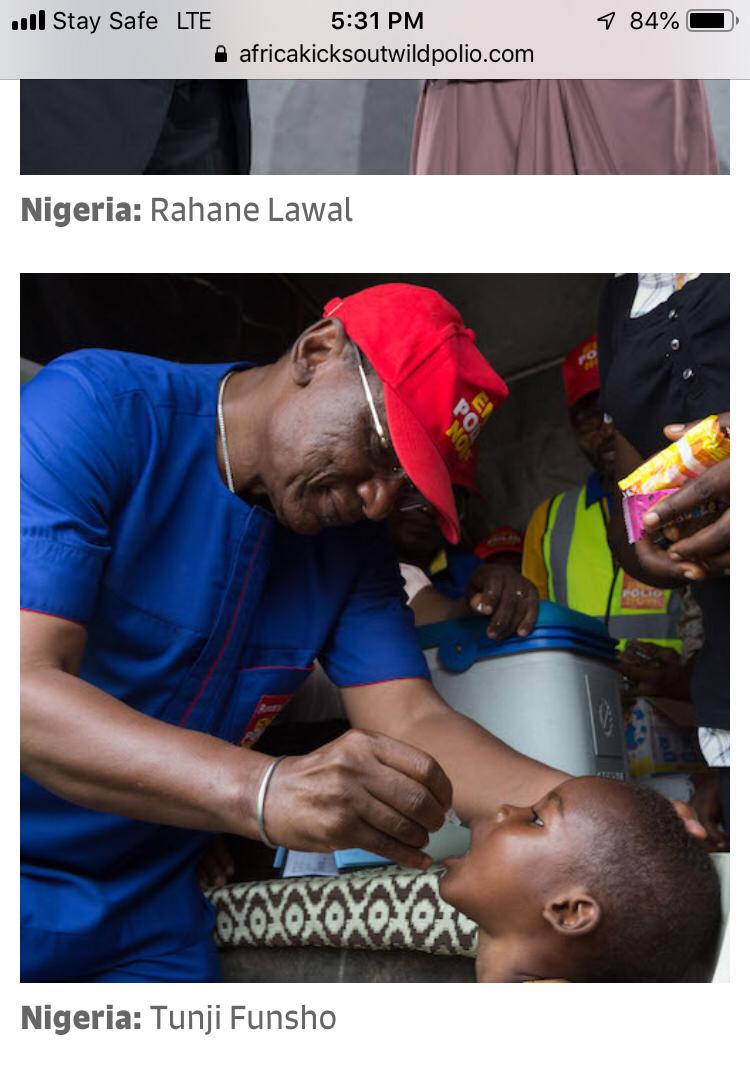
President Muhammadu Buhari Tuesday in Abuja expressed optimism that African countries can defeat the coronavirus pandemic, in the same manner, it eradicated the Wild Polio Virus on the continent.

President Buhari spoke at the formal certification of the Wild Polio Virus eradication in the African region during the virtual session of the 70th World Health Organisation (WHO) regional committee for Africa.

‘‘I recall that shortly after assuming office in May 2015, I made a pledge to Nigerians that I would not bequeath a polio-endemic country to my successor.

‘‘This certification is, therefore, a personal fulfillment of that pledge to not only Nigerians, but to all Africans.

‘‘At a time when the global community is battling the COVID-19 pandemic, this achievement strengthens my conviction that with the requisite political will, investments and strategies, as well as citizens’ commitment, we will flatten the epidemic curve.

‘‘I can affirm the commitment of all African leaders to this course of action,’’ the President said in his remarks celebrating the historic feat.

The President assured the global community that Nigeria will sustain the momentum and leverage on the lessons learnt from polio eradication to strengthen her health system, especially primary health care, and prioritize health security.

He said Nigeria used data systems, community engagement and innovative technology to monitor and predict the occurrence of polio outbreaks, adding that these same skills and tools are being used to fight COVID-19 and the multi-country outbreaks of Circulating Vaccine Derived Polio Viruses.

President Buhari, who described the achievement as a truly historic moment, commended President Cyril Ramaphosa of South Africa and Chairman of the African Union, under whose leadership, Africa crossed the finishing line.

He recounted that the journey to eradicate the virus dates back to 1996, when Nelson Mandela of blessed memory launched the Kick Polio out of Africa campaign.

The Nigerian leader also used the occasion to congratulate Dr. Matshidiso Moeti and the WHO Regional Committee for Africa on their untiring efforts, contributions and leadership towards polio eradication in Africa.

‘‘We must guard this achievement of the eradication of Wild Polio Virus in Africa jealously and ensure that we take all necessary steps to prevent a resurgence of this dreaded disease.

‘‘This will require maintaining the highest quality of surveillance and sustaining population immunity through increasing routine immunization coverage and supplemental immunization activities.

‘‘It is heartwarming to note how the strong partnership between the Global Polio Eradication Initiative and Governments of African countries worked tirelessly and collaboratively to deliver this success,’’ he said.

The President further commended the decades of hard work and resilience of health workers and volunteers across the region, Ministers of Health and other stakeholders such as political, traditional, religious and community leaders who provided the required support and leadership.

‘‘I would also like to appreciate the invaluable support of our donors, development and local partners such as WHO, UNICEF, Rotary International, Bill and Melinda Gates Foundation, Aliko Dangote Foundation, United States Centre for Disease Control and Prevention, GAVI, USAID, European Union, Emeka Offor Foundation, the Japanese and German Governments, numerous NGOs and faith-based organizations.

‘‘These are truly the heroes and heroines of many battles that have made us triumphant in the war against polio,’’ he said.

Stressing the need to sustain vaccination of children in Africa, the President urged African governments to continue investments in the health sector because ‘‘healthy populations create wealthy nations.’’

‘‘We must continue to build trust between Government institutions, leaders and citizens, so that we can unite as a people and confront the health and socio-economic challenges we face together,’’ he said.

In his remarks, Chairman, Aliko Dangote Foundation and Africa’s foremost philanthropist, Aliko Dangote urged governments across Africa to increase their budget allocations to the healthcare sector, to help ensure improved basic healthcare for the people.

Dangote expressed deep satisfaction at the final eradication of wild polio in Nigeria, and by extension Africa after years of hard work and collaboration among stakeholders.

Dangote, who played a major role through his Foundation in the eradication of Polio in Nigeria, said, “I want to commend our African leaders, especially my own President Muhammadu Buhari of Nigeria for his leadership. All levels of government have successfully come together to make this day possible.”

Femi Adesina
Special Adviser to the President
(Media & Publicity)
August 25, 2020

Continue Reading
Click to comment

Leave a Reply

Your email address will not be published. Required fields are marked *

Headline

Gunmen Abduct Ex-Power Minister Adelabu’s Sister, Her Two Sons in Ibadan

Published

on

By

Suspected gunmen have abducted the sister of a former Minister of Power, Adebayo Adelabu, in Ibadan, the Oyo State capital.

The family of former minister and chieftain of the All Progressives Congress (APC) confirmed the abduction, disclosing that Mrs. Olaide John-Paul and her 12-year-old twin sons were kidnapped by the gunmen on Wednesday, June 3, 2026.

According to a statement issued by Adelabu’s media aide, Femi Awogboro, the victims were kidnapped at about 7:30am while Mrs. John-Paul was taking her children to school.

Mrs. John-Paul, the youngest of five children of Mrs. Olufunmilayo Aduke Adegoke Adelabu, reportedly retired voluntarily from her career at First Bank Pension Custodian in 2025 before relocating to Ibadan with her children.

She was said to be making arrangements to join her husband, who had earlier relocated to the US.

The family expressed deep concern over the development but stated that security agencies had already commenced efforts to rescue the victims and apprehend those responsible.

“We are pleased to confirm that security operatives have swung into action and preliminary investigations have commenced in earnest,” the statement partly read.

While appealing for calm, the family urged members of the public to refrain from spreading unverified information that could undermine ongoing rescue operations.

“We are deeply distressed by this unfortunate incident, but remain hopeful that the victims will be rescued safely. We appeal to the public to remain calm, avoid speculation and support ongoing efforts with prayers,” the statement added.

The family also called on anyone with useful information that could aid the rescue operation to promptly share such intelligence with security agencies through the appropriate channels.

It assured that it would continue to cooperate fully with law enforcement authorities and provide updates as investigations and rescue efforts progress.

Continue Reading

Headline

Adeboye Proposes 90 Days Ultimatum for Security Chiefs to Eradicate Terrorism or Resign

Published

on

By

The General Overseer of Redeemed Christian Church of God (RCCG), Pastor Enoch Adeboye, has called on the Federal government to issue a 90-day ultimatum to security chiefs to end terrorism in Nigeria or step aside.

Adeboye made the appeal in a video shared on his X (formerly Twitter) account on Tuesday, expressing deep concern over the country’s deteriorating security situation.

He emphasized the need for urgent and decisive action, stressing that security chiefs must be held accountable for tangible results in the fight against terrorism.

According to him, while citizens can only advise the Commander-in-Chief, it is within the government’s power to set clear expectations and timelines for security leaders.

“If I were to make a suggestion, I would say the government should act swiftly and direct the service chiefs to eradicate terrorists within 90 days or resign,” he said.

The cleric also urged authorities to go beyond targeting terrorists alone, insisting that their sponsors must equally be identified and dealt with, regardless of their social or political influence.

“When issuing directives, it should be made clear that both terrorists and their sponsors must be eliminated, no matter how powerful they are,” he added.

Adeboye recalled that a former Nigerian president had once issued a similar three-month directive to security chiefs to end the Boko Haram insurgency but failed to enforce the order after the deadline expired.

Reflecting on his interaction with the late president, Adeboye noted that although initial efforts were made, the lack of follow-through undermined the directive’s effectiveness.

He maintained that his current recommendation is informed by that experience, urging the government to ensure strict enforcement if such a timeline is adopted.

His comments come amid renewed concerns over persistent terrorist attacks, banditry, and kidnappings across the country, with increasing public pressure on authorities to take stronger action against insecurity.

Continue Reading

Headline

TAS Pushes Sustainability Training Drive to Bridge Africa’s ESG Implementation Gap

Published

on

By

As global conversations around sustainability, governance and responsible development continue to intensify, attention is increasingly turning to Africa’s need for practical capacity building to translate environmental, social and governance (ESG) awareness into measurable action.

This was the central focus of Train Africans on Sustainability (TAS), an initiative founded by Dr. Orlando Odejide, which is working to equip Africans with the knowledge, skills and tools required to actively participate in the global sustainability agenda.

According to sustainability professionals involved in the programme, TAS was created in response to a growing gap across the continent between awareness and implementation of sustainability principles. While understanding of ESG frameworks and the Sustainable Development Goals (SDGs) has expanded in recent years, many individuals and organisations still face challenges in applying these concepts due to limited access to structured, practical training.

The initiative is designed to close that gap by shifting participants from awareness to action through hands-on, context-driven sustainability education. At the core of the programme is Odejide’s vision of training 50,000 Africans, aimed at building a new generation of sustainability-focused leaders and professionals capable of driving long-term change across the continent.

TAS operates as a capacity-building platform focused on sustainability, ESG principles and SDG implementation. It targets a wide audience, including young professionals, corporate organisations, public sector institutions and individuals seeking to strengthen their understanding of sustainability and its real-world application.

A defining feature of the programme is its emphasis on practical implementation. Participants are exposed to how sustainability functions within organisations, how ESG frameworks can be integrated into business operations and how sustainability performance can be measured and reported. The training is also tailored to African contexts, ensuring that global sustainability concepts are adapted to local economic, environmental and institutional realities.

The importance of such education has become increasingly evident as Africa faces mounting environmental, social and economic pressures alongside rapid population growth and development demands. Decisions made today, stakeholders note, will have long-term implications for future generations.

Sustainability education, therefore, is seen as a critical tool for balancing economic growth with environmental protection and social inclusion. It helps translate broad global frameworks into practical approaches for decision-making, innovation and long-term planning. Industry practitioners associated with TAS say one of the key barriers to sustainability adoption is not lack of interest, but uncertainty about implementation, a gap the programme aims to address through structured learning and practical guidance.

Since its launch, TAS has recorded steady participation, with 548 registered participants and 212 individuals certified as 2030 Agenda for SDGs and ESG (IWA48) Champions. Beyond certification, many participants are applying their learning within their workplaces and communities.

Some graduates are now leading sustainability-focused discussions within organisations, while others are aligning projects and initiatives with the SDGs. This shift from passive awareness to active engagement is viewed as a key indicator of the programme’s growing influence. Reports of participant-led initiatives and awareness campaigns are increasingly visible across professional platforms, particularly LinkedIn.

Looking ahead, TAS is focused on expanding its reach across more African countries, strengthening partnerships and improving the quality and depth of its training programmes. The long-term ambition is to establish the initiative as a leading sustainability capacity-building platform across the continent through collaboration with private sector organisations, government institutions and development partners.

The programme also provides multiple avenues for participation. Individuals can enrol to build sustainability competencies and join a growing professional network focused on sustainable development, while organisations can partner to train employees, sponsor access programmes or collaborate on ESG-related projects.

Through this collaborative approach, TAS aims to bring together stakeholders across sectors in support of a shared goal: advancing sustainable development across Africa. By prioritising education, capacity building and practical implementation, the initiative is positioning itself as a driver of sustainability transformation on the continent.

Continue Reading

Trending