The Oracle
The Oracle: The Place of Education in a Crisis-Ridden Nigeria (Pt. 2)
Published
10 months agoon
By
Eric
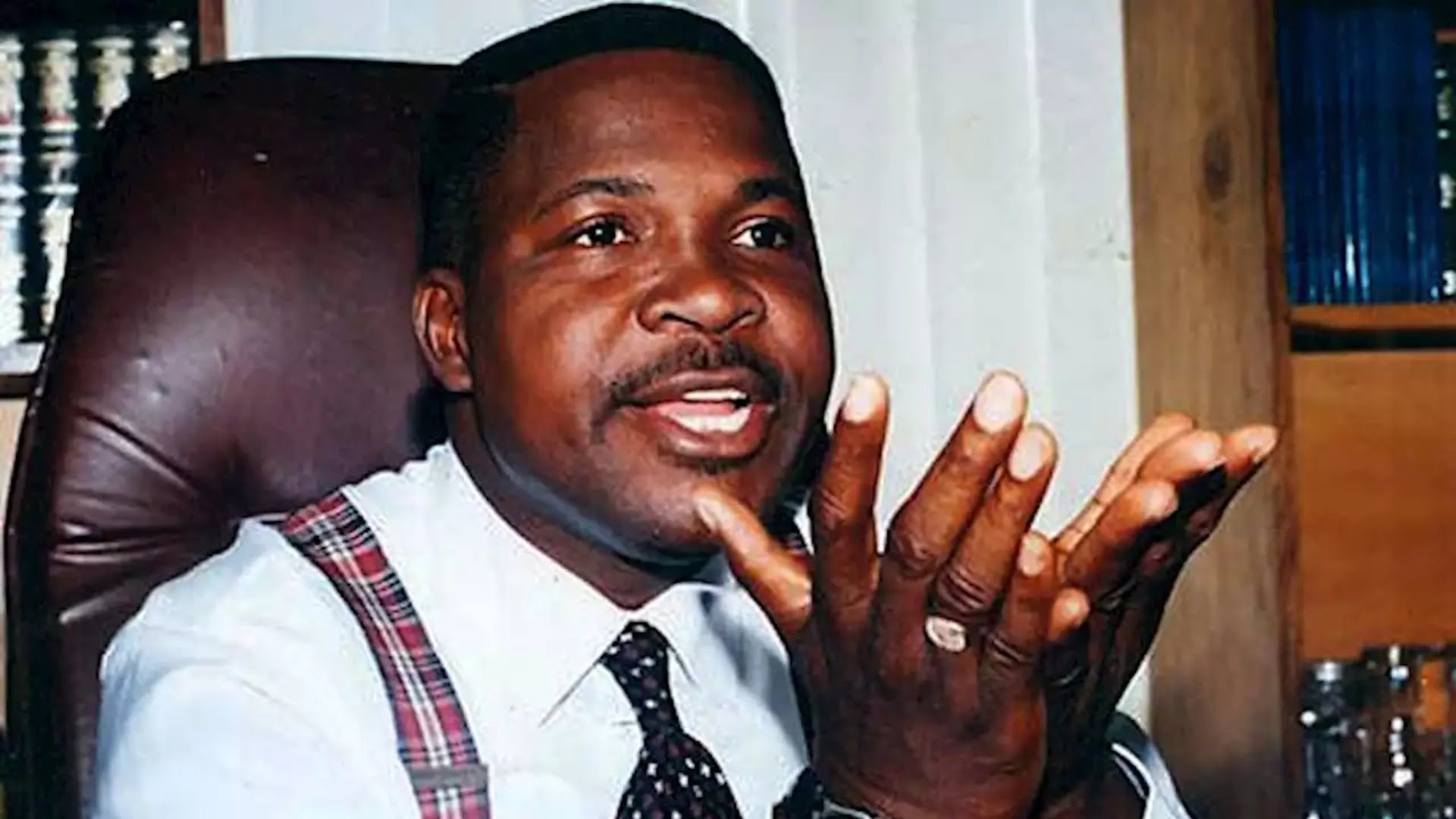
By Prof Mike Ozekhome SAN
INTRODUCTION
Last Week, we gave a compound definition of the subject matter and later x-rayed the following sub- topics: a short history of education in Nigeria; education and development; before the crisis and challenges in the educational sector; we also identified some of the problems in Nigeria’s educational system beginning with: Out-dated curricular and infrastructural decay: lack of quality education; total neglect of schools; dearth of qualified teachers; teachers’ poor working conditions and concluded with insufficient funding by government. Today, we shall begin with Failure to Accommodate the Rising Population Demands; the factor of greed; we shall also take look at how far we have come in Nigeria in terms of education and educational institutions in Nigeria and later the exodus of the extent of our failure wherein the best hands in Nigeria keep relocating abroad. We shall then conclude with by categorically stating that the Nigerian educational system is no longer at ease and also examine depth of crisis in our educational system.
FAILURE TO ACCOMMODATE THE RISING POPULATION DEMANDS
The total population of Nigeria as at independence was 45.2 million. As at October 6, 2022, Nigeria’s population was estimated to be 217.66 million. This has become a major problem as the education system cannot fully enroll its rapidly growing population. For instance, Nigeria’s basic education sector is overburdened by strong population growth. In 2015, the country’s population under the age of 15 was about 44 percent. The system has failed to integrate large parts of this growing youth population.
As at today, Nigeria’s under-5 population is 31 million children. At least 7 million babies are born each year. The poverty level of Nigeria is one in three. 22% of Nigeria’s population is made up of children. Over 20 million children are out of school as at 1st September, 2022 (UNESCO). No one bothers about the almajiris, drops-out, nomadic migrants and pastoralists; poor children of farmers, fishermen, etc. they are part of the forgotten vulnerable of the society – the hoi polloi; the Frants Fanon’s “Wretched of the Earth”.
According to the United Nations, 8.73 million elementary school- aged children in 2010 did not participate in education at all, most of which were the almajiri children. They constitute the largest group of out-of- school children in Nigeria. These boys are sent to Qur’anic teachers to receive an Islamic education, which includes vocational or apprenticeship training. Some are involved in street begging. The Ministry of Education estimated that there were over 9.5 million almajiri children in the northern part of the country in 2010, making Nigeria the country with the highest number of out-of-school children in the world. The net enrollment rate at the elementary level was 63.8 percent compared to a global average of 88.8 percent. This low rate of enrollment to basic education in Nigeria has further increased illiteracy level in Nigeria. The country in 2015 had a youth literacy rate of 72.8 percent and an adult literacy rate of 59.6 percent compared to global rates of 90.6 percent and 85.3 percent in 2010 respectively (data reported by the World Bank). The non-literate population is no doubt alarming.
THE FACTOR OF GREED
Greed has crept in as a major issue in Nigerian education because most instructors are paid far less than what they deserve. Thus, the heads of these schools frequently embezzle part of the money for themselves instead of using it for the earmarked purpose. This forces lecturers to milk parents and pupils dry of funds, to survive.
HOW HAVE WE SO FAR FARED?
According to a popular online source (“Smartest People, mediocre nation – the irony of Nigeria” ; accessed on 11th September, 2022), British Nobel laureate, Dorothy Hodgkin, once noted that the University of Lagos was one of the world centres of expertise in her specialist field of chemical crystallography. Ahmadu Bello University, Zaria, had the first world class computer centre in Africa. The University of Ife (now OAU), had a notable pool of expertise in nuclear physics. Our premier University of Ibadan had an international reputation as a leading centre of excellence in tropical medicine, development economics and historical sciences.
The Saudi Royal family used to frequent UCH for medical treatment in the sixties. The engineering scientist, Ayodele Awojobi, a graduate of ABU Zaria, was a rather troubled genius. He tragically died of frustration because our environment could not contain, let alone utilize, his talents. Ishaya Shuaibu Audu, pioneer Nigeria Vice-Chancellor of ABU Zaria, collected all the prizes at St. Mary’s University Medical School, London. His successor in Zaria, Iya Abubakar, was a highly talented Cambridge mathematician who became a Professor at 28 and was a notable consultant to NASA.
Alexander Animalu was a gifted MIT physicist who did work of original importance in superconductivity. His book, Intermediate Quantum Theory of Crystalline Solids, has been translated into several languages, including Russia.
Renowned mathematician Chike Obi solved Fermat’s 200-year old conjecture with pencil and paper, while the Cambridge mathematician, John Wiles, achieved same with the help of a computer working over a decade. However, after the harsh environment of the 1980s and IMF/WB structural adjustment programmes, the Ibrahim Babangida military dictatorship undertook massive budgetary cutbacks in higher education. Education started nose-diving.
THE EXODUS
Our brightest and best fled abroad. Today, Nigerian doctors, scientists and engineers are making massive contributions in diverse fields in Europe, Asia, North America and the Arab world. Philip Emeagwali won the 1989 Gordon Bell Award for his work in super-computing. Jelani Aliyu designed the first electric car for American automobile giant, General Motors. Olufunmilayo Olopede, Professor of Medicine at the University of Chicago, won a McAurthur Genius Award for her work on cancer.
Winston Soboyejo, who earned a Cambridge doctorate at 23, is a Princeton engineering professor, laurelled for his contributions to materials research. He is Chairman of the scientific Advisory Board to the Secretary-General of the United Nations. Washington University biomedical engineering professor Samuel Achilefu, received the St. Louis Award for his invention of cancer-seeing glasses that is a major advance in radiology.
Kunle Olukotun of Stanford did work of original importance on multi-processors. National Merit laureate, Omowunmi Sadik of State University of Binghamton, owns patents for biosensors technology. Many young Nigerians are also recording stellar performances at home and abroad. A Nigerian family, the Imafidons, were voted “the smartest family in Britian” in 2015.
Anne Marie Imafidon earned her Oxford Masters’ in Mathematics and Computer Science when she was only 19. Today, she sits on several corporate boards and was awarded an MBE in 2017 for services to science. Recently, Benue State University mathematician Atovigba Michael Vershima is believed to have solved the two centuries old Riemann Conjecture that has defied giants such as Gauss, Minkowski and Polya.
Another young man, Hallowed Olaoluwa, was one of a dozen “future Einstein” awarded postdoctoral fellowship by Harvard University. He completed a remarkable doctorate in mathematical physics at the University of Lagos, at age 21. While at Harvard, he aims to focus on solving problems relating to “quantum ergodicity and quantum chaos”, with applications to medical imaging and robotics. Another Unilag alumnus, Ayodele Dada, graduated with a perfect 5.0 GPA, an unprecedented feat in a Nigerian University. Victor Olalusi recently graduated with such stellar performance at the Russian Medical Research University, Moscow, and was feted the best graduate throughout the Russian Federation. Habiba Daggash, daughter of Senator Sanusi Daggash recently graduated with a starred rust in Engineering at Oxford University.
Emmanuel Ohuabunwa earned a CPA of 3.98 out of a possible 4.0 as the best overall graduate of the Ivy-League Johns Hopkins University. Stewart Hendry, Johns Hopkins Professor of Neuroscience, described the young man as having “an intellect so rare that it touches on the unique…a personality that is once-in-a-life-time”. There is also young Yemi Adesokan, postdoctoral fellow of Harvard Medical School who patented procedures for tracking spread of viral epidemics in developing countries. Ufot Ekong recently solved a 50-year mathematical riddle at Tokai – University in Japan and was voted the most outstanding graduate of the institution. He currently works as an engineer for Nissan, having pocketed two patent in his discipline.
WE ARE NO LONGER AT EASE
This is only the tip of the iceberg. If our system were not so inclement to talents, we would be celebrating a bountiful harvest of geniuses in all fields of human endeavour. This is why the correlates between our gene-pool and national development are so diametrically opposed, as the night and day. Unfortunately, the success stories mentioned above are the exception rather than the rule. This is because, we are fast becoming a failed state. We are currently miserably below the ladder of progress in the hierarchy of world economics and politics. None of our institutions, except ABUAD, the leading University in Nigeria which also situates within the leading 300 universities come near the top 500 in the World Universities League Table.
The profligacy, graft, bacchanalian and primitive acquisitive instincts of the ruling class (both military and civilian), have undoubtedly arguably contributed to the erosion of our cherished values and the consequent attendant degeneration in the educational Sector. The rot that set in has since ballooned and festered. So bad is the situation that it will not be an exaggeration to characterize it – as depicted in the title of this article – as a crisis. We are surely in a crisis situation.
HOW BAD IS THE EDUCATIONAL CRISIS?
The challenges confronting education in Nigeria are multi-faceted and well-documented. From underfunding to inclement enabling environment, cultism, “blocking”, sales of grades; and everything in between. In parts of the country (particularly in the North-East, North-West and North Central), kidnapping, armed banditry and nascent insurgency have made formal and even informal, Koranic-style (called ‘Islamiyya’) education something of a luxury, the quest for which involves risking one’s life and limb. In the reasonating words of Kenneth Maduagwu (Learning in Crisis”; https://nextierspd.com, July 21, 2022, Accessed on 1st October 2022), “the intensity of violence in Nigeria poses significant risks for school children. Several places of learning have turned to piles of ruin due to attacks by non-state armed groups. Instances are more prevalent in Nigeria’s northeast zone, where the insurgency has been well over twelve years. In the northwest and northcentral zones, banditry also poses significant threats to education due to large-scale kidnappings at places of learning. In the sourtheast zone, school activities are suspended on Mondays and other designated sit-at-home days by the Indigenous People of Biafra (IPOB). Ubiquitous terror significantly constrains school enrolment in Nigeria. The country has an out-of-school children problem, estimated at 18.5 million children. The figure is a sharp rise from 10.5 million recorded in 2021. UNICEF links the surge to northeast terrorism and banditry in the northwest and north central regions”.
To be continued…
THOUGHT FOR THE WEEK
“An education isn’t how much you have committed to memory, or even how much you know. It’s being able to differentiate between what you know and what you don’t”. (Anatole France).
Related
You may like
The Oracle
The Oracle: Enforcement of Fundamental Human Rights Under the 1999 Constitution of Nigeria (Pt. 4)
Published
1 month agoon
May 22, 2026By
Eric
By Prof Mike Ozekhome SAN
INTRODUCTION
In our last discourse on this series, we examined the procedure for enforcement of fundamental rights, including applications for leave; as well as the substantive application itself and the reactions that follow. Today, we shall continues from where we stopped with the substantive application itself and the reactions thereto and later x-ray the applications to squash proceedings; applications for production and/or release of persons restrained; orders for bail, production and access to medication. Please read on.
SUBSTANTIVE APPLICATION: THE MOTION OR SUMMONS (Continues)
In the case of LAWRENCE OLUSEGUN ADEYEMO V. C.O.P, OYO STATE ([2021] LPELR-56272(CA)), the applicant requested the court for a writ of habeas corpus under order 2 of the fundamental Rights (Enforcement Procedure) rules 1979 which provision enjoined the applicant to serve all parties who are or might be interested in the proceedings. Although the affected party had put up appearance, but raised a preliminary objection to the application for non-compliance with the statutory conditions. Babalakin. J. (as he then was) struck out the application on the ground that order 2(1)(4) is mandatory whether the application is for mandamus, certiorari, or habeas corpus.
However the Supreme Court in recent times in respect of the fundamental rights enforcements has favourably leaned towards the equitable principle of “Ubi Jus Ubi remedium”, therefore looking more at the substance rather than the form. Hence the liberalization of the procedure for the enforcement of fundamental rights as exposed in the case of ABACHA V. FAWEHINMI ((2000) 6 NWLR (Pt. 660) 228) and UBI UJONG INAH & ORS V. MARCUS UKOI ((2001) (CA) 41981.
APPLICATION TO QUASH ANY PROCEEDINGS
Sometimes it may be necessary for an applicant by way of certiorari to apply to the court for an order that such proceedings be removed from a particular court or tribunal to another court for the purpose of being quashed for lack of power and/or jurisdiction to entertain such proceedings or make such order.
However, an applicant shall not be able to question the validity of any order, warrant, commitment, conviction, inquisition or record unless before the hearing of his application (Motion or summons), he has served a certified copy (CTC) thereof together with a Copy of the application on the Attorney-General of the Federation or of the State in which the applicant is being heard (as the case may be).
The court in granting an application seeking to quash proceedings, shall direct that the order, proceedings, conviction or the records of an inquisition be quashed forthwith upon being removed into the court hearing the application.
APPLICATION FOR PRODUCTION AND/OR RELEASE OF PERSON RESTRAINED
By virtue of Order 4 of the Fundamental Rights (Enforcement Procedure) Rules, where an applicant complains of wrongful or unlawful detention, the court or judge to whom the application is made ex-parte may make an order forthwith for his release from such detention.
The court may also direct that an originating summons (as in form 2) be issued or that an application therefore be made by notice of motion (as in form 3). The court may also as it deem fit adjourn the ex-parte application so that notice thereof may be given to the person against whom the order for the release of the applicant is sought.
ORDER FOR BAIL, PRODUCTION, AND ACCESS TO MEDICATION
Pursuant to order 4 of the bail application, the court upon application may grant to the detainee reliefs including bail, production of the detainee, access to mediation etc.
The court may grant bail at ex-parte stage, pending the substantive application. Where an applicant complains of wrongful or unlawful detention, the court may subject to its discretion order that the person restrained be produced in court. And where such order is so made, it shall constitute a sufficient warrant to any superintendent of a prison, police officer in charge of a police station, police officer in charge of the complainant or any other person responsible for his detention, to produce or ensure the production of the person so restrained or detained in court.
For the purpose of enforcing a person’s fundamental rights, no matter where a detainee is kept he can be allowed access to his personal physician or medically prescribed drugs.
It suffices to note here, that once an order has been made by the court pursuant to the Enforcement Rules, and for the purpose of enforcing or securing the enforcement of any of the fundamental rights provided for in the constitution, such order must be complied with. Failure to obey or comply with any order so made by the court under these rules will incur proceedings for the committal of the party disobeying such an order.
CONCLUSION
Without any controversy, the idea of human rights and personal liberties has become firm and secured. The universality and immutability of human rights are now globally accepted. Consequently, any nation that slacks or shyies away from the diligent protection and enforcement of human rights stand the precarious risk of being shunned by decent and civilised nations. The United Nations seems to have captured the importance and primacy of the issue of human rights and its protection when it poignantly stated as follows:
“Human Rights and fundamental freedoms are the birth right of all human beings, their protection and promotion is the first responsibility of Government” (Universal Declaration of Human Rights (UDHR).
It is the duty of every Government everywhere and every courts of law in every jurisdiction to promote, protect, uphold, and ensure enforcement of fundamental Human rights at all times, because these rights encapsulate the very essence of man.
The end.
THOUGHTS FOR THE WEEK
“Human rights, of course, must include the right to religious freedom, understood as the expression of a dimension that is at once individual and communitarian – a vision that brings out the unity of the person while clearly distinguishing between the dimension of the citizen and that of the believer”. – Pope Benedict XVI.
“Because no matter who we are or where we come from, we’re all entitled to the basic human rights of clean air to breathe, clean water to drink, and healthy land to call home”. – Martin Luther King III
“Human rights are not only violated by terrorism, repression or assassination, but also by unfair economic structures that creates huge inequalities”. – Pope Francis.
Related
The Oracle
The Oracle: Enforcement of Fundamental Human Rights Under the 1999 Constitution of Nigeria (Pt. 3)
Published
1 month agoon
May 15, 2026By
Eric
By Prof Mike Ozekhome SAN
INTRODUCTION
Last week’s installment examined amongst others, the features of what constitutes violation of fundamental rights and posed the question- whether enforcement of such rights is restricted to the mechanism of the FREP Rules? This week contuse the same theme by discussing the procedure for enforcing fundamental rights, including applications for leave; the substantive application itself and the reactions thereto. Please read on.
PROCEDURE FOR ENFORCEMENT (Continues)
Furthermore, the Court of Appeal (Benin Division) dilated on the procedure in the case of N.U.T Vs. COSST ((2007) 23 E-WRN / 03 (CA).), thus:
“By virtue of Order 1 rule 2(2) of the Fundamental Rights (Enforcement Procedure) Rules, no application for an order enforcing or securing the enforcement within that state of any such rights shall be made unless leave therefore has been granted in accordance with the rules. Thus, while an applicant can approach the High Court in a state where the infringement of his rights occurs or is likely to occur for redress he has to obtain leave of the appropriate High Court before he can apply to enforce his rights. In the instant case, even if the case was a fundamental right case the suit was not commended by due process, as the respondents approached the court by way of originating summons contrary to the provision of Order 1 rule 2(2) of the Fundamental Right (Enforcement) Rules.
An application for the enforcement of fundamental right becomes incompetent if the main claim does not fall within the ambit or precinct of chapter IV of the Constitution. Any claim that falls outside chapter IV of the Constitution becomes ancillary claim. Therefore, for an applicant for enforcement of fundamental rights to be competent, it must be within the provisions of chapter IV of the Constitution.
This point reverberated in W.A.E.C Vs. Akinwumi, (2008) JELR 49485 (SC), where the Supreme Court succinctly held that:
“In ascertaining the justicieability or competence of a suit commenced by way of application under the Fundamental Rights (Enforcement Procedure) Rules, 1979, the court must ensure that the enforcement of the fundamental rights under chapter IV of the Constitution is the claim and not ancillary claim. Where the claim is not the enforcement of a fundamental right, the jurisdiction of the court cannot be said to be properly invoked, and the action is liable to be struck out on ground of incompetence.”
Also, in Unilorin Vs. Oluwadare (2008) JELR 55842 (CA), the court adumbrated the point as follows, when it held that:
“When an application is brought under the Fundamental Rights (Enforcement Procedure) Rules, 1979, a condition precedent to the exercise of the court’s jurisdiction is that the enforcement of fundamental rights or the securing of the enforcement thereof should be the main claim and not an accessory claim. Enforcement of fundamental right or securing the enforcement thereof should, from the appellant’s claim as presented, be the principal or fundamental claim as presented, and not accessory claim. However, where the main claim or principal claim is not the enforcement or securing the enforcement of a fundamental right, the jurisdiction of the court cannot be properly exercised as it will be incompetent. In the instant case, the respondent’s claim, being a challenge to his expulsion as a student from the 1st Appellant institution, is not one of those claims/reliefs envisaged by the Fundamental Rights (Enforcement Procedure) Rules.
See also Gafar Vs. Govt., Kwara State, (2007) JELR 53915 (SC); Unical Vs. Ugochukwu 2007-LD-CA-232.
It is important to note that an applicant seeking redress for the infringement of his Fundamental Rights shall in addition to declaratory and injunctive orders also be entitled to an award of damages. This is because in fundamental right cases, the law presumes that damages flow naturally from the injury suffered by the victim as a result of the violation of the rights.
APPLICATION FOR LEAVE
By virtue of Judgment (Enforcement) Rules in Nigeria, no application for an order enforcing or securing the enforcement within a state, of any such rights shall be made unless leave therefore has been granted in accordance with these rules. Also, any application for such leave must be made ex-parte to the appropriate court and must be supported by a statement setting out the name and description of the applicant, the relief sought, and grounds on which it is sought and by an affidavit verifying the facts relied on.
The deadline for filling an application for leave is not later than 12 (twelve) Months after the date of the happening of the event complained of, unless the judge is satisfied that extenuating circumstances exist. In case of ongoing act, an action can be brought after 12 Months deadline, at any point during the continuation of the wrong. An applicant must however file the application for leave not later than the day preceding the date of hearing. The court may in granting leave to the applicant impose such terms and condition as it may deem fit, as security for cost.
It is to be noted that leave once granted, shall operate as a stay of all actions relating to or connected with a complaint which forms the subject matter of the application until the determination of the substantive suit.
The ex-parte application for leave must specify the provisions of the enforcement procedure Rules under which it is brought, the precise content of the relief to be requested once the application for leave has been granted and cursory reference to relevant laws. This must be accompanied by an affidavit verifying relevant facts to be relied on.
The deadline for filing an application for leave is not later than 12(twelve) months after the date of the happening of the event complained of, unless the judge is satisfied that extenuating circumstances exist. In cases of ongoing act, an action can be brought after 12month deadline, at any point during the continuation of the wrong. An applicant must however file the application for leave not later than the day preceding the date of hearing. The court may in granting leave to the applicant impose such terms and conditions as it may deem fit, as security for cost.
It is to be noted that leave once granted, shall operate as a stay of all actions relating to or connected with a complaint which forms the subject matter of the application until the determination of the substantive suit.
The ex-parte application for leave must specify the provisions of the enforcement procedure Rules under which it is brought, the precise content of the relief to be requested once the application for leave has been granted and a cursory reference to relevant laws. This must be accompanied by an affidavit verifying relevant facts to be relied on.
SUBSTANTIVE APPLICATION: THE MOTION OR SUMMONS
After obtaining leave, the applicant can apply for an enforcement order by way of NOTICE OF MOTION (as in form 1) or ORIGINATING SUMMONS (as in form 2). In the celebrated case of SHUGABA, A. DARMAN V. MINISTER OF INTERNAL AFFAIRS & ORS. ((1981) 2 NCLR 459). It was held inter-alia that the proper procedure to be followed in an application for enforcement or securing the enforcement of fundamental rights and redress for violation of same is guided by the fundamental Rights (Enforcement Procedure) Rule 1979 which requires that where leave has been granted to apply for the order being asked the application for, such order must be made by notice of motion or originating summons to the appropriate court.
The motion or summons, together with a copy of the statement submitted in conjunction with the application for leave, must then be served on all persons directly affected. Unless the court directs otherwise, there must be at least 8 clear days between service of the motion or summons and the date fixed for hearing.
A substantive application either by motion or summons seeking for substantive reliefs, remedies or orders may include such prayers as:
a. Unconditional release of the detainee
b. Payment of a certain sum of money as compensation in the event of the arrest and detention being illegal, unwarranted, null and void.
The court may equally make any other ancillary order after hearing argument from counsel on all sides based on the affidavit and counter-affidavit.
It should be noted that failure to adhere to the procedure laid down by the Enforcement Rules may lead to the entire proceedings being nullified. The court shall upon objection being raised for non-compliance with the rules strike the entire proceedings out. (To be continued).
THOUGHT FOR THE WEEK
“Human rights, of course, must include the right to religious freedom, understood as the expression of a dimension that is at once individual and communitarian – a vision that brings out the unity of the person while clearly distinguishing between the dimension of the citizen and that of the believer”. – Pope Benedict XVI
Related
The Oracle
The Oracle: Enforcement of Fundamental Human Rights Under the 1999 Constitution of Nigeria (Pt. 1)
Published
2 months agoon
May 1, 2026By
Eric
By Prof Mike Ozekhome SAN
INTRODUCTION
Man as distinct from other beings is rational and has morals. He has the power of reason which enables him to differentiate between right and wrong, between good and bad, and also between justice and injustice. He therefore possesses honour and dignity which are higher than that of other beings. Human rights are necessary to protect this honour and dignity which nature has bestowed on human kind. They ensure (where these rights are enforced) that human kind is not degraded or made inhumane. Chapter IV (Sections 17-32) of the Constitution of the Federal Republic of Nigeria, 1963, had provided that:
“No person shall be subjected to torture or to inhuman degrading punishment or other treatment.”
This has been replicated in section 3 of the 1999 Constitution. Equally, Article 1 of the Universal Declaration of Human Right, 1984 declares that:
“All human beings are born free and equal in dignity and right. They are endowed with reason and conscience and should act towards one another in a spirit of brotherhood.”
There is therefore a great need to protect and ensure the protection of these inherent rights and freedoms.
WHAT IS A RIGHT?
Before discussing the ways and means by which one may enforce his fundamental human rights, it is apposite to first understand the context in which “right” is used.
‘Right’ in ordinary language means power of free action; a demand, inherent in one person and incident upon another. It is an interest recognized by law, respect for which is a duty and disregard of which is wrong. It refers to the cultural, political, social, economic advantage to which a person has just claim, either morally or in law. It is distinct from privilege.
Right described as ‘human’ refers to a category of rights which are specified and in most cases protected by law. Every human being is entitled to such rights and no person may be denied of such rights except through the due process of law. Cranston therefore holds the strong view that:
“A human right is something of which no one may be deprived without a great affront to justice. These are certain deeds which should never be invaded some things which are supremely sacred”
Kayode Eso, JSC. (as he then was) re-affirmed the importance of human rights in RANSOME KUTI Vs. A-G OF THE FEDERATION, (1985) CLR 6(d) (SC), when he said of human rights:
“… It is a right which stands above the ordinary laws of the land and which in fact is antecedent to the political society itself. It is a primary condition to a civilized existence… and what has been done is to have these rights enshrined in the Constitution so that the rights could be immutable to the extent of the non-immutability of the constitution itself.”
FUNDAMENTAL RIGHTS OR FUNDAMENTAL HUMAN RIGHTS?
“Fundamental rights” are generally regarded as those aspects of human rights which have been recognized and entrenched in the constitution of a country. They are specially provided for to enhance human dignity and liberty in every modern state. In the Nigerian context, the terms “human right”, “fundamental right” and “fundamental human right” are always used interchangeably. This has been justified by a learned author who posited forcefully that:
“Human rights remain so, whether they occur in the international plane or within municipal confines and whether they are called ‘human rights’ or ‘fundamental rights’. It should be noted that the international bill of rights – the universal declaration of Human rights and the International Covenant on Civil and Political Rights- use the expression fundamental human rights, so also the U.N charter.” (the Universal Declaration of Human Rights (UDHR) of 1948).
Since the Constitution specifically provides for fundamental rights, Nigerian Court have found it expedient to draw a line of dichotomy between ‘human rights’ and ‘fundamental rights’. Thus, in UZOUKWU & ORS Vs. EZEONU II & ORS, (1991) 6 NWLR (pt 200) p. 708, the Court of Appeal (per Nasir P. C. A) put in with apt clarity and lucidity:
“Due to the development of Constitutional law in the field, distinct difference has emerged between ‘Fundamental Right’ and ‘Human Rights’. It may be recalled that human rights were derived from and out of the wider concept of natural rights. They are rights which every civilized society must accept as belonging to each person as human being. These were termed human rights. When the United Nations made its declaration it was in respect of Human Rights which belong to all human beings irrespective of citizenship, race, religion and so on. This has now formed part of international law. Fundamental Rights remain in the realm of domestic law. They are fundamental because they have been guaranteed by the fundamental law of the country, that is by the Constitution.”
Nature and Classification of Human Rights
Human rights are generally grouped under five sub-headings namely; Civil Rights, Political Rights, Social Rights, Economic Rights and Cultural Rights. We shall however discuss these classifications under two broad further categorization, that is:
Civil and Political Rights: these includes the right to self-determination, the right to life, freedom from torture and inhuman treatment, freedom from slavery and forced labour, the right to fair trial, right to privacy, freedom of thought conscience and religion, freedom of opinion and expression, the right of assembly, freedom of association, and movement, the right to marry and found a family, the right to participate in one’s Government either directly or through freely elected representatives, and the right to nationality and equality before the law.
Economic, Social and Cultural Rights (ECOSOC Rights) include the right to work, the right to an adequate standard of living, the right to organize, form and join trade unions, the right to social security, the right to collective bargaining, the right to property, the right to education, the right to participate in cultural life and to enjoy the benefits of scientific progress.
The importance of these rights cannot be over emphasized. So important are they that they have been universally recognized and acclaimed by the international community. The universal Declaration of Human Rights, as well as other United Nations Covenant on Human Rights, the African Charter on Human race on an equal scale as the foundation of freedom, peace and justice in the world.
NOW THIS
HUMAN RIGHTS IN NIGERIA AND INTERNATIONAL CHARTERS AND CONVENTIONS
The emergence of human rights in documented form in Nigeria can be traced to the Nigeria Bill of Rights of 1959. This was incorporated into the 1960 Independence Constitution in 1963; these rights were reproduced 111 of the 1963 Republican Constitution. These fundamental human rights are provided for in Chapter Iv of both the 1979 and 1999 Constitutions of the Federal Republic of Nigeria with some improvements.
The reverence of these human rights can be seen from their recognition, promotion and protection under international law. Charters and Conventions have been globally drawn, and under various economic, geographical and political blocs for the promotion and protection from abuse of these rights. The United Nation (UN) has been championing the global protection of these rights as can be seen from the various chapters of the UN charter. The United Nations Declaration of Human Rights (1984) proclamation states as follows:
“This Universal Declaration of Human Rights as a common standard of achievement for all the end that every individual and every organ of society keeping this Declaration constantly in mind, shall strive by teaching and education to promote respect for these rights and freedoms and by progressive measure, national and international to secure observance both among people of member states themselves and among people of territories under their jurisdiction.”
Article 30 of the Charter further provides thus:
“Nothing in this Declaration may be interpreted as implying for any state group or person any right to engage in any activity or to perform any action aimed at the destruction of any of the rights and freedoms set forth herein.”
The Declaration by its provisions sets out the minimum standard to be observed by countries of the world in relation to human rights.
There is also the African Charter on Human and Peoples Rights which has become, in Nigeria, a potent source of quick remedy against gross violation of human rights under municipal laws which remedy could not be traced to the laws because of ouster clauses built in them. The charter has since been ratified in Nigeria as African Charter on Human and Peoples Rights (Ratification and Enforcement) Act Cap 10 1 FN 1990. The importance of the African Charter was underlined by Eniola Longe J, in the case of MOHAMMED GARUBA & ORS V. A.G OF LAGOS STATE & ORS (Unreported Suit No. ID/559/90), when he held:
“The African Charter on Human and Peoples Rights of which Nigeria is a signatory is now made into our law… Even if its aspect in our constitution is suspended or ousted by provisions of our local law, the international aspect of it cannot be unilaterally abrogated…”
AND THIS LIMITATION ON FUNDAMENTAL RIGHTS
Under section 45 of the 1999 Constitution and many constitutional expressions of fundamental rights, certain qualifications or restriction which are reasonably justifiable in a democratic society are incorporated in the interest of defence, public safety, public order, public morality or public health or for the purpose protecting the rights and freedoms of other persons. Consequently, the aforesaid rights are generally subjected to these limitations.
ENFORCEMENT OF RIGHTS
Procedure for the enforcement of the fundamental rights provisions enshrined in the constitution of the Federal Republic of Nigeria is guided and regulated by the Fundamental Rights (Enforcement Procedure) Rules 1979. It is pertinent to state here that the above rules are made pursuant to the powers conferred on the Chief Justice of Nigeria by section 46(3) of the Constitution, which provided thus:
“The Chief Justice of Nigeria may make rules with respect to the practice and procedure of a High Court for the purpose of this section.” (To be continued).
THOUGHT FOR THE WEEK
“Each state, so that it does not abridge the great fundamental rights belonging, under the Constitution, to all citizens, may grant or withhold such civil rights as it pleases; all that is required is that, in this respect, its laws shall be impartial”. (Lyman Trumbull).
Related


Alleged Coup: Court Orders DSS to Probe VDM over Leaked Trial Video
Glo Extends “Borrow Me Credit” Services for Customer Inclusion
Senate Passes Bill Establishing State Police in Nigeria
US Govt Releases Names of Terrorism Financiers Amid Growing Insecurity
How I Made Buhari President in 2015 – Amaechi
Presidential Ambition: Is Donald Duke a Spoiler?
Insecurity: Why Tinubu Must Wake Up
Senate Passes Bill Establishing State Police in Nigeria
US Govt Releases Names of Terrorism Financiers Amid Growing Insecurity
Glo Extends “Borrow Me Credit” Services for Customer Inclusion
Alleged Coup: Court Orders DSS to Probe VDM over Leaked Trial Video
Trending
-
National5 hours agoSenate Passes Bill Establishing State Police in Nigeria
-
World10 hours agoUS Govt Releases Names of Terrorism Financiers Amid Growing Insecurity
-
News2 hours agoGlo Extends “Borrow Me Credit” Services for Customer Inclusion
-
National51 minutes agoAlleged Coup: Court Orders DSS to Probe VDM over Leaked Trial Video