Connect with us

Opinion

Mike Adenuga: 70 Times a Genius

Published

on

By Olabode Opeseitan

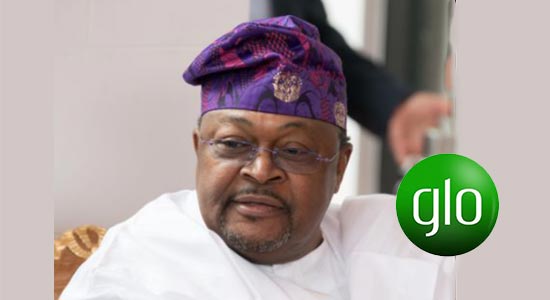
This is a celebration of an exceptional African business icon and enigma from an insider perspective. I have interacted with the billionaire founder of Globacom and Conoil, Dr. Mike Adenuga Jr., for over three decades, 16 years of which I worked for him, often at close quarters. This is an unrestrained chronicling of his unique attributes; with anecdotes and perspectives you probably have never read elsewhere.

THE ENIGMA

It was one of those activity-choked days when his meetings lasted till very late in the night. He had, a few moments earlier, closed his last meeting for the day with senior managers in his signature style. “Well, everyone to himself, God for us all,” he said with reverence, yet commandingly and reassuringly. With everyone released, he treated the remaining files on his desk, passed them to his secretary and crossed over from his Oval Office at the golden building to his palatial residence, which he fittingly christened Bellissima on the waterfront. Bellissima is an Italian word coined from bella, which means gorgeous, while issima, is an absolute superlative. Bellissima, the name, absolutely complements the gorgeousness of the immaculate white buildings at the Adenuga villas and their coral-coloured roofs. You would think, at that wee hour, he was heading straight to bed once he got home. No Sir!

Dr. Adenuga is genetically fortunate to require only about three to four hours of sleep a day. The influential Wall Street Journal calls his kind the sleep-less elite who need just a few hours of sleep to function normally. In that mold are the likes of Tim Cook of Apple and former American President Donald Trump. Sometimes, he would make a few calls to give some follow-up instructions or review some aspects of his last meetings. Then, he would pour himself a glass of one of the smoothest cognacs in the world, relax and journey back to the past couple of hours to dissect his previous day, reflectively.

This is a celebration of an exceptional African business icon and enigma from an insider perspective. I have interacted with the billionaire founder of Globacom and Conoil, Dr. Mike Adenuga Jr., for over three decades, 16 years of which I worked for him, often at close quarters. This is an unrestrained chronicling of his unique attributes; with anecdotes and perspectives you probably have never read elsewhere.

THE ENIGMA

It was one of those activity-choked days when his meetings lasted till very late in the night. He had, a few moments earlier, closed his last meeting for the day with senior managers in his signature style. “Well, everyone to himself, God for us all,” he said with reverence, yet commandingly and reassuringly. With everyone released, he treated the remaining files on his desk, passed them to his secretary and crossed over from his Oval Office at the golden building to his palatial residence, which he fittingly christened Bellissima on the waterfront. Bellissima is an Italian word coined from bella, which means gorgeous, while issima, is an absolute superlative. Bellissima, the name, absolutely complements the gorgeousness of the immaculate white buildings at the Adenuga villas and their coral-coloured roofs. You would think, at that wee hour, he was heading straight to bed once he got home. No Sir!

Dr. Adenuga is genetically fortunate to require only about three to four hours of sleep a day. The influential Wall Street Journal calls his kind the sleep-less elite who need just a few hours of sleep to function normally. In that mold are the likes of Tim Cook of Apple and former American President Donald Trump. Sometimes, he would make a few calls to give some follow-up instructions or review some aspects of his last meetings. Then, he would pour himself a glass of one of the smoothest cognacs in the world, relax and journey back to the past couple of hours to dissect his previous day, reflectively.

That, for Dr. Adenuga is a spiritual voyage of sorts where he tries to set matters straight between himself and the people he had encountered. Meditatively, he would ask himself, ‘Was I fair to him? Was she fair to me? Is there any additional value to explore and get a better result beyond the ideas the various teams from Globacom to Conoil Producing, Conoil Plc, Cobblestone Properties & Estate and others presented? How can we optimize our assets?’ He could be at this for up to three or four hours before calling it a day. That is how the genius mindset of Chairman Adenuga works. Upon deep reflection, if in the previous day there was anyone the Chairman felt he was unfair to, he would make amends, often not in an apology but in voluntary compensatory actions. If there was anyone he felt was unfair to him, he would also take corrective measures. As generous as he frequently is, he doesn’t spare the rods when he needs to make people account for their misdeeds. Where he acts the fastest is on any matter that could stimulate business growth. He takes whatever action is required to get results, particularly where the opportunity is hot and fresh, even if it requires a trip to the most distant part of the world. There were people in the Mike Adenuga Group who had travelled to the US, Europe, China and other parts of Africa and had no clue they were travelling as close as four to 24 hours before they boarded their flights. No other business leader I have known can match his mettle when it comes to pulling all the strings to get a difficult result. That perhaps is the strongest staying power of an icon his admirers call the Great Guru.

HOW HE PRESIDES OVER MEETINGS

Dr. Adenuga is a strict disciplinarian who runs his organisations with traits of the command-and-control structure of a military hierarchy. A perfectionist, he expects his officials and consultants to be prompt, organised, adequately prepared and conform to the rules of his office. “You can’t do that here. This is the Office of the Chairman”, he would thunder and remind anyone stepping out of line. He is irritated by tardiness and unintelligent responses. A voracious reader and intellectual explorationist, he ceaselessly brings himself up to speed on the latest trends in the businesses he is involved in, from oil exploration to the downstream, banking to finance, real estate, hospitality, road construction and telecommunications. You cannot pull the wool over his eyes. One moment he is discussing the network configuration management system for Globacom with his technical team, the next moment, he is discussing the result of geological surveys and offshore/onshore drilling of oil with his Conoil Producing management team. The same day, he is getting feedback from his representatives at Julius Berger, where he has controlling shares, and Cobblestone, the multibillion real estate company which has luxurious properties spread across the land. This is just a snippet of his regular undertakings. He probably would have slowed it down by now.

He is also politically and economically savvy. He has unassailable strategies on how to fix the Nigerian economy. I can just imagine how much Nigerian and African leaders can tap from his profound solutions, most of which are a bigger bang for the buck, even without asking to be paid any buck. It’s there just for the asking!

How long or short he spends with every presenting team depends on how much value he gets from or adds to the presentation. He needs only a few slides to decide if a presentation is worth his precious time. Yet, he displays a disarming humility, especially when there are visiting consultants or advisers. He is quick to spot and convert opportunities. He sees the boardroom and an entire organisation like a football team where only the players in good form keep their shirts. “Everyone must fight for his shirt”, he would say. Yet, he shows the milk of human kindness to his people. He gets personal with employees he often interacts with, cares about their welfare over and beyond the benefits they get from the system. Dr. Adenuga is also a powerful storyteller who has shared several aspects of his life relevant to topics under discussion with officials during or after meetings.

HOW HE KEEPS VALUABLE STAFF

Despite his strict regimen and famous quote of, “We may laugh and play together, don’t let the hierarchy be lost on you,” Dr. Adenuga is among the most involved and most caring employers of labour you can ever see. When a valued staff departs voluntarily or is asked to quit over certain developments, the Chairman does not see it as a permanent separation. If there is an opening later and he remembers any of the former staff he rates as ‘livewires’ who can fill the void, he will go after such staff, entice, appeal, incentivize or take any step necessary to bring him/her back. Dr. Adenuga goes as far as speaking directly to the staff or sending emissaries to them to gain their confidence and rekindle their collaboration. Biblical? Perhaps, yes. Leaders can leave a herd and go after a lost or missing sheep. For a business leader who can afford to hire any staff from anywhere in the world, that is a rare act of humility, large-heartedness and pragmatism. About two years after I had left Globacom in 2020, I got a surprise call from the Chairman. “Bode, mo ti’n wa e. Nibo lo wa lat’ojo yi” (Bode, I have been looking for you, where have you been all this while)? Then he added, “We shouldn’t be far from each other. I shouldn’t be looking for you when I need you or you, looking for me when you need me. There is no easy way to say goodbye but there can be a pleasant way.” I thanked him for his fatherly admonition, and we have kept in touch ever since. The truth is that the Chairman really does not need me to the point of seeking me out. It is just his nature to be kind to his employees and friends he considered valuable when they were with him.

ROLE IN TURNING WIZ KID, OTHERS INTO GLOBAL STARS

The world today celebrates Wizkid, Burna Boy and other Nigerian music superstars who have become global icons. Dr. Adenuga played a big part in accelerating their journeys into global reckoning. He instructed his management team to engage the fledgling music stars then as brand ambassadors and take them on musical and comedy tours across the country. Many of them had the opportunity to perform in different parts of Nigeria for the first time, courtesy of the Adenuga gesture. Empowerment is one of the core reasons he founded Globacom. He wanted the fish seller in Epe or the yam seller in Aboh Mbaise or the farmer in Dawakin, Kano to be able to reach their customers and boost their trade. When things were tough for comedians, Nollywood stars and musicians, the endorsement and performance fees they got from Globacom helped in no small way to see them through. Many of the beneficiaries are eternally grateful for that deed. His impact was also felt in football across Nigeria, Ghana and at CAF where he pumped millions of dollars to promote and develop African football for almost two decades.

ADENUGA’S EXTENSIVE CONNECTIONS

The Chairman has an extensive network of connections, and he has kept many of them in his closest circle over the years. In the innermost of the circle are the Awujale of Ijebuland, Oba Sikiru Adetona, who is his older cousin, the Esama of Benin, Sir Cabriel Igbinedion, and his son, Chief Lucky Igbinedion, boardroom guru Mr. Bode Emmanuel, General IBM Haruna, General Ibrahim Badamosi Babangida, Dr. Seyi Roberts and Chief Obi Adimora. This list is by no means exhaustive. Another of the elite senior friends is General Alani Akinrinade, whom he met as the big brother of his close childhood friend. He has nurtured a sublime friendship with the Akinrinades over the years. He is particularly fond of General Akinrinade, who was kind to them in those days when the youngsters were trying to find their feet. The powerful list also includes past and present heads of state across the world, Governors, Senators, traditional rulers, professionals, friends and associates. Many thought he would be in a dilemma when two of his friends, Alhaji Atiku Abubakar and Asiwaju Bola Ahmed Tinubu, went head-to-head in the last presidential election. They forgot that he is a boardroom virtuoso who understands the dynamics of leadership contests in Nigeria and would never be caught in the crossfire. His strategy over time is to leave politicking to politicians and stay in his comfort zone, the boardroom and business management.

RELATIONSHIP WITH HIS CHILDREN

Like every caring and doting father, the Chairman loves his children to bits. He spoils them with gifts and finds time to attend to them despite his extremely busy schedule. He prioritises family dinner which could be at least once a week, often after watching movies together at the family’s luxuriant cinema hall. He also comes hard on them when they get on the wrong side of his strict rules. He once told one of his children whom he had to compel to attend a meeting after requesting to be excused, “Come rain or shine, I’m at this desk, working. If I can do that without giving excuses, then you shouldn’t give excuses. The only thing I owe you is to give you a good education. Afterwards, if you want to stay here, you are welcome, but you must adhere to my instructions”. Surely, he cherishes them and will do anything for them, but he wants to train them in his strict disciplinarian way, believing this will strengthen them in sustaining the huge legacy he is bestowing on them. Everyone close to the Adenugas knows that his scions have also fully embraced the ethos of hard work wholeheartedly and they are adept at what they do. He once told me after a meeting at his Oko-Awo home office, shortly before relocating to the Banana Island home, that his wish was to hand over his flourishing empire to his children.

ADENUGA’S LEGENDARY GENEROSITY

Dr. Adenuga’s generosity is legendary. He gives personal rewards like no other billionaire, except for probably a few like Oprah Winfrey. “If God has given you this kind of resources, it is not for you and your family alone,” he would say. That is the guiding philosophy influencing the way he reaches out through his wealth.

All year round, he splashes generous gifts on extended family, friends, associates, staff and the less privileged. The gifts could range from exotic brand-new cars to expensive perfumes, designer bags, designer wristwatches and cash. And during every festive season, he has a long list of beneficiaries he touches with life-transforming gifts; some on rotation, others in perpetuity. He is detailed and exquisitely tasteful, not only in the quality of gifts but also in the manner the gifts are presented. His Christmas cards are not only the best designed but the first to arrive. Recipients have treated them as valuables to be proudly displayed. He is unorthodox in living out his precepts. He does things his own way and the Chairman acts and moves when he wants to. He doesn’t like to be over pressurised.

His company, Globacom, recently revamped and furnished the rundown home of a former national football hero, Peter Fregene, who had been in financial distress. That altruism has the imprimatur of Dr. Adenuga written all over it. He feels a deep sense of inexplicable joy when he sends his team to look for and rehabilitate Nigerians whose predicaments caught his attention. Sometimes, he would send his team to go and enquire about the well-being of a friend and associate he had not heard from in a while and ensure such was well taken care of. He also loves enabling empowerment promotions, using his companies to give out jaw-dropping prizes like houses, cars, hefty sums of money and tools of trade such as sewing machines and tricycles, among others.

HOW HE INDULGES SELF

The chairman enjoys the good things of life and pampers himself in remarkable ways. Yet, he believes that if it is not broken, don’t fix it. At his Oko-Awo, VI, Lagos office, he used the same TV sets for over a decade before finally giving the nod for them to be changed. His car preferences include Mercedes Benz G Wagon, Range Rover, sports cars, Toyota Landcruiser and Bentley. For some reason, he keeps his distance from Rolls Royce.

He also has a fleet of private jets, including the recently acquired Dassault Falcon, a quiet, productive, beautiful and luxurious executive jet built to withstand stormy weather. Named Sisi Paris after one of his grandchildren, the Dassault Falcon is a beauty in the air.

He has palatial homes in Lagos, Ibadan, Abuja, Accra, London and Johannesburg. The Lagos villa is the most extensive of them all with numerous mansions, a chapel, a purpose-built auditorium, an office tower, a general office for his private staff and an executive holding bay for visitors, a residence for domestic staff, a gym, an Olympic size swimming pool, a helipad and a boat dock. The Chairman is a connoisseur of excellent wine, champagne and a power dresser who sets his own dressing standards. Occasionally, he invites special friends over to spend the evening with him and can arrange for top-of-the-range entertainers to tickle their fancy, even if they are just a couple. Sometimes, he also arranges to have dinner or lunch with his best performing staff, often at some of the choicest restaurants in town. Always looking out for the comfort of his people, he would scan the room at regular intervals and nudge those who were not relaxed enough to drink or eat more.

A GENIUS LIKE NO OTHER

As a business icon, he reacts to issues in a manner totally different from many other business elites. No matter the storm, he is always calm. Dr. Adenuga has spent a substantial part of the last two and a half decades of his life nurturing Globacom to the giant brand it has become. He built it all from the ground up, spending thousands of painstaking days and nights with his team. In the process, he has been celebrated locally and globally, at times maligned and a few times persecuted. He has stepped on toes; others have stepped on his toes. Sometimes, he would get his team to defend his honour, at other times, he would let it slide. He knew he could not please everyone and he endeavours to fix his shortcomings. In later years, he developed a thick skin to extreme critics. When he sees a profound gesture or publication celebrating  his exploits, he reaches out to express his gratitude, sometimes personally. He likes to keep his head under the parapet, as he loves to frame it.

Dr. Adenuga has never confronted any government in power. He would always devise his own ingenious way to co-exist harmoniously with the government of the day. He believes he has too much at stake to take on any government. He uses diplomacy, tact and rapprochement to reconcile differences. The most vindictive government for Dr. Adenuga remains the Olusegun Obasanjo regime, which even forced him to go into self exile. From various reports, Obasanjo wanted him (Dr. Adenuga) to implicate General Babangida and lie to the Economic and Financial Crimes Commission (EFCC) that the General owns Globacom. ‘Once you confirm that to Nuhu, everything will be fine’, he was instructed. At that time, Nuhu Ribadu was the Chairman of EFCC. Adenuga couldn’t understand why anyone would want him to lie against himself over his own business. Adenuga refused. He was hounded out of town and the rest is now history. For General Babangida, that was a commendable act of courage by Adenuga for refusing to accede to a trumped-up charge to implicate him (Babangida), ruin his reputation and then possibly give his traducers the weapon they need to prosecute him.

HIS LOVE FOR SOYINKA, MAITAMA SULE, OJUKWU

Dr. Adenuga is a master strategist. When he launched Globacom, he chose Glo with Pride as the payoff line. It was a rallying call to the entire nation to be proud of our heritage and accomplishments. To ingrain the brand in the heart of fellow countrymen as a national hero to treasure, he sought out the support of Nobel laureate, Professor Wole Soyinka; one of Nigeria’s finest diplomats, Alhaji Yusuf Maitama Sule, and the Ikemba Nnewi, Dim Emeka Odumegwu Ojukwu. They all had one thing in common. They were elder statesmen who were respected vastly in their spheres of influence.  After some convincing, they agreed to do it to support a young man who was making the nation proud. Professor Soyinka was a tough nut to crack. He made it categorically clear that he wouldn’t do brand endorsements. Dr. Adenuga counted on the poet’s closest allies such as Dr. Yemi Ogunbiyi to convince him to support the vision on the condition that his (Professor Soyinka’s) message would not be used for product endorsements. When the messages were launched on national television, they became an instant hit across the country. As the first fully owned Nigerian telecommunication brand to be launched after two foreign brands in the same category had enjoyed a two-year head start, Globacom needed such a tremendous intervention to stand a chance. It complemented the Per-Second Billing narrative and propelled Globacom to become the darling of the nation.

LET THE CELEBRATIONS BEGIN

To all fond admirers of Dr. Adenuga worldwide, it is an extraordinary moment of inestimable joy to see an icon of this magnitude clock the ripe age of 70 on April 29, 2023. This is not the moment to nit-pick about his life or start documenting his shortcomings. This is a period to soak ourselves in unadulterated joy as we commemorate an exceptional national asset, father, husband, uncle, mentor, visionary, philosopher and juggernaut. Wherever you are on April 29, please fill your glass and let us toast to the good health and longer life of this incredible achiever who holds the highest national honour of three major countries, including the Grand Commander of the Order of the Niger (GCON) in Nigeria, Companion of the Star of Ghana and Commander of the Legion of Honour in France.

Opeseitan is a social commentator, consultant and global business developer.

Continue Reading
Click to comment

Leave a Reply

Your email address will not be published. Required fields are marked *

Opinion

The Stockholm Syndrome in the Delta

Published

on

By

By Boma Lilian Braide Esq.

The water remembers. It remembers when we were queens and kings of the creeks, when our voices carried across the rivers like thunder, and when no external force could dictate the terms of our existence.

Today, as a daughter of the Ijaw nation, I look at our political landscape and my heart breaks into a thousand pieces. The recent withdrawal of Pastor Tonye Cole from the political race reopened a wound that never properly healed. I immediately texted him a single, urgent question: “Why?” His response was a resigned, familiar phrase; “It is well.” At that exact moment, my thoughts were screaming so loudly inside my head, “Not again!” It felt like a brutal repetition of an old script. Every single time, without fail, they treat the Ijaw man badly, pushing him out of the room where decisions are made.

This leadership class continually trades our birthright for political crumbs, leaving me with a profound sadness I cannot shake. Every four years, we are forced to watch the same exhausting, predictable cycle play out. We have become the laughing stock of the Nigerian politics. We roar like lions in the morning, only to allow ourselves to be led like sheep to the slaughter house by nightfall. This pattern is not merely a string of tactical errors. It is a structural and psychological condition that has calcified into our political culture. We begin every election season with unparalleled bravery, massive energy, clarity, and a list of demands. We mobilise, we protest, we declare our rights. Yet at the decisive moment we fold. We trade collective power for personal gain. We accept crumbs while the harvest is taken from our lands allowing our leaders to be used as mere pawns, chess pieces, and foot soldiers on a board completely controlled by outsiders.

Call it what it is, a political Stockholm syndrome. When a people are held hostage by extractive systems for generations, they can begin to see the captor as a provider. When political actors poison our rivers, burn our gas, and extract our wealth, then return during elections with token gifts, the damaged political imagination can mistake those gifts for benevolence. A motorcycle, a solar lamp, a bag of rice, or a ten thousand naira note becomes a substitute for structural justice. We applaud the giver and forget the theft.

This is not a partisan indictment. The major parties have all participated in this system. From the coastal edges of Ondo and Edo, through Rivers and Bayelsa, to the riverine communities of Delta and Akwa Ibom, the script is the same. Political machines arrive with cash and spectacle. They leave with votes. They do not stay to build roads, to clean oil spills, to fund health care, or to restore fisheries. They do not invest in education or in the infrastructure that would make our communities resilient. They know they do not have to. They know that the combination of poverty, fragmentation, and short-term survival instincts will deliver the votes they need.

The spectacle in Rivers State is instructive. The conflict between an incumbent and a predecessor is not only a personal rivalry. It is a mirror of a deeper structural problem. An Ijaw son may occupy the governor’s office, but the expectation of loyalty to an external power broker remains. When disagreements arise, the Ijaw polity does not close ranks. Instead, it fractures. Elders, youth groups, and political actors align with different external centres of power. We tear ourselves apart while the larger system remains intact.

Delta State offers another painful example. The region produces a disproportionate share of the oil wealth that sustains the state and the nation. Yet Ijaw communities are routinely relegated to secondary roles in governance. The highest offices are often out of reach. When an Ijaw candidate shows real ambition, the pressure to step down, to accept a consolation prize, or to be bought off intensifies at the last minute. The result is a steady stream of symbolic representation and token appointments that do not translate into structural change.

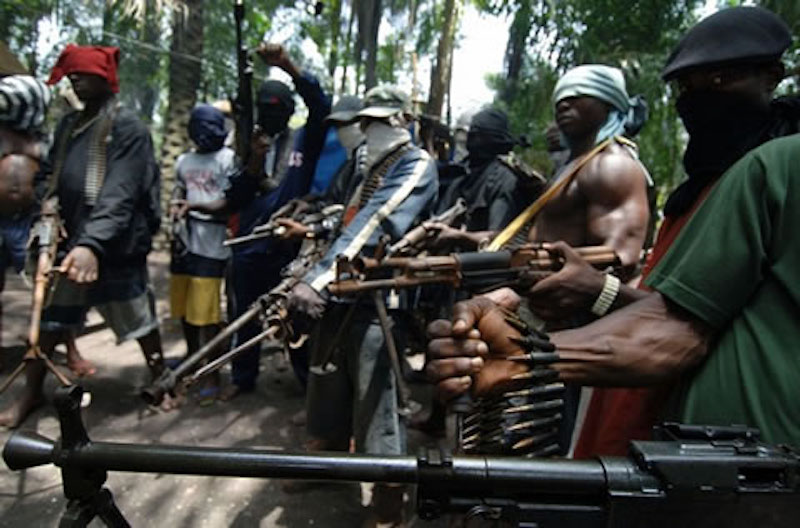
Even Bayelsa State, our most homogenous political home, has not been immune. The state has been turned into a dependent outpost. Political life there is often conducted under the shadow of Abuja. During elections, communities are militarized. Young people are paid paltry sums to snatch ballot boxes and intimidate their neighbours. The leaders who emerge from such processes rarely prioritize environmental remediation, health care, or education. They prioritize survival within the national political economy.

Why do we accept this? Part of the answer lies in a minority complex that has been cultivated over generations. We have been taught to believe that because we are numerically small and geographically dispersed across several states, we cannot set national terms. That belief is false. Our geographic position along the southern maritime border gives us leverage. Nigeria’s economy cannot function without the peace of our creeks. Yet we negotiate from a position of weakness because we lack a unified, non-partisan political command structure.

Other major ethnic blocs in Nigeria have developed cultural mechanisms that protect collective interests across party lines. They maintain consensus on key strategic questions and punish those who betray the collective. The Ijaw political house, by contrast, is fragmented. We are divided into Western, Central, and Eastern blocs. Internal jealousy and rivalry consume us. When an Ijaw son or daughter rises to prominence, it is sometimes their own people who are recruited to pull them down. This internal sabotage is a major reason we are treated as expendable by national political machines.

Our representatives in national assemblies and federal boards are often the most silent and compliant. They vote for policies that harm our region because they want to protect their personal seats and committee positions. We have forgotten the intellectual foundation of our struggle. Our fathers did not rely on muscle alone. They fought with logic and strategy.

Harold Dappa Biriye used constitutional arguments to demand minority rights during the pre-independence conferences. Isaac Adaka Boro presented a detailed economic manifesto during the twelve-day revolution, exposing the systematic underdevelopment of the Delta. The Kaiama Declaration of 1998 linked environmental justice with true federalism in a way that remains a model for strategic political thinking. Today, that intellectual tradition has been eroded by a culture of thuggery, praise singing, and the pursuit of quick money.

The social and economic costs of our political submission are visible everywhere. Schools sink into the mud. Primary health centres lack basic medicines. Women die in childbirth because there are no functional boats to transport them to urban hospitals. Rivers that once sustained us are coated with crude oil. Gas flares burn day and night, releasing toxins that cause cancers and respiratory diseases. In any functioning democracy, such environmental devastation would provoke electoral punishment. But our people accept ten-thousand naira, wear party uniforms, and return the same leaders to office.

This pattern is not only morally wrong. It is strategically suicidal. The global energy transition is underway. The world is moving away from fossil fuels. In a few decades, crude oil will no longer be the primary driver of the global economy. When that happens, the Nigerian state’s willingness to distribute minor rents, amnesty stipends, and pipeline contracts will evaporate. If we remain politically domesticated and economically dependent, we will be discarded once our resources lose value. We will be left with a ruined environment and a population unprepared for the modern economy.

Breaking this cycle requires a radical transformation of our political behaviour. It requires both immediate reforms and long-term institution building.
First, we must refuse to sell our votes for temporary relief. If politicians bring money during elections, take it because it is a fraction of your stolen wealth, but enter the voting booth and vote fiercely against them if they have not delivered real, systemic progress. The act of taking money and voting against the giver is not a moral ideal. It is a pragmatic tactic that recognizes the reality of survival while asserting political agency.

Second, we must create a culture of community accountability. Any Ijaw politician, elder, or youth leader who sells out the collective interest for personal gain must face social consequences. They should be stripped of traditional honours, excluded from community gatherings, and greeted with public disapproval rather than celebration. The cost of betrayal must be made higher than the reward offered by external actors.

We must also institutionalize our collective strength. The Ijaw nation needs a permanent, non-partisan political and economic council composed of our finest minds. This council should include intellectuals, legal experts, economists, and community builders from across the globe. Its mandate would be to define a multi decade Ijaw National Agenda that transcends party lines. Any Ijaw person entering politics should be bound by that agenda. Any external political force seeking our cooperation should be required to commit to its verifiable execution.

Again, we must build strategic alliances with other coastal minority groups. From Calabar to Badagry, the coastal communities share common interests in environmental protection, maritime economies, and regional development. A unified coastal voting bloc would create a political force that no national party can ignore. Such an alliance would also strengthen bargaining power for federal resource allocation and environmental remediation.

Fifth, we must shift our economic focus from pipelines to the blue marine economy. Our future lies in the ocean. We must invest in community owned industrial fishing fleets, deep sea shipping logistics, local shipbuilding yards, and aquaculture networks. We must develop port infrastructure and maritime training centres. Economic independence is the foundation of political courage. When our communities can fund their own schools, hospitals, and water systems through independent marine enterprises, we will no longer beg for crumbs.

Sixth, we must invest in education and leadership training. Political courage is not loud rhetoric. It is disciplined strategy. We must train a new generation of leaders who understand constitutional law, public finance, environmental science, and international trade. We must teach negotiation skills, coalition building, and institutional design. The Ijaw struggle must be intellectualized and professionalized.

Seventh, we must reclaim our narrative. For too long our story has been told by others. We must document our history, our legal claims, and our environmental evidence. We must use the courts, the media, and international forums to hold polluters and complicit officials accountable. We must turn our lived experience into verifiable claims that can be litigated and publicized.

Finally, we must practice disciplined solidarity. Political unity does not mean uniformity of opinion. It means a shared commitment to core strategic objectives. It means agreeing on red lines that cannot be crossed. It means supporting candidates who commit to the Ijaw National Agenda and sanctioning those who betray it.

The hour is late. The cost of our political naivety is visible in every polluted river, every jobless youth, and every broken promise. We cannot enter another election cycle with the same broken playbook. We must reject transactional politics and demand structural change. We must hold our leaders accountable and refuse to celebrate personal appointments that bring no collective benefit.

We must heal ourselves of this political Stockholm syndrome. We must stop loving the systems that destroy us and begin the difficult work of building lasting political infrastructure. The future of the Ijaw nation depends on our ability to transform our pain into strategic power. The water is watching. The spirits of our ancestors who resisted colonial domination are watching. We must rise, cleanse our minds of dependency, and stand with dignity. The era of last minute surrender must end. The time for strategic, sovereign Ijaw political courage has arrived.

Continue Reading

Opinion

Leadership in Africa: Forging a New Era of Self-Reliance, Unity and Global Relevance (Pt. 3)

Published

on

By

By Tolulope A. Adegoke

“True leadership in Africa is not the pursuit of power, but the courage to serve — to turn the pain of yesterday into the promise of tomorrow, to bind broken hearts into one destiny, and to raise a continent where every son and daughter can stand tall, not by pulling others down, but by lifting one another higher.” – Tolulope A. Adegoke, PhD

Building upon the foundational principles and practical pathways discussed in Parts 1 and 2, this continuation explores the deeper implementation strategies, institutional reforms, cultural shifts, and long-term vision required to translate African leadership into tangible, sustainable transformation. It addresses the realities on the ground while offering forward-looking, actionable recommendations that can help Africa move from potential to performance on both regional and global stages.

Institutional Reforms as the Backbone of Transformative Leadership

Visionary leadership without strong institutions is like a beautiful dream without a foundation. Africa’s progress depends on building institutions that are resilient, transparent, and people-centred.

Leaders must prioritise civil service reform, judicial independence, and anti-corruption mechanisms that are not only punitive but preventive. For example, Rwanda’s use of performance contracts (imihigo) for public officials has created a culture of accountability and results. Similarly, Ghana’s strong electoral commission and relatively independent judiciary have helped sustain democratic stability. These models show that when institutions are strengthened, leadership becomes less about individual charisma and more about systemic effectiveness.

Regional institutions such as the African Union, ECOWAS, SADC, and the East African Community must also be reformed. They need greater financial autonomy, faster decision-making processes, and clearer enforcement mechanisms. The African Union’s current efforts to reform its Peace and Security Council and operationalise the African Standby Force are steps in the right direction, but they require consistent political will and adequate funding from member states.

Cultural and Mindset Transformation

Leadership that builds Africa must also transform mindsets. Many of the continent’s challenges are rooted in colonial-era thinking, dependency syndromes, and a culture of short-termism.

Progressive leaders should invest in cultural renewal programmes that celebrate African excellence, innovation, and resilience. This includes supporting the creative industries — Nollywood in Nigeria, Afrobeats music, and contemporary African literature — which are already projecting positive African narratives globally. Educational systems must move beyond rote learning to foster critical thinking, ethical reasoning, and entrepreneurial spirit.

Youth leadership development is particularly crucial. With over 60% of Africa’s population under the age of 25, the continent’s future depends on preparing young people not just for jobs, but for leadership. Initiatives like the African Union’s Youth Agenda and national youth service programmes should be expanded and made more impactful.

Economic Transformation and Self-Reliance in Practice

True self-reliance requires deliberate economic restructuring. Leaders must champion value addition in agriculture, mining, and natural resources. Instead of exporting raw cocoa, cotton, or crude oil, African countries should invest in processing facilities that create jobs and capture more value domestically.

The African Continental Free Trade Area (AfCFTA) offers a historic opportunity. When fully implemented, it can boost intra-African trade, reduce dependence on external markets, and create new industries. Leaders who actively remove non-tariff barriers, harmonise standards, and invest in cross-border infrastructure will be remembered as the architects of Africa’s economic renaissance.

Public-private partnerships (PPPs) should be strengthened, with clear frameworks that protect national interests while attracting responsible investment. Countries like Morocco and Ethiopia have shown how strategic industrial policies can attract foreign direct investment while building local capacity.

Global Relevance: Africa as a Solution Provider

Africa must stop seeing itself solely as a recipient of global solutions and begin positioning itself as a contributor. The continent’s vast renewable energy potential, youthful population, and rich biodiversity give it unique advantages in addressing global challenges such as climate change, food security, and digital innovation.

Leaders who understand this will invest in research and development, patent African innovations, and engage confidently in global forums. The success of African pharmaceutical companies during the COVID-19 pandemic and the growth of African tech unicorns demonstrate that the continent can compete and lead when given the right environment.


A Balanced and Hopeful Conclusion

Africa stands at a historic crossroads. The challenges — poverty, inequality, climate vulnerability, and governance gaps — are real and significant. Yet the opportunities — a youthful population, abundant natural resources, cultural richness, and growing regional integration — are even greater.

Leadership remains the decisive variable. When leaders rise above narrow interests to serve the collective good, Africa does not just survive — it thrives and offers the world new models of resilience, innovation, and inclusive growth.

The path forward requires a new covenant: between leaders and citizens, between nations and regions, and between Africa and the global community. This covenant must be rooted in trust, mutual accountability, and shared vision. With the right leadership — courageous, ethical, inclusive, and strategic — Africa can forge a new era of self-reliance, unity, and global relevance.

The question is not whether Africa can rise. The question is whether its leaders, supported by an awakened citizenry, will summon the will, wisdom, and courage to make that rise unstoppable. The world is watching, and history is waiting to record the choices made in this decisive decade.

Africa’s story is still being written. With visionary leadership, it can become one of triumph, dignity, and global excellence.

Dr. Tolulope A. Adegoke, AMBP-UN is a globally recognized scholar-practitioner and thought leader at the nexus of security, governance, and strategic leadership. His mission is dedicated to advancing ethical governance, strategic human capital development, resilient nation building, and global peace. He can be reached via: tolulopeadegoke01@gmail.comglobalstageimpacts@gmail.com

Continue Reading

Opinion

A Familiar Kind of Tragedy by Adeoye Inioluwa

Published

on

By

The recent attacks on school communities in Oyo and Borno states have once again forced the country into a familiar emotional cycle — shock, grief, statements, and questions that briefly dominate public attention before gradually fading into silence.
What makes this cycle more unsettling each time is not only the incident itself, but the growing sense that it no longer feels entirely unexpected.
No society is completely free of insecurity. That much is understood. But what often defines public confidence is not the absence of incidents; it is the clarity, consistency, and visibility of response over time.
People do not only want to hear that action will be taken. They want to understand what has changed since the last time similar words were spoken.
Schools are supposed to represent safety at its most basic level. They are meant to be spaces where children are temporarily removed from the uncertainties of the outside world, not exposed to them. So when violence reaches those spaces, it does more than disrupt learning — it disrupts trust.
In the immediate aftermath, responses are often swift in tone. Condemnation is expressed. Sympathy is extended. Assurances are made. These reactions are necessary, but the challenge lies in what follows after the statements are made.
Because for those directly affected, the consequences do not end when public attention moves on.
There is also a broader national concern that emerges in moments like this: the increasing difficulty of distinguishing isolated incidents from a pattern. When similar events recur across different locations and times, they begin to reshape how communities perceive safety itself.
At that point, the issue is no longer only about response, but about prevention — and more importantly, about whether prevention is visibly evolving in a way that matches the scale of concern.
Citizens are not only listening for reassurance. They are watching for evidence that lessons from previous incidents have been fully translated into action. This includes how vulnerable spaces are secured, how intelligence is applied, and how quickly gaps are identified before they are exploited again.
Without that visible progression, reassurance risks becoming routine, and routine reassurance gradually weakens public confidence.
There is also a quiet emotional cost that is rarely acknowledged. Each new incident does not erase the memory of the previous one; it adds to it. Over time, this accumulation creates a national fatigue — a troubling adaptation to repeated distress.
In such a climate, the most important responsibility is not only to respond after events, but to reduce the conditions that allow them to repeat.
Because ultimately, the measure of any serious response is not how firmly it is stated in moments of crisis, but how clearly it reshapes what happens next.
And if that shift is not visible, then the unanswered questions will continue. Not out of impatience, but out of necessity.

Continue Reading

Trending