
Featured
Tributes to Mallam Umaru Altine: First Elected Mayor of Enugu Municipal Council (1952–1958)

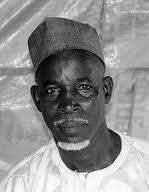

By Hon Femi Kehinde
Benjamin Cardozo, an American Jurist and Philosopher has said- “history in illuminating the past, illuminates the present and in illuminating the present, illuminates the future”
The story of Nigeria is a deep, intriguing and enchanting metaphor. Its glorious past had contradicted sharply with its current political corundum. A Fulani man from Sifawa in Sokoto Caliphate- Mallam Umaru Altine, had in 1952 become elected as the first Mayor of the City of Enugu, the heart land and heart beat of the Igbo Nation.
He was in office till 1958.
Enugu is the capital of the old Eastern Region of Nigeria. Umaru Altine was a product of Dr. Azikiwe’s political Nationalistic and cosmopolitan outlook. He was a Pan Nigerian.
His faith in one Nigeria, was unimpeachable, unshakable and unquestionable. He was Altine’s guide, pathfinder and mentor.
Umaru Altine, a cattle dealer, had left the Sokoto province to sojourn in Enugu.
In Enugu, he married an Igbo Lady- Esther, and was President of the Enugu branch of the Youth wing of the National Council of Nigeria and the Cameroons (NCNC).
Umaru Altine- a completely detribalised Nigerian, became a prominent member of Zik’s NCNC. A scion of the Sokoto Caliphate, he became the first elected Mayor of Enugu.

As a descendant of Utman Danfodio, Altine could have equally emerged as Sultan of Sokoto, one day, but he preferred the truculent life of trading, travel and adventure. He had joined the Army and worked briefly with the Railways.
He had played politics in the Tambuwal District of the Sokoto Province, before his eventual sojourn in the Coal city of Enugu. He was handsome, always dressed impeccably and had a magnetic touch.
In Enugu, he wore the popular babariga, with a turban, and on some occasions he wore Suits as the function of office, demanded.
In Enugu he went to church, if his duties as Mayor demanded and also went to do the kick off at Stadia as Mayor, whenever invited.
Without loosing his identity, he smoked, loved the native igbo Nsala Soup with fresh fish, and according to his Enugu Igbo wife- Esther, he had a high sense of personal hygiene and a good command of English, Fufude, hausa and Igbo languages.
Umaru Altine’s feats, could have been unattainable, but for the encouragement and supports of Dr Nnamdi Azikiwe, leader of the NCNC- a consummate politician, cosmopolitan, urbane and pan Nigerian.
Azikiwe wanted to use Altine’s story, or entry into Enugu politics, to teach a lesson, and tell a story of a Nigeria, that could only grow and prominently too, without ethnic, religious or tribal divides.
Azikiwe’s life, had been equally chequered.
He was born on the 16th of November 1904 in Zungeru, in present day Niger State to Obed-Chukwuemeka Azikiwe and Rachel Chinwe Ogbenyeanu. Obed, was at the time, a clerk in the British Colonial Government.
Zik started his early elementary school in Zungeru, and ended up in Onitsha where his father had sent him, to enable him speak and understand the indigenous language- Igbo.
He attended Hope Waddell Training College Calabar and ended up at the Methodist Boy’s High School in Lagos, for his Secondary education.
In Lagos, he courted the friendships of children of prominent Yoruba aristocrats like George Shyngle, son of Egerton Shyngle, Francis Cole and Ade Williams (a son of the Akarigbo of Remo). These connections were later of immense benefits to his future political career.
Azikiwe later travelled to America for his University education and obtained various degrees from Washington DC, the University of Pennsylvania and Colombia University, respectively, before returning to Nigeria in 1934.
He became an active member of the Nigerian Youth Movement (NYM), Nigeria’s foremost Nationalist movement and supported Adeniran Akisanya, as the NYM candidate, for a vacant seat in the Legislative Counsel in 1941, that had been vacated by Sir Kofo Abayomi, who had resigned from his position to pursue further studies in Ophthalmology in the United Kingdom.
The leadership of the NYM, had supported Ernest Ikoli an Ijaw man to succeed their former President- Kofoworola Abayomi. Azikiwe, disappointed by this choice, resigned his membership of the NYM and alleged the leadership, of disdain against the Ijebu Yoruba members.
Interestingly, Obafemi Awolowo, Samuel Ladoke Akintola and a host of other youths, supported Ernest Ikoli, against the choice of Adeniran Akisanya, by Dr. Nnamdi Azikiwe.
Akisanya, bemoaning the loss, described Awolowo and Akintola as “misguided youths.” He later became the Odemo of Isara. Zik became a Co founder of the NCNC in 1944 and became its Secretary General in 1946 with Dr. Herbert Macauley as its President.
He played Lagos politics and his newspaper The West African Pilot was very prominent.
His militants in the Zikist Youth Movement led by Osita Agwuina were Raji Abdala, Kolawole Balogun M.C.K Ajuluchukwu and Abiodun Aloba, whose pen name was Ebenezer Williams.
In the politics of Lagos and its environs, the Igbos and its acolytes have always held sway. Alhaji Adegoke Adelabu (Penkelemesi), Chief Theophilus O.S Benson, Chief Adeniran Ogunsanya, Chief Olu Akinfosile, Chief Richard Akinjide, were distinguished and notable Yoruba politicians in their life-time, and were equally close confidants of the late Dr. Nnamdi Azikwe. T.O.S Benson (Nigeria’s first Minister of Information) had earlier won the Yaba Federal seat for the NCNC and in 1964 ran again as Independent Candidate, to defeat his former Constituency Secretary, Maduagwu Moronu, an Oba man of the Igbo clan; as a candidate for Yaba Federal seat.
Zik won a seat to the Western Regional House of Assembly representing Lagos and would have been the first Premier of the Western Region in 1952, already coasting home to victory, if the Action Group had not bousted its memberships by supports of Ibadan’s People’s party, Ondo Improvement League the Out-Edo People’s Party and other splinter groups to secure a majority in the Western Region House of Assembly in 1952 following the advent of the Macpherson Constitution of 1951.
Ibadan political maverick- Adegoke Adelabu, Dr. Olorunimbe and TOS Benson, were his ardent supporters. As a result of this loss, he returned back to the Eastern Region by displacing the Ibibio man Prof. Eyo Ita who as Majority leader, in the Eastern Region House of Assembly, was leader of government business and Azikiwe succeded him, by being elected in 1954 as Premier of the Eastern Region.
He became Governor General on the 1st of October, 1960 with Abubakar Tafawa Balewa as Prime Minister,- the first Nigerian appointed to the Privy Council of the United Kingdom and the first President of Nigeria in 1963 when Nigeria became a Republic.
In Enugu, a Northerner- Babasule was equally prominent in politics about this time and was President of the Stranger Elements Movement in Enugu.
He synergised and supported Altine’s cause.
In 1956, a group in the NCNC had also presented D. T Iyang as a candidate to run against Altine, in the election to the Municipal Council. He was easily trounced by Altine to continue in office as Mayor of Enugu Municipal Council. Interestingly, he won thus re-election as an Independent candidate.
He was also at this time, still very close to the Sultan- Sadiq Abubakar who was the Sultan of Sokoto for 50 good years- (1938 to 1988).
Umaru Altine grew up in the Sultan’s Palace. On the 10th of November 1956, Umaru Altine was elected as President of the NCNC branch in Enugu without any opposition. He was in office, comfortably and confidently until 1958.
In the Western Region, Umaru Altine had a soul mate in Emmanuel Ebubedike an Igbo man from Ozubulu Town, in present day Anambra State.
He was the Honourable member representing Ajeronmi/Ife Lodun/Badagry Constituency in the Western Region House of Assembly.
In May 1962, he was the member, who on the day of the crises in the House of Assembly, prominently pitted his support for the continuation in office of Samuel Lodoke Akintola as Premier of the Western Region.
The crises that erupted on the floor of the Parliament, eventually led to the dissolution of the Parliament and government of the Western Region and the eventual set up of the Majekodunmi Emergency Administration, between May 29 1962 and December 31 1962 by the Federal Government and the Tafawa Balewa Administration.
Dr. Moses Adekoyejo Majekodunmi, asides from being a member of the Senate of the National Assembly was also Tafewa Balewa’s friend, confidant and private medical doctor.
Ibadan, as a result of its rising growth, economic development, and its accommodating nature, became a colony for large migrants population. The Western Igbos settled in Mokola, Ekotedo and Inalende, in the early 1920’s whilst Sabon- gari was planned in 1917 and completed in 1920. The overcrowding of Sabon- gari, originally meant for the Hausas, led to the development of Mokola, to also house, Nupe and Igbira migrants, from the Northern Nigeria. Late Waziri Nupe, Alhaji Bello Muhammed Bagudu, grew up and settled in Mokola, Ibadan, until his later life, when he relocated back to Bida. He was a member of Ibadan Municipal Council in the 1950s. His son, Senator Isa Mohammed, who also grew up in Ibadan, attended Igbo Elerin Grammar school, Ibadan, founded by the late Ibadan Monarch – Oba Odugade Odulana. He was a Senator, representing Niger Central Constituency of Niger State, in the National Assembly, between 1999-2007.
As an interesting corollary, a non-Ibadan native, J.M Johnson (1912-1987), born in Lagos of Lafiaji/Brazilian extraction, returned to civil life in Ibadan after the Second World War and became a Bank Clerk and later a business man and eventually joined Politics, where he got elected into the Ibadan District Council and later became the first and only ever non-indigene to serve as Chairman of the council.
From his Political life in Ibadan, he became a Federal Minister in 1956, and served in Internal affairs, Labour, Social welfare and Sports, also acting twice as the Prime Minister in the N.C.N.C and N.P.C. Coalition Government. He was instrumental to the first World Boxing Title fight in Africa, which took place in Ibadan, Western Nigeria, between Tiger and Fulman in 1963 at the Liberty Stadium. In the same year (1963), he retired from Politics by declining to contest in the General Elections
Nigeria is a very complex country. Our problems did not start yesterday it started about 1894. Lord Lugard came here as Major Lugard and he was not originally employed by the British Government, but employed by companies
He was first employed by the East Indian Company, then by the Royal East Company, then by the Royal Niger Company. It was from the Royal Niger company, that he transferred his services to the British Government.
The interest of the Europeans in Africa and indeed in the enclaves later known as Nigeria was purely economic and it is still economic.
Nigeria was created as British spheres of interest for business.
in 1898, Lord Lugard formed the West African Frontier force, initially with 2000 soldiers.
Lugard became a Lord and imperialist.
When Lugard formed the West African Frontier Force, about 90% of them were from the Middle belt in Northern Nigeria.
His dispatches to London, between 1898 to 1914 were interestingly amazing.
He sent a number of dispatches to London, which led to the amalgamation of 1914.
The Order-in-Council was drawn up in November 1913, signed and came into force in January 1914.
In those dispatches, Lugard said a number of things, which are the root causes of Yesterday and today’s problems.
Mary Shaw, a journalist, was Lugard mistress, and she actually suggested to him, in the amalgamation of the Northern and Southern protectorates, the name- Nigeria.
The British needed railways, from the Coast to the North in the interest of British business.
The Amalgamation of the South, not of the people, with the North, became of crucial importance to British business interest.
Benin was conquered in 1896. It made the creation of the Southern protectorate in January 1 1900, possible. Sokoto was not conquered, until 1903. After the conquest of Sokoto, the British were then in a position to create the Northern Protectorate.
Unfortunately, what the British amalgamated in 1914, was the amalgamation of the administration of the North and South and not its people.
Obafemi Awolowo had called Nigeria- “a mere geographical expression” while Sir Ahmadu Bello called Nigeria- “a mistake of 1914.”
In furtherance of the British interest, the British started railway services from Iddo Lagos in 1896 and it got to Ibadan in March 1901, when the Dugbe Train Station, was opened, and from there, into the North, exiting at Nguru then known as the Lagos to Nguru line.
As a result of the discovery of Coal in Enugu in 1906, by British engineer Mines Albert Kitson, the British developed a city port, known as Porthacourt in 1906 and developed a rail line to Enugu for evacuation of coal to the Port from Enugu mines, in 1913.
As at 1956 there were about 8000 miners in Enugu, Coal was then like crude oil. There are barely a few miners now in the Coal city.
The Porthacourt rail line traverses Enugu and ended or exited at Kaura Namoda in Maiduguri.
Porthacourt was actually named after Lord Lewis Vernon Harcourt, former Secretary of State for the colonies- (1910 to 1915).
Both Lagos to Nguru and Porthacourt to Kaura Namoda has a total spanage of 3506kms of narrow rail track.
In fondest memory of the first ever Mayor of Enugu, Umaru Altine, Agu Gab, in his capacity as Chairman Enugu North Local Government in 2004, invited the Umaru Altine family to Enugu, to celebrate the achievements of their late father.
According to Agu- “our history before that tune did not reflect its towering achievements in terms of Nigerian unity. I was going to name a public institution after him, but time did not allow for that…, ” but was glad to note – “a street was named after the late Mayor somewhere in the coal camp in the city of Enugu during the first Republic” Alhaji Umaru Altine, certainly deserves more.
Despite the history of its birth in 1914, its hiccups and challenges and leadership deficits coupled with its inability or refusal to restructure, despite strident and trenchant calls, Nigeria has certainly come to stay, and in fondest memory of the likes of pan Nigerians like Mallam Umaru Altine, there may be need to re-echo with relish and undisguised affection, and deep nolstagia Nigeria’s old National anthem –
Nigeria we Hail thee
Our own dear native land
Though TRIBES and TONGUE may differ
In brotherhood we stand
Nigerians all, are proud to serve
Our sovereign Motherland…
(Adopted as Nigeria’s National Anthem composed in 1960 by Frances Berda and relinquished in 1978.)
May the soul of Mallam Umam Altine, continually find peaceful repose with the Lord.
Article by-
HON (BARR.) FEMI KEHINDE,
FORMER MEMBER, HOUSE OF REPRESENTATIVES, NATIONAL ASSEMBLY, FROM 1999 TO 2003, REPRESENTING AYEDIRE/IWO/OLA-OLUWA, FEDERAL CONSTITUENCY OF OSUN STATE
& PRINCIPAL PARTNER,
FEMI KEHINDE & CO. (SOLICITORS),
84, IWO ROAD, IBADAN.





Alleged Coup: Court Orders DSS to Probe VDM over Leaked Trial Video

Glo Extends “Borrow Me Credit” Services for Customer Inclusion

Senate Passes Bill Establishing State Police in Nigeria

US Govt Releases Names of Terrorism Financiers Amid Growing Insecurity

How I Made Buhari President in 2015 – Amaechi

Presidential Ambition: Is Donald Duke a Spoiler?

Insecurity: Why Tinubu Must Wake Up
Senate Passes Bill Establishing State Police in Nigeria
US Govt Releases Names of Terrorism Financiers Amid Growing Insecurity
Glo Extends “Borrow Me Credit” Services for Customer Inclusion
Alleged Coup: Court Orders DSS to Probe VDM over Leaked Trial Video
-
 National7 hours ago
Senate Passes Bill Establishing State Police in Nigeria
-
 World12 hours ago
US Govt Releases Names of Terrorism Financiers Amid Growing Insecurity
-
 News4 hours ago
Glo Extends “Borrow Me Credit” Services for Customer Inclusion
-
 National3 hours ago
Alleged Coup: Court Orders DSS to Probe VDM over Leaked Trial Video