Connect with us

Featured

COVID-19 Wouldn’t Have Spread If Buhari Had Shut Airports, Borders on Time, Says Sanwo-Olu

Published

on

Lagos State Governor, Babajide Sanwo-Olu, has said the delayed closure of the country’s borders, seaport, and airports, including the failure of returnees to self-isolate, caused the spread of COVID-19.

He said this during an Instalive interview with CNN on Wednesday.

According to the governor, Lagos was prepared to curb the spread of COVID-19 but had to wait for the Federal Government to shut airport, seaport and land borders.

Nigeria recorded its first COVID-19 death on February 27, but President Muhammadu Buhari officially shut the country’s airports, seaports, and borders on March 29.

As of March 29 when president shut the country’s airports, seaports, and borders, Nigeria had recorded 111 confirmed cases of COVID-19 and one death.

When asked about the state’s preparedness, Sanwo-Olu said, “Given the population that we have, we are a bit ahead in terms of preparation, as a state, but we are sub-national. We couldn’t give directives as to when Nigeria should close the airport, seaport, or in-land border.

“We don’t have control over that. We were just wrapping up our own facilities and the training officials, and that was why we were able to track the index case over two months now.

“In the country, 33 or 34 states have had one case or the other. For us, it is a double X thing. The population is huge, so we will be a fool of ourselves to just think that it is going to be a spike and we will be out of it. Because we did not close all of the importations early and people were not also doing full isolation when they came, it was really difficult for us to do contact tracing before it got to the community – which is where we are now.”

The governor also reiterated that Lagos may be recording large cases “soon”, adding that over 7000 samples had been tested in the state.

The Punch

Continue Reading
Click to comment

Leave a Reply

Your email address will not be published. Required fields are marked *

Featured

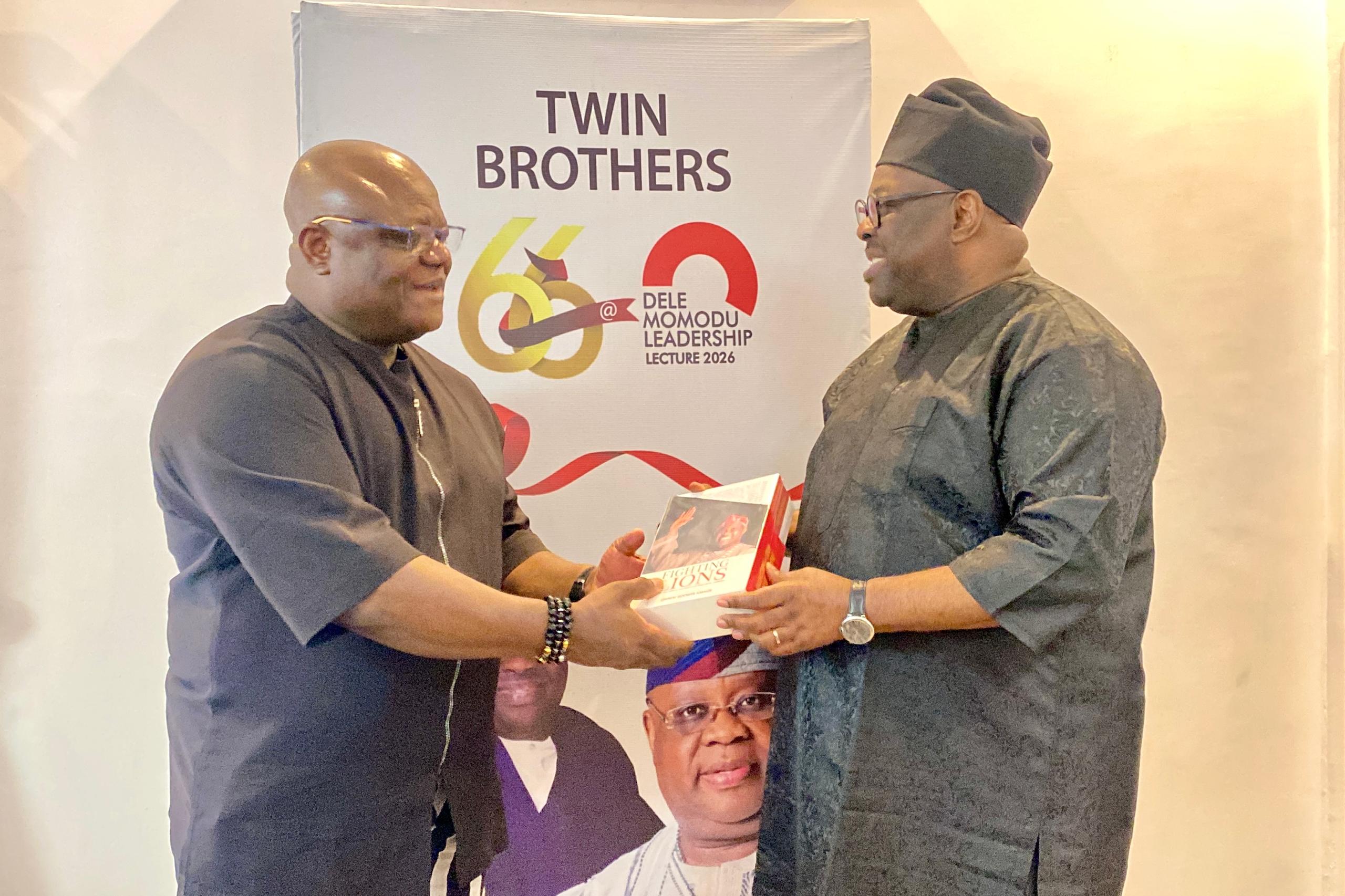
Prof. Abiodun Adeniyi Visits Dele Momodu Leadership Centre, Hails Founder on Remarkable Journey, Achievements
Published

on

By

By Shakira Akintola

It was an afternoon of reflection, intellectual exchange and mutual respect at the Dele Momodu Leadership Centre in Ibadan on Saturday as the Vice Chancellor of Baze University, Professor Abiodun Adeniyi, paid a courtesy visit to veteran journalist, media entrepreneur and public intellectual, Aare Dele Momodu.

The conversation, which traversed journalism, politics, literature, scholarship and leadership, evolved into a compelling discourse on legacy, with Professor Adeniyi encouraging Momodu to document the wealth of knowledge and experiences he has accumulated over decades of public life.

According to the academic, while many people make an impact during their lifetime, only a few intentionally preserve their ideas for generations yet unborn.

“One of the most difficult things for anybody to do, sir, is to think consistently and put your thoughts down,” Adeniyi observed. “People may leave this world, but their thoughts remain. Even in those days when it was not possible to document ideas the way we do today, generations still found ways to preserve them because of the substance they contained.”

He noted that Momodu’s influence extends beyond journalism and politics, saying his experiences deserve to be captured in books and memoirs that will continue to educate and inspire future generations.

Responding, Momodu reiterated that while politics remains an important aspect of his life, it has never defined the totality of his purpose.

“Politics for me is part-time,” he said. “If you have a voice, then use it well.”

He also reflected on his formative years in Ile-Ife, recalling how growing up in the ancient town exposed him to some of Africa’s greatest literary minds, particularly Nobel laureate Professor Wole Soyinka.

“My first encounter with Soyinka was political in nature,” Momodu recalled, explaining how reading the works of renowned African writers helped shape his worldview and deepen his appreciation for literature, public discourse and leadership.

The discussion later shifted to scholarship, with Momodu revealing that he still hopes to pursue a doctoral degree.

“I am hoping to do a PhD one of these days,” he said. “A lot of people say I’m not a journalist anyway, but I try my best to remain a writer, even if not a career journalist.”

While applauding the aspiration, Professor Adeniyi encouraged him to view academic fulfilment beyond the acquisition of certificates.

“I’m not discouraging you from doing a PhD,” he said. “But there are so many routes to it. The reason why you want to do a PhD should not simply be because of the certificate. It should be professional.”

The Vice Chancellor argued that Momodu’s decades of international exposure already constitute a unique body of knowledge that deserves to be documented.

“I was telling your staff when we were going round that you are one of the most travelled Nigerians,” Adeniyi said. “One of the best ways to be educated as a human being is travelling because it is very exposing; it is civilising. You have been exposed to all these opportunities. The plan is not to forget to document them.”

He described Momodu’s remarkable journey—from journalism and publishing to business, diplomacy and public engagement—as an invaluable repository of experiences capable of enriching scholarship and inspiring younger generations if carefully preserved.

Momodu disclosed that he has already begun taking steps in that direction.

“I have someone working on my biography now,” he revealed, drawing an approving response from the Vice Chancellor, who described the decision as timely and significant.

The exchange also underscored the enduring relevance of journalism and ideas in shaping society. Adeniyi praised Momodu’s ability to remain influential across different spheres of national life, while Momodu maintained that the greatest responsibility of anyone blessed with influence is to use it in service of society.

The visit concluded with Momodu expressing appreciation to Professor Adeniyi for making the journey to Ibadan despite the heavy traffic before inviting guests at the Leadership Centre to engage the scholar during an interactive question-and-answer session.

More than a conversation between two accomplished Nigerians, the encounter served as a thoughtful reminder that while achievements may define a lifetime, it is the deliberate preservation of ideas, experiences and lessons that ultimately secures an enduring legacy.
Continue Reading

Featured

Nigeria Needs More Taxpayers, Not Higher Taxes, Says Finance Minister Taiwo Oyedele

Published

on

By

The Minister of Finance and Coordinating Minister of the Economy, Taiwo Oyedele, on Thursday said Nigeria’s revenue challenge lies in expanding the tax net rather than increasing tax rates, stressing that the country needs more taxpayers, not higher taxes.

Oyedele spoke in Abuja while receiving the leadership of the Chartered Institute of Taxation of Nigeria during a courtesy visit to the Federal Ministry of Finance at the end of the Institute’s maiden National Tax Awareness Day, which featured a road walk and taxpayer sensitisation at Wuse Market as well as a visit to the headquarters of the Nigerian Revenue Service.

The awareness campaign coincided with one year since President Bola Tinubu signed Nigeria’s landmark Tax Reform Acts into law on June 26, 2025.

Commending the Institute for supporting the Federal Government’s tax reform agenda, Oyedele said public misunderstanding of taxation remained one of the biggest obstacles to improving compliance. According to him, many Nigerians still believe that whenever the government talks about taxation, it is simply seeking to collect more money from citizens.

“We are still not getting enough revenue from taxes; it is not about increasing taxes, but making sure that those who are supposed to pay taxes pay.

We want to promote fairness in tax administration,” he said.

The minister added that getting Nigeria’s tax system right would have a transformative impact on national development. He also urged the Institute to establish annual awards to recognise the country’s most compliant taxpayers as a way of encouraging voluntary tax compliance.

Earlier, the tax awareness campaign commenced at Wuse Market, where the 17th President of the Chartered Institute of Taxation of Nigeria, Innocent Ohagwa, said the initiative was introduced to bridge the information gap surrounding the country’s tax reforms and improve voluntary compliance.

He explained that although the reforms had been in force for one year, many Nigerians were still uncertain about the changes and how they would affect businesses and individuals.

“The laws have been signed, implementation has begun, yet many taxpayers and stakeholders are still grappling with what has changed, what remains the same, and how these provisions affect their businesses and personal affairs,” he said.

According to Ohagwa, widespread misconceptions have continued to fuel anxiety, with some people believing the reforms introduced new taxes across all aspects of economic activity, while others assume they were designed solely to raise government revenue.

He, however, said the reforms contain significant reliefs and incentives for both individuals and businesses. Among the benefits, he said, individuals can now claim rent relief of up to 20 per cent of annual rent paid, subject to a maximum of N500,000, while essential goods and services, including food, education, healthcare, electricity transmission, and non-oil exports, now enjoy zero-rated Value Added Tax treatment.

He added that compensation for loss of employment or personal injury now attracts higher tax exemption thresholds. For businesses, Ohagwa said companies with annual turnover not exceeding N100m and fixed assets of not more than N250m are exempt from Companies Income Tax, Capital Gains Tax, and the Development Levy.

“This means thousands of small businesses can now reinvest in growth, job creation, and innovation,” he said.

He added that targeted tax incentives had also been introduced for agriculture, aquaculture, dairy production, cocoa processing, and animal feed manufacturing, while eligible investors could benefit from tax credits under the Economic Development Incentive.

Despite the incentives, the CITN president reminded taxpayers that compliance remained a legal obligation.

“Compliance is not a burden; it is a civic duty. It is our collective contribution to nation-building. And taxation works best when there is trust — taxpayers must fulfil their obligations, while the government must uphold accountability, transparency and the effective use of public resources,” he said.

He urged traders, entrepreneurs, and business owners to obtain Tax Identification Numbers, keep proper records, file accurate returns on time, and seek professional guidance from the Nigerian Revenue Service, the FCT Internal Revenue Service, or members of the Institute whenever necessary.

Explaining the rationale for the awareness campaign, Ohagwa said the Institute approved an annual National Tax Awareness Day after observing that many Nigerians remained uninformed about the reforms despite ongoing sensitisation.

He said Wuse Market was deliberately chosen because it represented one of the country’s key grassroots commercial hubs where taxpayer education was most needed, adding that the campaign was held in June because it coincides with the peak filing period for many corporate taxpayers.

After the market sensitisation, the CITN delegation proceeded to the headquarters of the Nigerian Revenue Service, where both organisations reaffirmed their commitment to strengthening tax awareness, voluntary compliance, and the implementation of Nigeria’s tax reforms.

Receiving the delegation on behalf of the Executive Chairman of the NRS, Dr Zacch Adedeji, the Executive Director, Finance and Corporate Services, Mohammed Abubakar, described the occasion as significant because it marked one year since the signing of the country’s landmark tax reform legislation.

“That historic milestone signalled the beginning of a new era in Nigeria’s tax administration, one anchored on simplicity, fairness, transparency, efficiency, and service delivery,” he said.

According to Abubakar, the reforms are intended to build a tax administration system that is trusted, technology-driven, and responsive to the needs of taxpayers and businesses.

He added that sustainable revenue mobilisation depends not only on enforcement but also on public awareness and confidence in tax institutions. “Taxpayers are more likely to comply when they understand their obligations, appreciate the value of taxation and have confidence in the institutions administering our tax laws,” he said.

The visit also highlighted the Service’s digital transformation agenda, with officials pointing to initiatives such as Rev360 and other technology-driven platforms aimed at delivering more efficient tax administration.

Also speaking, the Group Director, Medium Tax Group, Dr Gbenga Daniel, said the NRS would continue collaborating with professional bodies to deepen taxpayer education and improve service delivery.

“The Nigerian Revenue Service values its longstanding partnership with CITN. Together, our institutions share a common vision of improving tax administration and fostering voluntary compliance for national development,” he said.

The reception brought together Executive Directors of the NRS, members of the CITN Governing Council, senior management staff, tax professionals, and industry stakeholders before the delegation proceeded to the Federal Ministry of Finance for the courtesy visit, where Oyedele urged Nigerians to embrace the country’s evolving tax system through greater compliance rather than misconceptions about higher taxation.

In June 2025, President Bola Tinubu signed four sweeping tax reform bills into law, including the Nigeria Tax Act and related statutes that together overhaul decades-old tax statutes and modernise the country’s tax system.

The Punch

Continue Reading

Featured

Hardship: Remi Tinubu Asks Poor Nigerians to Start Akara, Roasted Corn Business

Published

on

By

Wife of the President, Senator Remi Tinubu, has urged economically disadvantaged Nigerians to consider small businesses such as selling akara, roasted corn and kulikuli as viable sources of income, saying they require little capital to start and can help families cope with the country’s economic challenges.

She gave the advice after hosting the wives of the 36 state governors in Abuja, where she highlighted empowerment programmes and financial support provided through her office to assist vulnerable Nigerians.

According to the First Lady, her interventions are centred on providing grants rather than loans to enable beneficiaries to establish small-scale businesses without the burden of repayment.

“We’re trying to give hope, and to start an akara business doesn’t take a lot of money. To start roasting corn… somebody even said about grants, you see, they’re saying that kulikuli doesn’t take much. We didn’t give them a loan; we gave it to them as a grant,” she said.

Senator Tinubu said her office has continued to support Nigerians through various empowerment initiatives designed to improve livelihoods and promote self-reliance.

“So we’ve encouraged Nigerians as best as we could. What is within our hands, I have given, and I keep giving, and those are the things we’ve done,” she added.

The First Lady also outlined some of the financial interventions she has personally supported, including ₦2 billion for tuberculosis treatment, N1 billion for breast cancer interventions and N500 million to address food malnutrition.

“I remember giving for TB when I heard there’s so much TB cases, I gave two billion (naira). To breast cancer, I gave a billion (naira). To food malnutrition, I gave half a billion (naira),” she said.

She added that her office has also supported programmes in agriculture, education, social investment and digital skills development, including scholarships and ICT training in collaboration with the National Information Technology Development Agency (NITDA).

According to her, the interventions are intended to complement the Federal Government’s efforts to improve the welfare of citizens and create more economic opportunities.

Senator Tinubu also appealed to Nigerians not to lose hope despite the country’s economic difficulties, arguing that negative narratives have worsened public anxiety.

“The narrative has really changed. The average man is supposed to have hope. So I like the idea that Mr. President said this is the Renewed Hope Agenda.

“We have to renew our hope. They don’t give up. We’re a very proud nation,” she said.

Continue Reading

Trending
