Connect with us

Featured

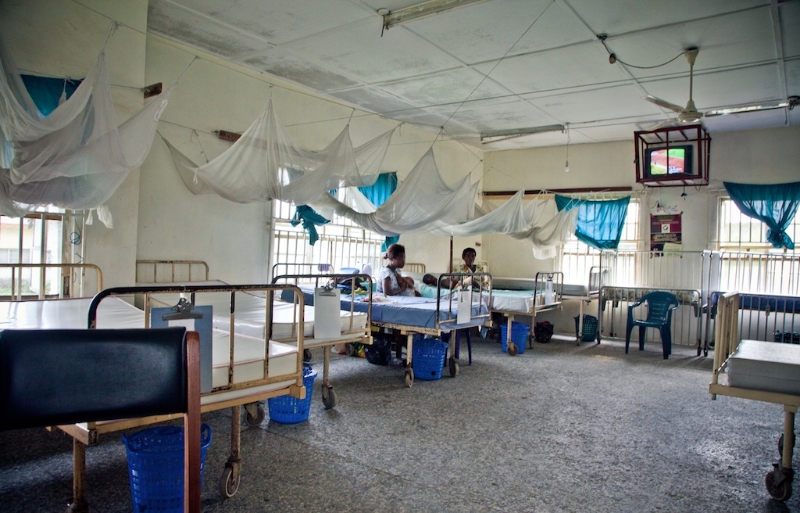
Doctors Reject FG’s Plan to Invite Chinese Medical Team

Published

on

The Nigeria Medical Association (NMA) has rejected the Federal Government’s proposed invitation of an 18-man Chinese medical team to support the country’s fight against Coronavirus.

The President, Francis Faduyile, in a statement Sunday said the move is a misplaced priority. He described it as “a thing of embarrassment to the membership of the Association and other health workers who are giving their best in the fight against Covid-19 pandemic under deplorable working conditions.”

The plan of inviting an 18-member team of Chinese medical experts to Nigeria has been criticised since it was announced Friday by health minister, Osagie Ehanire.

The Trade Union Congress of Nigeria (TUC) had advised the federal government against the plan, saying it was unnecessary to invite Chinese doctors as Nigeria was already handling the crisis effectively.

Clarification

But the Director-General of the National Orientation Agency (NOA), Garba Abari, further clarified the reasons behind the proposed visit on Saturday.

He said the Chinese medical team were only coming to share experiences with the Nigeria Centre for Disease Control (NCDC) and not to directly take charge of the fight against COVID-19 pandemic in the country.

According to him, they will be sharing experiences on how the pandemic was handled in China and giving expert suggestions to our medical teams.

“Whatever information the Chinese medical team makes available to NCDC will be filtered and applied to address the peculiar challenges of the country on handling the COVID-19 scourge.

“This is a global pandemic and from wherever assistance comes, you cannot reject it”, the official noted.

Rejection

The clarification, however, did not stop Nigerian doctors from opposing the plan.

Rejecting the invitation, the NMA president said the government in arriving at the decision, did not take into consideration the extant laws regulating the practice of medicine in Nigeria as enshrined in the Medical and Dental Council Act.

“This is one such circumstance where the Medical and Dental Council of Nigerian should be consulted to grant necessary approvals to foreigners to interact with Nigerian patients”, Mr Faduyile explained.

He also said the association of Nigerian doctors was subjected to the “ignominy of not being carried along in arriving at such a decision”.

Read the Full Statement Below

(1) The Nigerian Medical Association (NMA) received the news of the intention of the Federal Government of Nigeria to invite Chinese doctors into the country at this time of a global pandemic with great dismay and utter disappointment.

(2) It is a thing of embarrassment to the membership of the Association and other health workers who are giving their best in the fight against Covid-19 pandemic under deplorable working conditions, and a fragile health system to be subjected to the ignominy of not being carried along in arriving at such a decision.

(3) The lack of Personal Protective Equipment (PPE), grossly inadequate test kits and test centres across the country, and the absolute lack of any form of insurance for the workforce are primordial issues begging for attention at this time.

(4) We are therefore profoundly dismayed to learn that the Federal Government is instead inviting the Chinese who from available accounts are not out of the woods themselves. The spike in cases and the death toll from COVID -19 in Italy coincided with the arrival of the Chinese in the guise of offering assistance. Even the United Nations has only just recently commended the efforts of Nigeria so far.

(5) The Association notes with grave concern that the Government did not take into consideration the extant laws regulating the practice of medicine in Nigeria as enshrined in the Medical and Dental Council Act. This is one such circumstance where the Medical and Dental Council of Nigerian should be consulted to grant necessary approvals to foreigners to interact with Nigerian patients.

(6) The Association appreciates the commendable work done by doctors and health workers at the Nigerian Centre for Disease Control (NCDC) and the various isolation centres across the country. It expects the Government to show appreciation by channelling the available resources and donations to improving testing facilities to detect more cases and ramp up capacity to train more workers.

(7) The Association is aware of a large pool of General Medical and Specialist Practitioners who are either unemployed or underemployed that can be engaged instead of bringing foreigners who aside from national security concerns may not be conversant with our culture, terrain and peculiar challenges.

(8) The Association believes that this invitation is ill-timed and of no overbearing significance considering that whatever experiences the Chinese have can be shared by digital technology through conferencing bearing in mind that Dr Chikwe Ihekweazu has only just returned from China. We are not averse to the donation of equipment and supplies because we can always do with such support as even the developed countries receive support.

(9) In rejecting the invitation of the Chinese doctors, the NMA would instead urge the Federal Government to review and approve better welfare incentives to the frontline medical personnel. The provision of adequate personal protective equipment, opening and properly equipping more isolation centres and health facilities across the country is an excellent first step. Deploying more resources to facilitate testing as we are beginning to witness community transmission of COVID 19 is equally a better application of scarce resources.

(10) The Government should declare a state of emergency in the Health sector and use the opportunity to fix our health institutions as a matter of urgency in a bid to stem the rot.

(11) The NMA urges the Government to expand the Presidential Task Force to include other critical stakeholders including journalists and the civil society to ensure more robust engagement especially as the decisions of the task force has implications for the health, wealth and security of our country.

(12) It is a great disservice to the morale of the long-suffering frontline health workforce if the Government goes ahead to invite these Chinese doctors. The invitation demeans their sacrifices so far in this pandemic. We fail to see how the 18 man team would impact the current efforts in any significant way.

(13) The Association, however, expects that the Government would rescind the decision in the overall interest of the country.

(14) The NMA would loathe reviewing her participation in the fight against COVID-19 considering the grave implications and the risk to the lives of her members should the Government go ahead with this ill-thought-out invitation at this time.

(15) The Association remains committed to the Nigerian people and the Government. We support the efforts of our frontline health workers in the fight against the COVID-19 pandemic, and we expect reciprocal trust from the Government.

Signed: Dr. Francis A. Faduyile
NMA PRESIDENT.

Continue Reading
Click to comment

Leave a Reply

Your email address will not be published. Required fields are marked *

Featured

How I Made Buhari President in 2015 – Amaechi

Published

on

By

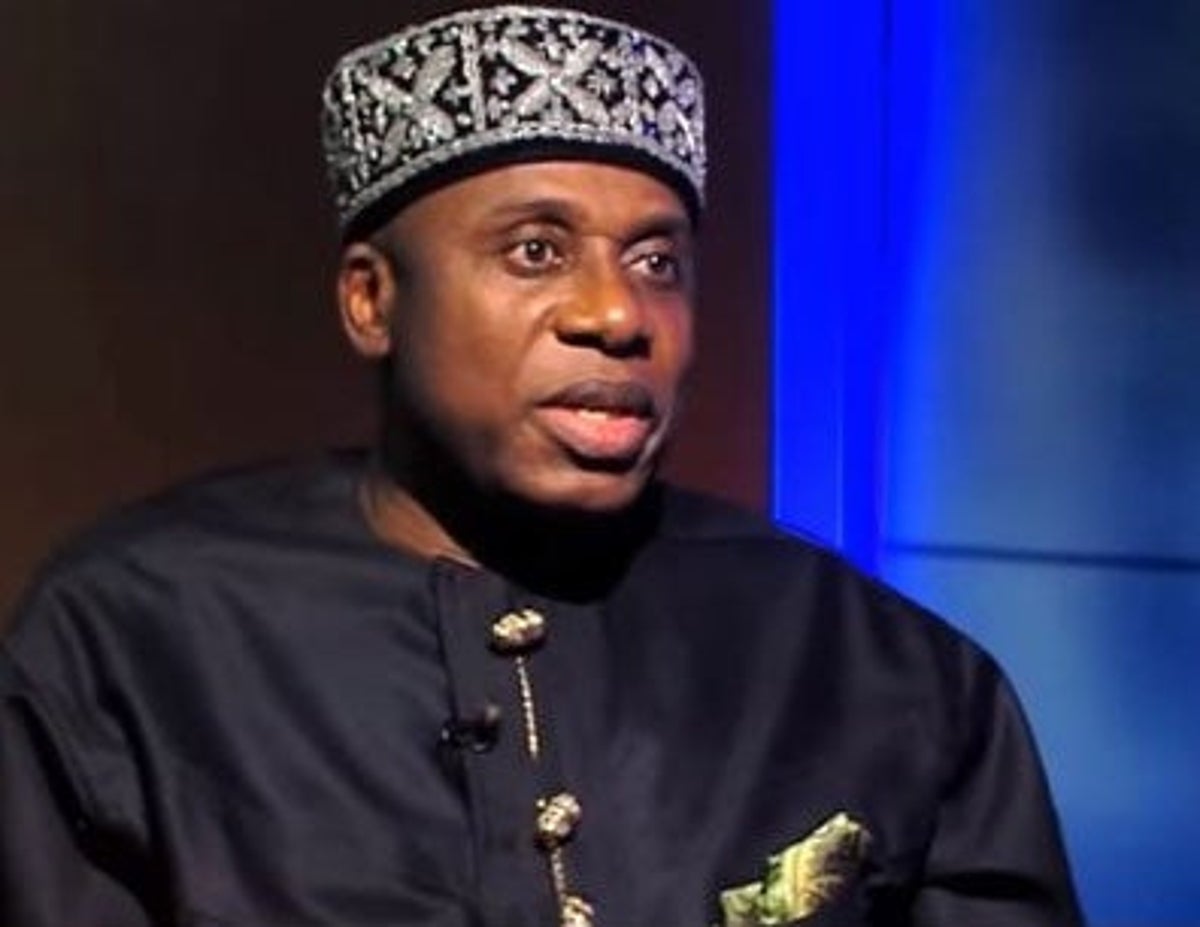
Former Rivers State Governor and ex-Minister of Transport, Rotimi Amaechi, has said that he, and not President Bola Tinubu, played the pivotal role in making late Muhammadu Buhari president in 2015.

In a Friday interview on Arise News’ Prime Time, Amaechi, who is now a presidential aspirant under the African Democratic Congress, addressed longstanding claims by Tinubu.

During his pre-2023 campaigning, Tinubu said Buhari would not have become president without him and that it was his turn to become one too.

But Amaechi explained that as a serving minister under Buhari, he could not publicly challenge Tinubu’s assertions to avoid risking his position.

“When we decided to form the APC, while I was a minister, (Tinubu) was claiming he made Buhari president and I couldn’t respond because I was a minister under President Buhari. That would have been suicidal because Buhari could fire you,” Amaechi said.

He continued, “So I couldn’t have said, ‘You are wrong.’ He didn’t make President Buhari president. Not only was I the DG of the campaign, but everybody will bear witness that I did all the battle.

“I led the Governors’ Forum, criss-crossed the country fighting here and there trying to get Nigerians to know that this is the time for change.”

Amaechi served as Director-General of Buhari’s 2015 and 2019 presidential campaigns.

He was a key figure in the 2013–2014 defection of PDP governors that helped form the APC alliance, which ultimately defeated President Goodluck Jonathan.

However, Tinubu was also instrumental in Buhari’s emergence, leading the merger of major opposition parties, including his Action Congress of Nigeria, to form the All Progressives Congress, which challenged and defeated the then-ruling PDP.

The remarks come amid Amaechi’s positioning for the 2027 presidential race as part of the growing opposition coalition under the ADC.

He has been vocal in recent months criticising the Tinubu administration over economic hardship.

Continue Reading

Featured

GLO: The Undisputed Digital Oxygen

Published

on

By

By Dr. Sani Sa’idu Baba

In medicine, oxygen is the invisible molecule upon which all human life depends. Remove it, and the body shuts down almost instantly. The brain weakens, the heart struggles, and every organ begins to fail. As someone who studies how the human body works, I have always understood the centrality of oxygen to biological existence. But in recent years, watching Nigerian society evolve in the digital age, I have arrived at another conclusion: connectivity has become the oxygen of modern civilisation.

Without network connectivity today, businesses freeze, students lose access to learning, hospital records fall into jeopardy, POS transactions struggle, markets slow down, and families become disconnected. Digital access is no longer a luxury; it is the infrastructure upon which modern life breathes.

And in Nigeria, one network increasingly stands out as the supplier of that digital oxygen: GLO.

Across campuses, markets, offices, villages, and urban centres, millions of Nigerians now depend on the Glo network for the daily rhythm of their lives. For students, it powers e-learning, research databases, virtual classrooms, and academic collaboration. For traders and entrepreneurs, it sustains mobile banking, online transactions, advertising, and customer communication. For farmers in rural communities, it ensures communication with farmland workers. For doctors and healthcare professionals, it enables telemedicine and rapid information exchange. In many homes, Glo is the invisible bridge connecting families separated by distance.

This is why many Nigerians increasingly describe Glo not merely as a telecom company, but as a necessity.

What is even more fascinating is the growing public confidence in Glo’s reliability, something I have personally witnessed. I recently observed a man asking a shop attendant to call his boss. After placing the call once, the attendant calmly replied, “Sir, his phone is switched off.” The man insisted he should call repeatedly before concluding. The attendant smiled and responded, “Sir, I am using Glo network. If Glo says the phone is unavailable, then it is unavailable.” Everyone around laughed, but beneath the humour was a powerful reality: people increasingly trust the reliability and clarity of the Glo network. That brief moment was more than a casual conversation; it was a testimony to the confidence Glo has quietly built among Nigerians.

The reality becomes even clearer during moments of national stress. In an era defined by climate change, unstable electricity supply, flooding, extreme heat, and infrastructural disruption, telecommunications networks face enormous pressure. Floodwaters damage fibre optic cables. Heat weakens sensitive electronic systems. Power failures destabilise base stations. Yet despite these challenges, millions of Nigerians continue to experience remarkable connectivity stability on Glo.

That stability is not accidental. Globacom has continued to invest heavily in infrastructure upgrades and network improvement projects aimed at enhancing customer experience nationwide. For millions of Nigerians, clearer calls and faster internet are no longer wishes but daily realities because of the company’s sustained commitment to expanding and strengthening its network systems.

What makes Glo exceptional is not simply its coverage, but its resilience. The company has increasingly embraced hybrid energy solutions involving solar systems and battery storage technology to reduce dependence on diesel-powered infrastructure. This improves network reliability during grid failures while simultaneously reducing environmental pressure. Glo has also undertaken extensive fibre reconstruction and relocation projects across Nigeria, redesigning network routes to withstand environmental disruptions such as flooding, erosion, and climate-related damage. Its investments in expanded spectrum capacity and advanced technologies have further improved efficiency, enabling stronger data delivery and smoother connectivity for subscribers across the country.

From my vantage point in Kano, a region experiencing intense heat and significant environmental pressure, the importance of resilient connectivity cannot be overstated. For traders in Sabon Gari Market, network access means economic survival. For students at Bayero University, it means uninterrupted learning and research. For countless young Nigerians trying to build digital businesses, it means opportunity itself.

In many respects, Glo functions like the respiratory system of Nigeria’s digital society. The Glo-1 submarine cable and Glo fibre optics act like lungs, bringing global bandwidth into the country. The national fibre network resembles blood vessels distributing connectivity nationwide. The 4G LTE base stations function like capillaries, delivering data directly to the individual user whether in Kano or far beyond.

The subscriber shouting “Glo Unlimited!” during a blackout while data continues flowing is not merely celebrating affordable internet. They are experiencing the result of years of investment, resilience engineering, and technological foresight.

Calling Glo “The Digital Oxygen” of Nigeria is therefore not poetic exaggeration, it is an acknowledgment of reality. In a country where millions now live, learn, trade, communicate, and dream through digital connectivity, Glo has become more than a network provider. It has become the vital breath upon which modern Nigerian life increasingly depends…

Dr. Sani Sa’idu Baba writes from Kano, and can be reached via drssbaba@yahoo.com

Continue Reading

Featured

Ooni of Ife, Wife Welcome Twin Sons

Published

on

By

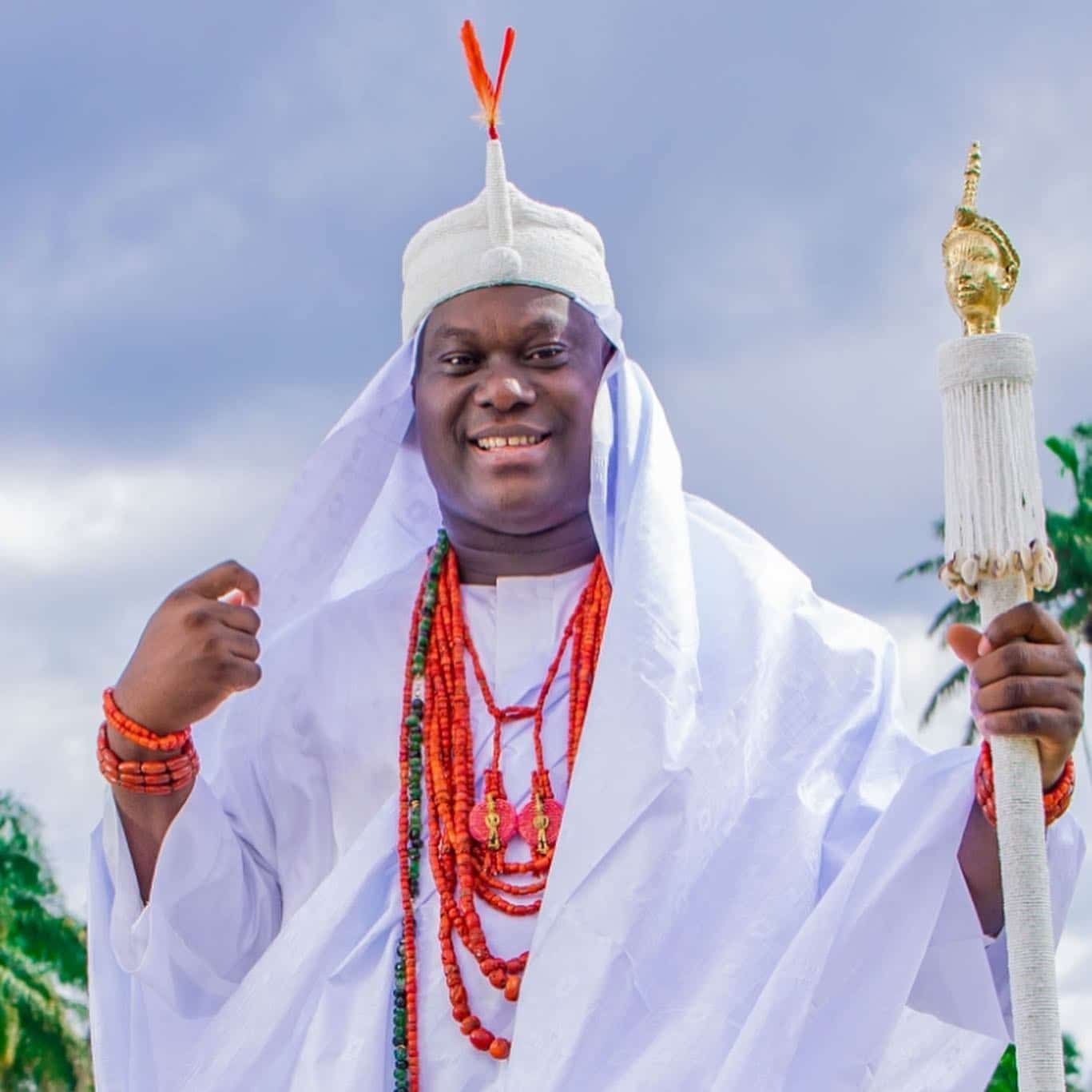
The Ooni of Ife, Adeyeye Ogunwusi, has announced the birth of twin princes with his wife Mariam Ajibola, to the Royal House of Oduduwa.

The monarch disclosed this in a post shared on his official Facebook page on Friday, expressing gratitude to God for the safe delivery of the children and the wellbeing of their mother.

“To God be all the glory and adoration for His wondrous works and abundant blessings once again.

The announcement has drawn congratulatory messages from admirers and members of the Yoruba royal institution celebrating the arrival of the newborn princes.

After his marriage to Naomi Silekunola ended, the Ooni married several queens within a short period in 2022.

Among the queens are Mariam Anako, Elizabeth Akinmuda, Tobiloba Phillips, Ashley Adegoke, Ronke Ademiluyi and Temitope Adesegun.

During celebrations marking his 48th birthday and seventh coronation anniversary, the monarch explained that his marriages were connected to the traditional heritage and responsibilities attached to the throne of Ile-Ife.

Continue Reading

Trending