
Boss Of The Week
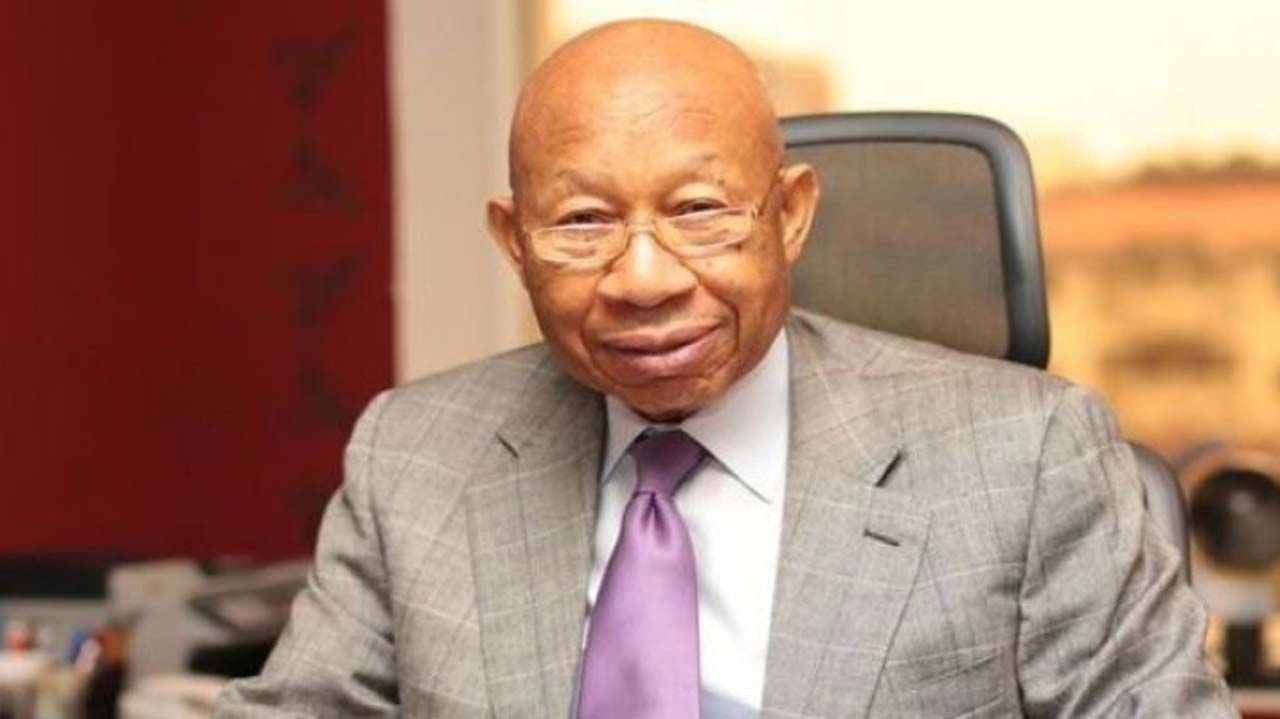
Pascal Dozie: A Garland For The Banking Diamond




By Eric Elezuo
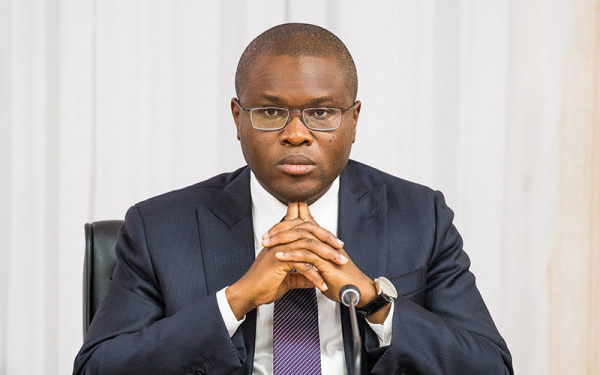
Romuald Wadagni is not new to Benin politics, neither is he new to administration, especially in the area of financial reorientation, recovery and development. He has professionally steered the Finance and Economy ministry of his country for 10 uniterrupted years after serving as a finance guru with top finance films including the renowned Deloitte. Wadagni is an enigma, and of course Benin’s choice to be president come April 12.
Below is a text delivered by the frontline presidential candidate for the forthcoming Benin Republic Presidential election, Romuald Wadagni on his stewardship, and the expections for the average Benoise:

Over the past few years, our country has achieved what many thought was impossible. With vision and courage, we have proven that when a people decide to take charge of their own destiny, nothing can stand in their way.
The progress we have made and the efforts contributed by all now give us the means to deploy a new complementary development approach that will eradicate extreme poverty and ensure that prosperity reaches every household. This is the challenge we must take on together.

Tomorrow, every Beninese, every young person, wherever they may be, must be able to find an opportunity within reach. Our ambition involves establishing regional development hubs, giving a more prominent role to the private sector, and fully harnessing technology. The goal is clear: to create wealth for all and improve living conditions across the entire country.
This program is the logical continuation of what we have started, and the beginning of what I propose we accomplish together: to build an even greater Benin—the Benin of our dreams.
Romuald Wadagni
By Eric Elezuo
With over 1000 housing units providing for shelter-seeking Nigerians, in just nine years, the influence and humanity embedded in the organizational structure of Veritasi Homes cannot be overemphasized.
Led by its indefatigable and energetic Chairman, Nola Adetola, Veritasi Homes has proved beyond reasonable doubt that its mission of providing affordable luxurious accommodation has come to stay.


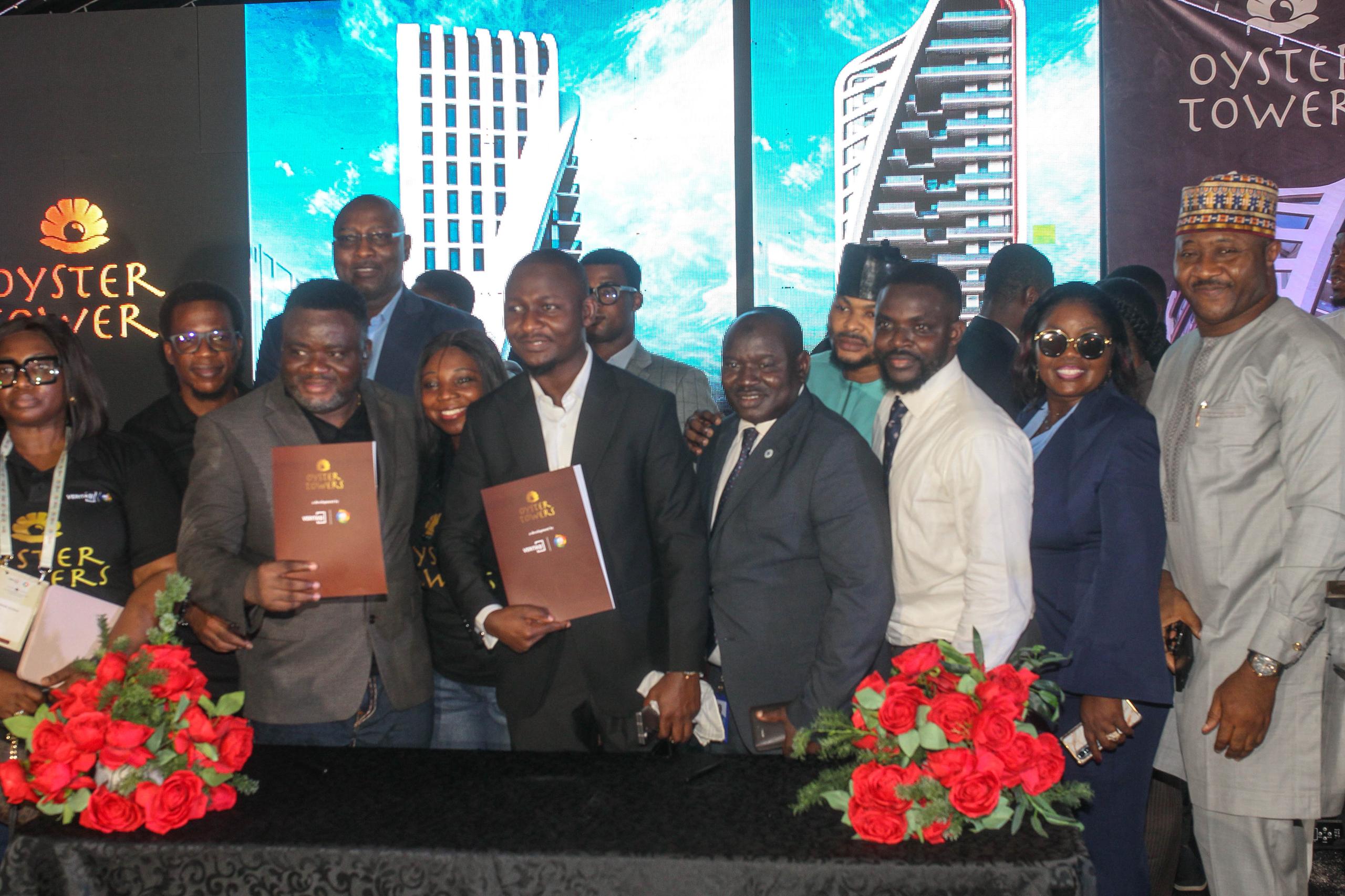
The firm, in conjunction with Cooplag, brought the mandate to the fore one more time on Thursday, when under the watch of Lagos State Governor, Mr. Babajide Sanwo-Olu, and many other distinguished Nigerians including the Chairman of Ovation Media Group, Chief Dele Momodu, conducted the Groundbreaking ceremony for a highrise edifice, right in the heart of the prestigious Eko Atlantic City, Lagos, called OYSTER TOWERS.
This development is coming less than six months after the Nola Adetola-led team began the construction of another high rise apartment, Allied Towers, in the high profile Ikoyi Island. A testament of how desirous he is about bridging the housing deficit in Nigeria.


The entrepreneur, in his speech, noted that his efforts are geared towards continuous provision of luxurious, but affordable accommodation for the Nigerian public, as a real estate giant, in rewarding partnership with Cooplag, under leadership of Francis Adeoye.
In his speech, the Chief Executive Officer of Veritasi Homes, Mr. Nola Adetola, noted that the project is a bold new chapter in the Lagos’ skyline, and will provide competitive and a whole new approach to luxurious living, especially with its location in the Eko Atlantic City axis.


“Today, as we break ground on Oyster Towers, we are declaring possibility and our determination to do something meaningful with it. Together with COOPLAG, we open yet another chapter in Lagos’ skyline, in Nigeria’s housing story, and in Veritasi’s journey,” he said.
Recalling the journey, the trajectory, and the achievements of the Veritasi brand, Nola informed that “Nine years ago, when we began this journey, we looked at Nigeria’s real estate market and asked: Can we do better? That question gave birth to Veritasi Homes. And today, we are doing it.”


Also speaking, the President of COOPLAG, Francis Adeoye, also underscored the significance of the project and the vision behind it.
“Today, we are not just breaking ground, we are breaking barriers. We are laying the foundation for a future where cooperative strength meets architectural excellence, where innovation meets legacy, and where our members and stakeholders can aspire to live in spaces that reflect their values, ambitions, and achievements,” he said.
Adding, Adeoye intoned that “This is the realisation of a shared dream, a dream to redefine urban living and empower our members. For over three decades, COOPLAG has stood as a beacon of cooperative strength, financial empowerment, and community development.”
Expressing his belief in the abilities of the two organizations, Governor Sanwo-Olu confirmed his trust in their efforts, noting that he has been in working relationship with the team, especially Cooplag.
He informed that having been involved in the groundbreaking ceremony, he would nonetheless be involved in every step of the way, until the project comes to conclusion.
Speaker after speaker, everyone agreed that the partnership is one of the best things to happen to the real estate sector, and would give vent the housing revolution the organisations are dedicated to.
The two organizations later put pen to paper to officially seal an agreement that was meant to materialize via the erection of beauty, style, architectural intelligence, elegance and housing space in the highbrow Ikoyi Island.
With the speeches and paperwork concluded, the guests moved outside, where the traditional ritual of scooping the earth over itself was held, signifying the commencement of the task of bringing the Oyster Towers project to reality within the next coming months.
Veritasi Homes and Cooplag are tested and trusted organisations in the housing and homes sector of the Nigerian economy.
The Impressive World of Indefatigable Investor, Adetola Nola

By Eric Elezuo
Here’s the story of a man, who read his way out of poverty. A man, who is known by a dictum not common to ordinary mortals; the dictum of perfection. It is no wonder that he is credited with the saying, “I am a perfectionist, and I take nothing short of excellence”.
His name is Adetola Nola. He is the Chief Executive Officer at Veritasi Homes and Properties, A.R.N Farms and Commodities Limited, which he founded and signed off to build one of the largest rice milling plants in West Africa; Asteric Asset Management, and Baraka Energy Lithium Processing Limited. Nola’s image looms large, and he still has years before his 40th birthday.
Nola is a typical example of the ‘real’ Nigerian youths, who are steadily proving that the not too young to run mantra is not just about politics, but spreads across every facet of human endeavour, chiefly among which is entrepreneurship.
It is therefore, not a surprise that before the age of 30, the star brained thinker, determined achiever and never-say-never entrepreneur, who has conquered the world of real estate, agriculture, mining and asset management giant, is already ruling their worlds, giving back to humanity and creating leverages that are already making the world a much more better place as well as pave the way for upcoming youths to bring their dreams to reality.
Nola is a standard measure for administrative competence, and the that fact anyone can achieve greatness if they set their minds to it.
Born 1990, Adetola Nola, is unarguably an excellence-driven and innovative real estate entrepreneur with positive energy and experience instrumental in redefining success in the Nigerian real estate industry. He does not only boast of these energies, but steadfastly put them to work and has reinvented a whole new strata of home management, estate development and all round provision of affordable housing for every class of humanity, Nigerians more especially.
A well-read intellectual, Nola is a Bachelor of Engineering degree holder in Chemical Engineering from the prestigious Obafemi Awolowo University, Ile-Ife. He has not left anything to chance as regards improvement educationally as he has just concluded an MBA (Masters in Business Administration) degree at the Metropolitan School of Business & Management, London.
His strong leaning on education and in continuous learning have created in him a need not to rest on his oars, prompting him to attend many capacity development courses, including Strategic Management & Leadership courses at the London Metropolitan University, Finance and Management Courses at the London School of Business & Finance; and numerous seminars locally and internationally. Little wonder he tells anyone he cares to listen that “I read my way out of poverty”.

Ever since he ventured into entrepreneurship, Adetola Nola has not looked back; he has not allowed himself to be weighed down by the vicissitudes surrounding business establishment and grooming, and has consequently, raked in extraordinary achievements under the age of 30, prompting the magnanimous Forbes to recognise him among the Forbes Africa Under 30 Class of 2019, when he was 29.
Reacting to his selection, Nola noted that “It is an honour to be part of this list that features so many great people. Forbes has done a great job compiling and ensuring the credibility of this list since inception, and it is a leading resource for entrepreneurs, like myself.”
The CEO is an epitome of impressive leadership, corporate management skills, and rich top management experience. His expertise, knowledge and experience span sales, marketing, real estate investment, property finance, real estate advisory, management, leadership development among a long list of business and entrepreneur oriented endeavours.
From a mere start up, Nola kick-started his real estate career. He began as a real estate sales consultant with Grenadine Homes, where he recorded a plethora of successes in closing property deals. Every pie he puts his hands is on becomes a done deal. His ingenuity won him a trip to Dubai while at Grenadine. He reported that once, he sold shoes so well to a client that the client felt he could sell real estate, and there arose his interest in real estate.
In 2017, after facilitating projects for other real estate companies, he founded his own company, Veritasi with just one staff – his secretary. But his style of leadership, rooted in eye for details and profits, the company recorded over N2 billion in revenue in less than two years of operation. In his modesty, he attributed the feat to the company’s vision of solving the housing problems of middle-income earners in Nigeria.
From the proverbial mustard seed, the company has grown to boast of over 12,000 real estate consultants, 1300 Veritasi Realtors and over a score full-time staff, today. This is a magnificent leap by all standard.
Nola has remained undaunted in his pursuit of the golden fleece or the green pastures even as he encountered untold entrepreneurial hassles. It has been reported that the man, who today has a Midas touch, has failed severally in business, but his sight on the ultimate goal, kept him going. And today he is a success story. A point of reference, and a veritable instrument with a passion to see and help other businesses grow.
“All the other businesses were learning grounds for us. They failed, but they taught me a lot of things. Because when I started Veritasi, I understood business dynamics and a lot of other things. I am trying to resurrect one or two,” he said.
The entrepreneur’s experience in growing businesses from the scratch to fruition is predicated upon his ability to have either founded or co-founded five other companies, including Noah and Nola Incorporated, Pineapples Luxury Retail Store and Couture 89 amongst others. He is also the current Founder/Chief Strategist Officer of Nola Travels. It is worthy of note that Nola founded this particular business with the sole aim of helping unemployed graduates. That explains how kindhearted he is, and can always be!
Walking in the footsteps of great African entrepreneurs like Tony Elumelu, Nola has a wholesome ambition of raising at least 200 successful African entrepreneurs who will, in turn, create employment and the circle continues. He has, as a matter of fact, been training batches of at least forty realtors and entrepreneurs on business and financial intelligence in his office every Thursday since November 2018. He also helps friends and family members to analyse their businesses, just as he assists the same friends and family members to see to the fruition of their businesses.
In all, Nola has analysed over 40 businesses, and still counting, for close friends and family members in the same way he has helped in restructuring about 20 of these businesses free of charge.
His corporate social responsibility has grown in leaps and bounds, affecting lives and giving hope to as many that he has come in contact with. He is presently championing the emergence of smarter communities with green energy in Nigeria while developing and providing properties that are timely in delivery, cost-effective, energy efficient, and durable. He is also a strategic investor with investments in the automobile industry, fashion and agriculture. His catalogue of palliatives for the good of his people has remained green even as he is still a very young man.
Nola is a thoroughbred inspirational speaker as well as a resource person in many affairs of life. While impacting his community, he has acted as a resource person at many learning and discourse sessions. He has also spoken in many local and international conferences including University of Mazda, Abu Dhabi and Property Investment & Homebuyers Show, London and others.
In his quest to further affect humanity, he has partnered with a number of NGOs with the aim of eradicating poverty and establishing a positive legacy. His belief in entrepreneurship has given him leverage to solve the challenge of unemployment and poverty in Africa. He has therefore, created platforms where people can work and learn to build companies of their own.
AWARDS AND ACCOLADES
Nola is not new to awards considering his humongous achievements. He has to his credit multiple local and international awards among which are Most Enterprising Student from Obafemi Awolowo University; Most Innovative Staff from Grenadine Homes; Best Intern in Operations from NNPC; Young Real Estate CEO Speaker from Property Investment Show, London and Fastest Growing Entreprenuer from Grapevine Real Estate.
Nola is a force to reckon with, and had started from the earliest of stages to create the accolades that follows him today, even at his youthful age.
THE PRESTIGIOUS CAMBERWALL ESTATE, LEKKI
Recently, Nola’s company unveiled an ambitious site and services scheme in Lekki, called Camberwall Estate. This magnanimous project is coming just after the Star City Garden in Ibeju-Lekki was first released. The estate consists of service plots.
A must buy and home to every lover of affordable luxury, Camberwall, a homely estate, which is located along Eleko Beach and opposite Amen Estate in Ibeju-Lekki Council, is a few minutes drive to Lagos Business School, and proposed airport. There is no doubt that it is an investor’s delight.
Speaking about the estate, Nola said it is a residential haven designed to provide affordable experience in a conducive and serene environment. He added that the estate is designed to accommodate modern state of the art facilities like interlocked road, clinic and security beautiful landscape, drainages, street lights, and estate club houses.
That is not all, it comprises a central designed architectural piece of accommodation, which provides residents with an ideal believe of tranquility and modern convenience. As part of his innovations, he is replicating noiseless and smart homes in Nigeria.
Nola does not only have a Midas touch in business, he is a stickler to excellence, decorum and the best of services. Little wonder he rolled out the drums to celebrate staff and clients as the year 2021 wound down in a most elaborate end of year party. He is by all means the class of technocrats capable of turning the economic fortunes of the nation, Nigeria around, and needs to be giving a chance.
A typical Epicurus son, Nola is a lover of good things including splendid food, neatly and smartly tailored apparels and worthy vacations to ease the stress and rejuvenate the mind.
Welcome to the impressive world of the indefatigable investor, Adetola Nola!




Trump Orders US Naval Blockade of Strait of Hormuz

200 Feared Killed As Military Airstrikes Hit Yobe Market

Police Probe Four Officers Accused of ‘Misconduct’ in Lagos

We’ve Crushed Iran’s Nuclear, Missile Programmes, Netanyahu Boasts

Turaki Faction Kicks As Police Unseal PDP Secretariat

Nation Building Reimagined: Integrated Principles and Strategies for Sustainable Growth

Dear CDS, NSA, Your Prodigal Sons, Brothers Have Killed General Braimah

Benin Republic 2026: Romuald Wadagni, The President in Waiting

Koumagnon Family Pledges Unalloyed Support for Romuald Wadagni As President

FG Expels US Missionary Alex Barber
Trump Delays Iran’s Strike by 2-Weeks As Pakistani Leaders Intervene
Dear CDS, NSA, Your Prodigal Sons, Brothers Have Killed General Braimah
Nation Building Reimagined: Integrated Principles and Strategies for Sustainable Growth

Again, Iran Blocks Strait of Hormuz, Alleges Ceasefire Violation
-
 Featured4 days ago
Benin Republic 2026: Romuald Wadagni, The President in Waiting
-
 Boss Picks3 days ago
Koumagnon Family Pledges Unalloyed Support for Romuald Wadagni As President
-
 National5 days ago
FG Expels US Missionary Alex Barber
-
 World5 days ago
Trump Delays Iran’s Strike by 2-Weeks As Pakistani Leaders Intervene
-
 Opinion2 days ago
Dear CDS, NSA, Your Prodigal Sons, Brothers Have Killed General Braimah
-
 Opinion2 days ago
Nation Building Reimagined: Integrated Principles and Strategies for Sustainable Growth
-
 Middle East3 days ago
Again, Iran Blocks Strait of Hormuz, Alleges Ceasefire Violation
-

 News5 days ago
Prominent ADC Leaders Storm INEC Hqrs in Protest Against Dictatorship