
The Oracle
The Oracle: Blood on the Benue: Weeping for Beleaguered Nigeria

Published
1 year agoon
By
Eric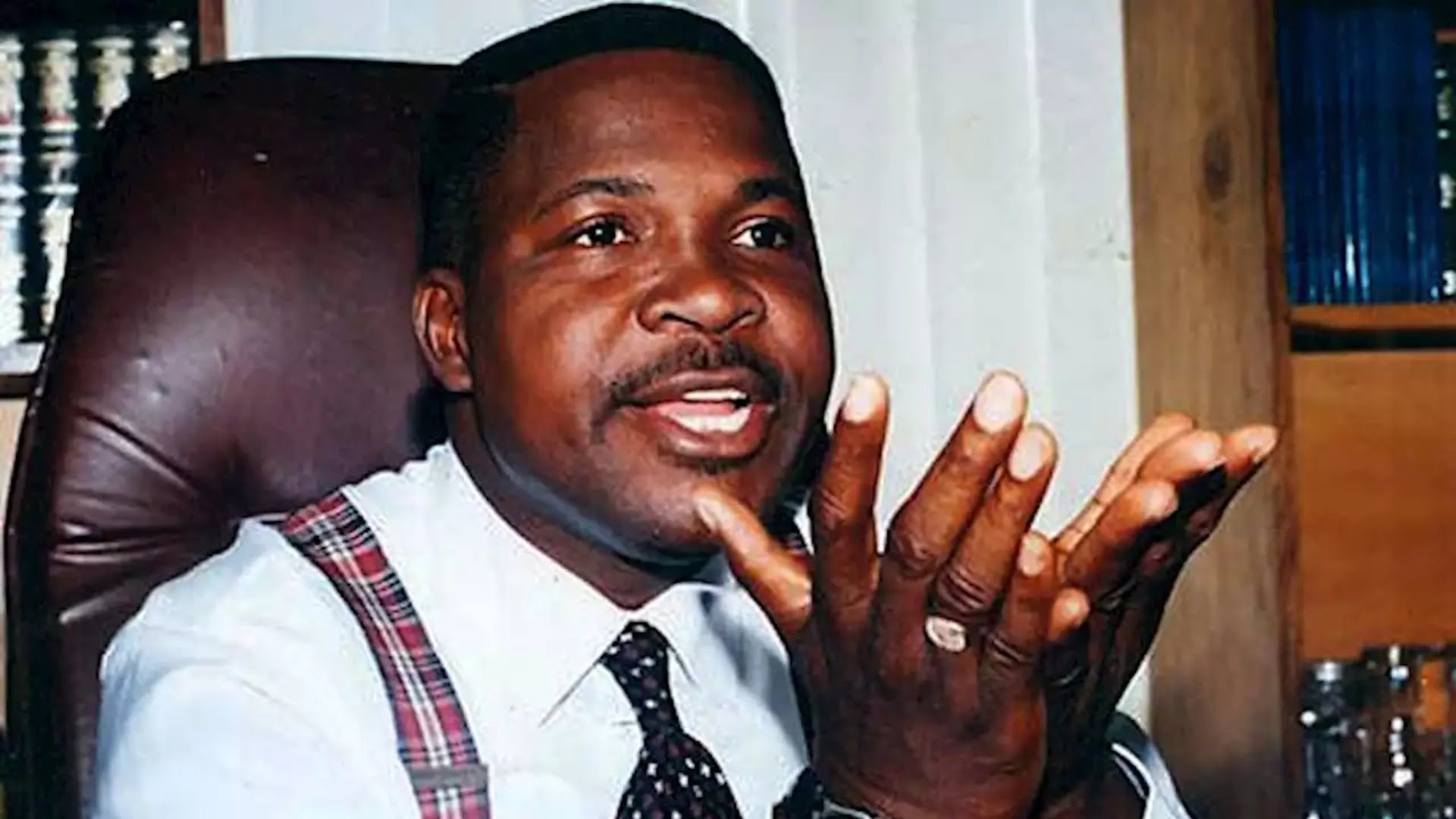

By Prof Mike Ozekhome SAN
INTRODUCTION
Yelwata in Benue state has been drenched in blood. Last October, I launched 50 books at the same time in Abuja to mark my birthday. One of the books is titled “Blood on the Niger and Benue: Nigeria’s Grim Insecurity Situation”. Everything said in that book has just bee reenacted in Yelwata, Benue State.
In the quiet hours of Friday night, June 13, 2025, the farming village of Yelwata in Guma Local Government Area of Benue State lay cloaked in the familiar darkness of rural Nigeria. There was no forewarning, no alarm. Only sleep. Then, like a storm without thunder, horror descended.
Armed men, suspected to be killer Fulani terrorist herders, emerged from the shadows and set upon the defenceless community with brutal precision. For more than two hours, they maimed, slaughtered, burned and razed. By the time the sun rose on Saturday morning, the landscape had transformed into a grotesque tapestry of charred ruins, still-smouldering debris and lifeless bodies sprawled across crimson soil. Over 200 people were reportedly confirmed dead at the scene and the toll would rise in the days that followed, with some reports placing the number of victims at over 300. Among the dead were children, pregnant women and elderly farmers, civilians caught in the indiscriminate cruelty of a calculated massacre. I most unequivocally condemn this horror, this man’s inhumanity to man. It must never happen again. NEVER!
Witnesses recounted how petrol was doused on thatched homes before they were set ablaze. Whole families perished in their sleep, trapped by flames and collapsing roofs. The night echoed with the crackling of the burning and the screams of the wounded and the orphaned. Survivors stumbled through the darkness, scorched and bleeding, in search of refuge. At the Benue State University Teaching Hospital in Makurdi, doctors worked frantically, overwhelmed by the influx of casualties. Medical personnel issued urgent calls for blood donations as the wards filled with the critically injured, many clinging to life with little more than hope.
In a land where yam festivals should flourish, the earth has instead flourished with drunk blood. A serene and prosperous village, producing large quantity of food is now a ghost community, no thanks to deadly attacks by killer herdsmen, who pose as innocent cattle rearers.
A PEOPLE LEFT FOR DEAD: THE HUMAN TOLL
What occurred in Yelwata cannot be dismissed as a “clash,” nor cloaked in the diplomatic cowardice of euphemisms that seek to sanitize horror. This was not a skirmish. It was not a misunderstanding. It was a massacre! A premeditated act of mass violence, executed with recklessness and impunity against a defenceless civilian population, in total defiance of laws and moral conscience. The people of Yelwata have become mourners in their own homeland, dressed in black, forever gathering the bones of the innocent. The village has been painted over with the sorrow of the grieving and the brushstrokes of trauma.
Among the victims was the family of Michael Ajah, a survivor now left hollowed by grief. Ajah lost twenty members of his family in a single night! Eleven perished in one house. Eight were killed in another. The others died in the chaos, scattered across a village that now exists only in ashes. His stores were burnt. His home was destroyed. Standing barefoot in the ruins, he described how he escaped only with the clothes on his back. “This is the only thing that I have now,” he said. “There is nothing else with me.” Bature Bartholomew, Joseph Kwagh and countless others suffered a similar fate.
Apparently, prior threats had been made, as they often are, but villagers had grown used to such messages. The community had seen warnings before. And in the past, some security forces had pushed back similar threats. The villagers believed it would be the same this time. They likened it to the story of the crying wolf. They were wrong.
Let the world hear it: the peaceful people of Yelwata were not victims of chance. They were targeted. They were hunted. And they were massacred.
DEAFENING SILENCE AND DEADLY INACTION BY GOVERNMENT
The massacre in Yelwata is not just a story of blood and loss. It is a harrowing indictment of leadership failure, systemic neglect and institutional cowardice. In the face of rising tensions and repeated warnings, those entrusted with the security of Benue State and Nigeria at large chose silence. Security forces knew the fragility of peace in Yelwata. They were not blind to the pattern. From Guma to Agatu, Logo to Turan, the script has played out over and over: villages burnt, families erased, justice deferred. Yet, no preventive measures were taken. No fortified presence. No aerial surveillance. Only the eerie stillness of a nation too used to the scent of scorched earth.
When the killers struck again, it was not a surprise. It was an inevitability made possible by deafening silence and deadly inaction. The people of Benue have cried themselves hoarse, year after year, massacre after massacre. But their grief has been met with bureaucratic apathy and public relations condolences. Governor Hyacinth Alia’s response to the massacre was not merely inadequate; it was an affront. His delay in visiting the scene, his refusal to speak, tweet, or even mourn publicly until after President Tinubu’s very belated visit, has been interpreted not just as incompetence but as possible complicity. In the face of over 200 dead, the Governor offered the nation a figure of 59, thus inimizing the scale of bloodshed and insulting the graves of the murdered. What even if it were one? Instead of naming the perpetrators, he set up an investigative panel that tactfully avoided attributing blame, as if the truth was inconvenient, as if justice might provoke too much discomfort.
When President Tinubu finally arrived in Benue, the expectations of a grieving people were clear: solidarity, seriousness, swift action and restitution. What they received instead was a grotesque display of political theatre. Placards bearing the President’s image lined the roads. Schoolchildren, soaked and shivering, were forced to line the streets under a heavy downpour, waving soggy banners while mass graves still steamed in the earth nearby. What should have been a moment of solemnity turned into an unofficial 2027 re-election rally, a tasteless spectacle that traded the blood of Yelwata for photo ops. This was not condolence. This was campaign optics.
This playbook is not new. On New Year’s Day in 2017, over 200 people were slaughtered in Benue for resisting the destruction of their crops by cattle. On December 25th, 2024, as Christians marked the birth of Jesus Christ, suspected armed herders invaded Ityuluv, Tse Azege and Innyiev Ya in Kwande Local Government, killing eleven people mid-celebration. The images are consistent: corpses laid out under church roofs, burning homes, the wails of mothers who will never again hold their children. Yet from the corridors of power, the same recycled rhetoric flows: “We condemn,” “We are investigating,” “We urge calm.” But no arrests. No convictions. No justice. Just the thud of fresh bodies hitting the ground.
Even the words of comfort are now hollow. President Tinubu’s lamentations, “Enough is enough… perpetrators must be arrested… communities must dialogue”, ring with irony. Dialogue with whom? With the men who crept through the rain to burn babies alive? With those who hacked entire bloodlines to death because they were asked not to graze on people’s farmland? Dialogue implies equal grievance. This is not war. This is terrorism. Pure and simple. And to place dialogue and reconciliation above accountability is to trample on the memory of the dead.
Dr. Daudu Ayu of Yelwata captured the fury of a betrayed people when he denounced the President’s framing of the massacre as a “conflict between warring communities.” There is no parity here. The Fulani attackers were not defending; they were invading. Their aim was clear: seize ancestral lands, decimate indigenous populations and spread fear as a weapon of conquest. To reduce this to “herder-farmer clashes” is to excuse genocide with semantics.
The numbers are staggering. Since 2009, Nigeria has lost millions of lives to insurgency and herder-farmer violence. Benue alone has absorbed blow after blow, turning its farmlands into open graveyards. The government’s failure to act, its refusal to label this terrorism for what it is, has emboldened the killers. Why would they stop when they face no consequence? Why retreat when their path is cleared by political hesitation and legal paralysis?
President Tinubu’s muted outrage and calculated ambiguity do not typify exemplary leadership. They are avoidance wrapped in grammar. His failure to draw a red line, to name the aggressors, to galvanize decisive military action, makes his ambition for a second term in 2027 more than politically distasteful; it makes it morally flawed. How do you govern the living if you preside over the slaughter of the forgotten?
Each delayed response, each muted condemnation, adds one more body to the pile. For years, as statistics ballooned into genocidal proportions, the government sermonized from podiums while the fields of Benue ran red. This latest atrocity in Yelwata is not the beginning of the story, but it must be the final warning. Because if Nigeria cannot protect its citizens, if the Constitution’s promise of security and welfare is conditional on tribe, location, or silence, then it is not a nation; it is a lie, a scam.
Enough, please. Condolences do not resurrect the dead. Nor do photo-ops rebuild homes. The people of Yelwata need more than pity; they demand justice. And if this government cannot deliver it, then it must step aside for one that will. The land of yams is now the land of tombs. And history will remember who stood up and who stood back while it all burned.
TERROR HAS A NAME! CALL IT BY ITS NAME!!
According to Fr. Remigius Ihyula, a long-time witness to these cycles of violence and trauma in Benue State, this is a coordinated effort to wipe indigenous Christian communities off the map. “These Fulani militias are not just killing, they’re clearing land to claim it,” he stated in what should have been a national alarm bell. “And they’re being allowed to do it.”
The silence that follows such clarity is complicity. These attackers do not crawl out of caves. They cross state lines. Emboldened, equipped and unchallenged. From neighboring Nasarawa. Armed groups are said to find safe haven in Lafia, the state capital; yet successive Nasarawa governors have refused to act. Not out of ignorance, but from calculation. What kind of leadership turns its face away while death marches across its borders in open daylight? What kind of democracy tolerates this level of carnage and calls itself whole?
And when the few voices brave enough to speak the truth rise, they are met with digital disinformation and diversion. Fr. Ihyula has strongly condemned attempts to scapegoat the Tiv people, refuting online rumors that Tiv militias orchestrated the massacre. “There were no Tiv fighters involved,” he said. “This is a deliberate attempt to muddy the truth and shield the real perpetrators.” In a country already fracturing under the weight of ethno-religious mistrust, such deflections are more than cowardly. They are dangerous.
David Onyillokwu Idah of the International Human Rights Commission gave name to what many have been too afraid to utter. “This is what the Nazis did to the Jews,” he warned. “It’s ethnic cleansing, step by step. First, they displace them. Then they come back and finish the job.” This is not sensationalism. It is a fact pattern. Entire villages emptied. Men and women slaughtered. Children hacked to pieces. Homes razed. Crops destroyed. Entire communities transformed into ghost towns with only ashes left to speak.
And where is the state? Where is the machinery of justice, the constitutional promise of safety, dignity and equal protection? Every law in Nigeria, beginning with the Constitution, affirms that the right to life is sacred. That the state has an inviolable duty to protect it. Yet in Yelwata, life was treated like expendable surplus. Background casualty in the theater of statecraft. Amnesty International has catalogued the horrors, calling attention to the government’s complete failure to stem the tide of violence. “Gunmen have been on a killing spree with utter impunity,” it reported, warning that the mass displacement of farmers would have ripple effects on food security and economic stability. Their statement, clinical yet urgent, highlighted not only a humanitarian disaster but also the erosion of constitutional order. “Without immediate action, many more lives may be lost.” The question is: does the government intend to act, or merely wait until there are no more villages left to bury?
POLICY OR HUMANITY FAILURE
What occurred in Yelwata is not only a breach of human dignity. It is a breach of law, of the very fabric that claims to hold Nigeria together. These are not mere attacks; they are crimes against humanity. Under international law, under the Rome Statute to which Nigeria is a signatory, a systematic attack directed against a civilian population qualifies as such. Ethnic cleansing, political protection of armed militias and the use of displacement as a weapon, all point towards a dangerous descent Nigeria cannot afford. This is not just Yelwata’s burden. This is a national stain.
The issue is no longer one of mere policy failure. It is a test of our collective humanity. It is the measure of whether we, as a people, as a nation under law, believe rural Nigerian lives matter. Because every time a tactical unit is deployed after the massacre, every time officials show up after the mass burial, every time condolences are uttered while killers remain nameless and free—it tells the people of Yelwata that their blood is cheap. That their lives are expendable. That they are alone.
But the Constitution says otherwise. Section 14(2)(b) of the Constitution of the Federal Republic of Nigeria, 1999 (as amended), declares the security and welfare of the people to be the primary purpose of government. Section 33 guarantees the right to life. Section 34 guarantees the right to dignity. Yet in the fields of Yelwata, once alive with farming, festivals and laughter, there is now only ash, silence and death. These rights, on paper, are being buried beside the people they were meant to protect.
If Nigeria still believes in its own laws, in its own humanity, then Yelwata must not be forgotten. Their stories must outlive the silence. Their names must echo louder than the rain that hid the footsteps of their killers.
This is no longer a rural crisis. It is a national reckoning. And history is already watching.
FROM CRIES TO JUSTICE: WHAT MUST NOW BE DONE
The carnage in Yelwata, like so many before it, leaves behind more than scorched homes and mass graves. It leaves a nation at a crossroads. In the place of swift justice, we have seen a cycle of condolences without consequence. In the place of leadership, we have seen silence, sluggishness and in some quarters, chilling complicity. And so, once again, a grieving people are left to ask: must our cries be louder than gunfire before we are heard? Must the soil drink more blood before the state will act?
The Northern Senators Forum, in a rare and firm voice, echoed the frustration of a people brutalized beyond measure. Chairing the statement, Senator Abdulaziz Musa Yar’adua called upon President Tinubu to ensure that his visit to the ashes of Yelwata would not dissolve into a photo-op footnote. “What the people of Benue and indeed all Nigerians, deserve is lasting protection, not repeated mourning.” In a nation where impunity now travels in convoys, that statement carries the weight of a challenge, not a courtesy.
But lip service will no longer suffice. Nigerians are not beggars at the gate of justice. They are constitutional citizens entitled to life, dignity and safety. Yet these rights have been violated repeatedly in Benue State, a region that has endured more than its fair share of bloodletting. Rural communities have become theatres of unrelenting terror. Ungoverned spaces stalked by militias, abandoned by the state and forgotten by a government too slow to respond, too quick to excuse. Yelwata is but a metaphor of what goes on across the length and breadth of Nigeria.
This moment demands more than mourning. It demands reckoning. The Constitution empowers the President to declare a state of emergency where there is a serious breakdown of public order and a clear and present danger is presented. That threshold has long been crossed. As Sir Ifeanyi Ejiofor, Esq, rightly noted, what we are witnessing is not communal misunderstanding. It is a transnational siege. Militants from across the Cameroon border continue to pour in, slaughtering with impunity, while the federal and state governments grope in the dark of denial.
And where was the governor, the supposed shepherd of the people? Governor Hyacinth Alia, elected to protect lives, stood muted while bodies were piled. The faint whisper of his voice came days after, long after the wails of the bereaved had risen to the heavens, long after Pope Leo XIV. It is not enough to wear a cassock; one must wield courage. It is not enough to call for prayer; one must demand justice. And if political office now weighs heavier than his conscience can bear, perhaps the pulpit is where he truly belongs. The hood does not make the monk after all.
RECOMMENDATIONS
1. Immediate Deployment of Adequate Security Forces
The first and immediate line of intervention must be the swift deployment of sufficient, well-trained and fully-equipped security personnel to the affected communities. But this cannot be business as usual. Our military and other security agencies must stop operating in separated silos. What we need is joint intelligence gathering, joint operations and joint accountability. Anything less is a betrayal of the people already left exposed and bleeding.
2. Declaration of a State of Emergency in the Affected Areas
The Federal Government must now invoke its constitutional mandate under Section 305 of the 1999 Constitution to declare a targeted state of emergency in the devastated areas. This should not be done as a mere political gimmick like in Rivers State but as a constitutional necessity. Such a declaration would allow for a unified, coordinated and rapid security response, free from the red tape that has too often cost lives. It would restore public order, unlock emergency relief and send a powerful message, not just to the perpetrators, but to the bereaved that Nigeria has not entirely lost its soul.
3. Establishment of a Judicial Commission of Inquiry
A robust, truly independent Judicial Commission of Inquiry must be established to thoroughly investigate these atrocities. It must dig deep; not just into who pulled the triggers, but into who enabled them, who funded them, who looked away. Justice must be more than ceremonial. It must be seen, heard and felt. Otherwise, we embolden the next set of killers.
4. Government Assistance to Victims and Survivors
The dead must not be buried with the silence of the state. Survivors must not be left to wander with grief as their only companion. The government must offer immediate and sustained relief, medical care, shelter, financial assistance, food, clothes, relocation support and psychosocial services. Compassion must walk hand in hand with justice. Not as charity, but as a right.
5. Tackling the Root Causes: Annexation and Occupation by the Fulani Herders; Poverty, Unemployment and Illiteracy
Peace is not built on military boots alone. It is built on dignity of the human person; opportunity and hope. The structural causes of this continuous violence must be tackled. First, the government must extirpate this sense of irredentist annexation and occupation of the land of the Natives all over Nigeria by fully armed Fulani herders. The grinding poverty, monumental unemployment and educational exclusion must be confronted and dealt with boldly. These are not background issues; they are the fuel that ignite the crises. A country that fails to invest in its people will eventually have to bury them.
6. Inclusive Dialogue with Traditional Rulers and Community Leaders
Security is not the exclusive preserve of the state. It must be co-owned by the people. Traditional rulers, faith-based leaders, youth groups and local stakeholders must be at the table, not as spectators but as partners. Their voices carry legitimacy and their cooperation carries weight. The road to peace must pass through the hearts of the people who live there.
Nigeria must abandon the lie that some lives are worth more than others. Whether in Lagos or Yelwata, the right to life is not negotiable.
Justice must rise. Not as a whisper but as a national roar. For each charred body in Yelwata cries out; not for pity, but for prosecution. Not for platitudes, but for policy. Not for remembrance, but for reform. Let the government stop sermonizing and start securing. Let the Presidency remember that it was elected to protect, not to pontificate. And let the nation rise to say: enough. Not one more grave before we act. Not one more child buried before we move.
IF NOT NOW, WHEN?
I have decried this nightmare too many times. My voice is now hoarse from screaming into the void. And if I, one far removed from; a mere citizen and a conscience with pen and protest feel this ravaged, this worn, then what must be the state of mind of the grieving people of Yelwata, of Benue? What must it be to live in constant dread, to bury child after child, to rebuild only for fire to raze it again?
The people of Benue State deserve better. They deserve a government that does not look away, a system that does not delay and a nation that does not devalue their suffering. The Yelwata massacre was not just a tragic event. It was an indictment. A blistering exposure of governance gone cold and a security architecture collapsed under the weight of its own rot. It laid bare the double standards that govern Nigerian responses to violence: swifter when it affects the elite and sluggish, if not silent, when it happens in the farmlands of the forgotten.
This was not just a failure of one government. It was the betrayal of institutions. A brutal failure by Governor Hyacinth Alia, who watched from within the state without uttering a word while the ashes of his constituents cooled. A glaring failure by the Tinubu administration, that merely sent condolences before justice and optics before concrete action. A catastrophic failure by the Nigerian state itself, whose primary constitutional duty, to protect life and property, was abandoned the moment the first gunshots rang out in Yelwata.
This massacre cannot be allowed to happen again. Not under any guise. Not cloaked in politics. Not silenced by power. Not dulled by time.
We end not in quiet despair, but in thunderous resolve. This grief will not make us mute. This pain will not make us passive. The dead of Yelwata are not numbers to scroll past—they are names, families, futures. They are stories etched into our conscience.
And so we write and will monitor the implementation of our recommendations.
We will not stop until the soil of Yelwata no longer tastes of blood, but of justice. Until the lives lost become the spark for national reckoning. Until silence is replaced by outrage and condolences give way to action.
Related
You may like
The Oracle
The Oracle: Enforcement of Fundamental Human Rights Under the 1999 Constitution of Nigeria (Pt. 4)
Published
1 month agoon
May 22, 2026By
Eric By Prof Mike Ozekhome SAN
INTRODUCTION
In our last discourse on this series, we examined the procedure for enforcement of fundamental rights, including applications for leave; as well as the substantive application itself and the reactions that follow. Today, we shall continues from where we stopped with the substantive application itself and the reactions thereto and later x-ray the applications to squash proceedings; applications for production and/or release of persons restrained; orders for bail, production and access to medication. Please read on.
SUBSTANTIVE APPLICATION: THE MOTION OR SUMMONS (Continues)
In the case of LAWRENCE OLUSEGUN ADEYEMO V. C.O.P, OYO STATE ([2021] LPELR-56272(CA)), the applicant requested the court for a writ of habeas corpus under order 2 of the fundamental Rights (Enforcement Procedure) rules 1979 which provision enjoined the applicant to serve all parties who are or might be interested in the proceedings. Although the affected party had put up appearance, but raised a preliminary objection to the application for non-compliance with the statutory conditions. Babalakin. J. (as he then was) struck out the application on the ground that order 2(1)(4) is mandatory whether the application is for mandamus, certiorari, or habeas corpus.
However the Supreme Court in recent times in respect of the fundamental rights enforcements has favourably leaned towards the equitable principle of “Ubi Jus Ubi remedium”, therefore looking more at the substance rather than the form. Hence the liberalization of the procedure for the enforcement of fundamental rights as exposed in the case of ABACHA V. FAWEHINMI ((2000) 6 NWLR (Pt. 660) 228) and UBI UJONG INAH & ORS V. MARCUS UKOI ((2001) (CA) 41981.
APPLICATION TO QUASH ANY PROCEEDINGS
Sometimes it may be necessary for an applicant by way of certiorari to apply to the court for an order that such proceedings be removed from a particular court or tribunal to another court for the purpose of being quashed for lack of power and/or jurisdiction to entertain such proceedings or make such order.
However, an applicant shall not be able to question the validity of any order, warrant, commitment, conviction, inquisition or record unless before the hearing of his application (Motion or summons), he has served a certified copy (CTC) thereof together with a Copy of the application on the Attorney-General of the Federation or of the State in which the applicant is being heard (as the case may be).
The court in granting an application seeking to quash proceedings, shall direct that the order, proceedings, conviction or the records of an inquisition be quashed forthwith upon being removed into the court hearing the application.
APPLICATION FOR PRODUCTION AND/OR RELEASE OF PERSON RESTRAINED
By virtue of Order 4 of the Fundamental Rights (Enforcement Procedure) Rules, where an applicant complains of wrongful or unlawful detention, the court or judge to whom the application is made ex-parte may make an order forthwith for his release from such detention.
The court may also direct that an originating summons (as in form 2) be issued or that an application therefore be made by notice of motion (as in form 3). The court may also as it deem fit adjourn the ex-parte application so that notice thereof may be given to the person against whom the order for the release of the applicant is sought.
ORDER FOR BAIL, PRODUCTION, AND ACCESS TO MEDICATION
Pursuant to order 4 of the bail application, the court upon application may grant to the detainee reliefs including bail, production of the detainee, access to mediation etc.
The court may grant bail at ex-parte stage, pending the substantive application. Where an applicant complains of wrongful or unlawful detention, the court may subject to its discretion order that the person restrained be produced in court. And where such order is so made, it shall constitute a sufficient warrant to any superintendent of a prison, police officer in charge of a police station, police officer in charge of the complainant or any other person responsible for his detention, to produce or ensure the production of the person so restrained or detained in court.
For the purpose of enforcing a person’s fundamental rights, no matter where a detainee is kept he can be allowed access to his personal physician or medically prescribed drugs.
It suffices to note here, that once an order has been made by the court pursuant to the Enforcement Rules, and for the purpose of enforcing or securing the enforcement of any of the fundamental rights provided for in the constitution, such order must be complied with. Failure to obey or comply with any order so made by the court under these rules will incur proceedings for the committal of the party disobeying such an order.
CONCLUSION
Without any controversy, the idea of human rights and personal liberties has become firm and secured. The universality and immutability of human rights are now globally accepted. Consequently, any nation that slacks or shyies away from the diligent protection and enforcement of human rights stand the precarious risk of being shunned by decent and civilised nations. The United Nations seems to have captured the importance and primacy of the issue of human rights and its protection when it poignantly stated as follows:
“Human Rights and fundamental freedoms are the birth right of all human beings, their protection and promotion is the first responsibility of Government” (Universal Declaration of Human Rights (UDHR).
It is the duty of every Government everywhere and every courts of law in every jurisdiction to promote, protect, uphold, and ensure enforcement of fundamental Human rights at all times, because these rights encapsulate the very essence of man.
The end.
THOUGHTS FOR THE WEEK
“Human rights, of course, must include the right to religious freedom, understood as the expression of a dimension that is at once individual and communitarian – a vision that brings out the unity of the person while clearly distinguishing between the dimension of the citizen and that of the believer”. – Pope Benedict XVI.
“Because no matter who we are or where we come from, we’re all entitled to the basic human rights of clean air to breathe, clean water to drink, and healthy land to call home”. – Martin Luther King III
“Human rights are not only violated by terrorism, repression or assassination, but also by unfair economic structures that creates huge inequalities”. – Pope Francis.
Related
The Oracle
The Oracle: Enforcement of Fundamental Human Rights Under the 1999 Constitution of Nigeria (Pt. 3)
Published
1 month agoon
May 15, 2026By
Eric By Prof Mike Ozekhome SAN
INTRODUCTION
Last week’s installment examined amongst others, the features of what constitutes violation of fundamental rights and posed the question- whether enforcement of such rights is restricted to the mechanism of the FREP Rules? This week contuse the same theme by discussing the procedure for enforcing fundamental rights, including applications for leave; the substantive application itself and the reactions thereto. Please read on.
PROCEDURE FOR ENFORCEMENT (Continues)
Furthermore, the Court of Appeal (Benin Division) dilated on the procedure in the case of N.U.T Vs. COSST ((2007) 23 E-WRN / 03 (CA).), thus:
“By virtue of Order 1 rule 2(2) of the Fundamental Rights (Enforcement Procedure) Rules, no application for an order enforcing or securing the enforcement within that state of any such rights shall be made unless leave therefore has been granted in accordance with the rules. Thus, while an applicant can approach the High Court in a state where the infringement of his rights occurs or is likely to occur for redress he has to obtain leave of the appropriate High Court before he can apply to enforce his rights. In the instant case, even if the case was a fundamental right case the suit was not commended by due process, as the respondents approached the court by way of originating summons contrary to the provision of Order 1 rule 2(2) of the Fundamental Right (Enforcement) Rules.
An application for the enforcement of fundamental right becomes incompetent if the main claim does not fall within the ambit or precinct of chapter IV of the Constitution. Any claim that falls outside chapter IV of the Constitution becomes ancillary claim. Therefore, for an applicant for enforcement of fundamental rights to be competent, it must be within the provisions of chapter IV of the Constitution.
This point reverberated in W.A.E.C Vs. Akinwumi, (2008) JELR 49485 (SC), where the Supreme Court succinctly held that:
“In ascertaining the justicieability or competence of a suit commenced by way of application under the Fundamental Rights (Enforcement Procedure) Rules, 1979, the court must ensure that the enforcement of the fundamental rights under chapter IV of the Constitution is the claim and not ancillary claim. Where the claim is not the enforcement of a fundamental right, the jurisdiction of the court cannot be said to be properly invoked, and the action is liable to be struck out on ground of incompetence.”
Also, in Unilorin Vs. Oluwadare (2008) JELR 55842 (CA), the court adumbrated the point as follows, when it held that:
“When an application is brought under the Fundamental Rights (Enforcement Procedure) Rules, 1979, a condition precedent to the exercise of the court’s jurisdiction is that the enforcement of fundamental rights or the securing of the enforcement thereof should be the main claim and not an accessory claim. Enforcement of fundamental right or securing the enforcement thereof should, from the appellant’s claim as presented, be the principal or fundamental claim as presented, and not accessory claim. However, where the main claim or principal claim is not the enforcement or securing the enforcement of a fundamental right, the jurisdiction of the court cannot be properly exercised as it will be incompetent. In the instant case, the respondent’s claim, being a challenge to his expulsion as a student from the 1st Appellant institution, is not one of those claims/reliefs envisaged by the Fundamental Rights (Enforcement Procedure) Rules.
See also Gafar Vs. Govt., Kwara State, (2007) JELR 53915 (SC); Unical Vs. Ugochukwu 2007-LD-CA-232.
It is important to note that an applicant seeking redress for the infringement of his Fundamental Rights shall in addition to declaratory and injunctive orders also be entitled to an award of damages. This is because in fundamental right cases, the law presumes that damages flow naturally from the injury suffered by the victim as a result of the violation of the rights.
APPLICATION FOR LEAVE
By virtue of Judgment (Enforcement) Rules in Nigeria, no application for an order enforcing or securing the enforcement within a state, of any such rights shall be made unless leave therefore has been granted in accordance with these rules. Also, any application for such leave must be made ex-parte to the appropriate court and must be supported by a statement setting out the name and description of the applicant, the relief sought, and grounds on which it is sought and by an affidavit verifying the facts relied on.
The deadline for filling an application for leave is not later than 12 (twelve) Months after the date of the happening of the event complained of, unless the judge is satisfied that extenuating circumstances exist. In case of ongoing act, an action can be brought after 12 Months deadline, at any point during the continuation of the wrong. An applicant must however file the application for leave not later than the day preceding the date of hearing. The court may in granting leave to the applicant impose such terms and condition as it may deem fit, as security for cost.
It is to be noted that leave once granted, shall operate as a stay of all actions relating to or connected with a complaint which forms the subject matter of the application until the determination of the substantive suit.
The ex-parte application for leave must specify the provisions of the enforcement procedure Rules under which it is brought, the precise content of the relief to be requested once the application for leave has been granted and cursory reference to relevant laws. This must be accompanied by an affidavit verifying relevant facts to be relied on.
The deadline for filing an application for leave is not later than 12(twelve) months after the date of the happening of the event complained of, unless the judge is satisfied that extenuating circumstances exist. In cases of ongoing act, an action can be brought after 12month deadline, at any point during the continuation of the wrong. An applicant must however file the application for leave not later than the day preceding the date of hearing. The court may in granting leave to the applicant impose such terms and conditions as it may deem fit, as security for cost.
It is to be noted that leave once granted, shall operate as a stay of all actions relating to or connected with a complaint which forms the subject matter of the application until the determination of the substantive suit.
The ex-parte application for leave must specify the provisions of the enforcement procedure Rules under which it is brought, the precise content of the relief to be requested once the application for leave has been granted and a cursory reference to relevant laws. This must be accompanied by an affidavit verifying relevant facts to be relied on.
SUBSTANTIVE APPLICATION: THE MOTION OR SUMMONS
After obtaining leave, the applicant can apply for an enforcement order by way of NOTICE OF MOTION (as in form 1) or ORIGINATING SUMMONS (as in form 2). In the celebrated case of SHUGABA, A. DARMAN V. MINISTER OF INTERNAL AFFAIRS & ORS. ((1981) 2 NCLR 459). It was held inter-alia that the proper procedure to be followed in an application for enforcement or securing the enforcement of fundamental rights and redress for violation of same is guided by the fundamental Rights (Enforcement Procedure) Rule 1979 which requires that where leave has been granted to apply for the order being asked the application for, such order must be made by notice of motion or originating summons to the appropriate court.
The motion or summons, together with a copy of the statement submitted in conjunction with the application for leave, must then be served on all persons directly affected. Unless the court directs otherwise, there must be at least 8 clear days between service of the motion or summons and the date fixed for hearing.
A substantive application either by motion or summons seeking for substantive reliefs, remedies or orders may include such prayers as:
a. Unconditional release of the detainee
b. Payment of a certain sum of money as compensation in the event of the arrest and detention being illegal, unwarranted, null and void.
The court may equally make any other ancillary order after hearing argument from counsel on all sides based on the affidavit and counter-affidavit.
It should be noted that failure to adhere to the procedure laid down by the Enforcement Rules may lead to the entire proceedings being nullified. The court shall upon objection being raised for non-compliance with the rules strike the entire proceedings out. (To be continued).
THOUGHT FOR THE WEEK
“Human rights, of course, must include the right to religious freedom, understood as the expression of a dimension that is at once individual and communitarian – a vision that brings out the unity of the person while clearly distinguishing between the dimension of the citizen and that of the believer”. – Pope Benedict XVI
Related
The Oracle
The Oracle: Enforcement of Fundamental Human Rights Under the 1999 Constitution of Nigeria (Pt. 1)
Published
2 months agoon
May 1, 2026By
Eric By Prof Mike Ozekhome SAN
INTRODUCTION
Man as distinct from other beings is rational and has morals. He has the power of reason which enables him to differentiate between right and wrong, between good and bad, and also between justice and injustice. He therefore possesses honour and dignity which are higher than that of other beings. Human rights are necessary to protect this honour and dignity which nature has bestowed on human kind. They ensure (where these rights are enforced) that human kind is not degraded or made inhumane. Chapter IV (Sections 17-32) of the Constitution of the Federal Republic of Nigeria, 1963, had provided that:
“No person shall be subjected to torture or to inhuman degrading punishment or other treatment.”
This has been replicated in section 3 of the 1999 Constitution. Equally, Article 1 of the Universal Declaration of Human Right, 1984 declares that:
“All human beings are born free and equal in dignity and right. They are endowed with reason and conscience and should act towards one another in a spirit of brotherhood.”
There is therefore a great need to protect and ensure the protection of these inherent rights and freedoms.
WHAT IS A RIGHT?
Before discussing the ways and means by which one may enforce his fundamental human rights, it is apposite to first understand the context in which “right” is used.
‘Right’ in ordinary language means power of free action; a demand, inherent in one person and incident upon another. It is an interest recognized by law, respect for which is a duty and disregard of which is wrong. It refers to the cultural, political, social, economic advantage to which a person has just claim, either morally or in law. It is distinct from privilege.
Right described as ‘human’ refers to a category of rights which are specified and in most cases protected by law. Every human being is entitled to such rights and no person may be denied of such rights except through the due process of law. Cranston therefore holds the strong view that:
“A human right is something of which no one may be deprived without a great affront to justice. These are certain deeds which should never be invaded some things which are supremely sacred”
Kayode Eso, JSC. (as he then was) re-affirmed the importance of human rights in RANSOME KUTI Vs. A-G OF THE FEDERATION, (1985) CLR 6(d) (SC), when he said of human rights:
“… It is a right which stands above the ordinary laws of the land and which in fact is antecedent to the political society itself. It is a primary condition to a civilized existence… and what has been done is to have these rights enshrined in the Constitution so that the rights could be immutable to the extent of the non-immutability of the constitution itself.”
FUNDAMENTAL RIGHTS OR FUNDAMENTAL HUMAN RIGHTS?
“Fundamental rights” are generally regarded as those aspects of human rights which have been recognized and entrenched in the constitution of a country. They are specially provided for to enhance human dignity and liberty in every modern state. In the Nigerian context, the terms “human right”, “fundamental right” and “fundamental human right” are always used interchangeably. This has been justified by a learned author who posited forcefully that:
“Human rights remain so, whether they occur in the international plane or within municipal confines and whether they are called ‘human rights’ or ‘fundamental rights’. It should be noted that the international bill of rights – the universal declaration of Human rights and the International Covenant on Civil and Political Rights- use the expression fundamental human rights, so also the U.N charter.” (the Universal Declaration of Human Rights (UDHR) of 1948).
Since the Constitution specifically provides for fundamental rights, Nigerian Court have found it expedient to draw a line of dichotomy between ‘human rights’ and ‘fundamental rights’. Thus, in UZOUKWU & ORS Vs. EZEONU II & ORS, (1991) 6 NWLR (pt 200) p. 708, the Court of Appeal (per Nasir P. C. A) put in with apt clarity and lucidity:
“Due to the development of Constitutional law in the field, distinct difference has emerged between ‘Fundamental Right’ and ‘Human Rights’. It may be recalled that human rights were derived from and out of the wider concept of natural rights. They are rights which every civilized society must accept as belonging to each person as human being. These were termed human rights. When the United Nations made its declaration it was in respect of Human Rights which belong to all human beings irrespective of citizenship, race, religion and so on. This has now formed part of international law. Fundamental Rights remain in the realm of domestic law. They are fundamental because they have been guaranteed by the fundamental law of the country, that is by the Constitution.”
Nature and Classification of Human Rights
Human rights are generally grouped under five sub-headings namely; Civil Rights, Political Rights, Social Rights, Economic Rights and Cultural Rights. We shall however discuss these classifications under two broad further categorization, that is:
Civil and Political Rights: these includes the right to self-determination, the right to life, freedom from torture and inhuman treatment, freedom from slavery and forced labour, the right to fair trial, right to privacy, freedom of thought conscience and religion, freedom of opinion and expression, the right of assembly, freedom of association, and movement, the right to marry and found a family, the right to participate in one’s Government either directly or through freely elected representatives, and the right to nationality and equality before the law.
Economic, Social and Cultural Rights (ECOSOC Rights) include the right to work, the right to an adequate standard of living, the right to organize, form and join trade unions, the right to social security, the right to collective bargaining, the right to property, the right to education, the right to participate in cultural life and to enjoy the benefits of scientific progress.
The importance of these rights cannot be over emphasized. So important are they that they have been universally recognized and acclaimed by the international community. The universal Declaration of Human Rights, as well as other United Nations Covenant on Human Rights, the African Charter on Human race on an equal scale as the foundation of freedom, peace and justice in the world.
NOW THIS
HUMAN RIGHTS IN NIGERIA AND INTERNATIONAL CHARTERS AND CONVENTIONS
The emergence of human rights in documented form in Nigeria can be traced to the Nigeria Bill of Rights of 1959. This was incorporated into the 1960 Independence Constitution in 1963; these rights were reproduced 111 of the 1963 Republican Constitution. These fundamental human rights are provided for in Chapter Iv of both the 1979 and 1999 Constitutions of the Federal Republic of Nigeria with some improvements.
The reverence of these human rights can be seen from their recognition, promotion and protection under international law. Charters and Conventions have been globally drawn, and under various economic, geographical and political blocs for the promotion and protection from abuse of these rights. The United Nation (UN) has been championing the global protection of these rights as can be seen from the various chapters of the UN charter. The United Nations Declaration of Human Rights (1984) proclamation states as follows:
“This Universal Declaration of Human Rights as a common standard of achievement for all the end that every individual and every organ of society keeping this Declaration constantly in mind, shall strive by teaching and education to promote respect for these rights and freedoms and by progressive measure, national and international to secure observance both among people of member states themselves and among people of territories under their jurisdiction.”
Article 30 of the Charter further provides thus:
“Nothing in this Declaration may be interpreted as implying for any state group or person any right to engage in any activity or to perform any action aimed at the destruction of any of the rights and freedoms set forth herein.”
The Declaration by its provisions sets out the minimum standard to be observed by countries of the world in relation to human rights.
There is also the African Charter on Human and Peoples Rights which has become, in Nigeria, a potent source of quick remedy against gross violation of human rights under municipal laws which remedy could not be traced to the laws because of ouster clauses built in them. The charter has since been ratified in Nigeria as African Charter on Human and Peoples Rights (Ratification and Enforcement) Act Cap 10 1 FN 1990. The importance of the African Charter was underlined by Eniola Longe J, in the case of MOHAMMED GARUBA & ORS V. A.G OF LAGOS STATE & ORS (Unreported Suit No. ID/559/90), when he held:
“The African Charter on Human and Peoples Rights of which Nigeria is a signatory is now made into our law… Even if its aspect in our constitution is suspended or ousted by provisions of our local law, the international aspect of it cannot be unilaterally abrogated…”
AND THIS LIMITATION ON FUNDAMENTAL RIGHTS
Under section 45 of the 1999 Constitution and many constitutional expressions of fundamental rights, certain qualifications or restriction which are reasonably justifiable in a democratic society are incorporated in the interest of defence, public safety, public order, public morality or public health or for the purpose protecting the rights and freedoms of other persons. Consequently, the aforesaid rights are generally subjected to these limitations.
ENFORCEMENT OF RIGHTS
Procedure for the enforcement of the fundamental rights provisions enshrined in the constitution of the Federal Republic of Nigeria is guided and regulated by the Fundamental Rights (Enforcement Procedure) Rules 1979. It is pertinent to state here that the above rules are made pursuant to the powers conferred on the Chief Justice of Nigeria by section 46(3) of the Constitution, which provided thus:
“The Chief Justice of Nigeria may make rules with respect to the practice and procedure of a High Court for the purpose of this section.” (To be continued).
THOUGHT FOR THE WEEK
“Each state, so that it does not abridge the great fundamental rights belonging, under the Constitution, to all citizens, may grant or withhold such civil rights as it pleases; all that is required is that, in this respect, its laws shall be impartial”. (Lyman Trumbull).
Related




Glo Extends “Borrow Me Credit” Services for Customer Inclusion

Senate Passes Bill Establishing State Police in Nigeria

US Govt Releases Names of Terrorism Financiers Amid Growing Insecurity

How I Made Buhari President in 2015 – Amaechi

Presidential Ambition: Is Donald Duke a Spoiler?

Insecurity: Why Tinubu Must Wake Up


