
Opinion
The Oracle: The Plateau State Legislators’ Debacle: Between Law and Justice

Published
2 years agoon
By
Eric

By Mike Ozekhome
INTRODUCTION
Error is becoming a norm in Nigeria. It has become our tradition. We have become a country of oddities; a country of one error per minute! We have become unshockable. Sadly, we spend the bulk of our time discussing inanities that ordinarily should not be heard in any serious forum. When some of us speak out boldly about these issues, some bootlickers, fawners and ego masseurs who seek favours from government of the day accuse us of partisanship; or of attacking national leadership; or Justices of the Court. Last year, in Kano State, for example, we read about a certified True Copy of a judgment of the Court of Appeal, affirming a judgment and simultaneously overruling it at the same time. The said judgment not only created great uncertainty, it also cast aspersions on the Judiciary and the legal profession, which are expected to set professional standards for others to follow. The earlier we addressed, boldly, these unfortunate anomalies emanating from our courts, the better for the legal profession and the entire Judiciary. Those who know or follow my works as a constitutional lawyer, human rights activist and Pan- Nigerian very well know that I defend the Nigerian judiciary passionately with every fiber in me. This is because the judiciary is the only and last hope of the common man and woman. But we must be careful not to allow sentiments becloud our true sense of judgement and thus get consumed by the ricocheting consequences. Some persons insist we are still learning. I thought learning leads to improvement? Like late legendary proverbsmith, Bashorun M.K.O. Abiola once metaphorically and laconically asked, if it takes a man 20 years to learn madness, how many years will he require to practise it? The focus of this write-up concerns not only about the serious implications of the recent Supreme Court judgement in Mutfwang & Anor v. Nentawe & Ors; SC/CV/1179/2023, (unreported), delivered on 12th January, 2024, to the effect that the nomination and sponsorship of a candidate are pre-election matters which constitute internal affairs of political parties, but also how the judgement highlights the grave injustice done to about 22 Legislators of Plateau State whose victories were snatched by the Election Tribunals and the Court of Appeal and handed over on a platter of gold to the APC losers. This is one judgement, aside the cases of Sen. Hope Uzodinma & Anor v. Rt. Hon. Emeka Ihedioha & Ors (2020) JELR 86967 (SC) and APC V. Sherriff & Ors (2023) LPELR – 59953 (SC), that have sparked national debates and which will never melt away in a hurry.
The article seeks to know how the said Supreme Court judgment in respect of the gubernatorial election in Plateau State re-iterating that the nomination and sponsorship of a candidate for any election is a pre-election matter and an internal affair of a political party, impinged on the earlier judgements of the intermediate court nullifying victories of 22 PDP Legislators and handing them over to APC Legislators.
THE BACKGROUND
Recall that the Court of Appeal had held that the failure of the Peoples Democratic Party (PDP) to comply with the orders of the High Court of Plateau State, Jos, directing it to conduct valid ward, local government and state congress elections before nominating its candidate for the various elective posts in the state was an incurable fundamental flaw. Relying on this finding, the Election Tribunal, under a petition brought by the All Progressives Congress (APC) and its members sacked many lawmakers elected on the platform of the PDP. Under Section 246 of the Constitution of the Federal Republic of Nigeria, 1999 (as amended), the Court of Appeal is the final Court of last resort on appeals emanating from the decisions of Election Petition Tribunals in disputes arising from the conduct, outcome and legality of National Assembly and States House of Assembly elections. The implication of this is that no appeal can be filed before the Supreme Court after the Court of Appeal had decided on the matter. However, as noted by the apex court in the recent judgment involving Governor Caleb Mutfwang of Plateau State, both the tribunal and the Court of Appeal were in grave error when they entertained the matter and the appeal respectively, as they lacked the requisite jurisdiction in the first instance.
GROUNDS FOR REMOVING LEGISLATORS
Can disobedience to a court order (which in any case was not correct, as found by the apex court in the Mutfwang Governorship appeal), be a ground to remove a legislator in the face of the clear provisions of sections 106 and 109 of the Constitution of the Federal Republic of Nigeria, 1999 (as amended), which respectively deal with qualification and disqualification for the office of members of the House of Representatives and Assembly? I think not. A long line of cases vindicates me. See for example, Onor & Anor v. INEC & Ors; SC/CV/1194/2023; (Unreported), delivered on 12th January, 2024. Thus, as found by the Supreme Court both in the Muftwang case and Onor & Anor v. INEC & Ors (Supra), disobedience to an earlier order made by a court (which was not even the case in the two matters) is not one of the qualifying or disqualifying factors of a Governor or Legislator. In the Onor & Anor v. INEC & Ors (Supra) which I handled, the apex court held that the punishment for a disobedient party is to take up contempt proceedings as provided for in the Sheriff and Civil Process Act, CAP 407; LFN 1990; not to use it to disqualify an elected person and take away his victory. Thus, brings us to the issue of jurisdiction.
WHAT IS JURISDICTION?
Jurisdiction is the authority of a court to proceed with the adjudication of a dispute. In Attorney General of Anambra State vs. Attorney General of the Federation (2005) FWLR (PT. 268) 1557, I.T Muhammad, JSC, held that: “Jurisdiction to a court of law is equated to blood in a living animal. Jurisdiction is the blood that gives life to the survival of an action in a Court of law, without which the action will be like an animal that has been drained of its blood. It will cease to have life and any attempt to resuscitate it without infusing blood into it would be an exercise in futility.”
APC’S GROUSE BEFORE THE PLATEAU STATE ELECTION TRIBUNAL
The grouse of the APC and its members before the Plateau State Election Tribunal and the Court of Appeal was premised on what they alleged to be invalid primaries conducted by the PDP. They had argued that the PDP had no structure in Plateau State (whatever that meant). But the trite position of the law now is that the issue of membership, nomination, submission of forms and sponsorship of candidates for elections are internal affairs of a political party as clearly provided for in Section 84(1) & (14) of the Electoral Act, 2022. Section 84(14) of the Electoral Act makes provisions before whom and where any issue emanating from the conduct of the primaries can be determined. It is an Aspirant that participated in the primaries that can complain to the Federal High Court. No other party has the vires to. Thus, section 84(14) of the Electoral Act, 2022, provides:
“Notwithstanding the provisions of this Act or rules of a political party, an aspirant who complains that any of the provisions of this Act and the guidelines of a political have not been complied with in the selection or nomination of a candidate of a political party for election, may apply to the Federal High Court for redress.”
The appellate courts, in ringing tones, have upheld this trite position of the law in a plethora of cases: Enang v. Asuquo & Ors (2023) LPELR – 60042 (SC); Onubogu v. Anazonwu & Ors (2023) LPELR – 60288 (SC); Olabisi & Anor v. APC & Anor (2023) 59640 (CA); Odey v. APC & Ors (2023) LPELR – 59695 (CA); and Dickson v. LP & Ors (2023) LPELR – 60837 (CA). Indeed, the appellate courts have gone ahead to hold that a person or political party that attempts to peep through the fence to query the internal affairs of another political party wherein he /it was not a candidate in the primaries is nothing but a mere busy body and meddlesome interloper. See the cases of APC V. JEGA & Ors (2023) LPELR – 59866 (SC); Akpatason v. Adjoto & Ors (2019) LPELR – 48119 (SC); Daniel v. INEC & Ors (2015) LPELR – 24566 (SC); APGA & Ors V. APC & Anor (2023) LPELR – 59914 (CA); and PDP V. Edede & Anor (2022) LPELR-57480 (CA). Matters such as the Plateau Legislators cases where victories were snatched from the PDP winners and handed over to their opponents in the APC on a platter of gold were therefore carried out without the requisite jurisdiction of the Tribunals and the intermediate court. The Supreme Court said this much in the case of Mutfwang & Anor v. Nentawe & Ors (Supra).
CONSEQUENCES OF A COURT DETERMINING A MATTER WITHOUT JURISDICTION
It is trite law that any exercise carried out by a court of law without jurisdiction is a complete nullity. The tests for determining whether a court has the jurisdiction to adjudicate on a claim were laid down by the apex court in the causa celebre of Maduokolu vs. Nkemdilim (1962) 2 SCNLR 341. The apex court held in that case that a court is competent to adjudicate a claim when:
a. It is properly constituted concerning the number and qualification of its membership;
b. The subject matter of the action is within its jurisdiction;
c. The action is initiated by due process;
d. Any condition precedent to the exercise of its jurisdiction has been fulfilled.
ONLY A CO-ASPIRANT HAS THE LOCUS STANDI TO COMPLAIN
As clearly provided in Section 84(14) of the Electoral Act and Section 272 (3) of the 1999 Constitution, it is the Federal High Court and not an election tribunal that has the jurisdiction to adjudicate on pre-election issues and this must be carried out within 14 days. Also, it is only a co-aspirant in the primary being disputed that has the locus to challenge the conduct of the said primary; and not his opponent in another party. See the cases of Alahassan & Anor v. Ishaku & Ors (2016) LPELR – 40083 (SC); Otegbeye & Anor v. APC & Anor (2023) LPELR – 60030 (CA); Labour Party v. INEC & Ors (2023) LPELR – 60548 (CA); YPP V. APGA & Ors (2023) LPELR-59799 (CA); and Usman v. APC & Ors (2020) LPELR – 50308 (CA). Delivering his own judgement in the Mutfwang appeal (it was unanimous), Justice Emmanuel Agim held that the APC and its candidate who had challenged Mutfwang’s election were not members of the PDP and so could not competently challenge the primary elections held by the PDP. He also held that the tribunal and Court of Appeal lacked jurisdiction to have entertained the matter in the first place. He lectured further:
“The petition by the APC and its candidates is an abuse of the court process. I wonder why the matter came to court at all. This appeal is allowed. The legal profession should wake up or render itself irrelevant. The judgment of the Court of Appeal is set aside. My only worry is that a lot of people have suffered as a result of the Court of Appeal’s decision. It was absolutely wrong. The appeal is allowed.”
CHALLENGE TO PRIMARY ELECTION IS A PRE-ELECTION MATTER
Section 285(14) of the Constitution of the Federal Republic of Nigeria, 1999, as amended, particularly (a), (b) and (c), delineates the circumstances which come under pre-election matters and; which can be challenged within the electoral framework. It encompasses an Aspirant’s grievance regarding non-compliance with the Electoral Act; or National Assembly regulations during political party primaries; disputes by Aspirants concerning their participation; and compliance issues with the Independent National Electoral Commission (INEC). It also includes legal actions by political parties challenging INEC’s decisions, including disqualification of candidates; and complaints related to non-compliance with electoral laws in selection or nomination of candidates; election timetable; voter registration; and other preparatory activities for an election. See the cases of Anyakorah v. PDP & Ors (2022) LPELR-56876 (SC); APM V. INEC & Ors (2021) LPELR – 58375 (SC); Akpamgbo-Okadigbo & Ors v. Chidi & Ors (2015) LPELR – 24564 (SC); Salim v. CPC & Ors (2013) LPELR – 19928 (SC); Akinremi & Anor v. Suleiman & Ors (2022) LPELR – 56903 (CA); and APC V. Suleiman & Ors (2023) LPELR – 59911 (CA).
COURT OF APPEAL AS FINAL COURT ON LEGISLATORS’ MATTERS
It appears that the Court of Appeal being the Court of last resort in respect of all appeals from the decisions of election petition tribunals in disputes arising from the conduct, outcome and legality of National Assembly and States House of Assembly elections becomes functus officio once it delivers its judgement and cannot reopen a matter it has pronounced upon with finality. In other words, a judgment once delivered by the intermediate court on National and State Houses of Assembly matters cannot be varied where it correctly represents what the Court decided. Nor shall the operative or substantive part of such judgement be varied or substituted. See the cases of Oyetibo & Anor v. Oyinloye (1987) LPELR-2883(SC) at 11-13. Dingyadi & Anor v. INEC & Ors (2011) LPELR 950 (SC); Udende v. Suswam & Ors (2023) LPELR-61304 (CA); and Owoo & Ors v. Edet & Anor (2013) LPELR – 22042 (CA).
THE COURT OF APPEAL’S RECENT DISMISSAL OF THE APPLICATION FOR A REVIEW INSTITUTED BY THE SACKED PDP PLATEAU LAWMAKERS
The sacked Plateau Legislators in an attempt to reclaim their lost positions in the light of the Supreme Court’s judgement in the Caleb Mutfwang case and it’s obiter pronouncement on the legislators’ injustice, filed a fresh application before the same Court of Appeal that had dismissed their appeal from the Plateau State Election Tribunal, requesting a review of the said judgement that sacked them. The appellate court however, as expected, on 28th February, 2024, dismissed the suit, describing it as a waste of judicial time, frivolous and lacking in merit. It further slammed a fine of N128 Million Naira (N8 Million per Applicant) on the already beleaguered Applicants.
BUT CAN A COURT THAT ACTS WITHOUT JURISDICTION IN THE FIRST PLACE NOT VARY ITS OWN JUDGEMENT DELIVERED WITHOUT SUCH JURISDICTION BY WAY OF A REVIEW?
The apex court had observed (on the Plateau Legislators’ case, albeit obiter), while delivering the judgment in the Governor Caleb Mutfwang appeal, that the lower tribunal and Court of Appeal erred as they acted without jurisdiction to have entertained the petitions sacking the lawmakers from the PDP over a matter bothering on internal affairs of their party. Couldn’t this issue of lack of jurisdiction as observed by the apex court have been further explored and subjected to the jurisdiction of the same Court of Appeal that delivered the judgement by way of review? Were the legislators wrong to have asked for a review? Let us have some guidance from earlier decisions of the Appellate courts. In Iteogu v. LPDC (2018) LPELR-43845(SC) 18-26, the Applicant had asked the apex court to revisit its decision concerning him which had been decided by the apex court in 2009. This application for revisitation stemmed from the fact that on the 12th July, 2013 and the 13th May, 2014, respectively, the Supreme Court had held in the cases of Aladejobi v. NBA (2013) 15 NWLR (Pt. 1376) 66, and Rotimi Williams Akintokun v. Legal Practitioners’ Disciplinary Committee that it had no jurisdiction to entertain an appeal directly from the LPDC. The Applicant’s posture in his case was that in those cases, the apex court had held that it lacked the jurisdiction to entertain appeals directly from the LPDC. He had therefore urged that there was the need to revisit his own case and declare that the decision or judgment of the apex court delivered in 2009 pertaining to him was given without vires and so set it aside and have his status restored as a legal practitioner. The apex court, per Justice Mary Ukaego Peter-Odili, JSC, while dismissing the application for review, held at pages 18 -26, inter alia, that aside the exception of the “slip rule”, the Supreme Court may only depart from its earlier decision in subsequent cases and thereby overrule itself. She emphasized that this:
“does not however mean that the previous decisions in those earlier cases differently decided would be given a new lease of life on account of this new development. The reason for this is self-evident as Oputa JSC stated in Adegoke Motors Ltd v Adesanya & Anor. (1989) 5 SCN113: (1989) 3 NWLR (Pt. 109) 250 at 274 thus:”We are final not because we are infallible, rather we are infallible because we are final.” …In other words, the Supreme Court enjoys the finality of its decisions. Except for clerical mistakes, accidental slips, or omissions, it seldom re-visits its decisions by way of review, variation or setting aside. Once the Supreme Court has entered judgment in a case, that decision is final and will remain so forever. The law may in the future be amended to affect future matters on the same subject, but for cases decided, that is the end of the matter.” (Emphasis supplied) See also Anyagham v. FBN PLC (2021) LPELR – 55905 (CA); Emezie & Ors v. Linus & Anor (2016) LPELR – 40514 (CA); and Onuh & Anor v. Ogbe (2019) LPELR-48361 (CA).
THE PLATEAU LEGISLATORS’ FIASCO
In the light of the above judgment of the Supreme Court, was there no remedy for those legislators who were wrongly sacked by the Court of Appeal? It is important to note that 22 PDP members in both chambers of the Nation’s and Plateau State Legislature were sacked by the Election Tribunals and the Court of Appeal, a development that left tongues wagging and ruckus generated across Nigeria. The legislators affected included two Senators – Simon Mwadkwon and Napoleon Bali; four members of the House of Representatives – Dachung Bagos, Beni Lar, Isaac Kwalu, and Peter Gyendeng Ibrahim; and 16 members of the Plateau State House of Assembly. They were all in PDP. Their constituents overwhelmingly voted for them. But the tribunal, supported by the Court of Appeal, felt otherwise. They took away the legislators’ victories and donated same on a platter of gold to the APC legislators who were roundedly trounced at the polls. The Plateau State people’s votes were rightly counted but the courts refused to make the votes count. This is what I have termed “Judocracy” in my OZEKPEDIA neologism, “as a genre of government practised only in Nigeria, where Presidents, Governors, Legislators and LG Chairmen are thrown up as having ‘won’ in an election. Their victory is immediately challenged. They get enmeshed in these legal calisthenics for the next 2 to 3 years of their corruption-ridden governance. Then, suddenly, they are conceived, incubated and delivered in the hallowed Chambers and precincts of our law courts, rather than through the ballot box. The will of the people is thereby subsumed in the decision and judgement of courts of law, the non-representatives of the people”. (https://www.youtube.com/watch?v=Yg8ByKVWWj)
SHOULD THIS PLATEAU STATE LEGISLATORS’ DEBACLE HAVE BEEN ALLOWED TO THRIVE UNREMEDIED?
Our case laws are decided based on precedents. Precedent is retrospective and ensures that a given posture is maintained even at the risk that harm may be caused by it.
The apex court in the Mutfwang’s case noted (albeit, by way of obiter), that the Court of Appeal was wrong when it sacked those legislators lawfully elected under the platform of the PDP, as it lacked jurisdiction to do so. However, precedent is saying, “Yes, we admit that there was an error. Nothing can be done about it.” I humbly disagree with this perpetuation of injustice under the thin guise of “my hands are tied”, or “that nothing can be done about it”. Surely, something can be done about it. I agree with Emmanuel Agim, JSC, when he noted in his judgement that, “it is high time the legal profession woke up before it became irrelevant.”
This admonition is in tandem with the admonition of venerable Justice Chukwudifu Oputa (JSC), in Adegoke Motors Ltd v. Adesanya & Anor (1989) 3 NWLR (Pt. 109) 250 at 274, 275, to the effect that “When therefore it appears to learned counsel that any decision of this court has been given per incuriam, such counsel should have the boldness and courage to ask that such decision be overruled.”
I also find solace in the complimentary and immortal words of Lord Denning in PARKER V. PARKER (1954) 2 All ER 22, where he illuminated thus:
“What is the argument on the other side? Only this, that no case has been found in which it has been done before. That argument does not appeal to me in the least. If we never do anything which has not been done before, we shall never get anywhere. The law will stand still while the rest of the world goes on, and that will be bad for both”.
Afterall, law is but a mere handmaid to deliver justice, which is why “ubi jus ibi remedium” (Bello v. AG Oyo State (1986) 5 NWLR 820).
Going by this, I humbly submit that when it comes to the critical issue of the court deciding a case in which it lacked jurisdiction in the first instance, then certainly, such a court has jurisdiction to revisit the said judgement and review it under certain laid down conditions. This is not a blanket or open-ended cheque for exhumation of buried cases. No.
A COURT CAN REVIEW ITS JUDGMENT
Thus, by reason of a long line of decided cases by the Supreme Court itself, a court has the constitutional power to enforce, review or set aside its own judgements under special circumstances as provided for by law. This is not tantamount to the court sitting on appeal over its own judgements. In Stanbic IBTC Bank Plc v. L.G. C. Ltd (2020) 2 NWLR (Pt. 1707), pp. 17-18, paras. D-C, the Supreme Court, per Abba Aji, JSC, held that the court has the power and leeway to set aside its own judgement and rehear a case, inter alia, under the following circumstances: “…where any of the other parties obtained judgement by fraud or deceit…. When judgement was given without jurisdiction…”
WHY THE PLATEAU STATE LEGISLATORS’ JUDGEMENT OUGHT TO HAVE BEEN REVIEWED BY THE COURT OF APPEAL
Surely, the judgement in the Plateau Legislators’ matter was dubiously obtained as there was no disobedience to any court order at all as rightly found by the Supreme Court in the sister Mutfwang case. All the cases had emanated from the same facts and circumstances. Secondly, both the Election Tribunal and the Court of Appeal lacked the requisite jurisdiction to have entertained the Legislators’ case the way they did in the first instance.
The reason or rationale behind this position in the above Stanbic IBTC case was graphically painted by Oputa, JSC, in Adegoke Motors Ltd v. Adesanya & Anor (1989) 3 NWLR (Pt. 109) 250 at 274, 275, inter alia, thus: “We are final not because we are infallible, rather we are infallible because we are final. Justices of this court are human beings, capable of erring. It will certainly be shortsighted arrogance not to accept this obvious truth. It is true that this court can do inestimable good through its wise decisions, similarly, the court can do incalculable harm through its mistakes.
When therefore it appears to learned counsel that any decision of this court has been given per incuriam, such counsel should have the boldness and courage to ask that such decision be overruled. This court has the power to overrule itself (and had done so in the past) for it gladly accepts that it is far better to admit an error than to persevere in error.” (Emphasis supplied).
Thus, where a judgment of a court was obtained without jurisdiction; or is tainted with illegality; or was obtained by fraud, the court surely has the vires, constitutional power and jurisdiction to revisit such judgement, even if time had since elapsed. This is because time cannot and does not run against illegality or fraud. A party cannot be allowed to benefit, or continue to benefit from the product of its own illegality and void conduct. This position was emphasized by the Supreme Court in Nwosu v. APP & Ors (2020) 16 NWLR (PT 1749) 28, where it held thus, through many of its justices as follows: Per Eko, JSC: “No person is allowed to benefit from illegality as illegality confers no right”
Per Peter-Odili, JSC: “It is difficult in the light of the damming facts well pushed in this appeal wherein illegality was enthroned to be surveyed into endorsing of such acts and to allow the perpetrator of such profane acts to derive or profit from his own wrong”.
Per Amina Augie, JSC: “The court cannot close its eyes to it (illegality) and allow itself to be used as a tool to perpetuate illegality, in whatever form or guise”
See also the cases of GTB V. Innoson (Nig.) Ltd (2022) LPELR-56657 (SC); Enterprise Bank Ltd v. Aroso & Ors (2015) LPELR – 24720 (SC); Oladosu & Anor v. Olaojoyetan & Anor (2012) LPELR – 8676 (CA) and Eco Bank v. Teak Naturale Investment Ltd & Ors (2017) LPELR – 42389 (CA).
The Court of Appeal which was approached by the grieving PDP Legislators sure had the power and jurisdiction to have calmly looked at and reviewed its judgements which have since been irretrievably punctured by the Nigerian people and the apex court itself (albeit, obiter). It should have meticulously reviewed its earlier judgements, all of which were delivered without following judicial precedents as laid down by the Supreme Court on the very issues dealt with in those appeals. Law is about justice. Being Siamese twins, one without the other is an orphan. The Plateau Legislators’ cases hallmarked a dangerous precedent where neither the law nor justice was followed or attained. The Court of Appeal ought to have seized the opportunity of the fresh application to correct itself. If for nothing else, at least for the sake of posterity, justice, fairplay, equity and good conscience.
I so humbly submit.
PROF MIKE OZEKHOME is a holder of SAN, CON, OFR, FCIArb, LL.M, Ph.D, LL.D, D.Litt, D.SC
Related
You may like

By Boma Lilian Braide Esq.
The water remembers. It remembers when we were queens and kings of the creeks, when our voices carried across the rivers like thunder, and when no external force could dictate the terms of our existence.
Today, as a daughter of the Ijaw nation, I look at our political landscape and my heart breaks into a thousand pieces. The recent withdrawal of Pastor Tonye Cole from the political race reopened a wound that never properly healed. I immediately texted him a single, urgent question: “Why?” His response was a resigned, familiar phrase; “It is well.” At that exact moment, my thoughts were screaming so loudly inside my head, “Not again!” It felt like a brutal repetition of an old script. Every single time, without fail, they treat the Ijaw man badly, pushing him out of the room where decisions are made.
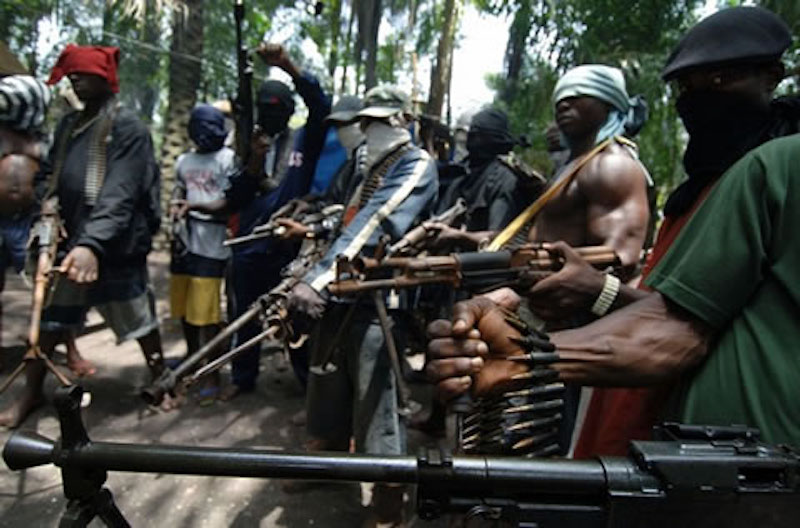
This leadership class continually trades our birthright for political crumbs, leaving me with a profound sadness I cannot shake. Every four years, we are forced to watch the same exhausting, predictable cycle play out. We have become the laughing stock of the Nigerian politics. We roar like lions in the morning, only to allow ourselves to be led like sheep to the slaughter house by nightfall. This pattern is not merely a string of tactical errors. It is a structural and psychological condition that has calcified into our political culture. We begin every election season with unparalleled bravery, massive energy, clarity, and a list of demands. We mobilise, we protest, we declare our rights. Yet at the decisive moment we fold. We trade collective power for personal gain. We accept crumbs while the harvest is taken from our lands allowing our leaders to be used as mere pawns, chess pieces, and foot soldiers on a board completely controlled by outsiders.
Call it what it is, a political Stockholm syndrome. When a people are held hostage by extractive systems for generations, they can begin to see the captor as a provider. When political actors poison our rivers, burn our gas, and extract our wealth, then return during elections with token gifts, the damaged political imagination can mistake those gifts for benevolence. A motorcycle, a solar lamp, a bag of rice, or a ten thousand naira note becomes a substitute for structural justice. We applaud the giver and forget the theft.
This is not a partisan indictment. The major parties have all participated in this system. From the coastal edges of Ondo and Edo, through Rivers and Bayelsa, to the riverine communities of Delta and Akwa Ibom, the script is the same. Political machines arrive with cash and spectacle. They leave with votes. They do not stay to build roads, to clean oil spills, to fund health care, or to restore fisheries. They do not invest in education or in the infrastructure that would make our communities resilient. They know they do not have to. They know that the combination of poverty, fragmentation, and short-term survival instincts will deliver the votes they need.
The spectacle in Rivers State is instructive. The conflict between an incumbent and a predecessor is not only a personal rivalry. It is a mirror of a deeper structural problem. An Ijaw son may occupy the governor’s office, but the expectation of loyalty to an external power broker remains. When disagreements arise, the Ijaw polity does not close ranks. Instead, it fractures. Elders, youth groups, and political actors align with different external centres of power. We tear ourselves apart while the larger system remains intact.
Delta State offers another painful example. The region produces a disproportionate share of the oil wealth that sustains the state and the nation. Yet Ijaw communities are routinely relegated to secondary roles in governance. The highest offices are often out of reach. When an Ijaw candidate shows real ambition, the pressure to step down, to accept a consolation prize, or to be bought off intensifies at the last minute. The result is a steady stream of symbolic representation and token appointments that do not translate into structural change.
Even Bayelsa State, our most homogenous political home, has not been immune. The state has been turned into a dependent outpost. Political life there is often conducted under the shadow of Abuja. During elections, communities are militarized. Young people are paid paltry sums to snatch ballot boxes and intimidate their neighbours. The leaders who emerge from such processes rarely prioritize environmental remediation, health care, or education. They prioritize survival within the national political economy.
Why do we accept this? Part of the answer lies in a minority complex that has been cultivated over generations. We have been taught to believe that because we are numerically small and geographically dispersed across several states, we cannot set national terms. That belief is false. Our geographic position along the southern maritime border gives us leverage. Nigeria’s economy cannot function without the peace of our creeks. Yet we negotiate from a position of weakness because we lack a unified, non-partisan political command structure.
Other major ethnic blocs in Nigeria have developed cultural mechanisms that protect collective interests across party lines. They maintain consensus on key strategic questions and punish those who betray the collective. The Ijaw political house, by contrast, is fragmented. We are divided into Western, Central, and Eastern blocs. Internal jealousy and rivalry consume us. When an Ijaw son or daughter rises to prominence, it is sometimes their own people who are recruited to pull them down. This internal sabotage is a major reason we are treated as expendable by national political machines.
Our representatives in national assemblies and federal boards are often the most silent and compliant. They vote for policies that harm our region because they want to protect their personal seats and committee positions. We have forgotten the intellectual foundation of our struggle. Our fathers did not rely on muscle alone. They fought with logic and strategy.
Harold Dappa Biriye used constitutional arguments to demand minority rights during the pre-independence conferences. Isaac Adaka Boro presented a detailed economic manifesto during the twelve-day revolution, exposing the systematic underdevelopment of the Delta. The Kaiama Declaration of 1998 linked environmental justice with true federalism in a way that remains a model for strategic political thinking. Today, that intellectual tradition has been eroded by a culture of thuggery, praise singing, and the pursuit of quick money.
The social and economic costs of our political submission are visible everywhere. Schools sink into the mud. Primary health centres lack basic medicines. Women die in childbirth because there are no functional boats to transport them to urban hospitals. Rivers that once sustained us are coated with crude oil. Gas flares burn day and night, releasing toxins that cause cancers and respiratory diseases. In any functioning democracy, such environmental devastation would provoke electoral punishment. But our people accept ten-thousand naira, wear party uniforms, and return the same leaders to office.
This pattern is not only morally wrong. It is strategically suicidal. The global energy transition is underway. The world is moving away from fossil fuels. In a few decades, crude oil will no longer be the primary driver of the global economy. When that happens, the Nigerian state’s willingness to distribute minor rents, amnesty stipends, and pipeline contracts will evaporate. If we remain politically domesticated and economically dependent, we will be discarded once our resources lose value. We will be left with a ruined environment and a population unprepared for the modern economy.
Breaking this cycle requires a radical transformation of our political behaviour. It requires both immediate reforms and long-term institution building.
First, we must refuse to sell our votes for temporary relief. If politicians bring money during elections, take it because it is a fraction of your stolen wealth, but enter the voting booth and vote fiercely against them if they have not delivered real, systemic progress. The act of taking money and voting against the giver is not a moral ideal. It is a pragmatic tactic that recognizes the reality of survival while asserting political agency.
Second, we must create a culture of community accountability. Any Ijaw politician, elder, or youth leader who sells out the collective interest for personal gain must face social consequences. They should be stripped of traditional honours, excluded from community gatherings, and greeted with public disapproval rather than celebration. The cost of betrayal must be made higher than the reward offered by external actors.
We must also institutionalize our collective strength. The Ijaw nation needs a permanent, non-partisan political and economic council composed of our finest minds. This council should include intellectuals, legal experts, economists, and community builders from across the globe. Its mandate would be to define a multi decade Ijaw National Agenda that transcends party lines. Any Ijaw person entering politics should be bound by that agenda. Any external political force seeking our cooperation should be required to commit to its verifiable execution.
Again, we must build strategic alliances with other coastal minority groups. From Calabar to Badagry, the coastal communities share common interests in environmental protection, maritime economies, and regional development. A unified coastal voting bloc would create a political force that no national party can ignore. Such an alliance would also strengthen bargaining power for federal resource allocation and environmental remediation.
Fifth, we must shift our economic focus from pipelines to the blue marine economy. Our future lies in the ocean. We must invest in community owned industrial fishing fleets, deep sea shipping logistics, local shipbuilding yards, and aquaculture networks. We must develop port infrastructure and maritime training centres. Economic independence is the foundation of political courage. When our communities can fund their own schools, hospitals, and water systems through independent marine enterprises, we will no longer beg for crumbs.
Sixth, we must invest in education and leadership training. Political courage is not loud rhetoric. It is disciplined strategy. We must train a new generation of leaders who understand constitutional law, public finance, environmental science, and international trade. We must teach negotiation skills, coalition building, and institutional design. The Ijaw struggle must be intellectualized and professionalized.
Seventh, we must reclaim our narrative. For too long our story has been told by others. We must document our history, our legal claims, and our environmental evidence. We must use the courts, the media, and international forums to hold polluters and complicit officials accountable. We must turn our lived experience into verifiable claims that can be litigated and publicized.
Finally, we must practice disciplined solidarity. Political unity does not mean uniformity of opinion. It means a shared commitment to core strategic objectives. It means agreeing on red lines that cannot be crossed. It means supporting candidates who commit to the Ijaw National Agenda and sanctioning those who betray it.
The hour is late. The cost of our political naivety is visible in every polluted river, every jobless youth, and every broken promise. We cannot enter another election cycle with the same broken playbook. We must reject transactional politics and demand structural change. We must hold our leaders accountable and refuse to celebrate personal appointments that bring no collective benefit.
We must heal ourselves of this political Stockholm syndrome. We must stop loving the systems that destroy us and begin the difficult work of building lasting political infrastructure. The future of the Ijaw nation depends on our ability to transform our pain into strategic power. The water is watching. The spirits of our ancestors who resisted colonial domination are watching. We must rise, cleanse our minds of dependency, and stand with dignity. The era of last minute surrender must end. The time for strategic, sovereign Ijaw political courage has arrived.
Related
Opinion
Leadership in Africa: Forging a New Era of Self-Reliance, Unity and Global Relevance (Pt. 3)
Published
1 month agoon
May 23, 2026By
Eric
By Tolulope A. Adegoke
“True leadership in Africa is not the pursuit of power, but the courage to serve — to turn the pain of yesterday into the promise of tomorrow, to bind broken hearts into one destiny, and to raise a continent where every son and daughter can stand tall, not by pulling others down, but by lifting one another higher.” – Tolulope A. Adegoke, PhD
Building upon the foundational principles and practical pathways discussed in Parts 1 and 2, this continuation explores the deeper implementation strategies, institutional reforms, cultural shifts, and long-term vision required to translate African leadership into tangible, sustainable transformation. It addresses the realities on the ground while offering forward-looking, actionable recommendations that can help Africa move from potential to performance on both regional and global stages.
Institutional Reforms as the Backbone of Transformative Leadership
Visionary leadership without strong institutions is like a beautiful dream without a foundation. Africa’s progress depends on building institutions that are resilient, transparent, and people-centred.
Leaders must prioritise civil service reform, judicial independence, and anti-corruption mechanisms that are not only punitive but preventive. For example, Rwanda’s use of performance contracts (imihigo) for public officials has created a culture of accountability and results. Similarly, Ghana’s strong electoral commission and relatively independent judiciary have helped sustain democratic stability. These models show that when institutions are strengthened, leadership becomes less about individual charisma and more about systemic effectiveness.
Regional institutions such as the African Union, ECOWAS, SADC, and the East African Community must also be reformed. They need greater financial autonomy, faster decision-making processes, and clearer enforcement mechanisms. The African Union’s current efforts to reform its Peace and Security Council and operationalise the African Standby Force are steps in the right direction, but they require consistent political will and adequate funding from member states.
Cultural and Mindset Transformation
Leadership that builds Africa must also transform mindsets. Many of the continent’s challenges are rooted in colonial-era thinking, dependency syndromes, and a culture of short-termism.
Progressive leaders should invest in cultural renewal programmes that celebrate African excellence, innovation, and resilience. This includes supporting the creative industries — Nollywood in Nigeria, Afrobeats music, and contemporary African literature — which are already projecting positive African narratives globally. Educational systems must move beyond rote learning to foster critical thinking, ethical reasoning, and entrepreneurial spirit.
Youth leadership development is particularly crucial. With over 60% of Africa’s population under the age of 25, the continent’s future depends on preparing young people not just for jobs, but for leadership. Initiatives like the African Union’s Youth Agenda and national youth service programmes should be expanded and made more impactful.
Economic Transformation and Self-Reliance in Practice
True self-reliance requires deliberate economic restructuring. Leaders must champion value addition in agriculture, mining, and natural resources. Instead of exporting raw cocoa, cotton, or crude oil, African countries should invest in processing facilities that create jobs and capture more value domestically.
The African Continental Free Trade Area (AfCFTA) offers a historic opportunity. When fully implemented, it can boost intra-African trade, reduce dependence on external markets, and create new industries. Leaders who actively remove non-tariff barriers, harmonise standards, and invest in cross-border infrastructure will be remembered as the architects of Africa’s economic renaissance.
Public-private partnerships (PPPs) should be strengthened, with clear frameworks that protect national interests while attracting responsible investment. Countries like Morocco and Ethiopia have shown how strategic industrial policies can attract foreign direct investment while building local capacity.
Global Relevance: Africa as a Solution Provider
Africa must stop seeing itself solely as a recipient of global solutions and begin positioning itself as a contributor. The continent’s vast renewable energy potential, youthful population, and rich biodiversity give it unique advantages in addressing global challenges such as climate change, food security, and digital innovation.
Leaders who understand this will invest in research and development, patent African innovations, and engage confidently in global forums. The success of African pharmaceutical companies during the COVID-19 pandemic and the growth of African tech unicorns demonstrate that the continent can compete and lead when given the right environment.
A Balanced and Hopeful Conclusion
Africa stands at a historic crossroads. The challenges — poverty, inequality, climate vulnerability, and governance gaps — are real and significant. Yet the opportunities — a youthful population, abundant natural resources, cultural richness, and growing regional integration — are even greater.
Leadership remains the decisive variable. When leaders rise above narrow interests to serve the collective good, Africa does not just survive — it thrives and offers the world new models of resilience, innovation, and inclusive growth.
The path forward requires a new covenant: between leaders and citizens, between nations and regions, and between Africa and the global community. This covenant must be rooted in trust, mutual accountability, and shared vision. With the right leadership — courageous, ethical, inclusive, and strategic — Africa can forge a new era of self-reliance, unity, and global relevance.
The question is not whether Africa can rise. The question is whether its leaders, supported by an awakened citizenry, will summon the will, wisdom, and courage to make that rise unstoppable. The world is watching, and history is waiting to record the choices made in this decisive decade.
Africa’s story is still being written. With visionary leadership, it can become one of triumph, dignity, and global excellence.
Dr. Tolulope A. Adegoke, AMBP-UN is a globally recognized scholar-practitioner and thought leader at the nexus of security, governance, and strategic leadership. His mission is dedicated to advancing ethical governance, strategic human capital development, resilient nation building, and global peace. He can be reached via: tolulopeadegoke01@gmail.com, globalstageimpacts@gmail.com
Related
Related




How I Made Buhari President in 2015 – Amaechi

Presidential Ambition: Is Donald Duke a Spoiler?

Insecurity: Why Tinubu Must Wake Up

The Stockholm Syndrome in the Delta

Bandits Invade Kwara Community, Abduct Scores, Set Emir’s Palace Ablaze

US Will Not ‘Rush into a Deal’ with Iran, Trump Declares
