Business
Entrepreneurship: Buhari Praises Dangote, Urges Nigerian Businessmen to Take Cue
Published
4 years agoon
By
Eric
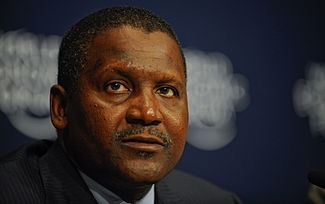
President Muhammadu Buhari on Friday in Abuja lauded the entrepreneurial spirit and doggedness of the President of Dangote Industries Limited (DIL), Aliko Dangote and urged Nigerians in business to emulate this iconic figure, to enable the country witness real economic growth and development.
While receiving the President of DIL and Board members of Dangote Group at the Presidential Villa, Abuja, President Buhari thanked the Management and Board of Dangote Group for the courage and foresight in embarking on mega investment projects “…which will have enduring benefits to generations of Nigerians. I have no doubt that such bold decisions can only be conceived by a mindset which transcends conventional commercial viability considerations.
“Entrepreneurs such as Alhaji Aliko Dangote are unique gifts to their societies and the institutions they build, and they often become the pillars of stable enduring prosperous economies,” Buhari added.
To this end, the President said: “I therefore urge other Nigerians in the business sector to emulate this iconic entrepreneur by investing in such enterprises that will in time become worthy legacies as national assets, which will continue to benefit their people for generation after generation, creating firm anchors of enduring prosperity for their citizens.”
While further commending Aliko Dangote and his team for investing in areas that bring the highest benefits to Nigerians, the President said: “I recall, with great pleasure, my visit to the Dangote Free Zone just about four weeks ago, to commission the Group’s new 3 million metric tonnes fertiliser plant. Let me, once again, congratulate you and your Board for a very successful commissioning ceremony.
“As I said at that event, the coming on stream of this plant was a huge opportunity to ramp up the productivity of our agricultural sector. It is, therefore, a most welcome booster to our government’s strategy for achieving food security and reducing poverty. Given recent developments globally, especially the effect of the ongoing war in Europe on world-wide food supply chain, I must commend your foresight for bringing the plant into operation at the time you did.
“I note that market realities will bring pressure to bear on Dangote Fertiliser Limited in seeking to meet the demands of your export customers. However, given your group’s well known patriotic vision, I am confident that your Board will continue to accord priority to meeting local demands of our farmers,” the President noted.
President Buhari also commended the Dangote Group for extending investments to other African countries, while highlighting the vision behind the refinery. “Mr. Chairman, I must specially commend you and your Board for the development of the Dangote Refinery and Petrochemical complex. I had a good view of this incredible city of steel and concrete when my helicopter circled over it during my visit for the commissioning of the Fertiliser plant”, he said.
In his remarks, the President of Dangote Group, Aliko Dangote said the Board was at the State House to express profound appreciation to the President for the great honour to the Dangote Group when he commissioned the new 3m MTPD Fertiliser plant, which was the latest subsidiary company of the Dangote Industries Limited.
“We also seize the opportunity to reiterate our immense gratitude for the sustained effort of your administration through various policy initiatives aimed at progressively improving the business environment and investment climate, despite some unprecedented challenges our economy has been confronted with over the past decade.
“We are also deeply grateful for your direct interventions at various times when our operations were challenged by some unintended consequences of economic policy positions. Your interventions have not only helped to resolve business challenges, but have been a source of great encouragement in our determination to continue to invest in our economy for the benefit of our country and our people,” he noted.
Dangote said the Board looks forward to the return of President Buhari to commission the Oil Refineries and Petrochemicals project, which will transform the Nigerian economy. “Through the outputs of our various businesses, our Group is proud to be making significant contributions to the diversification and growth of our nation’s economy, which is second only to Federal Government in the size of our workforce,” he added.
The leader of the Dangote Group said with more investments in agriculture and Oil and Gas sectors, greater impact would be made on the economy. Dangote also submitted that the group of industries would always hold on to the President’s mantra on the economy to “produce what we consume and consume what we produce.”
Related
You may like
Business
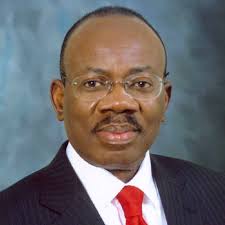
Jim Ovia Retires As Zenith Bank Chairman, Mustafa Bello Takes Over
Published
2 months agoon
May 5, 2026By
Eric
Zenith Bank Plc has announced the retirement of its Founder and Group Chairman, Jim Ovia, following the expiration of his tenure in line with regulatory requirements.
The bank disclosed this in a corporate notice issued in Lagos on May 5, 2026.
Ovia completed the mandatory 12-year tenure permitted under corporate governance guidelines for financial holding companies, non-interest banks, and payment service banks in Nigeria.
As the founder of Zenith Bank, he has been a central figure in its growth trajectory and was credited by the Board for providing strong leadership, strategic direction, and effective oversight throughout his time as chairman.
The Board noted that his commitment to governance standards and stakeholder value creation significantly enhanced the Group’s positioning and reputation in the financial services sector.
Until he was appointed Chairman, Engr. Mustafa Bello was a non-executive director in the bank.
Engr. Mustafa Bello graduated with B.Engr. (Civil Engineering), from the Ahmadu Bello University (ABU), Zaria, in 1978 with Second Class Upper Division, and won the Shell prize for best project and thesis for Faculty of Engineering in 1978.
He served in the Directorate of Quartering and Engineering Service (Nigerian Army) between 1978 and 1979. He later joined the Niger State Housing Corporation between 1980 and 1983 as a Senior Civil Engineer.
He served as a cabinet Minister of the Federal Republic of Nigeria as the Federal Minister of Commerce between 1999 and 2002. He was subsequently appointed Executive Secretary/Chief Executive Officer of the Nigerian Investments Promotion Commission (NIPC) between November 2003 and February 2014.
He is currently the Chairman of Invest-in-Northern Nig. Limited, a special purpose vehicle for the economic and social transformation of the Northern Nigerian Economy.
He has been involved in several projects in Nigeria, including the CAC online project in 2002, developing a WTO-consistent Trade Policy for the Federal Republic of Nigeria, etc.
He has attended several conferences, missions, and meetings and represented the Federal Government of Nigeria.
Channels Television
Related
Business
Why MTN, Airtel Suspended Airtime, Data Borrowing Services + the FCCPC Connection
Published
2 months agoon
April 19, 2026By
Eric
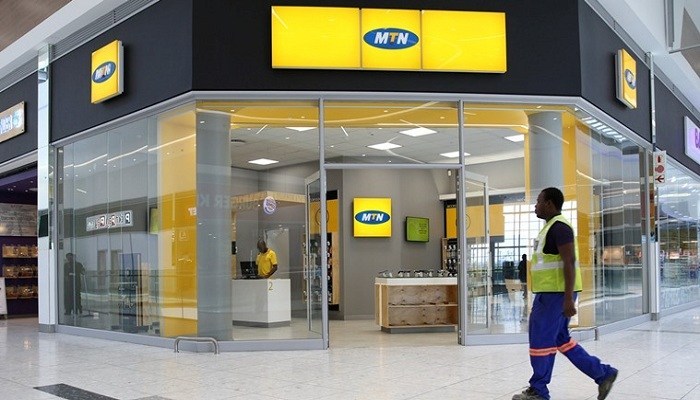
Nigeria’s largest telecom operators are temporarily suspending airtime and data loan services, a once-sticky feature for prepaid users, as new consumer lending rules force them into full regulatory compliance.
On Thursday, MTN Nigeria, the country’s largest telco, temporarily suspended its airtime and data lending product, Xtratime, and Airtel Nigeria, the second-largest provider, followed suit on Friday, citing the need to align with “evolving requirements.” Both companies say customers can still purchase airtime and bundles through standard channels.
“MTN Nigeria Communications PLC (MTN Nigeria or the Company) hereby notifies the Nigerian Exchange Limited and the investing public that the Company has temporarily suspended its airtime and data credit advance service (“Xtratime”),” the telco said in its filing. “This relates to the implementation of processes under the Digital, Electronic, Online or Non-Traditional Consumer Lending Regulations, 2025, which introduced a new compliance and licencing framework for entities providing digital or non-traditional consumer credit services.”
Nigerian telecom providers are reviewing their digital lending services to consumers following new rules by the Federal Competition and Consumer Protection Commission (FCCPC), passed in July 2025. Those guidelines apply to any entity involved in the provision, facilitation, or administration of digital or non-traditional consumer lending, bringing airtime and data advances into scope and requiring operators to obtain licences and meet the compliance requirements before continuing the services.
“Airtel Nigeria remains committed to the highest standards of compliance, transparency, and consumer protection, while continuing to innovate responsibly within Nigeria’s digital ecosystem,” said Ismail Adeshina, the company’s director of marketing, in the statement released Friday.
However, in a statement issued on Friday, the FCCPC pushed back against claims that it ordered the suspension of airtime lending services, stating that it “has not prohibited airtime borrowing or data advance services, and no directive was issued preventing consumers from accessing lawful telecom value-added services.”
The regulator framed the disruptions as a consequence of operators’ failure to comply with existing rules within the stipulated timelines.
The FCCPC’s Digital, Electronic, Online, or Non-Traditional Consumer Lending (DEONCL) Regulations and Guidelines apply to entities involved in digital consumer lending, including services tied to repayable monetary value. Products, such as MTN’s Xtratime, fall within the scope of the framework.
The FCCPC said the rules were introduced following “a deluge of consumer complaints” involving opaque charges, unexplained deductions, aggressive recovery practices, and poor disclosure standards across digital lending services.
According to the consumer protection watchdog, affected digital lending operators, including telcos, were initially given a 90-day compliance window in 2025, later extended to January 5, 2026, yet relevant operators failed to meet the necessary compliance steps.
“In the telecom sector, our findings indicated that some operators engaged in exclusionary third-party technical arrangements in clear disobedience to the provisions of the Federal Competition and Consumer Protection Act, 2018. The Regulations sought to unlock the market to allow local participants alongside foreign partners, in line with free market principles. These measures benefit Nigerians by reducing abusive practices, improving transparency, strengthening consumer choice, and encouraging responsible innovation by legitimate operators,” the regulator said on Friday.
Any temporary suspension, restriction, or operational change introduced by service providers, including telcos, should therefore be understood as a business or compliance decision by those operators, not a ban imposed by the FCCPC, the statement read.
Securing approval under the framework requires service providers to apply to the FCCPC, submit corporate and ownership documents, and disclose their lending models, including interest rates, charges, and default fees. Applicants must also declare all digital lending applications and interfaces used to issue credit, and provide evidence that these systems meet data protection and security standards under Nigerian law.
The rules further require formal consumer lending or service-level agreements (SLAs) for any partnerships with banks or fintechs. The FCCPC charges approval and renewal fees under the regulations, including an additional ₦500,000 ($372) for each lending application beyond the initial five permitted under a single approval.
While it is usually not reported separately, airtime lending contributes a sizable amount to telcos’ revenue.
In 2025, MTN Nigeria’s fintech revenue reached ₦191.3 billion ($142.5 million), growing by 80% from the previous year. About ₦10.9 billion ($8.1 million) accounted for its core fintech revenue, while the rest significantly came from airtime lending and other value-added services.
In Airtel’s case, the telco reports airtime credit service under its mobile services revenue segment, and according to how it defined this product in its 2025 financial year, it treats airtime credit as a value‑added service (VAS) classified as a mobile services product rather than a mobile money product.
In the nine months to December 2025, Airtel Nigeria’s mobile services revenue grew by 50% to $1.12 billion from $738 million year‑on‑year in constant‑currency terms. Data brought in $576 million; voice contributed $432 million, and “other” revenue—the bucket where airtime and data credit earnings sit—reported $113 million, up by about 44% from the previous year.
By comparison, Airtel Nigeria’s mobile money product, SmartCash, earned only $6 million over the same period, underscoring how small its fintech line still is relative to core mobile services income.
Airtime and data lending are high-margin businesses for telcos, since they keep the interest on advances, while incurring little to no procurement costs. Airtime credit is also critical for Nigeria’s credit-starved market, where increased telecom tariffs have pushed up the cost of staying online.
Other telecom operators operating in Nigeria, including Globacom and T2, are yet to announce similar moves. Both MTN Nigeria and Airtel Nigeria said the suspension is temporary and that the services will resume once they meet the requirements.
Source: Tech Cabal
Related
Business
Fuel Importation Ban: Dangote Tackles NMDPRA over Continuous Issuance of Import Licences
Published
3 months agoon
March 14, 2026By
Eric
President of Dangote Industries Limited, Aliko Dangote, has raised concerns that Nigeria’s downstream regulator, the Nigerian Midstream and Downstream Petroleum Regulatory Authority (NMDPRA), is still issuing licences for petrol importation despite public assurances to the contrary, warning that the practice could undermine the operations of his refinery and threaten the country’s energy security.
Speaking in an exclusive interview with THISDAY, Dangote said the continued importation of refined petroleum products into Nigeria was hurting the Dangote Petroleum Refinery, which he insisted has the capacity to meet the country’s fuel demand.
“They are still issuing licences despite that we can meet the demand. They are still killing us with importation. They are importing and we are exporting. Yes, we can do 75 million litres, but they are still back-loading,” Dangote said.
According to the billionaire businessman, the refinery can produce up to 75 million litres of petrol daily, but some market participants are still bringing imported products into the country, a development he said could distort the domestic fuel market.
His comments came against the backdrop of a statement by the NMDPRA indicating that it had stopped issuing new licences for petrol importation because domestic refining was now meeting a significant portion of Nigeria’s demand.
The regulator said the decision aligns with provisions of the Petroleum Industry Act, which allows import licences to be issued only when local production cannot meet national consumption needs.
According to the agency, no new petrol import licences were issued in 2026 as supply from domestic refineries, particularly the Dangote refinery, was considered sufficient to support the local market.
However, NMDPRA data for January 2026 showed that about 24.8 million litres of imported petrol were still consumed daily in Nigeria, although the figure dropped significantly to about three million litres per day in February.
Dangote further alleged that many of the companies importing petrol into Nigeria do not operate retail outlets or filling stations, suggesting that some of the imported volumes may be diverted or smuggled after arriving in the country.
He warned that the trend could mirror challenges previously faced by Nigeria’s rice industry, where local producers struggled to compete with imported products.
Nigeria has historically relied on imported refined petroleum products due to the poor performance of its state-owned refineries. However, expectations have risen with the start of operations at the Dangote refinery, which has a processing capacity of 650,000 barrels per day and is regarded as the largest single-train refinery in the world.
The facility is seen as a major step in Nigeria’s efforts to end decades of dependence on imported fuel.
Meanwhile, Nigeria’s minister of foreign affairs, Yusuf Tuggar, has said the ongoing tensions in the Middle East highlight the need for stronger energy partnerships with countries like Nigeria.
He noted that disruptions in oil shipments through the Strait of Hormuz, a key global oil corridor, underscore the importance of diversifying supply sources.
Tuggar said Nigeria’s untapped oil and gas reserves present an opportunity for Gulf states to partner with the country in expanding production and stabilising global energy supply.
Nigeria currently produces about 1.7 million barrels of oil per day, up from around 1.4 million barrels when President Bola Tinubu assumed office in 2023, with the potential for further growth through increased investment in fields and pipelines.
He added that while Nigeria still imports significant volumes of refined petroleum products, expanding domestic refining capacity could help the country better withstand global energy shocks in the future.
Related


Glo Extends “Borrow Me Credit” Services for Customer Inclusion
Senate Passes Bill Establishing State Police in Nigeria
US Govt Releases Names of Terrorism Financiers Amid Growing Insecurity
How I Made Buhari President in 2015 – Amaechi
Presidential Ambition: Is Donald Duke a Spoiler?
Insecurity: Why Tinubu Must Wake Up