Connect with us

Featured

Time For FG To Show Evidence Of Borrowed Funds-Wike

Published

on

Governor of Rivers State, Nyesom Ezenwo Wike says Nigeria has enormous resources, if well managed, can change, not only the fortunes of the country but the life of every Nigerian.

He has therefore, challenged the Federal Government to show evidence where it has deployed all the money borrowed from external creditors.

Governor Wike made the challenge at the inauguration of the Rumuola Flyover Bridge that was performed by the former Governor of Ondo State, Dr. Olusegun Mimiko on Thursday in Port Harcourt.

The governor stated that his administration is propelled by love and commitment to service, which is why it is working assiduously and deploying the State’s resources judiciously, for the good of Rivers people.

“It is very clear that governance is not by magic. It is all about commitment. It’s all about your love for your people and your country.

“This country has enormous resources to change the lives of our people. Nobody should give excuses. Like we would always say,  if you don’t have it,  you don’t have it.

“So, all these stories that you borrowed money from here,  and there,  let us see what the money is being used for. If we borrowed money, we are showing Rivers people what we used that money to do.”

Governor Wike said he is preoccupied with the duties of governance and rendering service to the people who elected him.

 According to him, his best reply to the opposition is the evidence of the quality projects that his administration has continued to deliver.

It is clear to them,  he said,  that the Peoples Democratic Party (PDP)-controlled state government has performed creditably well.

Aside the numerous roads completed and ongoing,  Governor Wike explained that his administration has within two years delivered nine flyover bridges, which are handled by Julius Berger Nigeria Plc.

“This government has done well.  This PDP government has done well.

Our contractor is Julius Berger Nigeria Plc. We are competing with federal government that is using Julius Berger.  Ask them how much it is to pay Julius Berger.”

He further continued:   “None of these flyovers cost us less than N7 billion. Now, the average of N7biilion into 9 and the other roads done by Julius Berger Nigeria Plc and the quality they give. I’m happy and proud to associate myself with a company that gives the best as far as construction is concerned. I can move about in this state and country proudly.”

Speaking further, Governor Wike warned criminal elements who steal manhole covers on major roads and on the flyovers bridges to desist from their nefarious activities.

He described those criminals and their sponsors as enemies of the state because they are sabotaging the good works that have been achieved to make motoring pleasurable with the State’s resources.

“Let me warn those who steal the cover of the manholes. You know when you take actions, people bring ethnic coloration. Those of you who are stealing the cover of manholes, if you like come from anywhere, if anybody wants to sabotage us, we will tell you how saboteurs are treated.

“We cannot do this road construction and you come to sabotage us by stealing to disappoint us, to make people have accident.We will not tolerate it anymore”

Governor Wike also spoke about the need for his successor to be one who will not only sustain the current pace of development but out perform him.

He pointed out that such person must rise above selfish sentiments and be ready to defend, and protect the interest of the State against all odds.

Performing the project inauguration,  former governor of Ondo State, Dr.  Olusegun Mimiko said that Governor Wike has proved himself worthy of his sobriquet: “Mr. Project!”.

According to him,  those who feel unsettled by Governor Wike’s words and actions cannot take away the fact that he conceives projects, plan projects, delivers projects because he loves projects.

“Some see governance or being in government as an end in itself, you have deployed your limitless energy, by these accomplishments, to demonstrate that governance is a means to an end;  the improvement of the lives of our people.”

Dr. Mimiko also spoke about the need to restructure Nigeria because it is an imperative means to a just, more productive and more prosperous nation.

He noted that restructuring is also about policies and actions towards getting Nigerian children off the streets into schools for the right kind of education.

According to him, it is also about improved subnational accountability in tackling youth unemployment and general alienation and many more.

“It is also not about Niger Delta oil and gas alone. After all, with the present state of climate change consciousness and concomitant investment in renewables, fossil fuel may sooner than later become outdated.

“It is about ensuring that all our God-given minerals, e.g., Gold in Zamfara or Osun is optimally exploited for the people, and not unaccountably, by, and for a few elites and their rampaging foreign collaborators.

“It is about a decentralized security architecture that will ensure nimble, versatile, accountable and optimally responsive formations.”

Providing the description of the project,  Rivers State Commissioner for Works,  Elloka Tasie-Amadi said the Rumuola Flyover Bridge project that was awarded on the 2nd of July 2020 to Julius Berger Nigeria PLC was complete by August 2021.

Tasie-Amadi pointed out that within the period the civil works lasted, there were road closures, traffic diversions, grid locks, deployment of equipment and workers.

He also stated that there were inconveniences caused to commuters, support from many good people particularly the community, and of course, payments to the contractors but all of that are over.

“This flyover measures 532m from Ramp to Ramp with the suspended section being 292m long. Service lanes on either side of the bridge  are 8.3m wide and 858.4m long.  The entire project is adorned with Street lighting and traffic control fixtures.

“The foregoing are all visible including the 24 piers under the bridge. (24 columns if you may).”

 Tasie-Amadi said,  before the project commenced, there was only a single carriage bridge which became grossly inadequate for the volume of traffic.

To address the situation, he said, a second bridge was built, service lanes completely reconstructed and expanded and all elements required to ease commute and pedestrian activities were incorporated into the project. That also included but not limited to refurbishment of the old bridge and adjoining streets.

“Please permit me to cease this opportunity to urge road users and the relevant agencies to ensure compliance with codes and strict adherence to road and traffic signs erected around the area, most notable amongst these are signs which make it unlawful to stop on the bridge and high speed lanes and which require that all commercial vehicles use only the service lanes. The bridge is essentially off limits to commercial vehicles.”

Continue Reading
Click to comment

Leave a Reply

Your email address will not be published. Required fields are marked *

Featured

How I Made Buhari President in 2015 – Amaechi

Published

on

By

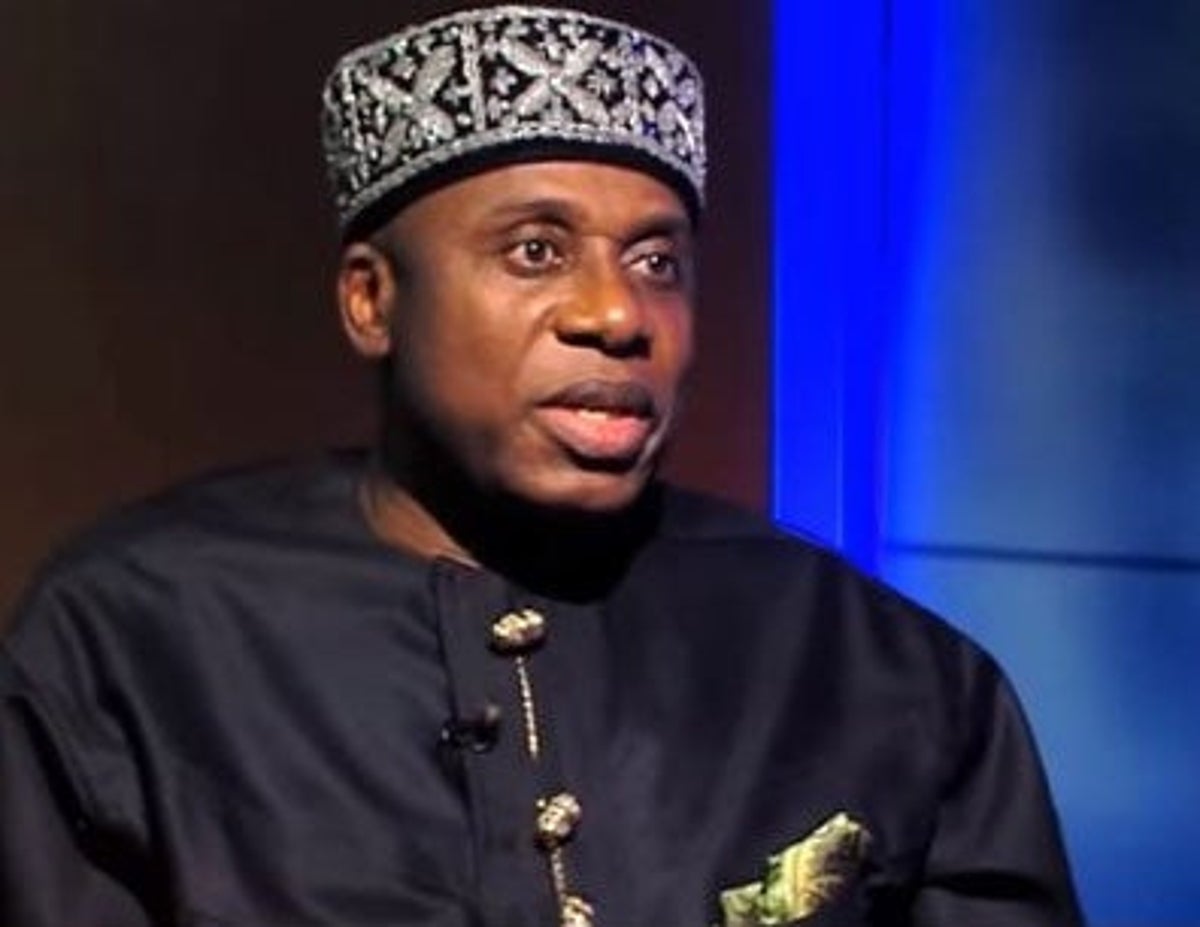
Former Rivers State Governor and ex-Minister of Transport, Rotimi Amaechi, has said that he, and not President Bola Tinubu, played the pivotal role in making late Muhammadu Buhari president in 2015.

In a Friday interview on Arise News’ Prime Time, Amaechi, who is now a presidential aspirant under the African Democratic Congress, addressed longstanding claims by Tinubu.

During his pre-2023 campaigning, Tinubu said Buhari would not have become president without him and that it was his turn to become one too.

But Amaechi explained that as a serving minister under Buhari, he could not publicly challenge Tinubu’s assertions to avoid risking his position.

“When we decided to form the APC, while I was a minister, (Tinubu) was claiming he made Buhari president and I couldn’t respond because I was a minister under President Buhari. That would have been suicidal because Buhari could fire you,” Amaechi said.

He continued, “So I couldn’t have said, ‘You are wrong.’ He didn’t make President Buhari president. Not only was I the DG of the campaign, but everybody will bear witness that I did all the battle.

“I led the Governors’ Forum, criss-crossed the country fighting here and there trying to get Nigerians to know that this is the time for change.”

Amaechi served as Director-General of Buhari’s 2015 and 2019 presidential campaigns.

He was a key figure in the 2013–2014 defection of PDP governors that helped form the APC alliance, which ultimately defeated President Goodluck Jonathan.

However, Tinubu was also instrumental in Buhari’s emergence, leading the merger of major opposition parties, including his Action Congress of Nigeria, to form the All Progressives Congress, which challenged and defeated the then-ruling PDP.

The remarks come amid Amaechi’s positioning for the 2027 presidential race as part of the growing opposition coalition under the ADC.

He has been vocal in recent months criticising the Tinubu administration over economic hardship.

Continue Reading

Featured

GLO: The Undisputed Digital Oxygen

Published

on

By

By Dr. Sani Sa’idu Baba

In medicine, oxygen is the invisible molecule upon which all human life depends. Remove it, and the body shuts down almost instantly. The brain weakens, the heart struggles, and every organ begins to fail. As someone who studies how the human body works, I have always understood the centrality of oxygen to biological existence. But in recent years, watching Nigerian society evolve in the digital age, I have arrived at another conclusion: connectivity has become the oxygen of modern civilisation.

Without network connectivity today, businesses freeze, students lose access to learning, hospital records fall into jeopardy, POS transactions struggle, markets slow down, and families become disconnected. Digital access is no longer a luxury; it is the infrastructure upon which modern life breathes.

And in Nigeria, one network increasingly stands out as the supplier of that digital oxygen: GLO.

Across campuses, markets, offices, villages, and urban centres, millions of Nigerians now depend on the Glo network for the daily rhythm of their lives. For students, it powers e-learning, research databases, virtual classrooms, and academic collaboration. For traders and entrepreneurs, it sustains mobile banking, online transactions, advertising, and customer communication. For farmers in rural communities, it ensures communication with farmland workers. For doctors and healthcare professionals, it enables telemedicine and rapid information exchange. In many homes, Glo is the invisible bridge connecting families separated by distance.

This is why many Nigerians increasingly describe Glo not merely as a telecom company, but as a necessity.

What is even more fascinating is the growing public confidence in Glo’s reliability, something I have personally witnessed. I recently observed a man asking a shop attendant to call his boss. After placing the call once, the attendant calmly replied, “Sir, his phone is switched off.” The man insisted he should call repeatedly before concluding. The attendant smiled and responded, “Sir, I am using Glo network. If Glo says the phone is unavailable, then it is unavailable.” Everyone around laughed, but beneath the humour was a powerful reality: people increasingly trust the reliability and clarity of the Glo network. That brief moment was more than a casual conversation; it was a testimony to the confidence Glo has quietly built among Nigerians.

The reality becomes even clearer during moments of national stress. In an era defined by climate change, unstable electricity supply, flooding, extreme heat, and infrastructural disruption, telecommunications networks face enormous pressure. Floodwaters damage fibre optic cables. Heat weakens sensitive electronic systems. Power failures destabilise base stations. Yet despite these challenges, millions of Nigerians continue to experience remarkable connectivity stability on Glo.

That stability is not accidental. Globacom has continued to invest heavily in infrastructure upgrades and network improvement projects aimed at enhancing customer experience nationwide. For millions of Nigerians, clearer calls and faster internet are no longer wishes but daily realities because of the company’s sustained commitment to expanding and strengthening its network systems.

What makes Glo exceptional is not simply its coverage, but its resilience. The company has increasingly embraced hybrid energy solutions involving solar systems and battery storage technology to reduce dependence on diesel-powered infrastructure. This improves network reliability during grid failures while simultaneously reducing environmental pressure. Glo has also undertaken extensive fibre reconstruction and relocation projects across Nigeria, redesigning network routes to withstand environmental disruptions such as flooding, erosion, and climate-related damage. Its investments in expanded spectrum capacity and advanced technologies have further improved efficiency, enabling stronger data delivery and smoother connectivity for subscribers across the country.

From my vantage point in Kano, a region experiencing intense heat and significant environmental pressure, the importance of resilient connectivity cannot be overstated. For traders in Sabon Gari Market, network access means economic survival. For students at Bayero University, it means uninterrupted learning and research. For countless young Nigerians trying to build digital businesses, it means opportunity itself.

In many respects, Glo functions like the respiratory system of Nigeria’s digital society. The Glo-1 submarine cable and Glo fibre optics act like lungs, bringing global bandwidth into the country. The national fibre network resembles blood vessels distributing connectivity nationwide. The 4G LTE base stations function like capillaries, delivering data directly to the individual user whether in Kano or far beyond.

The subscriber shouting “Glo Unlimited!” during a blackout while data continues flowing is not merely celebrating affordable internet. They are experiencing the result of years of investment, resilience engineering, and technological foresight.

Calling Glo “The Digital Oxygen” of Nigeria is therefore not poetic exaggeration, it is an acknowledgment of reality. In a country where millions now live, learn, trade, communicate, and dream through digital connectivity, Glo has become more than a network provider. It has become the vital breath upon which modern Nigerian life increasingly depends…

Dr. Sani Sa’idu Baba writes from Kano, and can be reached via drssbaba@yahoo.com

Continue Reading

Featured

Ooni of Ife, Wife Welcome Twin Sons

Published

on

By

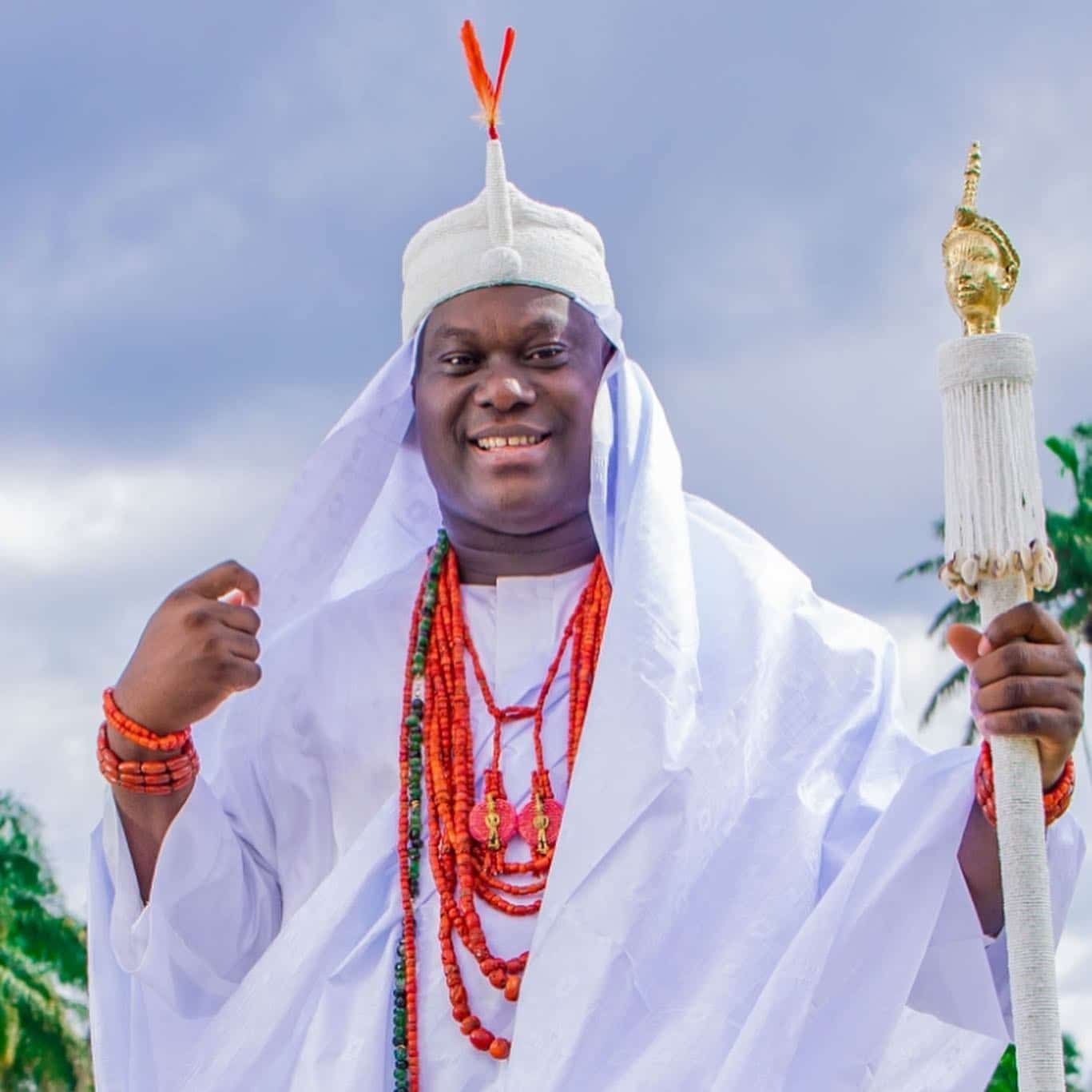
The Ooni of Ife, Adeyeye Ogunwusi, has announced the birth of twin princes with his wife Mariam Ajibola, to the Royal House of Oduduwa.

The monarch disclosed this in a post shared on his official Facebook page on Friday, expressing gratitude to God for the safe delivery of the children and the wellbeing of their mother.

“To God be all the glory and adoration for His wondrous works and abundant blessings once again.

The announcement has drawn congratulatory messages from admirers and members of the Yoruba royal institution celebrating the arrival of the newborn princes.

After his marriage to Naomi Silekunola ended, the Ooni married several queens within a short period in 2022.

Among the queens are Mariam Anako, Elizabeth Akinmuda, Tobiloba Phillips, Ashley Adegoke, Ronke Ademiluyi and Temitope Adesegun.

During celebrations marking his 48th birthday and seventh coronation anniversary, the monarch explained that his marriages were connected to the traditional heritage and responsibilities attached to the throne of Ile-Ife.

Continue Reading

Trending