
Headline
Tinubu Shares Ideas On How To Tackle COVID-19

Published
6 years agoon
By
Editor

By Asiwaju Bola Ahmed Tinubu
POLICY BACKGROUND
The coronavirus has changed the modern world with a velocity un-foretold. To protect their populations, nations have taken unprecedented steps in closing down cities, halting socio-economic activities and quarantining vast numbers of people.
Given the lethality of the disease, the public health measures have been prudential. If such action were not taken, the toll of this pandemic might rival the 1958 Asian Flu which took over 1 million people or, worse, the 1918 Spanish Flu where an estimated 50 million people passed away.
While the public health measures may save lives, their economic consequences have been brutal enough to place large numbers of people in a different form of jeopardy. We face a trade-off between certain pandemic and possible widespread depravation. Having to make this dismal trade-off between a currently incurable sickness and significant economic contraction is a dilemma no nation wishes to face. However, it is the one upon us.
The Nigerian government acted wisely to suppress the virus. Our health system and medical facilities simply cannot cope with legions of cases. The capacity and aptitude of government are more suited to dealing with the economic fallout of the public health restrictions than in dealing with the medical complexities of a contagion no one fully understands.
The economic pain suffered by the private sector can be counterbalanced by government fiscal and monetary policies that stimulate the flagging economy. We dare not underestimate the twin dangers posed by the virus itself and the economic consequences of the public health response. Our goal must be that the people live neither with disease nor in hunger. This situation presents a historic chance to establish a more beneficial social contract between government and the governed. If we so utilize thismoment, it will be recorded as a pivotal one in our national history. If we allow this moment to slip, history will not be obliged to treat us with great mercy.
THE ECONOMIC SITUATION
To stop the viral spread, the world has gone into self-induced economic contraction. Most recessions have their roots in crisis born first in the financial sector. We should sound an even louder alarm when contraction befalls the financial sector and real economy at the same time. When both experience steep downturn simultaneously, there exists the true danger of descending into something worse than recession.
The global economy has turned against us. Oil prices have steeply fallen. The price may rebound but not nearly enough to return to customary levels. The resultant revenue loss impairs the naira exchange rate. In general, the price of imports per unit has become dearer. Thus, wise policy suggests limiting our imports during this emergency in order to save hard currency and protect the exchange rate.
Nigeria’s private-sector economy can be divided into three broad sectors: 1) Agriculture, 2) Service and 3) Industry. Each sector has been affected by this crisis but with different degrees of severity and, in some instances, in entirely different ways.
Most Nigerians are engaged in low-level agricultural production in rural areas. Thus far, the coronavirus is mostly in urban areas and not in rural communities. Because of their relative isolation and the nature of their work, most farmers can continue their vocation. This means the supply of domestically produced food staples should not materially fall. With the reduction in imports, demand for their crops should accordingly rise. Unfortunately, that increased demand cannot translate into actual sales because of the drop in aggregate income suffered by the urban population. This loss of demand, coupled with restrictions on movement and on public marketplace hours, creates great uncertainty for farmers.The uncertainty means farmers and consumers cannot engage in adequate and rational price discovery. The cost of the same item may vary significantly from one location to another. Additionally, farmers engaged in non-food crop production will suffer much greater uncertainty as well as greater lost demand for their products than those who cultivate staple foods.
The farmer is burdened with too much uncertainty for any good to come of it. Government can do a lot to diminish the uncertainty by assuring farmers a minimum price for select staples. This can be done through reestablishment of commodity boards. See Recommendation 3 below for more detail.
The urban work force is mostly engaged in the service sector with aminority of workers involved in industrial manufacturing. Much of the urban labor force has been made idle. Hiring of services such as hair care, taxi driving, artisanal crafts, tailoring, etc., will be substantially deferred at this moment. These people work in businesses that are mostly small and medium-sized. The firms do not have ample cash reserves nor can they borrow funds given the high interest rates.
Unemployment has quickly skyrocketed to levels only witnessed in economic depressions. Many families have no money at all. Otherfamilies have very little money, perhaps enough to last a few more days. Yet, real life is not some abstract economics book where a person can immediately adjust his demand for goods strictly correspond with his supply of money. Despite the paucity of money, demand for life’s essentials cannot fall below the minimum required to survive. The money-less family still needs food, water, shelter and, to a lesser degree, utilities. In a compassionate society, they should not be made to do without.
Most families need relief. If relief is not forthcoming, these families risk hunger and its attendant suffering and woes.
SITUATION WITH BUSINESSES
Most businesses are small, service-sector oriented ones that have beenroughly battered by the crisis. Without relief, many of these small businesses will permanently close even when things begin their return to normal.
The financial sector too has suffered. Foreign investment has shrunk as has domestic borrowing. Large businesses also struggle because aggregate demand for their products and services has fallen. Yet, help to banks and large business is relatively simple. Such aid can be rapidly provided by the CBN. The CBN can lend large amounts of virtually non interest loans to these firms with the proviso that the companies maintain their existing payrolls.
If we must hold to the restrictive public health measures, the people will need economic relief. Activating Trader-moni and other programs will help many small-scale traders but not the average wage earner who just lost his job. Resort to the strategic grain reserves will blunt hunger but the finite reserve cannot cover all who are in danger. If we do not take additional steps to stimulate the economy and answer the demand for food, we risk a deep economic contraction that will prove difficult to cure. The worst of this dark potential can be avoided if government is prepared to act in ways that not only feeds people but protects the basic contours of our private-sector economy so that it can more quickly revive once normal conditions return.
POLICY RECOMMENDATIONS
Recessionary forces outweigh inflationary ones at this time. The agricultural sector mostly intact but hurt in part. The service and manufacturing sectors have been weakened and urban employment severely battered. The economy will suffer palpable contraction unless government enacts countervailing measures.
1. SUSPEND/AMEND 5 PERCENT DEFICIT LIMIT OF THE FISCAL RESPONSIBILITY LAW.
The Fiscal Responsibility Act prohibits fiscal deficit of more than 5 percent of GDP. This provision was fashioned after the Maastricht Treaty governing membership in the Eurozone. Eurozone members never honoured the deficit ceiling even in normal times; it was too impracticable and deflationary to abide. Given the exigencies of the current moment, the Eurozone has completely ignored the Maastricht limits.
The fiscal responsibility limit, while perhaps well intentioned, is, to say the least, inapt for a nation in our economic situation. The provision is based on two inaccurate assumptions.
The first myth is the belief that national government fiscal deficits are always harmful. The second is that economic conditions will always be “normal” even for the long-term.
Deficits run by a national government in its own currency are part of modern governance. The United Kingdom has run a continuous, ever-growing deficit since 1694. It is not the worst for it. Running that deficit wisely was instrumental in turning the island kingdom into the pre-eminent world empire. For 90 percent of its existence, the US has run annual deficits. During this extraordinary time we face, both the UK and U.S. will record the largest yearly deficits in their histories. China and India follow suit by implementing unprecedented stimulus packages.
A government deficit serves to enrich the private sector. A deficit means government spends more than it takes in. That extra amount goes to the private sector. As such, national government deficits boost private sector growth and activity. The only legitimate concern with deficit spending is inflation. However, in the present case, the threat we face is more recessionary than inflationary. A bit of inflation is the cost we should be prepared to pay to avert severe contraction.
Second, the efficacy of the law unduly hinges on the long-term clairvoyance of the legislature that wrote it and on the questionable soundness of the assumption that times will always be normal. No fiscal legislation can predict the future in perpetuity. The best fiscal rules provide sufficient leeway for future leaders to respond to the conditions of the day. Since the Fiscal Responsibility Act was first passed in 2007, Nigeria has already experienced three abnormal periods. The 2009 financial and banking crisis heavily affected us. The 2015-16 oil price recession heavily affected us. The present crisis is now heavily affecting us.
In normal times, the provision constitutes a handcuff on the federal government’s ability to stimulate economic growth. In the current situation, the provision is a mean straitjacket blocking the federal government from taking the steps required to salvage the economy at a time when only the federal government can do so.
The best step would be to suspend the 5 percent budgetary limit for this fiscal year. Alternatively, the limit should be raised to 25-30 percent to allow the federal government more room to make the minimum expenditures necessary to save the economy and the people.
2. EMERGENCY SUSTENANCE PAYMENTS
With the fiscal latitude provided by lifting the budgetary limit, government can render emergency sustenance relief to most Nigerian households, especially the recently unemployed, via cash payments.
This will blunt hunger, maintain aggregate demand in the domestic economy and help sustain private-sector markets to the extent possible. Directed towards needy and modest households, such expenditure mustbe heavily weighted to local produce, not to imports. This will help mute inflation.
Such payments can be done in either one or in a combination of three ways. First, we can designate a stipend for every household. The amount should be enough to pay for the monthly needs of an “average” household for food and other basics. While this may somewhat penalize larger families, perfection cannot be had at this time. Second, the stipends could be given as a form of emergency unemployment insurance to those who can prove they were relieved of employment due to the crisis. This would be more targeted at the actual victims of the crisis but harder to administer. This stipend would also have to be extended to owners of small and medium- sized businesses.
Third, we could render some form of payroll support to companies and businesses that seek to retain workers albeit they may not be fully employed. The stipend could help companies stay in operation while maintaining workers on their payroll. By maintaining workers, the company can more swiftly return to full operation when normalcy returns.
Payment of these stipends will require hiring additional government workers to augment the existing bureaucracies to implement this program. This administrative requirement will help boost employment and aggregate consumer demand.
Payments can be made quickly by using the BVNs of prospective recipients to make direct deposits into individual bank accounts. This will encourage those without bank accounts to establish such accounts. This process will bring millions of people into formal banking. It will also be safer and not lead to the types of violence and crime that might follow physical cash transfers.
3. AGRICULTURAL MARKET AND COMMODITY BOARDS
The agricultural sector is perhaps the least affected by this crisis. This is fortunate as it is the most important tool in mitigating the threat of widespread hunger. Yet the agricultural sector is still beset by uncertainty over prices and supply.
To maintain adequate supply of food and ensure price stability, government should re-establish commodity boards for strategically important crops. These boards will specify a guaranteed minimum-maximum price range for these crops in order to maintain and stabilize farm incomes as well as consumer prices.
4. FARM TO MARKET FACILITATION
In addition to the work of the boards, the government and the boardsmust take additional action to improve the transportation of goods from farm to market. Constructing new storage facilities in major urban centres will help maintain supply, keep prices lower and also provided employment for those constructing and maintaining the storage berths.
5. IMPORT SUPPRESSION
At this time, imports generally hurt the economy because they siphon much needed hard currency. It is imperative that we drive down our level of imports. The sole exceptions to this rule are medicine, essential raw materials and vital products such as petrol imports that we do not produce in sufficient quantities. On some essentials, we may even lower taxes and tariffs.
All other imports should be strictly discouraged through a mixture of policy measures including luxury taxes, higher tariffs and higher import processing fees due to the partial closure of ports of entry due to the coronavirus.
6. MAINTAIN AND EXPAND SCHOOL FEEDING PROGRAMS
Even with schools closed to classroom instruction, we should continue the school feeding program at participant schools. But we must also do more. The program must move beyond its pilot status by expanding it to as many schools in as many states as we can, consistent with applicable public health measures. By expanding this program, we help feed our most vulnerable children while creating extra jobs and bolstering food production and farm incomes.
7. DIPLOMATIC PUSH FOR DEBT RELIEF
African Finance and Foreign Ministers should join a coordinated effort for debt forgiveness, a “Debt Jubilee.” Alternatively, the World Bank and other DFIs should agree to a wholesale rollover of the debt of African nations by reducing the interest rate burden of African nations by at least one half.
8. FINANCIAL SECTOR MEASURES
The CBN should lower interest rates to single digits. This may spur some private sector and will lower the charge on government deficit spending.
To ensure the health of commercial banks, the CBN should give liberal access to its discount window at a virtual zero interest rate policy. To assist large businesses maintain operations and their payrolls, the CBN can give conditional interest free loans. Conditions could include firms maintaining their work force and even hiring an extra 10 percent for 2-3 months but at more reduced wage. These additional workers should be youth hired under a temporary internship or training program.
Related
You may like
Headline
Presidential Ambition: Is Donald Duke a Spoiler?

Published
4 weeks agoon
May 25, 2026By
Eric
By Eric Elezuo
With the collective intention of most political parties coming together to wrestle power from President Bola Tinubu-led All Progressives Congress (APC) at the centre, the defection of most political leaders from the coalition umbrella, the African Democratic Congress (ADC), has been viewed as a betrayal of the original course.
First, it was the presidential candidate of the Labour Party in the 2023 election, Mr. Peter Obi, and the presidential candidate of the New Nigeria People’s Party (NNPP), Senator Rabiu Kwankwaso defecting to the Nigerian Democratic Congress (NDC), and now following in their footsteps, is the former Governor of Cross River State, Mr. Donald Duke, who has found an awaiting presidential ticket with the Peoples Redemption Party (PRP).
According to reports, former governor Duke has officially joined Nigeria’s 2027 presidential race, becoming one of the latest politicians to declare interest ahead of the general elections.
Duke emerged as one of three cleared presidential aspirants of the Peoples Redemption Party ahead of the party’s primaries scheduled for 25th May in Abuja.
The party said the former governor agreed to submit his ambition to the decision of party members during the nationwide exercise.
In a statement issued by PRP National Publicity Secretary, Muhammed Ishaq, the party described the aspirants as committed to “democratic ideals and internal party unity.”
Duke, who governed Cross River State from 1999 to 2007, is widely known for promoting tourism and urban renewal projects, including the Tinapa Business Resort and the annual Calabar Carnival.
The former governor previously contested for president in 2019 under the Social Democratic Party, where he criticised both the ruling APC and the PDP.
At the time, he said the PDP had “lost its values and became a shadow of itself.”
The PRP says it remains committed to “credible, transparent and free primaries” as preparations continue for the 2027 elections.
Nigeria’s political space has already become increasingly active ahead of 2027, with more aspirants expected to declare interest in the coming months.
The statement quoted Duke, alongside Nnaoke Ufere from Abia State and Yakubu Kingsley from Edo State, are the candidates, who have unanimously agreed to submit their aspirations to the decision of party members during the nationwide primaries.
The party said the aspirants demonstrated commitment to democratic ideals and internal party unity by agreeing to abide by the outcome of the exercise.
Duke, who was Cross River governor between 1999 and 2007, appears the only strong candidate among the three aspirants, and is likely to pick the ticket after the primaries. But the major concern is not in his decision to contest or stand for election, but the intention behind his decision to choose a different to test his presidential aspirations.
Across the political space, stakeholders, observers and analysts alike have said that given the consensus agreement built around and towards ending the administration of Bola Tinubu, the coalition ADC remains the viable option to all aspirants to test their strength and popularity, after which anyone who emerges as the candidate should be supported by all. They have argued that those leaving the coalition may have much more than presidential ambition behind their minds. And so the question, is Donald Duke a spoiler? Is he in the race to decimate the votes of the opposition?
Meanwhile, Duke, who was part of the coalition at the initial stage, have taken a bow out of the group, principally coordinated by former Vice President Atiku Abubakar, and chaired by a former Senate President, David Mark. He did not give reasons for his exit from the ADC though observers have insinuated that his exit, like Peter Obi, is hinged on the premise that the ADC allegedly has a hidden bias for Atiku, and so the presidential might be handed over to the former Vice President on the platter. The ADC has since denied the allegation with former two terms governor of Rivers State, Rotimi Chibuike Amaechi and Hayatudeen still in the race.
With the entrance of Duke in the presidential race, the number of southern aspirants, especially those sure to pick the tickets of their parties have swollen up. Others include include Peter Obi of the NDC, Rotimi Amaechi if he wins the ADC primaries ongoing across the nation, Oyo State Governor, Seyi Makinde representing the PDP and APM coalition among others.
Now, that almost all the political bigwigs are separately pursuing their political aspirations devoid of a collective platform, many have said that Tinubu is no longer fighting a coalition of likeminds, but against presidentially ambitious individuals, pursuing a different agenda. Many have also said that since Tinubu already has a political structure he can rely on, he is making sure all the fragmented giants did not come together to form an indivisible body capable of challenging his reelection in 2027.
“And that explains why he continually instigate both individuals and institutions to revolt against themselves thereby creating factions and very weak political centre to challenge his ambition,” an analyst told The Boss.
Meanwhile, whether there are intentions to be a spoiler or not; whether any institution or individual have been coerced into turning itself to a vessel of destruction on behalf of the ruling, ir us only the people that would decide who becomes in 2027.
Not Tinubu, not the APC, not any of the political bigwigs, not any of the presidential aspirants or candidates, but the Nigerian people in their totality.
The election is just eight months away.
Related
By Eric Elezuo
The common refrain and slogan across the nation is ‘Nigeria is bleeding’, and as the days turn into weeks and months, the wound gets larger. Then from bleeding, the blood is now flowing.
Across all strata of endeavours, all the regions and not a few communities, insecurity of the highest order has enveloped on a very large scale, a nation that once thrive in brotherliness, interstate movements without fear, and camaraderie. The fear of the unknown has completely eclipsed social life, excursions, traveling within the country, and funnily enough staying in your own house. In the Nigeria of today, nowhere is safe anymore; not event the comfort of one’s home; not even the sacredness of holy places; not even the respected academic environment. Terrorists and bandits attack anywhere and from anywhere. And with impunity.
In the Nigeria of today, everyone leaves in fear. No one knows who the next target is as terrorists, bandits, Fulani herdsmen and other miscreants have overran the nooks and crannies of the Nigerian existence, prompting the question, where’s Nigeria’s chief security officer? And the answer that he must wake up and face squarely the insecurity challenges that is fast tearing the nation to shreds.
With the 2027 election fast approaching, the Nigerian administrative apparatchnik led by President Bola Tinubu, appears to have completely lost focus of the security of the people. The country is been thoroughly run down by activities of terrorists, who are no longer hiding their nefarious and heinous activities as they boldly put on air the victims abducted and process of execution. This daring moves are a challenge to the government and security agencies, yet no criminal is in custody yet and victims are still unaccounted for with most of them cruelly deleted, and bodies mangled.
It is worthy of note that while the nation is still gambling with the rescue efforts for the teachers and pupils kidnapped from Oyo communities schools about 12 days ago, suspected bandits have reportedly struck again, invading the Yashikira community in Baruten Local Government Area of Kwara State, early on Monday morning, setting the Emir’s palace ablaze and abducting several residents, including women and children.
Reports gathered from Channels Television say that the attack occurred late at night when the heavily armed assailants stormed the community, firing sporadically.
The medium, quoting sources in the area, stressed that the gunmen attacked the palace during the invasion, setting parts of the royal residence on fire before whisking away multiple victims.
Residents said the attackers operated for hours without resistance, leaving behind destruction and fear in the border community.
Another local source described the incident as terrifying, noting that villagers were caught unaware as the gunmen invaded the town under the cover of darkness.
Sources say Security forces have launched immediate rescue operations to free victims of the Yashikira abduction, which occurred on Sunday night.
Military and police operatives have established a cordon in the area as part of the efforts to rescue about 10 persons who were reportedly taken from the community in an overnight attack on the palace of the Emir of Yashikira.
The attackers also sought to raid the local police stations but were reportedly repelled.
As at press time, the police were yet to issue an official statement on the incident.
The invasion is one development too many this 2026 alone, and has been a recurring decimal in the Tinubu-led administration. This is taking for granted that the incident is following the heels of bandits, who on Saturday night invaded a prayer ground at Ori-Oke Ajaiye, on the outskirts of Ikiran village in Ekiti Local Government Area of the same Kwara State, killing three worshippers and abducting 15 others during a vigil.
The stories and tales of woe are inexhaustible. There’s no morning and no evening where Nigerians are not presented with gory narratives of one abduction and killing or another, creating fear and apprehension among the populace. The general notion is hinged on Tinubu’s control loss of the fabrics of the nation including the economy, power and every other mention-able sector.
It is worthy of note that like every other failure still staring Nigerians in the face, Tinubu also inherited insecurity. However, three years into his administration, and consequent upon available indices, the Nigerian leader seems to have tripled the effects of insecurity. This is counting the boldness with which the insurgents operate, the magnitude of each operation, the casualties involved, the deliberate bloodletting and the huge ransom paid in exchange. The circle has continually continued, and there seems to be no hiding place for Nigerians, especially the vulnerable masses.
On May 17, 2026, the world woke to the chilling news of the killing and beheading of the school teachers, abducted from Oyo communities. He was Michael Oyedokun.
Oyedokun was one of the teachers abducted from Community High School, Ahoro-Esinele in Oriire Local Council of Oyo State, a few days before his gruesome killing.
The killing threw residents of the area into mourning and heightened fears over worsening insecurity in the state, and the nation at large, which the government of President Bola Tinubu has found a herculean to handle.
In a video reportedly released by the captors on Sunday, May 17, 2026, the gunmen claimed responsibility for the killing of the Maths teacher, sparking panic across the community.
The incident followed a series of coordinated attacks launched by armed men on Friday, May 15, targeting multiple schools within the Ogbomoso axis, including Baptist Nursery and Primary School, Yawota; Community Grammar School; and L.A. Primary School, Esiele.
During the attacks, the assailants reportedly shot dead a classroom teacher and a commercial motorcyclist who resisted attempts to seize his motorcycle.
The attackers also abducted the school principal, vice-principal, another staff member, and an unspecified number of pupils before fleeing into the forest. Later reports put the number of abductors to 39.
Governor Seyi Makinde had earlier confirmed that seven students were abducted from Community Secondary School, while 18 pupils and seven teachers were kidnapped from First Baptist Primary and Nursery School.
He also confirmed that one person was killed during the attack, a school teacher, Joel Adesiyan. Further reports confirm that a bike rider was also killed, when he refused to let go of his motorcycle.
The incident triggered widespread panic in Ogbomoso and surrounding communities, with many parents rushing to schools to withdraw their children over fears of further attacks.
Some schools were also forced to shut down temporarily following rumours of bandits infiltrating the Ladoke Akintola University of Technology, an allegation the institution’s management later dismissed as false.
Reacting, the Amnesty International Nigeria accused the Federal Government of failing to adequately respond to Nigeria’s worsening wave of abductions targeting school children, rural communities and internally displaced persons, saying at least 1,100 people were kidnapped between January and April 2026.
The organisation made the allegation in a statement shared on its official X handle, amid renewed public concern over mass abductions in Oyo, Borno and other states, which left dozens of students, teachers and residents affected.
In the statement, Amnesty International said, “President Bola Tinubu and his government have failed to address the country’s shocking spate of abductions targeting school children, rural communities and internally displaced persons across the country.”
It added, “At least 1,100 people have been abducted – from January to April 2026,” describing the trend as a continuing failure of protection for vulnerable populations.
The group’s criticism comes days after gunmen abducted 39 students and seven teachers in an attack on schools in the Ahoro Esinele community in Oriire Local Government Area of Oyo State, an incident that also left teacher Michael Oyedokun reportedly beheaded.
Amnesty also referenced another attack in Borno State, where 42 students and pupils were abducted from Mussa Primary and Junior Secondary School in Askira/Uba Local Government Area during a Boko Haram assault.
Survivors of similar abductions, according to the rights group, have described being subjected to starvation and torture, including beatings, flogging and sexual violence, raising further concerns about the conditions victims face in captivity.
The organisation said the pattern of repeated school attacks shows a long-running crisis that authorities have yet to resolve, stressing that “over a decade is enough time for the Nigerian authorities to find a solution to this horrifying problem,” but insisting that “the reality shows the government has neither the will nor the commitment to end rampant abductions and attacks on children and their schools.”
It urged authorities to meet their obligations under both national and international law, particularly regarding the protection of children’s rights to education, safety, and protection from violence and ill-treatment.
The latest incidents have intensified national concern over school security, especially following the Oyo and Borno attacks, which occurred within the same period and involved the abduction of dozens of children and teachers.
Weeks earlier, there was a failed kidnapping attempt along the Ibadan-Ijebu road corridor, which reportedly left a traveller dead, raising fresh concerns over insecurity of great proportion hitting the southwest of the region.
According to Global Centre for the Responsibility to Protect report, between 2014 and March 2026, ‘over 2,000 children have been abducted or kidnapped, largely in mass abductions targeting schools. Armed extremist groups, including Boko Haram and ISWAP, as well as local bandits, are implicated in many cases, often using kidnappings to generate ransom or to recruit children.
The report noted that in 2024 alone, at least 580 civilians, primarily women and girls, were kidnapped across several states, noting that the figures might be higher. Not only are most victims killed during these attacks or while in custody, survivors live the rest of their lives in poverty, trauma, stigma and utter abandonment.
The funniest part, according to a social analyst, who crave anonymity, so-called repentant terrorists and bandits are treated with kid gloves, ‘rehabitated’ in luxury and given huge financial lifeline as they are released back into the sane society while their victims are left to wallow in neglect. It would be recalled that the National Security Adviser, Mallam Nuhu Ribadu, described the terrorists as ‘our brothers’, who should not be killed just as the Chief of Defence Staff, General Oluyede equated the rerrorists to the biblical ‘prodigal son’, who should welcomed with warmth and affection. These two national officers have silent on the treatment for their traumatized victims and their bereaved loved ones.
The question on the lips of majority of Nigerians, has remained what President Tinubu is doing about the extreme insecurity in the country beyond offering condolences and suggesting a now known refrain of ‘It won’t happen again’ while it continues to happen over and over again.
On two known occasions, President Tinubu was expected to visit victims and sites of violent killings and abductions in Benue and Plateau states. On the two known occasions, Tinubu fell short in the advertised visitations. He never made it to the locations.
Following the June, 2025 killings in Yelwata, Benue State, Tinubu was programmed to have an extensive state visit to site of massacre and the government house where a townhall meeting was scheduled.
It was agreed that upon his arrival, the President will first proceed to Yelewata in Guma Local Government Area, the epicentre of the attack that claimed over 100 lives.
He was scheduled to meet with families of victims, displaced persons and community leaders directly impacted by the violence.
“But it’s only God who can give you joy and hope. No amount of money can pay all of you back. Yes, as a government, we will try our best to comfort you, to work with you,” he said while directing security chiefs present, including the Inspector-General of Police, Chief of Defence Staff, and Minister of Defence, to unearth and apprehend those responsible for the killings.
Related
Headline
Fubara Withdraws from Rivers APC Governorship Primary
Published
1 month agoon
May 20, 2026By
Eric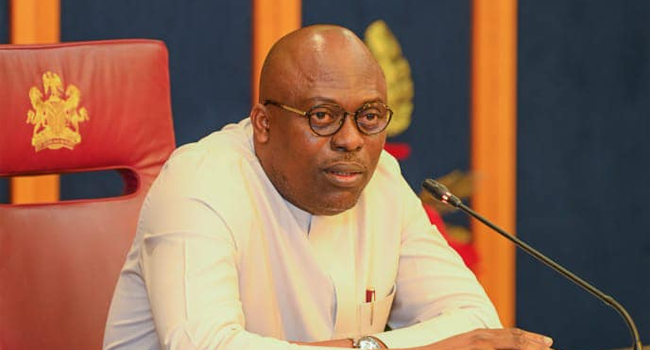
Rivers State Governor, Siminalayi Fubara, has announced his withdrawal from the All Progressives Congress governorship primary election in the state.
Fubara made this known in a statement personally signed on Wednesday, saying he would support whoever emerges as the party’s candidate, The Nations reported.
The governor said his decision followed extensive consultations with his family, friends, and political associates.
“After deep reflection and extensive consultations with my family, friends, and associates, I have taken the difficult but necessary decision to withdraw from the APC governorship primaries. I do so with a full heart and with a firm commitment to support whoever emerges as the candidate of our great party,” Fubara said.
Fubara said although the decision was difficult, he remained committed to supporting whoever would emerge as the APC governorship candidate.
According to him, leadership demands sacrifice and personal ambition must sometimes give way to the collective interest of the people.
Meanwhile, the embattled governor expressed appreciation to his supporters for their loyalty, prayers and sacrifices throughout the political process, acknowledging that many would feel disappointed by his withdrawal.
He said his silence in recent weeks was “deliberate and strategic,” adding that it was guided by the higher interest of the state.
Tone Cole, APC chieftain and 2027 governorship aspirant in Rivers State, also announced his withdrawal from the race, saying his decision was, among other reasons, in the interest of the party’s unity.
Related




US Govt Releases Names of Terrorism Financiers Amid Growing Insecurity

How I Made Buhari President in 2015 – Amaechi

Presidential Ambition: Is Donald Duke a Spoiler?

Insecurity: Why Tinubu Must Wake Up

The Stockholm Syndrome in the Delta

Bandits Invade Kwara Community, Abduct Scores, Set Emir’s Palace Ablaze

