Connect with us

Business

FirstBank Takes SMEs Business Clinic to Port Harcourt, Abuja

Published

on

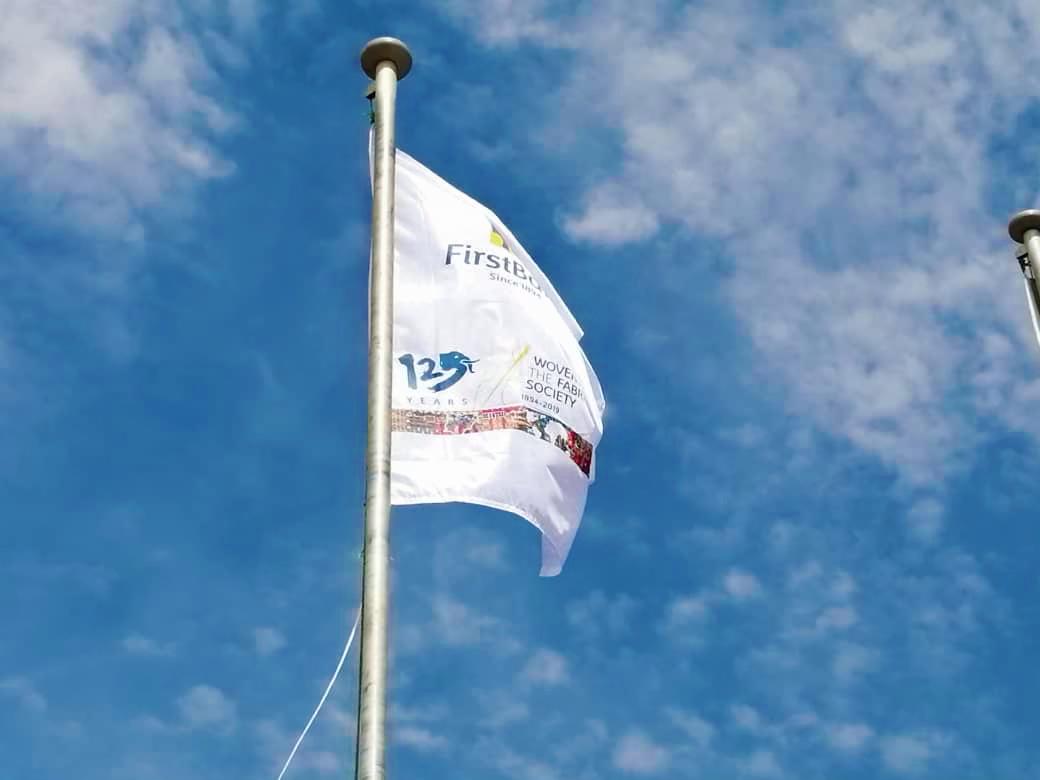
In recognition of the significant role SMEs play in achieving sustainable growth and development in the economy, Nigeria’s premier and leading financial services provider, First Bank of Nigeria Limited would host SMEs in its 2020 second edition of the SME Business Clinic.

The event is themed “Building a sustainable Business” would be held on 25th and 27th February 2020 in Port-Harcourt and Abuja respectively.

SMEs are encouraged to take the FirstBank SME diagnostic tool by visiting https://smeconnect.firstbanknigeria.com/ in order to stand a chance to be amongst the participants that will be in the SME Business Clinic in Port-Harcourt and Abuja.

The FirstBank SME diagnostic tool is designed for SMEs to check the health of their business, better understand it and drive profitability. The SME Clinic will feature one-on-one business advisory services, mentoring, networking opportunities and participants will also be acquainted with the requisite knowledge and business tools needed to drive efficiency in the day-to-day operations of their business.

Speaking on the event, Gbenga Shobo, the Deputy Managing Director, FirstBank, said “at FirstBank, we are proud of the giant strides we have taken over the years towards enhancing the SMEs for their businesses to thrive, have a fair play in the market and contribute to the Gross Domestic Product of the country. We remain the trusted financial partner of SMEs and reiterate our resolve to be known as the brand that enables their success; much the same way that we have for over 125 years enabling Nigerians and the economy at large”.

The coaches at the event are Seye Olurotimi, Lead Consult at Cedar Tribe Limited, an SME branding expert and business growth consultant with vast experience helping SMEs grow effective brands and Robert Yakubu, founder of the Instabiz Academy and the Business Mastery Program, a digital entrepreneur and business strategist empowering entrepreneurs, marketers and business professionals in Port-Harcourt and Abuja respectively.The SME Clinic session is organized in partnership with SME Traction, a leading business coaching platform aimed at empowering SMEs to make informed choices about their businesses, thereby facilitating growth and bolstering their contribution to the development of the economy.

Expressing her delight on the impact the inaugural SME Clinic has had on her business, the CEO, Nibbles Plus More Ventures, Owoeye, Oluyomi, stated that “the first step I took after the SME business clinic was do a strategic road map for my business. Riding on the information I got from the business trend session on consumer landscape, I had a clearer understanding of who my target audience are and have included that in my business plan. The feedback we believe will help us identify untapped markets and problems in our industry, how to reach them and what value we can offer them”.

Like we were told at the clinic, progressing into the counter intuitive zone of the business model reinventing box is what brings about Innovation. Something must trigger innovation and not just our intuition. Hence, we have chosen research, she concluded.

Continue Reading
Click to comment

Leave a Reply

Your email address will not be published. Required fields are marked *

Business

Jim Ovia Retires As Zenith Bank Chairman, Mustafa Bello Takes Over

Published

on

By

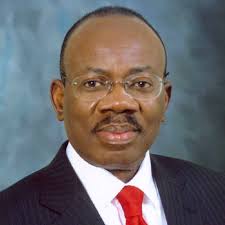
Zenith Bank Plc has announced the retirement of its Founder and Group Chairman, Jim Ovia, following the expiration of his tenure in line with regulatory requirements.

The bank disclosed this in a corporate notice issued in Lagos on May 5, 2026.

Ovia completed the mandatory 12-year tenure permitted under corporate governance guidelines for financial holding companies, non-interest banks, and payment service banks in Nigeria.

As the founder of Zenith Bank, he has been a central figure in its growth trajectory and was credited by the Board for providing strong leadership, strategic direction, and effective oversight throughout his time as chairman.

The Board noted that his commitment to governance standards and stakeholder value creation significantly enhanced the Group’s positioning and reputation in the financial services sector.

Until he was appointed Chairman, Engr. Mustafa Bello was a non-executive director in the bank.

Engr. Mustafa Bello graduated with B.Engr. (Civil Engineering), from the Ahmadu Bello University (ABU), Zaria, in 1978 with Second Class Upper Division, and won the Shell prize for best project and thesis for Faculty of Engineering in 1978.

He served in the Directorate of Quartering and Engineering Service (Nigerian Army) between 1978 and 1979. He later joined the Niger State Housing Corporation between 1980 and 1983 as a Senior Civil Engineer.

He served as a cabinet Minister of the Federal Republic of Nigeria as the Federal Minister of Commerce between 1999 and 2002. He was subsequently appointed Executive Secretary/Chief Executive Officer of the Nigerian Investments Promotion Commission (NIPC) between November 2003 and February 2014.

He is currently the Chairman of Invest-in-Northern Nig. Limited, a special purpose vehicle for the economic and social transformation of the Northern Nigerian Economy.

He has been involved in several projects in Nigeria, including the CAC online project in 2002, developing a WTO-consistent Trade Policy for the Federal Republic of Nigeria, etc.

He has attended several conferences, missions, and meetings and represented the Federal Government of Nigeria.

Channels Television

Continue Reading

Business

Why MTN, Airtel Suspended Airtime, Data Borrowing Services + the FCCPC Connection

Published

on

By

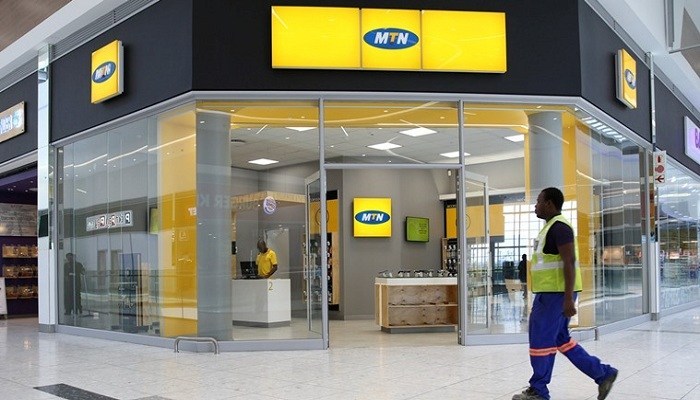
Nigeria’s largest telecom operators are temporarily suspending airtime and data loan services, a once-sticky feature for prepaid users, as new consumer lending rules force them into full regulatory compliance.

On Thursday, MTN Nigeria, the country’s largest telco, temporarily suspended its airtime and data lending product, Xtratime, and Airtel Nigeria, the second-largest provider, followed suit on Friday, citing the need to align with “evolving requirements.” Both companies say customers can still purchase airtime and bundles through standard channels.

“MTN Nigeria Communications PLC (MTN Nigeria or the Company) hereby notifies the Nigerian Exchange Limited and the investing public that the Company has temporarily suspended its airtime and data credit advance service (“Xtratime”),” the telco said in its filing. “This relates to the implementation of processes under the Digital, Electronic, Online or Non-Traditional Consumer Lending Regulations, 2025, which introduced a new compliance and licencing framework for entities providing digital or non-traditional consumer credit services.”

Nigerian telecom providers are reviewing their digital lending services to consumers following new rules by the Federal Competition and Consumer Protection Commission (FCCPC), passed in July 2025. Those guidelines apply to any entity involved in the provision, facilitation, or administration of digital or non-traditional consumer lending, bringing airtime and data advances into scope and requiring operators to obtain licences and meet the compliance requirements before continuing the services.

“Airtel Nigeria remains committed to the highest standards of compliance, transparency, and consumer protection, while continuing to innovate responsibly within Nigeria’s digital ecosystem,” said Ismail Adeshina, the company’s director of marketing, in the statement released Friday.

However, in a statement issued on Friday, the FCCPC pushed back against claims that it ordered the suspension of airtime lending services, stating that it “has not prohibited airtime borrowing or data advance services, and no directive was issued preventing consumers from accessing lawful telecom value-added services.”

The regulator framed the disruptions as a consequence of operators’ failure to comply with existing rules within the stipulated timelines.

The FCCPC’s Digital, Electronic, Online, or Non-Traditional Consumer Lending (DEONCL) Regulations and Guidelines apply to entities involved in digital consumer lending, including services tied to repayable monetary value. Products, such as MTN’s Xtratime, fall within the scope of the framework.

The FCCPC said the rules were introduced following “a deluge of consumer complaints” involving opaque charges, unexplained deductions, aggressive recovery practices, and poor disclosure standards across digital lending services.

According to the consumer protection watchdog, affected digital lending operators, including telcos, were initially given a 90-day compliance window in 2025, later extended to January 5, 2026, yet relevant operators failed to meet the necessary compliance steps.

“In the telecom sector, our findings indicated that some operators engaged in exclusionary third-party technical arrangements in clear disobedience to the provisions of the Federal Competition and Consumer Protection Act, 2018. The Regulations sought to unlock the market to allow local participants alongside foreign partners, in line with free market principles. These measures benefit Nigerians by reducing abusive practices, improving transparency, strengthening consumer choice, and encouraging responsible innovation by legitimate operators,” the regulator said on Friday.

Any temporary suspension, restriction, or operational change introduced by service providers, including telcos, should therefore be understood as a business or compliance decision by those operators, not a ban imposed by the FCCPC, the statement read.

Securing approval under the framework requires service providers to apply to the FCCPC, submit corporate and ownership documents, and disclose their lending models, including interest rates, charges, and default fees. Applicants must also declare all digital lending applications and interfaces used to issue credit, and provide evidence that these systems meet data protection and security standards under Nigerian law.

The rules further require formal consumer lending or service-level agreements (SLAs) for any partnerships with banks or fintechs. The FCCPC charges approval and renewal fees under the regulations, including an additional ₦500,000 ($372) for each lending application beyond the initial five permitted under a single approval.

While it is usually not reported separately, airtime lending contributes a sizable amount to telcos’ revenue.

In 2025, MTN Nigeria’s fintech revenue reached ₦191.3 billion ($142.5 million), growing by 80% from the previous year. About ₦10.9 billion ($8.1 million) accounted for its core fintech revenue, while the rest significantly came from airtime lending and other value-added services.

In Airtel’s case, the telco reports airtime credit service under its mobile services revenue segment, and according to how it defined this product in its 2025 financial year, it treats airtime credit as a value‑added service (VAS) classified as a mobile services product rather than a mobile money product.

In the nine months to December 2025, Airtel Nigeria’s mobile services revenue grew by 50% to $1.12 billion from $738 million year‑on‑year in constant‑currency terms. Data brought in $576 million; voice contributed $432 million, and “other” revenue—the bucket where airtime and data credit earnings sit—reported $113 million, up by about 44% from the previous year.

By comparison, Airtel Nigeria’s mobile money product, SmartCash, earned only $6 million over the same period, underscoring how small its fintech line still is relative to core mobile services income.

Airtime and data lending are high-margin businesses for telcos, since they keep the interest on advances, while incurring little to no procurement costs. Airtime credit is also critical for Nigeria’s credit-starved market, where increased telecom tariffs have pushed up the cost of staying online.

Other telecom operators operating in Nigeria, including Globacom and T2, are yet to announce similar moves. Both MTN Nigeria and Airtel Nigeria said the suspension is temporary and that the services will resume once they meet the requirements.

Source: Tech Cabal

Continue Reading

Business

Fuel Importation Ban: Dangote Tackles NMDPRA over Continuous Issuance of Import Licences

Published

on

By

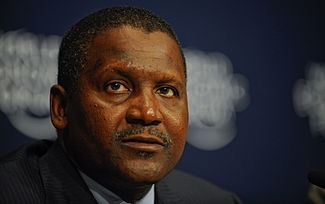
President of Dangote Industries Limited, Aliko Dangote, has raised concerns that Nigeria’s downstream regulator, the Nigerian Midstream and Downstream Petroleum Regulatory Authority (NMDPRA), is still issuing licences for petrol importation despite public assurances to the contrary, warning that the practice could undermine the operations of his refinery and threaten the country’s energy security.

Speaking in an exclusive interview with THISDAY, Dangote said the continued importation of refined petroleum products into Nigeria was hurting the Dangote Petroleum Refinery, which he insisted has the capacity to meet the country’s fuel demand.

“They are still issuing licences despite that we can meet the demand. They are still killing us with importation. They are importing and we are exporting. Yes, we can do 75 million litres, but they are still back-loading,” Dangote said.

According to the billionaire businessman, the refinery can produce up to 75 million litres of petrol daily, but some market participants are still bringing imported products into the country, a development he said could distort the domestic fuel market.

Dangote said the persistence of import licences contradicts earlier assurances by the Nigerian Midstream and Downstream Petroleum Regulatory Authority (NMDPRA) that fuel imports would be restricted once domestic refining capacity improved.

His comments came against the backdrop of a statement by the NMDPRA indicating that it had stopped issuing new licences for petrol importation because domestic refining was now meeting a significant portion of Nigeria’s demand.

The regulator said the decision aligns with provisions of the Petroleum Industry Act, which allows import licences to be issued only when local production cannot meet national consumption needs.

According to the agency, no new petrol import licences were issued in 2026 as supply from domestic refineries, particularly the Dangote refinery, was considered sufficient to support the local market.

However, NMDPRA data for January 2026 showed that about 24.8 million litres of imported petrol were still consumed daily in Nigeria, although the figure dropped significantly to about three million litres per day in February.

Dangote further alleged that many of the companies importing petrol into Nigeria do not operate retail outlets or filling stations, suggesting that some of the imported volumes may be diverted or smuggled after arriving in the country.

He warned that the trend could mirror challenges previously faced by Nigeria’s rice industry, where local producers struggled to compete with imported products.

Nigeria has historically relied on imported refined petroleum products due to the poor performance of its state-owned refineries. However, expectations have risen with the start of operations at the Dangote refinery, which has a processing capacity of 650,000 barrels per day and is regarded as the largest single-train refinery in the world.

The facility is seen as a major step in Nigeria’s efforts to end decades of dependence on imported fuel.

Meanwhile, Nigeria’s minister of foreign affairs, Yusuf Tuggar, has said the ongoing tensions in the Middle East highlight the need for stronger energy partnerships with countries like Nigeria.

He noted that disruptions in oil shipments through the Strait of Hormuz, a key global oil corridor, underscore the importance of diversifying supply sources.

Tuggar said Nigeria’s untapped oil and gas reserves present an opportunity for Gulf states to partner with the country in expanding production and stabilising global energy supply.

Nigeria currently produces about 1.7 million barrels of oil per day, up from around 1.4 million barrels when President Bola Tinubu assumed office in 2023, with the potential for further growth through increased investment in fields and pipelines.

He added that while Nigeria still imports significant volumes of refined petroleum products, expanding domestic refining capacity could help the country better withstand global energy shocks in the future.

Continue Reading

Trending