Connect with us

Headline

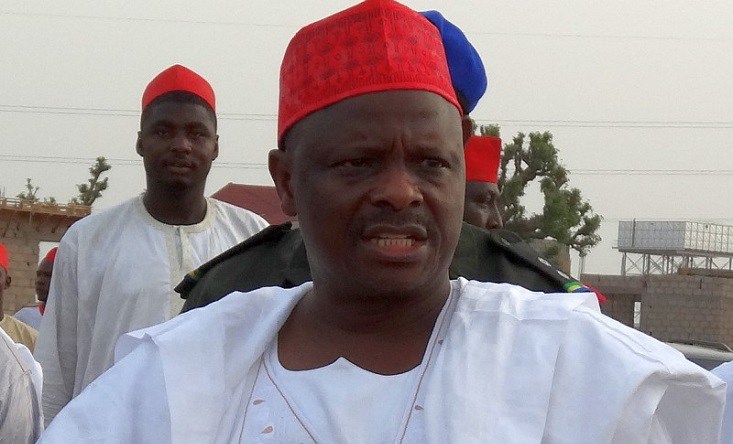
Who’s Afraid of Rabiu Kwankwaso?

Published

on

By Eric Elezuo

The recent revelation that the Economic and Financial Crimes Commission (EFCC) is investigating Rabiu Kwankwaso, former governor of Kano state, over alleged N2.5 billion pension fraud may not have come to a lot of Nigerians as a shock.

Kwankwaso is alleged to be in the middle of the storm brewing in Kano State at the moment concerning the emirship tussle of Kano Emirate between the reinstated Emir Muhammadu Sanusi II, who is known as Sanusi Lamido Sanusi, and the deposed Emir Aminu Ado Bayero. While it is believed that the state government, which Kwankwaso arguably is a part of it, backs the reinstatement of Sanusi, the Federal government supports the continuation in office of Bayero, as he is a product of the immediate past governor of the state, Abdullahi Ganduje, who is now the Chairman of the ruling All Progressives Congress (APC).

Kwankwaso was the presidential candidate of the New Nigeria Peoples Party (NNPP) in 2023, the platform under which the present governor, Kabir Yusuf, was elected.

TheCable reports that a source in the EFCC said that the said sum was diverted from the coffers of the Kano government when Kwankwaso was governor of the state.

The source also alleged that houses that should have been handed to pensioners at the time were “given to other persons” by Kwankwaso, who was governor of Kano from 1999 to 2003 and from 2011 to 2015.

The source told TheCable that “There was a time when a group of pensioners in Kano paid to have their own houses. The money was N2.5 billion, and they diverted the money during the Kwankwaso administration and didn’t give them houses,” the source said.

“The houses were given to other people. So we recovered the houses and returned them to the pensioners.

“But we are currently investigating because it is still a criminal offence. We invited him for questioning but he was not detained. It wasn’t recent and it came before the election.”

News of the investigation comes months after Boniface Aniebonam, founder of the New Nigeria Peoples Party (NNPP), said Kwankwaso is destroying the party and making attempts to hijack the party’s structure.

In 2023, NNPP’s board of trustees (BoT) suspended Kwankwaso for alleged anti-party activities.

However, another faction of the party loyal to the former governor reversed the suspension.

Kwankwaso was subsequently expelled from the party after he failed to appear before a disciplinary committee.

It is yet to be ascertain if the parts Kwankwaso is playing the dethronement of Ado Bayero, and enthronement of Sanusi is the reason behind the sudden EFCC investigation.

It would be recalled that in 2020, Kwankwaso accused then President Muhammadu Buhari of ordering the dethroning and subsequent banishment to Nasarawa State of Mohammed Sanusi II.

Kwankwaso also derided the president as one who intervenes where he is not supposed to, but does not intervene where he supposed to.

In a statement, he was quoted as saying:

“Let me begin by saying today is a very sad day in Kano, Nigeria and by extension in the entire world, because His Highness the Emir of Kano (Sanusi) is a global personality.

“What we have seen is very sad because there is no responsible government that is supposed to take the kind of step taken by Kano State Government by dethroning Emir Muhammad Sanusi II.

“But, the big issue is that, as enshrined by section 35 of the Nigerian Constitution, even if you dethrone someone as Emir, you ought to allow chose wherever he so pleases to stay, that is even when you follow due process to dethrone him.

“However, like people who are close to President Muhammadu Buhari often say that, the President does not intervene in disputes; that, if people are in dispute the President just keeps quiet, but we in Kano do not see him (President Muhammadu Buhari) like that; we see him like he selects where he intervenes. And where he is supposed to intervene, he doesn’t, but where he is not supposed to intervene, that is where he does.

“You see leaders here in Kano State Government themselves are saying they were given the order to dethrone the Emir. He (President Muhammadu Buhari) is the one that gave them the order.

“The reason they are insinuating that, we are supporting the Emir and the Emir is supporting us is because, His Highness the Emir had said repeatedly that, whoever won the Kano State Governorship election should be given his mandate. Those are the kind of statements from the Emir that got them (APC Governorment) angry.

“And you see, the process they followed in the dethronement of the Emir is not the only problem, the most disturbing is the way and manner they humiliated the people of Kano by humiliating the Emir.

“I never issued query to His Highness Emir Sanusi II or did anything that looks like that. What I know is that, if you are Governor or President, you are supposed to know that, you are a leader, helper of the people, lover peace, not to use what you have like the security forces to muscle people like what we saw in Kano yesterday (Monday).

Alhaji Rabiu Musa Kwakwanso, the subject behind the popular Kwankwasiyya Movement has made and continue to make waves in the Northern political arena and beyond. The former governor of Kano State, who posterity gave pass marks for his eight years stewardship in the ancient city-state, seems to make a third appearance as his protégé, Yusuf, won the 2023 election in the state.

In the buildup to the 2019 presidential election, gave the likes of Atiku Abubakar, Aminu Tambuwal and Bukola Saraki a run for their money for the presidential ticket of the PDP.

In the prelude to the 2015 General Elections, Kwankwazo narrowly lost to the incumbent President, Muhammadu Buhari, at the party primaries held at the Teslim Balogun Stadium in Lagos. He beat former Vice President, Alhaji Atiku Abubakar to the third place.

Kwankwaso was born on October 21,1956 in Kwankwaso village of Madobi Local Government Area of Kano State. He attended Kwankwaso Primary School, Gwarzo Boarding Senior Primary School, Wudil Craft School and Kano Technical College before proceeding to Kaduna Polytechnic where he did both his National Diploma, and Higher National Diploma. He did postgraduate studies in the United Kingdom a Middlesex Polytechnic (1982-1983) and Loughborough University of Technology (1983 -1985) where he got his master’s degree in Water Engineering. Kwankwaso was an active student leader during his school days and was an elected official of the Kano State Students Association.

Kwankwaso started work in 1975 at the Kano State Water Resources and Engineering Construction Agency (WRECA), serving as a civil servant for 17 years in various capacities and rising through the ranks as the principal engineer.

In 1992, Kwankwaso was elected as a member of House of Representatives representing Madobi Federal Constituency. His subsequent election as Deputy Speaker in the House brought him to the limelight of national politics.

During the 1995 Constitutional Conference, Kwankwaso was elected as one of the delegates from Kano, as a member of the Peoples Democratic Movement led by Yar’adua. He joined the PDP in 1998 under the platform of Peoples Democratic Movement in Kano led by Mallam Musa Gwadabe, Senator Hamisu Musa and Alhaji Abdullahi Aliyu Sumaila. He was elected governor of Kano State in 2007 and served for two terms before being elected as a senator. He defected from the PDP in 2014 and returned on July 24, 2018.

The coming days will determine the authenticity of EFCC’s claim, or if it is just another witch-hunt to persuade him to dance to the Federal Government’s tune in the Kano Emirship tussle.

Continue Reading
Click to comment

Leave a Reply

Your email address will not be published. Required fields are marked *

Headline

Rivers Impeachment Brouhaha: Wike, Fubara ‘Run’ Abroad to Meet Tinubu

Published

on

By

By Eric Elezuo

The fragile peace that sprout out in Rivers State after the six months Emergency Rule declared by President Bola Tinubu, has suddenly collapsed as the two major gladiators; the Federal Capital Territory Minister, Nyesom Wike and Rivers State governor, Siminalayi Fubara, have returned to the war front.

This is as the 26 legislators loyal to the FCT minister have initiated an impeachment proceedings against the sitting governor, Fubara, accusing him of gross misconduct roped in 8-count charges.

The lawmakers during a session on Thursday, presided over by Speaker of the House, Martin Amaewhule, are accusing Fubara and his deputy, Dr. Ngozi Oduh, of gross misconduct.

Observers have said that the day’s proceedings bear the imprimatur of renewed hostilities between Fubara and his predecessor Nyesom Wike, minister of the Federal Capital Territory (FCT).

Rrcall that onn December 5, 2025, a horde of the Rivers assembly lawmakers led by the speaker, announced their defection from the Peoples Democratic Party (PDP) to the All Progressives Congress (APC), and days later, Fubara formalised his own switch from the PDP to the APC.

By the renewed hostilities, the two feuding personalities are seeking the support of the president, who it is believed can quench the rising tension, to either impeach the Chief Executive or survive the impeachment process.

A report monitored on Businessday Newspaper noted therfore, that President Bola Tinubu has once again intervened in the lingering political crisis between Fubara, and Wike.

According to the paper, quoting credible sources, the President summoned Wike for a crucial meeting abroad over the renewed face-off, which has reignited tensions in the oil-rich state, even as the president is still holidaying abroad.

The paper also The Punch, said a top presidential source disclosed on Saturday that the meeting is expected to be held in Dubai, United Arab Emirates (UAE), where Tinubu will be heading after a brief stay in France.

“The President must see the danger in what Wike is doing. I am aware he has summoned him to a meeting in Dubai. Barring any last-minute change, they are expected to meet abroad. Wike cannot impeach Fubara; the President will call him to order,” the source said.

The source added that Wike’s recent actions constituted an affront to the President and could potentially trigger unrest in the Niger Delta.

“If you say you want to sack the first Ijaw man to be governor, are you not sending the Ijaw people back to the creeks? That will have attendant effects on the economy, and the President will not allow that to happen,” he warned.

According to reports, tension heightened on Thursday after 27 members of the Rivers State House of Assembly, loyal to Wike, initiated fresh impeachment proceedings against Governor Fubara and his deputy, Prof. Ngozi Odu.

The impeachment notice, read by Majority Leader, Major Jack, during plenary presided over by Speaker Martins Amaewhule, contained seven allegations of gross misconduct against the governor.

These include the demolition of the Assembly complex, extra-budgetary spending, and refusal to comply with a Supreme Court ruling on legislative financial autonomy.

Deputy Governor Odu was accused of “reckless and unconstitutional spending of public funds” and “obstructing the Assembly from performing its duties.”

Speaker Amaewhule described the impeachment move as “good and in the interest of Rivers State,” accusing Fubara of undermining the Assembly by failing to present the 2026 budget.

The latest move mirrors the earlier impeachment crisis that led to the declaration of a state of emergency in Rivers in March 2025.

Despite Tinubu’s earlier mediation, the fragile peace between Wike and Fubara collapsed just months after the end of the six-month emergency rule.

Wike accused Fubara of reneging on their post-truce agreements, while Fubara fired subtle jabs at his predecessor.

The rift has since deepened, with Wike vowing that Fubara would not secure a second term, even after defecting to the All Progressives Congress (APC).

A senior aide to the President told reporters that Tinubu was aware of the escalating situation but declined to confirm any planned meeting with Wike.

“Only Wike or his aides can say if there is any scheduled meeting between him and the President,” the official said.

However, a senior APC official confirmed that national leaders of the party planned to meet Tinubu when he returns to Nigeria to discuss the growing discontent over Wike’s conduct.

“Some of our leaders believe Wike should have respected the President and the party because Fubara is now one of our governors,” the official said. “Even if he won’t get a second term, he should be allowed to complete his tenure.”

Meanwhile, Wike has been touring Rivers local councils, soliciting and accepting approvals from loyalists just as Fubara has asked for calm from members while they wait on the president.

Continue Reading

Headline

Atiku Will Not Withdraw for Anyone, ADC Ticket Must Be Earned in Open Contest – Paul Ibe

Published

on

By

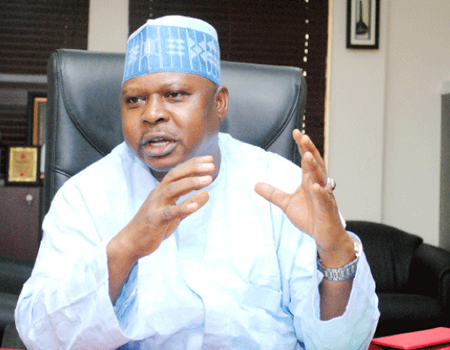
Media Adviser to former Vice President Atiku Abubakar, Paul Ibe, has insisted that neither Atiku nor any other aspirant in the African Democratic Congress (ADC) opposition coalition will step aside, stressing that the party’s presidential ticket must be earned through a transparent and competitive process.

Speaking in an interview with ARISE News on Wednesday, Ibe said calls for Atiku to withdraw from the race undermine democratic principles and play into what he described as the ruling All Progressives Congress’ alleged plan to weaken opposition politics.

“Inclusiveness is the essence of democracy. The ADC remains committed to an open, transparent and competitive process for choosing its flag bearer. Any call for Atiku Abubakar to step aside is a betrayal of the Nigerian people,” he said.

Ibe accused the administration of President Bola Tinubu of interfering in the internal affairs of opposition parties, alleging an agenda to impose a one-party state on Nigeria.

“The Tinubu-led administration should be focused on governance — security, the economy, the welfare of Nigerians — but instead, they are dabbling into opposition politics. That is dangerous for democracy,” he said.

He dismissed claims that Atiku dominates the ADC, describing such narratives as “mischief.”

“Atiku Abubakar is just a member of the ADC. Yes, he is a leader, a former vice president, but he is not the only leader. There are leaders across the country, and he is working with them to build party structures,” Ibe said.

According to him, the party’s current priority is grassroots mobilisation, not ticket permutations.

“Talking about who gets the ticket now is putting the cart before the horse. A house without pillars will collapse. The ADC is building structures — ward, local government, state — and that is where the focus should be.”

On speculation about possible compromises with other aspirants such as Peter Obi and Rotimi Amaechi, Ibe said no discussion has taken place regarding relinquishing the presidential ticket.

“There has been no conversation whatsoever about stepping down for anyone. Their preoccupation is building a robust alternative platform capable of giving the APC a run for its money.”

Addressing reports of alliances involving figures outside the ADC, including Rabiu Kwankwaso and former President Olusegun Obasanjo, Ibe said such talks were external to the party.

“Rabiu Kwankwaso is not a member of the ADC. Whatever discussions are happening are outside the party. But the ADC is expanding, reaching out, and more people will come on board.”

He maintained that the ADC leadership has ruled out automatic tickets, insisting the process will not be dictated by external forces.

“The party has made it clear: no automatic tickets. The outcome of the primaries will be determined by party members, not outside influence.”

Responding to questions about Atiku’s age and repeated presidential bids, Ibe rejected suggestions that the former vice president should step aside to mentor successors.

“Age has nothing to do with leadership. Atiku has mentored governors, lawmakers and public servants over the years. He is patriotic, passionate, and deeply committed to Nigeria.”

He added:

“If you analyse his blood, you will find Nigeria in it. Nobody has been more prepared to govern than Atiku Abubakar.”

Ibe also alleged that Nigeria’s last two presidential elections were rigged, arguing that Atiku’s defeats were not a reflection of public trust.

“The elections of 2019 and 2023 were rigged. This is not about trust; it is about institutions failing Nigerians.”

On fears that opposition divisions could again hand victory to the ruling party in 2027, Ibe said opposition leaders had learned from past mistakes.

“This is not about personal ambition. It is a call to national duty. Leaders understand what is at stake and have learned from 2023.”

He further alleged attempts by the ruling party to infiltrate and destabilise the ADC.

“The Tinubu camp does not want an opposition. They are funding court cases and using state resources to undermine the ADC, but the party is taking steps to ensure they fail.”

However, Ibe said some details could not be disclosed publicly.

“There are things I cannot share on camera, but the leadership and stakeholders are fully aware.”

Asked what would happen if Atiku loses the ADC primary, Ibe said his principal would accept the outcome.

“Atiku Abubakar will submit himself to the process and support whoever emerges as the presidential candidate of the ADC.”

Continue Reading

Headline

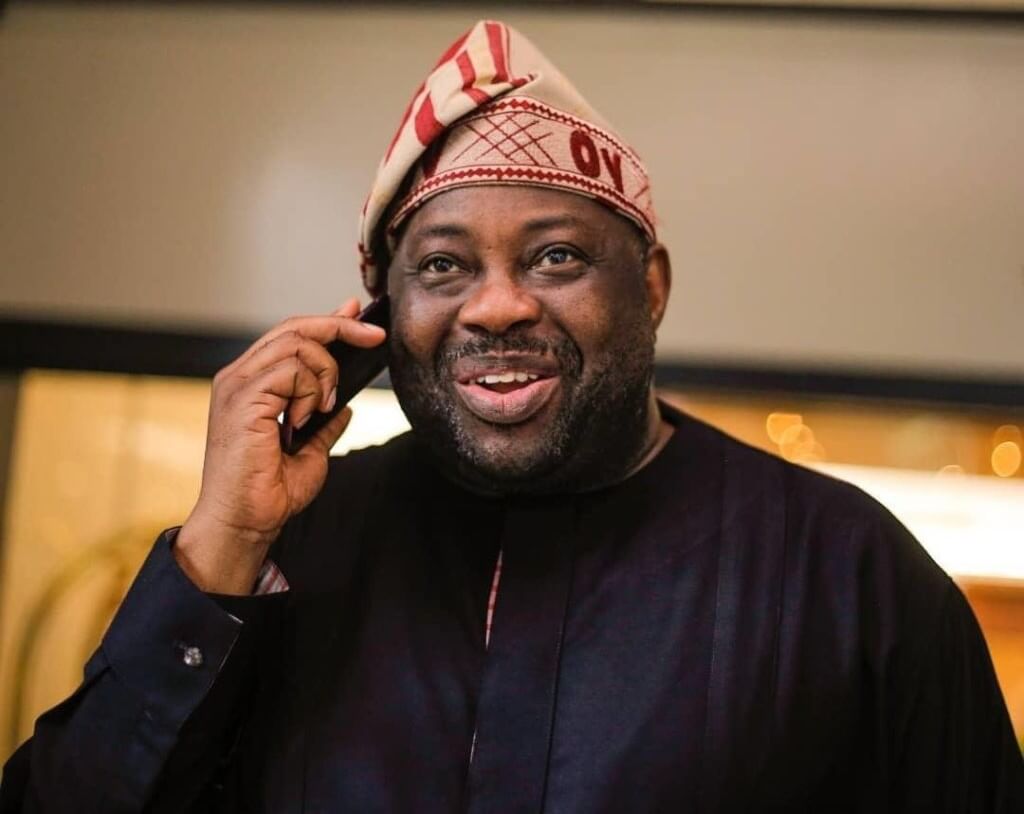
2027: Dele Momodu Warns Against Introduction of ‘Aggression and Rambunctiousness’ into ADC

Published

on

By

Veteran Journalist and chieftain of the African Democratic Congress (ADC) Chief Dele Momodu, has cautioned the party against repeating internal conflicts similar to those experienced in the Peoples Democratic Party (PDP), stressing that some groups are introducing ‘aggression and rambunctiousness into a fledgling cooperation’.

In a post on X, Momodu recalled the 2025 gathering in Abuja, where opposition parties coalesced around ADC to challenge the ruling All Progressives Congress (APC).

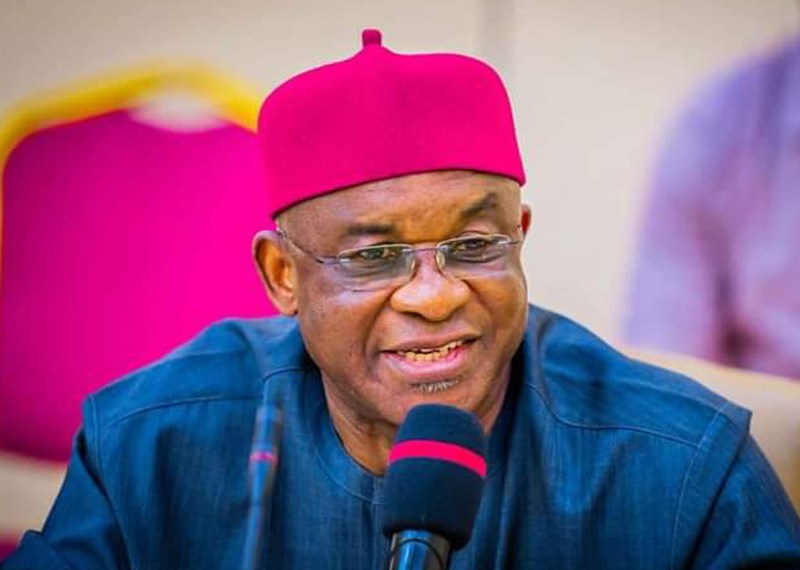
He wrote: “I was most elated hearing these beautiful words. I was happy to see an Army veteran and General David Mark as Chairman, knowing he would brook no nonsense. But in recent time, some groups have introduced aggression and rambunctiousness into a fledgling cooperation. How can a coalition work if some groups insist they must produce the top ticket by donation and coronation, without election or persuasion?”

Momodu warned that ADC must enforce discipline before internal disagreements escalate, citing how former Governor of Rivers State, Nyesom Wike, consolidated power within the PDP.

“ADC should be a party of love and not a Fuji house of commotion,” he said.

The warning coincides with renewed clarifications from the Obidient Movement Worldwide, which has emphasised that former Anambra State Governor, Peter Obi, who recently defected from the Labour Party to the ADC, will not serve as a vice-presidential candidate to any politician, asserting that its support is exclusively for his emergence as Nigeria’s president in 2027.

Also, Obedient Movement’s National Coordinator, Dr Tanko Yunusa, speaking on Eagle 102.5 FM’s Frontline programme, dismissed speculation that Obi’s alignment with ADC signals deference to former Vice President Atiku Abubakar or other political figures.

“Everybody that was in that particular coalition contributed to that particular coalition with their hard-earned money. Nobody owns that political party, please, and please, don’t get it wrong,” Yunusa said.

He described Obi as a candidate capable of delivering what the Obidient Movement calls a “moral solution” to Nigeria’s leadership challenges, highlighting policy priorities including economic discipline, national security, and sustainable fuel subsidies. Yunusa also outlined Obi’s approach to foreign relations, saying, “The people of Nigeria are the ones that Mr Peter Obi will interface with as a gentleman. And then he will also link up with the international community to ensure that they’ve got that particular respect they desire.”

Addressing criticisms over Obi’s political mobility, Yunusa said structural challenges within the Labour Party necessitated his defection to ADC. “Forces in power deliberately undermined the party’s functionality. If your house is being deliberately set on fire, would you remain inside it? There was a calculated attempt to destroy what was being built,” he said.

Yunusa said that Obi’s decision to join ADC followed consultations with a broad coalition of groups seeking national reform. “Ordinarily, Peter Obi would flow with the people who are calling for him,” he said, noting that young Nigerians involved in the process are “the deciders” of his political trajectory.

Responding to questions on a potential vice-presidential role, Yunusa reaffirmed, “Politics has no permanent enemies, only permanent interests. The interest here is good governance, and Peter Obi represents that.”
He also reiterated Obi’s one-term pledge, saying, “If elected in 2027, Peter Obi would complete the remaining four years for the South and return power to the North. This demonstrates credibility and national unity.”

The Obidient Movement has committed to following a transparent ADC presidential primary and stated it will act collectively with Obi should the process be compromised, signalling continued vigilance over party discipline and coalition cohesion.

As Nigeria approaches the 2027 elections, Obi’s positioning within ADC, alongside warnings from figures like Momodu, underscores the ongoing tension between coalition building, party discipline, and the ambitions of influential political actors in the opposition landscape.

Additional info: The Guardian 

Continue Reading

Trending