Connect with us

World

UK Economy Slips into ‘Technical’ Recession

Published

on

The United Kingdom slipped into a technical recession in the second half of last year after its economy registered two consecutive quarters of negative economic growth, official figures have shown.

The Office for National Statistics (ONS) announced through a statement on Thursday that Britain’s gross domestic product (GDP) shrank by 0.3 percent in the last three months of 2023, after contracting 0.1 percent in the third quarter.

It meant that the economy entered a technical recession, as defined by two or more quarters in a row of falling GDP.

It marked the first time the UK had entered recession since the first half of 2020 when the initial COVID-19 lockdown sent the country’s economy plunging into reverse.

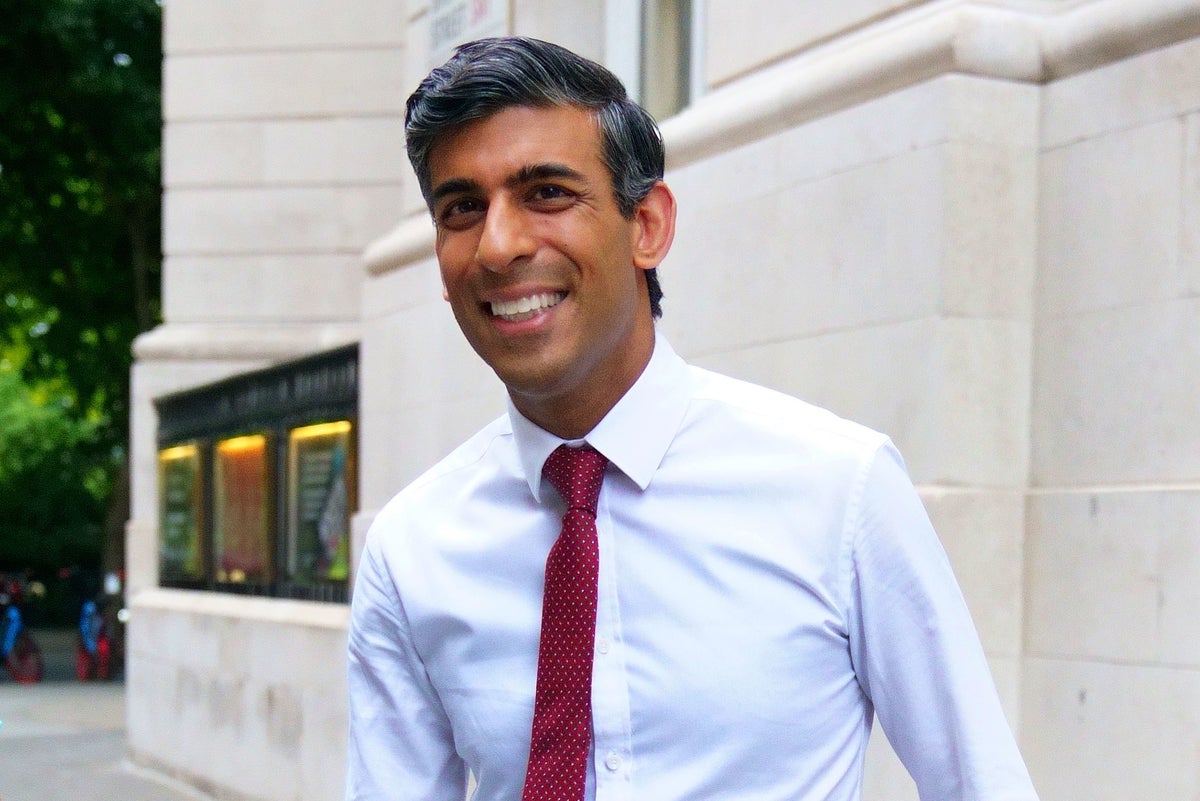
The figures dealt a blow to Prime Minister Rishi Sunak, who had promised to grow the economy as one of his five priorities.

Chancellor Jeremy Hunt said inflation and high-interest rates were behind the output fall but insisted the economy was turning a corner.

He said: “While interest rates are high so the Bank of England can bring inflation down low growth is not a surprise.

“But there are signs the British economy is turning a corner; forecasters agree that growth will strengthen over the next few years.

“Wages are rising faster than prices; mortgage rates are down and unemployment remains low.

“Although times are still tough for many families, we must stick to the plan of cutting taxes on work and business to build a stronger economy.”

Shadow chancellor Rachel Reeves said the Prime Minister’s promise to grow the economy was in tatters.

“The Prime Minister can no longer claim credibly that his plan is working or that he has turned the corner on more than 14 years of economic decline under the Conservatives that has left Britain worse off.

“This is Rishi Sunak’s recession and the news will be deeply worrying for families and businesses across Britain,’’ he said.

Continue Reading
Click to comment

Leave a Reply

Your email address will not be published. Required fields are marked *

World

Okonjo-Iweala Rocks with Igbo Cultural Dances at WTO Open Day in Switzerland

Published

on

By

Director-General of the World Trade Organization (WTO), Dr. (Mrs.) Ngozi Okonjo-Iweala, recently attracted a unique global attention when she danced with Igbo masquerades at the WTO Open Day in Geneva, Switzerland.

In a viral video, an Adamma masquerade, adorned in elaborate woven raffia and a beautifully carved maiden mask, strode into the centre of the square and moved with intricate footwork.

The masquerade stamped its feet to the escalating tempo of the drums, bringing the raw spirit of Southeastern Nigeria straight into the heart of global governance.

The crowd erupted in cheers as Okonjo-Iweala immediately caught the rhythm.

She matched the masquerade’s energy, rolling her shoulders and executing graceful, rhythmic steps that perfectly mirrored the cadence of the Ogene.

Continue Reading

USA

Trump Warns of Attack on American Identity As US Turns 250

Published

on

By

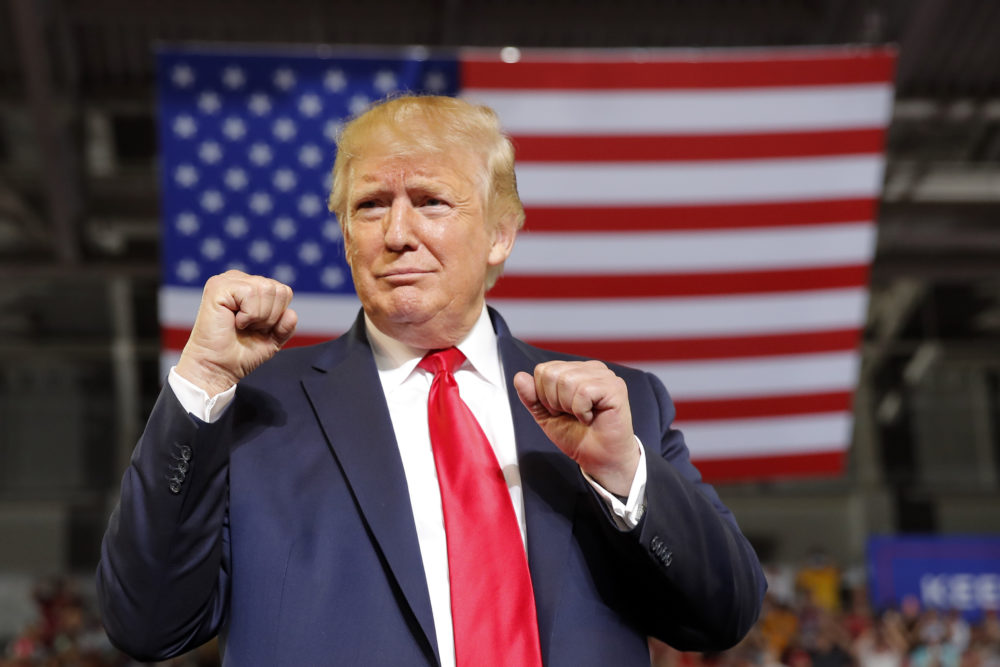
America turns 250 on Saturday — a landmark birthday that coincides with a time of deep national division and a president determined to seize the festive center stage.

The independence anniversary also comes in the middle of a brutal heatwave that has placed some 160 million Americans under major or extreme heat warnings, playing havoc with planned parades and block parties in towns and cities across much of the country.

But the searing temperatures have done little to deter President Donald Trump, who has gone to great lengths to ensure the event becomes, in large part, a celebration of himself.

Executive Branch

On Saturday evening, Trump will hold a huge campaign-style political rally on the National Mall in the capital, Washington, along with roaring military flyovers and what he has touted as the world’s biggest fireworks display.

“It’s going to be approximately 107 degrees (41C) out, and I’m going to go, and I’m going to make a really long speech — just to show that I can do anything,” he earlier said.

Late Friday, the president visited the Mount Rushmore National Monument for an address under the gaze of the giant granite heads of four of his legendary predecessors.

While he lauded American exceptionalism and praised the country’s past leaders, he said that the American identity was “under a renewed attack.”

Taking aim at domestic “radicals and extremists,” he charged that there was “a resurgence of the communist menace in our land.”

It is a theme that Trump has repeatedly hammered home in recent weeks, as the anti-establishment left of the Democratic Party carried a string of US primary victories.

The president has cast the rise of the left ahead of November’s midterm elections as “communists” on the rampage, posing a major “threat” to the country.

On Friday, Trump said there has been an attempt to “beat the American spirit out of us, alienate us from our history” in recent years.

While his language fell short of the more violent anti-immigrant rhetoric he has wielded in past speeches, the underlying message was clear.

“You do not have to be born here, but you do have to love what we have built,” he said.

The location of Trump’s speech was a fitting backdrop for a president who views himself as one of the greats.

Trump’s supporters have even introduced legislation to have his likeness chiseled beside those of George Washington, Thomas Jefferson, Abraham Lincoln, and Theodore Roosevelt.

For Americans, the 250th festivities offer a moment for reflection as well as celebration.

After two and a half centuries of triumphs and tragedies, slavery and freedom, civil war and world wars, multiple surveys indicate a nation divided about where it is and where it’s going.

A Quinnipiac University Poll showed 61 percent of Americans thought the US was not living up to the ideals stated in the Declaration of Independence — though even opinion on that was divided, with most Republicans thinking it did, and most Democrats thinking it didn’t.

“There’s too many people that hate on each other, steal from each other. They don’t love each other,” said Los Angeles-based artist Johnny Presley.

“I’m sick of the way this country treats people. I’m sick of the way this country treats its foreign neighbors,” he added. “I’m sick of a lot of damn things.”

For others, like American-Iranian Karisa Tavassoli, an educator in Atlanta, the basics of the American dream still ring true.

“I have safety, I have freedom of speech, I have freedom of religion, I can wear whatever I want as a woman,” she told AFP.

“There are many flaws here, but we have something very special that’s worthy of protecting,” she added.

Alonzo Coby, a member of the Shoshone-Bannock Tribes, is grateful to be able to celebrate 250 years of the United States.

“But I want people to remember that Native Americans have been here a lot longer than 250 years,” he said.

AFP

Continue Reading

World

Trump Declares Trade War on Nations Imposing Digital Tax on US Tech Firms

Published

on

By

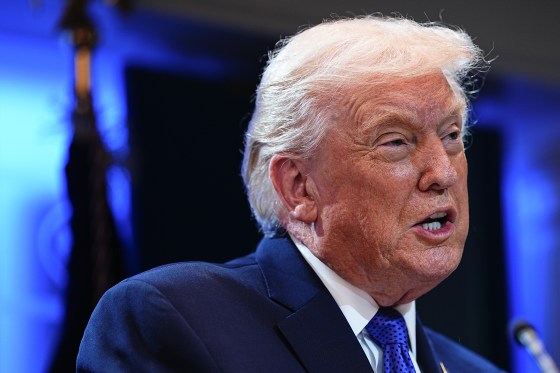
U.S. President, Donald Trump, has threatened to impose a 100 per cent tariff on imports from any country that introduces a digital services tax (DST) targeting American technology companies.

In a statement posted on his Truth Social platform on Friday, Trump warned that countries introducing or maintaining digital services taxes on U.S. tech firms would face immediate retaliatory tariffs on all goods exported to the United States.

“Any country that imposes such a Tax will immediately be met with a 100% TARIFF on any Goods sent to the United States of America,” Trump declared, insisting that digital services taxes unfairly single out American businesses and undermine U.S. economic interests.

The latest warning is aimed primarily at several European countries that have adopted or are considering digital services taxes on multinational technology companies such as Apple, Google, Meta, Amazon, and Microsoft.

Washington has long argued that such taxes disproportionately target U.S.-based firms while discriminating against American innovation.

Trump also asserted that the proposed 100 per cent tariff would supersede existing and future trade agreements, signalling a more confrontational trade policy if countries proceed with taxing revenues generated by U.S. technology giants within their borders.

France became the first major economy to introduce a digital services tax in 2019, prompting repeated threats of retaliatory tariffs from Washington.

Other countries, including the United Kingdom, Italy, Spain, Austria, and Canada, have either implemented or proposed similar measures while negotiations continue under the Organisation for Economic Co-operation and Development (OECD) to establish a global framework for taxing multinational corporations.

The OECD’s two-pillar international tax agreement was designed to reduce unilateral digital taxes by allocating a greater share of multinational profits to countries where earnings are earned while establishing a global minimum corporate tax.

Continue Reading

Trending