Connect with us

Featured

We’ve No Regrets Working against Jonathan, Say ACF, NEF

Published

on

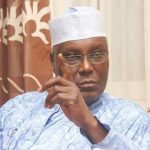
The Arewa Consultative Forum and the Northern Elders’ Forum on Wednesday defended their opposition to ex-President Goodluck Jonathan when he contested the 2011 and the 2015 presidential elections.

The groups, in separate interviews with The PUNCH, indicated that they had no regrets for their position in the two elections.

On its part, the ACF while justifying its position, said leaders should learn to honour their words.

The spokesman for NEF, Prof. Ango Abdullahi, told one of our correspondents on the telephone that the North worked against the former President because he and his party jettisoned the power shift (zoning) policy.

He said the forum never hid the reason for working against Jonathan, as according to him, “We told him(Jonathan)why we worked against him,” he stated.

He added that the forum expected the former President to respect the zoning formula shortly after the death of the late President Umaru Yar’Adua but regrettably, Jonathan and his party reneged on the zoning agreement.

The former Ahmadu Bello University vice-chancellor, stated, “Yes, it is true that Northern Elders’ Forum worked against Jonathan and we told him why.

“They themselves (PDP) admitted that they made a mistake in reneging on the power shift and why what happened happened,” the spokesman said.

On its part, the ACF adduced the same reason for working against the former President and his party, saying Jonathan contested in 2011 and 2015 against the arrangement of his party that zoned the presidency to the North.

The National Publicity Secretary of the ACF, Alhaji Muhammad Ibrahim-Biu, told one of our correspondents that the former President’s assertion that the North worked against him was odd, considering the “circumstances at that time.” The spokesman admonished Nigerian leaders to always honour agreements they entered into.

He said, “It is on record that Jonathan contested the 2011 and 2015 polls against the zoning arrangement of his party that zoned the presidential slot to the North.

“Therefore, his assertions that Northern leaders and socio-political groups in the North worked against his presidency is rather odd, considering the circumstances at that time.

“Yet the ruling party secured 25 per cent in most states of the North. It may interest you to know that his party has since admitted the oversight in the party winning game plan.”

He added, “This clearly means that leaders should always honour their words with deeds if they want to earn the respect of their followers.”

The former President, in his new book, ‘My Transition Hour’ had said that he battled opposition from Northern leaders and socio-political groups, which felt he was usurping power from the region.

Jonathan said the northern power blocs had tried to deny him his constitutional right of contesting the 2010 presidential election after the death of   President Umaru Yar’Adua in 2010.

According to him, despite the threats and opposition, he was able to win the 2011 election.

The Punch

Continue Reading
Click to comment

Leave a Reply

Your email address will not be published. Required fields are marked *

Featured

Glo Boosts Lagos Security with N1bn Donation to LSSTF

Published

on

By

In a landmark gesture underscoring its enduring commitment to national development and public safety, communication giant, Globacom, has donated ₦1 billion to the Lagos State Security Trust Fund (LSSTF), to strengthen security infrastructure across Nigeria’s commercial capital. The contribution stands among the most significant private-sector interventions from the telecommunications industry to the Fund in recent years and reinforces Globacom’s position as a responsible and patriotic corporate citizen.

The donation follows Globacom’s participation in the LSSTF-organised Private Sector Breakfast Meeting with CEOs, hosted by the Executive Governor of Lagos State, Mr Babajide Sanwo-Olu, on Friday, January 30, 2026. The high-level forum emphasised deeper collaboration between government and business on security, innovation and economic resilience—an agenda Globacom has consistently supported through sustained social investment.

Expressing appreciation, the Executive Secretary/CEO of the Fund, Dr Ayo Ogunsan, described Globacom’s gesture as “a powerful demonstration of corporate citizenship and a strategic investment in the stability of Lagos State.” He noted that the LSSTF was established to bridge funding gaps in security infrastructure and therefore relies heavily on voluntary contributions from corporate bodies and well-meaning partners.

According to Dr Ogunsan, the ₦1 billion donation will significantly enhance the Fund’s capacity to address critical priorities for 2026, including multipurpose security helicopters and drones, Armoured Personnel Carriers (APCs), water cannons, digital communication equipment and Smart CCTV systems.

These assets are central to proactive policing, rapid response and intelligence-led operations across the state.

Reacting to the development, a senior executive of Globacom described the donation as an extension of the company’s long-standing belief in Nigeria’s future. “At Globacom, we see security not as a government burden alone, but as a shared responsibility. When people feel safe, enterprise grows, creativity flourishes and hope becomes practical,” the official said. “Our support for the LSSTF is about protecting the everyday dreams of millions of Lagosians.”

Globacom’s intervention is consistent with its long-standing approach to social responsibility—practical, timely and aligned with national priorities. Over the past decade, the company has supported relief efforts for flood-affected communities, assisted displaced persons, advanced youth skills through structured training programmes, and invested in education, culture and digital inclusion. These initiatives reflect a philosophy of giving that privileges institutional impact over personal acclaim.

Dr Ogunsan also urged Lagosians to support organisations that invest in the safety and development of the state. “When companies step forward to secure our environment, residents should reciprocate by patronising them. Their support directly impacts the protection of lives, property and economic activity,” he said.

By strengthening the LSSTF, Globacom is investing directly in the conditions that enable commerce to thrive—safety, confidence and stability. With this support, the Fund is poised to scale its interventions further, reinforcing Lagos State’s position as the country’s safest and most vibrant commercial hub.

As Lagos continues its journey toward global competitiveness, Globacom’s partnership with the LSSTF stands as a model of how the private sector can help secure shared prosperity.

In an industry built on signals, Globacom’s clearest signal remains trust—earned through consistency, conscience and action.

Continue Reading

Featured

Ex-AfDB Chief Akinwumi Adesina Launches Investment Platform to Drive Capital to Africa

Published

on

By

Africa appears to have found a deal and investment channel that will help lure scarce capital into a continent that houses 12 of the world’s 20 fastest-growing economies, as rising protectionism and geopolitical tensions weaken capital flows.

The Global Africa Investment Summit (GAIS), a transformative platform co-founded by Akinwumi Adesina, former president of the African Development Bank, is set to bridge African governments, global CEOs, and institutional investors to accelerate the continent’s shift from aid dependency to investment-driven growth.

With the fastest young demographic in the world and a population of nearly 1.3 billion, Africa is punching below its weight as fragmented markets, under-prepared public assets, and a reliance on aid rather than scalable private investment pose the biggest constraint to growth.

“Africa must unlock its vast sovereign assets to generate wealth,” Adesina said in a statement ahead of the summit scheduled to be held in Angola later this year.

“The Global Africa Investment Summit, as a market maker, is the globally trusted platform to unlock mega deals and assets by connecting Africa to global capital.”

Africa’s Foreign Direct Investment (FDI) continues to lag behind both developed and developing economies, representing only 6 percent of global FDI in 2024, according to the United Nations Trade and Development World Investment Report.

GAIS aims to boost Africa’s lagging foreign direct investments by providing investors the enormous opportunities abound in the continent some of which includes the continent’s population projected to double by 2030, with a rapidly growing middle class.

Its consumer market is growing, from $1.4 trillion in 2015 to an expected $2.5 trillion in 2030, opening investment windows for FDIs.

According to the organisers, strategic sectors, including critical minerals, metals, rare earths, energy, agriculture, and digital infrastructure, are primed for investment.

Global leaders including President of Ghana John Mahama, William Ruto of Kenya, Samia Suluhu Hassan of Tanzania, Prime Minister of Italy, Giorgia Meloni, Daniel Chapo of Mozambique, former UN Secretary-General, Ban Ki Moon, former Prime Minister of the United Kingdom, Tony Blair, Africa’s richest man and President, Dangote Group, Aliko Dangote, and Robert Gumede, founder and chairman Guma group have all backed the need for Africa to harness its potential for economic growth.

BusineesDay

Continue Reading

Featured

ADC Knocks Senate over Rejection of Electronic Transmission of Results, Says APC Afraid of Transparent Polls

Published

on

By

The African Democratic Congress (ADC) has accused the APC-led Senate of being afraid of free and fair elections after rejecting key electoral reforms meant to strengthen transparency and integrity in Nigeria’s voting process.

This was contained in a statement signed and released by the National Publicity Secretary of the ADC, Bolaji Abdulahi on Wednesday.

The party criticized the Senate’s rejection of electronic transmission of election results, saying it signals yet another effort by the APC to manipulate future elections.

Other rejected reforms included the electronic download of voter cards from the INEC website, a reduction in election notice periods, and a shortened timeline for the publication of candidates from 150 days to 60 days.

“The proposed provisions were intended to provide safeguards against electoral abuse and restore voter confidence.

“But the Senate’s action amounts to tampering with the law, creating opportunities for rigging and imposing logistical challenges on INEC that could weaken future elections,” the statement read.

The ADC accused the APC of exploiting its majority in the National Assembly to entrench malpractice, warning that the party’s fear of free and fair elections is driving legislative manipulations.

“By rejecting reforms meant to improve election conduct, the APC has shown its desire to cling to power by all means,” the statement added.

The opposition coalition urged Nigerians to hold the APC accountable and called on the Conference Committee on the Electoral Act to reject the Senate’s submissions.

It also appealed for amendments that reflect democratic principles and the will of the Nigerian people.

Continue Reading

Trending